


Back in the 1970s, a car sold in Australia was luxurious if it had velour seats and a radio. Those two features meant you didn’t burn your legs on vinyl seats after a day at the beach and you had some music on your way home.
Today, we’ve got so many interior amenities it’s hard to know the difference between inside and outside the car. We step out of a climate controlled building and get into a climate controlled car. We don’t have to stop taking or making phone calls because the Bluetooth system will sync directly and seamlessly with our phone. In the near future our cars will be online. We’ll be able to tweet traffic conditions to our Facebook friends using Waze on the way to a speed date.

Oceans of plastic. Tacky grey fabric, which if you were lucky, would come with a pale blue, yellow, red or green fleck. Then came the pleather revolution. Today it’s faux sport seats in sub-grade sporty-ish cars that look the goods, but don’t deliver.
I spend a lot of time considering the interior of any car I’m thinking of buying. For me, a car is a world away from home. It’s a world away from generic office life. Driving has the chance to be an occasion. The journey can be a destination all of its own. Whilst good exterior design provides some excitement as you approach from the outside, you spend your driving time inside the vehicle. The interior has to add to the experience.
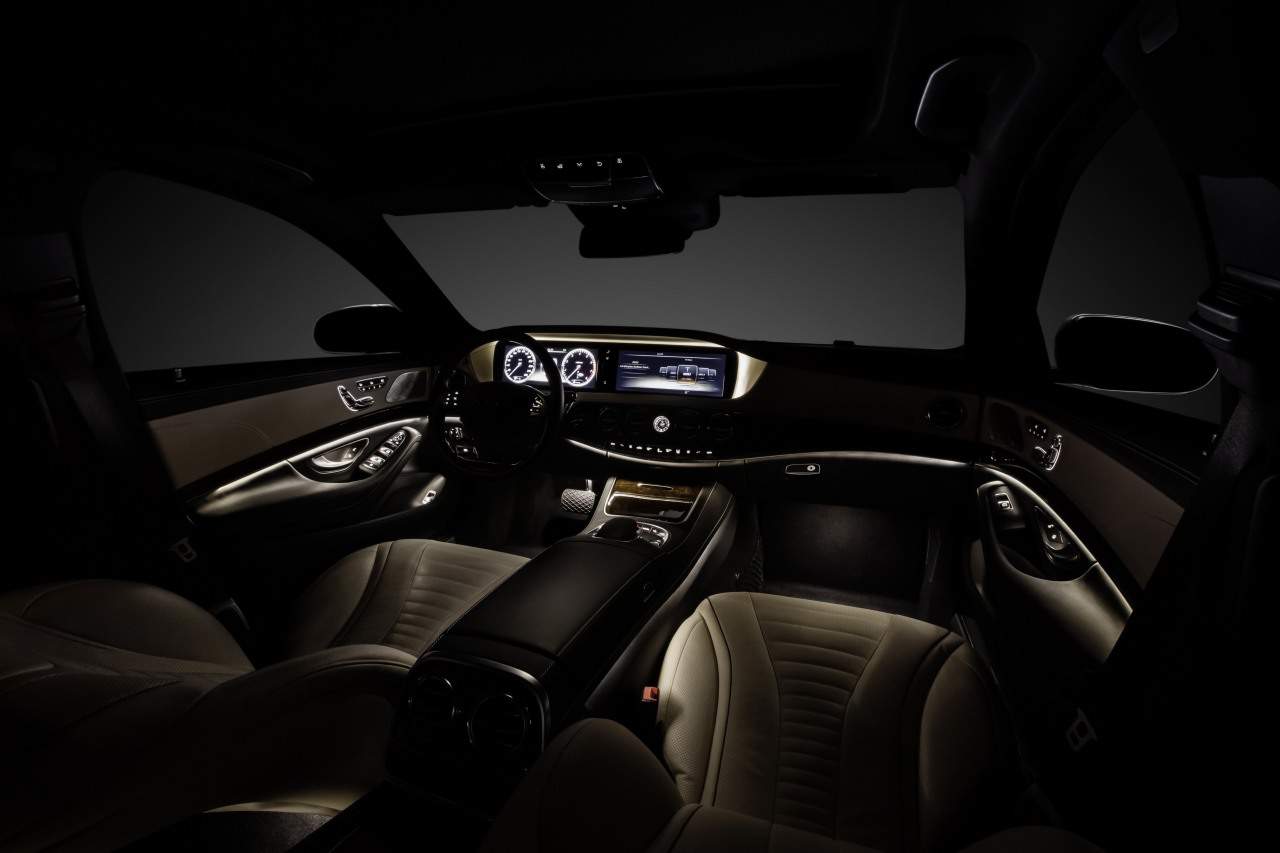
This is why I got so excited when I saw images of the new Mercedes Benz S-Class interior a few days ago. Back in the early 1980s when I was still burning my legs on the seats of my Dad’s XY Ford Falcon wagon, a friend’s parents had a 1970’s vintage Mercedes. Sitting in that car was like being on another planet with views of the earth just outside the window. Those windows were electric, for starters. It had real wood grain trim, big switches and dials for all sorts of functions that the Falcon was missing. It smelled of leather rather than sawdust. That car didn’t try to be better than anything else I’d ever seen. It simply WAS.
The gap between European and non-European vehicles used to be a chasm when it came to interior design and quality. That gap closed over the last few decades and today, both premium and regular brands are selectively guilty of dumping their drivers in a sea of smelly plastic punctuated by generic switchgear.
If this is progress, why is it frequently so unsatisfying?
Form Follows Function is a wonderful mantra but it doesn’t mean things have to be boring. Yes, we like our gadgets in the new millennium but the soul endures. The soul still wants to be encased in something special, not something solely functional.

That’s why I like what I see in these early images of the new S-Class Mercedes interior. It seems that Mercedes has regained its sense of occasion. I look at these photos and to me, they ooze luxury, which is what a Mercedes S-Class should be all about.
Modern car companies from all segments are chasing exterior design efficiency. The shapes are largely the same. It’s the face that they draw on the shape that differs. Modern car companies all do engines and safety pretty well, too.
Could it be that interior design and the quality of materials used will be the last great differentiator between generic and premium cars?


——