It’s 2026. The automotive world rolls on and I’m interested in knowing… what are you driving?
Most of you got here via SaabsUnited, the website I ran back when Saab was still a going concern. I’m guessing that while some will still have a Saab (or two), most won’t.
So what’s driving your automotive interest now? Pun fully intended.
I’ve had a semi-deliberate hiatus from the online automotive world for a few years now. Back in the SU days, and in the early days of this site, I was in a good earning, two-income household with minimal debt and plenty of parking space. I could indulge my automotive interests with very few restrictions. And I did, again and again and again. That world changed in 2015 when a) I moved to Sweden to work for Koenigsegg, and b) that marriage broke up (the two circumstances were not related).
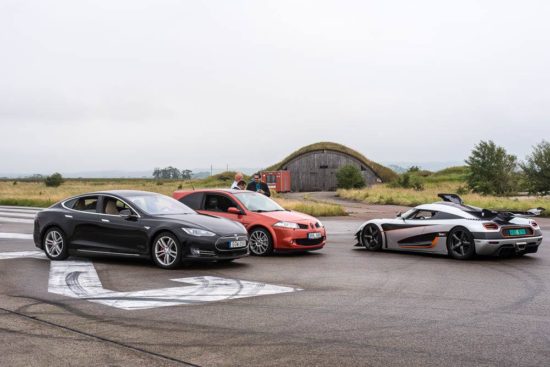
Since then, while I’ve had a couple of interesting vehicles – most notably an RS Megane (below) and my Alfa Giulietta – cars have been a bit on the backburner. I didn’t want an online automotive life to consume me the way it did in the SU days, and being at Koenigsegg quenched much of my interest, anyway.
My current circumstances are very different to 10+ years ago. I’m now in a one-salary world, busily trying to build a second, and we have just one parking space in our apartment building. Indulgence has to blend with practicality. It matters if the stupid car I bought breaks down now.
But I do miss it. The online side of things will not be allowed to get so big again, but sharing this interest with friends around the world has always been a joy. I’d like to keep that flame burning.
Saab is Gone. Long Live Saab!
I couldn’t write Saab is dead. Because it isn’t, right? I’ve seen it first-hand and I know many of you have, too: The Spirit of Saab is alive and well.
But the bankruptcy did happen. And while I know a few peeps who’ve maintained/expanded their fleet, I also know many who’ve moved to explore other brands.
There’s no judgement here, by the way. I’ve been exploring other brands for 15 years. I love cars. I love what they’ve meant to me, and what they’ve meant for the world in terms of mobility, independence, exploration and achievement. I loved Saabs most of all – I still do, and will have one again some day – but as SE Hinton wrote way back when: that was then and this is now.
So…. what are you driving?
Have you maintained your Saab fleet?
Did you move to the other Swede (and I don’t mean Koenigsegg)?
Have you changed tack entirely and sought comfort in something other than a 4-banger turbo hatchback?
Have you taught yourself how to wrench so you can maintain your weekend Miata/Integra/Golf/Insertnamehere?
Have you gone (cue theatrical Beelzebub voice……) electric?
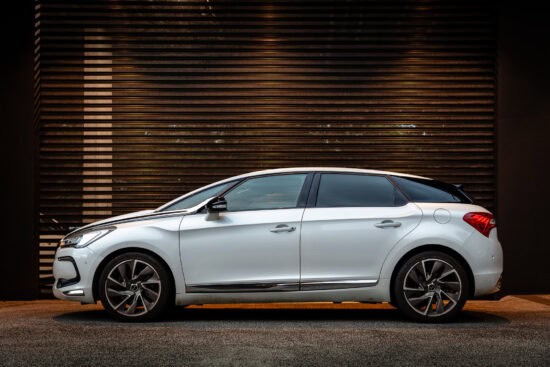
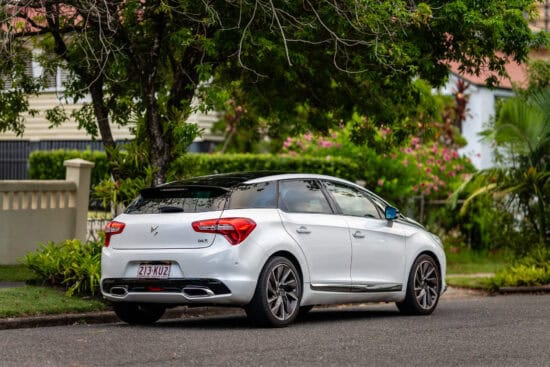
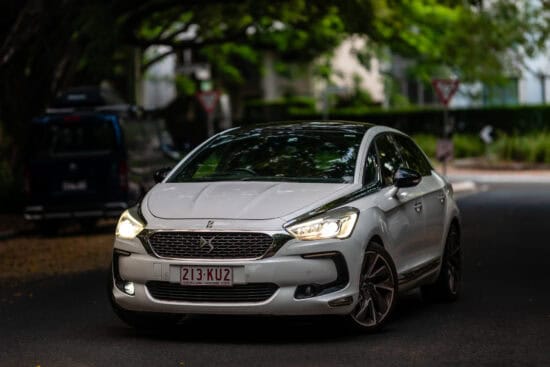
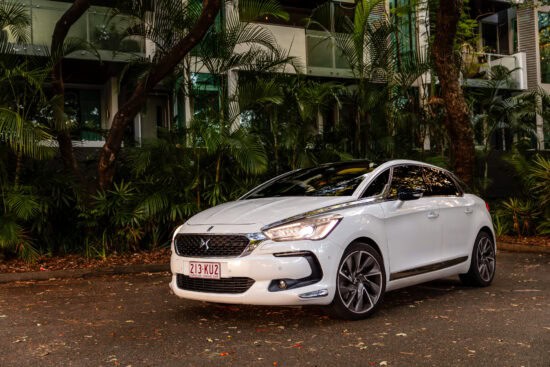
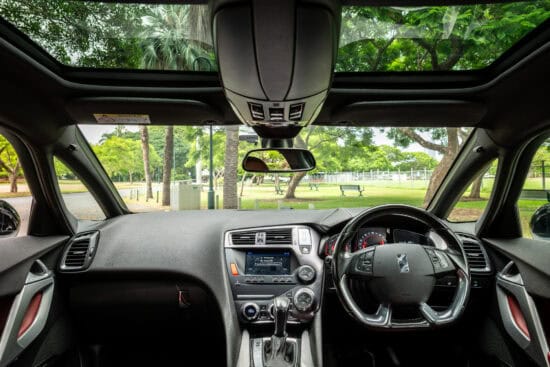
This is the car I affectionately refer to as The Croissant – a cheap reference to its French heritage, I know.
We bought the car in October 2024. So what is it?
Officially, this is a DS Automobiles DS5 2.0 HDI Sport Anniversary. Let’s decipher that.
2.0 HDI refers to its diesel engine. Yes, I bought my first diesel. The Sport bit refers to the fact that it’s the higher 180hp model, with a full 400 torques. And the ‘Anniversary’ bit refers to the fact that it’s a 2015 model that celebrates the 70th anniversary of the original car that the brand is named for – the Citroen DS.
DS Automobiles is Citroen’s attempt at a Lexus. Or Inifiniti. Acura. Genesis. Or whatever ‘premium’ brand you’d like to come up with in relation to a mainstream brand.
The modern DS line of vehicles entered Citroen’s lexicon around 2009 and the brand was spun off under its own name in 2015. Hence, my 2015 model is badged as a DS on the front and rear, where earlier DS5’s feature Citroen’s original double chevrons.
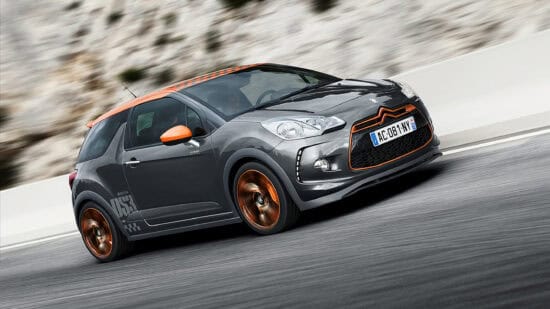
DS Automobiles started with a bang. They sold as amany as 120,000 cars in just their third year. That was largely on the back of the small DS3 compact hatch. Sized similar to a modern Mini, the DS3 won a bunch of awards at launch, and still looks pretty good today. It was actually the DS3 that first got me interested in the brand. They were easy to spot in Sweden, and came in a very sporting DS3 Racing variant – designed to celebrate Citroen’s rally success of the era – complete with funky suspension, bigger brakes, a body kit and a BMW-derived 200hp engine similar to contemporary Minis of the time.
DS5 Design
The DS5 was reasonably well received at launch for its avant-garde styling and its generous equipment levels.
The front end tends to polarise opinion, but I hope you agree that overall, this is a pretty handsome thing. The rear three-quarter view is my favourite. it has a stance to it that gives it a sense of intention. It’s not full-on sporty, but it’s definitely forward-facing. If that makes sense.
And while the brand name might be retro, the design is the complete opposite. We live a world full of homogenated design, where legislation threatens to make all cars a similar shape. So many 3-box sedans and SUV’s look similar to their competition. The shapes are the same. Only the faces are different. You can’t accuse the DS5 of looking like anything other than a DS5.
The styling is very modern, inside and out. It’s not as iconic as the original DS. Nothing is. But it’s definitely distinctive.
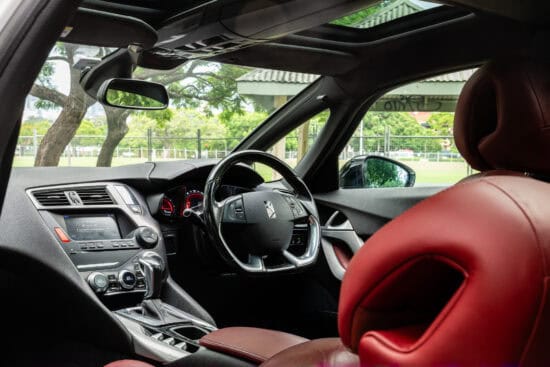
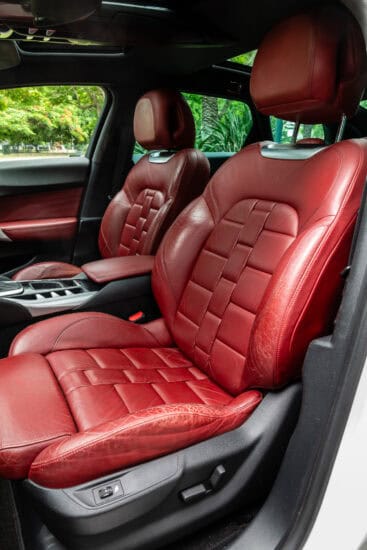
Modernity continues on the inside. There’s a touch of elegance with the leather ‘watchband’ seats. The rest of the cabin is quite Star Trek. There are plenty of angles in the console, the cluster, and the overhead controls. Even the buttons have an angular sharkstooth thing going on.
DS5 Equipment
The DS brand is Citroen trying to break into a more upmarket category. It makes sense, then, that they include plenty of goodies to lure people in. And they do. My DS5 was pretty much the flagship of what they were offering at the time and it comes with:
Those gorgeous ‘watchband’ leather seats, which are electrified, heated, have memory and massaging
Denon hi-fi system, including subwoofer
Laminated double-layer side windows – it’s pretty quiet in there
Heads-up display
Blind spot monitoring
Rain-sensing wipers
Auto stop/start
6-speed auto with manual shifting
Cruise control with speed limiting
Power everything except tailgate
Keyless entry, start and keyless locking (just run your finger over a notch in the door handle as you walk away)
Glass moonroof with electric screening inside
Full climate control
Bluetooth, DAB, Aux, USB, iPod control (but not Carplay)
Factory Satellite Navigation (that’s rather crappy by today’s standards).
Chilled glovebox
Directional headlamps – just like the original DS!
Lots of beautifully textured materials inside – leather cluster surround, patterned materials around shifter, etc
Driving the DS5
The DS5 was less well received because of a relatively harsh ride – very un-DS-like – thanks to a chassis deriving from Citroen’s less luxurious family hauler catalogue.
I can attest.
Citroen took the initial criticism of the DS5 on board and completely re-tuned the suspension for the 2015 model year. People say that the 2015 model rides much better than its predecessor when equipped with its standard 18-inch wheels. Unfortunately, the guy who bought my example specced the bigger 19-inch wheels and their lower profile tyres, which completely negated the work done on the mechanical bits to make the ride smoother.
While the acceleration in my 180hp model is adequate, the steering is not keen. The car might look contemporary and sporting, but the driving experience isn’t, sadly. It’s comfortable and you’ve got all the gadgets you’ll ever need, but don’t look to take this car canyon carving.
What it excels at, though, is effortless cruising. Fill the spacious rear hatch with all your gear, hit the highway, and you’ll get 1000kms per tank of diesel all day long.
This was one of my priorities when we arrived back in Australia. We’re 2,000kms away from my family and, potentially, many hundreds of kilometers away from clients I might serve. I have to be able to carry my gear and cover long distances economically and in some comfort.
The DS5 does this pretty well.
DS5 Reliability
Let the mocking commence. Are you done? OK.
We’ve had some things to do on our DS5, it’s true. And because we’ve taken it to its original dealer to get work done, it’s been expensive. Half of that work is routine maintenance – servicing, front and rear brakes, etc. But we’ve also had to do a few annoying things, too.
Air Conditioning condenser. Not cheap.
Battery control module. Not crazy, but not cheap.
And while brakes are consumables, its highly recommended you always do discs and pads together (as with many modern cars). So that ends up at around $1000 per end at dealer prices.
All up, we’ve spent around $5k on getting work done this year. And we’ve still got more to go. Next week, I’ll be booking it in to get a wheel bearing, CV boot and a NOx sensor replaced. (We’re going non-dealer for this work. The dealer wanted $1500 for the Nox sensor alone. I picked one up for $130).
It’s been OK, really. While French car companies are ridiculed sometimes for having lots of engineers but none of them electrical engineers, our electrics have been 100% fine. Likewise, the mechanicals. No parts aside from the aircon and BCM have just given up randomly. The issues that happened are mainly 10-year-old car issues.
It’s just a pain that we copped them rather than the previous (initial) owner.
Conclusion
You can get a DS5 pretty cheap here in Australia. We paid $12K, which in Australia’s post-Covid car market, is pretty good. The maintenance costs I’ve just mentioned, as well as Citroen leaving Australian shores a few years ago and a general underappreciation for the marque, are the main reasons why they’re pretty affordable. It’s a LOT of car for the money and when all is well, which is 99% of the time, it’s excellent.
That 1% can be expensive, though.
We’re a little wary of more surprises bobbing their heads up in the next 12 months. We have only one car, and only one full-time salary at the moment. As good as the croissant is for the vast majority of the time, I think we need to cut our losses.
So once the CV boot, wheel bearing and Nox sensor are done – all are required for a roadworthy certificate here – the croissant will go in the display cabinet and be offered for sale.
It’s only my second French car, and my first diesel. It’s added to my vehicular experiences in a positive way. And for that, I’m thankful.
We’re still a little restricted by circumstance from getting something else way more interesting potentially flawed, so I think we might have to aim for something a bit more reliable. But hopefully also a bit more intentional.
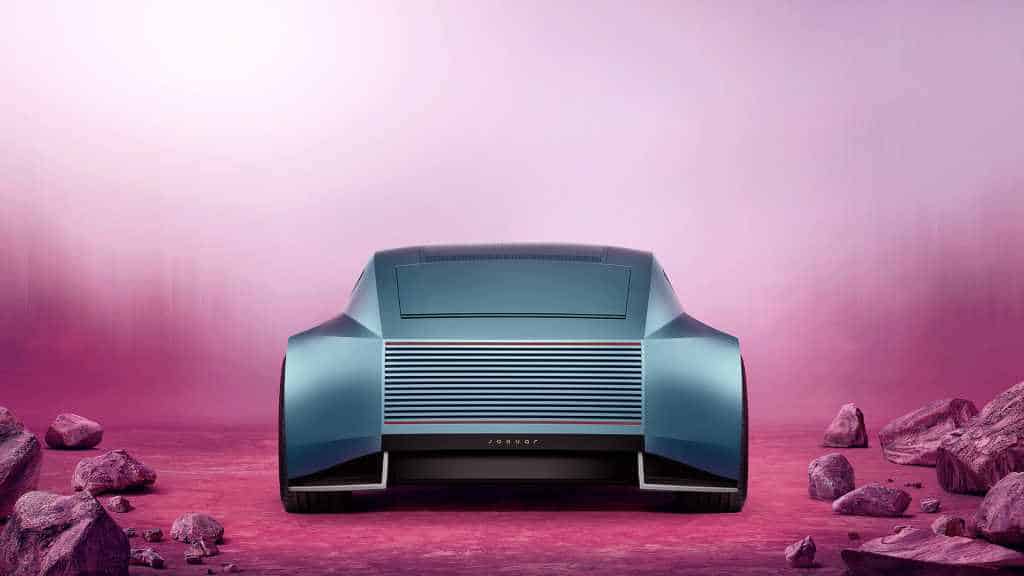
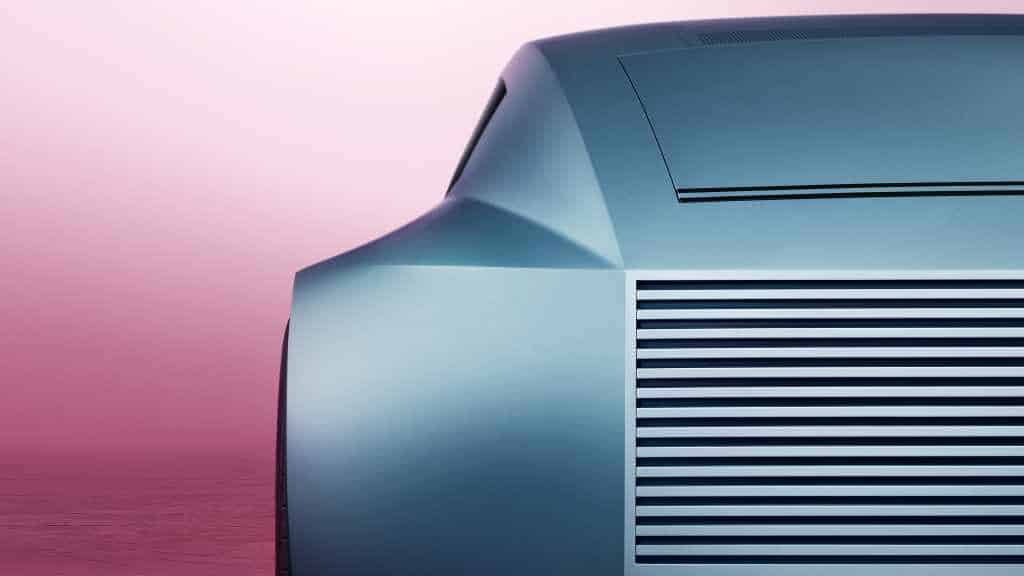
The new Jaguar launched its new Type 00 Concept in Miami today. Thankfully, we still have an internet as there were zero androgynous models in sight.
(To be fair, I think the models might have made an appearance if the kerfuffle of the last two weeks hadn’t turned out the way it did. But that’s neither here nor there.)
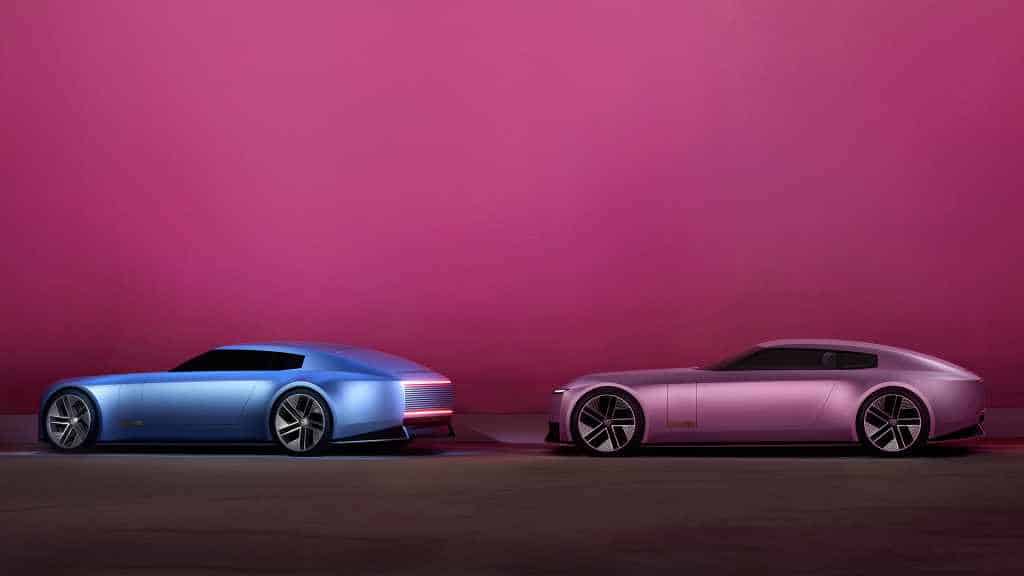
The new car was shown in two bold new colours – London Blue and Miami Pink – yet another signal of Jaguar’s determination to shatter some expectations.
Here you go….
——
The outside
“As if a Tesla Cybertruck humped a Rolls Royce Spectre”, to paraphrase one comment I heard. And it’s a little bit true.
That’s not so say I don’t like it, though.
I do. I really do.
We all need to keep in mind that this is a concept. The first car that Jaguar will release in a couple of years from now is actually a 4-door GT car, so while it’ll take some styling cues from this concept, it’s not going to be this concept. Jaguar insist that they wouldn’t make a concept unless it was close to reality, but let’s see how close the new cars are to this, when they arrive.
As a styling exercise and an indication of what’s to come, I think they’ve kicked some goals here.
It has presence. And attitude. It looks confident. Strong.
Jaguars need to look strong, I think. The last 10-15 years have seen their best cars look strong, at the expense of the rest of the range. The R and R-S models carried a confidence and strength fitting for the brand. The standard models, sadly, did not. The Jaguars we people-of-a-certain-age grew up with – Jaguars from the 60s, 70s and 80s – carried their confidence in a form of stately poise and elegance.
I think this new Type 00 has that, but with an edge. On the exterior, at least.
I’d like to echo Harry Metcalf’s thoughts on Jaguar’s intended audience for this car. It’s size and boldness – to me – scream US and China. Not necessarily in that order. And while Harry’s a little down on their chances of success due to the dampening of the Chinese market, specifically, and the dampened state of EV sales, generally, I disagree. I think that a few years of development and some maturing in the market will give Jaguar a better-than-even chance of success – IF THE PRODUCT IS GOOD. The eternal caveat.
——
The Inside
Noting that, once again, this is a concept, the interior is where the new Jaguar and I part ways.
The Macquarie Dictionary’s Word Of The Year is ‘enshittification’.
“The gradual deterioration of a service or product brought about by a reduction in the quality of service provided, especially of an online platform, and as a consequence of profit-seeking.”
I’d like to argue that the trend towards screen-only interiors is part of the enshittification of what should be enthusiast automobiles.
I’ve been waiting for a company to buck the trend and restore some elegance – and function-oriented manual controls – to a car interior. There have been several studies into vehicle UI and how much better a set of good controls are, compared to screens. Thus, I had very high hopes for this Jaguar on the inside.
Sadly, no. It’s been enshittified.
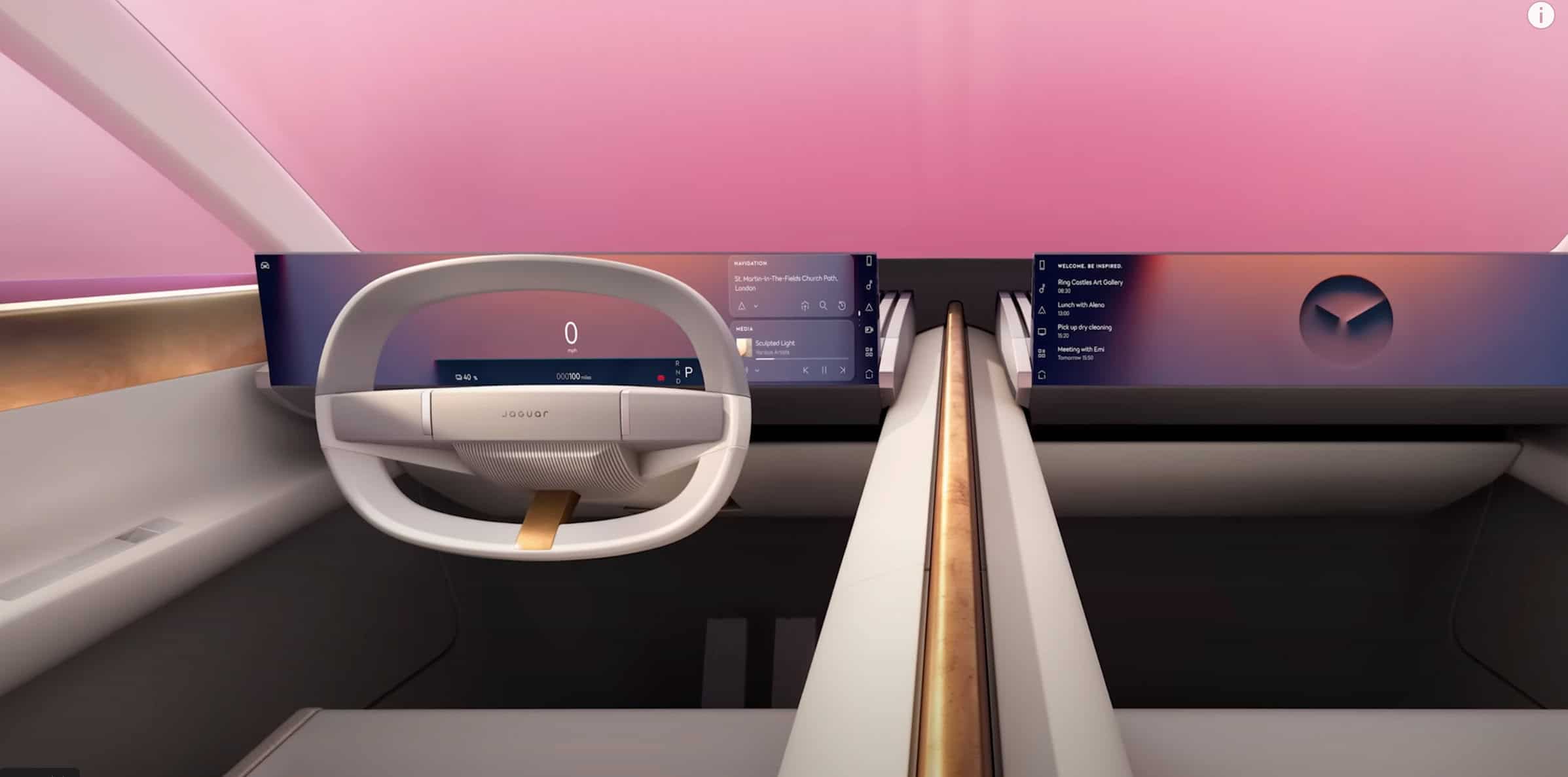
Those flat bits at the front of the ‘dashboard’ rotate upwards to provide two wide screens, one either side of the center column.
I hope the real car has something different, but I think I’m pushing uphill on that one.
It’s very disappointing. Now that the novelty of Tesla’s iPad interior is over, I figured the industry might return to a more UI-friendly position. Sadly, it seems like the industry is still in love with a) the cheap cost of screens compared to good manual controls, and b) the fancy pictures and patterns they can put on them.
The screens look like they could be 100% real and carried over into the car.
The rest of the interior – not so much. It features Travertine, for goodness sake! Are they really going to put stone into a car?
——
The Future
I love the exterior.
I don’t love the interior.
I like the boldness of Jaguar to go for this hard reset, and make a new future for itself. It’s trajectory was not good. Something had to give. They might still fail and be gone in 5 years, but at least they have a chance, and they’re not going to die wondering. And I’m glad Tata, the parent company, has given them the space to do it.
There’s been plenty of concern in the Jaguar community (and waaaaaaaaaaay more stupidity outside of it) about Jaguar’s decision to leave its heritage behind.
At the Type 00 launch in Miami, Jaguar’s Chief Creative Officer, Gerry McGovern, said:
Jaguar has no desire to be loved by everybody. [Type 00] has already stirred emotions, and it will continue to. Some may love it now. Some may love it later. Some may never love it. And that’s OK. That’s what fearless creativity does. This is the original essence of Jaguar, and for me, it’s been an honour lead the creative reimagining of this great British brand.”
I have a feeling that with time, more people are going to return to Jaguar than the ferocity of the last few weeks would have us believe. Again, if the product is good, and the brand is strong, it will carry the name well.
I don’t agree with the popular proposition that the company is willing people to leave. Not at all. This is not a middle finger to Jag’s traditional base, IMHO. I think they’d like to carry as many Jaguar fans with them as they can. They’re just not willing to be held hostage by them. Some see that as reckless (because it is, a little). Others see it as courageous (again, because it is).
The physical footprint and the visual language of this Type 00 concept gives me some hope.
It’s early in the morning of December 2nd as I write this in Australia. Around 1pm in Miami on December 1st.
Right now in Miami, there’s a bunch of very nervous Jaguar executives awaiting a new vehicle reveal on Monday December 2nd that will either crown, or cut the throat of, the ambitious Jaguar re-brand launched a few weeks ago.
In case you’ve been living under a rock for the last few weeks (completely understandable, given the US election results), Jaguar launched a teaser video and some pictures a few weeks ago. They show a re-branded Jaguar with an avant-garde eye towards the future.
Watch this:
——
Sign O The Times
My guess is that Jaguar conceived this campaign a couple of years ago – these things take time, after all – when the world was a slightly more tolerant place. They probably didn’t know (but maybe should have suspected, at least) that there might be a renewed focus on culture wars as we got closer to a contentious US election – and their launch date. The pearl clutching leading up to November was extraordinary, which perhaps didn’t bode well for Jaguar.
Indeed, if you’ve been following the reactions since this Jaguar teaser launched a few weeks ago, you’ll know what’s happened. There’s been plenty of doom forecasting, a reasonable amount of outrage, a not-insignificant amount of MAGA-inspired vitriol (Faguar! fight! fight! fight!), and some small pockets of positivity.
Personally speaking, my immediate reaction was similar to some of yours, I’m sure. I was VERY surprised on first seeing it, somewhat sceptical, and a bit sad.
I wasn’t taken aback by the artistic nature of things: the colours, the androgyny. That doesn’t bother me at all. But….
That feeling of loss
What sparked my initial reaction was the stark contrast with Jaguar’s past.
I even wrote a note to a mate in the UK, expressing my condolences. He’s a multiple Jaguar owner and, I would say, part of that ‘best of British’ cohort. An appreciator of engineering, quality, history and tradition. A guy who bought his cars for a reason. He’s the type of guy Jaguar (and Saab) relied upon for sales for some time. I wrote to him because I figured that, like me, this campaign would have come as a shock. And perhaps it might lead to a departure. I think the jury’s still out on that one, which is fair enough.
Jaguar’s is a past that I feel invested in, too.
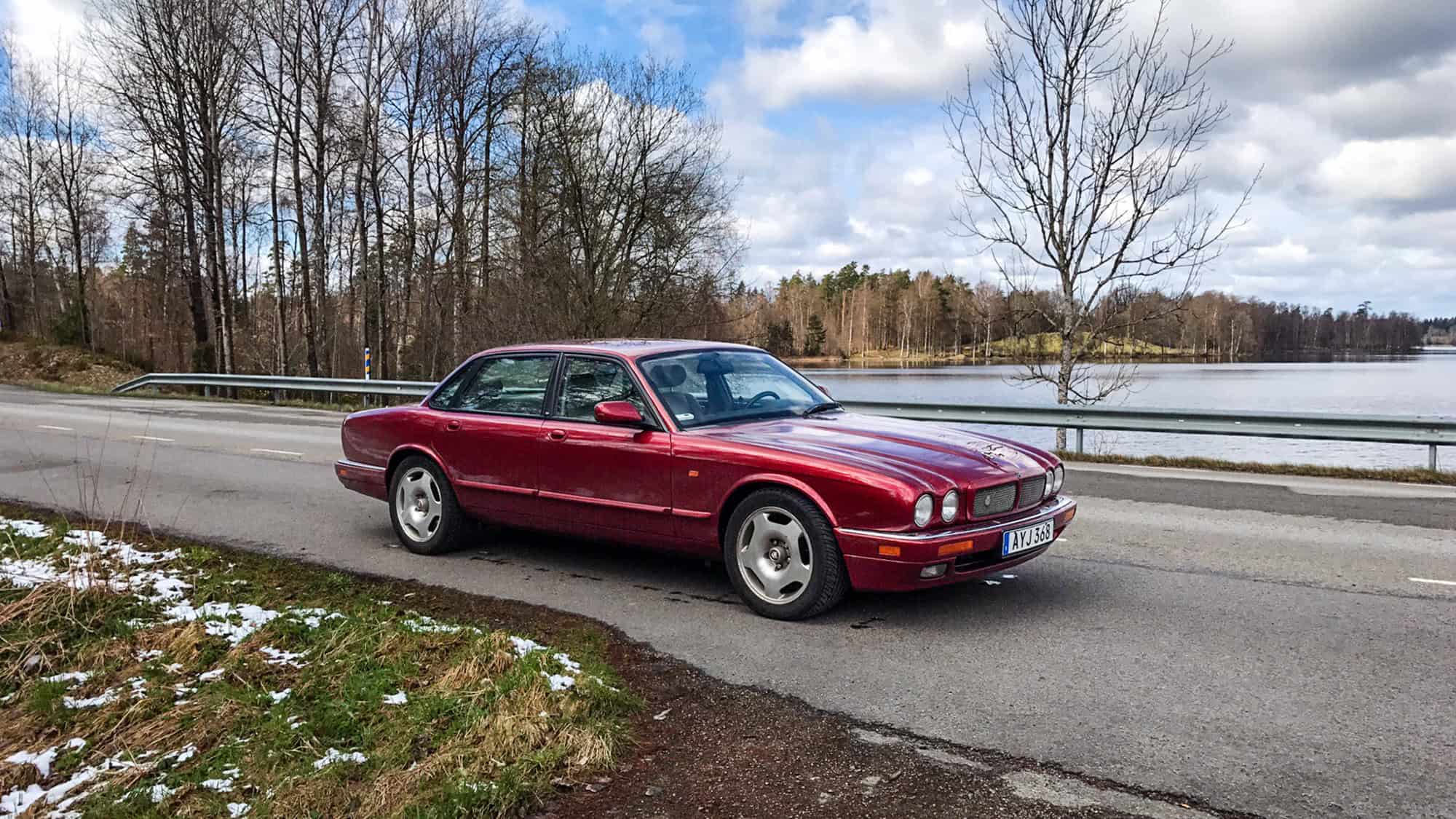
Jaguar was my first automotive love. My Dad gave me some XJ6 brochures when I was a kid and I used to pore over them like nothing else. I sat in class at school, drawing the XJ6 from every profile (and while I can’t draw to save my life, I got these perfect – in my memory, at least!). And long-suffering long-time readers of this site might remember that one of my most lusted after cars on my occasional ‘want’ lists is an XJ6 with a V8 transplant (sacre-bleu!!).
I finally got to indulge my Jag-lust in 2016, when I bought a beautiful XJR in Sweden:
So yes, I felt a pang of doubt when the Jaguar re-brand was launched. I’ll admit it.
The Case For The Reset
Personally speaking, I’ve given this whole episode a lot of thought, and my pangs have subsided.
I highly recommend you listen to that clip (and to that pod, in general. It’s brilliant.) But for those who didn’t….
As much as we might like the whole tradition-mahogany-leather-whiskey persona of Jags past, not enough people buy Jaguars.
The company made some legendary vehicles in the middle of the 20th century, and they’ve made some very good vehicles since, but they’ve also had some quality problems and they’ve never reached the sales heights of their German counterparts. Never ever. And they’ve rarely ever been profitable.
Jaguar – like Saab, I’d like to suggest – have constantly been victims of both their own successes and their small size. Their successes show the potential that’s there if they really had an opportunity, but their small size and a lack of willingness in others to invest in them means they’ve never really had the chance to show more. In Saab’s case, it was fatal.
Jaguar, it seems, has one more roll of the dice. The three options, as Porter puts it, are:
1. More of the same – why bother?
2. Shut the whole thing down – can you imagine the outcry? Saab fans have lived through this.
3. Try something radical. A hard reset – which is what we’ve got here.
So… What now?
Miami. December 2nd. The big reveal.
Jaguar will show their new electric concept in Miami and it’s said to bear a fair resemblance to the production car that’s due in 2026.
This is the car industry, and it all comes down to product in the end. Not advertising. Not teasers.
EVERYTHING will come down to the market reaction to that car. If they make it and people buy it, then the company lives. If people don’t buy it, the company dies, which is the trajectory they were probably on, anyway. And the one thing that Jaguar has learned over a long period of time is that their old clientele, on its own, can’t sustain it. They need a different, and much bigger audience.
The one thing nobody can deny is that there’s going to be a LOT more eyeballs on this vehicle launch than what there might have been otherwise. And from that measurement alone, the Jaguar re-brand has, so far, been a success.
Again, aping Porter, while this campaign might not be the way I’d have gone, I don’t mind it and I’m hopeful for Jaguar.
The world is better with Jaguar in it. The company has a history of bringing an element of class, elegance and refinement. They can be both cutting edge and traditional. They’ve torn up the rulebook more than once in the past. Now they’re doing it again. And just between you and me, I don’t think it’s as big a leap as what some are portraying right now between elegant and avant-garde.
I wish Jaguar well and will be watching with interest.
Tim, from NYC, asks which Porsche 911 he should buy…..
A brief question, if I may.
If you were to choose your favourite 911 year models from an enjoyment of the vehicle perspective, and investment hopeful return perspective, and in an attempt to mitigate maintainence costs, would you have any suggestions?
Tim wrote correctly in his email that I’m a fan of the Porsche 911 but sadly, I’ve never owned one. I came close once, but I hit the chicken switch because the price was ‘a whopping’ $37,000 AUD so I spent 30K on a 968 ClubSport instead. What an idiot! That 911 would be worth four times as much now (he says, knowing he never would have kept it long enough to see it appreciate).
I ask you, dear readers, to contribute your thoughts on this 911 question for Tim’s enjoyment and benefit. I will also furnish my own, of course.
I will preface this by directing you to one of my automotive maxims – Buy the Best. i.e. figure out what you like and buy the best equipped version you can find, the one that fits closest to your dreams. Better to extend yourself by $5K and love the car than sit there, somewhat content, thinking about the car you could should have bought.
So then, in anticipation of your collective thoughts, here are my own.
The enjoyment of vehicle perspective
It depends a little on what you’re into, I suppose. Objectively speaking, a Porsche 911 is really all about performance, so the answer to this is probably going to lie with one of the latest models.
But is maximum performance what will bring you the most enjoyment? Personally, speaking only for myself, I think not. The 968 Clubsport had plenty of performance potential – way more than I could have reasonably enjoyed with my driving skills – and I got bored of it within months.
What would give me the most enjoyment, I think, is proper classic design and just enough performance/handling to make me feel alive. Better to drive a slow car fast than a fast car slowly, as they say.
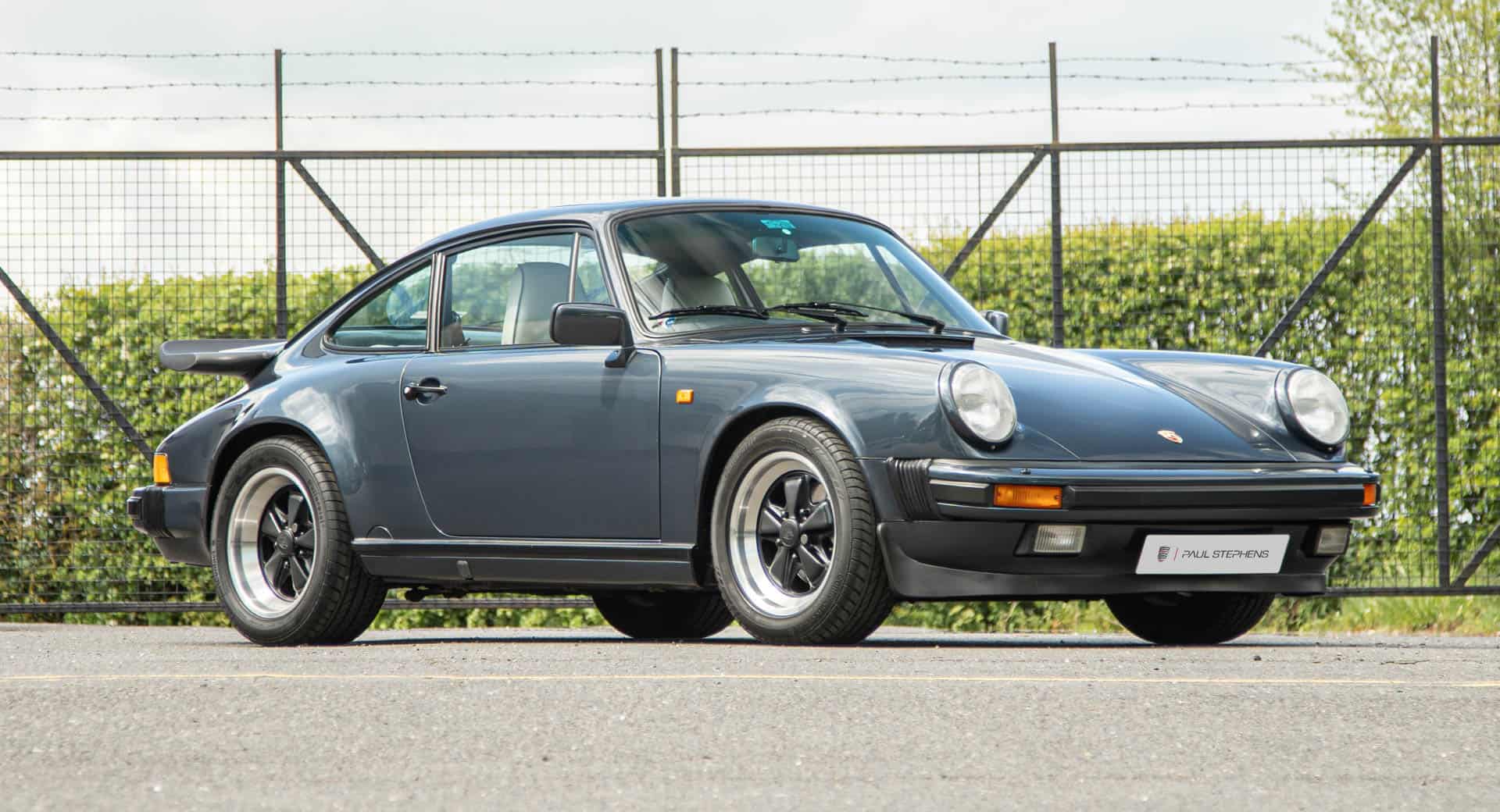
For me, I think that would be a G-series 911 from the early-mid 1980s.
It’s no coincidence, perhaps, that this is the Porsche of my youth. I was born in 1970 so the Porsche of my teenage years is always going to be a strong contender.
Nevertheless, the G-series has those classic old-school 911 looks with just a hint of muscle. It’s got a lovely sounding air-cooled engine and the 230hp put out by the Carrera 3.2 model is well and truly capable of generating big grins on a Sunday afternoon.
Investment potential
Porsche sports cars of nearly every flavour have proven to be a sound investment over the last 10 years. Even a humble 924 can fetch money well beyond the car’s objective worth nowadays. That 911 that baulked at paying $37K for back in 2014 is likely worth well over $100K now.
But, as SE Hinton wrote …. That was then. This is now.
Porsches were undervalued 10 years ago. They’re not undervalued today. Some might even say that they’re due for a post-Covid decline.
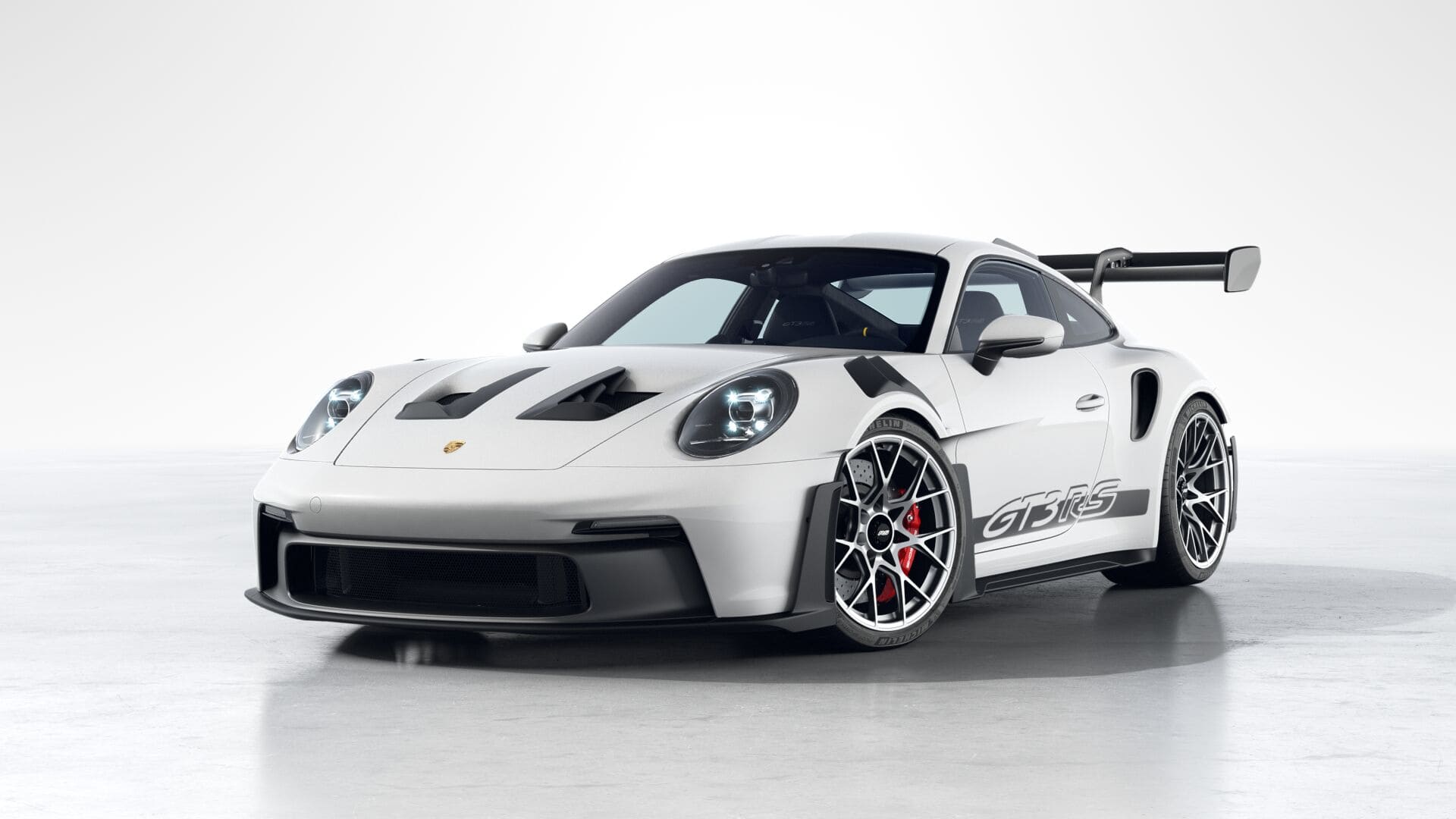
Personally speaking, I think a desireable limited edition model, or a notable performer, will hold its value pretty well. Any air-cooled cars should hold value pretty well, for example. If you can afford a GT3, and the maintenance, and you can keep it in decent condition, I think you’re going to do OK. A bog-standard 2002 2.7 Boxster? Maybe not.
Mitigating maintenance costs
From my understanding, Porsches are well engineered and there are very few documented cases of systematic failures due to poor engineering design. They’re not unheard of (hello, IMS bearings) but they’re not common.
If you want to mitigate maintenance costs, my best recommendation would be to buy as new as you can and invest in a good regime of preventative maintenance. Older cars are going to need parts replaced. It’s inevitable. And when Porsches finally do go wrong, it can be expensive, too.
Don’t skimp the maintenance on a performance car. They’re not built for short-term thinking.
——
I’m going to leave my thoughts as inconclusive, mostly.
I don’t know enough about Porsches to make a firm recommendation. I also didn’t ask Tim for a budget.
Personally, I’d pick a 3.2 Carerra for myself. But that’s me and as a man I respect very much once reminded me, I’m a sample-size of one.
It’s been said that classic cars were one of the better-performing investments over the last 10 years and I’ve noted in a previous post that Classic Car prices have gone completely maaaaaad. Consider this an extension study to substantiate that earlier work.
I’ve recently revisited the 2014 post and looking at the results, I think that maybe we should have put a consortium together to dump some money into these cars.
They’ve done OK.
**NOTE**
This post is NOT financial advice.
I’ve owned 30 cars during my lifetime and I’ve never made a penny on any of them. This is just interesting historical observation.
Don’t do anything I suggest.
Ever.
I’m an idiot.
The 7 investment cars I highlighted and their selling prices at the time were:
1981 Porsche 911 SC – $28,000
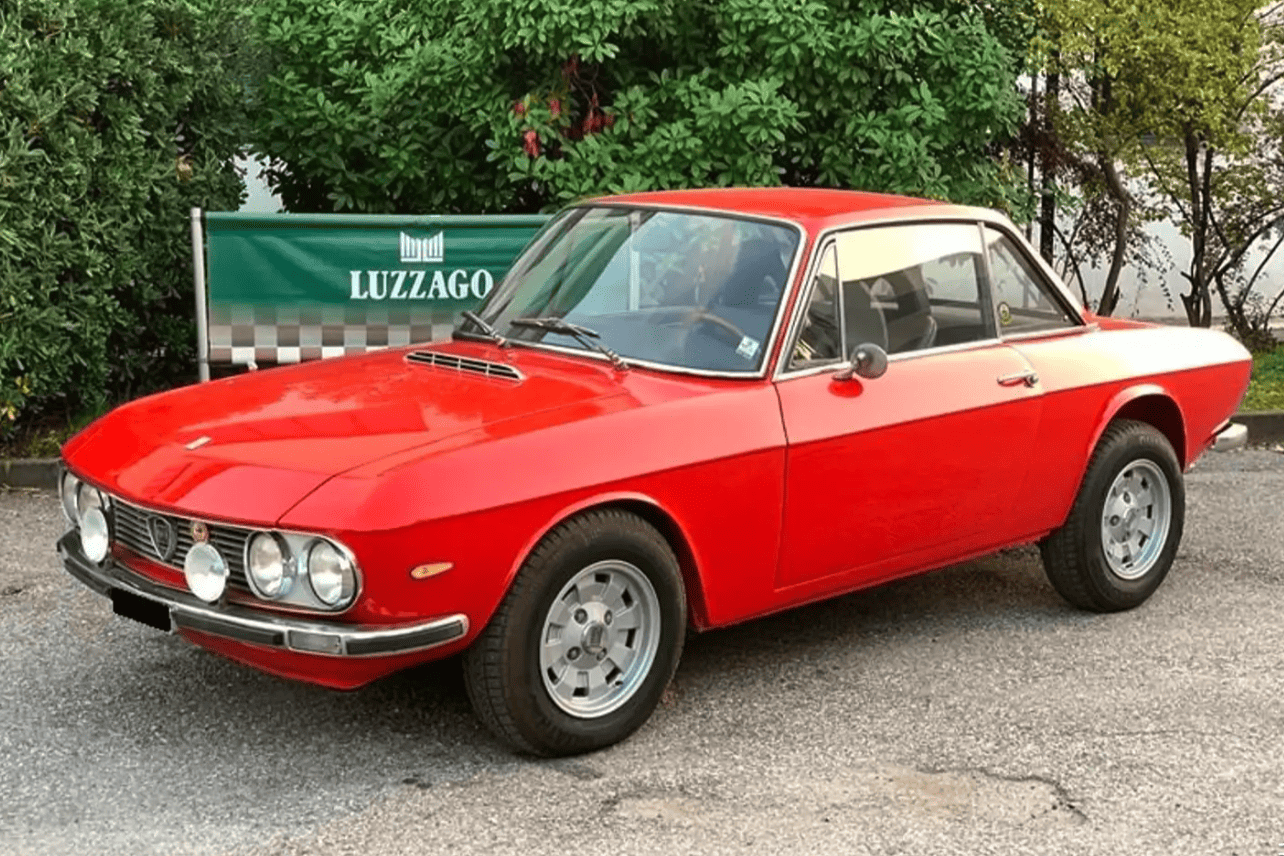
1972 Lancia Fulvia 1600 HF Lusso – $29,500
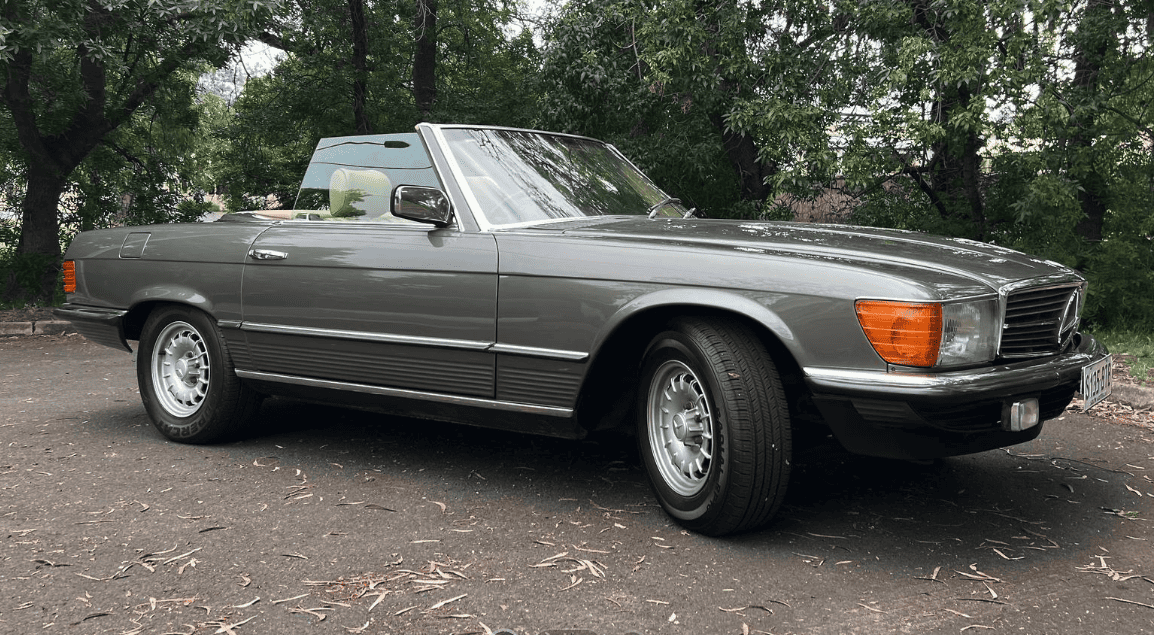
1981 Mercedes Benz 380SL – $25,000
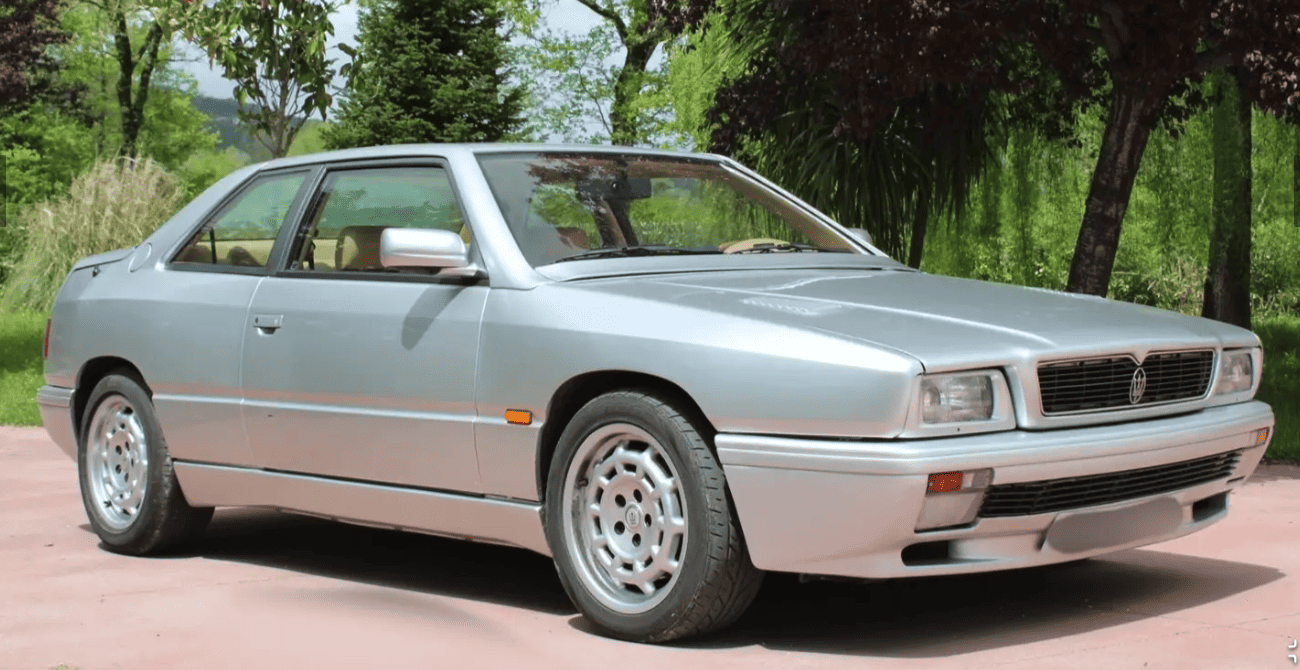
1998 Maserati Ghibli GT – $32,000
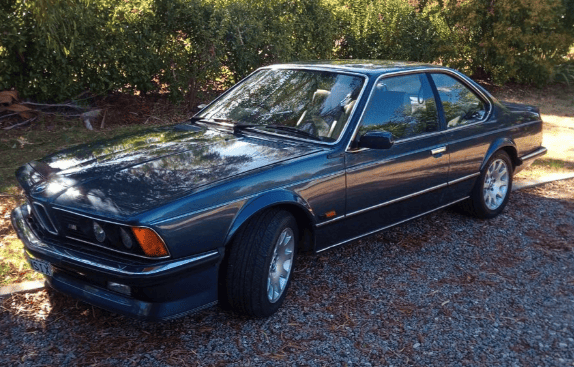
1985 BMW M635 CSi – $29,900
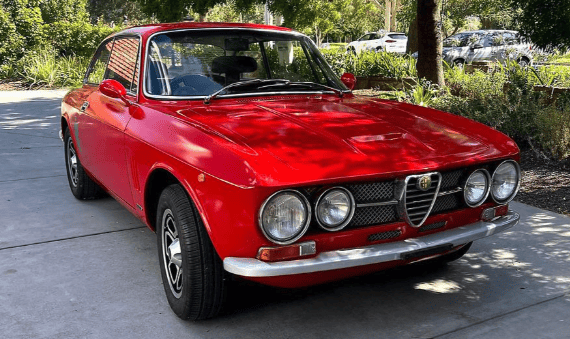
1968 Alfa Romeo 105 Series Coupe 1750 – $21,000
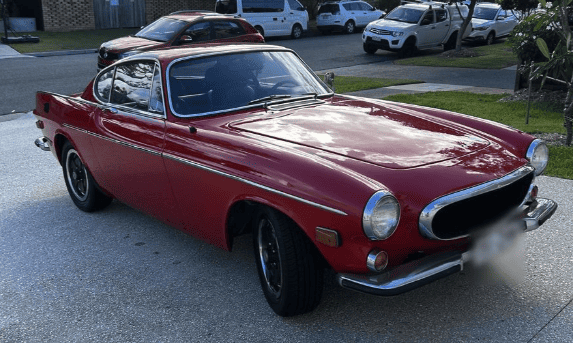
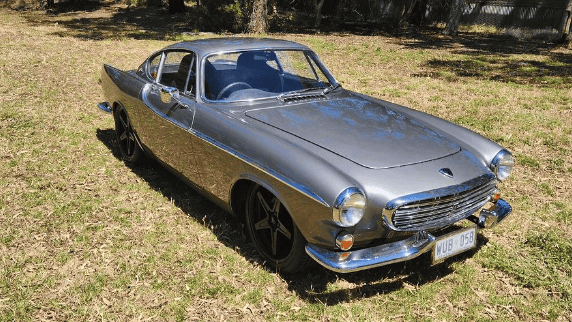
1966 Volvo P1800 S – $26,000
That would have constituted a total spend of $191,400 for 7 investment cars that I thought had potential. For many of us, traditionally, the idea of ‘Investment Cars’ was a bit of a laugh. It was the preserve of those with Ferrari GTOs or Bugatti Type 57s. Those cars went up consistently. Everything else was a money-pit.
That was then. This is now.
So let’s take a look at those 7 investment cars and see what you’d have to spend to buy them in 2023.
I will use carsales.com.au as my guide, just as I did in 2014.
I will look for the cheapest available comparable model, even though that wasn’t my approach in 2014. In other words, what’s the minimum you’d have to spend to get back into this model, today?
All prices are in Australian dollars.
—
Porsche 911 SC
I’d only just sold my Porsche 968 CS when I wrote the 2014 article, and I’d looked at 911s quite closely when shopping for the 968 in 2013. Air-cooled Porsche 911s were good value in the post-GFC era but were just starting to rise slowly.
I should mention that the 911 SC was actually not the cheapest type of 911 available at the time. The cheapest 911s on the market in 2014 were 1970s era 2.7 models, which were notorious for poor heat management (all of it fixable, but still). In 2012-13, those 2.7 models could be had for sub-$20k prices in Australia. I kid you not.
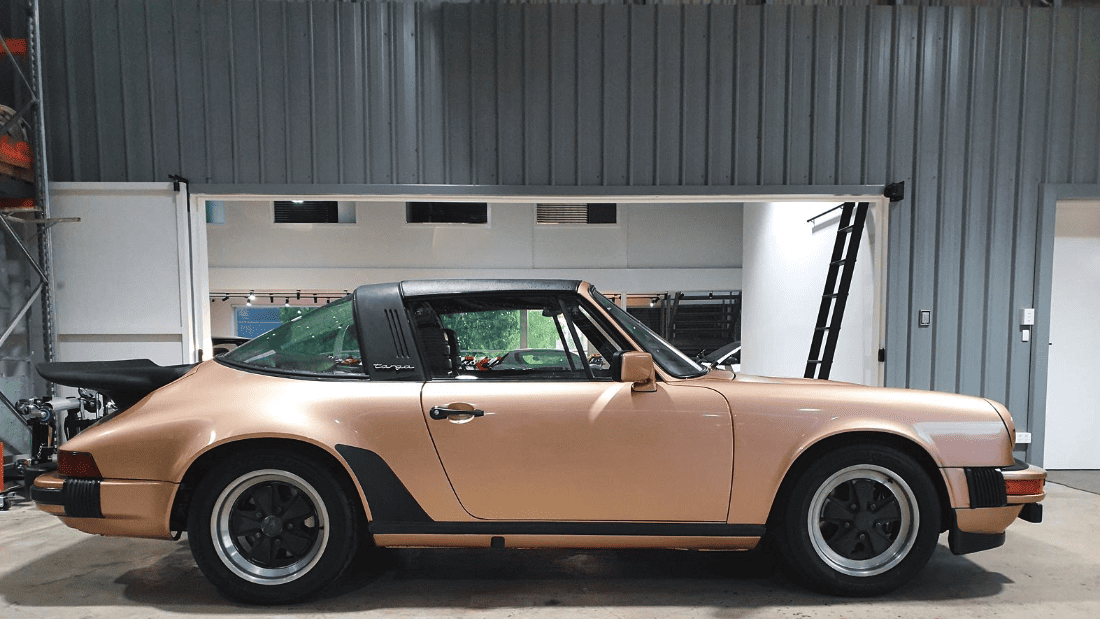
The Porsche 911 SC models for sale right now range from $75,000 to over $200,000.
The catch with this one, though, is that it’s left-hand drive. While the 2014 selection was also an import, it had a steering wheel appropriate for the market.
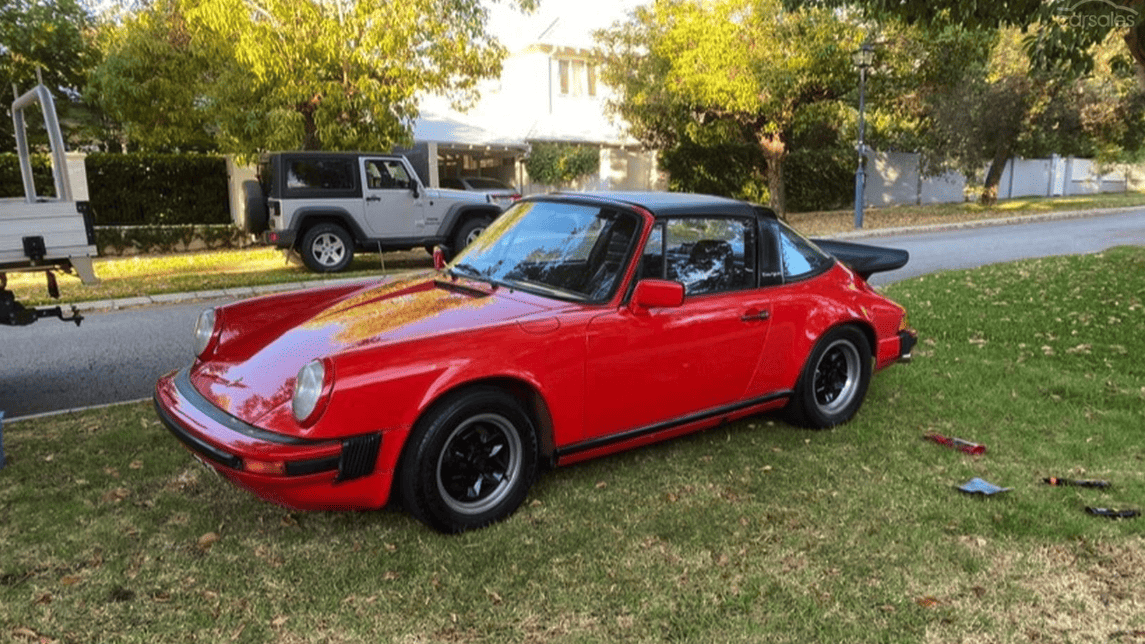
Hence, we’ll move on to the next least expensive 911 SC, which is priced at $89,000. It’s an Australian delivered Targa in Guards Red, with 215,000 kms on its original engine.
I must note, however, that this red 911 is a 3-speed Sportmatic rather than a 5-speed manual.
I didn’t specify the transmission in the 2014 entry, so I’ll run with this auto version and simply note that the cheapest RHD manual 911 SC that’s described as an original RHD car (i.e not a LHD conversion) is currently offered at $149,000.
—
Lancia Fulvia 1600 HF Lusso
There are three Fulvias for sale in Australia, currently, but none of them match the HF 1600 Lusso specification.
I did find three for sale in Italy, however. The cheapest of them is EUR50,000.
At current rates, that’s just a few hundred dollars short of AUD$80,000.
That’s a relative bargain because of the three for sale in Australia right now, the cheapest is $135,000!! That car’s a Series 1 Rallye model from 1967 with the 1.3 engine and “HF inspired cosmetic and performance modifications”. Such a car would have set you back around $20,000 or so back in 2014.
Like our sample car from 2014, this one has the optional hardtop roof and cream leather interior. Instead of red paint, this one is Anthracite Grey.
And quite lovely.
—
Maserati Ghibli GT
Back in 2014, I spotted a Ghibli GT for sale for $32,000. That was just over our $30k limit but I excused myself because….. well….. I love stupid Italian 90’s Maseratis and it looked amazing in black.
There are no Ghibli GT’s from the 1998 era for sale in Australia right now. Once again, I had to go to Italy, where I found just one example for sale.
It definitely looked better in black.
I referred to it as a “speculative pick” at the time, indicating a distinct lack of confidence in the little Mazza.
Thankfully, it’s rewarded what little confidence I had, with its price rising to EUR28,000. That’s AUD$44,000. It’s no record-breaker but at least it’s gained a little bit of value in that time.
—
BMW M635 CSi
The Shark. Best seen in JPS black and gold, but I couldn’t find one of those today.
I’m actually a little surprised that I found an M version of this car for sale for less than $30,000 back then. It seems far too low for the M version of a cult car, even in 2014 dollars.
I could only find one of these beauties available in Australia right now. It’s a UK import that spent some time in New Zealand before heading to Oz 20 years ago.
Interestingly, it comes with the original metric wheels and tyres, of which the rubber is pretty old and needs replacing. Good luck with that. It might be cheaper to store the original wheels and get new ones of a more common size.
The 1750 bit is the most important part of the nomenclature, there. There were numerous engines available with the 105 Series, but the 1750 is the sweet spot.
There are a couple of restorers slotting in around the $40,000 mark.
There are plenty of tidier ones for sale, but they’ll set you back at least $100,000.
What a sweet, sweet car.
—
Volvo P1800 S
The last car on my 2014 list was a Volvo P1800S.
There are no S models for sale in Australia right now, but there are two P1800 E models. The ‘E’ means it has fuel injection, giving it a bit more power and a higher top speed. I would imagine the ‘E’ model to be more expensive than the ‘S’ but Volvo enthusiasts, please correct me if I’m wrong.
I’m not sure where to go with this.
P1800 E #1 is an automatic. I’m pretty sure a manual would be nicer to drive and I think it’d command a higher price.
The possible downside is that the engine has been swapped for a turbocharged Nissan SR20, with a bunch of other performance modifications to handling, seats, etc. Given that originality is generally preferable in investment cars, I’m unsure as to how well this will hold value, even though it probably performs better than the original.
P1800 E #2 is priced at $75,000.
I’m going to go the conservative route, and select the more original car, even though it’s lower in price and an automatic.
—
Results
So how did we go? If we’d bought those 7 investment cars under $30,000 back in 2014, what could we potentially sell them for now?
Our total spend back in 2014 would have been $191,400.
Our total revenue based on current (minimum) 2023 prices would be $474,400!!
That’s a $283,000 profit.
A 147% return.
Even if we adjust for inflation (using USA inflation figures), where our initial $191,400 in 2014 is $248,000 in today’s money, it leaves us with a $226,400 profit. That’s still a 91% return.
Something that would impact those figures in a negative way is that I don’t account for maintenance, insurance, registration, storage, etc. Those figures would be significant in terms of the outcome.
On the other hand, however, the cars selected in 2014 were typical examples of the models that were available the time. Mid-range examples, if you will. The cars selected in 2023 are absolute entry-level. It might have made for a more fair comparison if I’d calculated an average price across models available, or selected a mid-range example.
Either way, it’s been an interesting exercise. If you’ve made it this far, thanks for sticking with me.
And if you’ve made a killing on a car in the last 10 years and want to share your experience in the comments section, please do. Anonymous posts accepted, but please don’t be telling tall tales.
I must apologise for this post taking SOOOOOOOOOO long. It was way back in August 2022 that I appealed to the collective wisdom of this website’s occasional readers, to suggest vehicle options for our upcoming move to Sweden. We arrived here late-October 2022 and I’ve been driving this BMW 328i GT since Day 2. That was 8 months ago! Some follow-up is WELL overdue.
The criteria I set at the time:
There are going to be a lot of furniture and appliance purchases in my near future, so the ability to cram a lot in the back makes some sense.
Fuel economy – have you seen Swedish fuel prices?
Automatic – Yes, I’m finally succumbing to age and I’m a bit tired of rowing my own gears in traffic. Plus, it’ll be easier for Caro (who’s already going to be challenged by the steering wheel being on the wrong side of the car, and the car being on the wrong side of the road).
Heated seats.
Carplay – or the ability to integrate Carplay. This has become a non-negotiable for us. It pretty much rules out all button-dash Saab 9-3s, but everything else can be converted, it seems.
The budget was 150,000 to 170,000 SEK.
——
There were a lot of great suggestions in the comments section, and some cautionary tales. You all might get bit mad at me as I followed my own road on this (thanks Saab USA) and overlooked many of those recommendations and cautionary tales.
I ended up passing on the Saabs because the fuel prices are so high here, and from previous experience, running a 9-5 costs about 30% more in fuel than a more modern 4 cylinder.
I passed on the Volvos because I’m just not that evolved yet. It’s a tribal thing that I’ve simply not been able to swallow the idea of. And they’ve simply not been of historical interest for me.
My interest was piqued by the idea of a Citroen, and that continues to be an itch that I might have to scratch one day.
But I didn’t get any of those.
What did I get? – BMW 328i GT
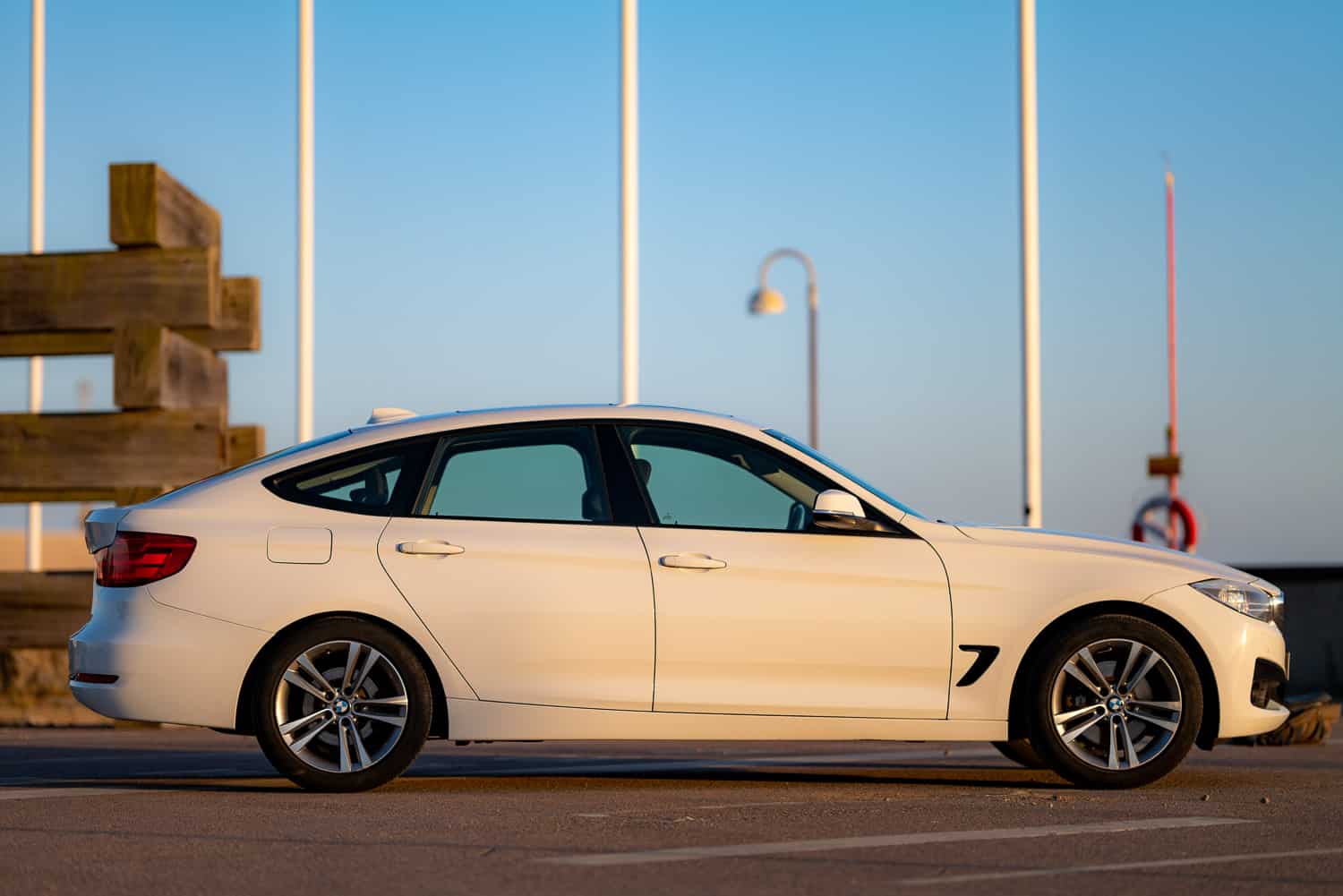
I bought one of these…..
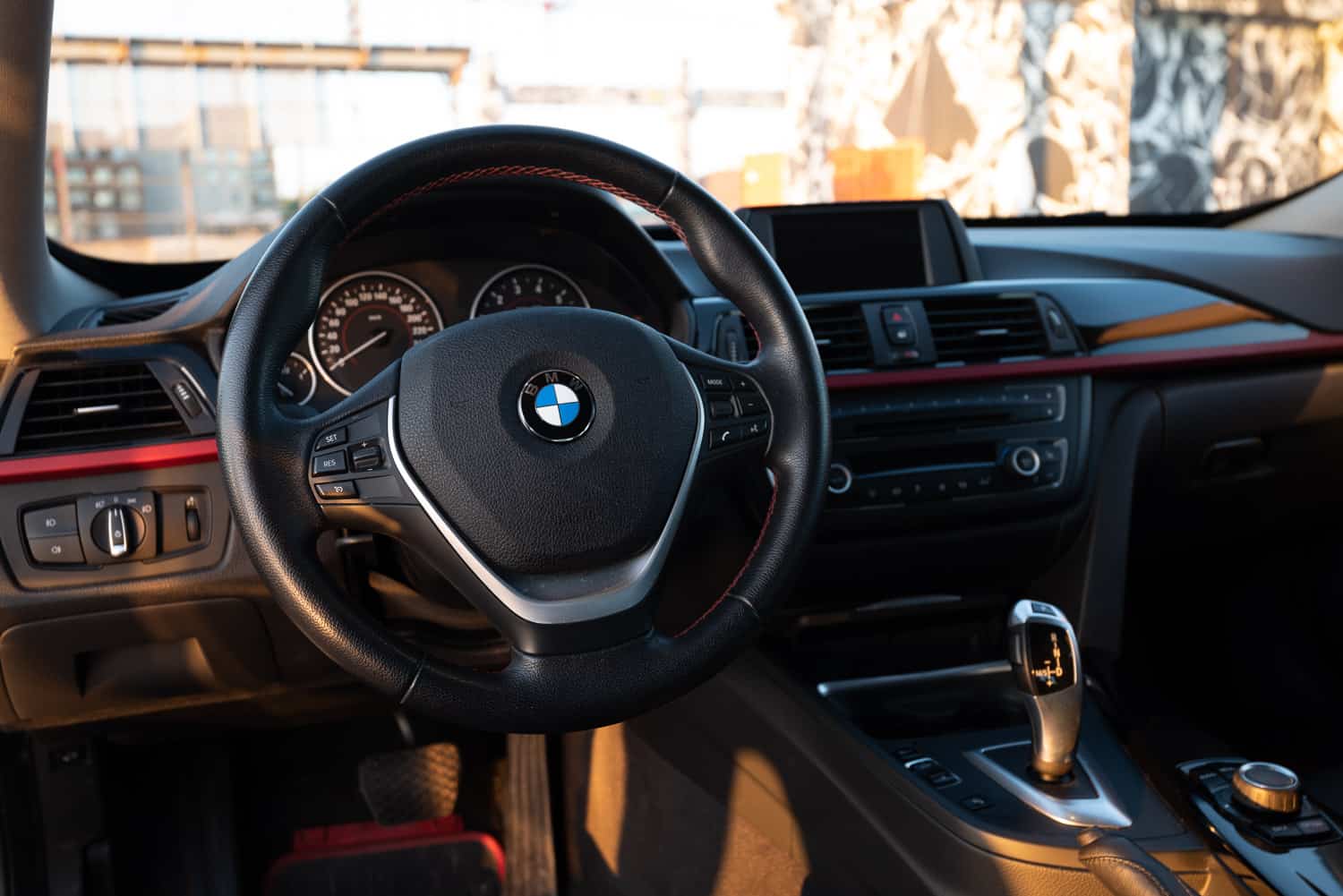
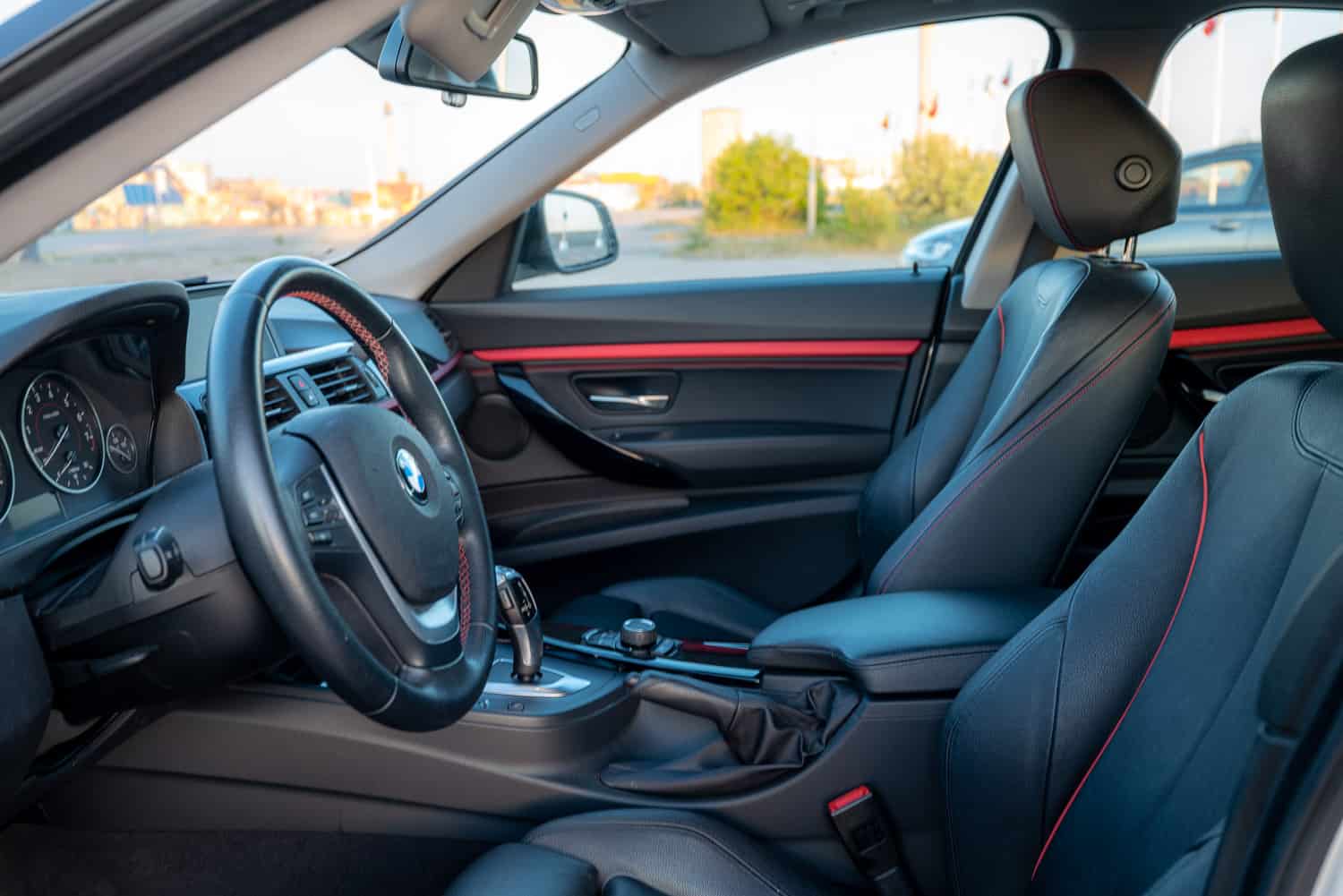
It’s a 2014 BMW 328i GT.
More than that, it’s actually the very BMW 328i GT that I featured in my original post, last year.
To its credit, it does fulfil all of the criteria that I set out. Absolutely.
There was (and still is) a bit of that tribal resistance to accepting the idea of being a BMW owner. It doesn’t feel like a natural fit. I eased my way over that mental hurdle when talking about the purchase with a friend, who suggested that in some ways, this is the sort of car that many of us hoped Saab would have made in that era, if they survived.
It’s a two-litre, turbocharged 5-door hatchback. That’s very much a Saab-like recipe. It’s well equipped, with a leather interior, 7-speed auto, and most of the bells and whistles you could ask for. It’s also AWD, which we thought might be helpful navigating a Swedish winter for a first-time Nordic driver like Caro.
So what’s BMW 328i GT like?
Well, it’s extremely competent.
It does everything I bought it to do. It eats up miles on a long drive. It can swallow a whale of a load. It’s economical for its size. The seats are comfortable. It has power-everything (including moonroof, but not including seat adjustment) and everything works. I haven’t converted it to Carplay yet but I can, and in the meantime it works fine through Bluetooth.
I have no reasons whatsoever to complain.
The problem is, I have no reasons whatsoever to be excited, either.
As a car guy, that’s somewhat of a problem.
I’ve not had a BMW before and while I’ve never envied those who have, I guess I’ve been curious as to why BMWs were so revered. A BMW 328i GT is probably (definitely, actually) NOT the car to explain that mystery but I hoped to at least get an insight.
So what do I think of it?
Well, I have to say, I’ve become a little bit fond of it over the last few months. It really is quite comfortable and capable. It runs on very little fuel at highway speeds for a car of its size – I can do the Helsingborg-Gothenburg run on just a quarter of a tank if I’m disciplined and cruise at 110km/h. And it really does have some size, with an extra 200mm space in the back compared to a regular 3-series. The controls take a little getting used to (for fans of weird things like me) but the ergonomics are actually quite good and controls are all logical and well laid out.
But….
Instead of an insight into the mystique of BMW, I think I’ve got confirmation of a thought that first emerged when I had my Porsche 968 Clubsport: German cars are engineered to a very high standard. They’re precise. They do what they say they’ll do. Consistently. But they lack some…… panache. At least according to me.
Let’s not include the 911 in that, eh? But otherwise….
I think I’m just doomed to like ‘stupid’ cars. Flawed cars. Slightly ugly cars. Oddballs. Mutts. Cars you have to wrestle with a little.
This is my 30th car. If I were to list my favourite 5 from that group (in no particular order), it would be:
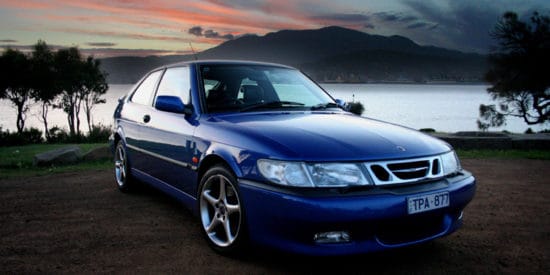
Saab 9-3 Viggen
Saab 99 Turbo
Alfa Romeo 33 16V
Saab 900 Turbo (LPT from 1990 or so)
Alfa Romeo Giulietta QV
Honorable mentions go to the Alfa GTV6, the Subaru Brumby, the Jaguar XJR, and an AlfaSud Sprint that I didn’t own, but looked after for a friend for 6 months.
That’s an acceptable list for this website and its typical reader but it’s a reasonably ragtag bunch of automotive conveyances for your regular car geek. I could add another 10 cars to that list before I’d even consider adding the BMW, competent and comfortable as it is.
Will I keep it?
While it’s done the job that I asked it to so far, I always figured that I’ll only keep it as long as that job needs doing. That’s basically now. Our apartment is furnished and the need to carry big things has been overtaken by the need for a bit more character, a return of some cash to our bank account, and easier parking in small spots.
I really think it might be time to explore something a little more….. French.
I’ve had a number of Alfas over the years. Two Sprints (plus caring for another for six months), two 16-valve 33s, a GTV6 from the mid-80s and….. the most recent one, which I’ve never written about: My Alfa Romeo Giulietta QV.
Well, my former Giulietta QV. I’ve recently sold it because we’re moving to Sweden in the coming weeks.
I thought it was well past time I committed some thoughts about this car to print. At just over three years owned, it’s one of the longest-held cars I’ve ever had. It’s one of the best, too.
——
Styling
The Giulietta was one of the first of the new-breed Alfas after Sergio Marchionne committed to revitalising the brand in the early 2000s. The 8C Competizione set the ball rolling with a new styling language nearly 20 years ago. It was released as a concept in 2003 and hit the market in 2007. It’s curvaceous styling and prominent headlamps were drafted into the MiTo in 2008, the Giulietta in 2010, and the 4C in 2013.
Alfa has more recently released the Giulia, Stelvio and Tonale, all of which keep the curves of the post-8C era while incorporating the sleeker headlamps more reminiscent of the 159/Brera line that preceded it.
The Giulietta is a handsome hatchback. It uses the old integrated rear door handle trick to keep a more coupe-like appearance. It has a big Cuore Sportivo front grill that looks magnificent on an unplated car, but places the front number plate in an offset position that looks a little bit silly. The QV model gets 18-inch multi-spoke wheels. Later models got 5-hole teledials, another nod to Alfas past.
The front lamps include LED running lights and the rear lamps include a circular pattern that looks great when braking. There’s also extensive use of glass in the body, too, with a glass roof that sweeps back from the windscreen and offers two skyward viewing windows from inside the vehicle.
As all Alfas should be, the Giulietta is distinctive. It’s a genuinely handsome hot hatch in QV guise and properly smart in the less performance-oriented models, too.
——
Mechanicals
My Giulietta is a 2010 QV model with the high-output 1750 turbocharged 4-cylinder mated to a six-speed manual gearbox. The engine produces around 230hp with 340Nm of torque.
This powertrain is an absolute delight. The engine is smooth and responsive. It’s thirsty if you’re playing in Dynamic mode (see below) but remarkably economical when in 6th gear – a claimed 5.2 litres per 100 kms (45mpg US) in highway mode, which corresponds with my experience driving the Giuletta on several 2500-kolimeter Brisbane-Sydney-Melbourne-Adelaide trips.
Performance can be controlled by Alfa’s DNA selector switch, which initiates different engine and suspension mapping aimed at Dynamic, Normal, or All-weather driving. The difference between normal and dynamic is remarkable. The car is no slouch in Normal mode, by any means, but the throttle response in Dynamic is much more immediate and makes for a truly exciting drive.
Being the QV model, my Giulietta also got bigger brakes with red calipers – red makes it stop faster, of course. The suspension is also lowered by 15mm at the front and 10mm at the rear compared to other models in the range.
——
Interior and Equipment
Modern Alfas have typically been impressively styled on the inside and the Giulietta is no exception.
The QV model is equipped with leather seats with contrast stitching, leather steering wheel, the aforementioned glass roof, privacy glass, climate controlled AC, cruise control, rain-sensing wipers, AR logo stitching on the headrests, and brushed aluminium pedals and gear lever.
The previous owner of my car did an audio upgrade that installed a double-DIN Pioneer stereo with Apple Carplay, which was housed in a new dashboard panel in piano black. The installation looked fantastic – as if from the factory – though it would have been better if he’d done the full wiring job to allow functionality for the steering wheel buttons.
The seats are fantastic. As mentioned, I did a few journeys between various capital cities here in Australia and they had me sitting comfortably all day.
——
So what went wrong
It’s an Alfa, right, so stuff had to go wrong.
Mechanically, the car was absolutely fine. As mentioned, the engine is a gem and it ran beautifully for the three years I owned the car. The gearbox, too.
The only mechanical issue I had was a broken bottom radiator hose connector, which is not beyond the realms of possibility for what was, at that point, a 10 year old car.
Inside, however, that stylish and well equipped interior did let the car down a few times. Cheap plastics and poor glues meant attention was needed for:
– Broken driver’s side interior door handle (replaced)
– Broken hood release lever (replaced)
– The sunroof is very, very sketchy. It opened just fine. Closing required a bit more patience (and luck). I did it once or twice then left it, and just enjoyed the glass roof in the closed position.
– Broken passenger side sun-visor clip (tolerated)
– Saggy door trims (tolerated)
You can see the sagging door trims in this interior photo.
Conclusion
Other than those minor interior issues, everything worked and the car was an absolute pleasure to drive for three years.
The folding rear seats meant that it could accommodate a load quite well. The six-speed gearbox was smooth in fast-changing situations and super economical on the highways. The engine was lively when called upon and got out of the way in normal traffic.
The handling wasn’t spectacular. You’re not going to go canyon carving at max speed in this without doing a better suspension setup. But it was fine for the average enthusiast – a good balance of comfort and speed – and the braking was much more than adequate.
I’d got used to forgiving the quirks of the various other Alfas I’d owned. I loved all of them because they made you fight with their worst bits in order to really, really enjoy their best bits.
There was very little to forgive with the Giulietta. It was beautiful to look at, wonderful to sit in, it was well equipped and powered by a fantastic powerplant.
This little Alfa carried me all around south-east Australia – more than once. It carried my now-wife and I on our second (and third) date, which were beautiful moments in our budding relationship. It took me everywhere I needed to go and it did so in comfort and style.
The Giulietta was one of the better cars I’ve owned and I can thoroughly recommend it. Alfa’s typically depreciate quite a bit so if you spot one selling at a good price, then do all your checks (of course), but be confident in knowing that you’re getting a cracking little car for the money.
As you now know, we’re moving to Sweden. And as I sold my Alfa (quite literally) just five minutes before starting this post, my mind is now on what keys will be in my pocket when we’re living there.
This is a genuine quandry, and one I wouldn’t mind your collective advice on. My default is to go with the most fun at the cheapest price. But I might be growing up. And I might have some miles to do and need some reasonable accommodation and decent mileage. My penchant for classics might not cut the mustard here.
The criteria:
There are going to be a lot of furniture and appliance purchases in my near future, so the ability to cram a lot in the back makes some sense.
Fuel economy – have you seen Swedish fuel prices?
Automatic – Yes, I’m finally succumbing to age and I’m a bit tired of rowing my own gears in traffic. Plus, it’ll be easier for Caro (who’s already going to be challenged by the steering wheel being on the wrong side of the car, and the car being on the wrong side of the road).
Heated seats.
Carplay – or the ability to integrate Carplay. This has become a non-negotiable for us. It pretty much rules out all button-dash Saab 9-3s, but everything else can be converted, it seems.
My ideal two-car garage – in the long term – would be to have something modern, small and economical that we’d both drive in the colder months with something fun to pull out of storage in the warmer months. An Abarth 595 and Saab 99, 96 or 900, for example. Maybe something electric instead of the Abarth will be feasible by the time we’re in that position. Maybe there’ll be an electric car with character by then.
But that’s the long term.
When we hit the ground in Sweden, we’re going to need one car to do it all. Or most of it, at least. We also need to buy an apartment, so cost is going to be an issue as we’d like to minimise our mortgage.
I’m thinking that I can address this issue in either of two ways.
A) Buy a cheap-ish load-lugger for the short term and then get a longer term car in 6-12 months, or B) Look for something spacious with a medium term view, a car that’ll also consume a reasonably small amount of fuel (relative to its size). And then we get the ideal two-car setup in a few years from now.
The top end of our budget is around 150,000 – 170,000 SEK.
Here are the options I’ve come up with so far:
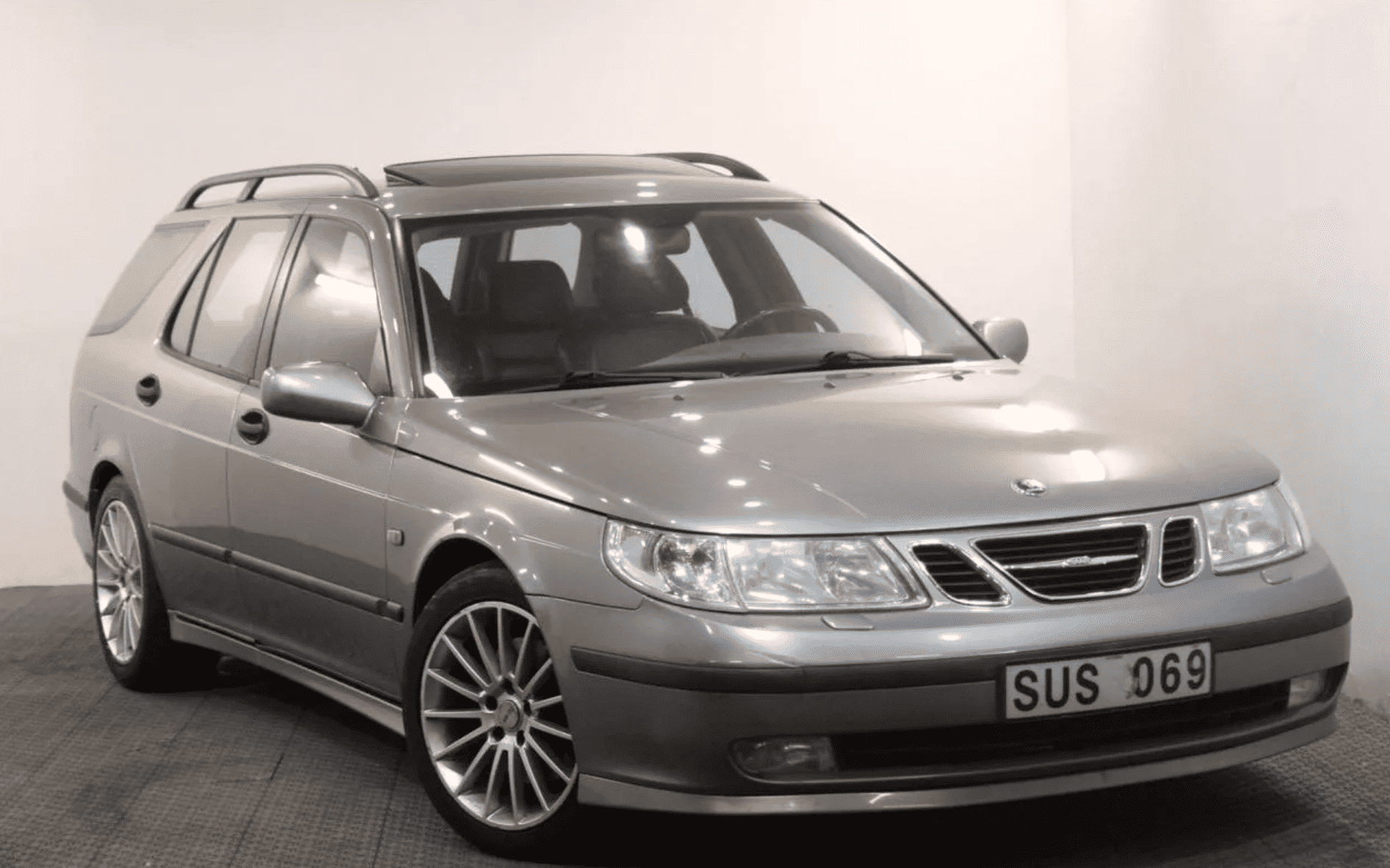
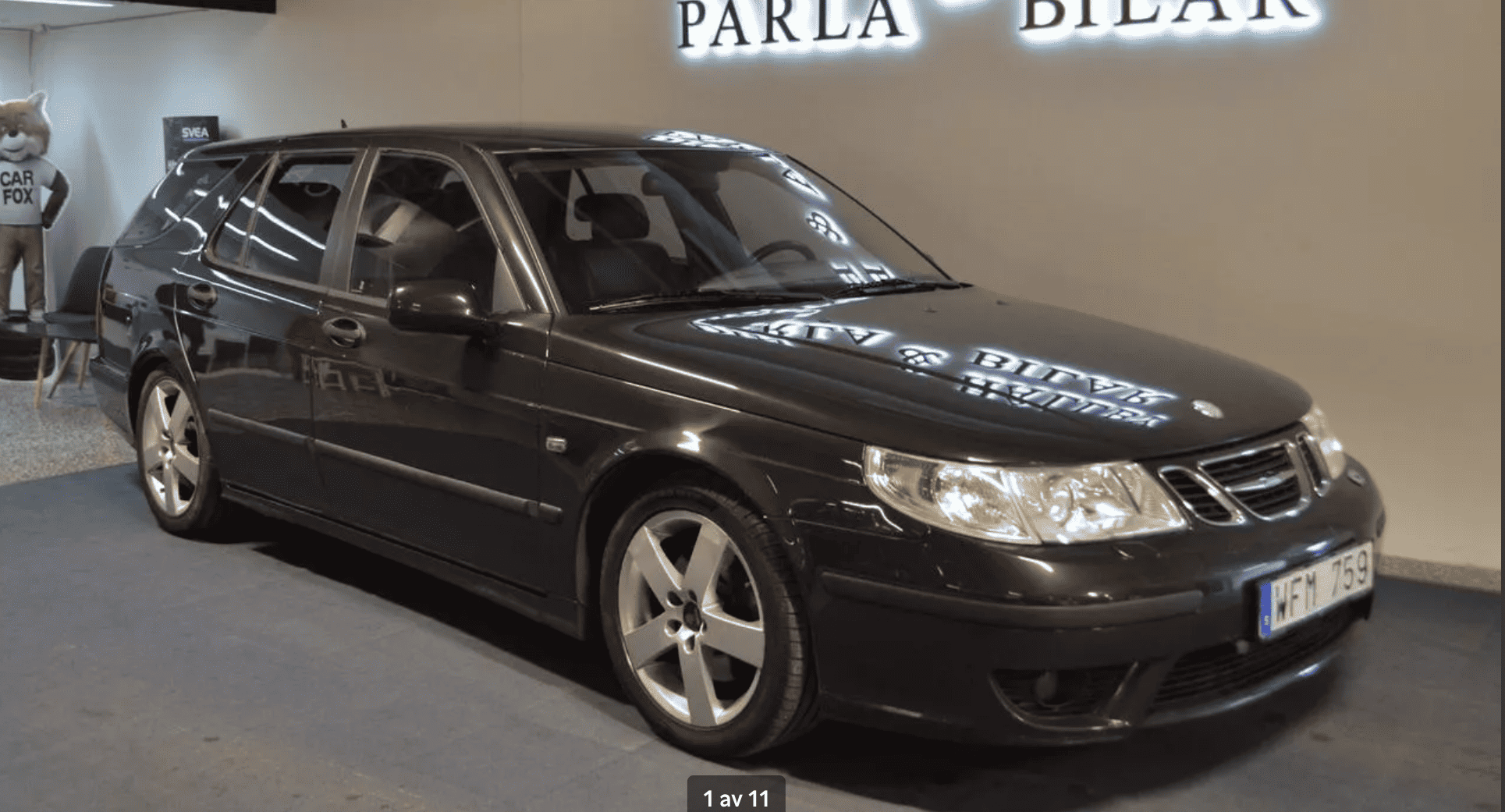
Saab 9-5 Aero Wagon
This would be instantly familiar. I had a 9-5 Wagon in (manual) Vector form for my whole 4 years in Sweden between 2015 and 2019. It was super comfortable, could swallow a whale, and it proved to be very reliable.
How comfortable was it? I also had a 1995 Jaguar XJR for six months and the 9-5 left it for dead in the comfort department. The seats, the ride, everything. It wasn’t the theatrical event that the Jaguar was, but on a practical level, the 9-5 was a much more comfortable long distance car.
It’s in Skane and it’s just 22,500 SEK. It’s a high miler, of course. Most of these are, now. But I’ve got a guy just outside Angelholm who’s a Saab guy, and who used to wrench on Koenigseggs for a living. He knows his stuff. Anything that needs doing, Mika can get it done.
If I want something with less mileage, this one’s only done 150,000 kms but it’s more than twice the price, at 49,900 SEK.
Getting a 9-5 would one of those short-term solution situations, most likely. It’s affordable, it’ll swallow a whale, and ….. well, it’s a Saab. And I love Saabs. That second one could do me well for a couple of years but I don’t know if I want to spend that much on a 9-5 Wagon.
The downside is that it’s old engine technology and it’s not going to be great on fuel (and have you seen Swedish fuel prices?? Did I mention those earlier??).
——
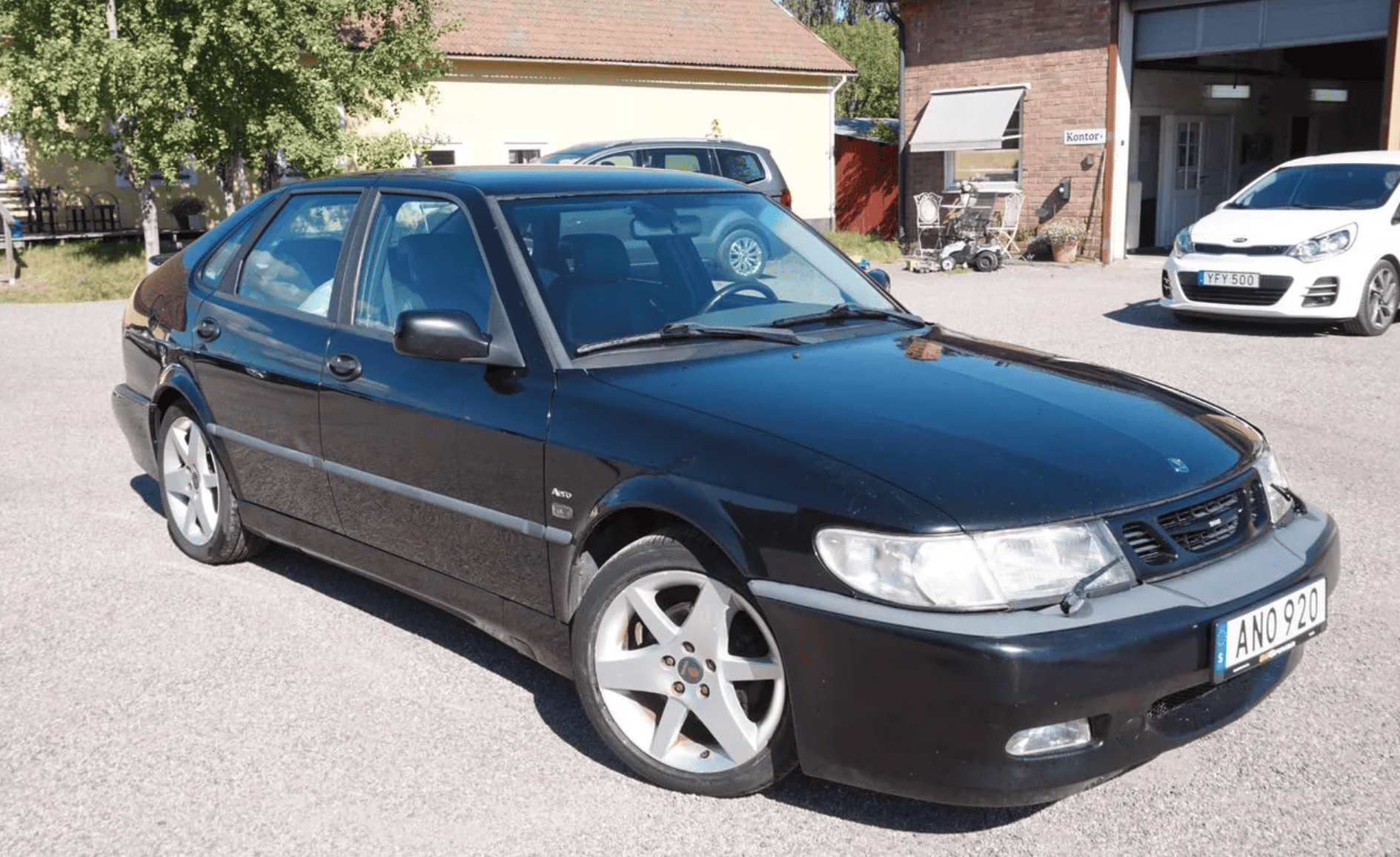
Saab 9-3 Aero
My two favourite Saabs that I’ve owned are my 99 Turbo and my Viggen. That generation of 9-3 is my generation of Saab. They still look great today, and despite the chassis flaws, they’re still good to drive.
This 9-3 Aero is a 5-door (there don’t seem to be many 3-doors) but it looks tidy enough in the ad and has reasonable mileage. It’s advertised on Blocket for 34,900 SEK.
The 9-3 and 9-5 can both be retro-fitted with double-DIN stereos with Carplay. It doesn’t look so great, but it’s possible.
The 9-3 won’t take as much gear as a 9-5 wagon but it’s still got a decent load capacity.
Again, though, it’s old-school engine tech and it’s not going to be as good on fuel as the more modern offering listed below.
——
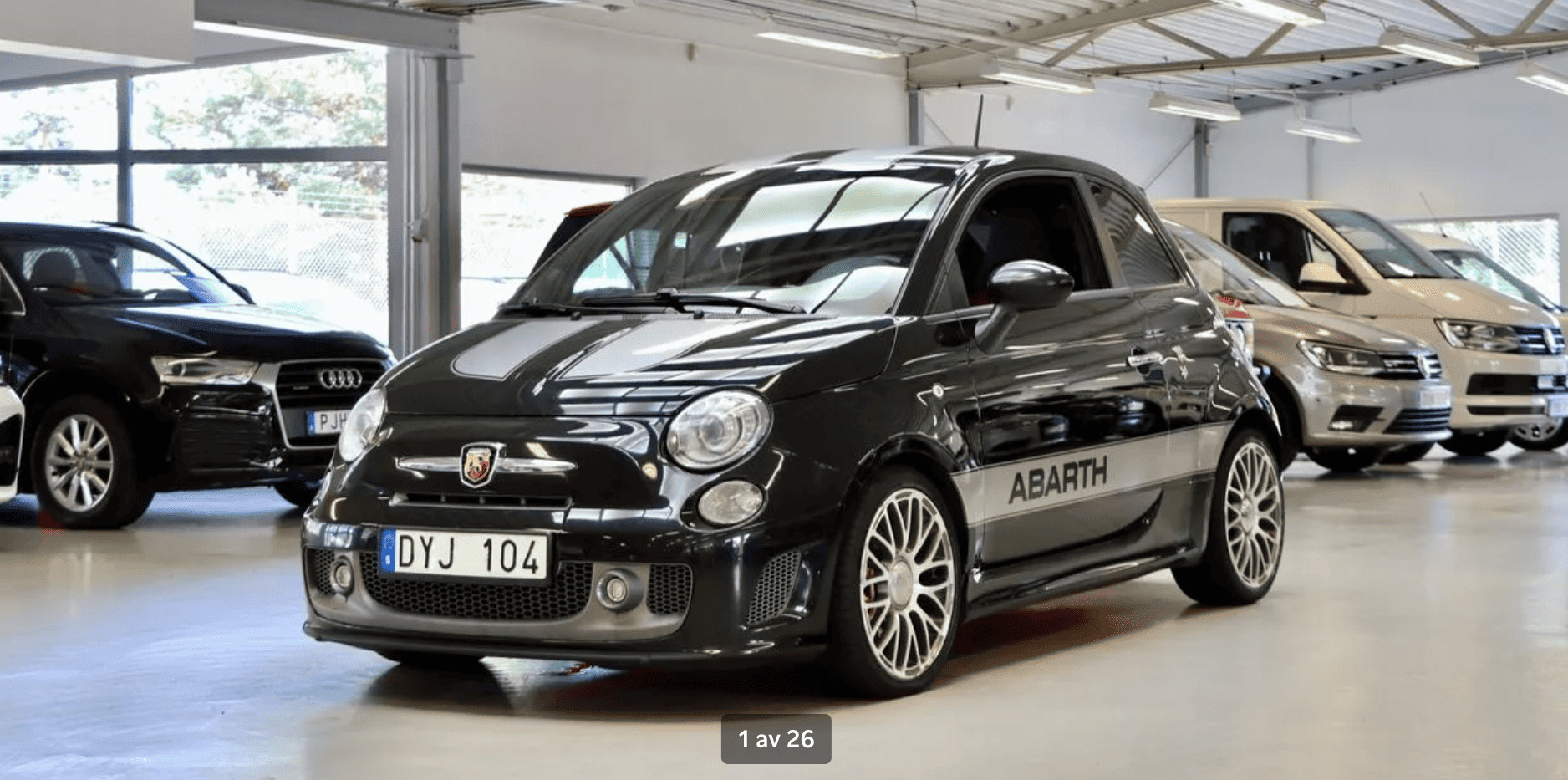
Abarth 595
This is one of the long terms options. It’d be great on fuel while still being lots of fun to drive.
It throws the load-lugging criterion out the window, though. Everything would have to be delivered if I went with this option.
This one’s for sale on Blocket for 129,900 SEK. It’s one of the cheaper ones on there. I’m not sure that it can be retrofitted with Carplay but it has a USB input, I believe, so maybe we’d just make do with that. I wouldn’t like it, but we could do it. If we had to.
For those Italia-sceptics out there, I’ve just sold an Alfa Giulietta QV that I had for three years with near-zero problems. The only I issue I had in that time was with a bottom radiator hose connection. Everything else was fantastic. I know Italian cars have a reputation, but that’s an historical issue from my point of view. And somewhat underserved. This was my 6th Alfa and they’ve all been great.
I’d get one of these with no concerns at all. And it’d be more fun than a sack full of puppies, I reckon.
——
Volkswagen Golf GTI
The classic one-car-to-do-it-all. The GTI.
It’s German. It’s one of three German cars on this list, actually. And that troubles me.
The Germans all present as very compelling options on paper. Before you drive them. I’ve only had two German cars in my lifetime. A Porsche 968CS and a Porsche 928S. The 928 needed the most work of any car I’ve owned and while the 968 was an incredible performance machine, it was so incredibly competent, so well balanced, so in-control of everything it did that it was…. boring.
My concern is that the Germans do cars too well sometimes. But, maybe I need to dip my toe in the GTI waters to see what all the fuss has been about.
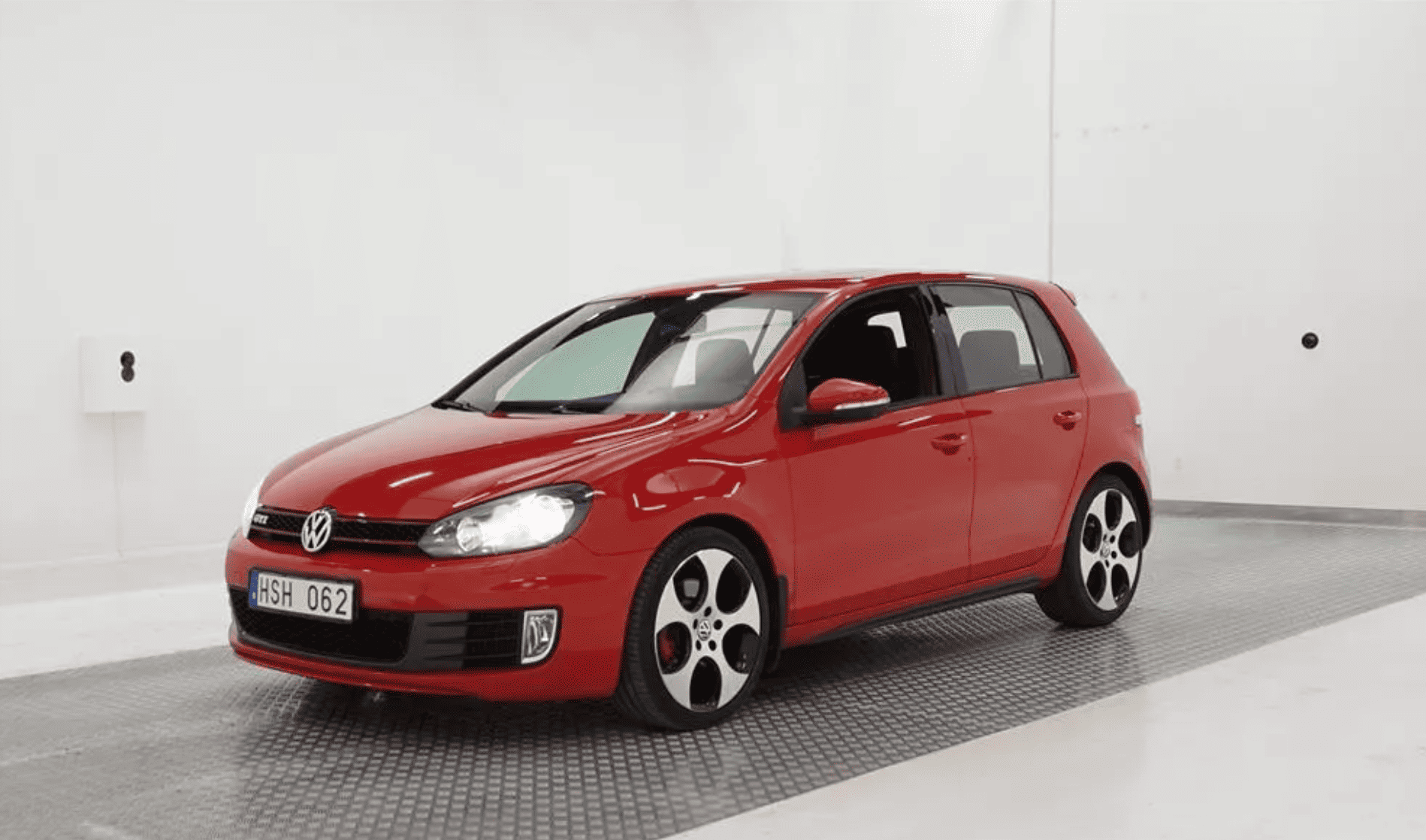
This one is red. That’s a genuine selling point for me. In a world of monochromatic road fleets, this could actually put a smile on my face. It’s for sale on Blocket for 134,700 SEK and has 160,000 kms on it.
It’s got 210hp. It’s got the tartan seats that add some character to the interior. It’s got funky five-hole wheels. And it’s a hatchback, so it’s versatile enough to fit mid-size purchases in.
It’s not great on fuel economy around town (10 litres per 100kms) but improves on the highway, going at just 5.9l per 100 kms.
It’s an option. It’s kind of grown up and a little bit childish. Just like me.
——
Audi A5 Sportback
This is me growing up. Maturing.
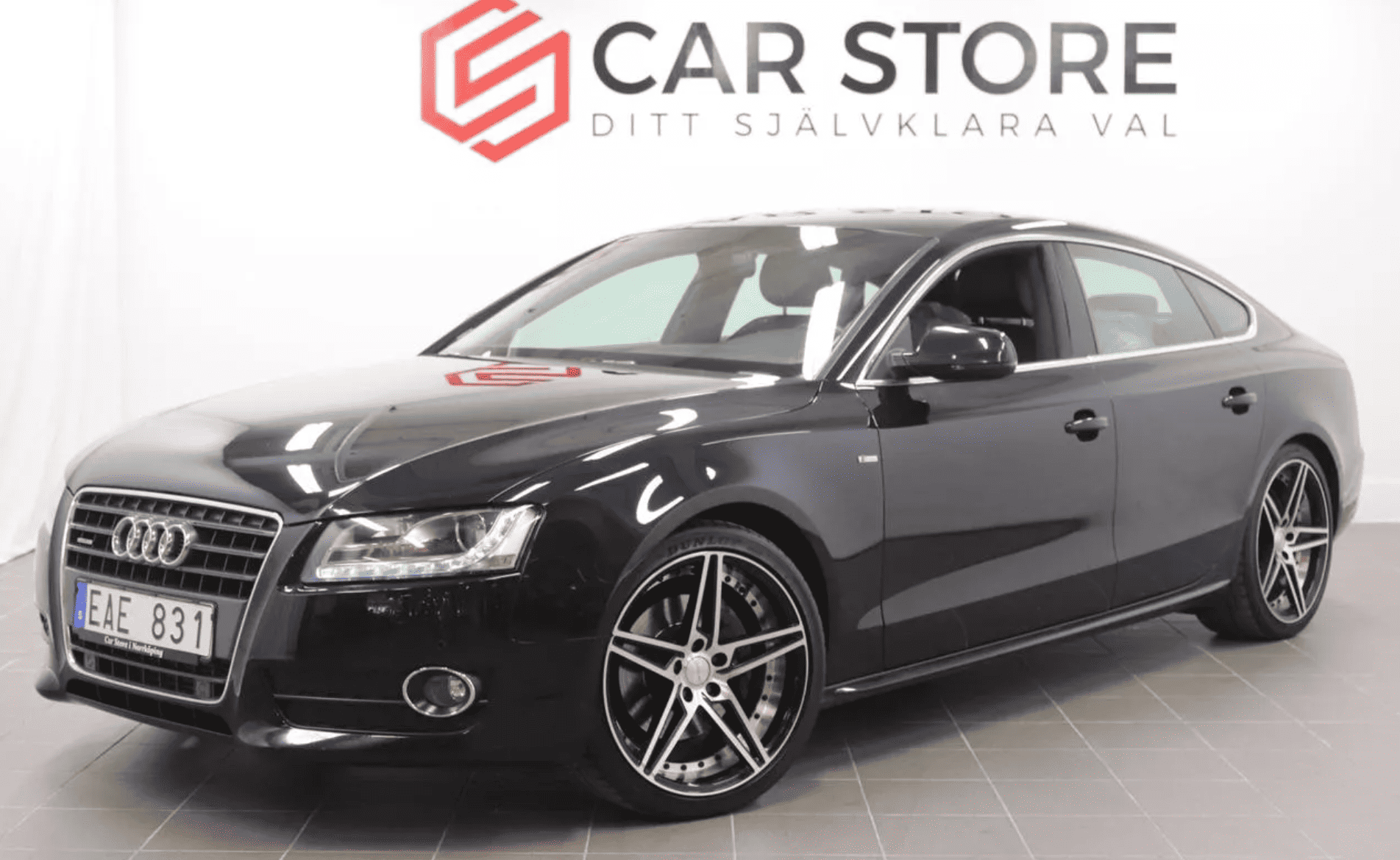
I’ve always been partial to a hatchback and I’ve always found the A5 – both the coupe and the sportback – to be rather handsome.
It’s sophisticated and elegant on the inside, and there are Carplay options that allow you to keep the original screen and OS while running Carplay in the background, switching between the two according to your needs.
This one’s in dark blue – a colour I love – and has interesting wheels (the wheels maketh the car, as you know). It has 110,000 kms on the clock and is for sale for 149,900 SEK.
The sportback body style has a large opening at the back, so it’ll accommodate all our needs for some time. It’ll be comfortable, adequately powered and well equipped. Fuel economy isn’t bad, either, at 7.5 litres around town and 6.4 on the highway (VW Group fiddly numbers notwithstanding, of course).
One downside is that this engine has a reputation for drinking oil. There were words to the effect of “it is not unusual for this engine to consume a litre of oil per 1000kms” in the owners manual. Yikes!
——
BMW 328i Gran Tourismo
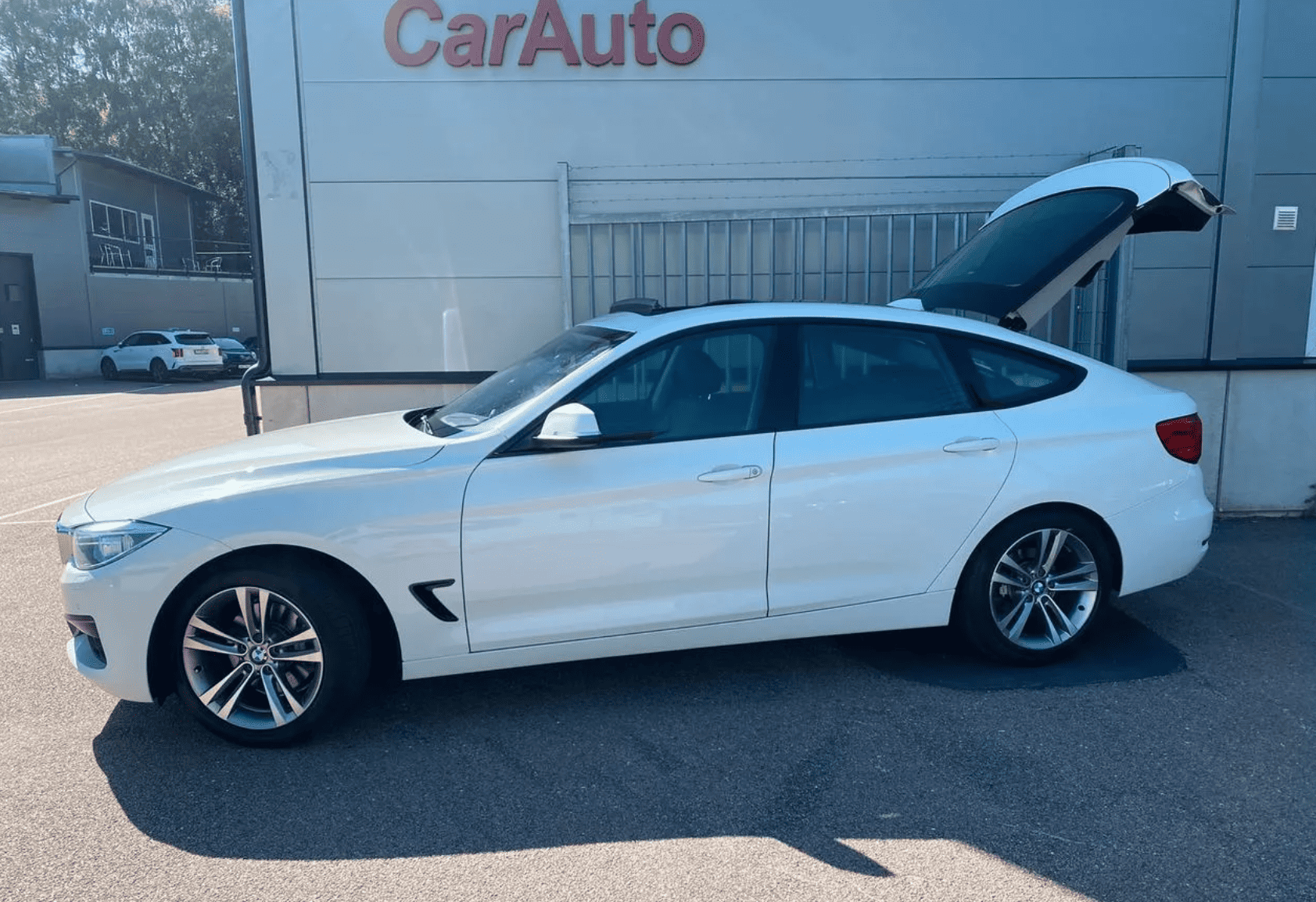
It’s one of those weird BMW coupe-but-not-a-coupe things. It’s not quite “the answer to the question that nobody was asking” (i.e. the BMW X6), but it’s close.
On the upside, I’ve seen a 5-series version of this swallow an entire Ikea Landskrona sofa – the 4 seater. It can take plenty of gear in the back. It’s also got plenty of passenger space, is well equipped and at 6.8 litres per 100 kms in mixed driving, it’s pretty good on fuel for its size and power (245hp).
This one’s done 160,000 kms and is for sale at the very top end of our budget, at 169,900 SEK.
It’s a BMW, which is something I’ve never owned. I’d feel a little bit dirty, to be honest, but it does look rather comfortable and capable. Again, there are Carplay options that let you add it to the existing system, as with the Audi.
——
Mercedes 380 SL
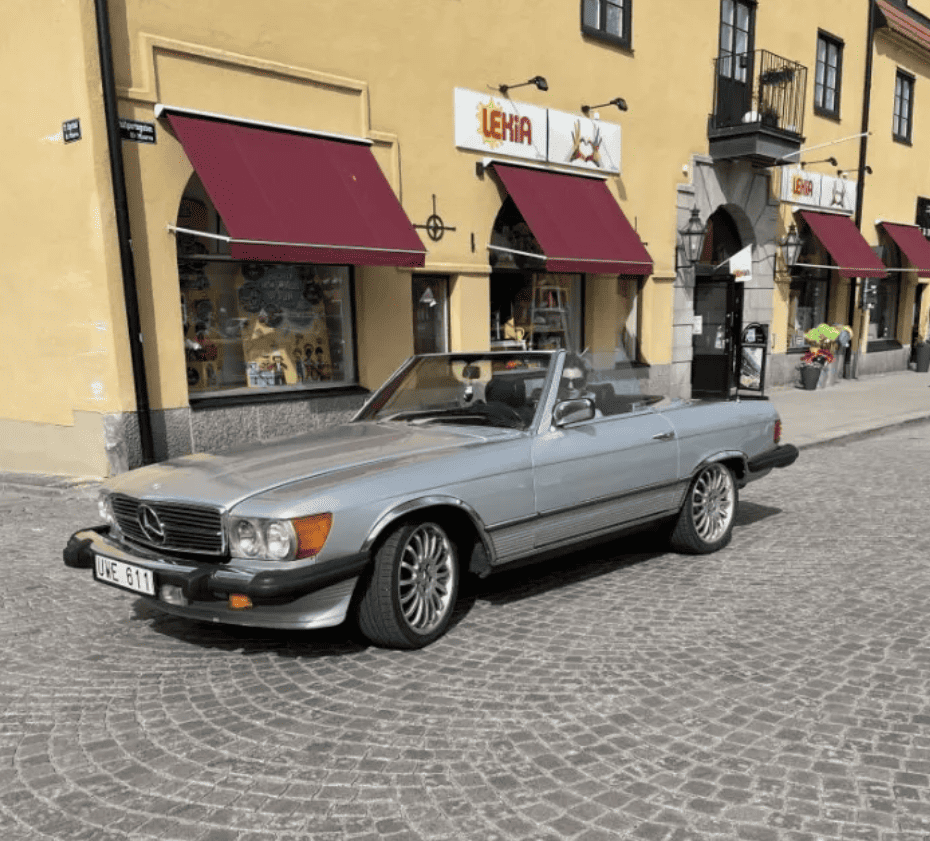
Why? Because I’m an idiot.
This car has nothing that we need. It barely has a stereo and you’d have to tow your own fuel pump behind it.
But where else can you get a Mercedes 380 SL for that money? The cheapest one for sale in Australia right now is nearly 500,000 SEK. This one is for sale for 159,000 SEK!!!!
Just beautiful. Just beautiful.
——
So what do you think?
What have I missed?
Aside from the Saabs at the beginning, I’ve not owned any of these cars before. I’m flying blind, here.
Is there anything else I need to know? Is there any other make/model I should be seriously looking at?
Question – Have the prices for classic cars gone as nuts in your country as they have here in Australia?
It’s reminiscent of this old classic TV ad from Melbourne back in the early 1990’s (with thanks to Turbin!)
I’ll let you decide for yourself whether or not Madonna had lost the plot back then. But there’s a reasonable argument that sellers and buyers of classic cars – mostly buyers, IF they’re actually buying – have lost the plot right now.
I bought and sold quite a few cars between 2009 and 2015. I bought Saabs, Alfas, my beloved Subaru Brumby, a few more Saabs, and a couple of Porsches.
2009 to 2015, of course, was the GFC and post-GFC world. Times were actually tough for a lot of people, though not so tough here in Australia compared to the rest of the world. Interesting cars were relatively affordable through this period (though air-cooled Porsches were just starting their meteoric rise).
When Covid hit early in 2020, I assumed it’d be another post-GFC scenario. I assumed that people would be struggling for income and looking to sell assets in order to maintain liquidity.
How wrong was I?
The classic car market has gone completely maaaaad! And much of it makes no objective sense.
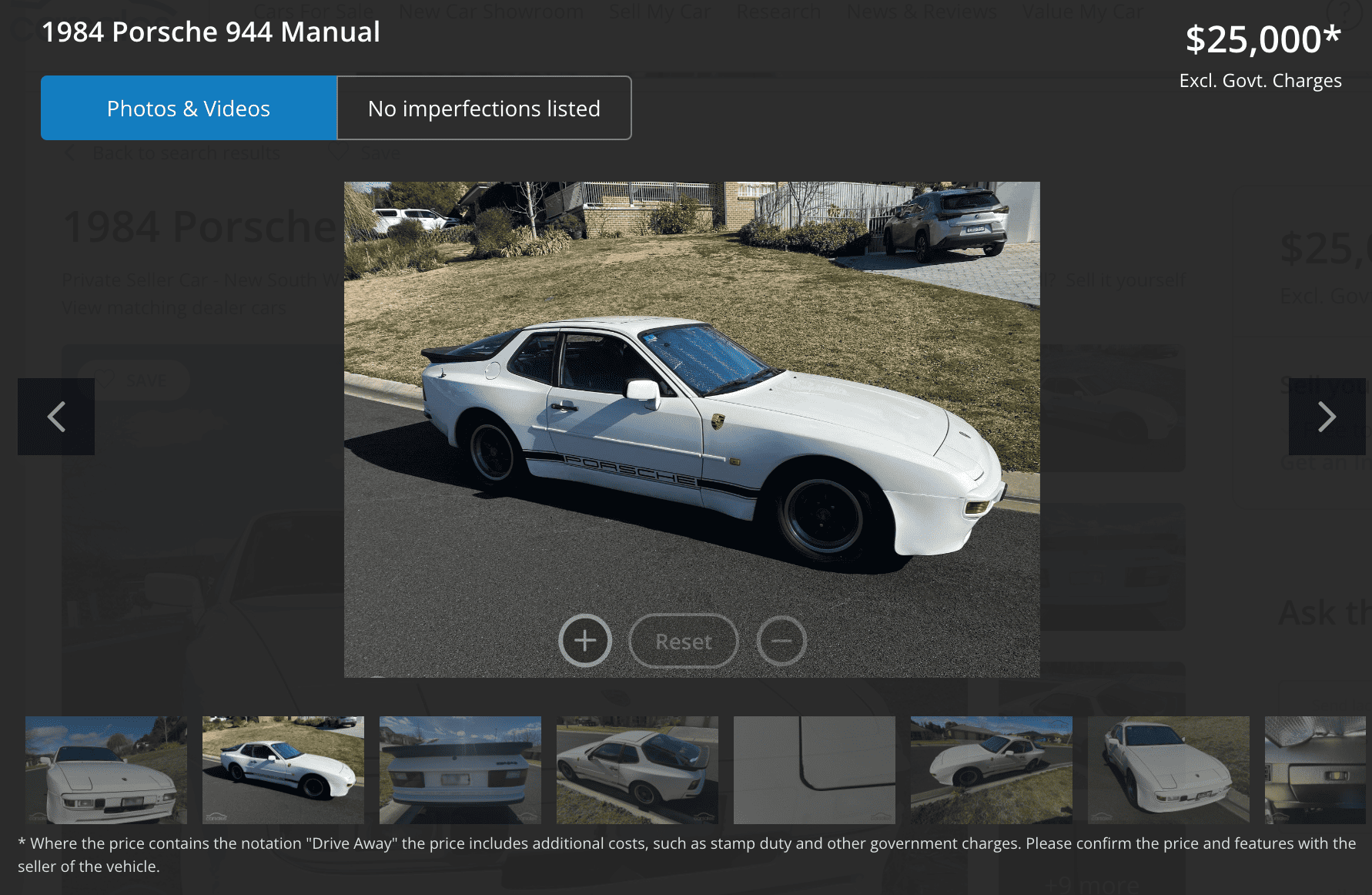
Case Study 1 – the Porsche 944.
I have a bit of experience with 944s. I looked at several of them in 2013/14, when I ended up buying a 968 ClubSport. I drove nearly all versions – a pre-85 model, a 944 turbo, and a few 944 S2’s. I came very close to buying an S2. The only ones I didn’t test drive were the 16V 944 S from 1987 and any model with an automatic transmission.
The most expensive (at the time) of the three models that I drove was the S2 at A$19,000, closely followed by the turbo at A$17,000. A pre-85 944 was under 12,000. These prices were all quite typical at the time and gave you a decent performance car for good, but not unreasonable money.
Bear in mind that air-cooled 911’s started in the A$15-$20k region back in 2014, usually for a 2.7 because that model had a troublesome reputation. A decent 3.2 911 Carrera from the 1980’s started in the high 20’s. The 944, therefore, was priced as an entry-level Porsche that an enthusiast could get into for $10-$20k rather than putting that money towards a new hatchback.
You might think $25K for a Porsche is not too bad. After all, the 944 has a reputation for being a well-balanced package. 50-50 weight distribution. It’s got a robust drivetrain. And it still looks as good in 2022 as it did in 1984.
All of this is true.
BUT (and you knew there’d be a but)….. the 944 from 1984 drives like a dog. And while the outside still looks pretty smart in a retro-cool-pop-up-headlights kinda way, the interior is pure late-70’s-to-early-80’s with all the hard plastics that implies. The 1984 model has the 8-valve engine that drives AND sounds like a tractor. It’s about as responsive as a bookkeeper on a fistful of quaaludes.
At least that one’s a 5-speed manual. The cheapest automatic Porsche 944 on Carsales right now is $35K!! Thirty-five gorillas for that 8-valve engine mated to a 3-speed automatic?????
There’s a reason why these cars were $10K or less, not-so-long ago. And it’s not that they were underappreciated.
For a Porsche 944 to be even close to the base asking prices the model’s fetching these days, it would need to be a 1985.5 model or later – that’s when they got an interior update that brought them closer to their 911 big brother – and it’d have to have the 16-valve engine that debuted with the 944S. An S, S2, or any variants of the 968 are worth considering IF you can get one at a reasonable price.
And 944 turbos? Forget it. I don’t care what sort of smoke Jeremy Clarkson blew up that car’s arse back in the Top Gear days…. it’s just a faster tractor. Eventually. After the lag.
Don’t take my word for it. Drive one for yourself.
——
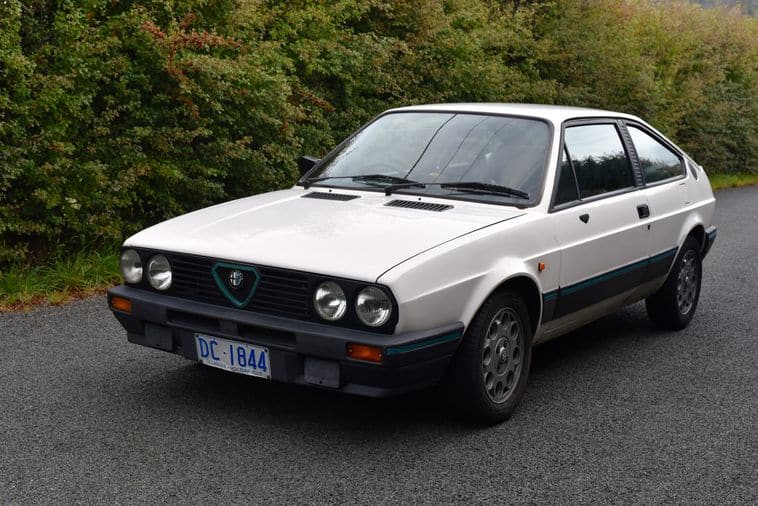
Case Study 2 – Alfa Romeo Sprint.
I’ve owned a couple of Sprints over the years, and had useful custody of another for around 6 months while garaging it for a mate.
You might remember me writing about this one for the US-based Hemmings magazine back in 2015 – Driving a Slow Car Fast
Well, there’s an Alfa Sprint on Carsales right now, too. It’s not just any Sprint, either. I’m about 99% sure that it’s my old Sprint. There are a couple of explainable differences between the old pictures and the new. But I’m pretty sure it’s the same car and the description seems to back that up with it’s references to Tasmania and the car going to an Alfa Club member in Melbourne (exactly my old car’s eventual path).
This is a car that I paid $1,100 for on New Year’s Eve, 2014. I sold it for not much more, a few months later, after I got the job at Koenigsegg and moved to Sweden. It’s definitely been improved since I had it, but they’re now asking $19,990 for it!!!
Now, it must be said that an Alfa Sprint is no dog. A good one is great fun to drive. It’s light, it’s revvy, and at any given moment you could hit something and it’ll fold up like a cheap card table and kill you. That adds a certain thrill-element to every drive.
BUT….. this is a Series 2 Sprint, based on the Alfa 33 chassis. The Series 1 Sprint was based on the AlfaSud chassis and had inboard brakes that lightened the steering with no adverse effects on the handling. It was a remarkably balanced car that loved being driven and it was more fun than a sack full of puppies.
And that’s why Series 2 Sprints were regularly found at $5K and under, not-so-long ago. They’re fun, but they don’t belong in the K category.
——
I’m sure I could find a few more examples without too much trouble. The 968 Clubsport I paid $30K for (and sold for the same price in 2014) is now worth $130K. Those $15K 911 2.7’s are now worth $95K.
Am I reading this right? Or should I just stop being a grumpy old man and let supply and demand do their thing?
What say you? Have car prices gone as nuts where you are as they seem to have, here?