I wrote this morning that I was feeling reassured about the future of the Saab Museum and I’m pleased to see those feelings have been vindicated. I was at O’Learys a few hours ago when word came through that the Saab Museum has been saved.
A consortium consisting of the Trollhattan Municipality, supported by Saab AB and the Wallenburg Foundation have won the day, securing the museum’s future and providing some small relief for the thousands of Saab fans who were worried about the museum’s collection being broken up.
This is a fantastic outcome, aligning Saab’s history with the city and the entities that shaped it over so many years. I truly believe it’s the best possible outcome we could have wished for.
The next steps I’d love to see:
Peter Backstrom and Ola Bolander secured to run the museum’s daily operations, as before.
A subscription model to enable friends of the museum to support it on an ongoing basis.
Maybe even an adopt-a-car scheme for people to assist with ongoing maintenance and care.
A great website for the museum to take it outside the city of Trollhattan. It’s crazy that the best known saab museum website was put together by an English enthusiast (G’day John!) independent of the museum itself.
I hope the museum collection is never vulnerable, ever again.
Yesterday was a busy day and a very enjoyable one. I’ll write more detailed notes on the visits at a later date, but there’s a summary below.
I guess the dominant feeling from this visit, aside from the happiness at being back here and seeing colleagues and friends again, is one of sadness. I’m coming to a better understanding of the personal loss that I’ll have in my own life by not being able to pursue my career with Saab here in Sweden. This job would have been fantastic and that’s a significant loss in itself, but more than that, there’s the friendships and experiences that I won’t get to build and share with people here.
Life back in Australia will be great, I know, but I’m really going to miss everything that Sweden had to offer PJ and I in terms of opportunities, experiences and friends. I guess it’s also making me more determined to make sure we do things back in Australia so we can live the way we want to, rather than the way circumstances might seem to dictate we have to.
Anyway, to yesterday’s activities…..
Visit with e-AAM
I called in on e-AAM to visit with Peter Johansson, a bloke I first met a few years ago back in Australia and the company’s vehicle integration manager. Peter’s the guy who made sure the XWD system that first appeared in the Saab 9-3 back in 2008 worked so well – the perfect guy to lead the vehicle integration efforts for e-AAM’s new eXWD system.
Their work has been affected by what’s happened to Saab, of course, but they continue to make progress and eXWD should indeed see life as a production component with interest from several companies already being nurtured. It shouldn’t be that far away, either.
When Peter’s not developing tomorrow’s technologies at the office, he’s in his private workshop building the car he’ll probably race from this summer in Sweden. We visited the workshop, too, and it was an amazing experience.
Peter’s the third generation of his family to work at Saab. His grandfather was one of the original 16 or so engineers who were there at the start of Saab’s automotive operations. His father, Sigge (who passed away very recently), was a legendary engineer at Saab and did some amazing things in the home workshop as well. Stuff like this:
That’s part of a compressor system (supercharger) for a Saab V4. Imagine that poking out the hood of your Saab 96 or Sonett 🙂
There’s plenty more from that visit, but that’ll do for now.
Museum Visit
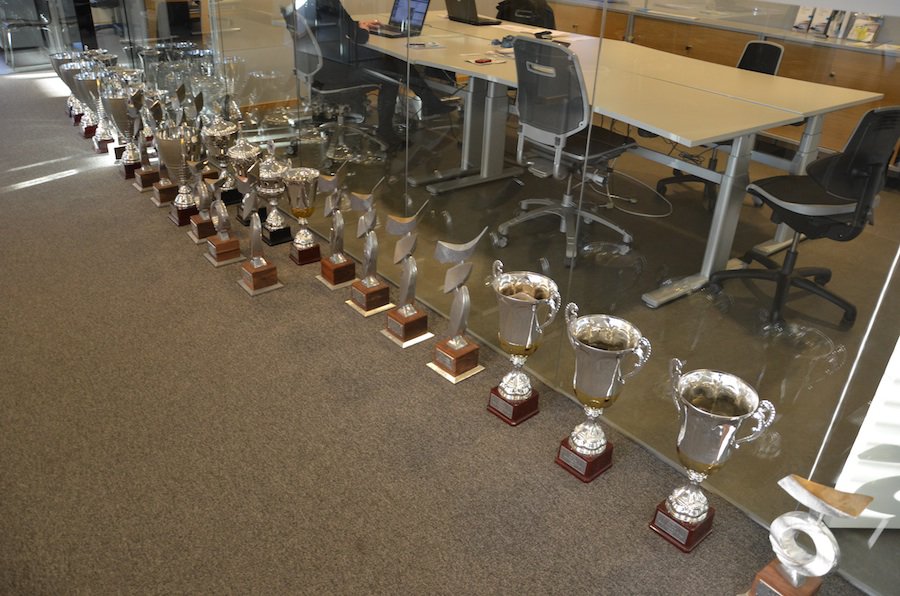
I also called into the Saab Museum to collect the award that Saab gave me a few years ago.
I’ve always preferred the idea of the award staying with the museum, but with the recent threat to the museum’s continued existence, I thought I’d take the opportunity to bring it home. I can always return it to the museum if things work out OK.
On that front, I feel a bit more confident about the museum’s future after chats with people here in Trollhattan. There were a lot of bids for individual vehicles (the reports of around 500 bids are accurate, from what I hear) but also some bids for the entire museum operation, which is encouraging.
I guess the question for the bankruptcy administrators is do they risk scraping together a little more money from individual sales – with some bidders probably possibly having thrown ‘hail mary’ bids and the possibility of non-payment – or do they make what I’d see as the sensible decision and take a whole-of-operation bid that would not only protect the heritage and value of the collection, but also provide them with funds in one easy-to-administer and easy-to-collect transaction.
TTELA interview
The local newspaper, TTELA, got in touch with me and asked for a pow-wow, so I talked with them yesterday. Anna-Karin from TTELA was a trooper – the photographer wanted an outside photo so we did the interview as we walked the streets of Trollhattan, with her trying to write as we walked. Her hands must have come very close to freezing and falling off the end of her arms.
I don’t know when that interview will be published, but probably in the next day or so.
Dinner
Meals are always a highlight of this visit as they’re a chance to catch up with colleagues and friends. Last night was Mamma Mia’s lasagne and it was great, as always. The occasion also saw me sell my little red 900 and it’s great to know that it’s gone to a good home here in Trollhattan. I had some great times with that little car. Whilst it wasn’t worth much in financial terms, it was worth everything in terms of the freedom it gave me as a foreigner here in Sweden, and the fun times I had driving it around the countryside.
Saab is like a patient who for a long time has bled to death. The brutal verdict is that the patient is dead, but the bleeding has not stopped. Such a large operation dies not die on its own. It takes time and costs to shut down this kind of business.
Their point being that the company is still leaking cash, even in bankruptcy, as it takes money to go through this process and of course, Saab has no income.
At least they had the good sense to do the press conference on a Saturday. I still expect more newspapers to run a similar headline in the coming 24 hours.
I’m as wary of spin as the next person, but there are ways of saying things, and then there are ways of saying things. The fact that The Local has snipped out this section for their headline won’t come as a surprise to anyone who has followed the news services around Saab for the last 10 months.
This is not a good headline for prospective buyers thinking of putting in bids for Saab this week.
The recent opening of bids for the sale of cars at the Saab Museum has touched a few nerves with a lot of people, me included.
I’ve been fortunate enough to spend quite a bit of time at the Saab Museum in the last four years or so and there’s always been something fascinating there to look at, discover for the first time, or re-discover.
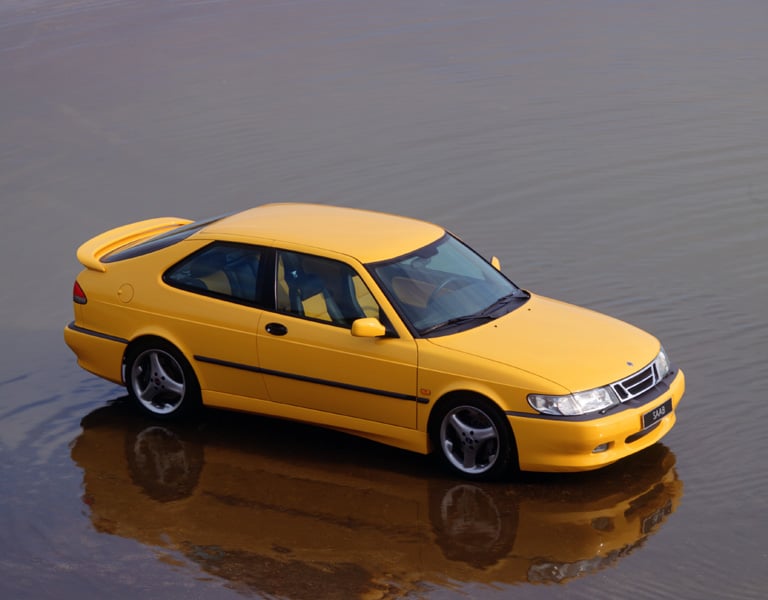
My first visit to the Saab Museum was back in 2007, when I came to the Saab Festival in Trollhattan. This video was shot during that first visit and it shows several things: 1) my relative newbie status as a Saab fan at that time, and 2) the absolutely gorgeous Saab 900 SVO Concept, the car that would form the basis for the Saab 9-3 Viggen.
I didn’t place any bids for cars at the Saab Museum, but if I did, this would have been one of the cars I’d have loved to secure.
I guess it’s appropriate to diarise this trip, eh?
I didn’t do a Day 1 diary, but for those who’d like to know, I visited Polestar and then got on a train to Trollhattan. That’s about it (more on Polestar later, but that’s it for now).
To be honest, most of Day 2 was pretty boring. I watched a few videos and tried to figure out how I’m going to pack all the stuff I have to take home into two suitcases. I went shopping, ate some food and got ready for the evening’s entertainment.
There are two reasons why such a quiet program was OK for me. Reason #1 is the jetlag, which tends to zap your enthusiasm for movement. Reason #2 is because no matter what I would have done today, the star attraction of the day was actually the weather.
I live about as far south as you can live in Australia. Hobart is 100kms or so from the southern-most town in the country. Even though we’re that far south, we don’t see snow very often at all. I’m actually petrified with the idea of living in a snowy climate. I wouldn’t know how to cope with all that shovelling, all that slippery stuff.
Today, it snowed in Trollhattan and I know now why the Swedes tend to welcome the snow in winter – because it gives some beauty to brighten up the cold temperatures that are going to be there anyway.
Today we were treated to a light, all-day snowfall that put the sort of picture-perfect white blanket over everything, the sort of postcard snowy image that we southerners think of when we think snowfall. It was enough to put 5cm or so of cover over everything, but not so heavy as to be a pain in terms of movement around the city. People were still walking their dogs and driving to the shops, but they were doing it amongst a prettier picture.
Speaking of which, here’s one from this evening:
Just beautiful. My wife’s quite accustomed to living with snow as she grew up in Canada. Still, I bet she would have enjoyed this today and I wish she was here to see it.
——
I waited like everyone else with a Saaby state-of-mind on events from Gothenburg today. Earlier in the week, the administrators in charge of Saab’s bankruptcy procedures announced a press conference in Gothenburg for this afternoon. Given that they haven’t said much up to now, there was a fair bit of anticipation around this happening. What would be announced? Would they sell Saab whole? And if so, who would they sell it to?
They needn’t have bothered. I get the feeling that they called the PC in response to some growing criticism that they hadn’t said much so far. They didn’t say much today, either. Essentially, they’re still looking to sell Saab whole (which we kinda knew, but is good to hear) and they have parties that are interested in buying the company whole, which we also knew. So their attempt to salve the PR needs of the people and the press didn’t really achieve its purpose, IMHO.
——
The main attraction this evening was a get together with some friends here for some car racing and some man-food. The racing was done on simulators at a place called Buddys. Let’s just say I finished Top-5 and leave it at that, shall we 😉
The food was great. It was my first O’Learys Classic Ribs of this visit, but I’m sure it won’t be my last. The food was only made better by the company and we all enjoyed some laughs.
——
I guess it’s different to come here to Trollhattan in the winter time. The place still functions, it just does things a little different when the snow is around.
The big change I’m looking to see during this visit is how things feel here with Saab being inoperative and under permanent threat. That’s something you can’t gauge from one day’s weather-watching. I guess it’ll hit home the most if and when I get to call in to Saab’s HQ during the week. I still have to return my keycard and my phone, so I’ll try to set up an appointment time when someone I know will be there. It’s going to be eerie, but that’s where we’re at right now, I guess.
I miss home very much, but it’s good to be back and the opportunity of catching up with more and more people this week, for the last time in many instances, is one I’ll treasure. I do love this place and the people I worked with here. It’s going to be very sad to leave it behind in a few days and know that I, personally, am not likely to be back for some considerable time.
The 2012 Targa Tasmania is still a few months away but I spotted these videos and couldn’t help but share them.
These videos of the 2011 Targa were shot by Porsche, who were celebrating their 60th Anniversary and spending up big to make sure they did it right. Not only did they send out their biggest name historical driver, Walter Rohrl, but they also sent a crack film crew who did a wonderful job of filming the state that I live in and its premier motoring event – Targa Tasmania.
Targa is a tarmac rally comprising 47 stages on public roads, held over 5 days. It’s not for the faint-hearted. In these videos you’ll get to see some great cars, some of Tasmania’s fantastic driving roads and of course, just a little bit of the spectacular scenery we have down here (really, there’s much better stuff than what they show, but what they show is nice).
Each video is around 4 minutes, so if you’ve got 20 minutes to spare then sit back, relax and enjoy.
I don’t currently own a car. It’s a strange feeling – the first time in 24 years. In a few weeks from now I’ll start working again, in a post-Saab position, and I’m probably going to need to buy a car to get there and back. The questions is – which car should I buy next?
I say probably as I actually have access to a couple of vehicles at the moment – a Subaru Impreza and a Toyota Corolla (more on that one later). Neither of those are floating my boat, however, and I can’t see myself going too long without something more….. engaging.
I should say at this point that I don’t mean to upset any Saab fans by posting this. No-one cares about Saab more than I do but I have to recognise that my time working for Saab is over. Even if the company were to be purchased as part of the bankruptcy proceedings, it is highly unlikely that I would be asked to work for the new entity. I poured seven years of my life into this company, and all but six months of that time was as an enthusiast, without compensation. I care deeply about what happens to Saab, but in many respects, I’m also moving on.
I know a few friends of mine and readers of this website are in a similar position. I’ve read comments and had conversations to this effect. People are asking themselves and others – what next? They may not be in the position that I’m in where I have to purchase something quite soon, but it’s happening.
——
If you’re in that position, what are your options as you see them?
I’d be interested to know if you’re going for another Saab or for a change in brand to something you feel you can live with a little easier.
We still own a Saab – the 9000 CS that my wife drives more than me – and I think we’ll most likely always have a Saab in our family, but not more than one.
——
Personally speaking, I will probably seek to buy a couple of cars this year. One will be a daily driver and the other a classic that I’ve wanted for some time. A long-term keeper. I’ll most likely look for the daily driver first and I have three criteria for that car:
Inexpensive (A$7K max)
Relatively reliable
Engaging to drive
It may also need to be a decent load carrier, but that’s not mandatory just at the moment.
This post-Saab life is pretty difficult, I have to say. I’ve been scouring the classifieds for well over a month and there’s hardly anything of interest in terms of daily drivers that meet those three criteria. If I keep an eye on load capacity the field shrinks even further.
Right now, the two best non-Saab candidates I can find are both Hondas. The Integra and Prelude VTI-R versions with the V-tec engines. The Integra is the model I’m more familiar with and I know it has the load-carrying capacity I might need with the rear seats down. The ‘inexpensive’ and ‘reliable’ criteria are covered and it should be a decent drive. It doesn’t really have many of the other attributes I’d prefer – like character – but you’ve got to start somewhere, right?
The next best candidate might be either an old Alfetta GTV or an E36 BMW. One might be short on reliability (even if big on character) and the other’s just …… not me from an historical perspective. On the other hand, though, I’ve taken a peek at the E36 and despite the poor personal and historical fit, there is some personal interest in owning a Euro RWD sedan, even if only for a little while. Even if I’m a Saab guy first, I’m a car guy over all, and there are many ownership experiences I want to have in the next 20-30 years. It’d be handy to be able to talk about a BMW ownership experience from a first hand perspective.
None of these are a done deal, but it’s both interesting and very frustrating to do some initial exploration of what might come next. There will always be a Saab around our house, but there’s also a world of possibilities out there.
UPDATE: Now complete, with over 200 photos and GoogleTrans text into English for the 123 vehicles from the Saab Museum that are up for sale by public tender at the end of this week.
This is a really sad post to have to write. The cars from the Saab Museum are now up for sale by public tender and I guess this process is one of the first indicators we’ll get as to a potential new owner’s intentions for the brand. A corporate buyer looking to build on Saab’s existing brand attributes and presence should, at the very least, preserve the core of the museum collection for that purpose.
The cars have been documented (you can get your own copy here in PDF form) and offers to purchase any of the vehicles are to be submitted by Friday.
What a sad, sad occurrence for a Saab fan.
I’ve reproduced the contents of that PDF and translated the basics into English (via Google, hence they won’t always make sense). The bankruptcy administrators have taken photos of each car, mostly in poor light, and these are provided as well. The administrators have used their own coding system for documenting the vehicles, comprising the letters VM and a three digit number – and no, I don’t think that’s a tribute to Victor Muller 🙂
——
UrSaab – VM001
Color: Black Year: 1946 Chassis #: 92001 Registration #: HKP 798 Location: Museum Mileage: 8,502 Comments: The first Saab car, Ursaab, prototype built in Linköping 1946-1947, executable, partially restored and maintained over the years. Only been to Saab ownership. DKW engine, 2cyl about 18 hp, mech. Brakes, etc. Indutri / design / cultural history
——
Saab 92 – VM002
Color: Green Year: 1950 Chassis #: 192 Registration #: JFT588 Location: Museum Mileage: 6,870 Comments: This car has been driven, is worn, the right side is bad, needs bodywork restoration. Complete car.
The more I’ve thought about this post, the more I’ve realised that no matter how I write it, it’s going to sound anti-American. That’s a shame, because I’m not anti-American at all.
My wife and I are actually in the beginning stages of planning a driving holiday there – sea to shining sea and all that kind of stuff. I’ve been to a few places in the US: felt ho-hum about LA and hated Detroit, but loved Seattle and Boston, and was completely awestruck after seeing only a minor glimpse of New York City.
So….. not Anti-American. Even if this post sounds like I am.
—
The automotive world is one that’s becoming smaller every year. That’s not in terms of sales, which keep expanding as developing nations become wealthier and demand more cars. It’s becoming smaller in terms of the convergence of companies through either sale or closure. It’s becoming smaller due to the fact that cars and car companies are becoming more and more alike through the pursuit of common fuel economy goals and adherence to common safety regulations.
It’s as if there’s a magic formula out there for The Car that will appeal to the most potential buyers and all car companies are pursuing that formula. Have you noticed how the basic shape of most sedans is the same these days? The only difference seems to be the face they draw on the front.
This is true of the global market in general terms, but it’s a concentrated truism in the world’s most established, mature, and cutthroat market – America. America’s one place I wouldn’t want to live as an automotive enthusiast. There are other places too, of course, but I don’t think I have to explain why I wouldn’t want to live in Afghanistan as an automotive enthusiast. America, however, does invite some explanation.
It’s not my distaste for American cars. There are a number of cars you can buy in the US that you can’t buy elsewhere, but aside from some of the stuff from Chrysler/Dodge, American vehicle styling just doesn’t appeal to me at all. So even though I’m not a fan, it’s not the cars that you can buy in America that make me glad I’m not an American car enthusiast. It’s the cars you can’t buy there.
Cars like the hot Ford Focus models. Any Alfa Romeos. Peugeots. Even the Dacia Duster and Skoda’s Yeti and RS vehicles have their merits and none of these can be bought in the US. There are a whole lot more, too. I’ve lost count of the number of times I’ve read stories on US-based automotive websites that include the words “of course, we can’t get it here……”
Why is this? Well, Americans have particular tastes in powertrains, ride comfort and most crucially, price. It’s the most cutthroat market in the world and I’ll go as far as to say that whilst the desire for companies to succeed in America has led to some vehicles becoming better in some respects, the need to maintain profitability has also led to some degradation of materials and quality, as a result. Bottom line, the American market is driven primarily by price and volume and if a company can’t achieve those, or chooses not to worry about them, then that company needs either great margins, or some very deep pockets behind them.
One of the brands that Americans can’t buy is Renault. I’m no Renault aficionado but I’m becoming more and more interested in their RenaultSport line of vehicles. As a Saab person, the idea of a slightly odd looking hatchback with a 2-litre turbocharged engine and class-leading handling is quite appealing, and the RenaultSport Megane from a few years back is deliciously close to my price bracket right now. It’s nowhere near as practical as an old Saab hatchback, but a Saaby friend of mine had one a year or so ago and still raves about the driving experience.
Carlos Ghosn is a rare CEO, regardless of industry. He’s actually the head of two quite distinct automotive companies – one French, the other Japanese. They own bits of one another and there’s all sorts of corporate incest going on there, but basically, Renault and Nissan have managed to combine their corporate and national cultures into a combined entity that allows them to rely on and cooperate with one another, and yet still maintain independent brand identities.
That’s one reason I like him.
The other is that he looks a little like how I’d imagine a modern day Napoleon. But that’s beside the point.
The reason I’m giving him the Swadeology Automotive Executive of the Year Award for 2012 – just two weeks or so into the year – is because he recently came out and said that Renault is not going to expand into America. Instead, Renault will focus their expansion efforts on developing markets, in particular the company’s introduction into China.
My interest in Renault is focused on their RenaultSport line of vehicles, comprising smaller vehicles finely tuned for bringing smiles on twisting, turning mountain passes and un-gridded city streets. These cars are about as un-American as you can get (check the video at the top-right of the page).
Renault, to me, is a European car made for European roads. It’s not particularly fancy in any way, but the cars do their job and carry their own certain je ne sais quoi whilst they do it. Some European car companies have adapted their cars for American life. They build them bigger, softer, more suited to the long and straight multi-lane highways that dominate there so much. And in order to be profitable in America, some manufacturers have to scale down on the materials or the sophistication of the vehicle. Compare Saab’s leathers in the 1980s to the last ten years. Or other interior trim parts, plastics, etc.
My experience from Saab tells me that a company selling in the American market sees itself subjected to a very large degree to what the company boss in the American market wants. Sometimes that can mean great things – the Saab 900 Convertible, for example. Other times, it can lead to a company setting aside some of its core traditions in the chase for the only thing that matters for most in the US auto market: volume.
The more a carmaker becomes dependent on higher volume instead of decent margins, the more that carmaker will de-content the vehicle.
I’ll freely admit that I’m an outsider when it comes to the US market and this is only my perspective. But the mainline car companies that are absent from the US market aren’t missing because they make bad cars. Renault is one of those companies, and they don’t make bad cars, either. In fact, their RenaultSport line is now ranked pretty consistently at the top of hot-hatch wishlists.
The decision by Ghosn to keep Renault on a steady course and preserve whatever DNA the company has is one that I applaud. And when you consider how easy it might be for him to piggyback an established Nissan dealership structure to reintroduce Renault in America, it’s even more cause for applause.