2011 Midnight Sun Rally – Regularity Class

The 2011 Midnight Sun Rally ended just over a week ago and there were a lot of Saabs entered in the event. If you haven’t seen the Midnight Sun Rally photo album yet, then make sure you click on that link and check it out.

Most of the Saabs at the event competed in the Regularity Class. This is not full-tilt rally driving as you might know it. Regularity, as the name suggests, is all about driving to a regular schedule and being consistent in that. In the case of the Midnight Sun Rally, this meant driving to achieve an average of 50km/h over every stage of the event. Cars incur penalties for being outside the 50km/h average target.

This video shows most of the Saabs competing in Regularity this year. Because I was filming on some longer, straighter sections, this is more like a chance to see and appreciate the vehicles than to see some sideways action (that’s coming in another video a bit later!). Regularity is more about teamwork and precision than it is about flat out speed. It’s also less expensive than flat-out rallying, allowing greater access to a wider group of people.

Enjoy the cars! You’ll see a great range of Saabs here from the Saab 92 right through to late model Saab 99s (entries in the rally have to be at least 30 years old).

Saab safety – Film and Photo

It’s time for video #2 in our special “Inside Saab” series of videos.

A few weeks ago we brought you a ‘live’ crash test of a Saab 9-5 SportCombi. You got to see and hear what a crash test looks like without all the slo-mo images and with full sound, which is a pretty rare insight. Last week you got to meet one of our crash test dummies. It was a special look at what is a much more sophisticated piece of equipment than many people realise. Today, we tie these together and take a look at the film and lighting systems used for crash test videos.

Light is a key element of any form of photography or videography. When you’re filming at 1,000 frames per second, adequate lighting is crucial in order to ensure that the impact of the test can be properly assessed after the event.

As you’ll see below, Saab’s crash test facility has a lighting system that was built in consultation with experts in the field from Hollywood. It’s a system that is unique to Saab and we like to make best use of it.

Saab 96 crash test – 1967

I found some still images of some early crash tests back in April and published them here on Inside Saab at that time.

Last week, we found the film from one of these tests. It’s from August 1967, and involves a frontal impact test performed on a Saab 96 at a speed of 50 km/h. It’s enjoyable both from a technical point of view, as well as being a window back in time into how things looked and worked back in the late 1960’s. The track they use today for crash testing at Saab is still in the same location, though it’s now much more sophisticated – and indoors 🙂

There is no audio.

I’m not sure I would have wanted to be the crash test dummy used in that test – both seat and seatbelt technology has come a long way since that time. I have to say, however, that the passenger compartment of the 96 help up remarkably well from the impact, much better than many other cars from this earlier era would have done.

Saab Safety – Crash Test Dummies

They’re a key part of Saab’s staff. It’s only a small team and they’re the most overworked and underpaid ‘people’ in the company. They risk life and limb every time they go to work in order to protect you as best as possible.

They are, of course, Saab’s crash test dummies.

Some key crash test dummy facts……

  • The dummy family includes a 95th percentile male weighing approximately 100kg and standing 1.9 meters. Also included is a 50th percentile male weighing 80kg and standing 1.75 meters.
  • The ‘youngest’ dummy is a one year old baby, but there are also three year-old and six year-old ‘children’ in the dummy family.
  • There are different types of dummies that are set up specifically for different types of tests – side, rear and front impact.
  • Dummies use a variety of sensors to measure movement and compression in a variety of tests.
  • Tests involving dummies are conducted around three or four times per week. Up to 200 tests per year involve the use of crash test dummies.
  • There are also tests without dummies, usually measuring load shifting within a vehicle on impact. Weight boxes are usually used for these tests.
  • According to the standard, every dummy has to be re-calibrated after a maximum of ten tests. Saab re-calibrate dummies after seven tests, or after six months (whichever comes first).
  • Due to their cost, dummies tend to be upgraded to meet new standards rather than scrapped and replaced.
  • New dummies cost approx 1,500,000 Swedish krona each.

Next time you jump in your Saab, take some assurance from the fact that you’re driving one of the safest cars that money can buy. And spare a thought for the hard working crash test dummies at Saab that helped make them that way.

Video: Saab 9-5 SportCombi crash test

There’s nothing at Saab that’s treated more seriously than the safety of our customers. It’s one of our core values and part of the Swedish philosophy that’s incorporated into every car that we design and build.

Our next vehicle release is the much awaited Saab 9-5 SportCombi and earlier this week (not even two days ago as I write this), Saab did a frontal offset crash test on the 9-5 SportCombi. The test was done at 65km/h and was performed to EuroNCAP standards, with four ‘occupants’ in the car.

I was fortunate enough to get along to the crash lab and record this video of the test. Many of you might have seen videos from the IIHS or EuroNCAP before, which tend to be slo-mo and soundless. This video doesn’t have the same angle they use because there are safety concerns governing where I could stand with the video camera, but it’s 100% live and you’ll get the same visual and aural experience that I had.

Note the intact cabin and A-pillar in the post-crash photos because the front of the car absorbed the impact. All airbags deployed as they should have to protect our valuable passengers. One detail that I found interesting….. if you look closely at the still shots, you’ll see that even the turn signals on the mirrors are still working.

We’ll have some more video in the next few weeks showing you some more background material from the crash lab and how various aspects of it work. It’s very interesting and impressive stuff and I’m looking forward to sharing it here on Inside Saab.

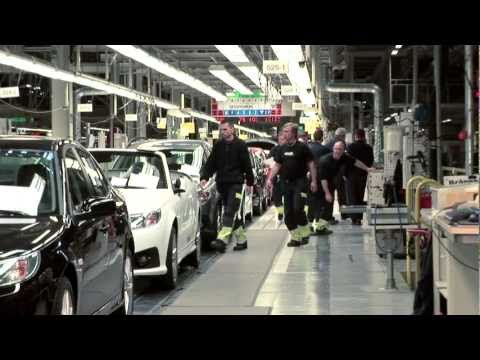
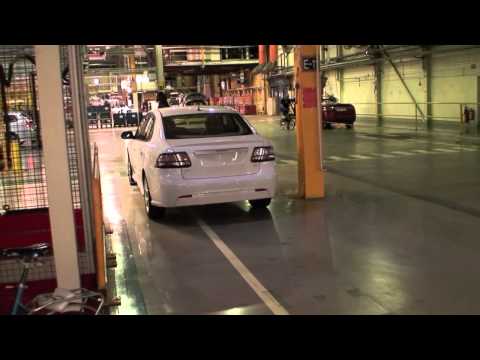
Video: Saab re-start production at the Trollhattan plant

I’ve already shown my own rather informal video of this event, featuring the cars coming off the production line.

Here’s the official company video featuring remarks from Saab’s VP, Purchasing and Manufacturing, Gunnar Brunius, as well as Saab’s Chairman and CEO, Victor Muller.

——

Exit mobile version