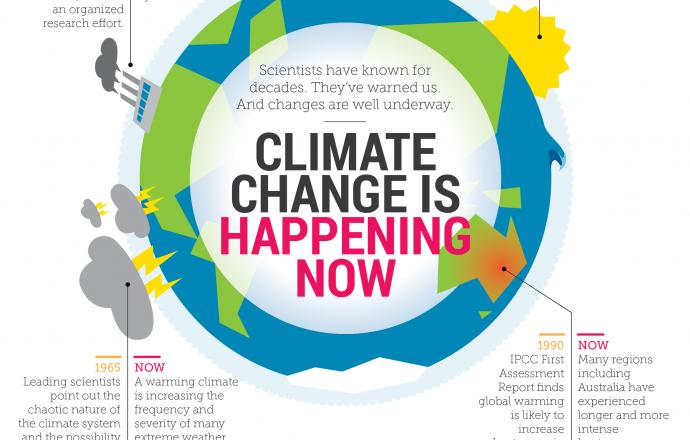
Climate change, as seen in Australia

Australian politicians are fond of looking down the barrel of a camera and saying “Australia is meeting – and beating! – its international emissions targets”.

They’re lying.

OK, technically they can look their kids in the eye and claim they’re not lying – just – because if you employ a couple of loopholes built into those targets back in the 1990s, Australia is (technically) meeting them. But that’s a bit like various bad actors that pay zero tax saying they meet all their tax obligations. They might domicile themselves in low-tax countries and/or use shell companies to avoid paying taxes. Yes, to the letter of the law, they are acting ‘legally’. According to the spirit of the law – i.e reality – they’re tax-avoiding arseholes.

Australia is a climate arsehole. Climate change in Australia is a bit of a joke.


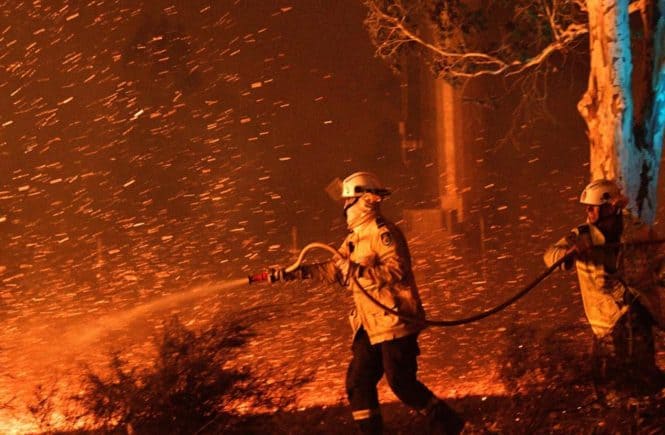
As I write, Australia is in the grip of a national fire crisis.

Bushfires have so far burned 5.8 million hectares of land (over 22,000 square miles). That’s twice the area of Belgium, or around half of Pennsylvania – burned. At last count, 19 people have died. Over 1700 properties have been lost and an estimated half-billion animals have died, including thousands of already endangered koalas.
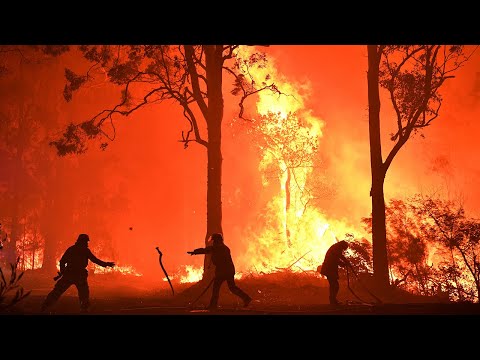
For too many Australians, the Australian summer tradition of beaches and BBQ’s has been replaced by P2 breathing masks and wholesale evacuations. This weekend, all down the south-east coast, Australian towns saw sunny days turn into visions of hell itself, complete with blood-red skies (if not complete darkness).

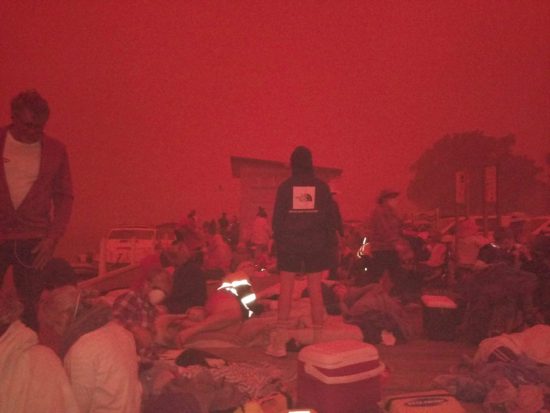
Evacuees at Mallacoota

It’s only January 5. Summer won’t end until Australia’s hottest month is done with. That’s February.

These fires are so bad that they’re creating their own weather systems. One created a fire tornado powerful enough to overturn a 10-ton fire truck, killing one of the volunteer firefighters inside (Australia’s large cities have professional paid firefighters. Outside of the cities, we have professionally trained and equipped volunteers).

This is a big bowl of not-good we’re eating.

Australia’s Prime Minister, Scott Morrison, was asleep at the wheel when it all started and has scurried (tripping over his own feet) to make amends ever since.

This weekend, he announced a significant assistance package from the federal government. That assistance is welcomed (even if it’s late) but in reality, it’s just applying a bigger bandaid to the symptoms of Australia’s climate recalcitrance.

Australia needs prevention rather than triage.


Making sense of Australia’s climate arseholery requires a bit of a history lesson.

It all starts with an emissions agreement called the Kyoto Protocol. Let’s go back to 1997, when John Howard was still a first-term Prime Minister, and some 8 years before he bowled a cricket ball like a punchdrunk gibbon (which has nothing to do with anything. It’s just funny).

This is the short version. For the full Kyoto story, check out The Conversation.

Australia’s Environment Minister at the time was Robert Hill. He went to Kyoto and by all accounts, he earned every dollar of his salary by negotiating an extraordinary agreement. Hill argued special circumstances for Australia and, keen to have everyone on board and ensure some positive optics, the conference eventually (and reluctantly) agreed. While other regions committed to reducing their emissions by 5-8% compared to 1990 levels, Australia was allowed to increase emissions, committing to a cap of 8% over 1990 levels.

Hill also argued for an insertion now known as the “Australia Clause”, whereby emissions from changes in land use would be included in calculations.

Emissions were supposed to be based primarily around the burning of fossil fuels. The inclusion of land use (i.e. land clearing) was a big deal because around 1990, Australia had been clearing land at crazy rates. That rate had dropped substantially by 1997 so Australia’s emissions target – an 8% increase – would be measured against an artificially inflated base year. We could do next-to-nothing and still meet our targets, which is exactly what we did.

Australia went on to increase fossil fuel emissions by around 28% but because of the Australia Clause (let’s call that the Kyoto Loophole), the government could claim we had still met our 8% increase target.

Fast forward to 2007, when Kevin Rudd was elected as Prime Minister. Rudd called climate change “the greatest moral challenge of our time”. He was right.

Rudd’s government developed a Carbon Pollution Reduction Scheme but after the debacle that was the 2009 UN Climate Summit in Copenhagen (where countries would not agree to binding commitments, only to “take note” of agreed targets), Rudd found himself devoid of the numbers to pass his Scheme in parliament and devoid of the management skills to do anything about it. Constantly pricked by the opposition leader, Tony Abbott (the blackest soul to ever darken the door of Australian politics), Rudd went into meltdown mode and was eventually replaced as Prime Minister by his deputy, Julia Gillard.

Australia’s first real attempt at a climate policy had gone down in flames.

I won’t go in to further detail on the history of Australia’s climate policy here. If you’re a wonk and you want some more info, check out this timeline that covers the dotted history of attempts at a carbon tax in Australia (including a jaw-dropping cameo by Al Gore posing with one of Australia’s biggest – figuratively and literally – mining barons).

Suffice to say that Australia has rarely tried and ultimately failed on climate change. Julia Gillard got an emissions trading scheme up and running but Tony Abbott repealed it when he came to power a few years later. Abbott established a direct action fund that let businesses set their own targets and then made it easier for them to expand those targets if they couldn’t meet them. Malcolm Turnbull proposed a National Energy Guarantee that would look to cut emissions from power generation, then lost his Prime Ministership over it.

Australia first failed to establish a climate policy way back in 2009 and we’ve had no credible climate policy and no credible national leadership since.

Even worse, we’ve had cynical politicians treating us like mushrooms (keeping us in the dark and feeding us bullshit), counting on the notion that history has forgotten the Kyoto loopholes.

Tony Abbott, our conservative Prime Minister from 2013 to 2015, was the first to make the cynical claim that Australia was doing more than other countries because we were actually (invoke Dr Evil fingers here) ‘meeting our targets’. Anything to appease the masses.

That talking point has now evolved into various conservative MPs claiming that we will meet our Paris targets “in a canter”. If we meet our Paris targets – a big if, given that emissions continue to rise – it’ll only be because of decisions taken by the conservative government to include ‘carryover credits’ calculated using the dodgy Kyoto Loophole.

Yep. Against plenty of international criticism, we’re stacking the deck again.


Australian politicians also like to say that our country only contributes 1.3% of world emissions.

Again, this is Australia being a climate arsehole.

The raw statistic is technically true but the statement ignores a couple of things.

A) – the fact that we’re the world’s second-biggest emitter per capita. Yes, we emit 1.3% of world emissions here but we’ve got just 0.3% of the world’s population.

B) – Even worse, the coal we dig up here counts for the emissions totals of other countries. If the coal we profited from around the world counted towards our emissions totals, we’d be responsible for something more like 4-5% of world emissions.


I know I’ve used the term ‘Climate Arsehole’ to describe Australia and its historical behaviour in this article. The truth, really, is even more damning.

One of the worst things you can call an Australian is a ‘bludger’ – someone who doesn’t like work; who doesn’t do their fair share, preferring to slack off and rely on the efforts of others. It goes against something at the core of our national character – the Aussie notion of a fair go, doing your bit and helping out your mates.

Australia is a climate bludger.

What makes that even worse is that Australia being bludgers gives permission for others to be climate bludgers as well. It reduces our credibility as a country on the international stage. It reduces the trust that other nations have in us.

Worst of all, and most important of all, it places our country at significant risk because Australia is getting hotter and hotter. The fire season claims more properties, more ground, more businesses and more lives every year – and it’s only getting worse.


To the Australians reading this…..

Whenever a politician says that our climate policies are credible, that we will meet our targets – they are bullshitting you. They are counting on you not knowing the truth behind the numbers, and being too busy to find out.

Australia can’t fix climate change by itself. That much we know. But we have to be real about the science and what it means for our country, and for the world. We have to get on board and work with sincerity to get other countries on board, too.

Mother Nature doesn’t care about your talking points. She will have her way.

If you want to make a difference, you need to write to your local member of parliament. Here’s how you can do that (Facebook link). I might cover that more in a follow-up post.


Conservative politicians were recently fond of saying that Australia’s national debt was “intergenerational theft”.

I couldn’t think of a better description for our climate policy debacle yet strangely, you don’t hear that phrase at all from Canberra during bushfire season.


.

.

.

.

.

.

.

.

.

.

post-script…..

Someone will bring up the idea of The Greens being responsible for Australia’s fires because they wouldn’t allow backburning or fuel reduction burns.

This is a theory fondly pushed by Barnaby Joyce on occasions, and recently mentioned in passing by Scott Morrison as well.

It’s bullshit.

#1 – Making a policy like that requires the power to make laws. When have The Greens ever held power anywhere at state or federal level sufficient to develop, impose and enforce such a policy? They haven’t. They shared power once in Tasmania and no such policy was enacted. Other than that, they’ve been a bit player in Australian law-making, at best.

#2 – The Greens own website talks about fuel reduction burns and their support for them. Check it out.

The widely acknowledged reasons for any existing drop in fuel reduction burns are:

  • A shorter window for doing so without risk of the burn-off spreading.
  • Reduced funding restricting the number of personnel available to conduct these burns.
  • Local community groups being concerned about them.

On Australia’s Vote for Same Sex Marriage – Resolving the Issues

This is the third (and final) instalment in a series on Australia’s current debate over making same-sex marriage legal.

The first instalment looked at the backstory to the issue.

The second instalment looked briefly at the Yes and No campaigns, as well as my view on the issue.

In this final instalment, I’d like to look at a few of the key issues and try to shine some light on those issues.

——

The ‘Yes’ campaign has a pretty simple platform: It’s time for same-sex couples to get the same access to marriage as heterosexuals. Australia is an egalitarian society and it’s time our marriage laws stopped discriminating against same-sex couples.

The issues that have made this such a complicated affair are pretty much all raised by the ‘No’ side of the debate. They’re the issues that I’d like to address here.

——

Same-sex couples in civil unions are treated the same as de-facto couples and the law has already been changed to give de-facto couples the same rights as married couples.

Umm, no. This is not true.

Yes, de-facto couples (couples in a relationship under the same roof but unmarried) do get many of the protections offered to married couples under the law. But not all.

The rights of a married couple are established as soon as the marriage certificate is signed. The rights of a de-facto couple are different from state to state, and they also differ depending what area of the law you’re looking at. The definition of a couple used by Centrelink is different to that used under migration law, and different again to that used under family law.

Married couples have more automatic rights with regards to IVF at the beginning of life and more rights about health decisions for their spouse at the end of life. They have less complicated proceedings available for divisions of property, and estate management. They have more rights and simpler procedures when it comes to superannuation.

Another key problem is that civil unions are administered by state law. The Marriage Act 1961 is a national law and all marriages in Australia are recognised under this law. Civil unions are established under inconsistent laws across the states and territories that actually have them (you can’t register a civil union in Western Australia or the Northern Territory at all).

If your partner is in a car accident in Sydney and ends up in hospital, a doctor will immediately know what your rights are if you can tell them you are that person’s spouse. The terms are clear. Saying “I’m their partner according to a Queensland civil union” lands you in far muddier waters.

Furthermore, while Australian marriages are recognised pretty much everywhere around the world, civil unions registered in applicable Australian states are barely recognised anywhere – a big problem if a couple moves overseas for work.

This piece at The Conversation will give you the full breakdown.

The bottom line: significantly similar rights are indeed available to both married and de-facto couples but de-facto couples have to jump through a lot more hoops to get access to them (well, the ones they actually have access to). It’s far from automatic.

I don’t necessarily see a problem with parts of that. If a couple does not want to marry, if they don’t want to declare their relationship in public and commit to one another in that way, then that’s their right. They can choose to forego the rights that marriage offers them and stay as a de-facto couple if they wish.

The problem is, a lot of same-sex couples DO want to declare their relationships in public and commit to their spouses. They’re not choosing to live together as de-factos. They want their family unit just like their hetero brethren, and it’s being denied to them purely on the basis of their sexuality.

It’s discrimination.

——

Why can’t we just amend the laws around civil unions so that same-sex couples get the same rights as married couples, but without it being called marriage?

Because that’s not marriage equality. We don’t need to create something new and different for same-sex couples. We already have something – it’s called marriage.

There is social currency in marriage. A married couple is one that has decided to declare for one another in the presence of witnesses and according to the laws of the land. They carry obligations to one another and have rights under the law.

Marriage is understood by society. People know that some marriages last and some don’t, but they know that a married couple has been serious enough about each other to tie the knot and they respect that.

Former speechwriter to Tony Abbot, Paul Ritchie:

“Allowing same-sex couples to marry is not just a matter of law. It’s also a matter of heart and soul. It reflects a universal hope: to be blessed by family and friends, and to share your life, with its trials and tribulations, laughter and joy, with the one that you love.


“The institution of marriage affirms us as people; gives standing to our most significant relationship; and changes our families for the better. It is an institution that points to a better life and helps us answer the deepest question: can I selflessly love another and find meaning and purpose in that love? This is a conservative ideal,” he writes.

What’s at question here is whether or not the respect that society gives to married couples should be given to all couples, or just heterosexual couples.

This is where a lot of Christian conservatives get their noses out of joint.

To Christians, marriage is a sacrament – “til death do us part”. It’s a human manifestation of the unbreakable bond between God and humanity.

To the courts, marriage is a legal arrangement that’s defined by statute. Like all good first-world countries, Australia has a distinct division between church and state. The definition of marriage in this instance is a matter of law, not a matter of religion.

This really is a key point that gets stuck in a lot Christian craws.

They want marriage how they see it. It’s theirs. It’s ordained by God and being married is something special that they don’t want to be confused with something so fundamentally sinful as homosexuality.

Other ‘sins’ are OK. But not this one.

It doesn’t matter that many of the people getting married are Hindus, or Muslims, or Buddhists, as long as it’s a man and woman. It doesn’t matter that many of the people getting married are shite at being married and end up divorced (multiple times), as long as it’s a man and a woman. It doesn’t matter that many of the people getting married are shite at being parents to their progeny, as long as it’s a man and a woman.

A conservative Christian sees all those situations as redeemable. They can equate their marriage with those people by saying ‘there but for the grace of God….’

But not this. Homosexuality has a special place in hell to them. Presumably one without lubricants*.

While it’s mostly unspoken, one of the things Christian conservatives hate the most is the idea that two gay people getting married might be equated with their marriage.

They want the word ‘marriage’ to themselves.

This is why you hear things such as “I’ve got nothing against gay people, but…..” and “I’m happy to see their rights protected, but……”

I’ve actually had one person propose to me that a new arrangement could be set up for same sex couples called a Homounion.

I’ve heard Christians raise concerns about gender fluidity, free speech, political correctness, paedophilia (which I consider ironic, given the nature of some priests in the Catholic church) and other issues. When it all boils down to it, though, Christian opponents to same-sex marriage simply want marriage to be the singular domain of people who bump uglies in the way it’s described in the bible.

I’ll say it again. In this debate, on this question, the word ‘marriage’ is a legal definition in a statute. It’s not the religious interpretation that people are seeking to re-frame here.

It’s a point. of. law.

As the wise man says… If you don’t like the idea of gay marriage, don’t get gay married.

——

Changing the definition from the current “between a man and a woman” will open Australia up to people marrying animals, and even stranger things such as bridges.

Yes, one Australian politician gave that as an example. Hit the link to see the story.

There is a LOT of dis-information being circulated at the moment and it’s designed to whip up fear of the unknown.

A classic example is the notion that changing the existing definition in the Marriage Act 1961 (a man and a woman) will leave the statute unclear on gender, or even completely genderless. And if the statute is genderless, then it’s just two….. things getting married – hence the reference to a person marrying a bridge.

Bollocks. Unnecessary, fearmongering bollocks.

Why assume that the wording will change from “between a man and a woman” to a genderless statement? Why not trust that our legislators can re-word it to something like “between a man and a woman, or a man and a man, or a woman and a woman.”

That wasn’t so hard to solve, was it?

——

“This is all part of a strategy for gay people to recruit and abuse children.”

This sort of rubbish is actually being bandied about. Seriously.

——

Kids deserve a mother and a father

This is something that’s a little easier to empathise with. “I grew up with a mother and a father and I liked it that way, therefore every kid should have that.” It’s easy for us to relate to (if you had both parents and the outcome was a good one).

Personally speaking, I’m not opposed to the notion that a child should have knowledge of (and preferably access to) both biological parents. I definitely don’t see that as a dealbreaker, however.

I don’t see it something that happens now, either. There are kids in broken homes all around the country that don’t see one (or more tragically, either) parent.

Having both Mum and Dad around isn’t a formula for success. Having a good family around you is a much better deal, and there are social studies to prove it. Being hetero provides no guarantee of being a solid family. In fact, I’d argue that in 2017, a family comprising same-sex parents is likely to be stronger than most, because they’ve had to fight to get there.

What kids need – what society needs – are solid families, not prescriptions as to what those families look like.

——

“Same-sex marriage is a trojan horse for…..” (killing free speech, rampant political correctness, promoting gender fluidity via the Safe Schools program, insert hobby horse of your choice here)

Rubbish.

This is the classic Strawman argument, designed to whip up fear and distract from the actual issue at hand.

Once again, the ballot has only one question on it:

If any of those side issues are a chance to be affected by changes to the Marriage Act 1961, then that’s the time for legislators to do their job and ensure there are protections in place so that people who want to get married can get married, and the reasonable rights of others aren’t infringed.

The law is there to do a job. Make sure the lawmakers get it right. That’s all part of the parliamentary process.

Also, let’s not pretend that these issues are going to go away anytime soon. The ‘No’ campaign would have you think that these are issues solely because same-sex marriage is being proposed.

Does anyone really think that if same-sex marriage is not implemented – i.e. if the ‘No’ campaign wins – that the content of the Safe Schools program will stop being an issue? Do you think Andrew Bolt will stop whinging about free speech?

These are all sideshows. They’re Strawman arguments designed specifically to get people upset and waste time. They’re issues that can, and will, continue to be discussed and legislated upon.

——

CLOSE

I’m fine with people having religious convictions about marriage and what it should be. I’m fine with people voting their conscience. I don’t necessarily agree with your convictions but I respect them and I’ve got no problem with that.

What makes me scratch my head, though, is people ignoring the REAL question and choosing to muddy the waters with dis-information and, in some cases, outright deceit.

Same-sex marriage will create more families. It’ll bring dignity and respect to a group in our society that have been figuratively and literally bashed for decades. It’ll give the people who want to access it much-needed and much-deserved rights and protections under the law. It’s not going to hurt you, or your family.

Modern WASP civilisations have got plenty of things wrong over the years. We kept slaves. We didn’t let women vote. We didn’t let indiginous people vote. We didn’t allow interracial marriage. This is just another thing that future generations will look back on and say “what was all the fuss about?”

Same-sex marriage will be legislated in Australia eventually. Be on the right side of history. Of justice.

Vote “Yes”.

——

* I should apologise to my Aunty Joan and my sister for the lubricants gag because there’s a fair chance they’ll read this. Actually, Aunty Joan will probably find it quite funny. So sorry, Sis.

Australia and Same Sex Marriage – The Campaign, and My View

This is the second in a 3-part series on the question of same-sex marriage, which is currently being ‘debated’ in Australia ahead of a non-compulsory public vote that is not binding on the government (and if you’re wondering “if it’s non-compulsory and non-binding, why have it?” – please join the massive queue forming on the left).

Part 1 of this series discussed the backstory to this issue.

Onwards and upwards, then….

The Ballot

This is the question on the postal survey form sent out to Australian voters in the last few weeks.

It’s pretty simple. Or it should be.

Advocates for same-sex marriage feared the idea of a plebiscite – a compulsory vote that’s non-binding – because it would be pre-empted by a campaign during which they’d have to justify their existence to the rest of the country.

They feared the idea of a non-compulsory postal survey even more.

Of course, the Prime Ministers (both former and current) went to great pains to talk about the need for respectful debate on the issue. The current PM will stick to that. He’s a centrist and has been outspoken on his support for same-sex marriage for some time. He’s also sitting on a razor-thin majority with hard-right conservatives holding him to the party line.

The former PM – the man who first set the plebiscite (that we’re not having) in motion – has already broadened the issue to be about free speech, religious liberty, and the stamping out of political correctness. As we all knew he would.

The ‘No’ campaign is made up primarily of two groups of people.

First, there are those who oppose the idea on religious grounds. They believe that God made Adam and Eve, not Adam and Steve. Any change to the law, which currently describes marriage as being between a man and a woman, would be contrary to God’s will. They are here to see that God’s will is adhered to. They have come up with a whole grab-bag of issues, which I’ll discuss later.

Second, there are the garden variety homophobes, who don’t think anything should be done to advance the rights of homosexuals at all. They’re not necessarily religious. They just don’t like poofters and lezos.

The remainder on the ‘No’ side is a mixed bag of people who don’t like change of any type and probably think it’s too much, too soon.

The ‘Yes’ campaign is, according to all recent surveys, the most popular and will hopefully be the side popping champagne corks on November 15. The question of same-sex marriage has enjoyed popular support for many years and most recent polls have support sitting at around 60%. The remaining 40% is divided between ‘No’ and ‘Unsure’ so there’s a reasonable chance of support being more than 60%.

The vast majority of the ‘Yes’ vote will come from city-dwellers, who are typically more progressive than their country counterparts. The ABC’s Vote Compass has a great breakdown of the support for both sides, mapped according to each electorate in the country.

——

The Yes Campaign In a Nutshell

The Yes side, in line with the question on the survey, is keeping things simple. The survey paper has one question only, and you tick either ‘Yes’ or ‘No’ as a response. The question at hand is:

Should the law be changed to allow same-sex couples to marry?

The Yes side say that this is all about marriage equality. Australia is an egalitarian society and within such a society, a couple should be able to access marriage, regardless of whether that couple is mixed-gender or same-sex.

That’s a pretty simple answer to a pretty simple question and I think it resonates with most fair-minded people. It certainly does with me.

Perhaps I should add a little more perspective here.

——

My Personal View

I grew up going to Sunday school as a child and later in my youth, attending a Pentecostal church. I was no model young Christian – very few of the young people at our church were at that time were – but I tried. We tried. We were a tight-knit group and we rose, fell and grew together. I even spent a year at a bible college, in 1991. I was a music/worship leader at both of the churches where I spent the majority of my time until age 30 and the Music Director at one of those churches.

All that’s to say that I grew up in an environment that didn’t encourage much tolerance for ‘sin’ (which is an irony, given a lot of the things I experienced and saw at the time).

We preached love and tolerance for all people but we rarely had to demonstrate any of that because, by and large, we moved in our own circle of like-minded people. If we’d have run into a gay person back then we would have 1. crapped our pants, then 2. tried to pray the gay away (hoping for either interpretation of the phrase to take effect).

I have since walked away from the church and no longer consider myself a believer. That’s a path I have walked over a long period of time, from around 2001 or so until now.

I’ve lost a few friends over that, which is sad, but it’s been for the best. I’m super-thankful for those friends that have stuck with me and I cherish the time I get with them. They’re great people of real substance.

I don’t regret my time in the church, though I’m still angry at certain people and a number of things I experienced. Overall, though, it taught me a lot and it gave me a solid moral grounding around which the rest of my life has been based.

That background, then, forms part of the prism through which I view this issue.

I’m not a gay man and I can’t say I understand the attraction that gay men or women have for one another. It’s a mystery to me.

I have had, and continue to have, gay family members, friends, and colleagues. None of them have judged me. None of them have hurt me. None of them have tried to hit on me. None of them ever tried to convert my stepkids. None of them have done anything other than live their lives, do their jobs, and enjoy themselves.

Perhaps the most poignant thing I can say about the gay people I know is that they’re basically unremarkable in many ways. They have issues that they’re passionate about, hobbies that they indulge in, they’re sports fans, political wonks, artists, creators, and from every observance I’ve made, they’re extremely productive. They’re…. people.

None of my gay family or friends have ever infringed upon my life in any way. In fact, many of them have shown me more acceptance than maybe I deserved, and definitely more than some of the so-called friends from my churchy past.

Who am I, then, to deny these most ordinary of people the right to marry?

In fact, it’s not even a question.

If two people are in love with one another and want to get married, they should. If we are to pose restrictions on that, let’s keep it to age and (maybe) crack addiction.

——

This issue is being debated very passionately in Australia right now. You’ve got my perspective, above, but that’s just me and my thoughts. There is a whole range of issues being thrown about.

In the next (and final) instalment in this series, I’m going to take a look at the major issues being talked about and how those issues are, in many cases, being manipulated and how the facts relating to those issues are, in my considered opinion, nothing to be scared about.

On Australia’s Vote for Same-Sex Marriage – Backstory

My home country is fighting with itself right now. The issue? Same-sex marriage.

Rather than do what they were elected to do (legislate), the Australian federal government, which has the sole legal jurisdiction over the definition of marriage, decided to outsource its job to the people. They’re holding a nationwide, non-compulsory vote on whether or not the definition of marriage within the Marriage Act 1961 should be changed to allow for same-sex marriage.

Ballots have been mailed to citizens around the country and the Yesses and Nos will be tallied as of November 7. The results will be announced on November 15.

——

Backstory

The issue of same-sex marriage has been on the agenda in Australia for a while.

A public poll held in 2004 showed that only 38% of respondents were in favour of same-sex marriage, with 44% against and 18% undecided. Just three years later, those results shifted to see 57% supporting same-sex marriage, with just 37% opposed and 6% undecided. Same-sex marriage, or Marriage Equality as the campaign is currently called, has enjoyed majority support in Australia ever since. Most recent polls show support over 60% with opposition resting between 20% and 30% and the remainder undecided.

What happened in 2004, you ask?

The Prime Minister of the day (and shit cricketer) John Howard, advocated changes to the Marriage Act 1961 that included a definition of marriage as being exclusively between a man and a woman. Same-sex marriage wasn’t at the front of many people’s minds before then, but it certainly was after.

The Marriage Amendment Act 2004 was prompted by a couple of Australian men who got married in Canada, where it was legal, and came back to Australia seeking to have their marriage recognised in Australia. The more specific definition – between a man and a woman – was therefore inserted to prevent any further attempts to have overseas same-sex marriages recognised under Australian law.

While The Marriage Amendment Act 2004 passed through parliament with bi-partisan support, it did not go through unnoticed. In many ways, the passage of this act was the tipping point for discussion on the issue and the birthing suite of the Marriage Equality movement we see today.

Those who had ‘opposed’ same-sex marriage up until 2004, simply because they’d never really thought about it, began to ask why? Or perhaps more poignantly, why not? The debate around same-sex marriage has been gathering steam ever since.

Former PM Kevid Rudd was opposed to it in 2007.

His replacement, Julia Gillard, was also opposed to changing the definition in the Marriage Act 1961, but the Labor Party she led allowed its MPs a conscience vote on the issue when it came to parliament in 2012. Gillard later stated she’d changed her personal stance on the issue, saying she supported same-sex marriage.

Kevin Rudd returned to the Labor leadership in 2013 and also announced a changed position, following a period of personal reflection and discussions with gay colleagues. Rudd vowed to introduce legislation if the Labor government was returned in the 2013 federal election. Labor was defeated in that election, bringing the Liberal/National (conservative) coalition into government.

The Prime Minister who won that election, Tony Abbott (a monumental prick for reasons that go far beyond this issue), is firmly against same-sex marriage. He declined the idea of having a vote in parliament on the issue while he was PM, promising instead that the government would hold a plebiscite (remember that word) during its subsequent term in office. He never got to keep that promise, however, as his own party voted him out of the leadership in 2015.

His successor, Malcolm Turnbull reaffirmed this pledge to the conservative base at the subsequent election. Turnbull is a progressive conservative in favour of same-sex marriage. While he currently leads the party, he has a razor-thin parliamentary majority of just 1 seat and is consequently hostage to the far right of his party. He probably wouldn’t have won the leadership if he’d changed the party’s policy on this issue.

That’s how we got here. But where is here, exactly? And what does it mean?

——

The Plebiscite (that Australia is not having)

It’s important to note that it was a plebiscite that was initially proposed by Abbott, because that’s different to what is going on right now.

A plebiscite is a compulsory vote on an issue. The outcome of the vote is not binding on the government, but reasonable people would hope that the government would respect the will of the people.

Tony Abbott offered the plebiscite as means of acknowledging the reality of the issue in the minds of the public. He also offered it because it let him put the issue on the backburner so he could go about being a bastard in other ways (his disaster budget of 2014 being chief amongst them).

The offer was and should be regarded as cynical. Abbott is a skilled campaigner on wedge issues, having dragged the Monarchist movement over the line during the Republic referendum in 1999. His M.O is to create fear and doubt over issues of substantial change, believing that in the presence of fear and doubt, most people will stick with the status quo rather than opt for change. Despite popular support for a Republic in principle, the ‘No’ vote won the referendum.

It worked then, so why not now?

Abbott proposed the plebiscite because he knew that it would be both non-binding and divisive. Outsourcing the vote to the people means that the people would fight amongst themselves, a perfect scenario for the type of anxiety that feeds his blackened soul.

You can’t just hold a plebiscite whenever you feel like it. It requires legislation. When the enabling legislation for the plebiscite was voted down in parliament for the second time, the government opted for a postal survey, which is what we’ve got now.

A postal survey is an even worse option than a plebiscite.

Once again, I hear you asking Why?

The postal survey is exactly what the name suggests. Ballots are posted out to everyone on the electoral roll. Voters then mark their preference on the ballot paper and send it back. Simple, right?

No.

There have already been stories of ballots being taken out of mailboxes, or being blown about neighborhoods by the wind. And those happenings are just the beginning as to why this was a seriously bad idea.

Perhaps the main reason this is a terrible idea lies in the fact that unlike a plebiscite, voting in the postal survey is non-compulsory. As well as being non-binding. That’s why people have been seen offering ballots for sale online. They don’t have to fill them out, so why not make some money??

The Australian government, led by the supposedly fiscally responsible Conservatives, is spending $122 million Australian taxpayer dollars on a survey that will sow bitterness, is not compulsory for voters to respond to, and does not bind anyone in the government with respect to its outcome.

I mentioned sowing bitterness in that last sentence. That is perhaps the saddest outcome of this government’s mistake. It’s one of the reasons Tony Abbott chose the plebiscite option instead of having the cohunas to face legislation in parliament.

The plebiscite-cum-survey was always going to be prefaced by a period of VERY public debate on the issue before votes were due. Despite pleas for decency from all sides (some of which could be rightly viewed with a liberal dose of cynicism), that debate was always going to be vicious. It was always going to be framed in such a way by those opposed to change so as to create maximum anxiety amongst those who are undecided.

And so it has been.

In my next post on this topic, I’ll address some of the ‘issues’ that have been raised and the way they’re being used to distract from what is a pretty simple question:

Up To Our Necks In It

I wouldn’t normally reproduce a friend’s Facebook status on here, but this has been with me all day.

Thanks Nige, for letting me reproduce this post from yesterday:

We were just driving over the Tasman Bridge and I saw a young lady climbing over the rail. I said to Rachael look she is going to jump. Took eyes off her, back onto road as we passed. Then I looked in the mirror and I saw her fall. Please, if you are feeling this way, seek help.

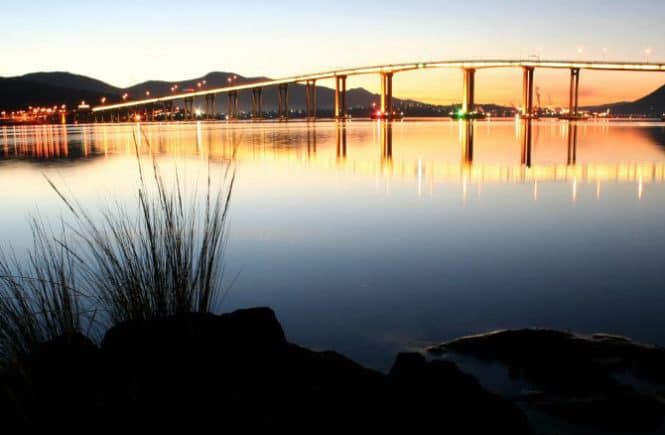
There’s a picture of the Tasman Bridge at the top of this post. It’s a beautiful bridge and this wonderful shot was taken by my good mate, Stu the Lens Genius.

Sadly, it’s also a place of sorrow for some families. I’ve driven past a guy being talked down off the bridge. Thankfully, I’ve never been in Nige’s position and driven past as someone jumped.

There’s nothing you can do to stop someone if they’re determined to jump and you’re driving by. The bridge is five lanes of moving traffic and there’s nowhere to pull over. The footpath is elevated from the road, with a fence making the physical barrier even more pronounced. Getting to someone quickly would not be a simple thing.

Nige’s FB post stuck with me today for a couple of reasons.

First, I can visualise exactly where he was and what he saw. I drove over that bridge nearly every day when I was living in Hobart.

The other reason is because today was a particularly shitty day. I had 5 big things happen today. Two of them – the things I had control over – turned out well. The other three turned out not so well. They turned my head inside out, in fact. They were beyond my control, my influence. They were things that I wish I could make better, but I can’t.

I’ve never felt anywhere near the level of desperation that that young lady felt, but I have endured my own little battle with the black dog over the last few years. It’s not fun.

Sometimes you know what’s causing it. Sometimes you have no idea. Sometimes you want to punch the crap out of someone/something. Sometimes you just want to lock yourself away and not face anyone ever again.

Sometimes you’re fine. For me, that’s most of the time. I can do my job, make decisions and engage with the people around me. And sometimes the choice between milk or fruit juice is too much to bear.

That sounds irrational, I know. But that’s how it gets sometimes.

I’ve been fortunate, I guess, to have what I would call a pretty mild case of depression. It relates more to my circumstances than the chemical imbalance that afflicts so many people. I can easily find myself dwelling on the things I don’t have in my life rather than taking satisfaction from the things I do have. I get overwhelmed by perceived obstacles, expectations or tasks.

Sometimes, the stuff that other people blow off pretty easily, that’s stuff I take to heart. Politics is a big one. I don’t get depressed because the side that I support might lose. I get depressed because I see, quite vividly, the dangers ahead for those less fortunate who have to fend for themselves in a dog-eat-dog society (which, sadly, my home country seems to be heading towards).

In lighter moments, I like to blame J.D. Salinger for this, but I know I’m just wired that way anyhow.

Sometimes stuff builds up in your mind and you’re powerless to stop it. It just takes over, no matter what you do. You can spend time with friends or family, get some energy and positivity in your life. But the anxiety, the darkness – it’s all there waiting for you like a retarded friend.

Sometimes I’m convinced that it’s like an addiction, as if the only way I can feel contentment is if I’m fighting something. Fighting to be at peace – an oxymoron of ‘murican proportions if ever I’ve heard one.

See, there I go again.

The strange thing about all this is that if you ask me what’s missing in my life – what do I think I need to be happy? – I’m not sure I could tell you. I could tell you what’s in my life that brings me times of happiness – my work, my family, my friends, music. But I can’t identify the missing piece that might bring lasting happiness. It’s just…… missing. Is it emotional intimacy? Personal vulnerability? Feeling part of something bigger?

I don’t know. I really don’t.

——

A message to those who might read this and get concerned – I’m OK. I really am. 100%.

It’s just that Nige’s FB post resonated with me today. I feel so bad for that young woman and her family. I understand a little about feeling overwhelmed, about feeling dark, but I’ve never ever been even close to that place. Even with the challenges I have, there’s way too much to live for. I just feel so much for her, crossing that line.

This piece is simply because I wanted to work it through. Writing about it helps sometimes.

——

I have friends who have been through depression. I have friends who are still battling with it. I can offer no solutions, other than to say you’re in my thoughts and I wish I could be there more often for you.

I wish we could be there more often for each other.

——

#Auspol – Budget Schmudget

Hey Australia!

For the last couple of years we’ve had a budget emergency. We’ve been living amongst a debt and deficit disaster – we know this because Tony and Joe told us – and if you didn’t agree with Sweaty Joe’s plans to fix it, then you were stealing from your children. You heartless bastards!

But hey, that was 2014. It’s 2015 now. Relax. Have a cigar. There’s nothing to worry about. Tony and Joe told us so. The 2014 budget fixed everything (even though most of it is still stuck in the Senate 12 months later).

Look how relaxed they are…..

Red vs Blue

Last night’s federal budget was a soft, toasty marshmallow of a document that was designed to do one thing, and one thing only – protect the jobs of the men who constructed it. It was a document designed to offend no-one (that matters) and postpone any real decisions until after the next election, an election that many are now predicting will come early given that Sweaty Joe and Tony The Smirk have buttered up their base with this financial fig leaf.

If you’re a Lefty, like me, then you’re likely to be completely nonplussed by last night’s mini-drama. The outrage from 2014 remains. The Coalition still wants to Americanise our higher education sector. They maintain their abandonment of the Gonski reforms. The reduction in pensions might have been stared down, along with the Medicare co-payment, but don’t fool yourself into thinking these are done and dusted. They’re merely on hold until the coalition wins the next election.

It’s a positive that they want to boost childcare but note that this measure, which will primarily benefit wealthier families, is meant to be propped up by taking Family Tax Benefits away from lower-income families. It’s the same old story – belt the little guys in order to prop up the big end of town and disguise it with words like ‘incentive’ and ‘aspiration’.

If you’re a right-winger then you should be more concerned than I am.

Tony and Joe have done more flips and twists in the last 12 months than Greg Louganis did in his whole career and this budget might just be the biggest yet. The iron-clad commitment to fiscal consolidation and budget repair is out the window. The gilt-edged PPL scheme that Tony didn’t believe in, then believed in fiercely through two election campaigns, then abandoned, is now a target for savings. The Minister For Women is no longer offering ladies $75,000 a year to look after their sprogs. Now he’s ripping money away from them and accusing them of double dipping if they argue!

But all’s not lost for the tax-averse.

Like Peter Costello in the Howard, era, Tony and Joe are still looking for ways to feather their voters’ nests. Costello gave the people capital gains relief and the baby bonus. Tony and Joe are offering $20K in open-slather business writeoffs and no meaningful action on tax reform at the top end of the scale – despite it being the topic of plenty of conversation.

You think that $20K business writeoff isn’t going to be rorted? Check it out:

WHAT CAN I CLAIM?

Cars, vans, utes, trailers, motorbikes, lawnmowers, ovens, fridges, coffee machines, other machinery, kitchens, tables and chairs, carpets, printers, photocopiers, tools, welding equipment, saws, generators, pumps, solar panels, heating, hot water units, water tanks, airconditioning units, sound and security systems, computers – any item used for running the business – will be 100 per cent tax deductible.

I think PJ Paintings might need a welder and a new sound system, actually…..

Little Miss Can’t Be Wrong

As mentioned at the opening, an $18billion deficit was considered to be a budget emergency by this mob back in 2013. Since then, the deficit has more than doubled under Sweaty Joe and this tough-talking Treasurer has effectively pushed his credible path back to surplus out another year – and even that is based on some very optimistic assumptions about future economic growth.

The truth is that this budget, like this government, is all about optics. It’s all about the message. The spin doctors haven’t worked so hard since Little Miss Can’t Be Wrong. It’s all there for you to see. From Tony Abbott’s Real Solutions booklet to his three-word slogans. The Coalition spent all of the last parliament creating a narrative about a fictitious problem that only they could fix. It worked like a charm, too, which is why they’ll do it again before the next election.

Spin examples?

The pillaging of a tertiary education system that works very well for the vast majority of people is OK if it’s presented as ‘opening up our universities to be more internationally competitive’. Providing a great and affordable education to everyone at home is less important than providing the best possible education to anyone who can afford to pay. Educating the masses is effective, but boring. Educating at the highest possible level? That’s something you can pin streamers and balloons to.

Climate change is another area the right wing should be angry about. Why on earth is the Coalition spending a couple of billion in taxpayer dollars to prop up a Direct Action plan when no-one in the Coalition actually believes in the science of climate change? It’s the ultimate appeasement measure.

And by-the-by, the true right-wing denialist approach to climate change is the ultimate form of intergenerational theft, a buzzphrase the righties are so fond of using.

The Sad Truth

Sadly, all this spin, posturing and feather-bedding is likely to work.

Why?

It’ll work because two-thirds of our country’s newspapers are owned by News Ltd, which effectively means most of the electorate is reading the Liberal Party Newsletter everyday.

It’ll work because Labor became so self-obsessed in the Rudd-Gillard-Rudd years that the Greens were able to insert themselves as a credible voting option for the progressive lefty.

It’ll work because Labor’s current messages are only half defined and rendered ineffective by their poor delivery.

Most of all, it’ll work because the Labor Party has a lettuce leaf of a leader who seems incapable of landing a meaningful blow against even the easiest and most obvious of targets.

#Auspol – The Ballad Of Tony Abbott

Politically speaking, our Prime Minister is now regarded as a dead man walking. There was a motion to spill the top leadership positions in the Liberals’ party room on Monday. It was moved by a couple of disaffected backbenchers sick to the mayhem at the top levels of the government.

40% of Tony Abbott’s party voted against his leadership – and that was without an alternative leader being nominated. It was Tony vs no-one and no-one got 40% of the vote. And given that his ministers were more-or-less bound by tradition to support him, that number actually rises to 67% disapproval amongst those who had a ‘free’ vote.

Nobody believes that he can recover from this. The next federal election is in 18 months time. Abbott’s approval rating is a deep minus and the party faithful who elected him as leader are all scared of losing their seats. They want a leader that doesn’t treat them like poop and a leader that won’t make them so unappealing that they’ll lose their seats. That leader is no longer considered to be Tony Abbott and the sooner they replace him, the sooner a new leader can build a policy platform capable of reinvigorating the government’s chances of re-election.

So why is Abbott so unpopular? Why has the man who united the conservatives in opposition become such a toe-rag of a Prime Minister?

He Only Knows How To Oppose

I think Tony Abbott’s effectiveness as an opposition leader in the Rudd/Gillard/Rudd era is a little overblown. He was opposition leader against one of the most dysfunctional governments in history, remember. Labor’s implosion was a 50/50 mix of self-harm and effective opposition.

But Tony Abbott is unique in that he is an opposition specialist, which is fine when you’re in opposition. The problem is that he’s now Prime Minister, which means he actually has to govern. He’s like the dog who finally caught the car he’s been chasing – he doesn’t know what to do with it.

Abbott did an interview with Leigh Sales on 7:30 last night and she asked him a very simple question – who are you? We’ve seen Junkyard Dog Tony, the attempted PM Tony and now he’d like us to think he’s a new Collegial Tony. Who is he? Abbott’s answer was telling. He rambled for a few minutes saying nothing in particular and then concluded with something to the effect of “I’m not the Labor Party”.

That’s all he’s got. When you define yourself purely by something you’re not, you’re kidding yourself.

A couple of other recent quotes-of-note are interesting, too:

“I’m terrible at fighting the Liberal Party (referring to the spill motion that threatened to depose him) but I’m a specialist at fighting the Labor Party and I can beat (Labor leader) Bill Shorten”

“I was given a strong message yesterday. If we focus on Labor we can win the next election. If not, we lose”

No. A thousand times, No.

The message was that you have to lead the government in a positive way and actually come up with workable policy that you can pass into legislation. The message was that your backbench is sick of your authoritarian Chief-of-Staff, sick of being trodden on instead of listened to and sick of hearing from their constituents about your stupid “Captain’s Picks” (see below).

If the message Tony Abbott took was that he has to focus on Labor, then he learned absolutely nothing this week. If that’s his strategy, then we can all look forward to another 18 months of a government still acting like it’s in opposition.

Permission and Forgiveness

When Abbott took over the Liberal leadership in 2009, he famously announced to his party room that the conservatives under his leadership were going to propose a generous paid parental leave scheme. It would be funded by a levy imposed on big business and would allow a half-year’s salary to be paid up to a value of $75,000.

Predictably, the policy went down like a lead balloon. Conservatives were outraged a) because of the hit imposed on business, b) because they’re anti-tax in any form, and c) because this was an Abbott thought-bubble imposed on them from on high without any consultation.

This is the first of Tony Abbott’s “Captain’s Picks” – decisions from on high that are justified for no other reason that he’s the leader and what he says, goes.

After the initial furore, Abbott gave a quote that bears remembering whenever he’s delivering one of his carefully crafted, “on-message” speeches. He said that “sometimes it’s better to ask forgiveness than it is to seek permission” – a quote that sums the man up nicely. It’s OK to abuse your power, to kick who you want to kick, do what you want to do. Afterwards, you rely on the healing power of time and a little wordsmithing to seek forgiveness from those you’ve abused.

It’s all in their best interests, after all. Right?

Lies, and then lies about lies

The Liberal Party were so clued-in to the lies being told by Tony Abbott that they went ahead and registered Abbottlies.com.au to prevent any opposition parties getting hold of it.

Smart politicking? Sure.

Shameful that they’d need to at all? Absolutely.

The big shame in all of this is that the lies have become so blatant, so commonplace, that interviewers don’t even pull people up on these lies anymore. Or they let an interviewee obfuscate to the point that the audience will have forgotten what the question was.

Here are a few examples.

“No cuts to health, no cuts to education, no cuts to pensions, no cuts to the ABC or SBS and no change to the GST” – All of these have either been cut or proposed for cuts/changes. Every single on of them. There’s a lie. Abbott likes to justify these broken promises by saying that the budget was in worse condition than the Libs thought……

“When we took over, we found the budget had a $30 billion black hole that Labor had hidden from us” – No they hadn’t. It was right there in the pre-election fiscal outlook (PEFO). Lying about lying.

“There will be no deals with independents and minor parties” – He said this because the last government was formed from a hung parliament and deals had to be done. Since then he’s done deals with Clive Palmer, Ricky Muir and other minor players in order to enact or repeal the few bits of legislation the government has actually tried to action (there haven’t been that many).

“We are a unity ticket when it comes to Gonski (education funding). Schools will get the same under a Liberal government as what they would under Labor” – ….except the Libs have cut the all-important years 5 and 6 from Gonski funding. So no.

There are so many more…..

And more….

I could write more but just like Tony Abbott, I’m running out time.

Here’s a few more to round out the list:

The world’s worst budget – we’re 9 months on from the most toxic budget in Australia’s history and much of the 2014 budget is still in limbo. It’ll likely be in limbo when Sweaty Joe delivers the 2015 budget.

The Iron Lady – The PM’s Chief-of-Staff, Peta Credlin, has rarely given an interview or even a quote to the press and yet she’s more well known than most of the government backbenchers. This is because of her iron-fisted control over all sorts of things that many think would be better left to elected people.

He can’t negotiate – It’s so ingrained in Tony Abbott that he’s right and everyone else is wrong that he’s in the unenviable position of being unable to get much legislation passed at all. Even Julia Gillard managed to get over 600 pieces of legislation through a hung parliament. Politics is supposed to be the art of the possible. Abbott’s turning it into an exhibition of the impossible.

Parrot-fashion messaging – People are starting to understand now that you can’t govern by three-word phrases. They’re good for sticking your message in people’s head, but eventually you will be weighed by what you do, rather than just what you say. And people get sick of hearing every politician roll out the exact same phrase in every interview. It makes it patently obvious that the media training consultants are earning their considerable keep in a big, big way. If we wanted a parrot for PM, we would have elected Alan Jones.

He fiddles with the truth – 1 – “We have fundamentally kept faith with the Australian people”. Ah, for the good old days of John Howard’s “core and non-core promises”.

He fiddles with the truth – 2 – All this talk about things like “the biggest deficit in Australia’s history” and other such things. Look, Australia is growing, just like you as an individual, are growing. My annual salary is the biggest it’s ever been. Our country’s population is the biggest it’s ever been. Our GDP is the biggest it’s ever been. Our capacity to repay debt is the biggest it’s ever been. It’s called growth, OK.

He has no vision – You want to talk about debt? Firstly, a country’s budget isn’t the same as a household budget. Countries don’t die, for starters. A Prime Minister with vision instead of pure ideology would realise that now is the perfect time to actually use borrowed money to build money-making assets and infrastructure. Debt is the cheapest it’s ever been (not fiddling with the truth there) with interest rates at around 2%. You want to actually BE the infrastructure Prime Minister instead of just talking about it? Quit your ideology and focus on the economics.

Bleeding Heart Lefty: Australia and Climate Change

Today, the Australian parliament repealed the country’s carbon reduction legislation. It has effectively left our country with no pollution reduction policy and we are the first country in the world to go from having a price on carbon pollution, to having no price on carbon pollution.

Our government campaigned hard on this for some time. They successfully prosecuted the false argument that our carbon tax was hurting Australian business and that it was ineffective in tackling the issue that it was designed for. That neither is actually true – emissions are actually down and the economy has kept growing – didn’t stop them from winning the argument. The whole discussion went from one based on facts to one based on a lowest-common-denominator argument that denigrated a populace.

The argument went something like this: people will fear losing a few dollars from their pocket in the short term more than they’ll fear something they can’t immediately see, something that will effect them in the long term. The hip pocket always rules.

——

Delayed Preface

Forgive me.

I should have prefaced this article by saying that if you don’t believe that human action is having a marked effect on the environment, if you don’t believe in human-influenced climate change, then this article probably isn’t for you.

The legitimacy of any action on climate change turns on whether people believe that an issue actually exists. I do. And I no longer have the time or the patience to discuss the pros and cons with sceptics. Others do and I admire their patience. As far as I’m concerned, however, the science is settled.

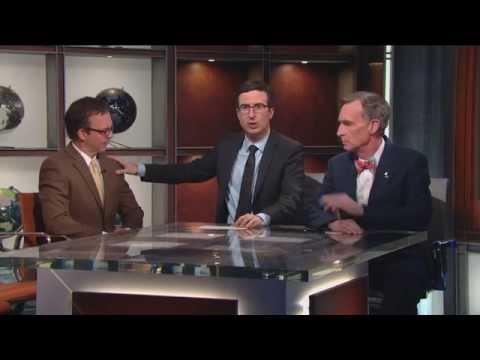
Cue the John Oliver video, which you can feel free to watch if you don’t agree (slight language warning):

——

The Carbon Tax

The policy that’s just been disposed of was dubbed The Carbon Tax. Back in the 2010 election campaign, our former Prime Minister, Julia Gillard, said that there would be no carbon tax under a government she leads. When that government ended up relying on the Greens for support, the carbon tax they insisted on was a direct contradiction of Gillard’s pledge. That breach, along with the hung parliament itself, proved terminal to Gillard’s tenure as PM.

The carbon tax put a fixed price on carbon emissions. Like most taxes, it has a dual purpose of influencing behaviour towards a desired goal and raising some money (to be directed towards other projects that help meet the goal).

The carbon tax should have been a cap-and-trade emissions trading scheme. That was the original plan but the former government wimped out in 2009, only to return in 2010 with a carbon tax that was toxic from the get-go. The intentions were good and the tax actually worked to a large degree, but that’s of little consolation now.

——

Direct (In)Action

Our new conservative government repealed the carbon tax laws today. Their plan to help tackle climate change and meet Australia’s emissions reduction goal is called Direct Action.

In short, they have a bucket of money that they’re going to offer as an incentive for companies that voluntarily reduce their polluting. It’s a reverse-auction style of fund, so companies will bid for the money but there’s no compulsion for them to do so because there’s no longer a cap on emissions. There’s merely a desire to reduce overall emissions by 5% by 2020, which is now seen variously as a very modest goal by the standards of Australia’s major trading partners and as quite inadequate by the environmental lobby.

Direct Action has been rightly described as an environmental figleaf, a token gesture to cover up the embarrassing lack of real action on climate change by this government.

In fact, I’m surprised that hardline conservatives are accepting the Direct Action plan at all. If the overarching desire of the conservative is fiscal prudence and getting Australia’s budget on track, then the spending of a couple of billion dollars on something that no-one except Tony Abbott believes will work (and the depth of his belief is the dictionary definition of ‘questionable’) then that’s pouring $2billion or so down the drain. We’ve all seen plenty of outrage about the carbon tax. I haven’t seen any outrage about that.

And how about the fact that the government has gone from charging polluters to charging the general population? No outrage from the lower taxes! crowd there, either. I guess as long as your side appears to be winning, they can do whatever they like.

——

Other Cuts

Our conservative government, along with abolishing the carbon tax, has sought to dismantle the Clean Energy Finance Corporation, a body set up to finance ‘green loans’ to companies embarking on clean energy projects. The CEFC makes money for the government (fact), provides greater access to clean energy (fact) as well as jobs in the energy sectors of the future (fact). It seems logical to keep it, but they want to shut it down.

They’ve appointed a self-confessed climate sceptic to oversee a review of Australia’s Renewable Energy Target. It’ll be no surprise when that’s wound back.

We have no science portfolio at the federal level. This is the first time Australia’s had no Minister for Science since the 1930’s. And funding to Australia’s major science body, the CSIRO, has been cut by over $100million.

The Climate Commission was closed almost immediately upon the Coalition’s election last year. This body’s task was to provide meaningful, authoritative and publicly digestible information about climate change. The main identity from the Climate Commission, Tim Flannery, has since founded the Climate Council through public donation, a funding model that I’m sure is a constant source of pleasure to conservatives everywhere.

In all, the recent Coalition budget slashed proposed spending on climate research and clean energy from more than $5billion to just $500 million over the next 4 years.

And despite all that, our Prime Minister stood in front of TV cameras today and said “We are a conservationist government” with a straight face.

——

The Future of Climate Change in Australia

Today, Australia went from being a leader in climate change action to falling more than a decade behind the rest of the world. In just one day.

Climate change is not going to go away as an issue in this country. First, it has science on its side. There’s a old saying down here (and in other parts of the world) about not letting facts get in the way of a good story. But facts should, and will, prevail. Especially on an issue as important as this.

Australia is experiencing more and more in the way of extreme weather activity. We’ve always had bushfires and we’ve always had storms. It’s the intensity, frequency and ferocity of these occurrences that’s increasing. Climate change plays a part in this; as the countryside gets drier the fires get more intense and as the seas get warmer, the storms get more fierce. The people who don’t believe the modelling on climate change will eventually see the evidence for themselves. Hopefully for them, it’ll be on television rather than in person.

The window is slowly closing on mankind’s ability to take meaningful action. Australia is now at least 10 years behind on joining a meaningful global effort and our Liberal-National coalition, who are more intent on staying in power than they are on making a positive difference for all Australians, will ride the opposition and their carbon tax pony as far into the ground as possible. In fact, Christopher Pyne (aka the most annoying man in Australia) said as much today, saying during question time that the government was going to hang the carbon tax around the Labor Party’s neck like a stinking carcass.

There’s your playing field. It’s set.

Officially, the government actually believes in the doctrine of man-made climate change. Despite our Prime Minister being (in)famous for saying that the science behind climate change was absolute crap. And despite the government’s policies not supporting any real belief in the science. And despite them demonising anyone who’s policies advocate meaningful action. But officially, they do believe.

Welcome to Australia.

I felt compelled to write something about this today. I realise it’s not much, though. It contributes nothing new to the debate and has no new insight. I just wanted to get it off my chest. For the absolute best article on this subject I’ve seen today, read Lenore Taylor’s editorial at The Guardian. It sums up Australia’s dilemma beautifully.

#Auspol: Meet Our President, Tony Abbott

This is too good not to share. It’s our Prime Minister, Tony Abbott, as profiled by John Oliver’s team at Last Week Tonight (HBO). It’s part of their ongoing “Other Presidents of the United States” series.

The Prime Ministership of Tony Abbott is kind of like Australia’s ‘Dubya’ moment. We’ve elected him once and already we can see the consequences. The big question is whether or not we’ll elect him again.

As Dubya himself said…..

Bleeding Heart Lefty – Smokin Joe Hockey’s Fight For Free Education

I missed commenting on The Budget ™ because my computer had crapped its pants but I couldn’t resist this.

The background…..

Last week our nation’s Treasurer, Joe Hockey, delivered his government’s first budget. Like most first-term government inaugural budgets, it blows a whole bunch of political capital on ideological flights of fancy that the government hopes it can make up for before the next election. It’s a budget that makes Australia a meaner, more desperate place.

One of those flights of fancy is the deregulation of universities and associated changes to Australia’s student loans scheme. Basically, the government wants a US-style university system that creates a small bunch of universities for elites who will go on to become conservative politicians think they’ll be able to afford the payments, and a bunch of crappier universities for the rest of the plebs.

They also want to slug students more to repay their loans – even if they’re dead (and who wouldn’t want Christopher Pyne at their dead child’s funeral, carrying a bunch of flowers and a letter of demand?).

Students have been – quite understandably – a little upset about this. They’ve held protests in the last week and even made our country’s Foreign Minister a little uncomfortable at one campus appearance. They also disrupted a presentation by another former Liberal MP, Sophie Mirabella, but then that’s completely appropriate and should be encouraged.

Smokin’ Joe’s colleagues have been up in arms at the treatment of their political kin, crying foul with confected outrage and calling students all sorts of nasty names due to their antisocial behaviour.

Cut to last night’s news, then……

——

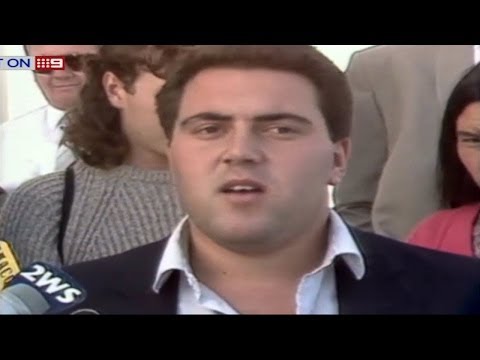
In light of that information, imagine how pleased Smokin Joe must be to see this news footage of himself from 1987. It hit the online news services last night. Smokin Joe might have morphed into Sweaty Joe again when he saw this.

He participated in a protest at Sydney University that saw security guards assaulted, windows smashed and buildings occupied. The pièce de résistance is at the end of this clip, where a younger-but-only-slightly-fitter Smokin Joe declares his support…… FOR FREE EDUCATION!!!!

Yes, the government’s $250 fee – that’s what this whole thing was about – was the beginning of the end for free tertiary education and Joe was ready to man the barricades to protect it.

Oh, the irony.

——

For the record, and before the peanut gallery start their hand-wringing…..

I’m not opposed to a more market based interest rate for HECS. But leave the dead people out of it.

And I know that many pollies have said things in their youth that they later regret. This is just another one. But what a relevant one at this particular point in time!!

And for those who wonder why we wouldn’t want an elitist university system here… our universities do just fine, thanks. And graduates rarely have to fear never getting a mortgage because of their student debts. The whole nation benefits from a more equity-based university system and it should stay that way.

Exit mobile version