Weighing the US Incursion Into Venezuela

Nobody feels bad for Nicolas Maduro today. The guy’s a jerk and nobody’s crying over him experiencing some consequences for his jerkery. But don’t get upset if people are, indeed, crying today. Metaphically, I mean.

Because this is not how things are meant to be done in a modern, civil, rules-based society.

The Seizing of Maduro

The US employed some precision bombing in Caracas in the middle of the night, cover for a special operations team that siezed Maduro and his wife, and spirited them away in choppers to an awaiting plane. He was then flown to New York, where he now sits waiting for a trial.

Kudos to the US military planners and soldiers for getting in and out with what sounds like minimal casualties on either side. It was impressive work – quite likely assisted from the inside – that in no way justifies its origins.

This incursion follows weeks of US military build-up in the area, and the bombing of suspected drug boats. The US administration provided no proof that those boats were carrying drugs. Not once did they try to sieze a boat, confiscate what was on board and try the crew in a court of law. They just bombed them (and bombed them again if the first bomb didn’t kill everyone on board).

This is not how things are meant to be done in a modern, civil, rules-based society.

The Reason

Officially, this is about ‘Narcoterrorism’. I hadn’t heard the word before the US used it in relation to Maduro, but it’s use actually dates back to the 1980s. Back then, it was used to describe the actions of rogues like Pablo Escobar, who’s looking sad, below.

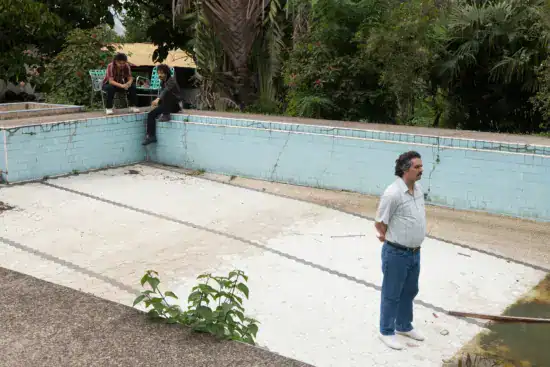
Escobar had so much money from manufacturing drugs that he could fund his own army to intimidate the Colombian police, and eventually, the Colombian government. He committed acts of extreme violence within Colombia with one hand to show his strength and intimidate the government forces charged with stopping him. With the other hand, he provided some community goods/services, to buy the loyalty of the people. This combination of drug finances and a belief system that demonised the government trying to stop him forms the genesis of the term narcoterrorism that’s being bandied about today.

Modern Narcoterrorists have included groups like Al Queda, ISIS, and FARC. They’re groups that have a core ideological cause that they’re willing to support with violence, and they’re willing to overlook any moral conflicts that their cause might have with very marketable drugs that can finance their terrorist activities. The end justifies the means.

Regular drug manufacturers have not often been labelled narcoterrorists, except by the governments they’ve attacked as they try to protect their operations. To Escobar, the Colombian population was one to be terrorised or protected in accordance with his own ends. The American population was his personal ATM. To whatever law-abiding offices existed within the Colombian government at the time, he was a narcoterrorist. To the US government, he was just another drug dealer.

But all this is just fluff and bluster anyway. The narcoterrorism charges and the trial that will follow are really just a pretense for what this is actually all about.

The Real Reason(s)

What was Donald Trump’s primary criticism of the war in Iraq again?

“You heard me, I would take the oil,” he said. “I would not leave Iraq and let Iran take the oil.”

Reason 1 is that Venezuela has the largest confirmed oil reserves on earth. More than the Saudis, even. And because the country is such a clusterf&@k after years of ineffective government, Trump thinks that it’s OK to go in and sieze those operations. He’s even justified it as taking back something that was stolen from the USA after Venezuela nationalised their oil production – expelling US producers from their fields – back in the 1970s.

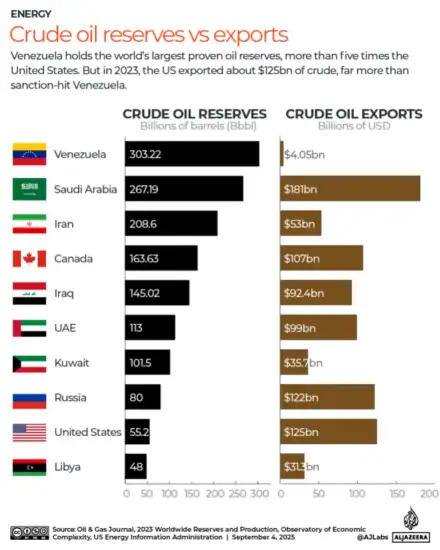
Kicking out the US producers that built a lot of your oil infrustructure was a shitty thing to do. It cost the Venezuelan people billions of dollars in growth and social services. But it wasn’t a breach of international law.

Flying in, siezing a recognised Head of State* and saying you’re going to take over another country’s resources IS a breach of international law.

And that’s not how you act in a modern, civil, rules based society.

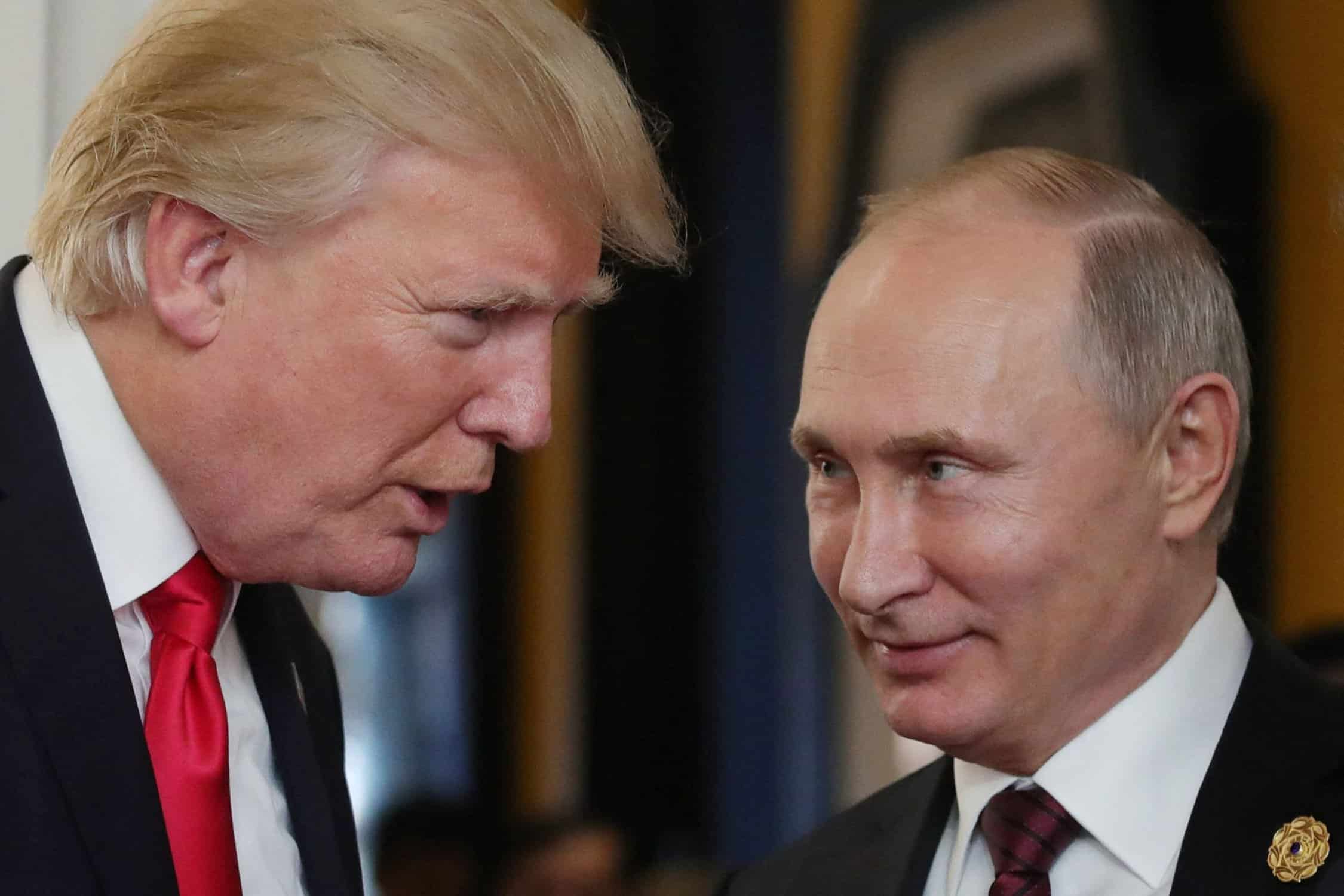
(* Maduro was not legitimately elected. But he was recognised as the guy on the ground you had to deal with there and he did have the levers of power to control. Put it this way: Maduro was a Head of State in the same way that Putin is.)

Reason 2 was outlined in the US Administration’s recently published National Security Strategy. The US has changed its posture, no longer counting China and Russia as primary threats to its national security. Where post-war alliances were fundamentally about values-based democracies, economic cooperation, and the rule of law, the focus is now on spheres of influence – being in charge of your own backyard. Might is Right. As long as your business doesn’t conflict with my business, do as you wish in your neighbourhood. Five families stuff, capisce?

Thus, Russia can likely have Ukraine as far as Washington’s concerned. And we’ll wait and see how important Taiwan really is, I guess (esp if Americans can finally manufacture all their own chips). The US will take firmer control of the Americas.

It’s going to be a smaller pond, but Donald’s going to be a much bigger fish.

So Who Cares?

Those metaphorically crying people that I mentioned at the start of this piece. They’ll care. Those who believe that the post-war order was a workable, successful framework for lasting peace and prosperity.

Before the 20th century world wars, people would go to war over just about anything. Men would charge up hills with their shields and swords and pummel each other to death. It was hell, but it was hell on a smaller scale. Nuclear weapons changed the game.

Leaders saw, after the first and second world war, that things HAD to change. The increased destruction possible with modern, mechanised weaponry meant that the world was now in severe jeopardy. The loss of life would not be confined to villages, or cities with medieval-scale populations. We were now talking about the firepower to wipe out modern cities/nations and all of their infrastructure. And left unchecked, some fool would eventually do it. Someone still might.

Leaders created the League of Nations in 1920 to promote peace and international cooperation, but it was a flawed model and without some critical adherents, it failed. With the development and use of nuclear weapons in WWII, there was a renewed effort, leading to the United Nations we know today. It established a framework for a rules-based international legal system designed to promote cooperation between nations, prevent war, enhance economic development and humanitarian assistance.

You might think me naive for believing in it. But I do. The UN isn’t perfect, but it’s done a hell of a lot of good in its time. And it was/is a good start in preventing the spread and scale of war.

With his actions in Venezuela, Donald Trump has potentially planted a final dagger in the UN’s back.

How Do We Read Into The Future?

People might pooh-pooh me for this – especially in the US – and that’s OK. You have your inside view. This is a common outside view.

For just over a year now, the current US administration has made it increasingly clear that the post-WWII order is on its last legs. The order that brought so much to world. It brought economic prosperity to some of the darkest corners of the planet. It brought a greater understanding of world cultures. It brought better health outcomes in less fortunate nations. It restricted nuclear proliferation thanks to a framework that de-escalated conflicts.

The Trump Administration has repeatedly shit all over the allies and friends that the US built up over 8 decades. Between tarriffs and security threats, those who’ve given decades in partnership to the USA are now being sidelined. Some might say it’s just a Trump thing, but how is anyone supposed to trust America again? Half your voting population responds to this. Who’s going to commit decades of cooperation and spending in the future to an administration that’s a) so corruptable, and b) something that could turn in the blink of an eye?

The post-WWII order was not perfect, but it rewarded rules-based international law and democracy, in all their various forms. It fostered peace and cooperation in an era where we now have enough weaponry to blow the planet up several times over. That’s no small thing. It was consistent, and predictable. It should have been subject to tweaking and recalibrating for changed circumstances, for sure, but the arc of history is a long one, and the future holds plenty of potential for course corrections.

Some questions and thoughts to finish.

Now that the American president has seen something he liked in a smaller country, and taken it, what separates America from Russia?

Now that historical alliances and agreements are SO questionable, and a signal has been sent to powerful countries that they can bully less powerful ones, how far will non-nuclear countries go to develop their own nuclear defence industries?

And how much closer to nuclear conflict does such expansion and increased tension bring us?

Breaking trust is breaking trust. It takes decades of cooperation to build, and only moments to fracture. With this move against one country, the Trump administration has fractured decades of trust built by dozens of countries.

The 2024 US election is up to you, my American friends. You have my sympathies.

The 2024 US election is eight months away as I write this and what a sorry story it is.

The blue corner….

A guy with an objectively admirable record of service and leadership over a long period of time. A few mistakes made, for sure. Afghanistan was a disaster and his backing of Israel to the full extent that he has is now looking unwise.

But the economy’s humming along – the Dow is up around 25% compared to when he took over – and things, generally speaking, are OK. His environmental leadership is admirable. He’s hampered by a ultra-conservative Supreme Court and a dysfunctional House, but he’s been a steady set of hands. America’s a better place right now because he won (quite legitimately) in 2020.

If only he wasn’t so damn old.

The red corner

A guy found responsible in a court for business fraud, for the sexual assault of a woman, and for the defamation of the same woman. A multi-time bankrupt. A guy who lost money on casinos! A man who lost the presidency, the house, the senate, who lost 60+ court cases related to the above, and who oversaw a woefully underperformed half-term campaign. A man accused of a) taking and hiding classified documents, b) paying off a pornstar to keep their encounter quiet, c) fomenting an insurrection, and d) conspiring with others to overturn the results of a democratic election. A guy who’s openly admitted that his legal strategy – as all innocent people would do, of course – is to delay court cases so that they fall after the election. That way he can either kill the cases as president, or pardon himself.

And he’s the one currently leading in some polls.

You should all know where my feelings fall on all this. I’m a bleeding heart lefty, after all.

I, and many like me, held some hope that the Americal legal system would hold Donald Trump accountable for his criminality. Quoting Dr King, I do believe ‘that the arc of the moral universe is long, but it bends towards justice’. Trump counts on extending the arc’s length, using it to escape justice by becoming president and shutting cases down from The Oval.

Any hope we lefties had of the courts doing their duty in a timely manner is diminishing.

The January 6 case

The Supreme Court declined Jack Smith’s request to hear Trump’s immunity appeal a few months ago. Now they want to hear it ….. in a few months time. If they’d come to this (inevitable) conclusion when Smith initially asked, we’d likely have a decision on the matter already. Now, they won’t begin arguments until April, which means a trial before Judge Chutkan won’t start until June, at the earliest. Probably even later. That delay that could see the American people unable to hear full evidence in court as to whether one of their candidates attempted to commit a giant electoral fraud against them.

I’m not going to say the Supreme Court is biased in favour of him. All I’ll say is that this smells, and not in a good way.

The classified documents case

In the classified documents case, Judge Cannon in Florida seems disinclined to get to trial, too. She’s taking motion after motion, offering stay after stay. She had a scheduling hearing last week that resulted in…. no schedule. Confidence is not running high.

The election subversion case (Georgia)

This case has been side-tracked by an enquiry into the Prosecutor, Fani Willis, and her relationship with one of her assistants, Nathan Wade (no relation).

This is part of the delay strategy. It doesn’t matter whether there’s any smoke there. The presence of fire doesn’t matter. Only the delay matters.

The paying-off-a-porn-star case

This is the only case proceeding to trial at this point, with jury selection beginning in late March. It’s good that it’s going ahead, and while descriptions of the presidential phallis are entertaining, this is probably the least impactful of the four cases Trump is facing. It shouldn’t be. There are 34 charges and they’re important. But ‘important’ is not how the media is covering this case right now. Hopefully that changes when the case begins in a few weeks.

——

The Media

The media (mostly) seems to be failing to meet the moment.

Followers of British politics may know that the BBC went through a time in the last five years where it insisted in allowing both sides of an argument to be given equal air time. That’s fair enough when it’s a legitimate debate that explores nuance. When one side of that debate is just outright bullshit, and the bullshitters are just exploiting your insistence on ‘fairness’, then something’s wrong.

Republicans know this. Like Donald Trump’s “delay” legal stragey, Steve Bannon’s “Flood the zone” strategy is well known.

…. the former head of Breitbart News and chief strategist for Donald Trump. “The Democrats don’t matter,” Bannon reportedly said in 2018. “The real opposition is the media. And the way to deal with them is to flood the zone with shit.”

Media outlets need to have the backbone to call a spade a spade.

But we can’t wait on them to do so.

——

The stakes

My American friends, the result of this election is in your hands.

If you’re planning to vote for Trump, then I wish you well but don’t let the door hit you on the ass on your way out.

If, on the other hand, you’re concerned about putting a would-be demagogue in charge of the economy, global peace, the nuclear codes, etc – regardless of whether you’re normally a Republican or a Democrat – then it’s up to you. Trump is preparing right now to argue before the highest court in the land that, as president, he should be immune from prosecution for anything he does in office.

Read that last sentence again and pause. Think about it.

Think about what we already know about the guy and what he would do with immunity in his utility belt.

He’s smitten with dictators. He’s OK with sexual assault (more than OK, actually). Read up on how the Christian Nationalist movement is backing him and understand that Roe/Dobbs is just the beginning. He’s dedicated to his own enrichment and bent on punishing anyone who opposes him. The only thing that matters is power and he’ll run over anyone, any institution, any issue, to get it, grow it and keep it.

He’ll appease Putin and hand over Ukraine. That will not end anything. It’ll only move Russia’s ambitions closer to Nato’s borders and the potential for global conflict will move with it.

A Palestinian solution will be off the table. Voters unhappy with Joe Biden for not doing enough to help people in Gaza will find no friend in Trump.

Donald Trump has voiced explicit backing for Israel’s war on Gaza, suggesting that he supports the goal expressed by the hardline government in Tel Aviv of continuing the assault until “total victory”.

Asked if he is “on board” with the way Israel was “taking the fight to Gaza”, the frontrunner for the Republican US presidential nomination responded: “You’ve got to finish the problem”.

Trump is oblivious to the historical fact that appeasing oppressors just leads to more oppression. Secretly, I think he’d like to be one of the oppressors, and he may just get the opportunity.

If he’s allowed to.

——

(Some of) the issues

If you care about the women in your life, their reproductive rights or just their rights in general, then think carefully about who you vote for.

If you care about the preservation of your country’s democratic institutions, then think carefully about who you vote for.

If you care about the separation between church and state, then think carefully about who you vote for.

If you care about global peace and agree that we’re all better off when working together rather than fighting – and you understand that appeasing oppressors is just delaying a fight, not avoiding it – then think carefully about who you vote for.

If you care about climate change and its consquences, then think carefully about who you vote for.

If you care about maintaining an economy that’s growing, that protects its middle class, provides a pathway for those who are struggling and produces enough GDP to maintain the social services a modern nation needs, then think carefully about who you vote for.

If you care about truth and fairness, then think carefully about who you vote for.

If you value the work of the press – the real, genuine and critical work of investigative journalism and the truth-telling that comes from it – then think carefully about who you vote for.

——

The conclusion

The courts are not going to put Trump out of the race.

The media’s not going to put Trump out of the race.

Nobody’s coming to save the day.

The only way this is going to end is for Joe Biden to present a compelling case to the electorate on the issues and – importantly – for the electorate to respond, turn up and vote.

It’s up to YOU to install a responsible government in this race.

I don’t envy what you’re about to go through but this is what Benjamin Franklin was alluding to when he was questioned about what type of government the US would have – a monrachy or a republic?

“A republic, if you can keep it” was his response.

(And note: Benjamin Franklin was 81 when he said that. Not bad for an old guy.)

If you’re concerned by a candidate who’s already tried once to overturn the results of an election and interrupt the peaceful transition of power, one who’s currently arguing for presidential immunity, then VOTE.

I’d rather Joe’d been a one-term president, too, and let someone like Newsom or Whitmer rise to national leadership. But he didn’t. And he’s not a bad guy for it. His government has been transformational in a positive way. While he flubs a few words and isn’t going to win any athletic contests anymore, you don’t have to worry about whether Joe Biden is going to sell your country down the river. He’s not perfect. But he IS good.

I’m cheering for you to do the right thing.

How I lost 25 kilos at age 50

Introduction

I originally prepared this text about losing weight in your 50s for the benefit of a family member who asked me about my weight loss experience a few years ago. I was going to make a few dot points and send them via text but then I figured a fuller explanation might be more helpful.

Given that this website is occasionally visited by men-of-a-certain-age, I thought it might be helpful here, too.

Nothing is being sold here. I’m not holding myself out to be some sort of diet guru. This is just my story and how things worked out for me. Maybe it’ll be work for you, too.

Note: the photo at the top of this article is me at, or around, my heaviest. I reckon I’m about 125kg in that shot with Erik Carlsson, which was taken in 2011 or 2012, IIRC. I was a big boy.

—–

I turned 50 in 2020 and given the significant nature of the milestone, I dragged myself off to the local doctor for a full medical. Most things came back OK, but not everything. Most pressing was the fact that my cholesterol was too high. My doctor gave me two choices:

1. Go on cholesterol medication, which tends to be a rest-of-life thing from when you start taking it. Or….

2. Lose some weight.

I’m always averse to taking medications, if avoidable, so I figured it would be a win-win to try and shed some kilos.

I weighed 115kg at the time of my check-up. It’s not the heaviest I’ve been in my life but it was not a comfortable weight, either. I tired easily, my clothes didn’t fit (and I love my shirts!), and I wasn’t sleeping well. I just didn’t feel good.

That was March 2020.

As of June 2021, I weighed in at 89.9kg. That’s 25kg off in 15 months. And my cholesterol count was no longer in the danger zone. As at the time of writing (Feb 2024), I’ve put on a couple of kilos, but am still firmly in the low 90s.

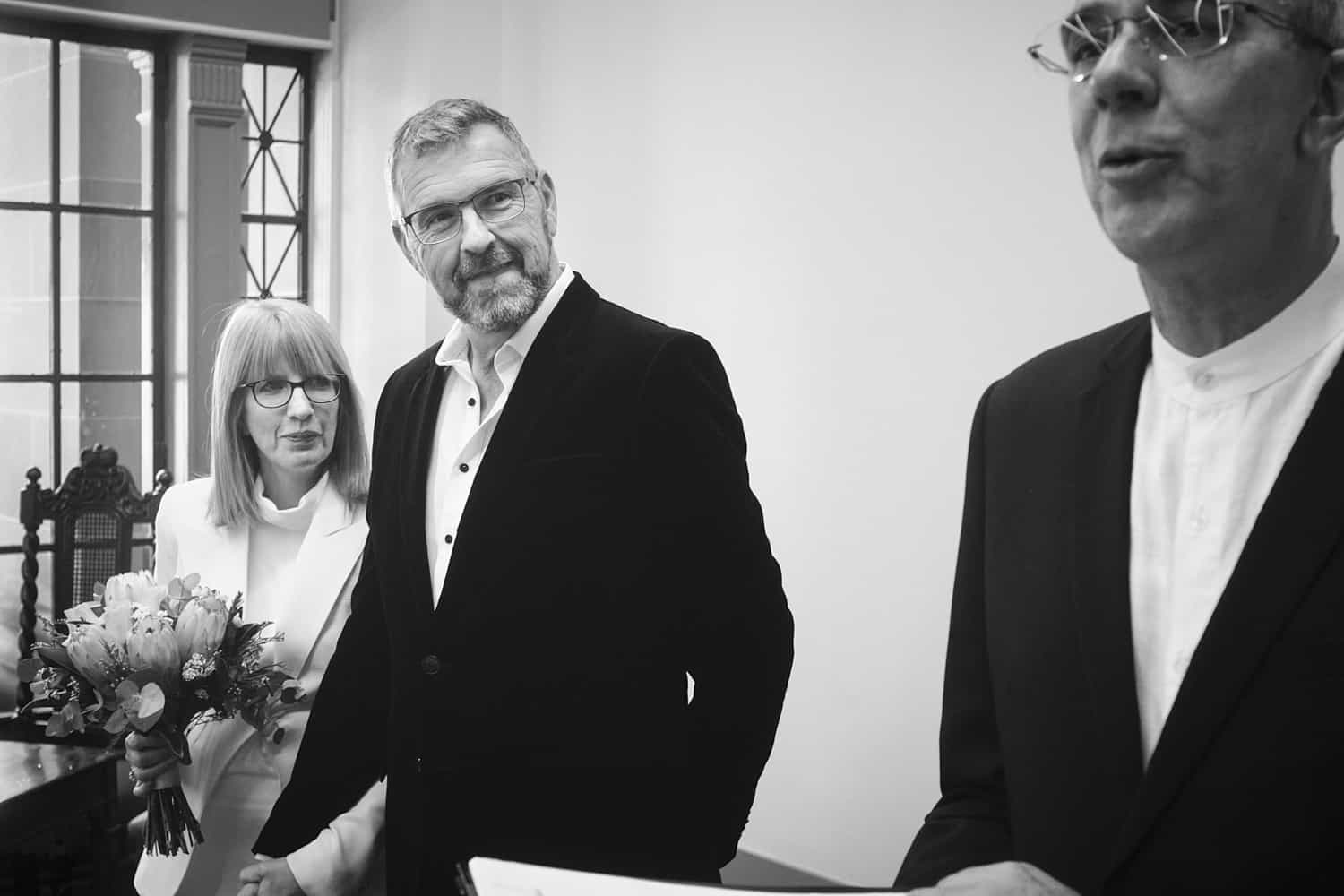
Below: A slimmer me, at 90kg, getting married to Caro in 2022

How did I do it?

There were no tricks, fad diets or shortcuts.

For me, it was sleep, diet and exercise.

Sleep

I’d known for a long time that I had sleep apnea. I went for an overnight test at a sleep clinic in Hobart around 2006 and the whole experience was terrible. They attached a massive harness full of sensors and cables to my head. It was thick and uncomfortable. I looked like a pasty-white and overweight Bob Marley. And they expected me to sleep with this Predator-like headpiece in a foreign bed?

No. The biggest ‘test’ involved in this exercise was actually getting to sleep.

Sleep tests have changed a lot since then. I got a referral from my GP and did my test through Air Liquide, which has offices all around Australia.

Pro tip
In Australia, when you consult your GP about doing a sleep test, the GP will ask you a bunch of questions. It’s a standard questionnaire used around the country and if you score enough on that, you get your sleep test for free!

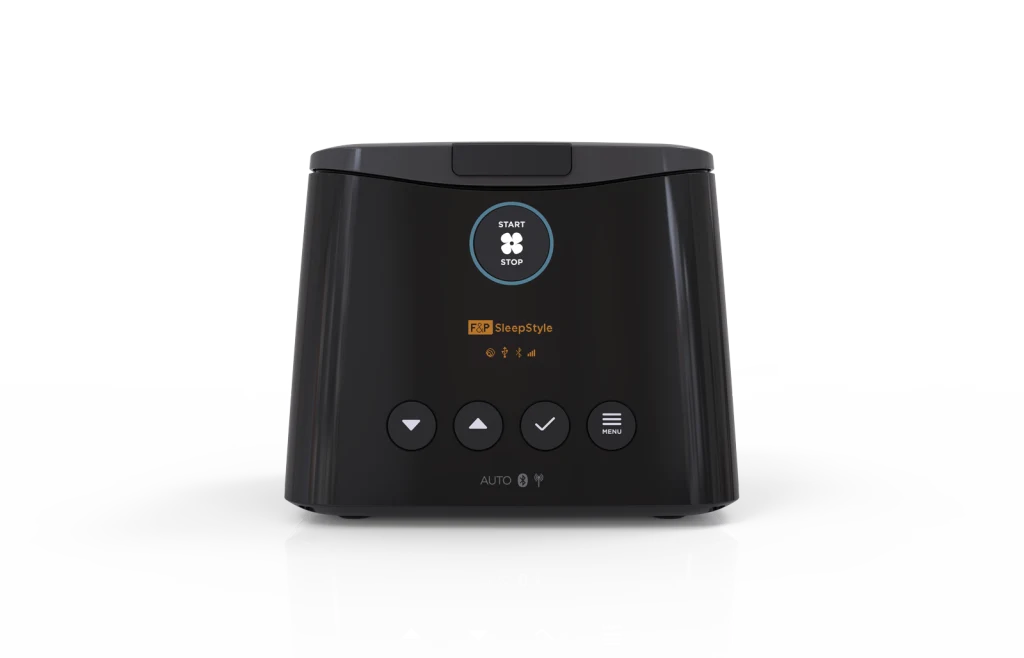
The sleep test I did in 2020 involved a small diagnostic unit worn on the chest with seven small sensors on the skin. You do it at home. The test kit is easy to fit and it didn’t obstruct my nighttime movement at all.

Once you return the test kit, they’ll analyse the results and if you need a CPAP machine, they can sell you one.

I needed one. And I’m so glad I got one!!

I’ve always been a 6-hour sleeper. I still only get 6-7 hours a night, but now it’s usually uninterrupted, which makes a massive difference. Here’s a quick primer on why sleep is so important (SA Health govt site)

The machine cost me around $1600 but it’s been worth every cent.

——

Diet

Diet was always going to be the hardest part for me. There was a time I was eating KFC for lunch 4-5 times a week. Sometimes that was topped off with BBQ Chicken for dinner at night. Or pizza. Or Indian. Plus a packet of chocolate biscuits. And maybe some potato chips. All in the same night. While drinking Coke.

I was the Michael Phelps of shite food.

Thankfully, by taking a long-term view and finding food combinations that worked for me, I’ve been able to establish a routine that seems to work.

The things I eat now

I don’t have a meal plan. I don’t eat the same things on set nights every week. All I’ve done is establish a small set of things I can count on to fill a hole at meal time. They’re tasty and they help me reduce the urge to snack.

Here are a few things I eat/drink now. They work for me. They might not work for you but the point is to find something that does.

Sugar-free drinks

Sugar is your enemy. And sugared drinks are killers when it comes to your health.

Sadly, even though I’m over 50, adult things like coffee and tea are not part of my life, so soft drinks (sodas to you Americans) are still a big part of my day. That meant lots of sugar intake. I used to drink at least three Cokes a day.

That’s now a thing of the past. While visiting an Aunt and Uncle in Melbourne back in 2020, I had a sugar-free lemon drink. It was good. And so began my affair with sugar-free drinks.
I now typically drink 7-Up Zero. There was a range of drinks back in Australia called Kirks which had a less hazardous sweetener in it. I might switch back to those when I return to Australia at the end of 2024. But for the moment, the important thing is getting off the sugar.
Pro tip
Make it sustainable to help make it work. Yes, fizzy drinks are a bit childish for a 50-something, but maintaining that link to something I liked makes it sustainable. Going cold turkey might have worked but for someone like me, it’s odds-on that it wouldn’t have. Do what’s good for you AND has the benefit of being sustainable.

Salads

Ha! Me eating a salad. What a laugh.

Some may laugh at my choice of salad. In fact, it’s referred to in our house as a ‘Bullshit Salad’. I don’t care. It works. And as with my pro tip, above, it makes things sustainable.

My salad consists of:

  • Oakleaf lettuce
  • Capsicum (that’s a red or green pepper for some of you non-Aussies)
  • Grated carrot
  • Sliced cucumber
  • Light shredded cheese
  • Bacon

Hey, they use bacon in a Ceaser salad. It’s a legitimate ingredient! And it’s not bad for you. Eating an entire pig is bad for you. A bit of bacon a few times a week is fine.

Steak and veg

Simple. A bit of well-cooked steak and a few veg.

Do the steak right (well seasoned, three minutes each side on high heat) and there’s nothing better.

Breakfast Cereal

Carman’s Oats, Cinnamon and Vanilla. Soooooooo good. It’s lower in sugar than most of the cereals I’ve seen and it tastes deeeelicious.

OK. There’s a chance it gets eaten for meals other than breakfast. Guilty, your honour….

Others

I eat a bunch of other things, too. Stir fry, slow-cooked stuff, burritos, wraps, toasties, and more.

Some people are real foodies. Every meal is an event. That’s not me. A meal being an event is something reasonably rare for me. When it is, it’s OK to dig in. I enjoy the moment.

I just try to eat the ‘moment’ meals and other stuff according to the pro-tip below…..

Pro tip
‘Lagom’ is a Swedish word and, I believe, a Scandinavian principle that influences the Scandi outlook on life.

Lagom is the idea of having “enough”. Being satisfied. Enjoying things but not being greedy. It’s a philosophy that’s not so familiar in the Western media but it’s something that can be applied across broad slices of life. The size of your house. Your type of car. Your indulgence in….. many things. And of course, food.

Portion size is important. We’re often full well before we finish eating. We keep going because it tastes good, not because we need the energy input. Make up a smaller plate and see how you go.

Lagom.

Things I don’t eat anymore……

  • An entire box of cholcolate biscuits every night (TeeVee Snacks were my favourites).
  • A full bag of chips in one sitting.
  • Bread – not much, at least.
  • Pasta – not as much as I used to. But I still love it when I do.
  • Fast food – BBQ or fried chicken, sausage rolls, etc. I still love them. I just don’t feel like them much anymore.

There’s nothing wrong with any of these things in moderation. It’s just that, for me, it was really hard to eat them in moderation.

Have one (small) treat

Denying yourself absolutely everything is a recipe for misery, and ultimately, failure. In order to keep things sustainable, I used to allow myself one treat on a regular basis – Mint Slice biscuits. That was in Australia. Right now, I’m living in Sweden and my treat of choice is a Kex.

Your treat will be something else. Allow it. Just don’t overdo it. I have a treat every day and it keeps me happy. Being happy in moderation keeps me on track in other parts of the diet/exercise equation.

—–

Exercise

Disclaimer
I’m fortunate enough to work from home. I don’t have kids. I recognise that I have more flexibility to control my own schedule and fit my work in with my exercise goals.

You might not.

Having work commitments and having kids are geniune reasons why exercise might be difficult. Exercise takes time you might not have. The trick is to make sure those commitments don’t shift from being reasons to being excuses.

My exercise regime started pretty simple – I walked.

I started walking when I was living in Sweden between 2015 and 2019. I did a few kilometers at lunchtime, and around 5km once or twice a week.

I stopped walking when I first returned to Australia in 2019 but eventually started doing a similar routine – a few kilometers at lunchtime and a 4km walk a few times a week.

It took a little time to walk 4km at a brisk pace without getting tired. Yes, you might have to work your way up to it. That’s OK.

The key, for me, was to find a regular route. It might sound a little boring to walk the same one or two routes regularly but having a routine that you don’t have to think about makes it easier to keep doing it. I find variety in the things I observe, the people on the route, the podcasts I listen to along the way. A familiar route that’s near to work/home just makes things easier.

Today, I walk for an hour in the morning and I try to do an hour in the evening if I can, too.

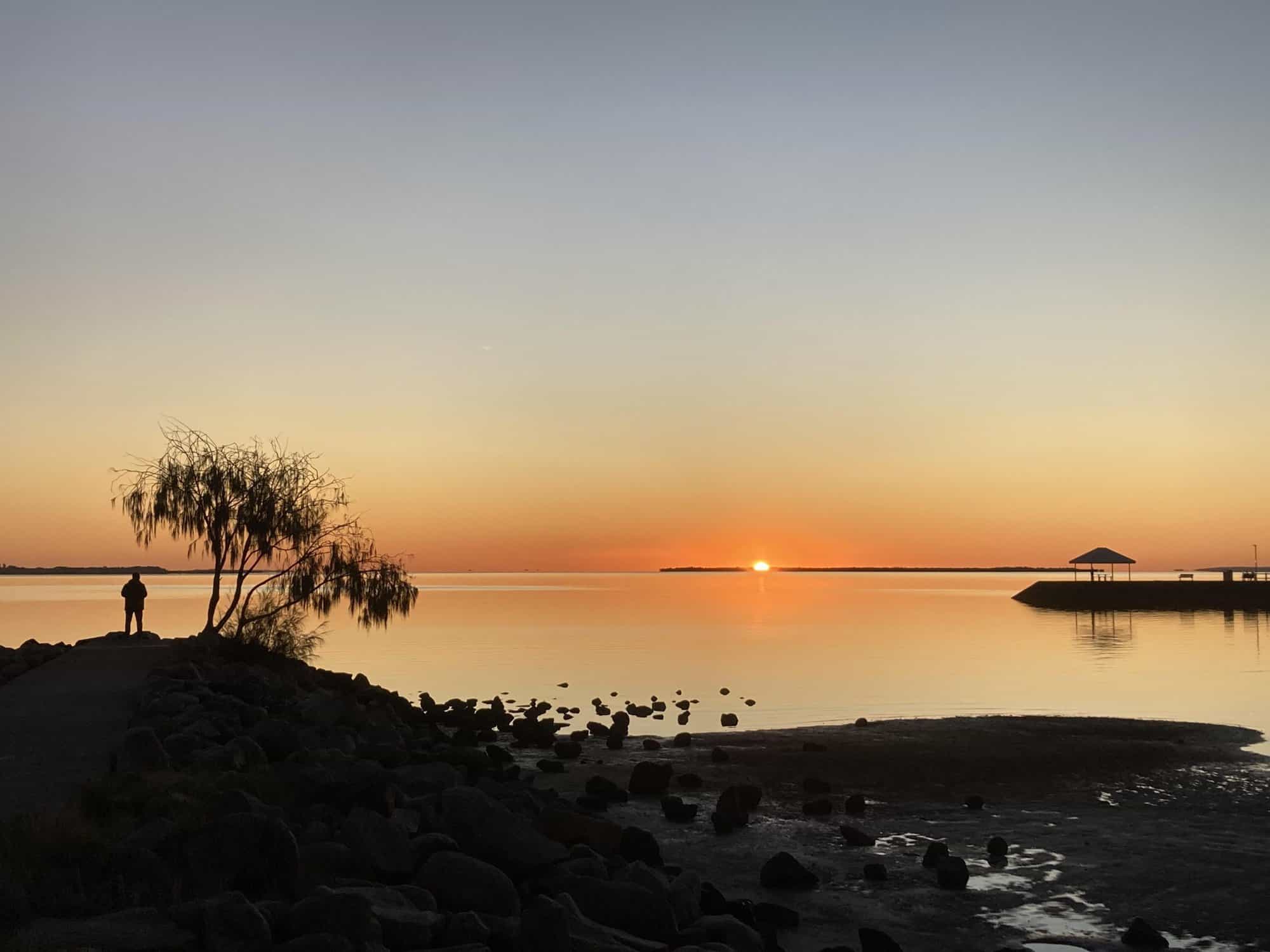
Below: The start of my walking route in Brisbane. It makes it a lot easier to do everyday if the route is a) nearby, and b) as pleasant as this

I’d recommend your route be as flat as possible to start with. Hills can be an easy disincentive when you first start a walking regime. Walking briskly along a flat route will build up your conditioning and base-level fitness. Pick up some hills once you feel like you need a new challenge.

Or start running.

I live in Sweden right now and running isn’t really palatable for me, here. When I was back in Australia I ended up running three mornings a week – Monday, Wednesday, and Friday. I used the Nike Run Club app to keep track of my pace. It’s a good data record and it uses GPS to track your time, per-kilometer, giving your inner competitor something to tussle with.

I’d done a year or so of walking before I started running. I started with a 1500 meter run a few times a week. Then 2km. Then 3km. Just before moving to Sweden I was doing 5km per run, three times a week.

It can be done. It feels good.

The bonus with this type of activity is that you get your heart pumping. It’s OK to walk 10,000 steps a day but you’re spreading that out over a whole day. Doing a concentrated block of activity puts a little stress on your system, forcing your insides to adapt and stretch their capability. Don’t overdo it, but do it.

Everyone has different time available to them for exercise. As mentioned earlier, I can fit this in with my work schedule and still get everything done. It’s understandable if others can’t fit that in. Life today can be a bit crazy. Whatever you do, though, it’s better than doing nothing.

Pro tip
If you’re going to start running, invest in some proper running shoes and socks. They really do help. They don’t make you go faster but you’ll notice the difference in your joints when you finish. $260 is a lot of money for shoes (in my experience) but it’s money well spent.

Notes

Scales

Others may disagree, but for me, what gets measured gets done.

I weigh myself at the same time every day. I get up. I go for my walk/run. When I get home, I have a shower and then I weigh myself before breakfast.

You might think weighing in every day sounds a bit obsessive. It doesn’t feel that way to me. It gives me a day-to-day look at how I’m tracking. It allows me to see what effect my diet and exercise from the last few days has had.

If I’ve had a busy few days in terms of eating, I understand in real(ish) time what effect that has on me and can adjust in the coming days. Weighing in regularly avoids most of the nasty shocks.

Patience

I did a similar weight-loss regime around 2013/14. From that experience, I knew that it took time to see/feel a difference.

This time, it took a month or two before I started seeing progress on the scales. I felt better, but the scales didn’t show that I was getting any lighter.

It’s important to be patient and to stick with it. It can be a real disincentive when you don’t see the progress you’d like to. Hang in there. It’ll come.

Eventually, as you sort out your routines and work on your consistency, you’ll start to see the needle move.

Enjoy your wins

It’s important to enjoy the journey and part of that is celebrating your milestones. Enjoy the achievement.

Have a treat, by all means. Then get back on the job.

Everyone is different

The stuff written above is what has worked for me.

You’re different. You might have to discover some different things that work for you. That’s OK. Just stick with it.

The old cliche applies – this is a marathon, not a sprint.

Find what works for you and make the most of it. The benefits in terms of energy, fitness, health, and enthusiasm, are worth it.

Share the experience (with limits)

Others will have to answer this for me but I try not to be a jerk about my progress. I have a few people that I share my progress with. Everyone else – they’ll notice if they notice and if not, that’s absolutely OK.

I share this bit of my life with my doctor, my wife, and occasionally, my Mum (from whom I seem to have inherited an exercise gene). Your attitude might vary, but I find it helps to have a few people around you who know where you’ve come from and who care enough to keep you accountable in an understanding way.

Conclusion

To the general reader: Losing weight in your 50s is not easy but it’s really not as hard as you fear. It takes some commitment and willingness to change but it’s change you can be in charge of. Your health is important. It’s a great balancer for other aspects of your life, too. It’s important to you, your family and your friends. Pick some of them and share the load.

To the guy I wrote this for: Both your health and your life are extremely important to me. It’s a great balancer for other aspects of your life and therefore, it’s important to you, your family and your friends.

The Post-Trump Lesson I Pray We’ll All Learn

I promised four years ago that I’d leave this website free of commentary on Donald Trump. Unlike the former president, I’ve kept to my word.  Well, until now, I guess.

The demise of The Donald – and my god it feels good to write that sentence! – gives us a brief moment to assess the important lessons to be learned from his time in power.  There are many.  Don’t nominate a Clinton again.  There’s one.

The lesson I’m mostly interested in, however, is the one Joe Biden alluded to in his inaugural address when he talked about truth and lies.  It’s something that I first wrote about in detail way back in 2017, in this post.

My short definition of Fake News back then:

…anything that Donald Trump doesn’t agree with

The longer, and just as accurate version (corrected for tense):

Fake News is a news story that looks like it could be true, but isn’t. It bears some resemblance to ‘a’ truth if you squint hard enough while reading it, but it smells a little bit funny and eventually, is proven to be untrue.

Donald Trump stuck to his own definition pretty religiously.  If anybody said anything critical about him or his actions, his gut reaction was to label it as Fake News and feed it as such to his base.

Fake News took a more sinister turn during the Trump presidency, too, which is the part I’m most hopeful that the world will find a way through.  Between 2016 and 2020, Fake News jumped from being something slightly warped from an actual reality, to an alternate reality with its own ecosystem of support.

These typical examples will be familiar to you all:

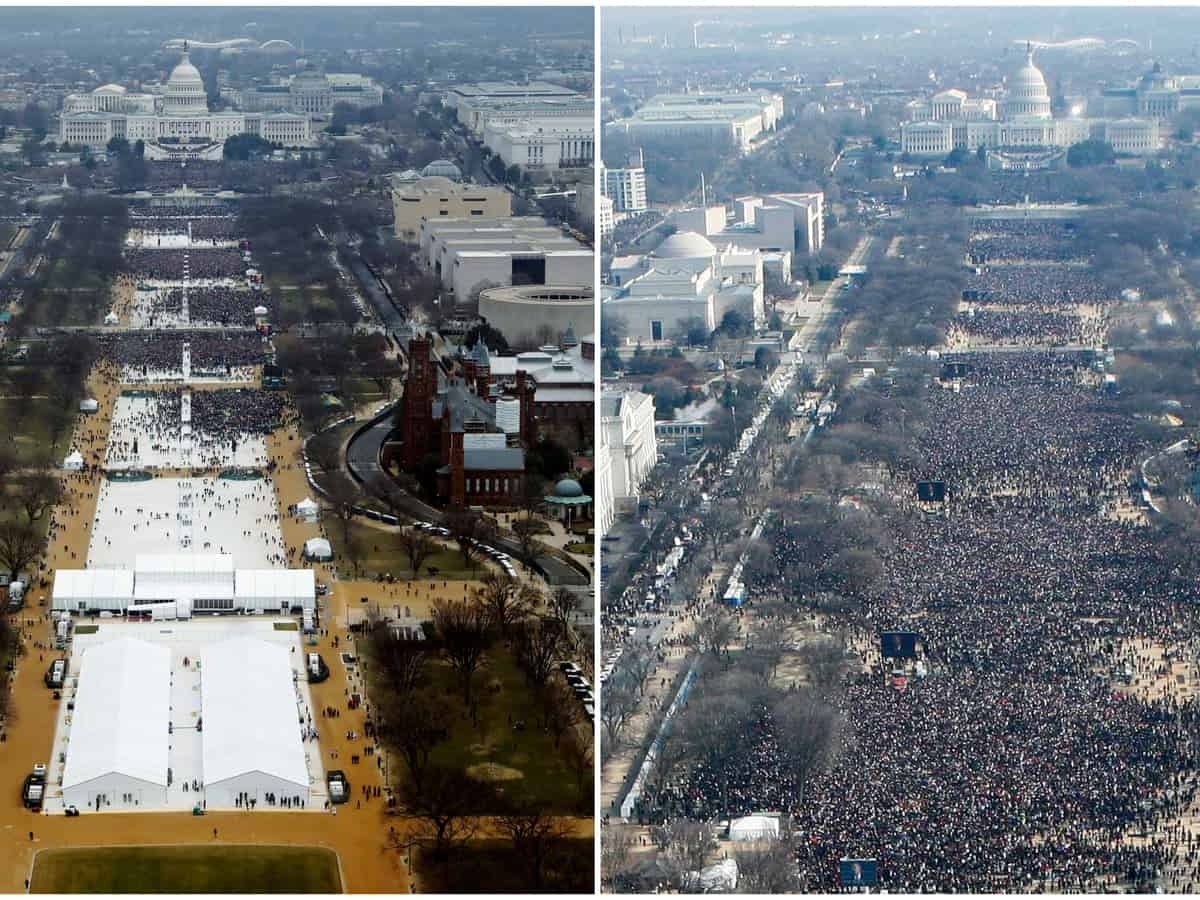
The Crowd – on day 2 of Trump’s presidency, the White House communications director, Sean Spicer, stepped up to the White House podium and said, on camera and unequivocally, that Trump’s inauguration was the best-attended inauguration ceremony in the country’s history.

Quote:

[It was] the largest audience to ever witness an inauguration, period, both in person and around the globe.

Unquote.

It’s a harmless lie, I’ll admit, but it’s a lie nonetheless and what’s more, it was a pretty good indication as to what was to come.

The Sharpie

This is another harmless lie in the overall scheme of things, but the lie being so harmless begs the question – why do it?

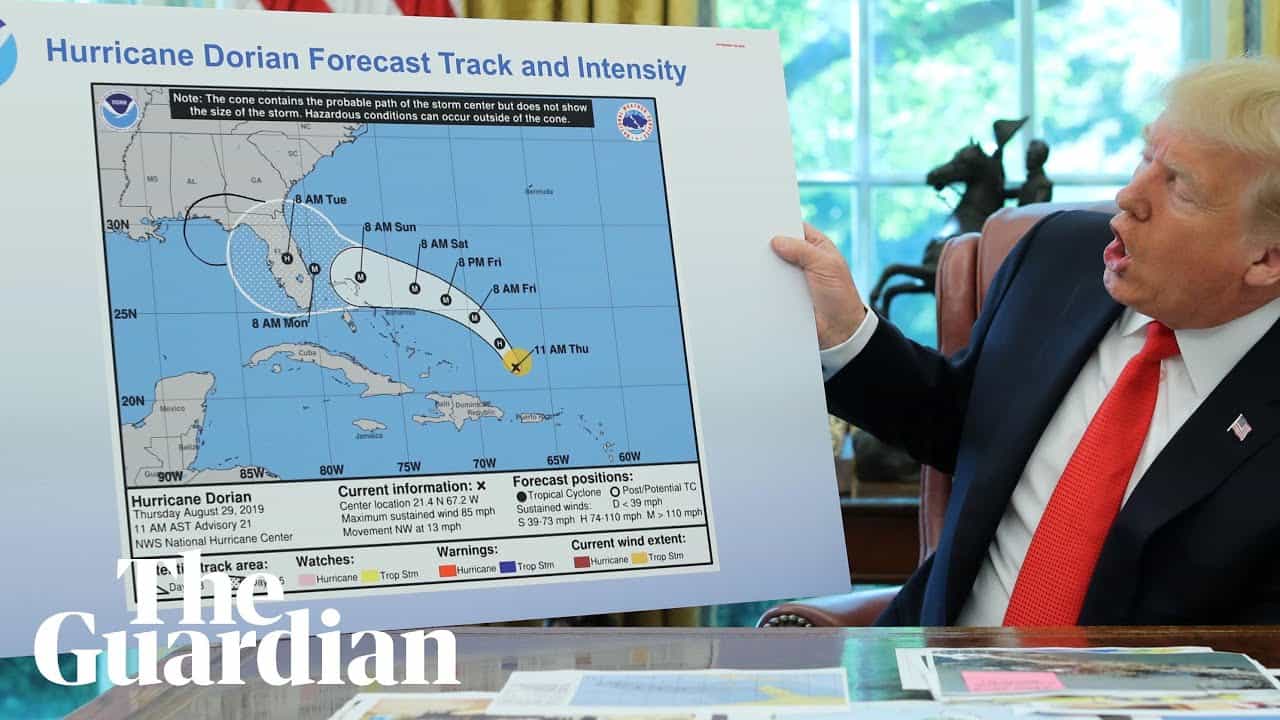
Trump incorrectly included Alabama in a hurricane warning.  The residents of Alabama were rightly quite frightened by this news.  The local authorities assured them they were safe.  Rather than admit the mistake, Trump presented a map that had been quite crudely altered using a black Sharpie pen as evidence to show he wasn’t in error.

Read more here.

The Virus

A lie made often in vain hope, but perhaps the most destructive lie Trump told in his four years as president.

Comments like “The Coronavirus is very much under control in the USA” in Feb 2020 and “it’ll disappear, you watch” were made somewhat in hope (though it should be noted that the first of these comments was made after Trump’s conversation with Bob Woodward, where he acknowledged that the Coronavirus was much more dangerous that people were being told).

Comments like “Some people say you can test too much” were more sinister, designed to cover up his Administration’s lack of commitment to, and incompetence in, handling the pandemic as it emerged in 2020.  This includes incompetence that led to some of the most unbelievable headlines you could ever imagine.

As of the time I’m writing this, the USA has more than a quarter of the world’s total cases.  More than 417,000 people have died with coronavirus in the USA.  The last 7 days have seen an average of 3,076 deaths per day.  The virus didn’t disappear.

The Steal

Donald Trump promoted The Steal starting way back in 2016.  Even then, he promoted the twin ideas of voter fraud and a stolen election as his numbers vs Hilary Clinton started dipping in the polls:

Later, at the evening rally in Wilkes-Barre, Mr. Trump raised more concerns about voting fraud. “I just hear such reports about Philadelphia,” he said. “I hear these horror shows, and we have to make sure that this election is not stolen from us and is not taken away from us.”

Trump raised this argument again and again in 2020.  It was one of his primary talking points during the campaign, morphing into an obsession that would completely dwarf his duties as president once the election was run and lost.

The Trump campaign lodged, and lost, more than 60 court cases alleging election fraud in states all around the country.  In speech after speech, at rally after rally, and in interview after interview, Trump and his boosters alleged that the election had been stolen.  Meanwhile, state electoral bodies – the majority of them in question being under Republican control – conducted recount after recount and audit after audit, confirming that the 2020 general election was statistically free of fraud and/or error.


The presentation of opinion-as-news – and more pointedly, lies-as-news – became “new normals” while Trump was president.  Fabrication became a cultural norm, given tacit approval by a spineless Republican party that was happy to look the other way in exchange for tax cuts and judicial appointments.

This new normal transformed into its own ecosystem thanks to cults such as Q-Anon, constructing an alternate reality mixing real-world people and events into a fantasy that has, quite literally, millions around the world sucked into its web.  A combination of choose-your-own-adventure and fan-fiction but with very real story endings.

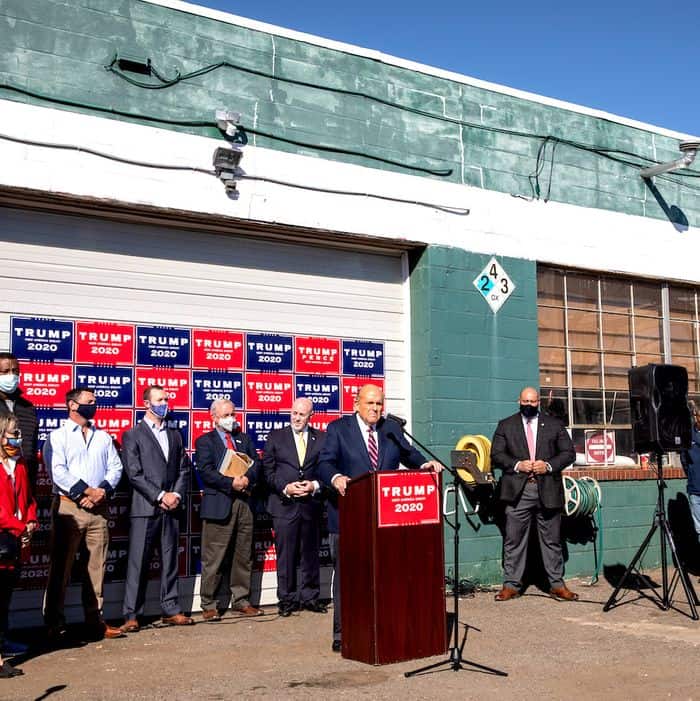
Weeks of escalating post-election rhetoric and tension fomented into a rally in Washington where Trump, Giuliani and others whipped up the crowd and inspired them to march to the Capitol.

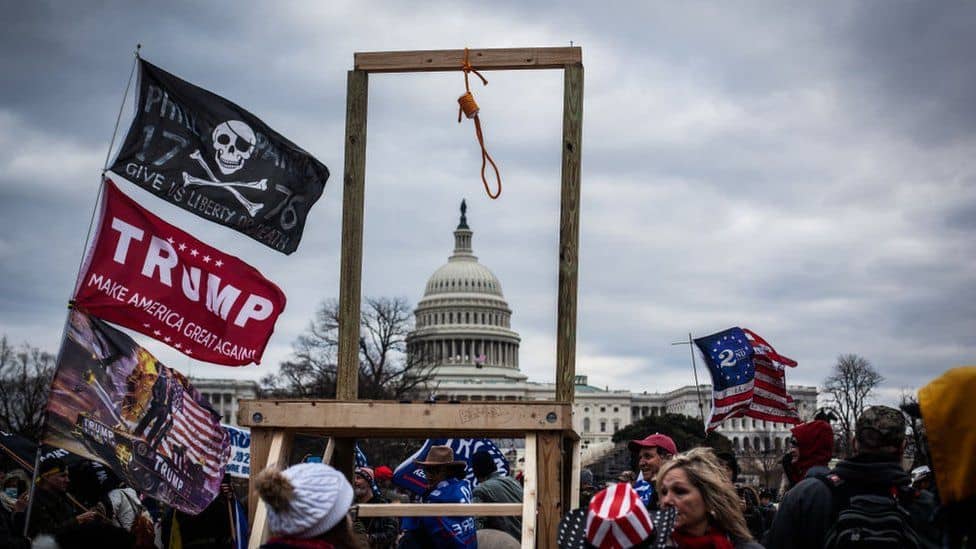
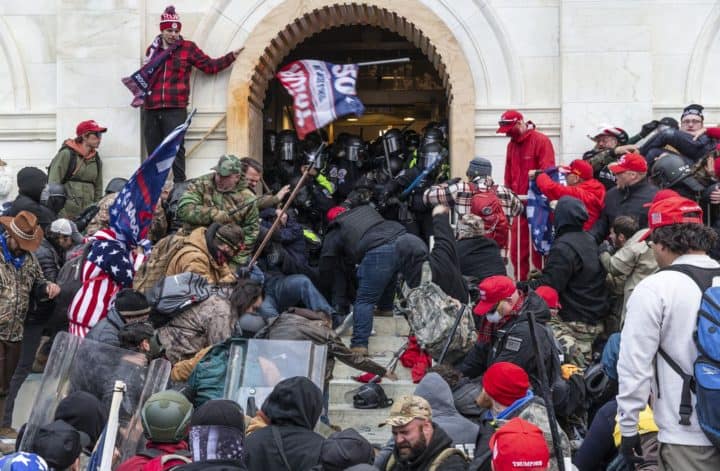
The January 6 insurrection was the culmination of all this.  Trump’s hand-built narrative of stolen elections was combined with the Q-Anon paranoid belief that he was some sort of anointed warrior destined to bust open rings of corruption and paedophilia, opposed by a non-existent Deep State determined to bring him down.  Anti-government militias and bovver-boy mobs bought into the idea of Trump’s outsider status and his determination for revolution.  They can be seen moving through the crowd in organised formations.  Many reports (such as this one) talk about calls in the crowd for vice President, Mike Pence, to be hanged.  For House Leader Nancy Pelosi and Congresswoman Alexandria Ocazio-Cortez to be kidnapped or killed.

Inside the Capitol itself, Senators Ted Cruz and Josh Hawley were doing more than just playing a PR game.  They were attempting to use senate procedures to overturn free and fair elections in selected states.  A handful of senators voted with them, along with nearly a third of the House.


I don’t fear another Trump-led attempt at revolution.

Trump was never in politics for the public good.  Trump was in it for Trump.  This whole stolen election campaign has been about him saving face, staying relevant, and being the person that he is – someone who’s always been allowed an escape clause.  His time, and that of his ragtag group of goons has passed.

What I fear is the next version of Trump being competent.

I fear a public that doesn’t know how to think critically anymore, a public that stops listening to the news and lives on a Murdochesque diet of opinion-as-news and is blind to its own fate.  I fear a protagonist who’s better at spin, better at mixing lies with the truth and exploiting the public’s fears, its need to get one up on the ‘other’ in their lives.

Somewhere out there, there’s a young, charismatic right-wing thinker who knows that he can be more measured than Trump.  More precise.  More targeted.  And somewhere out there is a party-machine specialist who’s seen how effective this movement was.  It didn’t overturn an election this time, but with a bit more finesse…….

The antidote to this is critical thinking.

As I mentioned to an old mate on social media last week:  you might have a kid that comes home screaming that the sky is red, that water isn’t wet, that the earth is flat, or whatever.  For a while, you humour them and their curious beliefs in the interests of keeping a peaceful house.  You might spar with them a little and poke fun in a light-hearted way.  Eventually, though, you owe it to your kids to educate them to think critically, to seek real evidence and evaluate it in a balanced way.  You owe it to them to think for themselves.

Journalism is not a loved profession.  There are genuine reasons for that.  Media owners have morphed news services into entertainment and we’re all worse off for it.

But good journalism has never been more important.

Critical thinking has never been more important.

Considered judgement has never been more important.

If I can leave you all with one thing to think about from this piece, it’s this:  Read.  Think.  Discuss.

Don’t tell me what your preferred commentator thinks about an issue.  Tell me in your own words what YOU think.  Back it up with reasons why.  Back that up with sources that involve expertise and/or recorded events from reputable sources, not commentary or opinion.

I am a bleeding heart lefty, as long-time readers of this website will know.  I’m a team player when it comes to society and I wear my heart on my sleeve.  You may not believe that we’re all in this together, but we are.  Your world affects mine, and vice versa.

Let’s come at it honestly.


A final word…..

Comments are open on this piece but if your name is Peter G or Dick L, don’t bother.  Your comments will be erased as soon as I see them.  You have no place here.

On Australia’s Vote for Same Sex Marriage – Resolving the Issues

This is the third (and final) instalment in a series on Australia’s current debate over making same-sex marriage legal.

The first instalment looked at the backstory to the issue.

The second instalment looked briefly at the Yes and No campaigns, as well as my view on the issue.

In this final instalment, I’d like to look at a few of the key issues and try to shine some light on those issues.

——

The ‘Yes’ campaign has a pretty simple platform: It’s time for same-sex couples to get the same access to marriage as heterosexuals. Australia is an egalitarian society and it’s time our marriage laws stopped discriminating against same-sex couples.

The issues that have made this such a complicated affair are pretty much all raised by the ‘No’ side of the debate. They’re the issues that I’d like to address here.

——

Same-sex couples in civil unions are treated the same as de-facto couples and the law has already been changed to give de-facto couples the same rights as married couples.

Umm, no. This is not true.

Yes, de-facto couples (couples in a relationship under the same roof but unmarried) do get many of the protections offered to married couples under the law. But not all.

The rights of a married couple are established as soon as the marriage certificate is signed. The rights of a de-facto couple are different from state to state, and they also differ depending what area of the law you’re looking at. The definition of a couple used by Centrelink is different to that used under migration law, and different again to that used under family law.

Married couples have more automatic rights with regards to IVF at the beginning of life and more rights about health decisions for their spouse at the end of life. They have less complicated proceedings available for divisions of property, and estate management. They have more rights and simpler procedures when it comes to superannuation.

Another key problem is that civil unions are administered by state law. The Marriage Act 1961 is a national law and all marriages in Australia are recognised under this law. Civil unions are established under inconsistent laws across the states and territories that actually have them (you can’t register a civil union in Western Australia or the Northern Territory at all).

If your partner is in a car accident in Sydney and ends up in hospital, a doctor will immediately know what your rights are if you can tell them you are that person’s spouse. The terms are clear. Saying “I’m their partner according to a Queensland civil union” lands you in far muddier waters.

Furthermore, while Australian marriages are recognised pretty much everywhere around the world, civil unions registered in applicable Australian states are barely recognised anywhere – a big problem if a couple moves overseas for work.

This piece at The Conversation will give you the full breakdown.

The bottom line: significantly similar rights are indeed available to both married and de-facto couples but de-facto couples have to jump through a lot more hoops to get access to them (well, the ones they actually have access to). It’s far from automatic.

I don’t necessarily see a problem with parts of that. If a couple does not want to marry, if they don’t want to declare their relationship in public and commit to one another in that way, then that’s their right. They can choose to forego the rights that marriage offers them and stay as a de-facto couple if they wish.

The problem is, a lot of same-sex couples DO want to declare their relationships in public and commit to their spouses. They’re not choosing to live together as de-factos. They want their family unit just like their hetero brethren, and it’s being denied to them purely on the basis of their sexuality.

It’s discrimination.

——

Why can’t we just amend the laws around civil unions so that same-sex couples get the same rights as married couples, but without it being called marriage?

Because that’s not marriage equality. We don’t need to create something new and different for same-sex couples. We already have something – it’s called marriage.

There is social currency in marriage. A married couple is one that has decided to declare for one another in the presence of witnesses and according to the laws of the land. They carry obligations to one another and have rights under the law.

Marriage is understood by society. People know that some marriages last and some don’t, but they know that a married couple has been serious enough about each other to tie the knot and they respect that.

Former speechwriter to Tony Abbot, Paul Ritchie:

“Allowing same-sex couples to marry is not just a matter of law. It’s also a matter of heart and soul. It reflects a universal hope: to be blessed by family and friends, and to share your life, with its trials and tribulations, laughter and joy, with the one that you love.


“The institution of marriage affirms us as people; gives standing to our most significant relationship; and changes our families for the better. It is an institution that points to a better life and helps us answer the deepest question: can I selflessly love another and find meaning and purpose in that love? This is a conservative ideal,” he writes.

What’s at question here is whether or not the respect that society gives to married couples should be given to all couples, or just heterosexual couples.

This is where a lot of Christian conservatives get their noses out of joint.

To Christians, marriage is a sacrament – “til death do us part”. It’s a human manifestation of the unbreakable bond between God and humanity.

To the courts, marriage is a legal arrangement that’s defined by statute. Like all good first-world countries, Australia has a distinct division between church and state. The definition of marriage in this instance is a matter of law, not a matter of religion.

This really is a key point that gets stuck in a lot Christian craws.

They want marriage how they see it. It’s theirs. It’s ordained by God and being married is something special that they don’t want to be confused with something so fundamentally sinful as homosexuality.

Other ‘sins’ are OK. But not this one.

It doesn’t matter that many of the people getting married are Hindus, or Muslims, or Buddhists, as long as it’s a man and woman. It doesn’t matter that many of the people getting married are shite at being married and end up divorced (multiple times), as long as it’s a man and a woman. It doesn’t matter that many of the people getting married are shite at being parents to their progeny, as long as it’s a man and a woman.

A conservative Christian sees all those situations as redeemable. They can equate their marriage with those people by saying ‘there but for the grace of God….’

But not this. Homosexuality has a special place in hell to them. Presumably one without lubricants*.

While it’s mostly unspoken, one of the things Christian conservatives hate the most is the idea that two gay people getting married might be equated with their marriage.

They want the word ‘marriage’ to themselves.

This is why you hear things such as “I’ve got nothing against gay people, but…..” and “I’m happy to see their rights protected, but……”

I’ve actually had one person propose to me that a new arrangement could be set up for same sex couples called a Homounion.

I’ve heard Christians raise concerns about gender fluidity, free speech, political correctness, paedophilia (which I consider ironic, given the nature of some priests in the Catholic church) and other issues. When it all boils down to it, though, Christian opponents to same-sex marriage simply want marriage to be the singular domain of people who bump uglies in the way it’s described in the bible.

I’ll say it again. In this debate, on this question, the word ‘marriage’ is a legal definition in a statute. It’s not the religious interpretation that people are seeking to re-frame here.

It’s a point. of. law.

As the wise man says… If you don’t like the idea of gay marriage, don’t get gay married.

——

Changing the definition from the current “between a man and a woman” will open Australia up to people marrying animals, and even stranger things such as bridges.

Yes, one Australian politician gave that as an example. Hit the link to see the story.

There is a LOT of dis-information being circulated at the moment and it’s designed to whip up fear of the unknown.

A classic example is the notion that changing the existing definition in the Marriage Act 1961 (a man and a woman) will leave the statute unclear on gender, or even completely genderless. And if the statute is genderless, then it’s just two….. things getting married – hence the reference to a person marrying a bridge.

Bollocks. Unnecessary, fearmongering bollocks.

Why assume that the wording will change from “between a man and a woman” to a genderless statement? Why not trust that our legislators can re-word it to something like “between a man and a woman, or a man and a man, or a woman and a woman.”

That wasn’t so hard to solve, was it?

——

“This is all part of a strategy for gay people to recruit and abuse children.”

This sort of rubbish is actually being bandied about. Seriously.

——

Kids deserve a mother and a father

This is something that’s a little easier to empathise with. “I grew up with a mother and a father and I liked it that way, therefore every kid should have that.” It’s easy for us to relate to (if you had both parents and the outcome was a good one).

Personally speaking, I’m not opposed to the notion that a child should have knowledge of (and preferably access to) both biological parents. I definitely don’t see that as a dealbreaker, however.

I don’t see it something that happens now, either. There are kids in broken homes all around the country that don’t see one (or more tragically, either) parent.

Having both Mum and Dad around isn’t a formula for success. Having a good family around you is a much better deal, and there are social studies to prove it. Being hetero provides no guarantee of being a solid family. In fact, I’d argue that in 2017, a family comprising same-sex parents is likely to be stronger than most, because they’ve had to fight to get there.

What kids need – what society needs – are solid families, not prescriptions as to what those families look like.

——

“Same-sex marriage is a trojan horse for…..” (killing free speech, rampant political correctness, promoting gender fluidity via the Safe Schools program, insert hobby horse of your choice here)

Rubbish.

This is the classic Strawman argument, designed to whip up fear and distract from the actual issue at hand.

Once again, the ballot has only one question on it:

If any of those side issues are a chance to be affected by changes to the Marriage Act 1961, then that’s the time for legislators to do their job and ensure there are protections in place so that people who want to get married can get married, and the reasonable rights of others aren’t infringed.

The law is there to do a job. Make sure the lawmakers get it right. That’s all part of the parliamentary process.

Also, let’s not pretend that these issues are going to go away anytime soon. The ‘No’ campaign would have you think that these are issues solely because same-sex marriage is being proposed.

Does anyone really think that if same-sex marriage is not implemented – i.e. if the ‘No’ campaign wins – that the content of the Safe Schools program will stop being an issue? Do you think Andrew Bolt will stop whinging about free speech?

These are all sideshows. They’re Strawman arguments designed specifically to get people upset and waste time. They’re issues that can, and will, continue to be discussed and legislated upon.

——

CLOSE

I’m fine with people having religious convictions about marriage and what it should be. I’m fine with people voting their conscience. I don’t necessarily agree with your convictions but I respect them and I’ve got no problem with that.

What makes me scratch my head, though, is people ignoring the REAL question and choosing to muddy the waters with dis-information and, in some cases, outright deceit.

Same-sex marriage will create more families. It’ll bring dignity and respect to a group in our society that have been figuratively and literally bashed for decades. It’ll give the people who want to access it much-needed and much-deserved rights and protections under the law. It’s not going to hurt you, or your family.

Modern WASP civilisations have got plenty of things wrong over the years. We kept slaves. We didn’t let women vote. We didn’t let indiginous people vote. We didn’t allow interracial marriage. This is just another thing that future generations will look back on and say “what was all the fuss about?”

Same-sex marriage will be legislated in Australia eventually. Be on the right side of history. Of justice.

Vote “Yes”.

——

* I should apologise to my Aunty Joan and my sister for the lubricants gag because there’s a fair chance they’ll read this. Actually, Aunty Joan will probably find it quite funny. So sorry, Sis.

Australia and Same Sex Marriage – The Campaign, and My View

This is the second in a 3-part series on the question of same-sex marriage, which is currently being ‘debated’ in Australia ahead of a non-compulsory public vote that is not binding on the government (and if you’re wondering “if it’s non-compulsory and non-binding, why have it?” – please join the massive queue forming on the left).

Part 1 of this series discussed the backstory to this issue.

Onwards and upwards, then….

The Ballot

This is the question on the postal survey form sent out to Australian voters in the last few weeks.

It’s pretty simple. Or it should be.

Advocates for same-sex marriage feared the idea of a plebiscite – a compulsory vote that’s non-binding – because it would be pre-empted by a campaign during which they’d have to justify their existence to the rest of the country.

They feared the idea of a non-compulsory postal survey even more.

Of course, the Prime Ministers (both former and current) went to great pains to talk about the need for respectful debate on the issue. The current PM will stick to that. He’s a centrist and has been outspoken on his support for same-sex marriage for some time. He’s also sitting on a razor-thin majority with hard-right conservatives holding him to the party line.

The former PM – the man who first set the plebiscite (that we’re not having) in motion – has already broadened the issue to be about free speech, religious liberty, and the stamping out of political correctness. As we all knew he would.

The ‘No’ campaign is made up primarily of two groups of people.

First, there are those who oppose the idea on religious grounds. They believe that God made Adam and Eve, not Adam and Steve. Any change to the law, which currently describes marriage as being between a man and a woman, would be contrary to God’s will. They are here to see that God’s will is adhered to. They have come up with a whole grab-bag of issues, which I’ll discuss later.

Second, there are the garden variety homophobes, who don’t think anything should be done to advance the rights of homosexuals at all. They’re not necessarily religious. They just don’t like poofters and lezos.

The remainder on the ‘No’ side is a mixed bag of people who don’t like change of any type and probably think it’s too much, too soon.

The ‘Yes’ campaign is, according to all recent surveys, the most popular and will hopefully be the side popping champagne corks on November 15. The question of same-sex marriage has enjoyed popular support for many years and most recent polls have support sitting at around 60%. The remaining 40% is divided between ‘No’ and ‘Unsure’ so there’s a reasonable chance of support being more than 60%.

The vast majority of the ‘Yes’ vote will come from city-dwellers, who are typically more progressive than their country counterparts. The ABC’s Vote Compass has a great breakdown of the support for both sides, mapped according to each electorate in the country.

——

The Yes Campaign In a Nutshell

The Yes side, in line with the question on the survey, is keeping things simple. The survey paper has one question only, and you tick either ‘Yes’ or ‘No’ as a response. The question at hand is:

Should the law be changed to allow same-sex couples to marry?

The Yes side say that this is all about marriage equality. Australia is an egalitarian society and within such a society, a couple should be able to access marriage, regardless of whether that couple is mixed-gender or same-sex.

That’s a pretty simple answer to a pretty simple question and I think it resonates with most fair-minded people. It certainly does with me.

Perhaps I should add a little more perspective here.

——

My Personal View

I grew up going to Sunday school as a child and later in my youth, attending a Pentecostal church. I was no model young Christian – very few of the young people at our church were at that time were – but I tried. We tried. We were a tight-knit group and we rose, fell and grew together. I even spent a year at a bible college, in 1991. I was a music/worship leader at both of the churches where I spent the majority of my time until age 30 and the Music Director at one of those churches.

All that’s to say that I grew up in an environment that didn’t encourage much tolerance for ‘sin’ (which is an irony, given a lot of the things I experienced and saw at the time).

We preached love and tolerance for all people but we rarely had to demonstrate any of that because, by and large, we moved in our own circle of like-minded people. If we’d have run into a gay person back then we would have 1. crapped our pants, then 2. tried to pray the gay away (hoping for either interpretation of the phrase to take effect).

I have since walked away from the church and no longer consider myself a believer. That’s a path I have walked over a long period of time, from around 2001 or so until now.

I’ve lost a few friends over that, which is sad, but it’s been for the best. I’m super-thankful for those friends that have stuck with me and I cherish the time I get with them. They’re great people of real substance.

I don’t regret my time in the church, though I’m still angry at certain people and a number of things I experienced. Overall, though, it taught me a lot and it gave me a solid moral grounding around which the rest of my life has been based.

That background, then, forms part of the prism through which I view this issue.

I’m not a gay man and I can’t say I understand the attraction that gay men or women have for one another. It’s a mystery to me.

I have had, and continue to have, gay family members, friends, and colleagues. None of them have judged me. None of them have hurt me. None of them have tried to hit on me. None of them ever tried to convert my stepkids. None of them have done anything other than live their lives, do their jobs, and enjoy themselves.

Perhaps the most poignant thing I can say about the gay people I know is that they’re basically unremarkable in many ways. They have issues that they’re passionate about, hobbies that they indulge in, they’re sports fans, political wonks, artists, creators, and from every observance I’ve made, they’re extremely productive. They’re…. people.

None of my gay family or friends have ever infringed upon my life in any way. In fact, many of them have shown me more acceptance than maybe I deserved, and definitely more than some of the so-called friends from my churchy past.

Who am I, then, to deny these most ordinary of people the right to marry?

In fact, it’s not even a question.

If two people are in love with one another and want to get married, they should. If we are to pose restrictions on that, let’s keep it to age and (maybe) crack addiction.

——

This issue is being debated very passionately in Australia right now. You’ve got my perspective, above, but that’s just me and my thoughts. There is a whole range of issues being thrown about.

In the next (and final) instalment in this series, I’m going to take a look at the major issues being talked about and how those issues are, in many cases, being manipulated and how the facts relating to those issues are, in my considered opinion, nothing to be scared about.

On Australia’s Vote for Same-Sex Marriage – Backstory

My home country is fighting with itself right now. The issue? Same-sex marriage.

Rather than do what they were elected to do (legislate), the Australian federal government, which has the sole legal jurisdiction over the definition of marriage, decided to outsource its job to the people. They’re holding a nationwide, non-compulsory vote on whether or not the definition of marriage within the Marriage Act 1961 should be changed to allow for same-sex marriage.

Ballots have been mailed to citizens around the country and the Yesses and Nos will be tallied as of November 7. The results will be announced on November 15.

——

Backstory

The issue of same-sex marriage has been on the agenda in Australia for a while.

A public poll held in 2004 showed that only 38% of respondents were in favour of same-sex marriage, with 44% against and 18% undecided. Just three years later, those results shifted to see 57% supporting same-sex marriage, with just 37% opposed and 6% undecided. Same-sex marriage, or Marriage Equality as the campaign is currently called, has enjoyed majority support in Australia ever since. Most recent polls show support over 60% with opposition resting between 20% and 30% and the remainder undecided.

What happened in 2004, you ask?

The Prime Minister of the day (and shit cricketer) John Howard, advocated changes to the Marriage Act 1961 that included a definition of marriage as being exclusively between a man and a woman. Same-sex marriage wasn’t at the front of many people’s minds before then, but it certainly was after.

The Marriage Amendment Act 2004 was prompted by a couple of Australian men who got married in Canada, where it was legal, and came back to Australia seeking to have their marriage recognised in Australia. The more specific definition – between a man and a woman – was therefore inserted to prevent any further attempts to have overseas same-sex marriages recognised under Australian law.

While The Marriage Amendment Act 2004 passed through parliament with bi-partisan support, it did not go through unnoticed. In many ways, the passage of this act was the tipping point for discussion on the issue and the birthing suite of the Marriage Equality movement we see today.

Those who had ‘opposed’ same-sex marriage up until 2004, simply because they’d never really thought about it, began to ask why? Or perhaps more poignantly, why not? The debate around same-sex marriage has been gathering steam ever since.

Former PM Kevid Rudd was opposed to it in 2007.

His replacement, Julia Gillard, was also opposed to changing the definition in the Marriage Act 1961, but the Labor Party she led allowed its MPs a conscience vote on the issue when it came to parliament in 2012. Gillard later stated she’d changed her personal stance on the issue, saying she supported same-sex marriage.

Kevin Rudd returned to the Labor leadership in 2013 and also announced a changed position, following a period of personal reflection and discussions with gay colleagues. Rudd vowed to introduce legislation if the Labor government was returned in the 2013 federal election. Labor was defeated in that election, bringing the Liberal/National (conservative) coalition into government.

The Prime Minister who won that election, Tony Abbott (a monumental prick for reasons that go far beyond this issue), is firmly against same-sex marriage. He declined the idea of having a vote in parliament on the issue while he was PM, promising instead that the government would hold a plebiscite (remember that word) during its subsequent term in office. He never got to keep that promise, however, as his own party voted him out of the leadership in 2015.

His successor, Malcolm Turnbull reaffirmed this pledge to the conservative base at the subsequent election. Turnbull is a progressive conservative in favour of same-sex marriage. While he currently leads the party, he has a razor-thin parliamentary majority of just 1 seat and is consequently hostage to the far right of his party. He probably wouldn’t have won the leadership if he’d changed the party’s policy on this issue.

That’s how we got here. But where is here, exactly? And what does it mean?

——

The Plebiscite (that Australia is not having)

It’s important to note that it was a plebiscite that was initially proposed by Abbott, because that’s different to what is going on right now.

A plebiscite is a compulsory vote on an issue. The outcome of the vote is not binding on the government, but reasonable people would hope that the government would respect the will of the people.

Tony Abbott offered the plebiscite as means of acknowledging the reality of the issue in the minds of the public. He also offered it because it let him put the issue on the backburner so he could go about being a bastard in other ways (his disaster budget of 2014 being chief amongst them).

The offer was and should be regarded as cynical. Abbott is a skilled campaigner on wedge issues, having dragged the Monarchist movement over the line during the Republic referendum in 1999. His M.O is to create fear and doubt over issues of substantial change, believing that in the presence of fear and doubt, most people will stick with the status quo rather than opt for change. Despite popular support for a Republic in principle, the ‘No’ vote won the referendum.

It worked then, so why not now?

Abbott proposed the plebiscite because he knew that it would be both non-binding and divisive. Outsourcing the vote to the people means that the people would fight amongst themselves, a perfect scenario for the type of anxiety that feeds his blackened soul.

You can’t just hold a plebiscite whenever you feel like it. It requires legislation. When the enabling legislation for the plebiscite was voted down in parliament for the second time, the government opted for a postal survey, which is what we’ve got now.

A postal survey is an even worse option than a plebiscite.

Once again, I hear you asking Why?

The postal survey is exactly what the name suggests. Ballots are posted out to everyone on the electoral roll. Voters then mark their preference on the ballot paper and send it back. Simple, right?

No.

There have already been stories of ballots being taken out of mailboxes, or being blown about neighborhoods by the wind. And those happenings are just the beginning as to why this was a seriously bad idea.

Perhaps the main reason this is a terrible idea lies in the fact that unlike a plebiscite, voting in the postal survey is non-compulsory. As well as being non-binding. That’s why people have been seen offering ballots for sale online. They don’t have to fill them out, so why not make some money??

The Australian government, led by the supposedly fiscally responsible Conservatives, is spending $122 million Australian taxpayer dollars on a survey that will sow bitterness, is not compulsory for voters to respond to, and does not bind anyone in the government with respect to its outcome.

I mentioned sowing bitterness in that last sentence. That is perhaps the saddest outcome of this government’s mistake. It’s one of the reasons Tony Abbott chose the plebiscite option instead of having the cohunas to face legislation in parliament.

The plebiscite-cum-survey was always going to be prefaced by a period of VERY public debate on the issue before votes were due. Despite pleas for decency from all sides (some of which could be rightly viewed with a liberal dose of cynicism), that debate was always going to be vicious. It was always going to be framed in such a way by those opposed to change so as to create maximum anxiety amongst those who are undecided.

And so it has been.

In my next post on this topic, I’ll address some of the ‘issues’ that have been raised and the way they’re being used to distract from what is a pretty simple question:

Please Support Jim’s Ride for a Cancer Cure

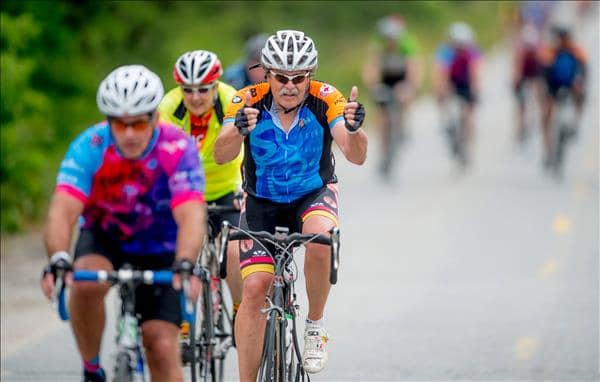
It’s that time of year when I ask you – once again – to support the endeavours of our mutual friend Jim Coggeshall as he participates in the Pan Mass Challenge to raise money for the Dana Farber Cancer Institute.

This is Jim’s seventh tour in the Pan Mass challenge and my guess is that we’ve been supporting him for at least 6, or maybe all 7 of those rides.

Jim is a cycling fanatic, an owner of 4 fine Saabs (and a very nice MG), a connoisseur of fine music and just a general all-round great guy. I first met Jim in 2010 when he was just a rookie cancer survivor (see next paragraph). I had the pleasure of spending a few days at his home last year and it was great to spend some more time with him AND get a drive of his gorgeous Saab Sonett.

CLICK HERE TO DONATE

Jim is a four-time cancer survivor, thanks in no small part to the outstanding research and clinicians at the Dana Farber Cancer Institute. He’s not just a fundraiser for cancer research – he’s a walking advertisement for it.

Jim will most likely top the ,000 mark this year, for funds raised over his seven rides. On top of that, he’s personally donated around $8,000 of his own heard-earned to support other riders.

I support Jim’s ride every year because he’s a great mate, and this is a great cause. Everybody is touched by cancer in one way or another and the Dana Farber Cancer Institute is doing great work developing treatment regimes that eventually find their way to your local hospitals. This is a donation to one place that can have a lasting effect around the globe.

From Jim:

I’m asking again for support as I join over 5,500 other cyclists as we attempt to meet a goal of raising over $48 million in one August weekend by riding across the state of Massachusetts. In the history of the event the PMC cyclists and their sponsors have been able to contribute over half a billion dollars to fund cancer research at the Dana-Farber.

If you’re reading this in the USA, you should know that your donation is tax-deductible and eligible for most company donation-matching programs. If you’re not in the USA, please donate anyway and enjoy the good karma.

CLICK HERE TO DONATE

As always, I’m not asking you to donate without having done so myself. I’ve just tipped $200 into Jim’s hat. The readers of SaabsUnited and Swadeology have donated multiple thousands of dollars over the stretch and I hope you’ll step up to the plate again this year.

——

By way of catch-up……

Long time, no write. Well, the last post was just 6 weeks ago but it feels like a looooong time ago. A brief look tells me this is just my fifth entry for 2017. Not even one a month. Bad Steven.

I’d write more, but I guess real life has taken over from internet life for a while, which is not a bad thing in 2017.

And besides, one of my main (publishing-related) interests is watching the demise of the sitting US president and nothing I put on ‘paper’ here would be as entertaining or as effective in bringing down the pussy-grabber-in-chief as the man himself (and yes, I fully realise the sadness inherent in that statement). America is being presided over by an idiot, the small-c captain of a Ship of Fools.

I hope you’re all well, and that you’re ticking some interesting cars off your personal automotive to-do lists.

I recently sold my Jaguar XJR – did I tell you about that one?

It was a 1995 model, with a 4-litre super-smooth, supercharged engine producing 320hp. It was red with a tan leather interior and I felt like a distinguished gentleman every time I got behind the wheel. It was everything I hoped my first Jaguar would be.

Why did I sell it? Basically, I needed the money more than I needed the car. I still have my 2003 Saab 9-5 SportCombi and being a two-car-guy with only one parking spot is a pain in the patoot.

The Jaguar is gone but another will take its place, eventually. I’ve been keeping an eye on the prices of the Jaguar XKR from around 2010. One of those would do nicely. The sexiest car in the world for me right now is the Maserati GranTourismo but they still exist only in la-la-land for a man of my modest means. Que sera sera.

My other automotive interest at the moment is the utterly charming Morgan 3-wheeler. It looks like it’d be a blast to drive and it’s so impractical that it’d make a perfect addition to the Swade garage. All in good time.

Present day bottom line – It’s fair to say that my automotive world is fairly plain right now (if you don’t count the Koenigseggs I see at the office every day). The Saab is reliable and comfortable – it’s actually more comfortable than the Jaguar was, I’m surprised to admit – and it’s worth so little in financial terms that it makes no sense to sell it at this point in time. Maybe next year, if the yearning for something zippy gets strong enough.

Until next time, please donate to Jim’ ride.

This has been fun. I hope to get back to a more regular posting schedule in the near future.

A Short Study In Fake News

‘Post-truth’ was the Oxford Dictionary’s word of the year in 2016.

If that (now) dubious honour doesn’t go to ‘Fake-news’ in 2017 – hyphenated for eligibility purposes only – then nobility and integrity must be counted as things of the past at the Oxford. No one phrase has embedded itself in political discussion quite like it this year.

Fake News – now capitalised for effect – is now commonly recognised as “anything that Donald Trump doesn’t agree with”. But there was a time, quite recently, when Fake News actually meant something more than that.

Fake News, at the outset, was a news story that looked like it could be true, but wasn’t. It bore some resemblance to ‘a’ truth if you squinted hard enough while reading it, but it smelt a little bit funny and eventually, was proven to be untrue.

It’s the typical strawman diversion of the past, but taken to Troll Level 10.

How was it done?

Example 1 – Play with inconsistencies

The Sandy Hook school shooting.

The Fake News spin says (among many things) that Adam Lanza could not have used an AR-15 Bushmaster rifle in the incident because initial reports claim that that particular weapon was found in his car.

Yes, initial reports may have claimed that. But those initial reports were later corrected. The police themselves issued a correcting statement as reported by NBC in Connecticut:

Police released a news release on Tuesday, saying they provided details in news conferences but wanted to eliminate any confusion or misinformation.

Police said they found a Bushmaster .223 caliber model XM15-E2S rifle with high capacity 30 round clips, a Glock 10-mm handgun and a Sig-Sauer P226 9mm handgun inside the school.

Police also searched Lanza’s car, which was in [the] parking lot, and found an Izhmash Canta-12 12-gauge shotgun.

Initial reporting around a tragedy like Sandy Hook is always sketchy at best. The news cycle is a savage, hungry beast, and sadly, even among established and credible outlets, the primary competitive motivator is to be First, not to be the most accurate. Details are sometimes reported before they’re confirmed and have to be corrected later. It’s sad, but true.

Such reportage has consequences.

Conspiracy theorists have built websites and made movies about how there are inconsistencies in reportage around what happened at Sandy Hook. They claim these inconsistencies are proof that the attack never happened. The ‘best’ of these conspiracy theorists actually make a living off this stuff.

There are a dozen or more claimed inconsistencies like the one quoted above. All of those holes in the reporting have since been cleared up but the corrections go unnoticed and those holes in the narrative give Sandy Hook sceptics the ammunition they need (pardon the pun) to run their mouths off and spout their conspiracies.

Why do they do it?

They’ve usually got a vested interest in doing so. They might be gun nuts looking to promote/protect the second amendment. They might be anti-government extreme right-wingers looking to throw mud at government involvement in anything. They might simply be looking to get the attention of weak minded individuals so they can sell them stuff (hello, Alex Jones).

The bottom line – Fake News is a conspiracy theorist’s wet dream. It’s a scenario where you get to take a true story and inject just enough doubt – credible or otherwise – so you can twist it to your own ends.

Example 2 – Shake and Twist. Believe Me.

“Donna Brazile Admits to Sharing Debate Questions With Clinton Camp, Blames Russia”

That’s the top headline at Fake News specialists, Breitbart News, as I write this article. Here’s the screenshot to prove it.

Again, you take an element of truth and spin it the way you want it to go.

The source article referred to in the Breitbart story is an Op Ed written by Brazile for Time Magazine (note: Fake News purveyors rarely do any actual journalism. They mostly spin articles produced by actual news and opinion outlets (which they typically later brand as mainstream, out of touch, or most amusingly, fake))

Breitbart’s headline makes it sound as if Brazile is admitting passing possible town hall topics on to the Clinton camp for the first time. She’s not. She did that when she stepped down from CNN. Breitbart’s headline makes is sound like she’s blaming the Russians for her own wrongdoing. She’s not.

If you actually read the Time story, you’ll read Brazile breaking down the Russian hack and the effect it had on the DNC. Her wrongdoing, which she freely admits to and regrets, is part of what was exposed by the Russian DNC hack but the Time story is about much more than that.

That’s Fake News as done by the specialists. Shake, twist, and count on people to accept what you say without checking further.

Breitbart’s inclusion of a link to the source makes everything seem more credible, but in truth they’re counting on readers to accept that level of seeming credibility and not bother to click on that link and weigh the story for themselves.

Example 3 – Duck, roll, shimmy, blame everyone else just like Bart Simpson used to do.

You knew this was coming, didn’t you? Yes, it’s our favourite Fake News disseminator, Donald ‘Joffrey’ Trump. This is an example of Fake News being constructed right before our eyes.

The Real News story is that Donald Trump used Twitter to claim that his predecessor, Barack Obama, ordered some wire-tapping on Trump Tower a month before the election in 2016.

Here are the tweets, straight from his personal Twitter account:

Those tweets represent one hell of a public accusation. Such action by a sitting president would be a federal crime so it’s not something you should go bandying about, willy nilly.

That’s the Real News story here.

The Fake News story is the narrative that’s now being used by the Trump administration to explain these tweets.

In an interview with Tucker Carlson through the week, Trump cited an article in the New York Times – yes, they are credible when it suits his needs and ‘failing’ the rest of the time. The article in question was on the front page on January 20 – Inauguration Day – and had a headline in the print edition that said Wiretapped Data Used in Inquiry of Trump Aides. The headline was changed for the online edition.

That’s source 1, as quoted by Trump and others.

Source 2 was a brief interview given by a former judge, now talking-head on Fox News, Andrew Napolitano. Here it is.

The problem with Source 1 is that the story doesn’t support the charge. The headline might suit Trump’s narrative if you have a vivid imagination and you squint hard enough when reading it. But the story doesn’t support his assertions. At all.

The story does cover the use of surveillance to investigate associates of the now-president. But where Trump alleges that Trump Tower was definitely wiretapped with orders coming direct from President Obama, the story says nothing of the sort. In fact, the story says nothing about Trump Tower being under specific surveillance, let alone any orders for such surveillance coming from the White House.

Such things matter when you’re publicly accusing a former president of a specific federal crime.

The problem with Source 2 – When President Trump was pressed on the wiretap issue by a German reporter in his press conference with Angela Merkel, he told the reporter that he should “go talk to Fox”, presumably because that’s the other source where Trump’s theory-presented-as-fact came from.

As it turns out, however, the ‘judge’ on Fox had no evidence to support this theory-presented-as-fact and Fox has since disavowed his statement, live on air. The key quote is at 1:20 in the video below.

Source 2 has bigger problems associated with it, too, namely the accusation that President Obama strong-armed an ally (the Brits) to conduct this surveillance on his behalf. Britain’s GCHQ has since commented and the agency was unequivocal in its denial.

And as if sources 1 and 2 being discredited aren’t enough, a statement from the chair and vice-chair of the government’s own Senate Intelligence Committee said:

Based on the information available to us, we see no indications that Trump Tower was the subject of surveillance by any element of the United States government either before or after Election Day 2016

Speaker Paul Ryan has also said no such wiretap existed.

The real news: President Trump accuses former president of federal crime without evidence.

The fake news (now being spread by the guy in the Oval Office): Obama wiretapped Trump Tower.

Words matter.

The president’s words matter a lot.

I want to finish by making a really important distinction:

Fake News and incorrect reporting are two very different things.

As you’ve seen here, Fake News is the deliberate twisting of a story beyond its factual base to serve one’s own ends. It’s misinformation with just enough credibility to sway non-thinking readers to believe it.

Incorrect reporting, on the other hand, is a reporter making a mistake. You can tell when incorrect reporting happens because credible organisations will retract or correct the report.

Example ….

There was an incorrect news report in January claiming that Donald Trump had removed a bust of Martin Luther King from the Oval Office. The news report came from a reporter for Time Magazine. The reporter realised his mistake shortly after it happened and corrected the record via emails, tweets and in-person. Time Magazine even printed an editorial about how it all happened.

That’s a reporter making a mistake and then correcting the record. It is not Fake News.

As shown in the Sandy Hook example at the beginning of this article, the pressure on news organisations to be first is now a financial imperative. It shouldn’t be that way with news, but it is. Such is life in a capitalist society.

That pressure to be first means that mistakes are made. Those mistakes can be siezed upon by these peddlers of Fake News to build inconsistent stories, or stories that are later twisted to suit a particular motive.

Reputable news organisations will work to correct any inconsistencies and note those corrections as footnotes to their articles.

We rely on an independent media now, more than ever. Some understanding and maybe even a little forgiveness is going to be required, as is a lot of financial support. I’ve said it more than once in the last year, but please go out and buy a subscription to your preferred reputable news outlet. I don’t care if it’s left or right leaning in its editorial slant, as long as it gives you fair, fact-based coverage.

Support your local media.

Up To Our Necks In It

I wouldn’t normally reproduce a friend’s Facebook status on here, but this has been with me all day.

Thanks Nige, for letting me reproduce this post from yesterday:

We were just driving over the Tasman Bridge and I saw a young lady climbing over the rail. I said to Rachael look she is going to jump. Took eyes off her, back onto road as we passed. Then I looked in the mirror and I saw her fall. Please, if you are feeling this way, seek help.

There’s a picture of the Tasman Bridge at the top of this post. It’s a beautiful bridge and this wonderful shot was taken by my good mate, Stu the Lens Genius.

Sadly, it’s also a place of sorrow for some families. I’ve driven past a guy being talked down off the bridge. Thankfully, I’ve never been in Nige’s position and driven past as someone jumped.

There’s nothing you can do to stop someone if they’re determined to jump and you’re driving by. The bridge is five lanes of moving traffic and there’s nowhere to pull over. The footpath is elevated from the road, with a fence making the physical barrier even more pronounced. Getting to someone quickly would not be a simple thing.

Nige’s FB post stuck with me today for a couple of reasons.

First, I can visualise exactly where he was and what he saw. I drove over that bridge nearly every day when I was living in Hobart.

The other reason is because today was a particularly shitty day. I had 5 big things happen today. Two of them – the things I had control over – turned out well. The other three turned out not so well. They turned my head inside out, in fact. They were beyond my control, my influence. They were things that I wish I could make better, but I can’t.

I’ve never felt anywhere near the level of desperation that that young lady felt, but I have endured my own little battle with the black dog over the last few years. It’s not fun.

Sometimes you know what’s causing it. Sometimes you have no idea. Sometimes you want to punch the crap out of someone/something. Sometimes you just want to lock yourself away and not face anyone ever again.

Sometimes you’re fine. For me, that’s most of the time. I can do my job, make decisions and engage with the people around me. And sometimes the choice between milk or fruit juice is too much to bear.

That sounds irrational, I know. But that’s how it gets sometimes.

I’ve been fortunate, I guess, to have what I would call a pretty mild case of depression. It relates more to my circumstances than the chemical imbalance that afflicts so many people. I can easily find myself dwelling on the things I don’t have in my life rather than taking satisfaction from the things I do have. I get overwhelmed by perceived obstacles, expectations or tasks.

Sometimes, the stuff that other people blow off pretty easily, that’s stuff I take to heart. Politics is a big one. I don’t get depressed because the side that I support might lose. I get depressed because I see, quite vividly, the dangers ahead for those less fortunate who have to fend for themselves in a dog-eat-dog society (which, sadly, my home country seems to be heading towards).

In lighter moments, I like to blame J.D. Salinger for this, but I know I’m just wired that way anyhow.

Sometimes stuff builds up in your mind and you’re powerless to stop it. It just takes over, no matter what you do. You can spend time with friends or family, get some energy and positivity in your life. But the anxiety, the darkness – it’s all there waiting for you like a retarded friend.

Sometimes I’m convinced that it’s like an addiction, as if the only way I can feel contentment is if I’m fighting something. Fighting to be at peace – an oxymoron of ‘murican proportions if ever I’ve heard one.

See, there I go again.

The strange thing about all this is that if you ask me what’s missing in my life – what do I think I need to be happy? – I’m not sure I could tell you. I could tell you what’s in my life that brings me times of happiness – my work, my family, my friends, music. But I can’t identify the missing piece that might bring lasting happiness. It’s just…… missing. Is it emotional intimacy? Personal vulnerability? Feeling part of something bigger?

I don’t know. I really don’t.

——

A message to those who might read this and get concerned – I’m OK. I really am. 100%.

It’s just that Nige’s FB post resonated with me today. I feel so bad for that young woman and her family. I understand a little about feeling overwhelmed, about feeling dark, but I’ve never ever been even close to that place. Even with the challenges I have, there’s way too much to live for. I just feel so much for her, crossing that line.

This piece is simply because I wanted to work it through. Writing about it helps sometimes.

——

I have friends who have been through depression. I have friends who are still battling with it. I can offer no solutions, other than to say you’re in my thoughts and I wish I could be there more often for you.

I wish we could be there more often for each other.

——

Exit mobile version