



Here are a couple of hints…..
The anoraks will be able to tell from the trophy picture alone.
UPDATE – the correct guess has been made in comments. For those who haven’t seen the answer yet, keep guessing. A bigger hint is after the jump…..


Here are a couple of hints…..
The anoraks will be able to tell from the trophy picture alone.
UPDATE – the correct guess has been made in comments. For those who haven’t seen the answer yet, keep guessing. A bigger hint is after the jump…..
The 2012 Targa Tasmania is still a few months away but I spotted these videos and couldn’t help but share them.
These videos of the 2011 Targa were shot by Porsche, who were celebrating their 60th Anniversary and spending up big to make sure they did it right. Not only did they send out their biggest name historical driver, Walter Rohrl, but they also sent a crack film crew who did a wonderful job of filming the state that I live in and its premier motoring event – Targa Tasmania.
Targa is a tarmac rally comprising 47 stages on public roads, held over 5 days. It’s not for the faint-hearted. In these videos you’ll get to see some great cars, some of Tasmania’s fantastic driving roads and of course, just a little bit of the spectacular scenery we have down here (really, there’s much better stuff than what they show, but what they show is nice).
Each video is around 4 minutes, so if you’ve got 20 minutes to spare then sit back, relax and enjoy.
—

—

—

—

—

—
I don’t currently own a car. It’s a strange feeling – the first time in 24 years. In a few weeks from now I’ll start working again, in a post-Saab position, and I’m probably going to need to buy a car to get there and back. The questions is – which car should I buy next?
I say probably as I actually have access to a couple of vehicles at the moment – a Subaru Impreza and a Toyota Corolla (more on that one later). Neither of those are floating my boat, however, and I can’t see myself going too long without something more….. engaging.
I should say at this point that I don’t mean to upset any Saab fans by posting this. No-one cares about Saab more than I do but I have to recognise that my time working for Saab is over. Even if the company were to be purchased as part of the bankruptcy proceedings, it is highly unlikely that I would be asked to work for the new entity. I poured seven years of my life into this company, and all but six months of that time was as an enthusiast, without compensation. I care deeply about what happens to Saab, but in many respects, I’m also moving on.
I know a few friends of mine and readers of this website are in a similar position. I’ve read comments and had conversations to this effect. People are asking themselves and others – what next? They may not be in the position that I’m in where I have to purchase something quite soon, but it’s happening.
——
If you’re in that position, what are your options as you see them?
I’d be interested to know if you’re going for another Saab or for a change in brand to something you feel you can live with a little easier.
We still own a Saab – the 9000 CS that my wife drives more than me – and I think we’ll most likely always have a Saab in our family, but not more than one.
——
Personally speaking, I will probably seek to buy a couple of cars this year. One will be a daily driver and the other a classic that I’ve wanted for some time. A long-term keeper. I’ll most likely look for the daily driver first and I have three criteria for that car:
It may also need to be a decent load carrier, but that’s not mandatory just at the moment.
This post-Saab life is pretty difficult, I have to say. I’ve been scouring the classifieds for well over a month and there’s hardly anything of interest in terms of daily drivers that meet those three criteria. If I keep an eye on load capacity the field shrinks even further.
Right now, the two best non-Saab candidates I can find are both Hondas. The Integra and Prelude VTI-R versions with the V-tec engines. The Integra is the model I’m more familiar with and I know it has the load-carrying capacity I might need with the rear seats down. The ‘inexpensive’ and ‘reliable’ criteria are covered and it should be a decent drive. It doesn’t really have many of the other attributes I’d prefer – like character – but you’ve got to start somewhere, right?
The next best candidate might be either an old Alfetta GTV or an E36 BMW. One might be short on reliability (even if big on character) and the other’s just …… not me from an historical perspective. On the other hand, though, I’ve taken a peek at the E36 and despite the poor personal and historical fit, there is some personal interest in owning a Euro RWD sedan, even if only for a little while. Even if I’m a Saab guy first, I’m a car guy over all, and there are many ownership experiences I want to have in the next 20-30 years. It’d be handy to be able to talk about a BMW ownership experience from a first hand perspective.
None of these are a done deal, but it’s both interesting and very frustrating to do some initial exploration of what might come next. There will always be a Saab around our house, but there’s also a world of possibilities out there.
The more I’ve thought about this post, the more I’ve realised that no matter how I write it, it’s going to sound anti-American. That’s a shame, because I’m not anti-American at all.
My wife and I are actually in the beginning stages of planning a driving holiday there – sea to shining sea and all that kind of stuff. I’ve been to a few places in the US: felt ho-hum about LA and hated Detroit, but loved Seattle and Boston, and was completely awestruck after seeing only a minor glimpse of New York City.
So….. not Anti-American. Even if this post sounds like I am.
—
The automotive world is one that’s becoming smaller every year. That’s not in terms of sales, which keep expanding as developing nations become wealthier and demand more cars. It’s becoming smaller in terms of the convergence of companies through either sale or closure. It’s becoming smaller due to the fact that cars and car companies are becoming more and more alike through the pursuit of common fuel economy goals and adherence to common safety regulations.
It’s as if there’s a magic formula out there for The Car that will appeal to the most potential buyers and all car companies are pursuing that formula. Have you noticed how the basic shape of most sedans is the same these days? The only difference seems to be the face they draw on the front.
This is true of the global market in general terms, but it’s a concentrated truism in the world’s most established, mature, and cutthroat market – America. America’s one place I wouldn’t want to live as an automotive enthusiast. There are other places too, of course, but I don’t think I have to explain why I wouldn’t want to live in Afghanistan as an automotive enthusiast. America, however, does invite some explanation.
It’s not my distaste for American cars. There are a number of cars you can buy in the US that you can’t buy elsewhere, but aside from some of the stuff from Chrysler/Dodge, American vehicle styling just doesn’t appeal to me at all. So even though I’m not a fan, it’s not the cars that you can buy in America that make me glad I’m not an American car enthusiast. It’s the cars you can’t buy there.
Cars like the hot Ford Focus models. Any Alfa Romeos. Peugeots. Even the Dacia Duster and Skoda’s Yeti and RS vehicles have their merits and none of these can be bought in the US. There are a whole lot more, too. I’ve lost count of the number of times I’ve read stories on US-based automotive websites that include the words “of course, we can’t get it here……”
Why is this? Well, Americans have particular tastes in powertrains, ride comfort and most crucially, price. It’s the most cutthroat market in the world and I’ll go as far as to say that whilst the desire for companies to succeed in America has led to some vehicles becoming better in some respects, the need to maintain profitability has also led to some degradation of materials and quality, as a result. Bottom line, the American market is driven primarily by price and volume and if a company can’t achieve those, or chooses not to worry about them, then that company needs either great margins, or some very deep pockets behind them.
One of the brands that Americans can’t buy is Renault. I’m no Renault aficionado but I’m becoming more and more interested in their RenaultSport line of vehicles. As a Saab person, the idea of a slightly odd looking hatchback with a 2-litre turbocharged engine and class-leading handling is quite appealing, and the RenaultSport Megane from a few years back is deliciously close to my price bracket right now. It’s nowhere near as practical as an old Saab hatchback, but a Saaby friend of mine had one a year or so ago and still raves about the driving experience.
Carlos Ghosn is a rare CEO, regardless of industry. He’s actually the head of two quite distinct automotive companies – one French, the other Japanese. They own bits of one another and there’s all sorts of corporate incest going on there, but basically, Renault and Nissan have managed to combine their corporate and national cultures into a combined entity that allows them to rely on and cooperate with one another, and yet still maintain independent brand identities.
That’s one reason I like him.

The reason I’m giving him the Swadeology Automotive Executive of the Year Award for 2012 – just two weeks or so into the year – is because he recently came out and said that Renault is not going to expand into America. Instead, Renault will focus their expansion efforts on developing markets, in particular the company’s introduction into China.
My interest in Renault is focused on their RenaultSport line of vehicles, comprising smaller vehicles finely tuned for bringing smiles on twisting, turning mountain passes and un-gridded city streets. These cars are about as un-American as you can get (check the video at the top-right of the page).
Renault, to me, is a European car made for European roads. It’s not particularly fancy in any way, but the cars do their job and carry their own certain je ne sais quoi whilst they do it. Some European car companies have adapted their cars for American life. They build them bigger, softer, more suited to the long and straight multi-lane highways that dominate there so much. And in order to be profitable in America, some manufacturers have to scale down on the materials or the sophistication of the vehicle. Compare Saab’s leathers in the 1980s to the last ten years. Or other interior trim parts, plastics, etc.
My experience from Saab tells me that a company selling in the American market sees itself subjected to a very large degree to what the company boss in the American market wants. Sometimes that can mean great things – the Saab 900 Convertible, for example. Other times, it can lead to a company setting aside some of its core traditions in the chase for the only thing that matters for most in the US auto market: volume.
The more a carmaker becomes dependent on higher volume instead of decent margins, the more that carmaker will de-content the vehicle.
I’ll freely admit that I’m an outsider when it comes to the US market and this is only my perspective. But the mainline car companies that are absent from the US market aren’t missing because they make bad cars. Renault is one of those companies, and they don’t make bad cars, either. In fact, their RenaultSport line is now ranked pretty consistently at the top of hot-hatch wishlists.
The decision by Ghosn to keep Renault on a steady course and preserve whatever DNA the company has is one that I applaud. And when you consider how easy it might be for him to piggyback an established Nissan dealership structure to reintroduce Renault in America, it’s even more cause for applause.
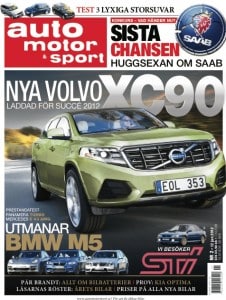
As the magazine is in Swedish, I figured it would be good to provide the original English version for those of you not yet blessed with the ability to read/speak Swedish (like me).
I don’t know what they’ve used for a headline, so I’ll post it without one, below.
——
I officially became a Saab employee at the beginning of April 2011. In the week before I joined the company, we had a brief factory stoppage due to an unpaid account with our freight company. During my first week with Saab, we had some occasional production, and then a stoppage that continued almost uninterrupted until the company declared bankruptcy on December 19, 2011.
The opportunity to work for Saab was a dream come true after writing about them as an enthusiast for just over six years. The job itself was equal parts joy and frustration but I wouldn’t have traded this opportunity for anything in the world.
As I write this, there is still a window of opportunity for someone to step in and purchase Saab as a whole from the bankruptcy administrators. The alternative is for the company’s assets to be broken up and sold around the world. One option gives some hope for the brand, the other makes certain that we’ve seen the last of this innovative company from Western Sweden.
The sad part about this whole episode is that was all so avoidable. I won’t go into all the details here, but suffice to say that there were a lot of short-term, reactionary decisions made both inside and outside Saab. Decisions that could have been different if the people concerned had a longer-term outlook.
Continue reading My Saab column in Auto Motor and Sport magazine
I’ve been doing a fair bit of reading about Porsche in the last month or so and I’m growing quite fond of this seemingly forbidden fruit. This personal inner struggle of mine hasn’t been made any easier by Porsche previewing the next Boxster range.
These photos just came out yesterday. I believe the 2013 Porsche Boxster will make its in-the-metal debut at the world’s best motor show – Geneva – in March. With 261 and 311hp engine options, the Boxster is no longer just a showpony, either.
Aside from the rest of the visual improvements (pretty much everything), I just love the retro lettering on the back end. A photo of an old 912 is included for comparison.
Kudos to Michael Mauer, who I think we can still claim as an ex-Saab guy, even if he’s been gone from Saab for quite a few years now.
Click.


The February edition is arriving in subscribers’ mailboxes right now. Hopefully it will show up on news stands soon, as well.
I’ll seek to publish the original English version of the column in due course.
* forgive the third person headline. It’s an SEO thing
I always felt a little guilty whilst writing my Saab blogs over the years. Here I was, writing about these fantastic cars and this great company, hoping that people would support the company and help to ensure it’s continued existence, and yet I hadn’t ever ponied up and bought one myself.
There were a couple of reasons for that.
1 – the website took a hell of a lot of my time and hopefully, made a good contribution to the marketing and promotion of the Saab company and the ownership culture. It was my hope that the site made a contribution at least equivalent to me buying a car myself. The time it took to put content together involved some family sacrifices and the trade-off with my wife was that we would direct our finances towards paying off the family home, rather than high-priced vehicle purchases. Thankfully, that decision has served us well and we’re nearly there with the house, which is a great feeling.
2 – New car prices here in Australia are crazy expensive when compared to some other places around the world. OK, they’re not Denmark-crazy or Norway-crazy, but every time I read articles from the United States about new models and pricing, it nearly makes me cry to see how much we’re paying downunder.
This article has been prompted by an announcement at the Detroit Auto Show today, about pricing for the Fiat 500 Abarth. Some of you may not have seen the Abarth yet, which is a great excuse for me to show the ad:

——
Magnificent, no? Makes the J-Lo series of 500 ads look very shabby, in more ways than one.
Anyway, it was announced today that the 500 Abarth will go on sale in the US for around US$22,000. Whining about US pricing is nothing new. I did it with Saab plenty of times and yes, I’m going to do it again here.
Bear in mind that as I write this, the Aussie dollar is at parity with the USD and has been for the best part of a year. Canadians, you’re feeling this, too, aren’t you?
So the Abarth is going for $22K. It looks fantastic, is better equipped and with 160hp, a feather-light body and some go-kart chassis tweaks, I bet it gets down the road pretty nicely, too.
Picture: Autoblog

Here in Australia, Fiat’s latest offer is to get the basic trim 500, in diesel hardtop form for A$26,000. Other sites are showing it at around A$29,000 whilst the petrol model – with none of the fancy trim and some 60hp less than the Abarth – is going for around A$28,000.
The Fiat 500 convertible (like the Fiat 500C I drove around Mallorca last year) sells for even more, at A$33,000. The convertible starts at US$19,500 in the US.
Abarth is actually treated like a separate brand here in Australia. The Abarth 500 Esseesse (say: SS) has been available since March 2011 at a price of A$35,000 – a 50%+ premium over the US equivalent at a time when our currency is at parity (and has been for some time).
——
It was even worse with the Saab Turbo X when that came out in 2008. The luxury car tax here in Australia helped to boost that to nearly double the US price, although our currencies weren’t as close then as they are now.
I don’t know if it’s a matter of US vehicles being sold for extremely low margins, or Aussie customers being gouged simply because we’re used to it and will accept it. I suspect the truth is somewhere in the middle. We have a 5% tariff on imported vehicles and of course, we’re a long ship ride away from the factories that build most of our car fleet. But those two factors don’t add up to a 50% premium.
In any case, our high initial prices in Australia and high depreciation rates make me wonder how we managed to sell 1,000,000 cars in each of the last two years. Based on current estimates, that’s one new car for every 23 people in the country. They also leave me feeling pretty sure that I’m not likely to buy too many, if any, brand new cars in my lifetime.
Perhaps if I lived in a larger city, with a longer commute. But here in Hobart, where I’m basically no more than 30 minutes from anywhere I need to be, it just doesn’t make economic sense.
US buyers – enjoy your opportunities while you have them (hopefully a very long time). I’m more than a little envious.
Greetings from home, which is not where I’m supposed to be. We booked a cottage up in Tasmania’s most beautiful beachside location – Binalong Bay – only to be thwarted by an over-eager smoke detector that went off at will. All night. For no reason.
Sleep deprived and very grumpy, we demanded a refund and headed home.
This shot really, really doesn’t do Binalong any justice whatsoever. The light was fading and so were the colors. The water is actually the most vivid blue you’ve ever seen.

——
As I’m back earlier than planned, it’s given me a chance to look over the new vehicles shown at the 2012 Detroit Auto Show. The coverage has been widespread and it’s been interesting to watch the various reactions to some of the new vehicles…..
Lincoln MKZ – link
Chevy Code 130 – link
Chevy Sonic RS – link
Dodge Dart – link
Ford Fusion – link
Hyundai Genesis Coupe – link
Swadeology – genuine big horsepower now. I’m not moving over to them, but between this and the Veloster Turbo, the Koreans are compelling me to use the word interesting twice in one week.
——
Of course, your thoughts on the standouts from Detroit would be more than welcome in comments. Also, your verdict as to who covered the show with the most wit, the most insight, and the most whining about other journalists/bloggers getting treated better than them.
——
Until then, just one more shot from Binalong Bay…..

This piece arrived in my inbox a few days ago. I’ll keep the author’s name anonymous for the time being (he can identify himself if he wishes).
It’s an interesting piece that might surprise, scare and maybe even offend a few people. Reactions aside, this is from an inside perspective, from a guy I’ve met and who I know is in a position to form an opinion on the subject.
I’ve seen Saab’s training courses in action, in Sweden, and I know that representatives get educated on the different electronic systems in the cars. The key might be whether that knowledge sinks in and trickles down to others in the dealerships.
It makes for some very interesting reading.
——
I started my career as an entry level Saab technician around a decade ago, working for a dealer in New Hampshire. Over my 4-5 years as a technician I learned that cars are complicated creatures including a huge amount of both mechanical and electrical content.
Back then the 9-3’s and 9-5’s that were out didn’t really have all the electronics that the newer cars have. They had ECM’s and transmission control modules, etc, but they still had a lot of old school wiring (power and ground, pin connectors). When the 9-3 sport sedan came out in 2003 I knew that we were going to run into a huge problem in the automotive industry and it was going to happen really fast.
All of a sudden the older technicians, paid on seniority and experience and making $25-30 an hour (shop foremen, guys that have been turning wrenches for 20-30 years) were clueless and scratching their heads. For the first few years they would pretend that they knew what they were doing, suggesting software updates as the fix for all problems. If the car came back, hell… let’s throw a control module at it.
By 2005 I decided that I loved the cars, the auto industry and where it was heading, but I really didn’t like getting dirty or covered in grease and busting my knuckles. It’s fun as a hobby but certainly not as a career for me. I switched paths and became a service advisor at a different Saab dealership. Being a computer savvy, well spoken, educated misfit, I was well aware of what I was seeing: the new cars/technology would baffle our highest paid technicians AND the newbies that were learning the trade from the older technicians.
Keep in mind that Saab was always a little behind on technology and I can imagine that this is an industry wide epidemic (e.g. Ford with Sync technology, everyone with nav units, Bluetooth). When the new 9-5 came out in 2010, there was no doubt that it was a wonderful marvel of technology, but there was also little doubt that we are neck-deep into a major problem in the repair industry.
Picture this – your super high tech new car is going into a dealership or shop and a senior technician getting $30/hr is going to work on it. This technician….
I’m sure you can see where this is going. These guys may be qualified to trace a wiring short in a 30 wire harness or drop a tranny on a car in 3 hours but are they really the right guys to take apart a $50,000 technical masterpiece?
You might be thinking “OK, let’s have the younger, computer savvy technicians work on these newer cars.”
But wait, these younger techs may have smart phones and use facebook, but let’s face it, a lot of them are in the industry because their parents were, or they loved turning wrenches with their dads. They probably didn’t do particularly well in school. They probably aren’t super computer savvy, and the guys that were helping them along at being technicians are now just as baffled as they are. Like I said, major problem.
I sadly don’t see any major fix for this in the near future. I find myself as a service advisor helping customers with Bluetooth phone pairing and navigation questions more knowledgeable than the technicians. Some of the customers driving these marvels probably have a better understanding of how they work than the technicians (being computer science graduates and electrical engineers.. etc etc).
So the question I raise is “Are Cars Smarter than Technicians?”
Yes. Plain and simple, sad but true. The guys we now pay $30/hr because we don’t have a solution to the problem are now simply parts replacers or “guessers”. They can barely figure out how to use the laptops and diagnostic tools and instead of getting trained they stumble through it and run straight time punches and expect manufacturers to pay for their lack of modern knowledge.
I think that in the near future, dealerships will have to acknowledge this and have one, highly paid, college-educated electrical engineer/software engineer on board to work with the next generation of technicians. The old guys will grunt and try to push them out and continue stumbling but a change is going to be necessary.
With hybrid technology and electric cars growing and evolving, the technician as we know it may disappear and this may be a good thing for everyone. I think people need to start taking this seriously. Hopefully some ongoing factory training will help keep techs – the ones willing to learn – up to date on the latest technology, but maybe the flat rate days need to be over. When you put someone in a position to earn 80hrs in a 40hr work week or get computer training to keep up to date they are going to continue to choose ‘guessing’ and take the 80hrs. After guessing and throwing parts at it, these cars will keep coming back until they happen to guess the right part or software update.
So, in summary, cars are definitely smarter than technicians…. and the auto industry is just getting started. In 10 years from now, cars may be smarter than all of us!


