I got this via Ted S in the United States overnight. It relates back to 2006, which is just a year after I started writing about Saab. I have to say, I don’t recall hearing about any particular problems with airbags in the Saab 9-5 around that time, but maybe such subjects simply weren’t on my radar.
Here’s the quote. The story is about the big GM recall fiasco that’s been going on the last few months.
The rate of air bag-related warranty claims for the Cobalt in 2006 was more than four times higher than for Honda Motor Co. (7267)’s Civic, Toyota Motor Corp.’s Corolla and Ford Motor Co.’s Focus, according to the documents. After the Cobalt, the next highest claims rates were with two other GM vehicles, the Saab 9-5 and the Cadillac CTS.
I’m left wondering about the context in which they’re reporting this. They don’t give numbers for the 9-5 or the CTS so no-one knows what the volumes actually are. Was it the Cobalt, then daylight, then the Saab?
They mention a 7,000+ warranty claim figure for the Honda but there weren’t even 7,000 Saab 9-5’s sold in 2006 (4,992 sold). Or in 2005 (6,103 sold). Surely there wasn’t an airbag warranty issue for every Saab sold in that period?
If you’re a 9-5 owner – either past or present – what’s your experience? Ever had your early-mid 2000’s Saab 9-5 airbag fixed on warranty? Ever heard that it was a widespread problem?
I’ve copped plenty of flack over my desire to V8-ifiy a 1970’s/80’s Jaguar XJ6. I don’t mind. I still think there’s some merit to adding a bit of grunt to compliment the smoothness and make it a big British bruiser (and by the way, Jaguar seem to agree – the company’s latest offerings are hardly what you’d call understated, and I like it!!)
The Volvo P1800, whether in coupe or shooting brake form, is a classic much like the Jag. But how far can you bend that classic before it breaks?
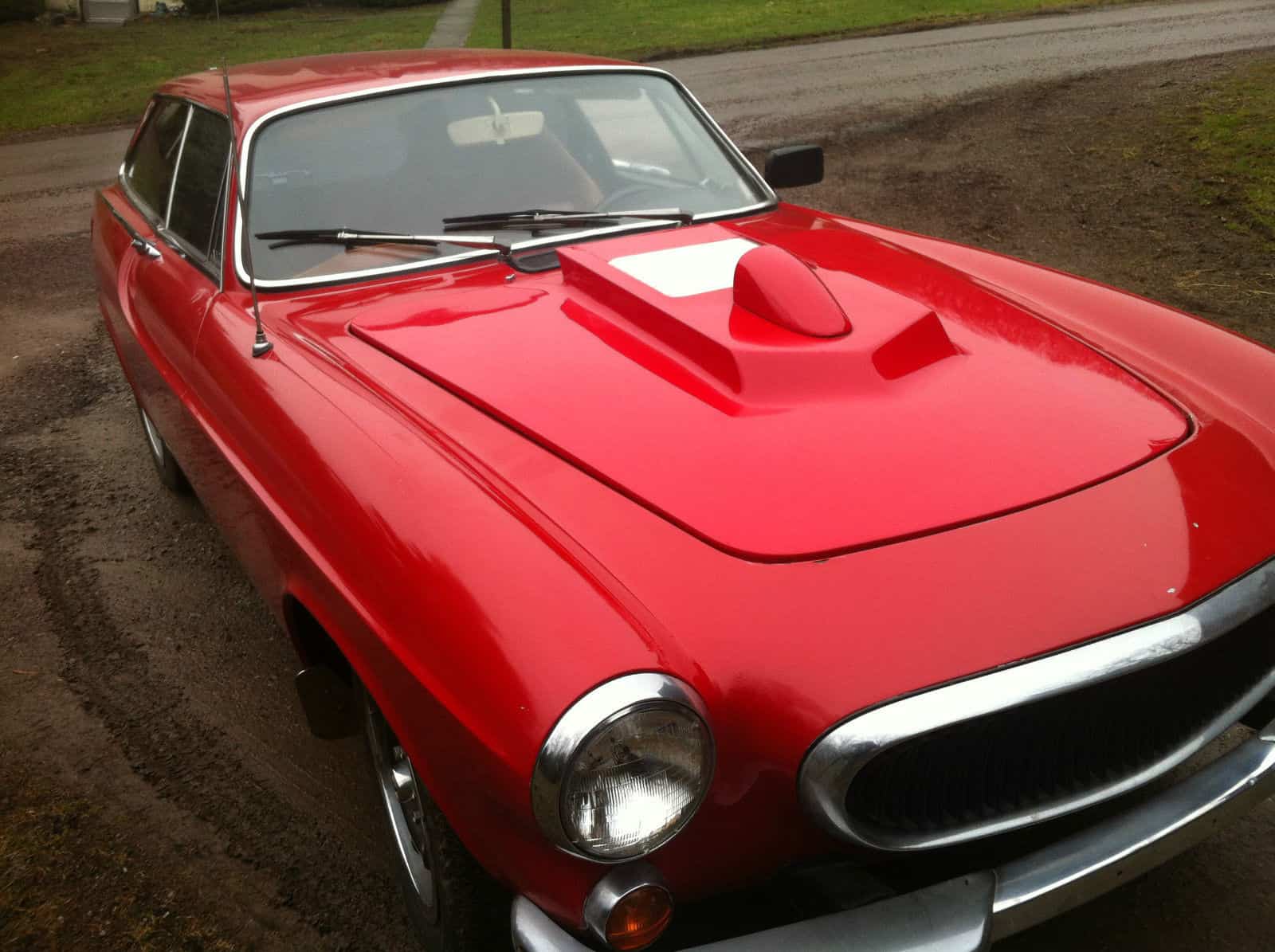
A guy in the US has shoe-horned a Chevy 327 into his Volvo P1800ES. He says it turns heads wherever he goes but are those heads turning in admiration of horror? Looking at the custom hood treatment, I’d suggest the latter.
BUT…… I reckon there’s merit in this V8 Volvo conversion.
Smooth out the hood, add some decent wheels and a body/paint job and I reckon you’ve got the makings of a fun weekender. You’re never going to win over the traditionalists in something like this, but you’ll have a blast while you’re annoying the daylights out of them.
I’m expecting people to vote ‘Cruel’ and I’m with you based on the cosmetics. The crowd on Ebay are with you, too, as the car attracted no bids at auction.
But I think there’s some cool in this V8 Volvo, too. All it needs is some vision and a few dollars.
Victoria is Tasmania’s big-brother neighbour state and even though there’s another state called South Australia, Victoria’s actually the southern-most state on the Australian mainland. Go figure.
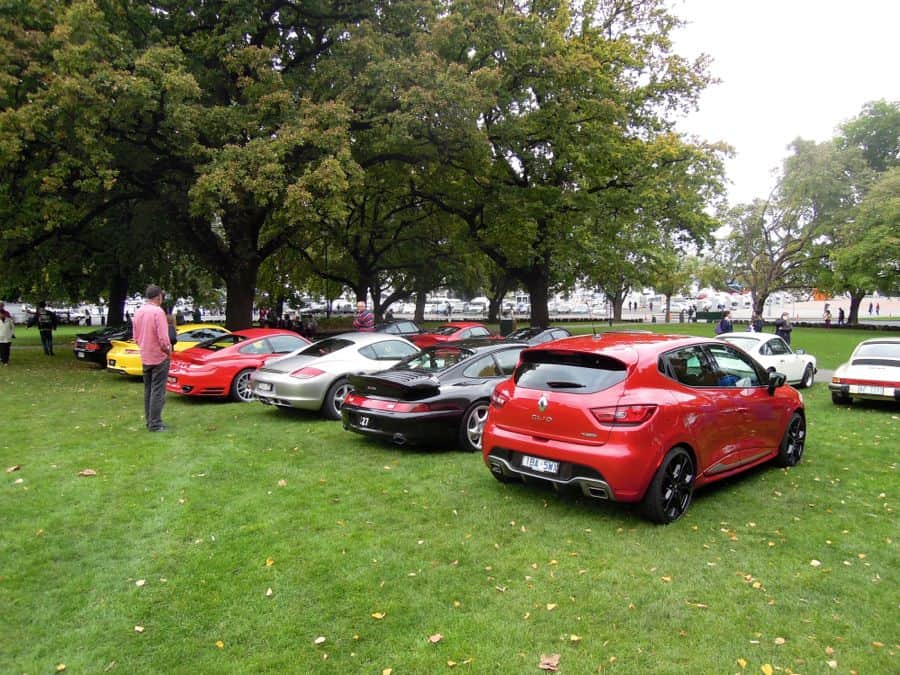
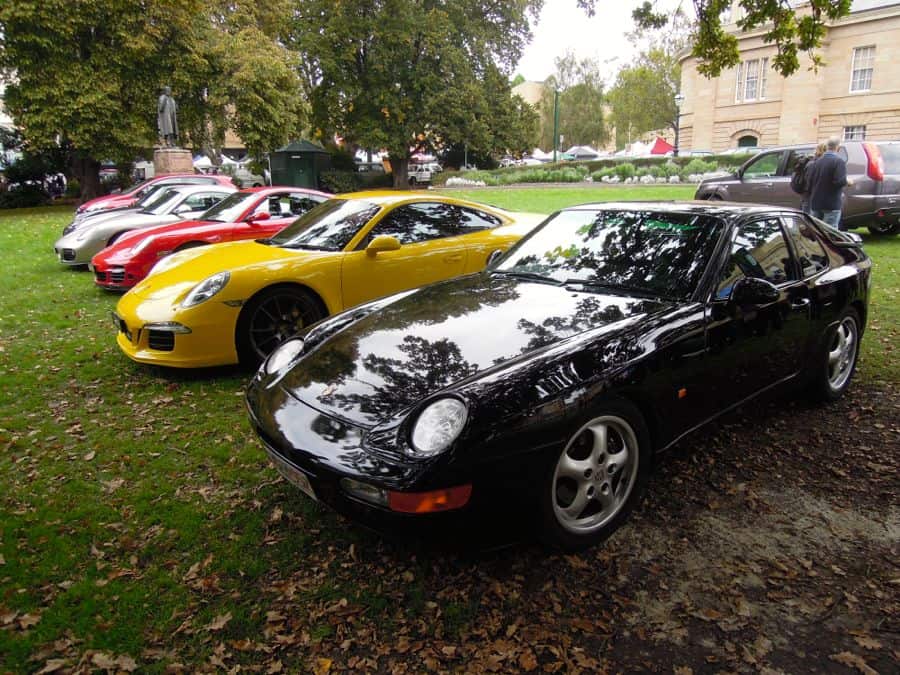
Anyway, members of the Porsche Club of Victoria are touring Tasmania and Saturday morning saw them gather their cars for a display on the lawns out front of Parliament House, in Hobart. The Porsche Club of Tasmania added a few vehicles to the show, too. My car would have been among them, but Saturday morning is the time PJ and I run our market stall at Salamanca Market, right next to Parliament House. I did mange to pop over for a little look-see with my camera, though.
The gallery is below, but a few notes first…..
A mate of mine in Sydney photographed a 911RS lookalike today and commented on how small it was in traffic. It’s true. The 911 is smaller than you think.
One of the guys on this trip was tagging along in a brand new RenaultSport Clio. No, I don’t know why. The Clio is a small car, but it doesn’t look so small next to a fleet of 911s:
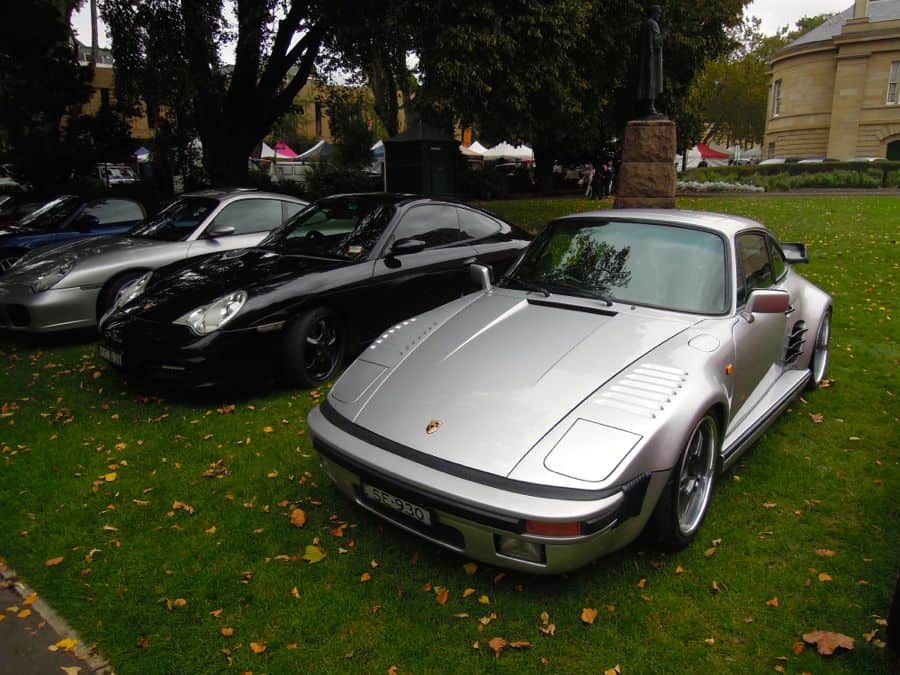
“Flachbau”
That’s the original German name for a 911 ‘slantnose’. I don’t know much about them except to say that they’re rare. If this is a genuine “Flachbau” then it’s one of less than 1,000 made. It looked cool.
The fleet was almost exclusively 911, which is leading me to a theory on Porsche club membership that I’ll keep private. I was pleased to see a PCT member bring his black 968CS along to the show to represent the watercooled era from a generation ago. I would have had mine there, too, except I was working at the market.
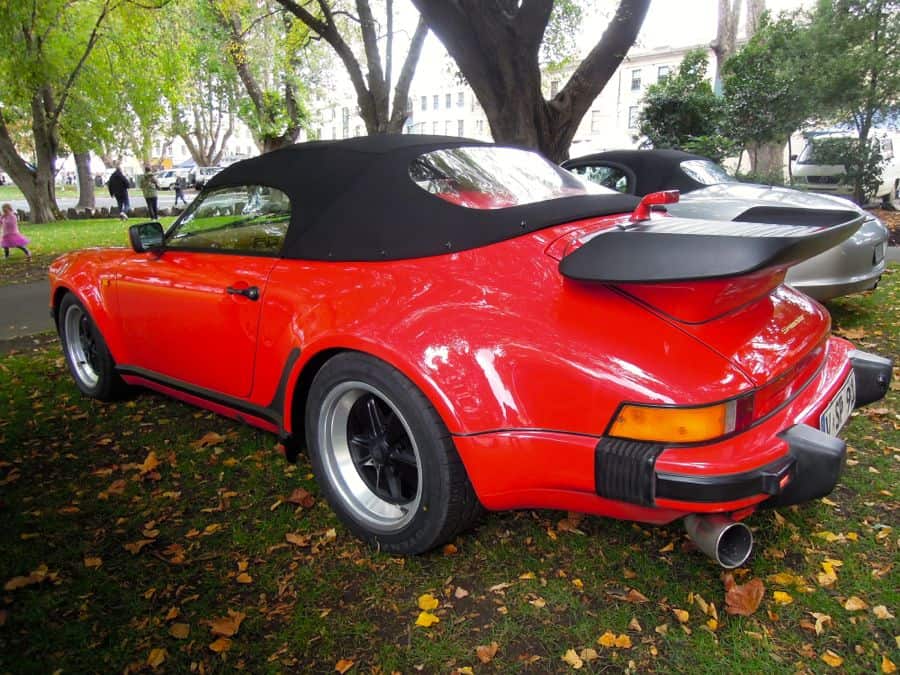
And finally, a 911 Speedster. This was pure cool. Loved it in every way.
Here’s the gallery. Short, sweet, but very powerful and with beautiful handling.
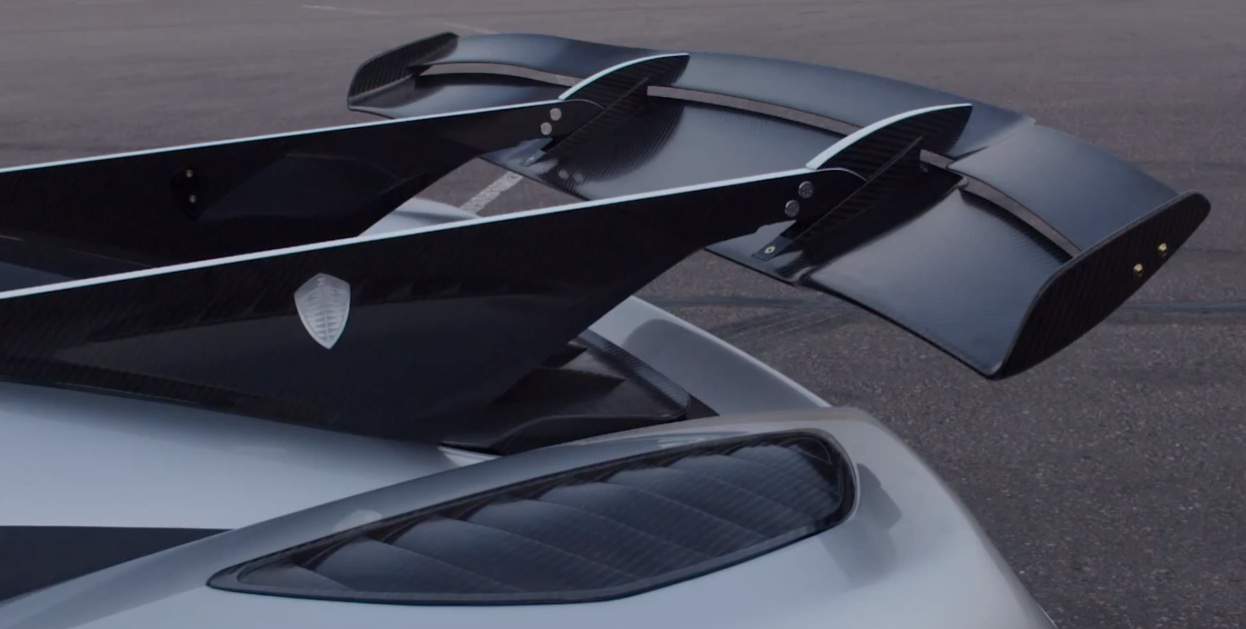
The absolutely awesome Inside Koenigsegg video series continues and today you get an introduction to the One:1’s active rear wing – another first for Koenigsegg.
The wing is the lightest of its type and it’s innovative mounting system overcomes some of the turbulence drawbacks suffered by competing units from other manufacturers. As always, Keonigsegg think hard about their solutions to make their cars the absolute best they can be.
I had cause to wander around a Swedish Saab forum yesterday and saw some interesting info posted there about Saab’s EV program. It’s unconfirmed, which is why I didn’t share it here and by referring to it today, I’m not saying it’s news in any way at all. I’m not on the Saab news train.
I’m mentioning it here because a post from Autoblog earlier today made it seem just a little bit funny.
The post on the Swedish forum had some info that sounded like it was taken from a meeting of some sort. The relevant bit of information for this story is that it mentioned some range figures for Saab’s EV’s.
The first figure mentioned was “25 mil” and the second figure mentioned was “50 mil”. If NEVS can achieve those range figures, that’ll be quite impressive – if you know what those figures mean in the Swedish context.
More on that in a moment…..
Autoblog picked up on a story from Auto Motor and Sport overnight, a story on Saab commencing the production of 200 EV’s that will be sent to China for testing.
This fall will start series production of electric Saab 9-3 and from next year, you can buy yourself an electric car at Nevs. In the first phase, the range is about 20 mil, but as the battery development increases, the range extended.
And here’s Autoblog, before they got schooled in their own comments section on Swedish distance measurements:
These first EVs have their batteries mounted down low in the chassis for a low center of gravity and have a range of about 20 miles on a full charge. That’s absolutely paltry compared to the other EVs on the market: a Nissan Leaf will travel more than four times that distance, and a Tesla Model S will go ten times farther on a charge.
Oops. Autoblog have obviously not heard the saying “to assume makes an ass of u and me.” With Google translate giving them no direct translation of “mil” they just figured it meant mile and ran with their story. Wrong move, guys.
When you’re reading Swedish stuff about distance, a “mil” is a Swedish term for the measurement of 10 kilometres.
So when AMS say the range will be “20 mil”, it means 200 kilometres to us non-Swedes (or just over 120 US miles).
The Swedish forum guy I happened to come across yesterday was quoting an initial range of 25 mil, or 250 kilometres, which would eventually top out at 50 mil, or 500 kilometres, when the top line model is released.
That’s quite a bit further than a paltry 20 miles and pretty competitive with the Tesla Model S in terms of distance 🙂
No, I have no idea about the accuracy of the Swedish forum guy’s information but he seemed to have a reasonable amount of it.
Everyone has their favourite form of motor sport, right? Some prefer Nascar. Others prefer their touring cars. Some prefer Indy and here in Australia, it’s the V8 Supercars. The good thing is that we don’t have choose between one or the other. We can watch it all.
If we did have to choose, though, I’m sure it’d be Formula 1 that topped the heap. If you can get away from all the corporate BS and the questionable records of some countries that pay to host races, what Formula 1 excels at is innovation.
Whether it’s engine tech, suspension, safety devices, aerodynamics, brakes, fuel economy and/or the use of materials, a lot of the innovations that make their way into modern passenger vehicles get their start in racing. And Formula 1 is consistently at the cutting edge.
This three-minute video narrated by ex-F1 driver and BBC commentator, Martin Brundle, gives you a good look at Mercedes-Benz’s new turbocharger setup. Formula 1 cars have vastly different airflows to regular cars but it’ll be interesting to see how this could be implemented in passenger cars to get more power and responsiveness while using less fuel. I’m sure they’ll find a way.
Last weekend saw the April 2014 instalment of Classics By The Beach. I have to apologise for the scant coverage as I was busy talking for most of the morning and didn’t get to take too many photos.
I did get to catch some interesting vehicles, however, with a bonus rarity from another car show on Saturday!!
——
The white Elise below belongs to Gavin, who’s written on this site a few times before. I’ve had the good fortune to ride shotgun in this one and it’s a memorable experience (and not just for the ingress/egress rituals).
We must do a feature soon.
——
Hobart’s slowly turning into the land of the Lotus.
OK, very slowly, but it’s happening. Gavin’s white Elise wasn’t the only one at Classics on Sunday. This black Elise from the same era was also present. It’s owned by a guy named Ken who’s
a) new to Tasmania and still discovering the fun roads 🙂 , and
b) a complete petrol head.
The two Loti ended up leaving early for a bit of a run down the Channel. Fun was had by all, apparently. It’s a great road.
——
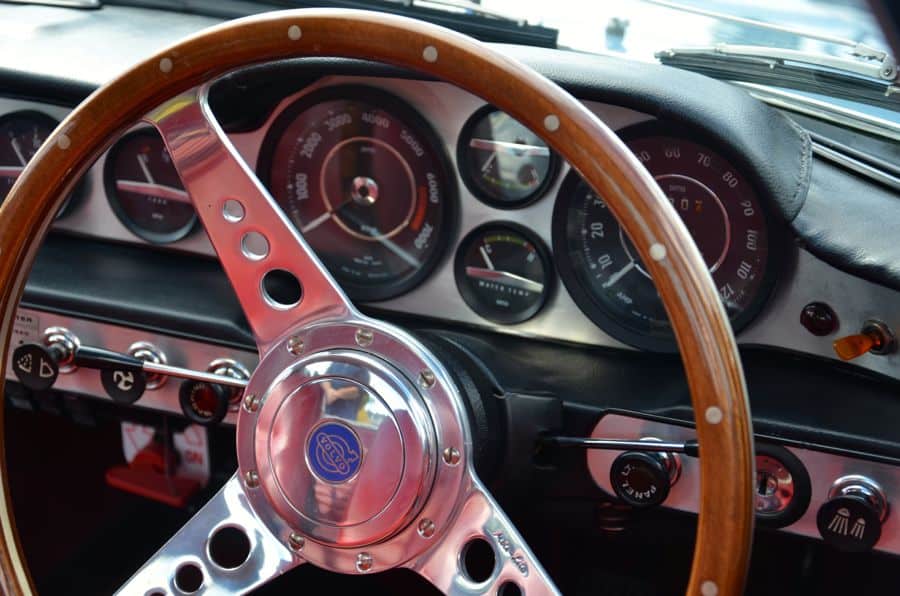
I’ve shown this Volvo P1800 once already but it was worth snapping a few more photos and taking a closer look. This is an early car and the classical dashboard is something to behold.
If there’s one area where you can see how generic vehicle design has become in the last 10 years, it’s interiors. Craft has given way to plastic injection and while technology has it’s undoubted benefits, they tend to drift towards the practical and the economic rather than the beautiful.
Sometimes it doesn’t hurt if function follows form.
P1800 prices are starting to rise. They used to be anchored at around $18,000 here in Australia but they’re well and truly into the $20’s now. In fact, there are six coupes for sale on carsales right now and the cheapest of them all is $23K.
——
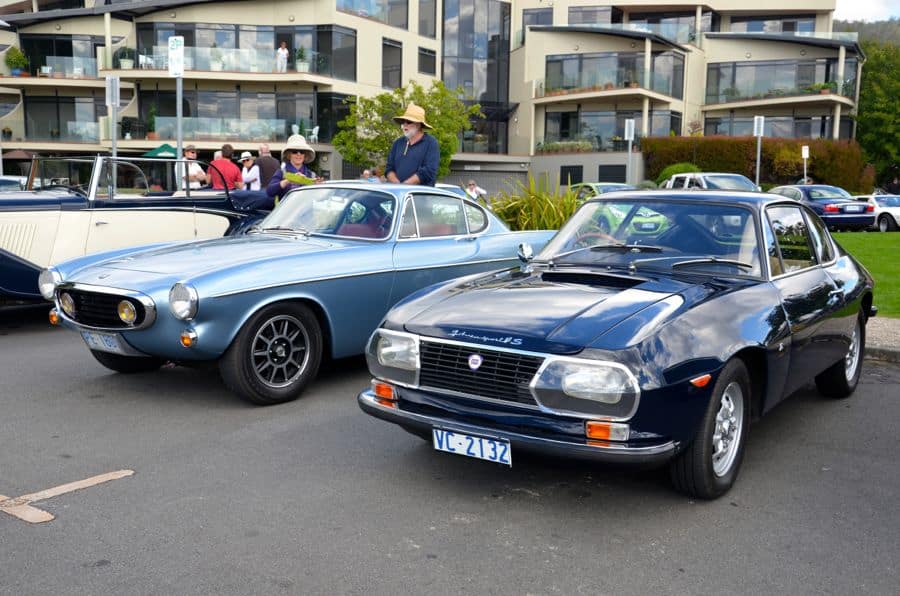
The Lancia Fulvia Sport by Zagato was back this month and I couldn’t resist a photo of it with the P1800. This is like the automotive version of a Miss Universe competition.
Magnificent!
——
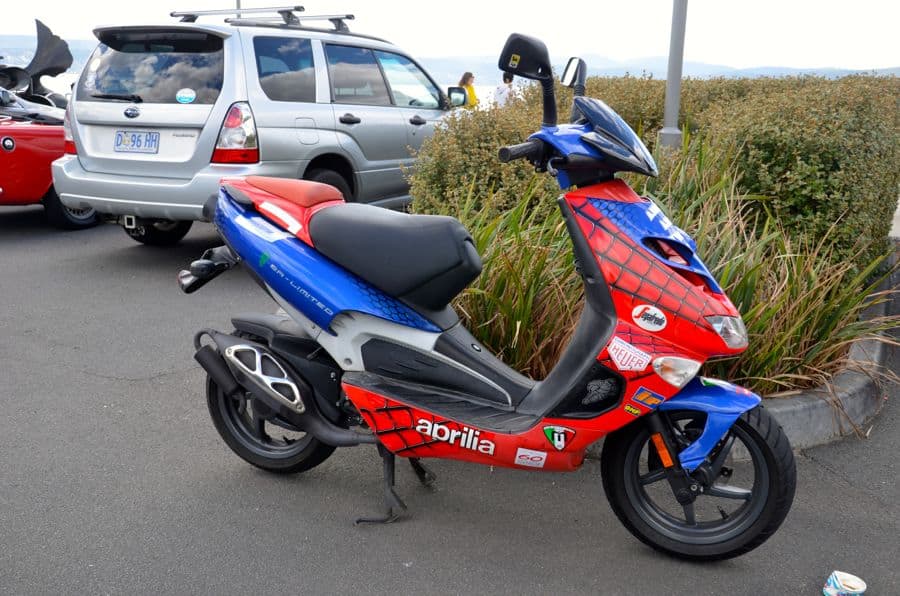
Our friendly neighbourhood Spiderman was in da house 🙂
——
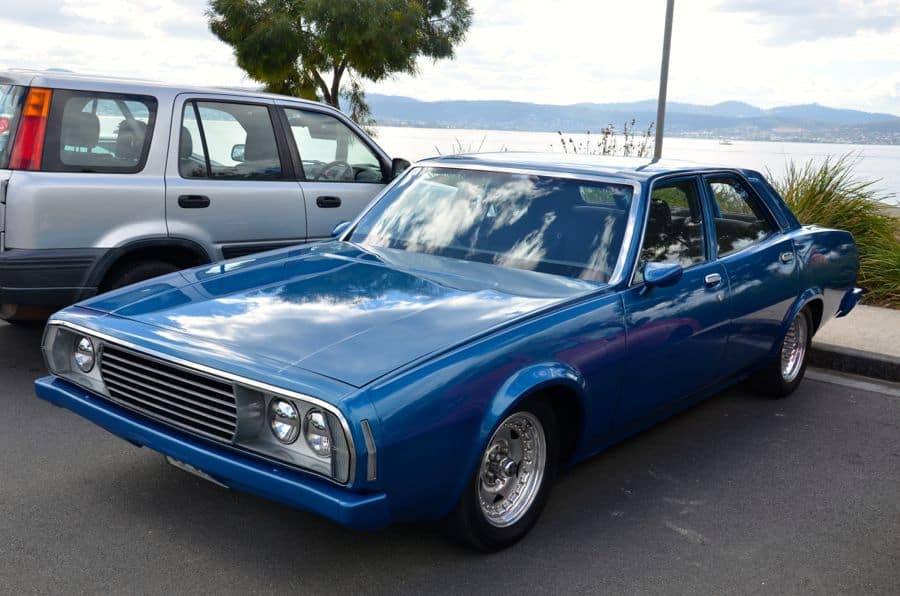
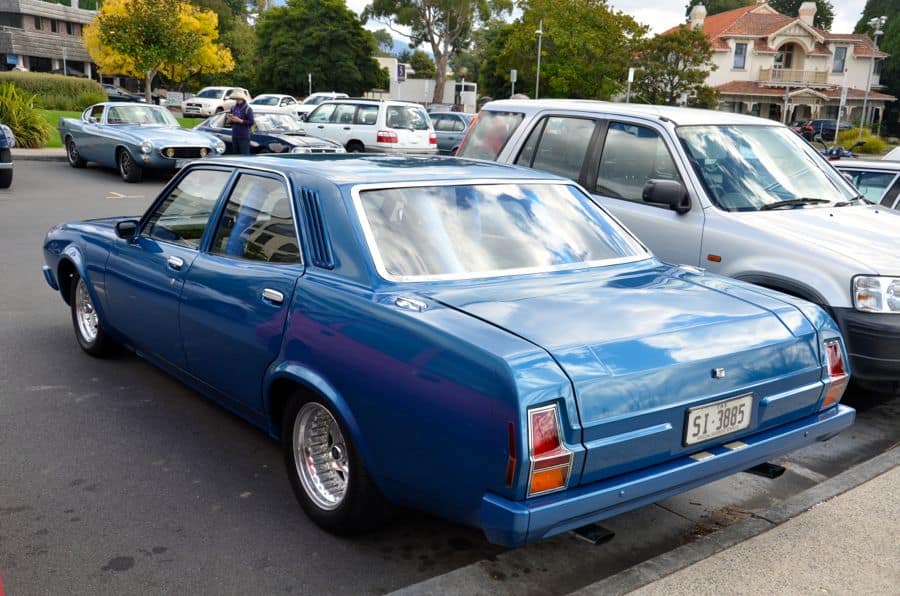
What you see below is a Leyland P76 and it’s an interesting model with a roller-coaster history.
The P76 was launched in the early 1970s and promptly won the Wheels Magazine Car of the Year award. Notable for its size – you can fit a 44 gallon drum in the boot with room to spare – it was a classic case of building the right car at exactly the wrong time.
The car was well received by the motoring press but a combination of industrial disputes and the 1970s oil crisis conspired to bring the P76 – and Leyland Australia – to a grinding halt.
The P76 actually won the Targa Florio stage of the World Cup rally in 1974 and Leyland Australia released a Targa Florio version of the car soon after. I’m pretty sure an uncle of mine has a Targa Florio P76 buried somewhere in his shed.
The P76 continues to enjoy a solid following here in Australia and it was nice to see this one parked here on Sunday.
——
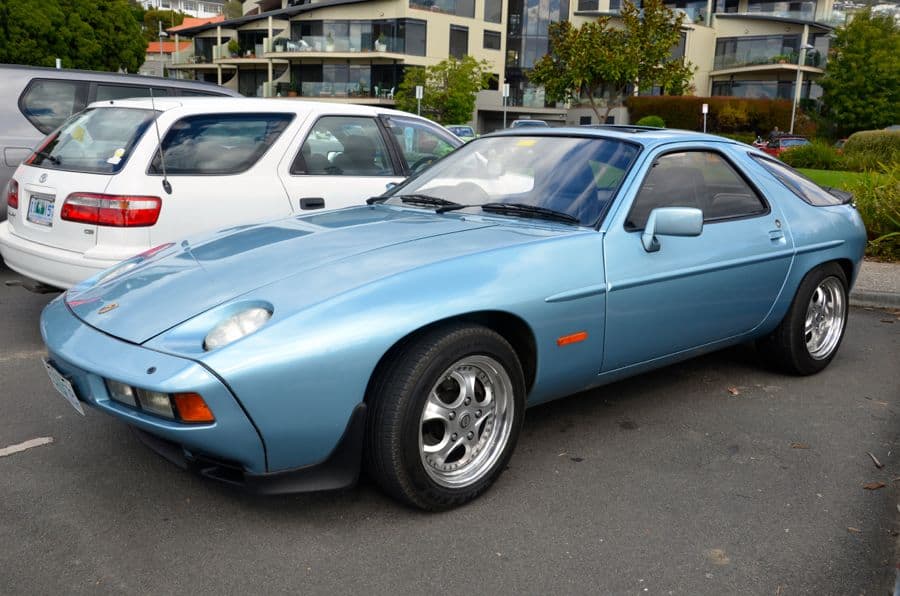
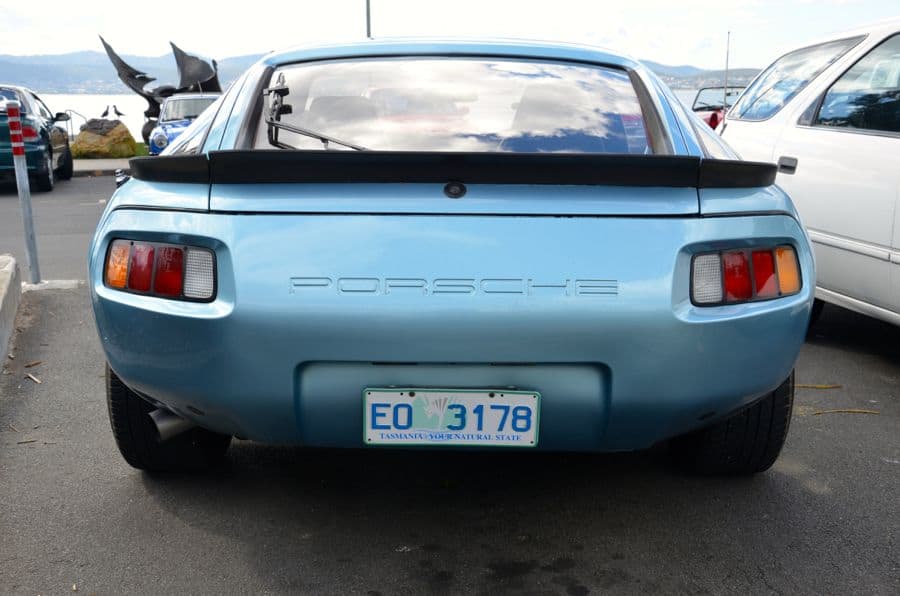
I got very excited when I saw this Porsche 928 parked at Classics.
Every night I drive home from work down a big hill called the Southern Outlet. Quite a few times on my drive home I’ve seen this blue 928 climbing the hill going in the other direction and because it’s climbing, the driver’s on the gas. Let me tell you, the note from this V8 – obviously equipped with something other than a stock exhaust – is amazing!
You can imagine my pleasure, then, when a saw a friend from the Porsche Club Tasmania get out of the car. Paul explained to me that the car just “followed him home” recently so he had to keep it. I commend him for his generosity of spirit 🙂 .
I didn’t get any interior shots but this is a 1981 model and it’s still got the original Pasha fabric on the door trim. The seats are all black, however.
The car sounded magnificent as Paul fired it up to go home and I can’t wait to see it again and maybe pinch a ride in it.
——
I know absolutely nothing about this Bentley, but with a window structure around the cabin like this one it was simply too interesting to leave without a few photos…..
——
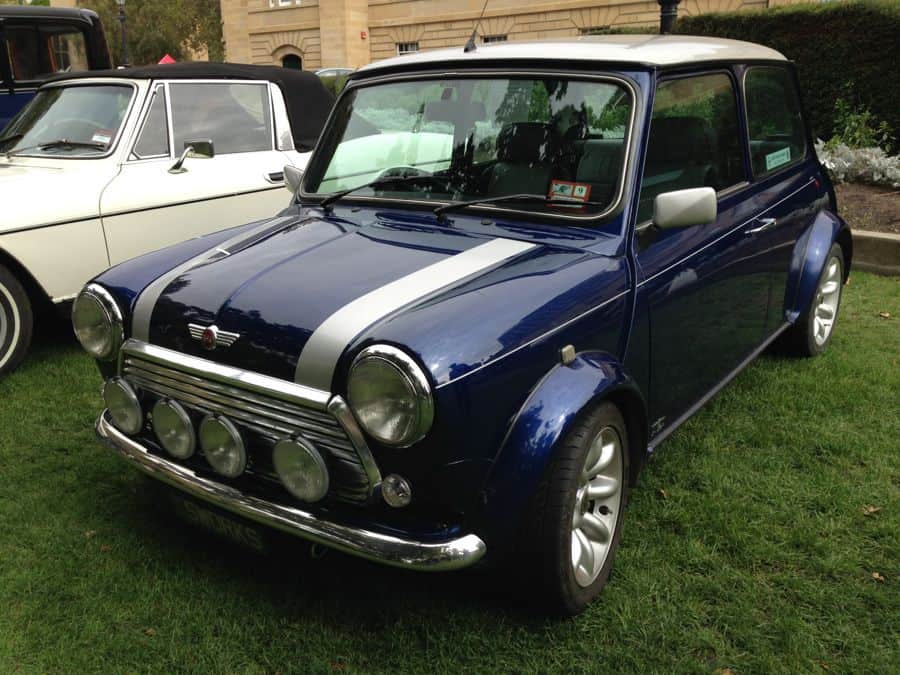
And now to our special bonus car from a show on the Parliament House lawns on Saturday. The lawns are right next to Salamanca Market, which is where I spend most Saturdays, so it was just a two minute stroll for me to catch this genuine Rover Mini Cooper S Works – one of the last 500 or so made by John Cooper’s company in 2000.
The red-winged badge, I believe, denotes that this car has the 90hp 1275cc motor, the most powerful engine ever put into a production Mini.
——
That’s all for this month. Unfortunately I’m going to miss “Classics” in May due to another commitment so you’ll have to wait until June to see who gathers down at Sandy Bay for another pleasant Sunday morning by the beach.
I was going to drive Gavin’s Alfa into work today but because I left a bit early, I had time to prepare the driveway and take the 968. And the unusual part is that I felt motivated to take the 968.
Why?
Well, it wasn’t because the 968 has a fantastic torque curve and is therefore effortless to drive on Hobart’s hilly roads (which is true). It wasn’t because the car handles with balanced precision aided by its optimal 50/50 weight distribution (also true). Those qualities have been lost on me for the last month as I struggled with my driveway and the infrequent use of the car.
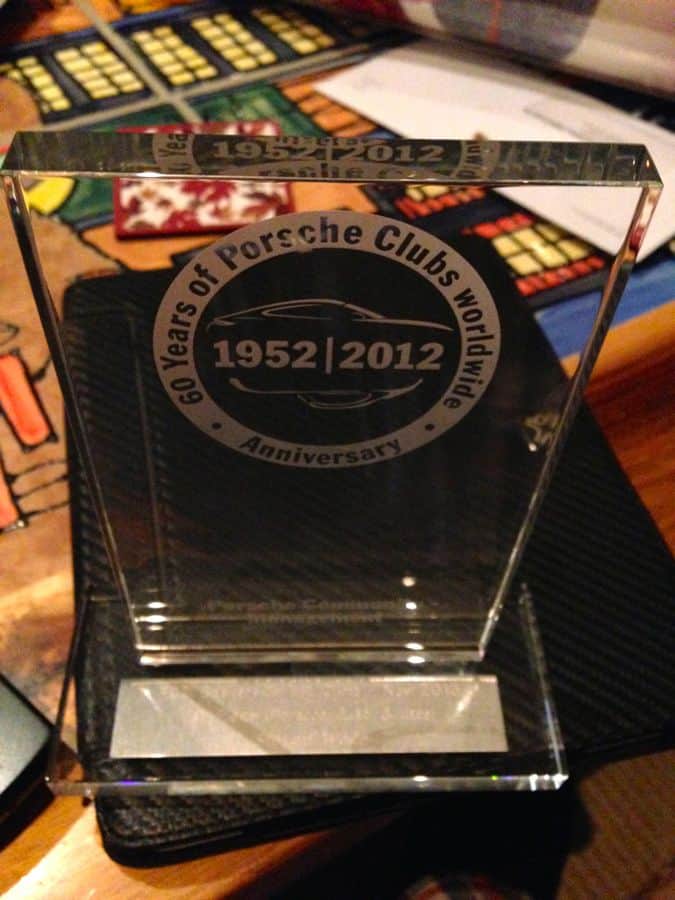
I felt motivated to overcome my problematic driveway because I felt a little bit of Porsche pride after receiving my hillclimb trophy yesterday.
What a cheap date I am!
In my mind, I know this is irrational. There were only a few competitors in my class and winning the class was more a case of good luck than good management. In fact, there were non-Porsches in our class that beat the Porsches quite easily. As it was a PCT event, though, there are PCT awards to give to PCT members who did well amongst their PCT peers. The event within the event, you might call it.
The trophy is quite impressive in presentation. It came in a black box lined with blue velvet. The award itself is laser-etched glass with an engraved plate on the base that records my win.
My guess is that Porsche make the etched glass trophy available to all affiliated clubs for purchase at minimal cost and the club does the engraving. As a recipient of the award – and again, I know that this is slightly irrational – it makes you feel like you got a little pat on the back from Porsche itself. It’s like they’re saying “We build cars for competition and we support clubs directly because they uphoild our culture and they compete. Well done on being part of our world.”
I’m impressed by the way Porsche support their affiliated car clubs. Porsche clubs that are affiliated with the company have access to a standardised content management system for their websites so that they all fit a company standard for presentation. A few years ago, Porsche sent a car from its museum to participate in Targa Tasmania with none other than Walter Röhrl at the wheel. Walter even attended a dinner hosted by the club here in Tasmania – a little car club with just 60 members.
That’s impressive. And I’m sure there are much more substantive ways the company goes out of its way to support the people who make it prosperous.
——
I think Saab were pretty good with community support, too.
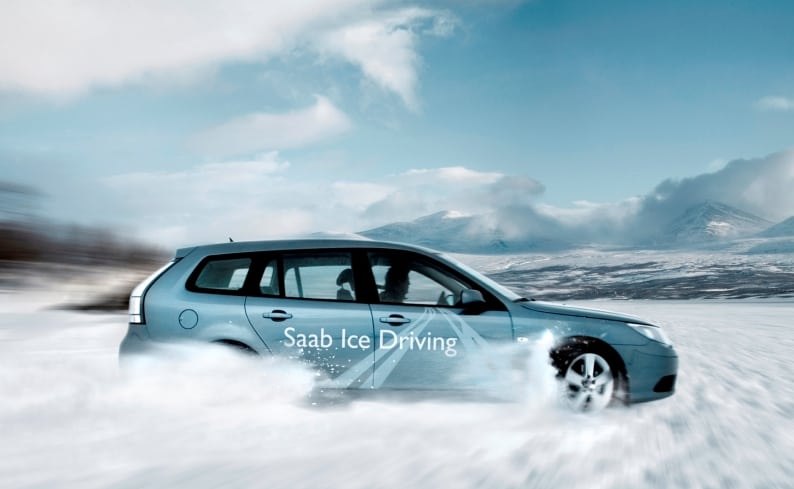
The personnel that they sent to Saab Owner’s Conventions over the years was consistently high calibre. The access that attendees had to company executives at Saab Festivals was wonderful. Any fan can walk into the Saab Museum today and talk to the keeper of Saab’s culture and history, Peter Backstrom. Then there were events and experiences like the Ice Hotel, driving experiences and other stuff. The customers all pay for it in the end, but it’s nice when a company spreads the love around a little.
I think that support would have improved even more, too, had the company continued. I know it was one of my goals with the role I started there.
——
Have you ever had a little thing happen that was so unexpected and yet quite personal, something that gave you a new appreciation of, and insight into, the big machine?
I’m interested to know who’s doing a good job of making people feel included. It doesn’t really take much, but a little personal touch can go a long way. Heck, I put my car up for sale last week and now I’m thinking of restoring the few bits that are non-standard!!
So what’s your best experience of community support from a car company? Dazzle me!
Greetings all. Let’s kick things of with a pleasant view, shall we?
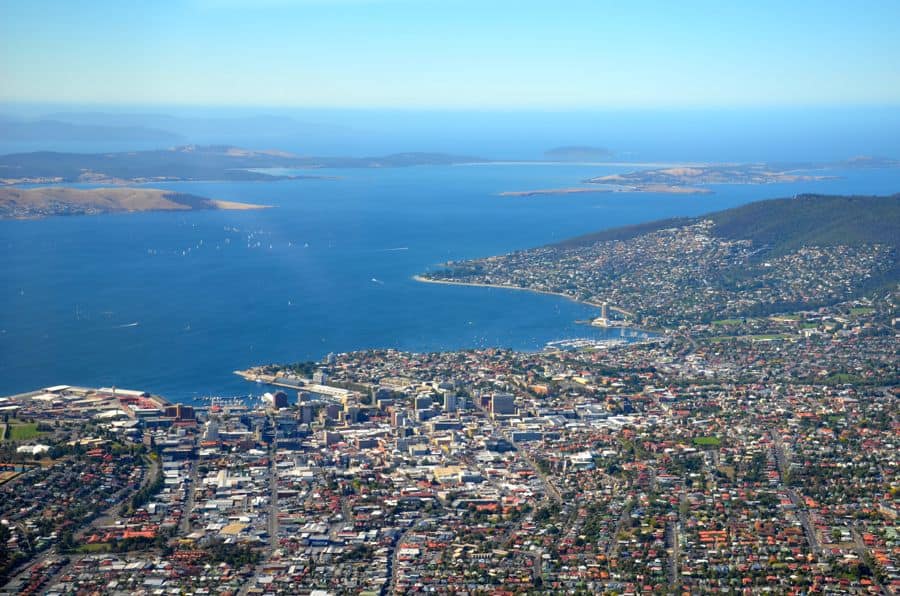
I hope to produce some video soon, but here are some photos of Hobart from the air. PJ and I had the good fortune to take a scenic flight recently, thanks to a friend of ours who’s a student pilot – Captain Sarah, we call her.
Hobart has its drawbacks. We don’t get the big things that big cities get, the cost of everyday items can be expensive (though thankfully housing’s quite affordable) and being disconnected from the mainland can be cumbersome sometimes.
There’s no doubt about it, though: Hobart’s a pretty city. Click.
——
Behold, my first Porsche trophy!!
You can’t see the inscription, but it records my first place in the Porsche Club Tasmania Baskerville Hillclimb 2013, in the 2-3 litre class. Nevermind the fact that there were only a couple of cars in the class 🙂
OK, it’s a bit of a laugh, but I’ll take a Porsche trophy in my cabinet any day. And declining to place any value on it would be disrespectful to the others in the class, too. We all had a competitive and enjoyable day so to have a memento of it is nice, indeed.
The 968CS is actually the perfect car for this type of thing. It’s more powerful than nearly anything else in the class and amongst the most balanced, too.
——
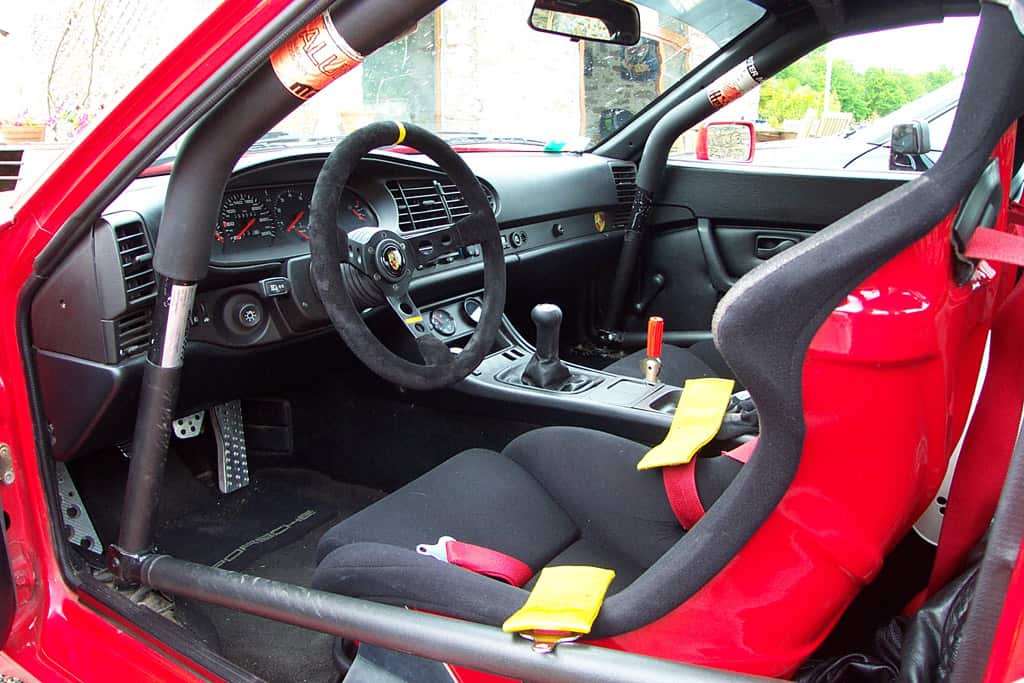
I checked out the options sticker on my 968 the other day and was saddened to see that it doesn’t have “Comfort Seats” as an option. That is, regular Porsche electric seats trimmed in leather.
My 968 currently has aftermarket Recaros and they’re very good. But the lack of an option code for “Comfort Seats” means it originally shipped with genuine 968CS fibreglass shell seats, also made by Recaro. The fibreglass backing was painted the same as the exterior colour of the car.
Here’s an example:
These are rare as hen’s teeth now and sell for around $3K or more per pair. I wish I had them in my car. The most frustrating part is knowing there’s a pair of them somewhere in Australia (or elsewhere in the world) that were originally in my car when it left the factory!
I’d love to find a pair of red ones and return the car to its original specification again.
My problematic driveway has me driving the car only once or twice a week and $30K is far too much money for me to have tied up in a car that I rarely drive. Either the house or the car has to go, and while we plan to sell both in the near-medium term, the car’s obviously the item that can be sold quicker (the house needs some preparation first).
I’m not expecting it to sell quickly at all. There are 968’s for sale now that were on sale back in October last year, when I bought mine. I predict I’ll still have plenty of time to enjoy it (and maybe bring home a few more trophies, too 🙂 )
——
On to other things, then……
If you only click on one link from this readings collection, make it this one.
I love creative start-ups like this. I love her creativity and her courage, two qualities that I sadly lack.
These are quality products; cleverly designed and hand-made. The story is a wonderful read and if you’re into cars, creativity and/or business then I think you’ll really enjoy it.
They were claiming that a BMW 1M Coupe is more expensive today on the second-hand market than when it went on sale a few years ago. You see this phenomenon with classics all the time, but they’re decades old. It’s not so common to see it with a mass-produced vehicle from the modern age that’s only a couple of years old. They’re usually still in depreciation mode.
….a few savvy Autoblog readers pointed out that our estimated price for a used donor car, set at $50,000, was low. Odd, we thought, as the car retailed for less than $50k ($46,135) when it was new in 2011. So we started checking around.
With only 740 units sold in the US to begin with, finding data on 1MC sales is a bit dicey, but here’s what we know. We tracked down about 20 cars currently on sale, by way of major used auto sales websites, and found an average asking price of a whopping $61,670 with an average mileage of about 11,600 on the clock. That’s more than $15,500 over the MSRP when new, or an appreciation of around $5k per year.
Hold on a second. You ‘mericans got that car for under $50K???? Wow.
Anyway, I figured I should have a look at the Australian market and sure enough, the 1M Coupe is doing similar things here.
The car originally sold for $99,000 here. Yes, you read that correctly – $99,000. A quick check on carsales.com tells me that you can buy one between $86,700 and $118,000. It should be noted that the top price is for a 2012 model, not a 2011, but it’s still more than the original asking price.
My guess is that it’s not just a case of supply and demand, but that the rather expensive options list is also playing a role. It might have stickered at $99K but not many of them would have been sold at that price.
——
I guess I’ll always mock GM in one way or another.
I know it looks like it, but this is not a 10 year old picture of a Cadillac Escalade.
Yes, it looks like a 10 year old truck but it’s actually the 2015 Cadillac Escalade.
You’ve got to admire their self-confidence, I guess.
——
And finally, to finish on a positive note, I’m going to unashamedly pinch a post from Saabs United.
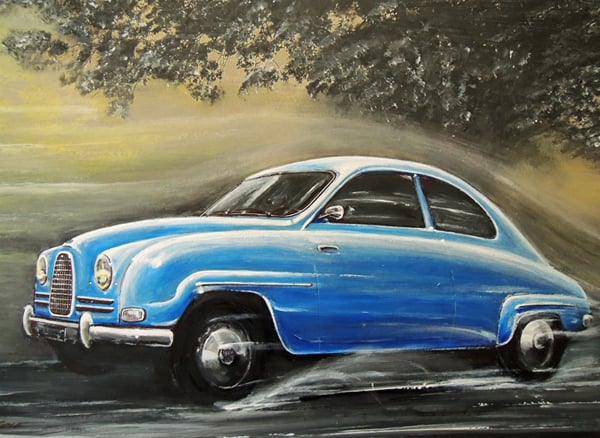
Lance Cole – known widely for his Saab books and occasional pieces on The Saab Smell and other things – has put his considerable artistic talents to use and painted this wonderful image of an old Saab 93.
He’s offering limited edition prints for sale and I hope he sells the lot. That painting looks fantastic.
So the votes are cast, the verdict is in. Sort of.
I hope no-one’s looking for some momentous enlightenment here. I had a theory and wanted to see if other people agreed. That’s all.
My theory was this:
Nasal Theory
In all but a few cases, Saab actually made their cars look less attractive when they updated them.
That’s it.
The theory started as I pondered the Saab 9-5. I’ve long said that we’ll look at getting a Saab 9-5 wagon when our 9000 bites the dust. But which 9-5?
Saab steadily de-contented the cars after a time, either through directly removing some items or through declining material quality. Cars from the early 2000’s seem to be best equipped as standard and with the highest quality finish when new. But you have to balance that equipment level against the age of the car and with the age comes the nose difference.
As I looked at the two noses, I came to the conclusion that I really liked the earlier 9-5 nose a bit more than the later one. There’s something very composed and elegant about that silver grille that looks good to me from all angles. When I see the later nose, with it’s color-integrated grille surround, something fails to click with me.
I think the 9-5 Aero looks good with the later nose, but the lesser models look like they have their chin poking out, like they’ve made a funny face for a photo.
Then I got thinking about other models.
The Saab 96 is an obvious one where the first iteration was the best. This is the only one for which I showed three generations. In fairness, I should have just made it a question between the second and third generation and left the bullnose out. Why? Because the second and third generations shared the V4 engine. The bullnose didn’t. The V4 necessitated a longer nose so if you want a V4, you don’t get a bullnose to choose from.
I think the Saab 99 looks much more elegant in it’s earlier form. I can understand people favouring the later form because that’s where the 99 really made its name. But the earlier form looks so clean.
My ideal Saab 99 would be an early-form body with a turbo engine, just like this one! It’s owned by a friend in Sweden named Anders S (his brother Peter has a red one just as nice! 🙂 )
—
When it comes the 900, I’m a little biased. I owned an early version of the Saab 900. It was one of the first 16V cars with the oxblood leather interior and the flat-nose version of the car had me from day 1.
In fairness, though, I also owned a later slant-nosed model in Sweden. I actually had a much better ownership experience with that car, but still prefer the look of the earlier flat-nose versions.
As an aside, I do wonder how much people’s personal ownership experience influenced their vote(s). I also wondered whether people voted just on the nose, and how many on their opinion on the whole vehicle. Did the wheels influence you, for example?
The 9-3 SS and the Saab 9000 are probably the two exceptions to my own theory that I would agree with.
I thought the 9-3 SS vote would be closer but I understand the later nose winning by a large margin. I reckon Dan P summed up the problem with the early 9-3 SS quite well:
I think the original design is great, timeless from many angles and just a beautiful organic shape. What I’ve never liked and puts me off buying one a little is the front lights. They don’t wrap around enough and sit too square on the nose, and it’s out of character compared to the og9-3 and the 9-5.
The overall shape of the 9-3 SS is nice but the front seemed un-finished. The later nose on the 9-3 gave the car more purpose, more aggression IMHO.
Same with the 9000. I like the earlier front but the later nose gave the car a more distinct identity. In comparison, the earlier front looks a little bit generic.
——
None of this is to say that people shouldn’t like one version or the other. The Saab 99 is a prime example. If you’re going to buy a Saab 99, buy a 99EMS or Turbo and love what is a magnificent front face. The earlier one looks more elegant to me, but the later cars are still beautiful to look at and a much better mechanical package.
Did my theory match the popular vote? Not really.
Saab 9-5 – I picked the early nose. The vote was close, but the majority picked the later, more integrated nose.
Saab 99 – I picked the early nose. The vote was overwhelmingly in favour of the later nose by a margin of 2 to 1.
Saab 900 – I picked the earlier nose. A lot of people agreed with me, but the vote was still firmly in favour of the later, more slanted nose.
Saab 96 – We all picked the early nose on that one. Despite there being three entries, the bullnose got 61% of the vote. I’m surprised it didn’t get more, to be honest.
Saab 9000 – I think the later nose was an improvement and the people agreed, but only just. The later design won….. by a nose. 87 votes to 79. There’s a lot of love for the early nose there, which maybe supports my theory, even if I wouldn’t have voted for it.
Saab 9-3 SS – I figured this one would be close, but it was an 83% vote for the later nose.
The bottom line
Saab has always had a strong design ethic and it’s no surprise that both their early designs and their refreshed designs are popular with the Saab faithful.
How to explain the discrepancy in the votes? Well, we’re all individuals. We all think differently. There might be something in the fact that some of the later designs that I dislike involve moulded rubber bumpers (Saab 96 and 99). Maybe I’m just into older cars.
Whatever the explanation, I’m happy with my theory and happy to know that all of Saab’s front-end designs are appreciated by the fans.