Tjena från Vejbystrand

Hi there. Long time, no write.

If you’re reading this, thanks for hanging around.

All is going well in Sweden. Yes, the job is absolutely fantastic. It’s everything I’ve ever wanted to do for work and it’s slowly expanding into areas I didn’t expect.

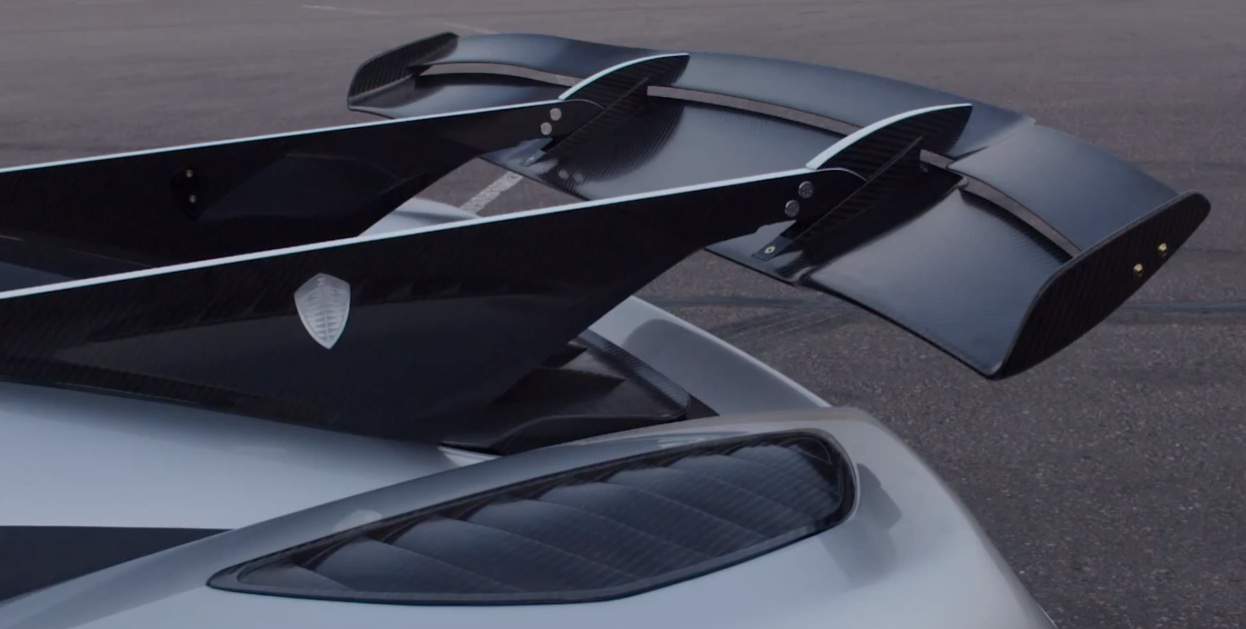
I expected to take photos, for example. I didn’t expect to take so many, nor for them to be so useful. This one’s now one of the slider photos on the Koenigsegg homepage.

There are lots of other unexpected things, too. Content management. Website layout. And plenty more. It all involves a learning curve but not one so steep as to be a problem.

The bigger learning curve has been in navigating the Swedish bureaucracy.

Just getting here legally was a nail-biting experience in itself. As I’m an Australian (read non-Swede or non-European), I had to get a permit to work here, which took a lot longer than anyone thought. I planned my exit from work in Australia back in March. It was supposed to coincide with the Saab Festival, with the belief that I’d be able to start work at Koenigsegg the day after the Saab Festival finished. I was working on the assumption that the work permit would come in plenty of time, which it most certainly did not.

The advice I received from the Swedish Embassy in Canberra was that I shouldn’t enter Sweden while the decision on my work permit was still being made. On the Monday before the Saab Festival, there was still no decision. Impatient as I am, I booked my flight anyway, crossing all my fingers and toes that it would come before I left.

I had to write to the Swedish migration agency and let them know that I would be entering the country in three days time for the Saab Festival. I was advised that my visit would be OK, but if the decision on my work permit still hadn’t arrived by then, I would have to leave Sweden as soon as the Saab Festival was finished. I made arrangements to flee over the border if need be.

My first night’s accommodation at Swania in Trollhattan was booked for Thursday night. The work permit decision arrived Wednesday morning, which is about as close as you can get.

There have been other red-tape nightmares since then. All of them worked out OK, but it’s frustrating having to work through an unknown process at unknown agencies just to be able to do the simplest things.

Getting the card that goes with the work permit.

Clearing my extra suitcase through Swedish customs when it (finally) arrived via Emirates air freight.

(Here’s a tip for any Aussies coming to Sweden and flying economy with Qantas: one suitcase only. Qantas will charge you $80 per kilo for any extra luggage if you simply arrive at the airport and try to check it in. Lucky I checked this first. Even the cheap option set me back $300 but that’s much better than the $1600 Qantas would have slugged me.)

Getting the all-important Swedish personnumber.

Getting the Swedish ID card that should really be automatic when you get the personnumber, but isn’t. It involves an extra fee and a visit to a bigger Skatteverket office.

Getting a Swedish bank account (relies on the personnumber and if your a working foreigner, proof of your employment).

Getting the aforementioned Swedish ID card so that you can access internet banking. Yes, you need one to do the other.

Buying a car.

Yes, I bought a car and yes, it’s a Saab. I bought a 2003 Saab 9-5 SportCombi in Merlot with a black half-leather interior and 5-speed manual shift. It was previously owned by a former tech at ANA and has been well maintained as a result. I gave the boss a lift home last night and even he commented on how smooth and quiet it is.

I’m also living in a ‘Falun Red’ timber cottage with white trim windows. I look like a regular Svensson now 🙂

There are actually three little accommodation units in that building. Mine is the middle one. It’s tiny but that’s good for me right now. The last thing I need is to feel compelled to buy furniture and fill a place up with it. This little cottage in Vjebystrand Vejbystrand has most of the things I need – it’s cheap, it’s 5 minutes drive from work and about two minutes from this beach 🙂

The 9-5 is actually intended to be my sensible winter car. I’m looking for affordable vehicle storage nearby and hope to store the 9-5, then pick up something less sensible to drive for the remainder of the summer.

The work?

It’s been a very interesting experience so far. It’s a bit like bringing up a kid in that there’s no instruction book. You think of things, you float ideas and you run with what seems best. There should be more strategy to this but I’m working on that. I think it’ll be my job to write that instruction book and I’m going to seek some expert help from friends along the way.

There have certainly been some exciting experiences so far.

I did my first trip for Koenigsegg before I’d even left my old job in Tasmania. I flew to Japan for an event at Suzuka Circuit, which was a jaw-dropping debut. I put a gallery of images in a previous post but here it is again:

Since then, we’ve done an unofficial record 0-300-0km/h run in the Koenigsegg One:1……

….. and I made it to England to cover Koenigsegg’s presence at the Goodwood Festival of Speed. Goodwood was astounding in its size and the access to mouthwatering vehicles that is given to spectators. It’s effectively replaced whatever old-style motor shows there were/are in the UK, too. It is massive.

We have more events and campaigns coming up, too. I’ll be abroad again in a few weeks and several times in the months to come after that, too. And there’s plenty to do when I’m here, not the least of which involves making some new friends, learning a new language and culture.

It’s all going OK so far. There are quiet times, which can get a bit lonely, but they’re more than offset by the work and the amazing things I’m seeing and learning.

I do hope to write here a bit more often now that things are getting settled. Being away from regular Australian news bulletins has given me a new perspective on what’s going on in my homeland and it’s distressing to say the least. But it won’t be all about that.

Thanks for reading. It’s been good to write something familiar again.

Have a great week.

Inside Koenigsegg – Making Carbon Fibre Wheels

This picture will tell you much of what you need to know about Koenigsegg’s carbon fibre wheels. This is Christian von Koenigsegg holding up a 19-inch wheel (10 inches wide) – with one finger.

That’s a screenshot from the latest update in the Inside Koenigsegg series of videos. It’s yet another inside look at the magic kingdom of cars, where there are only two items on the daily agenda:

  • Build Koenigsegg cars
  • Push the boundaries on what can be done to make a vehicle the absolute best it can be.

Koenigsegg’s carbon fibre wheel has only one metal part – the air valve. The rest of wheel is hand-laid, pre-preg carbon fibre in different thicknesses that are purposefully designed to make the wheel as strong, as balanced and as light as it can be.

You’ll be surprised at how little it weighs and you might also be surprised at what the wheels greatest source of potential stress is. Here’s a hint: it’s NOT pot-holes in the road. Christian also gives a nice little primer on the importance of lowering the un-sprung weight of a car.

The video is 11 minutes long and it’s as educational as every other Inside Koenigsegg video has been so far. Enjoy.

Inside Koenigsegg – 3D Printing

The two times I visited Koenigsegg’s facility in Angelholm, I came away thinking “this is car-making on a completely different level”. Very few people – not companies, but people – can do what Christian von Koenigsegg can do to optimise a car.

This video extends that idea. It extends the whole idea of 3D printing, too. They’re not just doing the stuff you’ve heard about, like printing plastic prototype parts. They’re actually 3D printing real parts in titanium, including stuff that gets stressed like turbo housings.

If you’re an engineering type, you’ll get this. In fact, I have a friend who works with this stuff and he’ll quite possibly yawn his way through it. Actually, I have to go visit his workplace one day and see this stuff in action.

If you’re a non-engineering type (like me), then prepare yourself to be amazed at how technology is completely changing the car business. This is an expensive process suited to (very) expensive cars right now but the trickle-down should happen and it’ll probably be sooner than you think.

I’ll stop rambling. Watch the video. It blew my mind. I hope you enjoy it just as much as I did.

Inside Koenigsegg – One:1 Active Rear Wing

The absolutely awesome Inside Koenigsegg video series continues and today you get an introduction to the One:1’s active rear wing – another first for Koenigsegg.

The wing is the lightest of its type and it’s innovative mounting system overcomes some of the turbulence drawbacks suffered by competing units from other manufacturers. As always, Keonigsegg think hard about their solutions to make their cars the absolute best they can be.

The video is six minutes or so in length. Enjoy.

Inside Koenigsegg – 1360hp engine in the Koenigsegg One:1

I’ll understand if you feel a little short-changed watching this video. What we want to see is the 1360hp One:1 engine in full flight and that’s not what you get here.

What you get, instead, is a verbal run-through of the changes made to the Agera R engine to bring it up to One:1 spec. Koenigsegg is, after all, an evolutionary car maker, a company that constantly improves its technology with every car that it makes. The One:1 continues the evolution.

The video is short. It’s worth watching. Hopefully get we get to see the One:1 in action soon.

Inside Koenigsegg – Preparing the Koenigsegg One:1

Did you watch the first Inside Koenigsegg video series last year? If not, click that link and get yourself educated about what it takes to build the most amazing cars in the world.

The latest iteration – the world’s first ‘megacar’ – is the Koenigsegg One:1, which as you’ll learn in the video is pronounced “one to one”. The premise is one horsepower for every kilogram of weight, making 1360hp (or one megawatt) in total. It’s an outstanding achievement and as you’ll see, they plan on going even further with the production version of the car.

This is the first video of /DRIVE’s second Inside Koenigsegg series. Christian von Koenigsegg presents a quick tour of the car as they’re preparing for it’s debut at the Geneva Motor Show.

Enjoy.

Inside Koenigsegg: Putting 1140hp to the ground

The Inside Koenigsegg video series concludes today with this final instalment – the gearbox. This one is guaranteed to go over most people’s heads. The overall concept makes sense to me but the technical bits went over my head very quickly and I think it’ll be the same for many people. I get concepts but I’m a technical imbecile. There are still several things you can appreciate, however.

First, even though it’s a video about a gearbox, the fact that it’s Christian von Koenigsegg talking about a gearbox still makes it interesting for some reason. Having watched this series from start to finish, there’s no-one else in the series that can make such technical wizardry so interesting to listen to.

Second, even thought I don’t understand the way everything works in detail, it’s still eminently clear how cutting edge this technology is. That makes the fact that Koenigsegg do all this stuff themselves rather than buying-in the component from someone else all the more remarkable.

This has been a great series to watch. Kudos to the Drive team for putting it together. I hope they stitch all the parts up into one 90-minute video.

——

You can see Episode 1 of this series (Carbon Fibre) here.

You can see Episode 2 of this series (Triplex Suspension) here.

You can see Episode 3 of this series (Perfect Paint) here.

You can see Episode 4 of this series (Interior Surfacing) here.

You can see Episode 5 of this series (Test Drive) here.

You can see Episode 6 of this series (The Brain) here.

You can see Episode 7 of this series (Cargine Camless Valves) here.

You can see Episode 8 of this series (The Engine) here.

——

Inside Koenigsegg – The Heart Of A Hypercar

I hope you’ve enjoyed the Inside Koenigsegg series so far. You’ve learned about carbon fibre, painting the cars, trimming the interiors and whole lot more.

If you were only going to get excited about one episode of this series, though, this is the one. In this episode, Christian takes you through the heart of a Koenigsegg car – its engine. I’m sure you’re going to be blown away not only by what they do, but by the potential for the future, too. Just imagine when they combine their already impressive engine tech with Cargine camless valve technology from last week. Mind boggling!
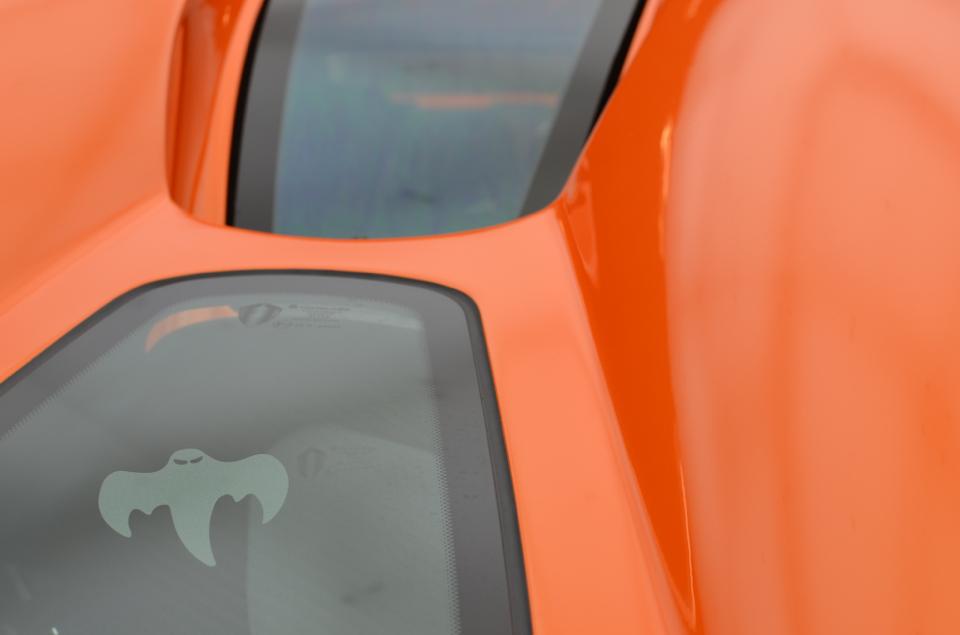
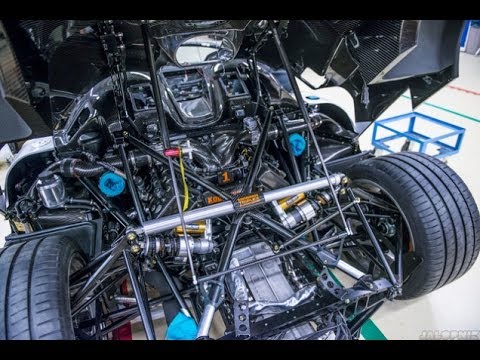
The one thing that amazes me about Koenigsegg – and I might be wrong in saying this but I believe it to be true – they’re the only hypercar manufacturer in the world that design and produce their own engines from scratch. Others will get an engine from Mercedes or BMW or GM and hype it up to their own specifications but at Koenigsegg, that’s not good enough. That’s the extent of their commitment to delivering the absolute best product that your money can buy.

Enjoy this video. And as a tip, keep an eye on the lamp behind Christian when he’s talking to camera with the engine on the engine stand. You’ll see the LEDs change colors from time to time. That lamp is custom made from carbon fibre and based on the tail lamps of Koenigsegg’s cars. They used to offer them for sale but a quick look at the Koenigsegg Lifestyles Shop tells me they don’t anymore.

——

You can see Episode 1 of this series (Carbon Fibre) here.

You can see Episode 2 of this series (Triplex Suspension) here.

You can see Episode 3 of this series (Perfect Paint) here.

You can see Episode 4 of this series (Interior Surfacing) here.

You can see Episode 5 of this series (Test Drive) here.

You can see Episode 6 of this series (The Brain) here.

You can see Episode 7 of this series (Cargine Camless Valves) here.

——

Inside Koenigsegg – the future of combustion

How does this sound?

30% more torque.
30% more power.
30% less fuel consumption.
50% less emissions.

Not bad, eh? That’s what Christian von Koenigsegg forecasts will be achievable when Cargine’s pneumatic valve technology finally takes off.

I won’t say any more for the moment. Just watch the video below. This is the 7th video of the Inside Koenigsegg Series and for the tech-heads, it’s quiet exciting.

——

Cargine was prominent back when Christian was leading a group trying to buy Saab Automobile in 2009. There was talk back then of the $600m EIB loan they were trying to secure being used in part to finance the further development of this system. It’s four years later and the system is still finishing development, so I’m guessing some of that EIB money would have been very welcome.

I visited Koenigsegg in 2010 and spent a wonderful day getting a look around their facility. Part of that tour included a drive in their Cargine 9-5.

The picture to the right shows the top end of the engine in the car I drove. As you can tell, it’s very different from the one you just saw in the video. Basically, if the current generation of Cargine is Windows 7 or 8, the version I got to drive was Windows 3.1. Here’s what I said about it back then:

I drove the 9-5 they had on site, pictured above with an early incarnation of the system. It’s now moved ahead since that system was fitted. The car drove extremely well, with just a little jerkiness when you lifted the throttle. This jerkiness, however, was not related to the Cargine system itself, but to the ground-up engine software they wrote (in a hurry) so that they could run the car without cams.

Removing the camshaft from the mechanical equation means energy losses are reduced, resulting in more power making it through the combustion cycle unhindered. Normal driving was very smooth, with the car easily able to carry speed in high gears with very low revs.

It was an amazing feeling to drive the future.

Christian’s allegory of playing the piano is most fitting. Instead of hitting the keyboard with a broomstick (i.e. a camshaft), engineers using Cargine will finally be able to play the instrument with their fingers. The possibilities that opens up really are mind-boggling.

——

You can see Episode 1 of this series (Carbon Fibre) here.

You can see Episode 2 of this series (Triplex Suspension) here.

You can see Episode 3 of this series (Perfect Paint) here.

You can see Episode 4 of this series (Interior Surfacing) here.

You can see Episode 5 of this series (Test Drive) here.

You can see Episode 6 of this series (The Brain) here.

Inside Koenigsegg – The Brain

It’s time to go Inside Koenigsegg and explore another aspect of what I believe are the most advanced, extreme cars on the planet. This has been such a good series.

In this episode, you go right into the fine detail behind the electronic brain that controls Koenigsegg’s vehicle systems. It’s quite possibly just a little too much information, to be honest, but it continues the extraordinary insight that this series provides and if you want to get an understanding of what it takes to build any modern car, looking at the processes of a small producer like Koenigsegg gives you much of the bigger story but in a boutique setting.

As with other episodes in this series, the big take-away is how dedicated Koenigsegg are to designing absolutely everything in-house so that it performs as it should. There are no short cuts and the only thing that vaguely resembles a compromise is time (eventually you have to put out a product, after all).

Enjoy:

——

You can see Episode 1 of this series (Carbon Fibre) here.

You can see Episode 2 of this series (Triplex Suspension) here.

You can see Episode 3 of this series (Perfect Paint) here.

You can see Episode 4 of this series (Interior Surfacing) here.

You can see Episode 5 of this series (Test Drive) here.

——

Exit mobile version