Tasmania’s bid for the 2024 Olympic Games

Here it is – the exclusive pre-preview of Tasmania’s bid to host the 2024 Olympic Games.

London’s got nothin on us!

—

OK, it’s not real.

Here in Australia we have a show called Gruen Nation, which is a fantastic program all about advertising. During the London Olympics they changed the name to “Gruen Sweat” and focused on the marketing side of the Olympics (huuuuuge!).

One regular segment on the show is called The Pitch, where different advertising companies put together a pitch to try and sell the un-sellable. In this case, the un-sellable was a bid for Tasmania to host the Olympics.

They used a few good mainland stereotypes in there. The weather, for example. It actually rains less here in Hobart than in any other Australian capital city. It doesn’t get cold enough for snow, either. And if you’re wondering about the two-headed bit, it’s a popular joke about the potential for in-breeding on a sparsely populated island.

Good stuff by the (Tasmanian) ad agency, Red Jelly.

Selling your car – Should you disclose minor faults?

I received this query earlier today with permission to share it on site. Your input would be welcomed.

Scenario: You are the owner of a 10 year old car which you bought second hand 2 years ago from a used-car lot in Melbourne. From day 1 of your ownership it has had an annoying symptom of being difficult to drive off the mark when cold. Sort of sputters and bogs down when you let the clutch in, almost to the point of stalling, often necessitating starting the process from scratch. Once underway it is pretty much fine, especially after the engine warms up.

The car doesn’t use excessive oil and returns good fuel consumption. The symtom only manifests in 1st or reverse gear and is most noticeable when cold. The local dealership for the brand (not SAAB, I should add) haven’t been able to reproduce the fault despite having the car overnight for a cold start-up and it hasn’t thrown up any fault codes when plugged to their diagnostic computer. (I suspect it is dumping too much fuel into the inlet side for some reason, on start up but this has yet to be proven).

You are now at the point of sale of the above car to a purchaser who has test-driven the car and placed a deposit on it.

Question: Do you disclose the above or not? What would you do?

——

Personally speaking, and before things got to the deposit stage…..

I probably would have made sure I was along for the test drive and if the car sputtered at that time, I would have made mention of it then. I would have described how it had been checked out and provided the name of the technician who worked on it and mentioned how it seems to be a cold-condition affliction that they couldn’t pin down. The car would have hopefully backed up this testimony by running fine as the drive progressed.

As it is, it sounds like the buyer has driven the car and is happy enough to proceed so I’d probably let it go. I’m not sure, but I don’t think most people will expect a 10 year old manual car to be completely smooth off the line when cold, anyway.

The one caveat on that is whether or not the potential buyer drove the car ‘cold’. If they’ve experienced it cold, all well and good. If the car wasn’t test driven in circumstances that would lend it to revealing the problem, then maybe mentioning it now would be a good idea.

——

From my own experience, I’ve appreciated it when sellers have told me of issues or potential issues. It gives me the chance to weigh up whether or not I’m happy to live with it. Occasionally it can also lead to some further negotiation on price, but not always.

On the other hand, I’ve occasionally bought cars with problems that weren’t disclosed. I haven’t tried to return them or negotiate money back, but let’s just say the seller didn’t make my Christmas card list.

Don’t beat yourself up over it, but “do unto others…..” etc.

5 things I wish I’d seen at the London Olympics closing ceremony

Congratulations to all you Brits on a wonderful Olympiad. I was addicted. In fact, the games made me so tired that I thought some of these were actually humorous.

We got the Spice Girls, and the rather ludicrous sight of a bunch of former druggie musicians and models at an event that was supposed to be clean and inspiring. There were a few things we didn’t get, however, so here’s my list – Five things I wish I’d seen at the London Olympics Closing Ceremony.

1 – A more prominent Royal.

Prince Henry of Wales, as he’s officially known, presided over the closing ceremony last night. Harry, as he’s more widely known, is third in line to the throne. If you count the incumbent, he’s actually the fourth who can claim the crown. That doesn’t even get him a Royal Bronze.

And what if Harry had been busy last night like his Royal Gran, his Dad and brother? He’s only two spots ahead of that lass with the truly awful hat and I’m sure Prince Andrew would have gladly stepped aside, if only to see the crazy outfit she’d come up with, just for a laugh.

And finally, the Duchess of Cambridge was at the closing ceremony, so where was William, exactly?

——

2 – Some Tea

Forget your cultural icons, your fashion and what not. What the closing ceremony needed, at least once, was a good strong cup of tea.

Surely that’s more British than that Greek toilet loiterer they had on?

——

3 – A wall/walk of shame

My own suggestion for reducing the cheating that goes on at these meets – show the names and pictures of disgraced competitors who were eliminated for cheating. Better still, walk them through the auditorium!

Drug cheats first and tanking badminton players second. Those who false-start at running races can be exempt because that rule’s pretty harsh already.

You might think it slightly distasteful, but try telling me you wouldn’t watch it! And try telling me the thought of being paraded around in disgrace in front of your law-abiding peers and a TV audience of more than 1 billion wouldn’t make a few dodgy athletes think twice about playing up.

——

4 – A per-GDP medal tally.

Everyone knows that Olympic success doesn’t just come down to natural talent.

How do you think China went from ZERO swimming medals in 2000 to TEN swimming medals this year, including 5 gold? They didn’t grow those swimmers on trees. They spent money – bundles of it – on high performance coaching (much of it in Brisbane, Australia, in fact).

If you re-count the medal tally according to national GDP per capita, you get to see those countries really punching above their weight. The ones doing it against the odds, essentially on raw talent and little else. Looking at things that way, the big winner from the games was actually Ethiopia, followed by China in second (OK, that might be an exception given the money they’ve got access to) and then Naughty Korea!

——

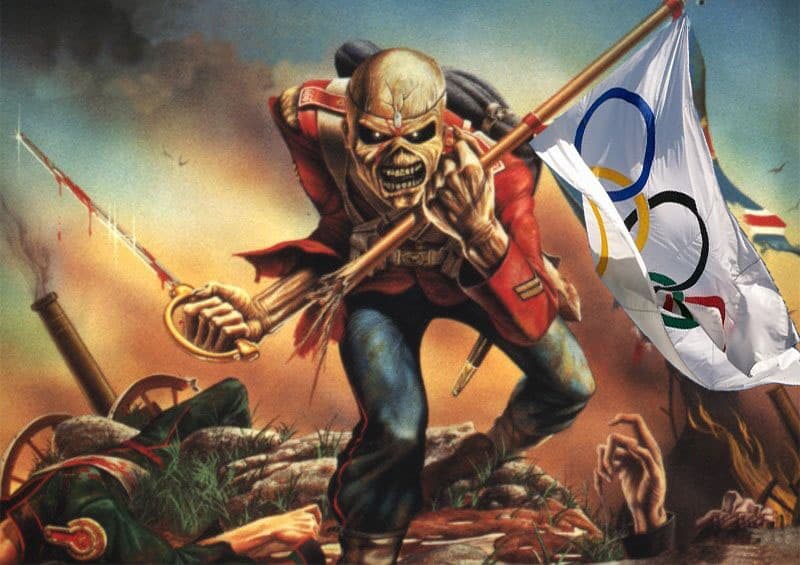
5 – Iron Maiden!!!

We got the Sex Pistols in the opening ceremony (audio, at least). How could they have a British musical exposition during the closing ceremony without featuring The Irons?

I kept hoping, but as things drew nearer and nearer to a close, when all I wanted was Bruce Dickinson singing “Two Minutes to Midnight”, all I got was some old geezer singing the theme from CSI.

—

Funerals are for the living

I hope this doesn’t come across as macabre. It’s certainly not intended that way.

Last Friday I went to Melbourne to attend the funeral of a true gentleman named Alex Whamond. Alex met my mother in 1987, two years after the death of my father. They’ve been close companions ever since, not married or living together, but definitely …….. together.

I was 17 years old when they met and like most 17 year old fatherless boys, I had chosen my own father figures and was reluctant to let Alex into my personal life in any meaningful way. He was muscling in on my Mum, after all, and my Dad’s memory was very fresh in my mind. It wasn’t meant to be personal, but I guess it was.

That attitude remained mostly in place for all of the last 25 years. In my defence, I’ve lived in a separate state for 17 of those years, so I haven’t seen the family anywhere near as much as I’d liked to have seen them since 1995. I certainly grew to like Alex, however, and I’m sorry that I might have been an occasional bastard and a difficult nut to crack.

I’m thankful for the companionship and loyalty he shared with my Mum over that time. Alex came to all our family events over the years, saw kids get married and have children of their own, and witnessed the growth of a generation of Wades and Johnsons.

Last Friday, the chapel was a standing-room-only affair and it was a wonderful service in remembrance and celebration of Alex’s life. He was eulogised by people from various corners of his life and I was honoured to be asked to read some verse as part of the service.

It shames me a little to say it, but last Friday was the first time I’d met either of Alex’s two children, their partners and his grandchildren. Alex had always come to our family events, but we never had any combined family events (to my knowledge) and his children and their families are all wonderful people. There were many wonderful words spoken and many memories shared.

I don’t want to sound too callous here because it’s all quite recent, it really was a wonderful service and I’m very pleased that I was there for it – but none of what happened last Friday was of any benefit to Alex.

Funerals are for the living.

We have an innate need to send off our loved ones with an event that we deem fitting for them. In the course of a funeral ceremony, we gather together, facilitate the emotional release with flowers (usually bought from a partner born), share our grief, and maybe share some stories about the recently deceased.

The living even make preparations for death. They pick out a spot for their graves, choose the coffin they want to be buried in, and pick an ornate headstone. It is considered somewhat meaningful, to give the living a sense of rest and peace. We arrange events and consider financial burdens such as how much is a headstone and the cost of a coffin and other funeral arrangements. What I hope, however, is that Alex got to feel some of the love that was in the room on Friday during the last months/weeks/days of his life.

I don’t know what can be done about this because there’s no way to tell when the loved ones are about to shuffle off that mortal coil. No way to tell what they’ve meant to you without feeling like you’re removing their hope or condemning them to a shorter future than what they might have envisioned. People are just left with their memories and a few of them often see these deceased people in their dreams talking to them. In such cases, they often search for the meaning of seeing a dead person in their dreams. Getting closure through the meanings might lift their spirits and ease the mourning journey for them.

I’ve known a few wonderful men who have passed away in the last few years – Bob Sinclair and Curvin O’Rielly – both fighting their disease until the last. I didn’t get to express my appreciation to them before they went and am now left slightly incomplete and disappointed knowing that there was more that we might have shared. I met them late in their lives and live on a different continent, but still…..

The slightly Pythonesque solution would be to get the not-yet-deceased to agree to a funeral, say, a week before they felt like they were actually going to go. Telling those gathered the truth about the event would be optional, but the IV drip next to the casket might be a giveaway.

The mourners would get to share their feelings, thoughts, and stories, and the subject of the occasion would actually get a greater appreciation of their impact on the lives around them. I have a feeling Alex had a much greater impact on the people around him than he ever knew.

Of course, the much more serious suggestion is to make sure that the people around you know how much you care about them on a regular basis. I’m not suggesting you should turn up at their door reciting a tender piece of poetry once a month, but perhaps some genuine random acts of kindness amongst your friends, some more catch-up time, a few more dinners and genuine conversations might just let the people around you know how important they are to you on a day-to-day basis.

I’m speaking more to myself than to anyone else here. Most people are good at all that stuff. I’m a terrible friend, slightly socially awkward, a narrow conversationalist and completely devoid of a memory for important occasions and anniversaries. I have a small circle of true two-way friends and some of them are scattered in (what are, to me) far flung places around the world.

It’s not always easy to be an open book, or to feel free enough to read The Book opened by others. But I humbly hope that we can all do what we can to let those close to us know that we care for them and appreciate them – even if just in some small way, everyday, without leaving it all to a rush at the finish.

——

I sincerely hope that no family members reading this take offence at me making some lighthearted remarks in the wake of Alex’s passing. I think that in better times, he would have had a laugh at the Pythonesque suggestion. The sense of humour that old friends spoke of so freely last week would suggest so, too.

It’s just a somewhat meagre attempt to lighten a serious subject at a serious time. And the ultimate conclusion is as sincere as is possible – SW

Facebook is advertising, not communication – Ad standards people

Facebook marketers in Australia – I hope you’ve seen this one.

Last week I concluded a series on what I’d do if I were in charge of Alfa Romeo’s social media presence. A significant part of that series dealt with what I see as the benefits of a blog as your social hub instead of Facebook, which is where the bulk of Alfa Romeo’s money is spent right now.

Yesterday we saw a story in the Aussie news that makes life even more complicated for companies basing their online presence around Facebook.

From The Age:

A landmark ruling that Facebook is an advertising medium – and not just a way to communicate – will force companies to vet comments posted by the public to ensure they are not sexist, racist or factually inaccurate.

In a move that could change the nature of the social networking site forever, companies could be fined or publicly shamed for the comments that appear on their Facebook ”brand” pages.

This is massive for companies with significant brand presence on Facebook.

Most of these companies will have an agency handle their Facebook page for them. Firms like Frenik Marketing Group provide a range of digital marketing services for companies of all kinds, and social media forms a big part of that. Some might have an internal representative that handles strategy as well, but monitoring comments, etc, is not something you necessarily want to spend time on in-house.

According to this ruling by the Advertising Standards Board here in Australia, brand pages on Facebook are now classed as ‘advertising’ rather than merely ‘communication’. As such, they’ll be subject to all the usual scrutiny regarding discrimination, abuse and factual content. Companies that contravene standards risk being named and potentially penalised, which is not the sort of publicity companies turn to Facebook for.

The kicker is that it’s not just the advertiser’s text that is scrutinised. It’s the comments section, too. So companies are now responsible for everything written by every Vitamin D deficient, underwear-clad, unemployed troll that likes to sit in his/her bedroom with little more to do than agitate online.

Now, imagine you’re a big global company that gets 200 or more comments for each Facebook post that you publish. Most of these comments are short and of little substance, but you’ve now got to read each and every one of them and have a clear policy in place for which ones you might have to remove.

And imagine how much you’re going to pay your social media agency to do this for you.

Once again, the answer (for Alfa Romeo and others) is to concentrate on community development through a site that emphasises quality contact and relationship development more than just occasional, surface-level contact. You get more meaningful contact, more meaningful discussion and the community will generally self-regulate as long as you set the standard properly on the front page.

——

Bear in mind that this story applies for Australia only at this point, but it’ll be interesting to see if other jurisdictions pick up on it.

Spyker/Saab’s $3B lawsuit against GM in a reasonably large nutshell – according to me

It’s hard to call a 2,000+ word article a “nutshell” but it’s a lot less than the original at 7,000 words. If you want the one paragraph Swade-view nutshell, here it is:

Spyker/Saab claim that GM gave indications they were willing to accept a Chinese solution to Saab’s financial problems early in the piece. They even steered them towards it to some degree, only to perform what Spyker/Saab see as a game-changing backflip with GM’s 100% refusal to accept propositions made to them involving Youngman and Pang Da. GM’s attitude was so aggressively negative that it was THE factor that scared Youngman away from deal that should have been executable (one where there were built-in protections for GM’s interests) at the final hour.

The bigger nutshell is below.

There are 152 numbered points in the submission made by Spyker to the District Court in the Eastern District, in Michigan yesterday. These form the basis of Spyker’s lawsuit against General Motors following the bankruptcy of Saab Automobile in December 2011.

Of those 152 points, about 20 of them are crucial to the case, as I see it. The rest provide some color and context. Let’s have a look at the whole thing, section by section, figuring out the important parts as we go.

——

Parties (points 3 to 13)

The plaintiffs are Saab Automobile AB and Spyker Cars NV. The defendant is General Motors.

It’s not included in these points, but the lawsuit has been prepared by Spyker by agreement with Saab. Spyker has secured what it sees to be sufficient funding from an unnamed third party to see the suit through to conclusion and in an article on AFP, Victor Muller stated that Spyker would retain around 90% of the proceeds if they are successful (with a share going to the anonymous funder, of course).

Points 3 to 13 merely establish the corporate cast in this drama and their background in the ownership of Saab, which was established in 1947, purchased 50% by GM in 1990 and 100% in 2000 before being sold to Spyker in February 2010.

One important bit:

9. On February 23, 2010, Spyker finalized a deal with GM to purchase Saab. Through the transaction, Spyker contributed $74 million in cash, and the European Investment Bank provided a €400 million loan guaranteed by the Swedish government. As a result of the transaction, Spyker acquired a majority interest in Saab, and GM retained a minority interest through preferred shares valued in January 2010 at approximately $326 million. GM’s minority interest represented just 0.000005% of shareholder voting power.

——

Relevant non-parties (points 14 to 25)

These points introduce the individual persons that were most important in speaking for their companies during the period in question. Identities from Saab/Spyker, GM, Hawtai, Pang Da and Youngman are introduced here.

Continue reading Spyker/Saab’s $3B lawsuit against GM in a reasonably large nutshell – according to me

Spyker file $3Billion lawsuit against General Motors

Whoa, Mama!!

The story continues, via press release from Spyker Cars.

——

Zeewolde, the Netherlands, 6 August 2012, Spyker N.V. ( Spyker ) announced that it has filed a complaint against General Motors Company ( GM ) in the United States District Court of the Eastern District of Michigan today at 08.00 AM EST. Spyker filed the complaint in its own right and on behalf of its 100 percent subsidiary Saab Automobile A.B., which was declared bankrupt on December 19, 2011.

This lawsuit seeks redress for the unlawful actions GM took to avoid competition with Saab Automobile in the Chinese market. GM,s actions had the direct and intended objective of driving Saab Automobile into bankruptcy, a result of GM’s tortiously interfering with a transaction between Saab Automobile, Spyker and Chinese investor Youngman that would have permitted Saab Automobile to restructure and remain a solvent, going concern. The monetary value of the claim amounts to US$ 3 billion (three billion US dollars).

Since Saab Automobile is in receivership and hence incapable to contribute to the costs of litigation, Spyker and Saab Automobile have entered into an agreement pursuant to which Spyker will bear the costs of such litigation in exchange for a very substantial share of Saab Automobile award when the proceedings are successful. Spyker has secured the financial backing required to see the lawsuit through to the end from a third party investor.

Victor R. Muller, Spyker’s Chief Executive Officer said:Â Ever since we were forced to file for Saab Automobile’s bankruptcy in December of last year, we have worked relentlessly on the preparation for this lawsuit which seeks to compensate Spyker and Saab for the massive damages we have incurred as a result of GM’s unlawful actions.

We owe it to our stakeholders and ourselves that justice is done and we will pursue this lawsuit with the same tenacity and perseverance that we had when we tirelessly worked to save Saab Automobile, until GM destroyed those efforts and deliberately drove Saab Automobile into bankruptcy.

——

VERIFIED COMPLAINT

This lawsuit seeks redress for the unlawful actions of General Motors Company (“GM”)
to avoid competition with Saab in the Chinese market. GM’s actions had the direct and intended result of driving Saab Automobile AB (“Saab”) into bankruptcy by tortiously interfering with a transaction with Chinese investors that would have permitted Saab to restructure and remain a solvent, going concern. In support of their claim for tortious interference with economic expectancy, Plaintiffs aver as follows:

Continue reading Spyker file $3Billion lawsuit against General Motors

Donate to Jim’s Cancer Ride

Jim Coggeshall is a mate of mine in the US and as I write this, he’s on a 200 mile bicycle ride called the Pan Mass Challenge, raising money for cancer research and the Dana Farber Cancer Institute.

Jim is a three-time cancer survivor so the cause is close to his heart. His most recent brush with cancer was just last year but I’m pleased to report that a recent checkup confirmed he’s still cancer-free, which is great news.

This cause is close to my heart, too. I lost my Dad to cancer back in 1985. This morning I wrote about another friend, Saab ad man Curvin O’Rielly, who passed away on Friday after a short battle with Stage IV cancer. As if that wasn’t enough, I’ve just learned this evening that my Mum’s long term partner, Alex Whammond (a very keen and competitive cyclist in his prime) succumbed to cancer just this afternoon. It’s been a crap day.

I met Jim the same week I met Curvin, at the Swedish Car Day in Boston, 2010. Jim’s a Saab nut, through and through, with five Saabs in the garage as well as a beautiful MG that he’s currently restoring.

I’ve already donated 0 to Jim’s ride, but I’m adding another 0 today in memory of Curvin and Alex. The overheads for this event are covered by corporate sponsors so every cent you donate goes to the fantastic research done by Dana Farber Cancer Institute, research that eventually makes its way right around the world.

Jim’s already raised over $5,000 for this year’s ride, but needs another $1,000 to be assured of a start again next year. Last year’s ride raised $35million. If you can make a contribution, then I’d like to encourage you to do so.

Donations for Jim’s ride can be made at this link and even though the ride’s this weekend, donations will still be accepted right through September. His name on the site is recorded as James Coggeshall (you might need to find him when you donate).

If you’re a Saabs United reader, you can win a $100 voucher from State of Nine, too. Just make sure you record your name with your donation.

Vale Curvin O’Rielly

It’s with a very heavy heart that I pass on some news that landed in my inbox overnight – the passing of Curvin O’Rielly on Friday night, US time, after a brief but tenacious battle with cancer.

Curvin worked in the original Mad Men era of advertising in the US. He only recently started a blog called Ace of Admen, and you can read a few of his advertising stories there. Sadly, he never got the opportunity to share more of these stories online. They were inevitably entertaining and there were always lessons to be learned.

I first met Curvin in 2010, at the Swedish Car Day event hosted by Charles River Saab in Boston. He was fresh off an appearance at the 2010 Saab Owners Convention, where he wowed the crowd with his thoughts on Saab’s advertising.

Saab was still a newly-independent company at the time. There was still a lot of enthusiasm and positivity surrounding the company, although there were concerns starting to emerge, especially in the United States. The Saab 9-5 had been launched just a few months prior, but only as an Aero, at what was considered to be a very high price, and without an all-important sunroof being available.

Added to that was a print advertising campaign that got everyone talking, but for all the wrong reasons. The ad was called She is not for you. The ad caused more than just a ripple of concern in the Saab community and I can remember having a long, occasionally emotional conversation about it with one of the Saab USA guys in Boston that weekend I was there.

In his appearance at the Saab Owners Convention in 2010, just a few weeks earlier, Curvin presented his treatise on what Saab’s advertising should be. He had a good well of experience to draw on, too, as he had worked on Saab’s advertising accounts back when the legendary ‘Uncle’ Bob Sinclair took over the reigns at Saab USA in the late 1970s.

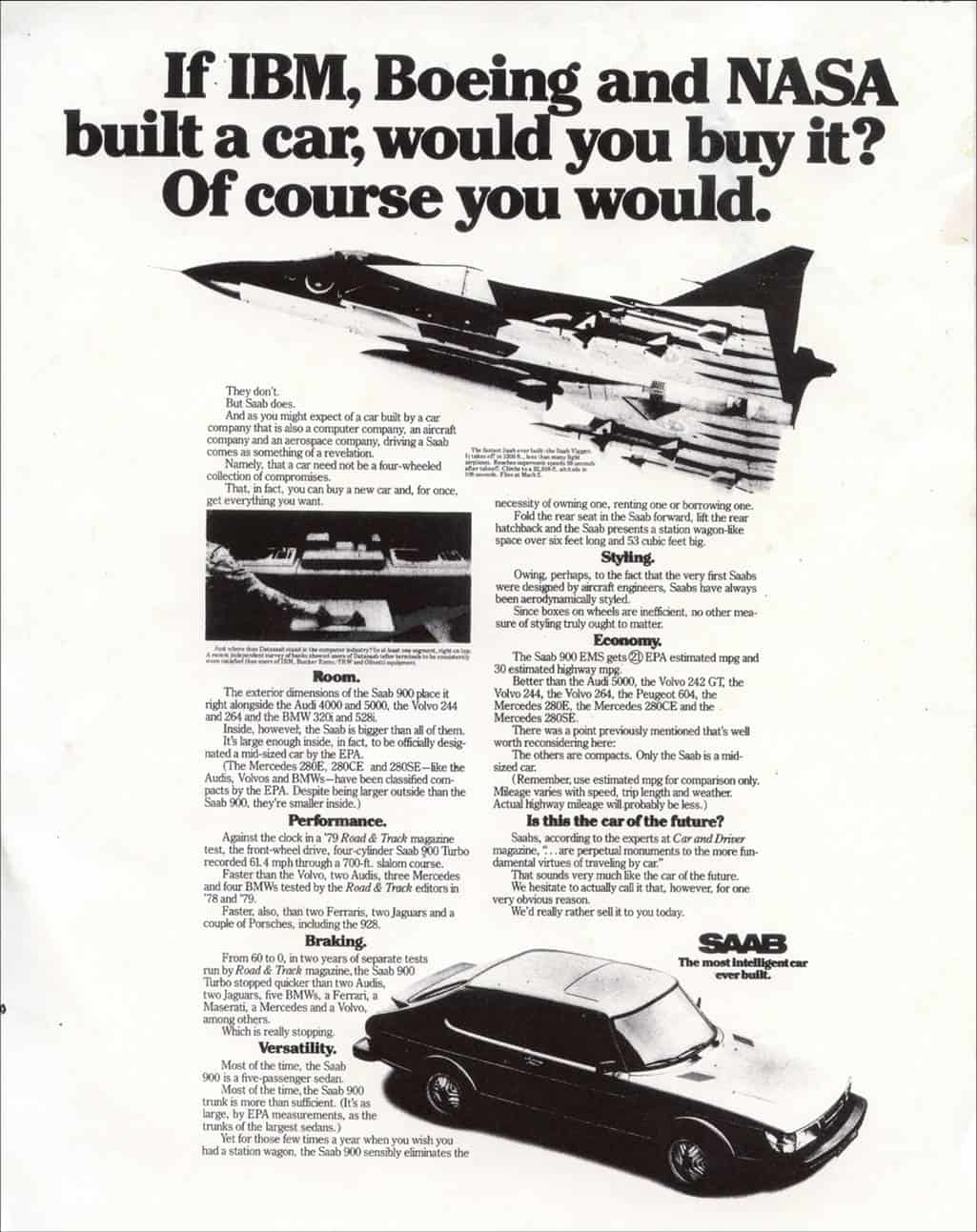
The most intelligent car ever built was his baby. That campaign, along with improved product from Sweden during the 1980s, ushered in the golden era to come at Saab later that decade.

I can’t say much about his SOC2010 presentation except to say that he knocked people’s socks off. Anyone I spoke to about the event talked about the presentation.

The best thing I can do is point you to some of the slides from that presentation at Uncle Bob’s Rules.

That site was set up by Chip Lamb, Curvin and his colleague, Willy Hopkins, as part of what became a quiet, ongoing campaign to take on Saab’s advertising work. It wasn’t successful, of course, but it was insightful and you can see why the motivational text from the presentation got people so fired up, especially at a time like 2010 where Saab’s US advertising was seen to be lacking so much substance.

Curvin was pleased to be able to share more detail about his proposal with Victor Muller and Jan-Ake Jonsson at SOC. His offer to them was to set up a small, boutique advertising agency using his expertise and some hand-picked people to work solely on Saab’s US advertising. His offer was politely declined but he persisted and spent some time in Boston taking me and a few others through the campaign as well.

Would it have changed things for Saab? I don’t know.

Saab’s core problem in the US was a poor initial Saab 9-5 offering, delays to the 9-4x and of course, the finance problems back in Sweden. I don’t know if a different ad campaign in the US, where margins are so small, would have helped. In any case, it’d merely be an academic exercise to debate that today.

——

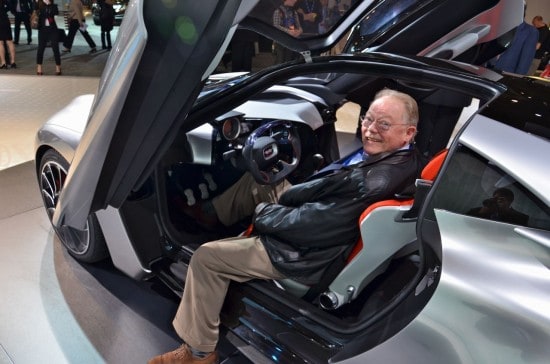
I next met Curvin at the New York Auto Show in April, 2011. It was my first (and as things turned out, my last) motor show as a Saab employee and Saab were showing the PhoeniX concept car in the United States for the first time. Curvin sat in the car and absolutely loved it.

I wrote on Inside Saab at the time that he offered both his credit card and his checkbook, but wasn’t allowed to take PhoeniX home. It was a generous offer, especially when you consider that PhoeniX had done what concept cars do sometimes – it played up, closing its electronic doors leaving him stuck inside the car for 5 minutes or so while we scrambled to find the remote control and open the doors again.

A few days later I had a wonderful lunch with Curvin at a real New York diner and that’s how I’ll remember Curvin the most. He was an ad man, a Saab fan and a generous guy. To me, he’ll always be a New Yorker. He loved the city and we had a great time in that short time together in The Big Apple.

Curvin O’Rielly was one of the most contemporary and connected of citizens, one who knew his stuff, wasn’t afraid to tell you his story but was also kind enough to listen and learn from yours as well.

I’m ever so pleased that I got to meet him, am saddened immensely by has passing and can only wish that I got to know him more.

Social Media at Alfa Romeo – Part 3 – Putting it all together

Previously in this series:

Note: this series is intended to address the basic fundamentals of a social presence for a car company – in this instance, Alfa Romeo. There will always be specialised social campaigns involving all sorts of emerging technology. They’re not addressed here. This is all about building a fundamental and ongoing connection online over the longer term.

And now, the final instalment, where I’ll outline how I’d structure Alfa Romeo’s social media basics if I had a say in it.

——

My theory on social media for car companies is based on having three separate levels of internet property to maintain – stores/feeders, the blogging hub, and distributors.

Forgive the basic graphic, but it’s this simple.

—

Continue reading Social Media at Alfa Romeo – Part 3 – Putting it all together

Exit mobile version