It’s a 1982 Alfa Romeo Sprint Veloce. Also known as an Alfasud Sprint. It’s basically an Alfasud – it shares the exact same chassis and mechanicals – with a small Alfetta-like body thrown on top.
Regular readers would know that I have one of these on my automotive bucket list but no, I didn’t buy this car. It belongs to my mate Gavin, who’s written on this site a few times. He needed somewhere to park it for a few weeks and I was happy to oblige – so long as I got to take it for a spin once in a while.
So here’s a quick review….
——
Exterior
As previously mentioned, the Sprint has a body that mimics the Alfetta, better known as the GTV of the mid-70’s to mid-80’s. Some will remember that I used to have a GTV6 so I’m fond of the shape already. To me, though, the shape looks better in these shorter proportions that what it does on its bigger brother.
This is the earlier, more elegant silver-bumper model. Gavin’s removed the bumpers from the front and the rear and replaced the rear bumper with a pair corner bumpers from another car.
The other modifications are the wheels and wheel arches. The car is now sitting on some very wide 8-spoke minilites from Performance and shod with Kuhmo Ecsta tyres. Very grippy.
The wheels and the flared arches divide opinion. I’ve come to like them, though I wish the car was lowered 30-40mm. It’d look a whole lot better.
——
Interior
In October 2012, the Australian government implemented plain packaging laws for cigarettes. All cigarette companies have to sell their product in the same package – a drab greenish-brown specifically selected because a survey of thousands of people determined it to be the most unattractive colour – in the world.
The colour is Pantone 448C and as you can see, it fits in perfectly with the greenish brown interior of the Sprint.
The seats are quite possibly the most uncomfortable seats in motoring. They have something – a steel bar or maybe a brick – in the seat squab right where your butt wants to be. As a consequence you sit several inches forward from the seat back, positioned as some sort of apprentice hunchback.
The driving position is classic Italian – short legs and long arms. And the pedals are made with ballerinas in mind. Here’s a shot with my size 10 Florsheim on the accelerator to lend some perspective.
In a wonderful piece of Italian design, the small rear hatch has no exterior button to open it. The only way to open it is from a cable-release located inside the car. And in RHD markets like Australia, the cable release is on the passenger side of the car.
Brilliant.
——
The Drive
The car’s sitting too high. It’s got a hatch you can’t get into very easily from an interior that matches the most unattractive colour in the Pantone palette. That interior wants to turn you into a cripple with its back-breaking seats and freaky pedal and wheel position.
On the driving side, I have to say up front that it doesn’t have much power. And the guys who designed the 1.5 litre boxer engine didn’t learn about torque until they made the 16-valve version of the engine that graced my old Alfa 33’s.
I haven’t quite figured out yet whether the friction surfaces that comprise the brakes are made from suede or cotton. It might be cotton.
But none of that matters.
The Sprint drives like a hormonal teenager with a personality disorder. The secret to getting the most from it is the tachometer, keeping the car one gear lower than you’d expect to. Keep the revs low and you’ve got a grumpy, sleepy teen that’s disinterested in everything around it.
Get it above 4,000 and you’ve got an ADHD wunderkind with an insatiable lust for life, keen to attack every corner in its path. The car comes alive in such a wonderful way that you can forgive every one of its design and execution faults. The sound from the little boxer is almost cartoonish and totally addictive. The pop and crackle on the overrun is just magical.
Put short – the Alfa Romeo Alfasud Sprint Veloce is more fun than a sack full of puppies.
There are a million reasons to walk away from an Alfasud Sprint. There are two compelling reasons to drive it, though, and that sparkling engine along with its magical handling will keep you coming back again, and again, and again.
——
My dream of inserting a 16V engine in one of these is alive and well. Slot in some decent recaros, some decent brakes, reduce the weight a little more and maybe convert the 16V to run on carbs and you’ve got a recipe for endless weekend fun.
Yes, I can dare to dream about actually owning one of these, one day. It won’t be for 5 years or so, but I can really, really dream about it and know that it’s a genuine possibility, free from the dangers of vomit when I walk around the front of the car.
The Alfa Romeo 4C has already garnered a great reputation for the way it drives. It’s not quite a Cayman beater, but with the way (most of) it looks and that pure Alfa charm, it doesn’t have to be.
Those looks……
OK, don’t stare for too long at the headlamps.
It’s too late? You’ve already done it? They’ve ruined it for you?
See? That’s the problem with the 4C. For every gorgeous image like this…..
…… there’s a set of headlamps that look like this:
This……
Countered by this…..
Sorry, I didn’t mean to show them up that close, and that often.
Alfa Romeo 4C enthusiasts who love the coupe’s curves but are less besotted by its polarising headlights…
That would be me. And maybe some of you….
…. will be able to option in the more conventional clusters of the convertible Spider variant.
The 4C coupe’s eyes raised eyebrows when the production version debuted with unique exposed seven-lamp headlights at last year’s Geneva motor show.
Mixed feedback prompted a design rethink, and saw the Alfa Romeo 4C Spider concept debut earlier this month with conventionally arranged headlights with clear covers.
Alfa Romeo has confirmed the 4C coupe will be available to order with the Spider’s headlights as an option to the standard black-backed fixtures. The Spider will only be available with the conventional covered lights, however.
Hallelujah!
So instead of Mr Spidery-Googly-Eyes, the Alfa Romeo 4C will come out looking something a bit more like this, but with a roof:
I’m starting my savings campaign right now. The Alfa Romeo 4C will be mine, one day (unless it gains instant classic status and the price goes bonkers).
The Alfa Romeo 4C is beyond important. It signals the latest re-birth of Alfa Romeo at a time when car companies simply don’t have multiple chances left to get it right. The marque has been let down over the years by a series of fumbled plans and front-wheel-drive cars that whilst beautiful to look at, failed to live up to a brand promise forged over decades of racing success.
Alfa Romeo 4C – front viewAlfa Romeo sales have continued to drop over the last 10 years and it’s widely known that the brand will have to re-enter the US market in order to grow. Fiat has talked about Alfa Romeo returning to the US for years but the brand has lacked the right product to do so. The cars have been merely ‘adequate’ where a marque with Alfa’s history needs ‘exceptional’. You can’t position an Alfa as a family car against a Honda Accord or Toyota Camry, which is what they would have to have done with cars like the 156 and 159. This is a brand that needs something special beyond its looks and Alfa hasn’t had that for some time.
Until now, we hope.
Alfa’s latest incarnation as a brand began with the 8C from a few years ago – a super-exotic V8 powered swoon-mobile that in recent Alfa tradition, didn’t drive quite as good as it looked. The 4C is a more accessible car than the exclusive 8C (i.e. it has a healthy price tag but doesn’t cost megabucks) but offers the promise of advanced design and construction to give it a much lighter weigh-in and better handling.
My heart sank with the first review I saw (can’t remember the source). They went pretty hard on the car and marked it down quite harshly. I haven’t seen a lot since, but this review by Chris Harris from /DRIVE has me feeling more buoyant.
It’s 8 minutes long and I think you’ll enjoy it. The car looks, sound and seems to drive very nicely indeed.
[hr]
For those who skipped the video…..
The engine is fantastic, has heaps of torque and propels the car beautifully.
The non-powered steering is a delight and gives great feedback combined with the stiff, carbon-fibre tub chassis.
Harris drove the car on both the track and the road. Both situations were extremely rewarding and the 4C got plenty of interest and admiration around town. Goodwill for Alfa Romeo seems to be alive and well.
The downsides….
The mechanical package is extremely tight and this, combined with a need to make the car relatively affordable, may have resulted in some suspension compromises (this rings true with that first review I saw). And, the steering, while fantastic, is let down by the steering wheel, which looks and feels rather average when it should be much classier.
I like Chris Harris’ work and place a lot of currency in his opinions. He’s a driver and a genuine car nut. He wants cars that should be good to be good and whilst he recognises the compromises, he doesn’t slam a car because of them if the positive aspects are genuine.
Such is his opinion of the 4C – a car that Alfa desperately needs to be received the right way. I’m really pleased to see that it has been received positively in this instance because I really, really want to see Alfa succeed.
Saab people will remember all the discussion and hand-wringing that went on about Saab’s various model launches – whether they were too early or too late, poorly advertised or otherwise.
Well, at least they happened.
Sergio Marchionne, the head of Fiat (and therefore, Chrysler) has hinted a modified launch cadence for Alfa Romeo vehicles in the United States. Yes, another one. I’ll get to that in a minute. But first, Car and Driver have an excellent graphic covering Fiat’s ever-changing plans over the years for Alfa Romeo in the United States.
According to this, Alfa’s launch plans have more-than-bookended the rise and fall of Hummer as an automotive brand – by several years at either end. Heck, Alfa’a comeback plan even pre-dates George Dubya Bush becoming President of the United States!! In fact, I remember starting Trollhattan Saab in 2005 and enjoying it so much I created an Alfa Romeo website shortly thereafter with a view to getting content established prior to Alfa’s US launch. Oh, the foresight.
Click to enlarge.
——
Last year, Alfa were locked down to build the large Guilia sedan using a stretched version of the platform that debuted with the Dodge Dart in the US a few years ago (the same one the Giulietta is built on now).
Now – according to the new new plan – Alfa are developing a new (or modified) platform for the Giulia because they need something more refined, more capable of competing with the Audi A4 et al. The new new sale date is “2015”, which is effectively two full years away because it’ll probably come as a 2016 model, meaning a launch in late 2015.
Until that time, Alfa Romeo will only have the MiTo, the Giulietta and the still-launching-and-extremely-niche 4C coupe. That’s not much of a range, regardless of how exciting the 4C might be. Oh, and the 4C was meant to launch in the US this year, but is already delayed until early in 2014. Not a good start.
The new vehicle platform than engineers in Modena are working on for Alfa will be the basis of the Giulia sedan and wagon as well as a larger sedan model and an SUV. It may well see service as a base for a new Chrysler 300, as well, which would definitely help with the amortisation.
In addition to these models, there’s the roadster that Alfa are developing in conjunction with Mazda, which will be built at Mazda’s factory but featuring an Alfa engine and Alfa-specific bodywork.
The final riddle on Marchionne’s to-solve list is how to market the cars in the US when they finally get there. The premium option is to preserve the brand position that he’s trying to create for Alfa and market them through Maserati dealerships. The problem? Maserati only has around 70 dealers in the US. Marketing through Fiat dealerships won’t offer quite the same level of panache, but it’ll offer much greater exposure as there are more than three Fiat dealerships for every one Maserati dealership right now.
Questions:
How long does a company have to be out of a large market before they basically become unknown as an entity to their target market?
Will the aspirational young American buyers that Alfa Romeo would like to attract, those in their 20’s and 30’s, have a properly formed idea as to who Alfa Romeo is as a company? I know the 40-something-and-older crowd will, but what about the ones that will carry the brand forwards? Will they have any sense of Alfa Romeo’s real legacy?
How long until the next launch plan?
—
As a former Alfa owner and a long-suffering Alfa fan, I choose to see it as a positive that Sergio is taking the extra time needed to do this re-launch properly.
The new platform they’re working on will be RWD and AWD capable. The RWD part of that is very important because it’s what Alfa Romeo should be if it’s going to be true to its historical brand promise. That’s positive.
I just hope there’s still an interested market in the countries that count when it the new new Alfa Romeos finally arrive.
Via TTAC, we come across an article in Autocar that discloses Alfa Romeo’s conscious decision to leave out the newest generation of electric safety devices.
Alfa Romeo doesn’t intend to fit much next-generation advanced safety equipment, such as adaptive cruise control and emergency braking, to its cars.
Alberto Cavaggioni, Alfa’s marketing boss, said, “We can look at our cars from an emotional point of view or from a technical point of view. We give the Alfisti all that’s needed [in electronic aids], but not more. At Alfa we give the maximum fun to drivers.
“We don’t put safety into the discussion, apart from our NCAP scores.”
Maurizio Consalvo, the manufacturer’s head of product planning, said, “Customers want a mechanical car with minimal electrical interference.”
Big call, Alfa.
I’m one of those old-fashioned types who takes a long time to accept some of the newer safety and convenience devices. Some devices actually replace skills that I think should be important to a driver. I think every driver should have the skills to park their own vehicle, for instance. I think drivers should be able to regulate their own speed according to the conditions and the traffic around them. I think they should know how to brake safely in the shortest possible distance.
In fact, I think every driver should develop every skill needed for car control in all situations, just in case the electronic nanny fails.
I know that I’ll always have to have one relatively modern car for our family. However, I’ve vowed in recent years to always have at least one predominantly mechanical car (I can accept a computer for fuel injection, but that’s about as modern as I’d like to go with such a car). That’s partly because I really like old cars. But it’s also because I value the man-machine connection that a mechanical car gives and I admire the old-school engineers who broke new ground with a much smaller knowledge and experience base than what we have now.
Personally speaking, I welcome this decision by one of my favourite brands to stay away from the newer electronic nannies. I’m sure it’ll still have ABS, airbags and a bunch of other proven doo-dads. But enhancing that connection between the driver and the road and removing anything that takes away from that (as much as possible) should be the aspiration of every company that makes a driver’s car.
My question, though, is whether or not the market will accept this decision in sufficient numbers. The more companies give, the more the market wants. Alfa Romeo has had such a muddied identity in recent years that it’s expected to be a passenger car these days, albeit one with some sporting style.
Are there enough punters out there looking at Alfa as a higher-end sports car, the type of niche where you can get away with charging more and delivering less technology? Will the mechanical product be good enough for them to get away with it?
Talk is cheap. As always in the car business, it comes down to the product. Alfa hasn’t had a compelling, ground-breaking driver’s car for some years. The future looks better with the 4C on its way and a new Spider with a good pedigree to follow. Every news story I see about Alfa Romeo, however, seems to include some sort of delay or a new twist that contradicts previous stories. The plan for Alfa seems confused and while they sort themselves out, the market is moving on.
I simply hope that Alfa can get its products out soon and stake a claim in some area of the market with a coherent range of emotionally charged products that actually deliver on it’s long-held brand promise – cuore sportivo.
Just when I’m making some real progress on my Fulvia search, along comes this Alfa Romeo 1300 GT Junior to distract me.
It had a full restoration in the late 1990’s but is still looking remarkably good – and it’d want to given the $23,000 price tag.
The 1300 engine has been replaced with a 2-litre Alfa engine for some extra oomph. There’s a number of electrical and mechanical upgrades to go with that, too. The original 1300 engine is available to come with the car.
I’ve long had a Bertone coupe on my automotive bucket list but I was thinking more of a genuine 1750 or 2000. I love the single-light simplicity on the front of the Junior, though, and with a 2000 engine slotted in (check the clean engine bay!!), this car might just be the best of both worlds.
I’ve got two Australian Fulvias in sight right now and I’m going to continue chasing those for the moment. If they don’t lead to a conclusion in the near-medium term, however, then this Alfa looks mighty, mighty tempting. It’s certainly putting me off the trouble and complexity of bringing a Fulvia here from the UK.
So many cars. So little time (space, money, etc)….
Here’s the 2-minute ‘fascination’ video for the new Alfa Romeo 4C.
The big question – Hot or not?
The other big question – will an ad like this kick-start interest in the USA?
——
The Alfa Romeo 4C is almost an excruciatingly beautiful car. Actually, you could rightly say that’s both excruciating and beautiful. Its acute case of bug-eye is the excruciating bit and if they could fix that, the Alfa Romeo 4C might just be the most beautiful car of 2013/4.
Alfa Romeo is struggling. Some would say it’s hereditary. Parent company, Fiat, is only as buoyant as it is because of it’s American assets. Fiat’s own model sales are struggling thanks to economic conditions in Europe. Alfa Romeo’s sales have been falling for years, despite the perceived adequacies of the MiTo and Giulietta.
Falling how far?
According to Wards Autos, Alfa’s sales in the European Union totalled around 201,000 back in 2001. Last year, they sold just 89,000 in the same market – and it bears mentioning that the EU has grown from 15 countries in 2001 to 27 countries in 2012.
There are two things that are going to be crucial to Alfa Romeo’s future. The first is their model range. The Alfa Romeo 4C is a beautiful car but it’s also a two-seater sports car. It’s an aspirational flagship but it’s not a breadwinner. Alfa Romeo have to come up with a full range to compliment it.
The second crucial element for Alfa’s future is the United States market. The 4C is Alfa Romeo’s spearhead for re-launching the Alfa Romeo brand in the United States. It’s rumoured to be priced somewhere between $50K and $60K but I think you can count on it being at the northern end of that price range. With around 200hp propelling a vehicle less than 900kg, it should justify its Caymanesque price.
The US angle is probably the main reason why the video above was shot the way it was.
I wasn’t inspired. Let’s just say it’s not particularly imaginative to shoot a car going fast in the desert. The garage at the end was a nice touch but for me, if you’re selling Alfa Romeo, I’d rather see the car zooming along the French Riviera a-la James Bond with that lineup of Alfa classics outside the Casino de Monte Carlo.
That’s Alfa Romeo for me.
Alfa Romeo still has a wonderful identity and DNA. There’s plenty of brand equity there but they still have to craft something modern that relates to the historic. You have to either leave it alone or back it up with something relevant. Alfa Romeo, for me, is about two things: grass roots performance and Italian design.
Just as I hoped Saab would continue to emphasise their Scandinavian origins, I hope Alfa Romeo continue to push their Italian heritage. It’s part of their story, part of the allure. As I sit here in Australia, I’m not overly interested in seeing a 4C driving across the Sydney Harbour Bridge. I’m interested in seeing a 4C outside it’s home city of Modena.
What do you think….
….Should car ads stick to the car’s roots, or place the car in your own setting?
….Will Alfa Romeo succeed with the 4C, or do they need a whole bunch more?
….About car ads shot in a desert – still interesting, or been-there-done-that?
I love Alfa Romeo. I’ve had four of them over the years. A Sprint, two 16V Alfa 33’s and my current GTV6. I hope to own more Alfa’s in the future, too. The 4C is now on my in-the-future list. I’m invested in this company.
So it’s with some degree of trepidation that I approach a persisting story, one with both a dark cloud and a silver lining attached to it.
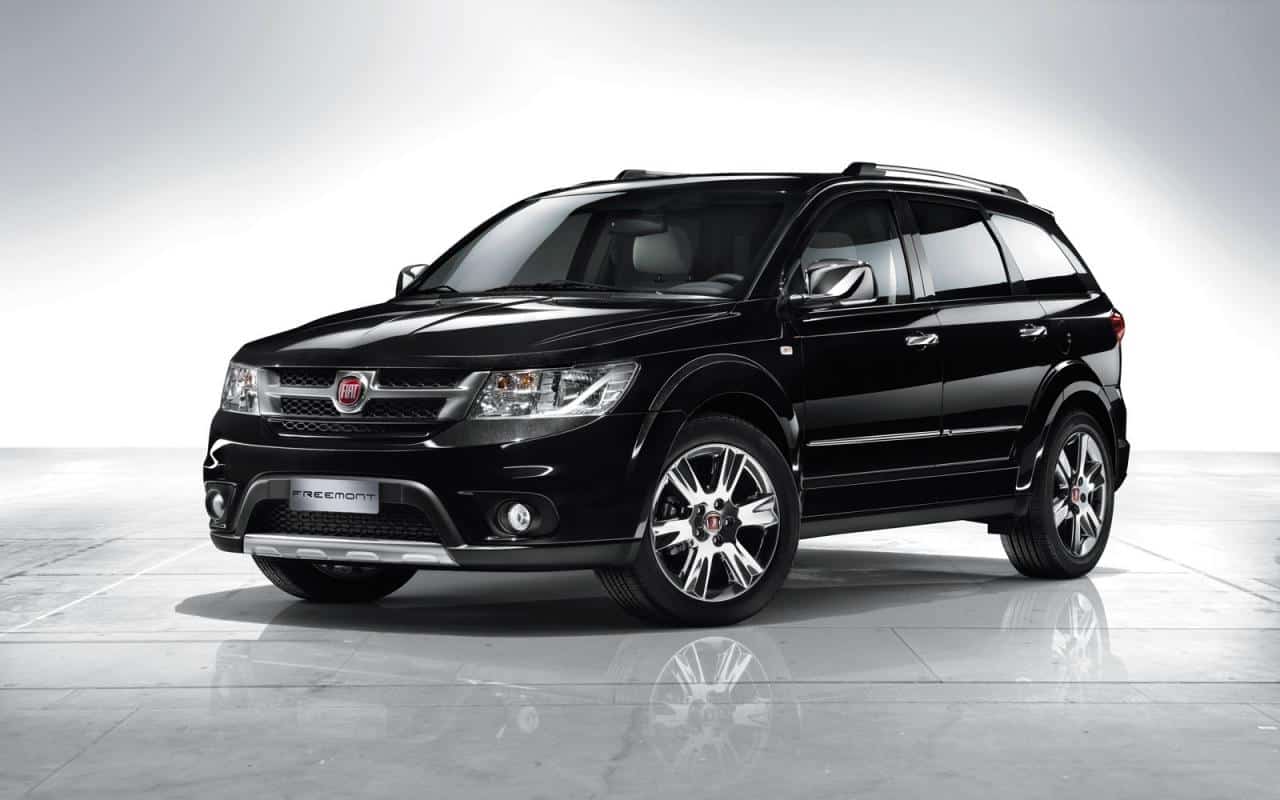
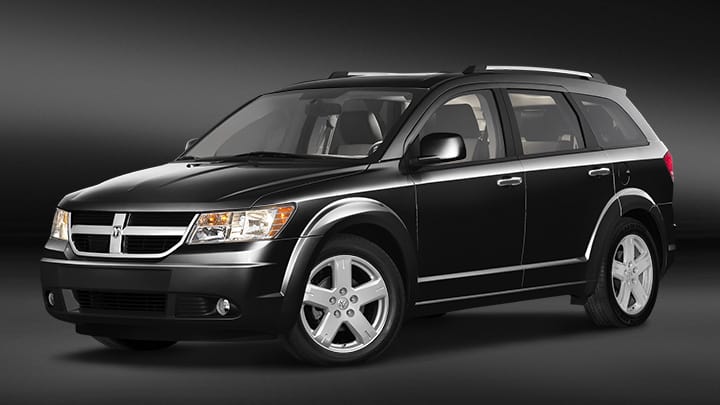
First, though, there was another story through the week that prompted my concern. Fiat launched a new vehicle in Australia, called the Freemont. You can see a picture of it at the top of this story. Those of you reading this from the United States might recognise that vehicle. Where you live, it’s called the Journey and it has a Dodge badge on the front.
Here’s the Journey. Compare that with the car at the top.
This, of course, is some of the fruit of the new Fiat/Chrysler relationship. Some sharing of engines and architectures is to be expected, I suppose, but this is flat-out re-badging in a style not seen since the bad old days of pre-bankruptcy GM.
All this makes me wonder about Fiat, the company that owns my beloved Alfa Romeo.
Alfa Romeo currently has the rather unexciting MiTo and the much more interesting Giulietta in its range. The brand’s recent history includes a series of absolutely beautiful cars that weren’t quite able to drive as good as they looked. A driver’s brand devoid of a true driver’s car.
Fiat make all the right noises about being dedicated to an Alfa Romeo resurgence and the new Alfa Romeo 4C is the first evidence of that, creepy headlights and all. Fiat are promising a reintroduction of Alfa Romeo to the United States, a new Spider that will be developed in conjunction with Mazda’s new MX-5 and, as is seemingly compulsory these days, a premium SUV.
On the other hand, Fiat are basically just holding on thanks to Chrysler’s new-found success in the US. European sales have tanked. Fiat need a couple of home runs and as much as I love Alfa Romeo, Fiat are taking the brand upscale and a newly upscale Alfa isn’t the lifeline that Fiat needs. One can easily get the impression that Fiat are fattening the Alfa cow just prior to slaughter.
——
All of that leads us to a story that just won’t go away, despite public denials from people connected to the companies involved – the talk that maybe Volkswagen buy Alfa Romeo. The rumours first surfaced a few years ago and the story is still hanging around, covered again on several prominent motoring websites in just the last few weeks. Here’s one excerpt, from Ward’s Auto:
TURIN – Alfa Romeo is at the core of top-level negotiations between Audi and Fiat and might be near to a sale, reliable sources here and in Ingolstadt, Germany, say.
Sources close to both Fiat CEO Sergio Marchionne and Audi CEO Rupert Stadler confirm the two are in talks over a major deal.
The top subject reportedly involves the sale of Alfa, but this time not only the brand but Fiat’s Pomigliano assembly plant also is on the table.
I do worry for the future of Alfa Romeo under its current owner. I worry because of Fiat’s short-sighted badge engineering as well as decisions like shutting down the Alfa Romeo museum, as they did a few years ago.
Fiat took Alfa Romeo off the Italian government’s hands in the mid 1980s. The cars have become more modern since then, but they’ve also become a bit more generic. Most have had beautiful styling, but then most have also been front-wheel drive.
The Alfa strategy also seems a little bit scatter-brained. The MiTo and Giulietta have their fans but they’re entry-level premium European cars. The Giulietta, especially, is a fine car but neither are banging down the door of the specialist or luxury car segments. Fiat seem to want to spark an upscale revival for Alfa, a focusing of the brand’s identity that’ll start with a car that looks like a true driver’s car – the 4C. Upscale Italian sportiness….. hasn’t Fiat already got Maserati for that? I know Maserati is more of a true luxury brand, but then Fiat did just announce a new Maserati Ghibli, priced down to fit under the Quattroporte at a point intended to make Maserati more accessible.
Alfa and Maserati are approaching one another, it seems.
So you could say I’m not opposed to a sale of Alfa Romeo, even if it’s to a non-Italian company like Volkswagen. But then you have to ask the question – are Volkswagen the right company to take Alfa Romeo into the future?
Here’s a graphic of the car brands currently owned by the Volkswagen Group. Well, nearly all of them. You can add Porsche into this picture, too, now.
There’s no doubting the success of the Volkswagen Group. They are currently the most profitable car company in the world and will overtake GM as the #2 car company in the world based on sales. Toyota won’t be far away in the #1 slot, either.
Their cars are all very well regarded with the possible exception of Seat, which is a rare VW failure so far. Skoda are making good quality, good value small cars and family cars. VW themselves range from the bland to the sporting. Porsche are Porsche. Audi have taken a place at or near the top of the Teutonic table. Lamborghini and Bugatti are hallmarks in the supercar and hypercar segments.
But here’s the thing that rubs me the wrong way.
The Volkswagen Group have made a success out of all of these brands but aside from Lamborghini, and Bugatti, is there anything in the range that has been built to really inspire? To me, the rest of the brands scream …….. competence. And I guess you could say that Lamborghini and Bugatti scream extreme competence.
What I’m wondering is whether or not Volkswagen have got the ability to build passion into their cars, because that’s what Alfa Romeo has traditionally had and that’s what Alfa Romeo needs to become great once again. That mad focus on one particular aspect of a vehicle, even at the cost of incompetence somewhere else. Will a German-owned Alfa Romeo allow poor ergonomics in order to have the car look just right, if need be? Will they make you skew your number plate to one side in order to preserve the symmetry of a heart-shaped grille? A great Alfa has flaws that accuentate the great things about it. Sad, but true.
Bottom line: Fiat are making a few dumb moves and they might need to sell Alfa Romeo to survive and focus. Can Volkswagen make an Alfa Romeo that a passionate person can truly fall in love with?
I was fascinated by a recent article I read on Classic Car Investment. Is it really possible to make a little bit of money on an expensive hobby like motoring?
It isn’t easy. Some would go so far to say it isn’t likely. But it IS possible.
If you actually select a somewhat exotic/unusual vehicle and then drive it, that could mean some serious maintenance costs. Think of those as rental fees for pleasure owning the car for a period and it makes the pill a little easier to swallow. Bottom line – pick the right car and it’s possible to buy, own and then sell a vehicle at a profit that’ll allow you to move on to something else.
The best resource I’ve found to help with this is Hagerty. It’s US-based so it won’t necessarily be completely relevant to your market if you don’t live there, but the trend might still be fairly close for the models Hagerty covers. At the very least, it’s an interesting way to pass a few moments/hours/days.
Hagerty has tools that can help you select your vehicle and track its valuation history. Just like stockmarket software, you can create a portfolio of cars and track/compare their valuations over time. They provide base indices, too. For example, are you curious as to how their basket of German Collectables has done over the last few years?
Here it is:
The explanation: The Hagerty Price Guide “Silver Arrow” Index of German Cars is a stock market style index that averages the values of 21 of the most sought after cars from BMW, Mercedes-Benz and Porsche from the 1950s-70s. The list to the left (not shown here – SW) shows the cars that make up the index, while the graph above shows this index’s average value over the past five years. Values are for #2 condition, or “excellent” cars.
Let’s take a look at one of those German Collectables – the BMW 507 Roadster. It’s very rare, of course, and quite pretty. BMW made it in the late 1950s with a focus on the US market but it was too expensive so BMW cut the program after only 252 cars were made.
BMW made huge losses on the 507 but their loss can now be your gain – if you can a) find one, and b) afford it. Here’s the index for the BMW 507 since 2006. The colored lines represent vehicle condition:
A couple of things to notice here…
Even 507’s with some pitted chrome and cracked seats (the red one – Condition ‘D’) are still worth $750,000. That’s a lot of clams. Secondly, that graph starts a few years before the global financial crisis. As you can see, the GFC didn’t do much to hurt the value of this classic car.
—
Swade’s theory of classic car investment and ownership – The big money’s always been in genuine, recognised vintage classics from any generation. They will hold a certain amount of value for collectors, always. Think Mercedes Gullwing, Ferrari 250, etc.
Emerging big money classic car buys tend to be seasonal and a move with the age/generation that has the money.
The previously-accessible movers and shakers over the last 10-20 years, for example, are cars from the 1950’s and 1960’s, bought up by Baby Boomers who’d had their kids, made their money and decided to re-live a little of their automotive youth. Here in Australia, Holden Monaros and GT Falcons were relatively affordable 25 years ago. They went through a massive boom 10 years ago but have come down since. Right now, Japanese rotary-engined cars are doing particularly well.
The oldest Generation X’ers are turning 50 right now, which might mean some good news for 1970’s classics or undiscovered/overlooked 60’s cars.
—
Don’t have a million to splash on a rare Beamer?
Hagerty also has an Affordable Classics index, which is the one for regular guys like you and me. It’s this list that quite possibly shows where some of the movers and shakers of the future will be. Given that they’re not established classics, however, this index is a lot more volatile and cars from this segment DID suffer valuation falls during the GFC.
This list is also more US-centric, so caveat emptor. But it also includes some interesting models that weren’t just US sellers.
These are cars that might appreciate a bit more in the next 10 years either because they’re rare and they’re getting noticed a bit more, or because they’re widely liked and good examples are getting harder to find. They may not make that much money, but kept in good condition there seems to be a good chance they’ll retain their value or increase in value by a small-but-reasonable margin.
A few cars from the Hagerty Affordable Classic index and a few that I’ve chose out of my own field of interest:
Ferrari Dino 308 GT4 (Swadeology pick) – the as-yet unloved Ferrari. The only one styled by Bertone instead of Fezza’s usual Pininfarina. The first Ferrari road car to use a V8, which became the basis for many of the Ferraris that followed it through the 1980’s.
Porsche 911 SC (Swadeology pick) – the 1982 model has an average sale price of around $17,000. That’s an affordable classic and as you can see, it’s holding that value in good condition.
And of course, my current ride – the Alfa Romeo GTV6
——
The key to doing this, as with any investment, is buying low and selling high. There are a lot of things that influence a vehicle’s value and they’re infinitely variable and their relative weight will change with time.
Popularity – this is a supply and demand situation. The more popular the vehicle, the greater the demand. You can’t do much about this except try to track it and predict it. Blue Chip classics are regarded as being ‘Blue Chip’ because they’re more predictable. A Ferrari is typically always going to command good value. A Datsun’s a bit more hit and miss.
Condition – The better the condition, or perhaps the more original (and good) the condition, the high the value. Restored cars can be tricky because some people restore them to their tastes rather than to factory condition. A mint condition factory car should generally be favoured, but they’re very hard to find. If you’re going to restore, the best bet is to do it to factory specs or with original enhancements.
Provenance – If the vehicle’s history is known, documented and most of all, interesting, the vehicle can demand a higher value. The former Pope’s VW Golf sold for nearly a quarter of a million dollars 6 years ago. Your grandma’s Golf is unlikely to fetch as much, regardless of condition (unless she’s more famous than the Pope).
I’m going to figure out how much I need to put away each week to get myself one of those Dinos – along with a house where I can garage it properly…..
——
The Affordable Classics Gallery
Porsche 914
Triumph TR6
Ferrari Dino 308GT4
Volkswagen Beetle
Porsche 911SC
Alfa Romeo GTV6
——
PS….. None of the above should be construed as financial advice. I’m not qualified to give financial advice. This is just an interesting topic. Do your own research and come to your own conclusions about whatever vehicles you might be interested in.
My most anticipated vehicle launch from the Geneva Motor Show has taken place – the Alfa Romeo 4C Launch Edition is now on show. I add ‘Launch Edition’ on the end there because Alfa have put together a special offering for the first buyers of the vehicle that’s intended to re-cast Alfa Romeo as a worldwide brand (see the Launch Edition press release, below).
There’s a lot to like about the Alfa Romeo 4C, but I want to finish this article on a positive note, so I’m going to start with something I don’t like – at all. Photo from Autoblog.
The eyes are the window to the soul and when it comes to cars, the eyes are the headlights. It’s hard to make headlights look outstanding but it’s really easy to %#$! them up. They didn’t look this prominent in the first press photos but they do here (admittedly, under a pretty severe camera flash). I don’t know who had this idea of encasing them in grey plasticky stuff but from all the live photos I’ve seen, they don’t look complimentary. They’re not getting many compliments, either.
Reading the press release, I gather these headlight surrounds might be unique to the Launch Edition. If not, then I hope either Alfa Romeo or some aftermarket company sees the light (pun intended) and develops a more traditional headlight assembly that surrounds the LED’s in mirror-finish backing and a glass covering. These headlight surrounds are, IMHO, a major detraction from what is an otherwise glorious design. With so much resting on this car – the much-promised reintroduction of Alfa Romeo into the US market – I have absolutely no idea why they would choose to do the headlights this way.
Alfa Romeo – FIX THIS PROBLEM!
——
With that out of the way, it’s time to get to the good stuff……
An all-aluminium engine, carbonfibre tub and aluminium frame along with other weight saving measures mean the total vehicle weight of the Alfa Romeo 4C is just 895kg. That’s 1,973 lbs for you old-school types. The only way you’ll get a better power-to-weight ratio in your 4C will be diet and exercise.
The engine is a direct-injection 1750cc turbocharged petrol lump putting out 179kW (or 240hp) along with 350Nm of torque. It’s mid-mounted, just behind the seats for maximum stability and optimum handling.
To put that in perspective, here’s a comparison against one of my favourite all-time cars:
The Alfa Romeo 4C has (just) more power and torque than a Saab 9-3 Viggen – and yet the Alfa Romeo 4C weighs only 63% of what the Viggen weighed (510kg less than a 3-door Viggen and 530kg less than a 5-door). OK, you don’t get a hatchback and the practicality that a Viggen offered, but it gives you an idea of the driving experience on offer here – and driving experience is what the Alfa Romeo 4C is all about.
That power is sent to the rear wheels via a new TCT twin dry clutch transmission that comes with multiple modes and launch control. It’s good for a 0-100km/h sprint of just 4.5 seconds and it’ll pull 1.1g in the corners. The brakes are pretty decent, too – 4-piston Brembos on the front along with ventilated discs all-round that will pull 1.25g in deceleration force.
Interestingly, the Alfa Romeo 4C might just be the most expensive car ever (in nominal terms) to be offered without power steering. Given the vehicle’s emphasis on light weight, Alfa decided to leave power steering on the workshop floor. They promise it’s incredibly precise as a result, and the light weight of the car doesn’t make the task of turning it a difficult one.
The interior is totally driver focused. The carbonfibre tub (which weighs just 65kg, by the way) is left exposed and the dashboard has been given what Alfa Romeo call an ‘asphalt’ treatment to link the visual with the car’s intended purpose. Dials are all digital. The metal bits are all aluminium.
The best news is that all this beauty, technology and performance is going to be on offer for a starting price less than $80,000 here in Australia. For a car with a genuine carbonfibre tub construction, I’ve got to say that that’s outstanding!
All they have to do now is fix the headlights and I think this will quite likely be the target of my automotive existence for the next five years.
Here’s a quick gallery. The Alfa Romeo 4C Launch Edition press release is below. The Launch Edition will be available in either Red or White.
Alfa Romeo 4C – front view
Alfa Romeo 4C rear view
Alfa Romeo 4C Top View
——
World première: Alfa Romeo 4C Launch Edition
The exclusive ‘Launch Edition’ will make its début at the Geneva Motor Show. It will be produced as a numbered limited edition: 400 in Europe, Africa and the Middle East, 500 in North America and 100 in the rest of the world.
Dedicated to the host of fans throughout the world, the limited edition of the new Alfa Romeo compact supercar is distinguished by exclusive characteristics such as carbon fibre trim and the ‘Carrara White’ body colour.
The 4C ‘Launch Edition’ can be ordered straight away at a price which is almost the same throughout Europe, 60,000 euros including VAT (net of other local taxes).
A unique privilege exclusively for 4C ‘Launch Edition’ buyers: the chance to take part in an exclusive event in Italy which also includes an Advanced Driving session with Professional Driver-Instructors.
New all-aluminium engine: direct-injection 240 HP 1750 Turbo Petrol.
Top speed of more than 250 km/h and acceleration from 0 to 100 km/h in 4.5 seconds.
Alfa TCT twin clutch transmission with shift paddles at steering wheel and new Alfa DNA selector with additional ‘Race’ mode.
The global launch of the Alfa Romeo 4C marks the return of the brand to the world of lightweight sports coupés, an extraordinary event, awaited ever more eagerly by the host of fans throughout the world. The exclusive ‘Launch Edition’ was created just for them, a numbered limited edition of 400 in Europe with exclusive characteristics developed specifically for this unique version.
It makes its début today, at the 83rd Geneva International Motor Show, where orders officially opened for the ‘Launch Edition’ of the new 4C compact supercar at a price of 60,000 euros in most European markets (price including VAT net of other local taxes). What’s more, all buyers can take part in an exclusive event which will include an advanced driving course, to learn how to make the most of its potential in complete safety.
The new Launch Edition can ‘clothe’ its body with two liveries – Carrara White or Alfa Red – and is marked out by the distinctive badge, inlaid beneath the paintwork. The line of the special car is enhanced by the carbon aerodynamic kit (including spoiler and door mirror covers), the rear aluminium diffuser with dark finishing, Bi-LED headlights with dark surround and 18″ (front) and 19″ (rear) alloy wheels with burnishing treatment.
To accentuate the sports look still further, there are front air intakes, brake calipers in a specific colour, racing exhaust system with BMC air cleaner and suspension kit with specific calibration for shock absorbers and rear anti-roll bar.
The interior has the same sports feel, with highlights provided by the leather/fabric sports seats with parts in Alcantara, as well as the distinctive, numbered carbon badge. In the case of the red livery, the Alfa Romeo 4C Launch Edition has red stitching on the steering wheel trim, handbrake, mats, handles and sports seats.
Of course, the Alfa Romeo 4C Launch Edition offers all the winning characteristics of the model that represents the essential sportiness embedded in the ‘Alfa Romeo DNA’: Italian style, performance and technical excellence, for maximum driving pleasure in complete safety.
Designed by Alfa Romeo and produced in the Maserati plant in Modena, the new mid-engined rear-wheel drive coupé with two bucket seats will be become available for purchase in 2013 and will mark the return of the Italian brand to the United States, inaugurating Alfa Romeo’s global growth plan.
The Alfa Romeo 4C derives directly from the concept which raised many eyebrows in admiration at the Geneva Show in 2011, so much so that it won three prestigious awards: the ‘AutoBild Design Award’ (2011, Germany), the ‘Design Award for Concept Cars & Prototypes’ (2012, Italy) and the ‘Most Exciting Car of 2013’ – ‘What Car?’ (2013, Great Britain).
Acronym 4C
The acronym ‘4C’ draws its inspiration from the brand’s glorious past, projecting the values of technology and emotions into the future. Indeed, it refers to Alfa Romeo’s great sporting tradition: the acronyms 8C and 6C in the 1930s and 1940s distinguished cars – both racing and non – fitted with the powerful ‘eight cylinders’ and the innovative ‘six cylinders’, confirming in its design layout and construction the goal of achieving the weight/power ratio of an authentic supercar, less than 4 kg/HP, yet focusing not merely on the maximum power delivered, but on limiting the weight to guarantee maximum agility and top performance. To this end, the Alfa Romeo 4C uses state-of-the-art technologies and materials derived from super sports cars (including the Alfa Romeo 8C Competizione) – carbon fibre, aluminium, rear-wheel drive – and technologies from the latest standard models from Alfa Romeo, but updated to enhance the sports appeal of the new car even further. This is demonstrated by the new 1750 Turbo Petrol all-aluminium engine with direct injection, the sophisticated “Alfa TCT” twin dry clutch transmission and the Alfa DNA selector with the brand-new Race mode.
Exterior style
Designed by the Alfa Romeo Style Centre, the 4C immediately brings to mind some of the traditional iconic models which have left a significant mark in the history of the Brand. Above all others, in terms of dimensional and layout similarities, one stands out in particular: the 33 Stradale, a car that combined extreme mechanical and functional requirements with an essential style which “clothed” the engine and chassis appropriately with unmistakable Alfa Romeo treatments.
The 4C has followed suit, and thus completes a journey which was embarked upon with the 8C Competizione, emphasising some particular concepts of the brand, such as compact size, dynamism and agility.
The development of the 4C’s exterior was characterised from the start by the need to enhance the style of the car and the technical characteristics both from a dynamic and aerodynamic point of view. For this reason, all the style solutions adopted have been optimised in accordance with the ultimate goal of the car: performance.
The rear volume, sinuous and enveloping, simultaneously encloses and embraces the beating heart of the car: the mechanics and the engine, visible through the rear window.
All this, thanks to the development of marked musculature above the wheels, lends strength and power to the rear end.
The rear musculature supports its structure on round rear light clusters and on the side air intakes necessary to cool the intercooler and the air intake for engine aspiration.
From this energy-charged rear volume and the two side air intakes spring the two long muscles which lend speed and dynamism to the side, generating the necessary volume at the front end to house the headlights and, on the central part, the two robust ribs running along the bonnet, tracing the unmistakable “V” and coming to their natural conclusion around the shield.
This, together with the two side intakes, forms the famous “Trefoil”, a substantial facet of Alfa Romeo’s profile.
Interior design
The elemental design and essential materials also distinguish the interior, which is all designed and built for maximum driving satisfaction.
Specifically, the carbon fibre of the central cell immediately stands out in the interior, left in full view to enhance the sense of low weight, technology and uniqueness of the car.
The dashboard and door panels have an “asphalt ” treatment to recall the vocation of the Alfa Romeo 4C, conceived to convey maximum driving sensation from the road.
The seats ensure dedicated sports posture, favouring the driver’s contact with the road without, however, compromising the comfort required for everyday use of the car.
The dashboard, simple and designed to make using functions simple too, reaches its zenith in the concept of extreme driver-orientation, thanks to digital instruments and gear shift controls located on the appropriately shaped steering wheel.
The cockpit, which powerfully suggests the world of motorcycle racing and race cars, brings together all information necessary to drive and control the car.
The information, which is rendered captivating through powerful, high-impact graphics, allows the driver to keep everything under control without distractions from controls that would be superfluous on this type of car.
The pedal unit and footboards for driver and passenger are all made of aluminium and embellish the lower part under the dashboard, highlighting sports character down to the smallest detail.
Dimensions and aerodynamics
The compact dimensions make this car with 2 bucket seats truly unique among its competitors: 399 cm long, 200 cm wide, 118 cm high and with a wheelbase of 238 cm. These dimensions serve both to emphasise the car’s “supercar proportions” and to accentuate its agility. What’s more, owing to the designers’ excellent work, the car achieves maximum aerodynamic efficiency levels, guaranteeing a negative Cz which, as in racing cars, contributes towards achieving increased stability at higher speeds thanks to the aerodynamic downforce.
New direct-injection 240 HP 1750 Turbo Petrol engine
The engine is the beating “heart” of an Alfa Romeo. In this case, it’s the new direct-injection 240 HP 4-cylinder 1750 Turbo Petrol, which was designed with a precise objective: to ensure exceptional performance without sacrificing driving fluidity and use in any circumstances, from the racetrack to the city streets. The Alfa Romeo 4C’s new mid-engine, all-aluminium power unit adopts specific optimised intake and exhaust systems, to enhance both response at low speeds and extension, with the assistance of a crankshaft with eight counterweights. In addition, it boasts cutting-edge technical solutions including direct petrol injection, dual (intake and exhaust) continuous variable valve timing, a turbocharger and a revolutionary scavenging control system that eliminates turbo lag. Torque delivery is generous, with a peak of 350 Nm, 80% of which is available at only 1700 rpm.
Alfa TCT twin dry clutch transmission
The 1750 Turbo Petrol engine is teamed with the Alfa TCT twin dry clutch transmission, which is a genuine benchmark in the category due to its limited weight and extreme speed of activation. The gears can be changed in sequential mode using the “shift paddles” located behind the steering wheel. Compared to the version already adopted on the Giulietta and MiTo models, the TCT on the Alfa Romeo 4C implements next-generation software and features the new ‘Launch Control’ function that optimises all car systems to provide the utmost acceleration possible. What’s more, to ensure the best performance in accordance with the road conditions and driving style, the Alfa TCT adopts optimised operating logic, interacting with the Alfa DNA selector, the braking system, the engine management system and the vehicle stability control system. For example, in automatic mode, the shifting logic differs according to the Alfa DNA setting.
The new Alfa DNA selector with ‘Race’ mode
A specific evolution of the Alfa DNA selector has been developed for Alfa Romeo 4C, which not only features the three standard settings available on other models in the range – Dynamic, Natural and All Weather – but also a fourth mode: ‘Race’, designed to enhance the driving experience on a racetrack even further. It only takes a long press of the selector in Dynamic position to activate it: in this mode, the Alfa DNA deactivates the stability control and anti-slip systems, leaving the driver in full, exciting control. Finally, the full-digital instrument panel with TFT display changes configuration – showing only information relevant to the chosen mode – and colour in line with the Alfa DNA setting: yellow for Race, red for Dynamic, grey for Natural and blue for All Weather.
Solid but lightweight structure
A stiff, strong but light structure is an essential pre-requisite for a high-performance sports car. The same principle inspired the creation of the Alfa Romeo 4C. A state-of-the-art combination of hi-tech materials of extraordinary stiffness and strength, together with a very low specific weight, was selected to achieve this result. In particular, the chassis is a monocoque made entirely of carbon fibre with ‘pre-preg’ technology derived from Formula 1 and adopted only by the most advanced supercars, which weighs only 65 kilograms, inside which a space is formed for the driver and passenger. The front and rear structures of the chassis and the roof reinforcements are made entirely of aluminium.
Additionally, the car’s bodywork is made entirely of low-density, high-strength composite material. Benefits of using this material include lighter weight (it is 20% lighter than steel) and resistance to corrosion. Dimensional stability is comparable to steel and better than aluminium.
Finally, the seats have a mixed carbon fibre and fibreglass structure which guarantees high resistance to stresses and a particularly low weight at the same time.
The final result is a significant reduction in overall weight (the dry weight is just 895 kg) combined with the best possible torsional stiffness and strength characteristics, as well as the optimisation of the car’s centre of gravity, which gives the advantage of increased agility and drivability on the most challenging roads.
Suspension
The Alfa Romeo 4C has an extremely sophisticated suspension layout – ‘superimposed wishbones’ at the front, development of MacPherson at the rear – to ensure maximum agility and road holding. This solution, along with the rear-wheel drive and the extraordinary weight to power ratio, ensures Alfa Romeo driving pleasure, enhanced even further by the weight distribution (40% on the front axle and 60% on the rear axle). What’s more, for those wanting the maximum in terms of handling, a complete suspension kit will be available with a specific calibration of the shock absorbers and rear anti-roll bar.
Braking system, wheels and steering
To ensure decisive braking even under the most intensive conditions, the braking system has four self-ventilating perforated discs, with Brembo four-piston aluminium calipers on the front axle. In addition, to “stick” the car firmly onto the road surface, tyres with a different diameter and width depending on whether they are fitted at the front or rear have been fitted (two variants possible, either 17″-18″ or 18″-19″) which were developed especially to guarantee excellent performance (a kit of tyres with a softer mix is also provided for optimised grip). In line with the car’s setup, the steering system of the 4C does not feature power steering, to save weight but above all to secure a superlative driving feel. An appropriate steering wheel load is maintained thanks to the low overall weight of the car.
Real supercar performance
The implemented state-of-the-art technical and technological solutions drive the Alfa Romeo 4C to reach real supercar performance with a unique driving feel. This is demonstrated by a top speed in excess of 250 km/h, only 4.5 seconds to accelerate from 0 to 100 km/h, 1.1 of side acceleration on corners and 1.25 g of maximum braking deceleration.
Excellence made in Italy
The very best technical and industrial expertise of the Alfa Romeo and Maserati brands was used to develop the Alfa Romeo 4C. Specifically, the teamwork between the two brands was aimed at the integration of the Alfa Romeo design department with the Maserati production plant. This was boosted by the technical and technological contribution of other Italian companies, international leaders in the sector of high-performance sports car components. In short, this too is a distinguishing trait of Alfa Romeo, a brand with a century of history that continues to be one of the most famous and popular ambassadors of Italian products across the world.