What Will Happen If Volkswagen Buy Alfa Romeo?

I love Alfa Romeo. I’ve had four of them over the years. A Sprint, two 16V Alfa 33’s and my current GTV6. I hope to own more Alfa’s in the future, too. The 4C is now on my in-the-future list. I’m invested in this company.

So it’s with some degree of trepidation that I approach a persisting story, one with both a dark cloud and a silver lining attached to it.

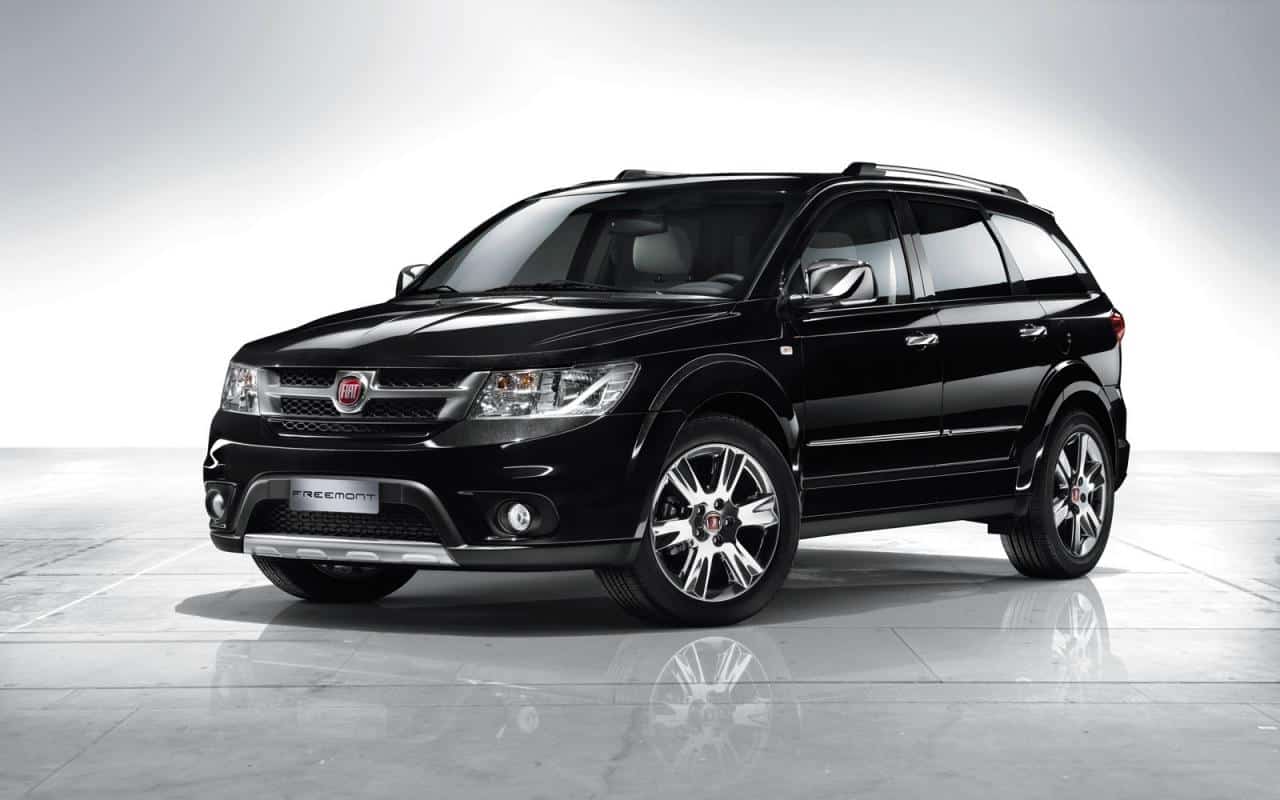
First, though, there was another story through the week that prompted my concern. Fiat launched a new vehicle in Australia, called the Freemont. You can see a picture of it at the top of this story. Those of you reading this from the United States might recognise that vehicle. Where you live, it’s called the Journey and it has a Dodge badge on the front.

Here’s the Journey. Compare that with the car at the top.
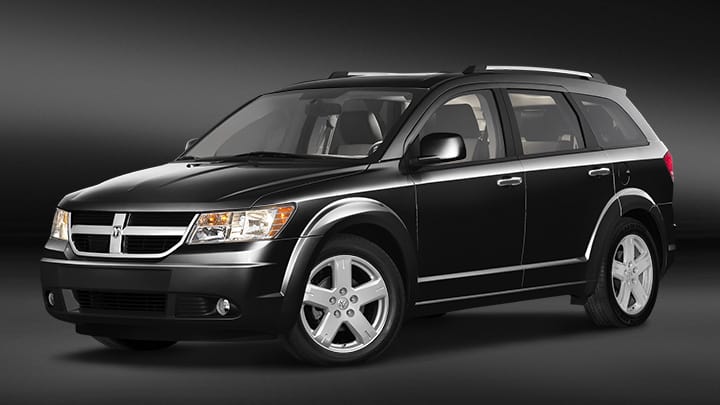
This, of course, is some of the fruit of the new Fiat/Chrysler relationship. Some sharing of engines and architectures is to be expected, I suppose, but this is flat-out re-badging in a style not seen since the bad old days of pre-bankruptcy GM.

All this makes me wonder about Fiat, the company that owns my beloved Alfa Romeo.

Alfa Romeo currently has the rather unexciting MiTo and the much more interesting Giulietta in its range. The brand’s recent history includes a series of absolutely beautiful cars that weren’t quite able to drive as good as they looked. A driver’s brand devoid of a true driver’s car.

Fiat make all the right noises about being dedicated to an Alfa Romeo resurgence and the new Alfa Romeo 4C is the first evidence of that, creepy headlights and all. Fiat are promising a reintroduction of Alfa Romeo to the United States, a new Spider that will be developed in conjunction with Mazda’s new MX-5 and, as is seemingly compulsory these days, a premium SUV.

On the other hand, Fiat are basically just holding on thanks to Chrysler’s new-found success in the US. European sales have tanked. Fiat need a couple of home runs and as much as I love Alfa Romeo, Fiat are taking the brand upscale and a newly upscale Alfa isn’t the lifeline that Fiat needs. One can easily get the impression that Fiat are fattening the Alfa cow just prior to slaughter.

——

All of that leads us to a story that just won’t go away, despite public denials from people connected to the companies involved – the talk that maybe Volkswagen buy Alfa Romeo. The rumours first surfaced a few years ago and the story is still hanging around, covered again on several prominent motoring websites in just the last few weeks. Here’s one excerpt, from Ward’s Auto:

TURIN – Alfa Romeo is at the core of top-level negotiations between Audi and Fiat and might be near to a sale, reliable sources here and in Ingolstadt, Germany, say.

Sources close to both Fiat CEO Sergio Marchionne and Audi CEO Rupert Stadler confirm the two are in talks over a major deal.

The top subject reportedly involves the sale of Alfa, but this time not only the brand but Fiat’s Pomigliano assembly plant also is on the table.

I do worry for the future of Alfa Romeo under its current owner. I worry because of Fiat’s short-sighted badge engineering as well as decisions like shutting down the Alfa Romeo museum, as they did a few years ago.

Fiat took Alfa Romeo off the Italian government’s hands in the mid 1980s. The cars have become more modern since then, but they’ve also become a bit more generic. Most have had beautiful styling, but then most have also been front-wheel drive.

The Alfa strategy also seems a little bit scatter-brained. The MiTo and Giulietta have their fans but they’re entry-level premium European cars. The Giulietta, especially, is a fine car but neither are banging down the door of the specialist or luxury car segments. Fiat seem to want to spark an upscale revival for Alfa, a focusing of the brand’s identity that’ll start with a car that looks like a true driver’s car – the 4C. Upscale Italian sportiness….. hasn’t Fiat already got Maserati for that? I know Maserati is more of a true luxury brand, but then Fiat did just announce a new Maserati Ghibli, priced down to fit under the Quattroporte at a point intended to make Maserati more accessible.

Alfa and Maserati are approaching one another, it seems.

So you could say I’m not opposed to a sale of Alfa Romeo, even if it’s to a non-Italian company like Volkswagen. But then you have to ask the question – are Volkswagen the right company to take Alfa Romeo into the future?

Here’s a graphic of the car brands currently owned by the Volkswagen Group. Well, nearly all of them. You can add Porsche into this picture, too, now.

There’s no doubting the success of the Volkswagen Group. They are currently the most profitable car company in the world and will overtake GM as the #2 car company in the world based on sales. Toyota won’t be far away in the #1 slot, either.

Their cars are all very well regarded with the possible exception of Seat, which is a rare VW failure so far. Skoda are making good quality, good value small cars and family cars. VW themselves range from the bland to the sporting. Porsche are Porsche. Audi have taken a place at or near the top of the Teutonic table. Lamborghini and Bugatti are hallmarks in the supercar and hypercar segments.

But here’s the thing that rubs me the wrong way.

The Volkswagen Group have made a success out of all of these brands but aside from Lamborghini, and Bugatti, is there anything in the range that has been built to really inspire? To me, the rest of the brands scream …….. competence. And I guess you could say that Lamborghini and Bugatti scream extreme competence.

What I’m wondering is whether or not Volkswagen have got the ability to build passion into their cars, because that’s what Alfa Romeo has traditionally had and that’s what Alfa Romeo needs to become great once again. That mad focus on one particular aspect of a vehicle, even at the cost of incompetence somewhere else. Will a German-owned Alfa Romeo allow poor ergonomics in order to have the car look just right, if need be? Will they make you skew your number plate to one side in order to preserve the symmetry of a heart-shaped grille? A great Alfa has flaws that accuentate the great things about it. Sad, but true.

Bottom line: Fiat are making a few dumb moves and they might need to sell Alfa Romeo to survive and focus. Can Volkswagen make an Alfa Romeo that a passionate person can truly fall in love with?

——

My tip: BMW could.

Classic Car Investments For Regular People

I was fascinated by a recent article I read on Classic Car Investment. Is it really possible to make a little bit of money on an expensive hobby like motoring?

It isn’t easy. Some would go so far to say it isn’t likely. But it IS possible.

If you actually select a somewhat exotic/unusual vehicle and then drive it, that could mean some serious maintenance costs. Think of those as rental fees for pleasure owning the car for a period and it makes the pill a little easier to swallow. Bottom line – pick the right car and it’s possible to buy, own and then sell a vehicle at a profit that’ll allow you to move on to something else.

The best resource I’ve found to help with this is Hagerty. It’s US-based so it won’t necessarily be completely relevant to your market if you don’t live there, but the trend might still be fairly close for the models Hagerty covers. At the very least, it’s an interesting way to pass a few moments/hours/days.

Hagerty has tools that can help you select your vehicle and track its valuation history. Just like stockmarket software, you can create a portfolio of cars and track/compare their valuations over time. They provide base indices, too. For example, are you curious as to how their basket of German Collectables has done over the last few years?

Here it is:

The explanation: The Hagerty Price Guide “Silver Arrow” Index of German Cars is a stock market style index that averages the values of 21 of the most sought after cars from BMW, Mercedes-Benz and Porsche from the 1950s-70s. The list to the left (not shown here – SW) shows the cars that make up the index, while the graph above shows this index’s average value over the past five years. Values are for #2 condition, or “excellent” cars.

Let’s take a look at one of those German Collectables – the BMW 507 Roadster. It’s very rare, of course, and quite pretty. BMW made it in the late 1950s with a focus on the US market but it was too expensive so BMW cut the program after only 252 cars were made.

BMW made huge losses on the 507 but their loss can now be your gain – if you can a) find one, and b) afford it. Here’s the index for the BMW 507 since 2006. The colored lines represent vehicle condition:

A couple of things to notice here…

Even 507’s with some pitted chrome and cracked seats (the red one – Condition ‘D’) are still worth $750,000. That’s a lot of clams. Secondly, that graph starts a few years before the global financial crisis. As you can see, the GFC didn’t do much to hurt the value of this classic car.

Swade’s theory of classic car investment and ownership – The big money’s always been in genuine, recognised vintage classics from any generation. They will hold a certain amount of value for collectors, always. Think Mercedes Gullwing, Ferrari 250, etc.

Emerging big money classic car buys tend to be seasonal and a move with the age/generation that has the money.

The previously-accessible movers and shakers over the last 10-20 years, for example, are cars from the 1950’s and 1960’s, bought up by Baby Boomers who’d had their kids, made their money and decided to re-live a little of their automotive youth. Here in Australia, Holden Monaros and GT Falcons were relatively affordable 25 years ago. They went through a massive boom 10 years ago but have come down since. Right now, Japanese rotary-engined cars are doing particularly well.

The oldest Generation X’ers are turning 50 right now, which might mean some good news for 1970’s classics or undiscovered/overlooked 60’s cars.

Don’t have a million to splash on a rare Beamer?

Hagerty also has an Affordable Classics index, which is the one for regular guys like you and me. It’s this list that quite possibly shows where some of the movers and shakers of the future will be. Given that they’re not established classics, however, this index is a lot more volatile and cars from this segment DID suffer valuation falls during the GFC.

This list is also more US-centric, so caveat emptor. But it also includes some interesting models that weren’t just US sellers.

These are cars that might appreciate a bit more in the next 10 years either because they’re rare and they’re getting noticed a bit more, or because they’re widely liked and good examples are getting harder to find. They may not make that much money, but kept in good condition there seems to be a good chance they’ll retain their value or increase in value by a small-but-reasonable margin.

A few cars from the Hagerty Affordable Classic index and a few that I’ve chose out of my own field of interest:

Porsche 914 (Hagerty Affordable Classics)

Triumph TR6 Convertible (Hagerty Affordable Classics)

Volkswagen Beetle (Hagerty Affordable Classics)

Ferrari Dino 308 GT4 (Swadeology pick) – the as-yet unloved Ferrari. The only one styled by Bertone instead of Fezza’s usual Pininfarina. The first Ferrari road car to use a V8, which became the basis for many of the Ferraris that followed it through the 1980’s.

Porsche 911 SC (Swadeology pick) – the 1982 model has an average sale price of around $17,000. That’s an affordable classic and as you can see, it’s holding that value in good condition.

And of course, my current ride – the Alfa Romeo GTV6

——

The key to doing this, as with any investment, is buying low and selling high. There are a lot of things that influence a vehicle’s value and they’re infinitely variable and their relative weight will change with time.

Popularity – this is a supply and demand situation. The more popular the vehicle, the greater the demand. You can’t do much about this except try to track it and predict it. Blue Chip classics are regarded as being ‘Blue Chip’ because they’re more predictable. A Ferrari is typically always going to command good value. A Datsun’s a bit more hit and miss.

Condition – The better the condition, or perhaps the more original (and good) the condition, the high the value. Restored cars can be tricky because some people restore them to their tastes rather than to factory condition. A mint condition factory car should generally be favoured, but they’re very hard to find. If you’re going to restore, the best bet is to do it to factory specs or with original enhancements.

Provenance – If the vehicle’s history is known, documented and most of all, interesting, the vehicle can demand a higher value. The former Pope’s VW Golf sold for nearly a quarter of a million dollars 6 years ago. Your grandma’s Golf is unlikely to fetch as much, regardless of condition (unless she’s more famous than the Pope).

——

Have fun over at Hagerty’s website.

I’m going to figure out how much I need to put away each week to get myself one of those Dinos – along with a house where I can garage it properly…..

——

The Affordable Classics Gallery

——

PS….. None of the above should be construed as financial advice. I’m not qualified to give financial advice. This is just an interesting topic. Do your own research and come to your own conclusions about whatever vehicles you might be interested in.

Exit mobile version