I had a small reminder today. A reminder that things are changing, moving on. I’m only 45 years old but the signs seem to come with increasing frequency now.
The first time I ever felt slightly ‘aged’ was near the end of 2007.
The one constant through my conscious lifetime has been Australian Rules Football. The end of 2007 saw the retirement of James Hird, Nathan Buckley and Kevin Sheedy from their respective roles in Australian football.
Sheedy had been the coach of one of Melbourne’s powerhouse teams for 27 years – since I was 10 years old. He was an elder statesman of the game and loomed large over the entire football landscape. Even if you hated his team, it was hard to think of Sheedy as anything other than a football father figure.
More pointed, however, were the retirements of Hird and Buckley. Their retirement as players stung because they were the last men close to my generation who played the game. The game I’d grown up with – the game I’d always felt young enough to play with my mates – was now being played wholly by young men a generation removed from my own.
That made me feel old.
—
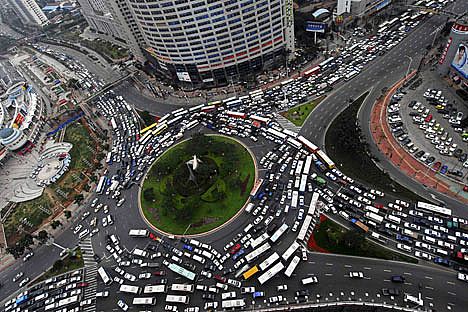
I’m sure you’ve all seen this image somewhere on the web before:
On a related subject…..
About 10 years ago I spent hours and hours building a wonderful cabinet for all my CD’s. It turned out really well, too.
Today, I think it’s been at least 4 years since I actually played a CD in a CD player. In fact, the only CD players we own now are a Playstation 4 inside the house (I assume it’d play a CD if I asked it) and a CD player in my Subaru Brumby. The last car stereo I bought didn’t even include a CD player. It’s purely a media player, finding its songs either from a USB drive or via Bluetooth.
I think the compact disc might just be the first significant technology to both emerge and become (almost completely) redundant within in my lifetime. Maybe the video cassette recorder took that honour first. It probably did.
—
So today…..
It was just a little thing, but it was just another sign that things have changed.
Today I had to write some notes as part of an audit I’m doing. Most of my audit notes are done directly into my workpapers, which are on my computer. Today I decided to draft some preliminary notes on paper. It’s not unusual to sketch things out on paper, but that’s usually just a few words with a lot of underlining/arrows and a bunch of doodles.
Today’s notes took a whole page.
What I learned at the end of that page was that 10+ years of writing on computers has completely ruined my ability to write in cursive script. The paper looked like a long prescription written by a 95 year old doctor. My ability to write with my own hand has been severely depleted and it’s largely down to the march of progress.
I can now type a lot quicker, with greater accuracy and much greater legibility than what I can write.
—
Football has moved on but I still enjoy the game immensely.
I find myself completely accustomed to digital music and I’ve even considered taking my CD’s to Cash Converters and breaking up the cabinet I built. It’s not much use for anything else.
But losing the ability to write in a presentable manner with my own hand feels like a genuine point of concern. I’ve never been a great practitioner of penmanship, but it feels like a basic skill that all people should try to hold on to.
If you’ve got any notable stories of time changing while you weren’t looking, feel free to share them in comments.
I’m grateful to Alex at Saabtala for posting about the Saab Car Museum Support Organisation last week. I didn’t even know this group existed prior to that post and for those of you who missed it, I figured it might be worth writing about it here. I’ve just sent through my support donation and I think it’d be worthwhile if you consider doing the same.
The Saab Museum is the spiritual home of Saab Automobile. Peter Backstrom, Ola and their crew of contributors and volunteers do a sensational job of keeping Saab’s legacy alive. The Museum is visited by thousands of people every year and this year, once again, it’ll be the central hub for activities linked to the Saab Festival.
The Saab Museum nearly went under a few years ago when the Swedish debt agency went and put stickers all over the cars, marking them as items to be secured for sale. Thankfully, the city of Trollhattan stepped in along with Saab AB and the Wallenburg family to secure the immediate future of the Museum.
That doesn’t mean the Museum is flush with funds, however. It cost money to save the Museum but it costs more to run it on an ongoing basis, too.
That’s where you come in.
The Saab Car Museum Support Organisation is a non-profit organisation, set up to allow supporters of the Museum to ‘join’ and provide a small amount each year in support of the Museum’s activities. The fee is 200SEK per year, which is around A$30 in my money, or $22 American dahllahs. Payment can be made by PayPal or a number of other means.
Thanks in advance for your support. And please make plans to visit the Saab Museum some day. June 5-7 would be perfect, as that’s when the 2015 Saab Festival will be on.
Whether it’s this year or another year, though, make sure you get there. It’s a truly magical place.
A little bit of personal philosophy to start the week…..
I’ve been in a position recently to think about why some of us obsess about cars so much. I remember a time back in 2011, a year or so after the sale of Saab to Spyker was completed, but when Saab were beginning to show the first signs of trouble. I was still writing Saabs United at the time and there was much debate going on about how things were going under Victor Muller’s leadership. I was a stout defender of Victor but there were a number of people who were critical. Some of them were extremely strong in their opinions.
There was one guy in particular, a guy so vehement in his criticism that he became one of the half-dozen or so people that I banned during my 7 years as a website administrator, after which he continued the tirade via email.
Most of the bullets he fired were a complete waste of time but one theme rang true – why are you doing this? Why do you spend so much time writing about this situation at Saab? Why do you write about cars so much? Is it really a productive use of your time? Does it benefit the world at all? Are you making the world a better place when there are people dying of preventable causes in various parts of the world and you’re sitting there writing obsessively about Saab cars?
It was a fair question then, and it remains so today.
Why cars? Why so much time spent on learning about them? Discussing them?
Are cars worthy?
Yes. I think they are.
The liberation of mass transport
From Karl Benz through to Armand Peugeot, Giovanni Agnelli, Henry Ford, and Ferdinand Porsche, cars progressed from being indulgences for the elite to true instruments of mass liberation, bringing a modern world to a society hungry for progress.
Cars expand our collective horizon. They take us to meet new people and experience new places with greater efficiency than we ever had before.
Cars mean that we’re no longer bound to villages or even regions like our ancestors. Trips a century ago may have been greatly affected by weather and could have taken days to complete, but now they could be completed in hours– with the help of air-conditioned comfort, car curtains, a sturdy engine, and a satellite navigation system with Bluetooth audio.
They say travel broadens the mind. It used to refer to inter-territorial travel but the car has made that accessible to nearly everyone. Today such a saying refers to international travel only. Anyone can explore the land they’re connected to, primarily because of the car.
Social mobility
That old village mentality is a thing of the past. Distance is not the barrier it used to be. Cars now carry families and friends to meet together every day. They carry them across town, or across the country.
Cars carry boyfriends and girlfriends to their first dates and a few years later they might just carry the same kids to their wedding.
Cars bring babies home from hospital for their first night under the family roof, just as they also carry the departed to their final resting place.
Cars also come with added security measures to ensure the safety on road. For instance, for babies and kids, one can look for products like a booster seat with recline, Nuna – everyday free shipping, or available in other brands so that kids are safe and protected while on road.
As you can see, cars have become an essential part of everyone’s life, which is why the increased demand. However, a rise in demand does not mean that you have to pay more. You can buy them for cheaper rates as well. So, instead of purchasing new vehicles, why not opt for used ones that can prove to be more economical (partly because they can be bought with no deposit car finance)?
Yes, you heard it right! They are as good as new cars. They are usually well-maintained and properly-functioning vehicles that you can use for a long period. That said, if you are on the lookout for one, then you can find many dealers; for example, we have Hilton Garage, a company that is known to offer used cars leicester.
They seem to be people’s first choice near the said location, as they have a wide range of options in terms of budget, lifestyle, or any other specific requirements. You could try visiting their website to check out the automobiles they have, or can pay a visit physically to them and test-drive the car before you make a decision. Additionally, they can help you with financing the car with different funding options and give you the best solution (you don’t have to do anything).
The best part is that if you are planning to sell it in the future, you can sell it at almost the same price you bought it. This is because the depreciation for used cars is slower compared to new cars.
Economic Mobility
Cars carry pimply 15-year-olds to their first jobs. A few years later they carry them to university.
They carry mobile locksmiths, gardeners, plumbers, pet groomers, bankers, builders and baristas. A vehicle can be a workhorse, a mobile office or even a mobile showroom.
And then there’s the car industry itself, which employs millions around the world. These people work with cars their whole lives – driving them, designing them, building them, fixing them, financing and selling them. Cars have driven advancements in technology, whether it be in safety systems, cutting edge materials, engine efficiency or manufacturing processes – the automotive sector is a hub for innovation in all sorts of fields.
Cars are also the lifeblood of a number of critical industries. They generate huge dollars in manufacturing and in all forms of advertising. There’s a dedicated aftermarket industry serving a vast number of custom vehicle tastes. If you can dream it, someone out there can take your money and build it.
I don’t think we’ll see another too-big-to-fail decision like we saw with GM at the beginning of the global financial crisis. But don’t let that lull you into thinking that the automotive industry has become a lesser player in terms of driving research and development. Car companies remain at the cutting edge of consumer-oriented industry and the dollars they spend on contractors and suppliers generate dollars elsewhere in the economy.
Cars Bring Joy
There’s the joy of the first date, the first baby’s homecoming, and the joy of occasions with family and friends. But there are other times when the car is an intrinsic part of the joyful experience.
The thrill of your first drive.
The joy you have on the right road trip in the right car with the right song on the stereo and the right people in the car with you.
The joy of a winding road shared with you friends in their cars, travelling together for a lunch somewhere. Or just travelling.
The joy people get from artistic automotive design. Yes, cars can be art, just like your favourite chair, desk lamp or wrist watch. Good industrial design is an art form all of its own.
There’s joy in preserving an old car and joy in driving it. The joy of gathering around an old car with friends and fixing it together. Eric Bana said in his film “Love The Beast” that his Ford Falcon coupe was like a campfire that he and his mates would gather around, telling stories while they worked on the car together.
For some people, these moments lose their lustre fairly quickly but for many, they endure for a lifetime.
Social Good
Those of us who spend a lot of time in the automotive sphere aren’t curing cancer. We’re not running a food bank or getting people off drugs. But don’t discount the enormous social good provided by the automobile over the last century or so.
Cars carry medicines to people in need. Their derivatives carry sick people to hospitals. They carry police and even soldiers to defend the places we live. Cars carry food to the hungry.
Cars changed the world. And while they’re not always used for good, the net effect of their invention has been overwhelmingly positive.
—
So are cars worthy?
I like to think they are. Cars are often the second most expensive investment that people make in their lifetime. We design cities around the need to move from place to place. Our world has become dependent on mobility.
But more than that, cars are intrinsically interesting. The engineering. The potential for man and machine to form an experience.
Put simply, cars bring happiness to a lot of people. It’s not curing cancer – I’ll leave that to the doctors – but sharing some of that happiness and trying to inspire it in other isn’t a bad thing, is it?
Rain was the forecast but this morning saw beautiful conditions at Sandy Bay and the cars were shining at Classics By The Beach for April 2015.
Today was also Easter Sunday, so this ornament on an Alvis seemed quite appropriate.
We have a couple of ‘new’ cars this month and plenty of favourites that we’ve seen before.
Let’s take a look…..
Mini 2+2, engineered by Broadspeed
This was the car of the day, for me. I’d never even heard of a Broadspeed Mini before, let alone seen one. I’m glad I’ve seen one now. Magnificent!
The Broadspeed 2+2 was a Mini modified in the mid 1960’s by Broadspeed Engineering, a company started by a guy named Ralph Broad, in Birmingham. The body was modified using fibreglass panels in place of the original steel. The engine was also modified with Broadspeed’s own parts and 4 different levels of specification were offered. Only 28 original Broadspeeds were made. Another 4 were made in Australia using Australian-made Minis as a base. Two are believed to survive.
This example is a steel-bodied replica that the current owner has had for around 5 years. It has a 1300cc engine and it looked and sounded absolutely superb.
Mark this down as one that I’d like to take more photos of one day, when I’m less pressed for time and with better light.
This 1971 model’s fresh from an engine rebuild and is in remarkable original condition, in Olive Green Metallic.
—
Studebaker Lark
Charm is the key and this Lark had it in spades. Big wide chromies, a sanded roof and plenty of patina made a lot of people smile when they saw this old Stude today.
—
Porsche 550 Spyder
This Spyder’s a regular at Classics but I haven’t photographed it for a while. New velocity stacks were the reason for the engine cover being open so I figured it was time to shoot some photos again.
It always looks great.
—
Ford F100
I’m not one given to loving old utes. For me, they’re more about being useful than being show vehicles. But it’s impossible to deny this F100 being worthy of some photos. It looked fantastic. Original LHD.
—
Porsche 911 Flachbau
I don’t know if the slantnose 911 is a divisive design, but given the iconic status afforded the traditional 911, it probably should be.
I like it. I like it a lot, in fact.
The wing’s off one of Porsche’s later GT models.
—
Ford Cortina GT
There was a nice trio of Cortinas attending today. Whilst both white cars were beautiful, this GT was the one that attracted my camera. They were accompanied by a red Cortina, which I didn’t take a close look at. I should have.
—
The Rest
I always feel awkward posting these as “The Rest” but I simply don’t have time to photograph or write about every car in detail.
Note the racing Fiat, which made a late appearance and is owned by a mate of mine here in Hobart. He’s completed many a Targa Tasmania, including several in this car. He was also in my Viggen with me when I wrote it off 🙁
Now, it’s time to name the three best cars I’ve ever owned (which is much easier than nominating the three worst, believe me).
So…. in no particular order:
Porsche 968 ClubSport
My time with the 968 was frustrated by driveway hassles. The car was simply too low to get in and out of our driveway without a set of heavy wooden ramps that I built to aid the process. It was a pain to get out of our driveway, which resulted in the following:
1) It tainted the day-to-day driving experience
2) It stopped me from driving the car as often as I would have liked.
Even though I had less seat time than I would have liked, I’m happy to draw the clear conclusion that the Porsche 968 CS is, without doubt, the most technically proficient car I’ve ever owned. It is genuinely fast, not so much in terms of straight line speed (though it’s no slouch in that department) but more in its ability to carry speed along a road or track. It handles like a dream – and that’s with standard suspension. I can only wish I had more time with the M030 suspension I fitted just before selling the car.
I have limited experience with Porsches, but what’s apparent to me is this: Lots of car companies can do something really well. Porsche differentiate themselves by their commitment to doing many things really well. They build focused, technically advanced and quite complete cars.
The only downside with the 968 (and the 928 I own now) is that it lacks a bit of personality. It’s so good that it’s almost too good. It’s limits are way beyond mine, which might be the key to really enjoying a car. You have to be matched to it.
—
Alfa Romeo 33 16V
What the 968 didn’t have, the Alfa Romeo 33 16V has in spades – personality.
It’s as ugly as a bashed crab and has the build quality of a mid-70’s Chinese apartment building – but my goodness this is a fun car to drive.
The 16V saw Alfa’s boxer engine at the peak of its powers. It only made 130-odd horsepower but it’s a torquey little thing and it loves to rev. Fit it with the right exhaust (2.25 inches is just right) and it makes a noise so beautiful that even the most hardened, latte-sipping butterfly enthusiast will be moved to weeping as you pass them by.
Typically, there are things the Alfa does well and things it doesn’t. It does revs and noise. It doesn’t do handling quite as nicely. Surprisingly, my first 33 did reliability pretty well, but it wasn’t great on comfort or build quality.
It’s this constant battle that gives it such a rich personality. You have to accept some give-and-take with the Alfa, but the things that it gives are given most generously.
Not only is the Alfa superb fun, it’s superb cheap fun. Mine cost me just $3,500 and I can’t recall if I had to spend a cent outside of regular service. I realise they’re not all like that (my second 33 was a basket case) but if you can get a 33 like my first one, it’ll give you the best smiles-per-dollar return you’ll ever see.
—
Saab 9-3 Viggen
I’ve owned a lot of Saabs over the years and it’s only right that I include one in this list. It’s not an act of charity, however – the Viggen makes this list 100% on merit.
I’m not sure what sort of fairy dust the engineers in Trollhattan sprinkled over the Viggen but it’s a magic machine. I had another Saab 9-3 from the same year that I tricked up to be more potent than the Viggen – on paper – but it never quite felt the same. It never delivered the same thrills and it never had the same presence.
We all know that the 9-3 of 1998-2002 sits on a flawed, GM-sourced chassis. We all know that Saab could have done more to improve it prior to releasing the Viggen to market. Still, the mystical character of that B235R engine combined with the Viggen’s inclination to want to kill you makes an addictive mix.
The Lightning Blue paint sets the car off beautifully and the blue/black leather interior was a masterstroke. I still think it’s Saab’s best ever design/execution effort, period.
I think the 9-3 Viggen is the best car Saab ever made. It’s definitely the craziest, which could well be why I like it so much. It’s not the easiest to drive nor the most practical, but for me, it’s the best combination of beauty, engineering and character that Saab ever screwed together.
The Viggen I bought in 2005 was my first ‘serious’ car purchase. It’s a choice that I’m eternally grateful for.
After months of negotiations and more suspense than a Steig Larsson sequel, the story can finally be broken – Apple will seek to break into the car market using bargain basement technology on offer under duress in Trollhattan, Sweden.
Apple is going to buy what used to be Saab Automobile from National Electric Vehicle Sweden (NEVS) in a deal that is set to shock both the electronics and vehicle industries.
There’s been a lot of speculation about Apple moving into this area and we can finally confirm that it’s all true. We see the automobile as the next step for human connectedness. For example, we think the work Volvo and other companies have done on connected safety systems is extremely interesting. But we also think there’s room for more innovation. We intend to accelerate that process. And then apply automatic braking, of course.
Addressing rumours that it was an Asian buyer that was negotiating to take a controlling stake in NEVS’s operations:
It’s true that we’re not an Asian company BUT we do make most of our products there so the ruse was only half-baked. As many people know, I can’t break wind without it being front page news so we decided to take this circuitous route and surprise the market.
Surprise!
I’d like to thank Mahindra for negotiating on Apple’s behalf. As a thankyou, we’ve also bought Mahindra, which will henceforth be known as i-Mahindra. All their trucks will be painted white in the future and will feature no hard edges.
So what will Apple build with its newly purchased car company?
Whatever Google’s building, really. Just slightly better. We’ll make it function a little smoother and of course, it’ll look much nicer. It’ll be electric. It’ll be a car. It might just be an electric car, but with an Apple twist.
For example, we are working on technology that will allow us to use a touch-windscreen. If you don’t like the street you’re on, simply swipe and you’ll be on the street to the left or the right.
Saab owners have been babbling on about how Saab and Apple are so alike for years and years. “Think Different” and all that. We think it’s true, except for the fact that Saab is broke and Apple has more money than God (who, incidentally, is just one of the deities we’re in negotiations with at the moment. Watch this space).
Regardless, we thought it was about time we join our minimalist design principals with a Swedish company and Saab was an ideal choice because it was available and it was cheap. We would have picked Ikea but I really hate building the stuff. And if I see another Billy bookcase I think I’m going to puke!
Kook confirmed that the vehicle will be called an i-Saab.
We had some trouble negotiating with Saab AB, the defence company that controls the use of the Saab name. So we bought them, too. Problem solved!
The re-named iGripen fighters will all be painted white later this year and have all hard edges removed. The Russki’s won’t see a single one of them in winter.
And how has this news been received in other areas of Apple’s business?
Jony Ive’s been itching to design something more interesting than the same old rectangle he’s been trotting out for years and just wouldn’t shut up about it. This acquisition should keep him and his hipster mates happy for five minutes.
This week, I give some time to which were the best, and which would have been better off as boat anchors 🙂
Let’s start with the boat anchors first, shall we? I’ll get to the three best later in the week.
The 3 Worst Cars I’ve Ever Owned
I’m a little torn as I put this list together. I’ve had great times in every car I’ve owned, even if some of them were a little….. junky.
And then there are the questions about process….
What if there’s a car that I love, that I know is a really good car, but one that I had a particularly bad example of? i.e. what if I just got a bad apple? Does it make the list? What if my poor ownership habits earlier in life contributed to a car being a debacle? Do I penalise the car, or do I penalise myself?
I’ll take these on a case-by-case basis and disclose in the writeup.
Here we go……
Holden LJ Torana
The Torana is a less-than-wonderful tribute to Australian engineering in the 1970’s. The Torana was a car whose legend is based on a small amount of success in some big motor races. It was ill-equipped, poorly built and in most cases, under-powered. Most survivors look like the red car, below. They’re well cared for, with hot 6’s or big V8 engine swaps and fancy paint jobs paid for by cashed-up custodians. The vast bulk of Toranas sold by dealers were nothing like these survivors, however, and made their inglorious trip to automotive Valhalla a long, long time ago.
My Torana had the added burden of being owned by me. That would usually be enough, but this was me as an 18 year old nutter with absolutely no idea about how I should maintain a car. For me, it was simply a means to abuse the road – and oh, how I did.
I had fun with it, but I don’t miss it. I don’t miss the noise, the water leaks, or the screwdriver I kept down the side of my seat to re-align the gear linkages. I don’t miss the smells or the hot vinyl seats.
I don’t miss it at all.
—
Alfa Romeo 33 16V (my second one)
This is one of those conundrum cars.
The Alfa Romeo 33 16V is a great, great car. I’ve owned two of them. One of them was a mind-blowing pocket rocket that puts a smile on my face just thinking about it.
And then there was this…..
I bought my second Alfa 33 after I returned from Sweden in 2011. I bought it because the first one was so good. This second one, however, had been in an accident at some point in its past and I didn’t pick up the suspension and steering problems on my test drive. I only have myself to blame.
For example – the steering was so out of whack that it took 3/4 more of a turn to go to lock on one side than the other.
The engine was OK but the suspension was stuffed, the car had rust spots (the repair of which led me to paint the bonnet in matt black) and the gearbox was even more problematic than is normal for an Alfa.
It was a really poor example of an otherwise great little car.
—
Toyota Celica Liftback
I bear no grudge towards the 4-cylinder Celica I owned in my early 20’s.
This car is part of this ‘worst’ list simply because it is the least memorable car I ever owned – and that’s a damnable attribute if ever I’ve heard one.
—
Dishonorable Mention
I have to give a dishonourable mention to one of my current cars, the Porsche 928 S. Sad, but true.
I can’t count it amongst the three worst because that would be over-egging the disappointment I feel, but the 928 has to be talked about here.
My one fear when I bought this car has been realised – it’s too much of a grand tourer, delivering too little of that sporty Porsche feeling. The accelerator has to be well-and-truly abused for a driver to properly feel its power. Call it a lack of fierceness, or an onerous commitment to solidity. Unless you want to drive with extreme prejudice all the time, the 928 makes you feel like you’re ambling along using a LOT of fuel for very little reward.
On the plus side, it’s great when you do provoke it. It’s very comfortable, it has a great driving position and it handles much better than a car of its size and weight has a right to. And it still looks like an absolute killer even some 38 years after the 928 shape was first released.
Maybe I needed this V8 experience to show me why I appreciate little rev-happy 4-cylinder cars so much. And maybe a big, old-tech V8 was the wrong car to buy when living in a city surrounded by hills.
The other ‘lesser vehicles’
Holden Gemini (x2) – I had fun in my two Geminis but really, they were much like the Torana, above.
Saab 900 Turbo – my first 900 was a five-door automatic. It served us well, but it wasn’t the 900 I was looking for.
My old 1985 Saab 900 T16 (AER-085) has just been listed for sale today!
I sold the car quite a few years ago to a student from Saudi Arabia. He owned the car until last year (I think) when he sold it to another Tasmanian local named Lee.
Lee has done some work to tidy up the car – new seats, refurbished wheels, a full service and new dampers – and has now put it on the market. I’m surprised he’s selling as he got in touch with me soon after he bought it and sounded keen on fixing it and keeping it. He does say it’s a reluctant sale and I can believe it.
The car has a new engine since I owned it and of course, it has the most wonderful note from its 2.5inch exhaust. Being a 1985 car, it’s cat-free and should theoretically have a bit more punch as a result. An additional mechanical bonus is the 1991 gearbox, which is stronger than the original mid-80’s unit.
I don’t know the owner and I can’t vouch for the current condition of the car, but if it drives half as good as it looks in the photos, it’d be a great little Saab 900.
I was thinking I might do a post on the three best and three worst cars I’ve ever owned. Such a list requires a little perspective, though, so here’s the full complement of cars that have crossed my driveway over the years.
It’s not as many as I thought it would be, actually – 25 cars in 27 years of driving. That’s not quite the one-per-year average I would have expected.
I’m obviously not trying hard enough 🙂
——
Holden Gemini
My little blue Gemini. I bought it for $3,000 around January 1988, three months before I got my licence. I wrote it off after a crash with a rather large tree 9 months later.
The photo below is not my actual car, but one of similar vintage. Imagine this in baby blue (and without a kangaroo)…
—
Holden LJ Torana
Given that my first car felt a little bit ‘girlie’, I beefed things up a little and bought a classic young Australian hoon’s car for $4,500. It had a 202 6-cyl with an Aussie 4-speed. I thoroughly enjoyed my Torana – including everything that ‘enjoying’ a small muscle car entails when you’re 18 years old – but totally neglected it and it died a natural death after about three years. Shame.
This IS my actual car, with an old mate of mine in the passenger seat.
—
Holden Gemini
Low on cash after the death of the Torana, I stumped up another $2800 for a yellow Gemini. This one had the advantage of a 5-speed gearbox and a great amplifier wired into the sound system. The downside was the broken driver’s seat that I had to hold up with a football.
Not my actual car. This, but yellow.
—
Toyota Celica Liftback
Can’t remember what I paid for this one, but it would have been in the region of $4,000. My first properly decent car, which I promptly traded when the car that followed it became available….
This is not my car, but exactly the same in the looks department.
—
Toyota Celica XX
I’d only just bought the 4-cylinder Celica (above) when this rare 6-cylinder became available. It was called a Supra in some markets but wherever my one was sold (I don’t think it was an Australian delivery), it was called Celica XX. It had a 2-litre fuel injected straight six and it kept me going through three full years of university.
I sold this one for next-to-nothing after getting a job that included the use of a company vehicle.
Mine looked exactly like this, with the exception of the wing mirrors. My mirrors were in a more traditional position, near the driver.
—
Saab 99 E
My first Saab, bought for $1,000 from a vehicle recycler. It was spectacularly slow and though it looked grubby when I first took it home, my ex-wife and I dismantled the interior and cleaned the whole car within an inch of its life. It emerged looking like a little Swedish fire truck. So shiny.
Sadly, my ex wrote it off in a parking incident.
—
Alfa Romeo Alfasud Sprint
Dissatisfied with the use of a boring company vehicle and sad at the loss of the 99E, I picked up this Sprint on the cheap. It was my first Alfa Romeo. I knew nothing about driving boxer-engined Alfas when I owned this. I know plenty about it, now.
—
Saab 99 Turbo
I bought my first turbocharged Saab for $400. It was due to be towed to a wrecker’s yard if it didn’t sell that weekend. I had the turbo and gearbox replaced and enjoyed some of the most wonderful motoring for the year or so that followed. I’d always wanted a 900, though, so I made a stupid decision and sold the 99 Turbo to buy one. If I’d only known how hard a good one is to come by (and if I only had the resources to keep it at the time). This was pre-TS and I was a completely uneducated Saab owner.
—
Saab 900 Turbo
I wanted a 900 and I wanted it bad – so I bought this one in a rush of blood. How can you tell? Well, it was an automatic and a 5-door instead of a manual 3-door. I regretted parting with the 99 Turbo straight away so after a time, I bought it back again 🙂
This is not my car, but I don’t seem to be able to find any digital photos of mine so this will have to do. Mine was a metallic grey Turbo with a grey velour interior and it was very comfortable. It’s a pity those auto transmissions can be so slow.
—
Saab 99 Turbo
This was me buying back the white one that I sold a few years earlier. I missed it a lot and thankfully, the kid I sold it to kept my details and called when he was ready to sell again. It finally died when 2nd gear gave up the ghost.
Damn those glass Saab gearboxes.
—
Saab 99 Turbo
A friend was going through some marriage turmoil and was going to sell this 99Turbo for about half its value. So I bought it from her. Her husband still hates me to this day, I think. I sold the car around 4 months later as I had no room and it was the most saleable car I had. No money was made on the deal. It passed into safe hands, which was all I really cared about.
This is not my car in the photo below. Once again, I can’t seem to fund any photos of it. The car in the photo belongs to a friend in Sydney. Mine was similar in both looks and condition at the time, though I think my old one’s deteriorated a bit now.
—
Saab 9-3 Viggen
Buying the Viggen was the biggest purchase of my automotive life at the time. It was the first time I bought a car less than 10 years old and the first time I spent 5-figures on a car. With it’s Lightning Blue paint, special interior and B235R engine, the Viggen really was something special.
Sadly, I wrote this one off at Baskerville Raceway in 2007.
—
Saab 900 Turbo
The Viggen accident took a long time to settle with the insurance company (I won) and in the meantime, I bought this 900 Turbo to keep me going. I bought it from the same guy who owns the red 99T, above, which accounts for the 900’s excellent condition when I bought it.
This 1985 Saab 900 16V flat-nose had some intermittent problems, however. The car would just stop running for no discernable reason. Two minutes later, it would start up again like nothing had ever happened. Strange.
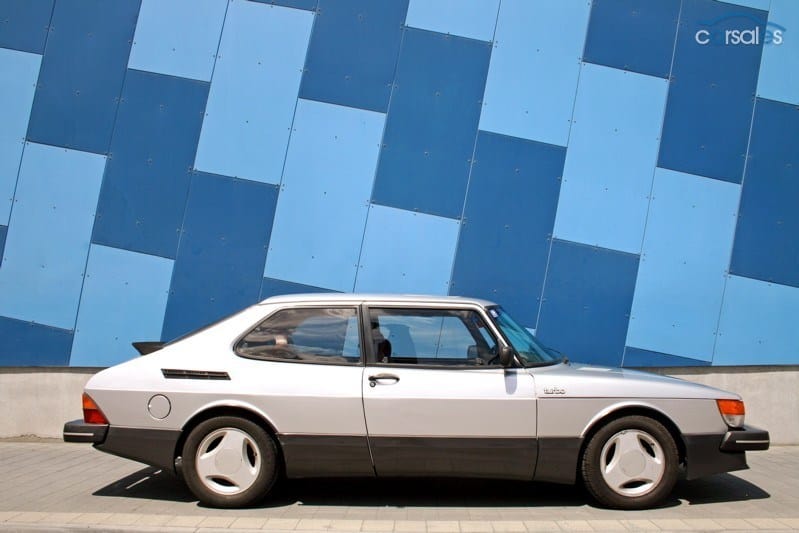
I sold it to a student here in Hobart and he owned it until last year (I think) when he sold it to another local who’s been in touch with me about it. He was going to do some interior restoration. I hope to see it again one day.
—
Alfa Romeo 33 16V
This was the beginning of my modern Alfa Romeo renaissance. I bought this 33 in Melbourne in one of my favourite scenarios – a guy who didn’t realise what he had, who presented it using poor photos and without being cleaned up when viewed in person. The car was a gem. An absolute gem. I got it for around 70% of its true value and I still regret selling it to this day.
I chipped the ECU and fitted a 2.25 inch exhaust. The sound and the performance were both totally addictive.
—
Mazda MX-5
The MX-5 is the only convertible I’ve ever owned.
I wanted to know what the fuss was about but sadly I never really bonded with it. I wouldn’t mind having another crack at it some time. Next time, I’ll find a way to store the hardtop so I don’t end up leaving it on the car so much.
—
Saab 99 Turbo
I bought another 99Turbo with a view to restoring it, but lacking the resources or the know-how, I ended up passing it on to a friend who collected 99s.
Sounds familiar, doesn’t it?
One day I’ll actually do one of these resto jobs.
—
Saab 9-3 Monte Carlo
I got the Monte at a great price and it was a good car. I kept thinking I could make it into a Viggen, however, which was a mistake. Only a Viggen can be a Viggen. The Monte had more power than a Viggen by the time I sold it (and better suspension) but it still failed to deliver the same thrill as a Viggen.
It proved to me just how well car companies do things when they put their mind to it. The Viggen might be a flawed masterpiece, but it’s a masterpiece nonetheless.
—
Saab 900 LPT
Fast forward to 2011. I was in Sweden working for Saab and I wanted a vehicle to get me around to places other than the Saab factory. My experiences with the Saab 900 in Australia left a little to be desired and I crossed my fingers and toes that I’d have a better experience in Sweden.
I did.
My little red LPT 900 S carried me across the country a couple of times and everywhere in between. It picked up my Ikea furniture, took me to dinner and lunch everywhere and performed perfectly every time. It was everything I hoped a 900 would be (except luxurious, but it felt more Swedish that way. Lagom.)
—
Alfa Romeo 33 16V
Lamenting the sale of my first 33, I bought another when I got back to Australia. This was my first real ‘miss’ as a car buyer – it was a poor car and its condition only worsened, regardless of the considerable amounts of money I threw at it.
—
Subaru Brumby
The Brumby was purchased after replacing the clutch in a number of cars over the years, thanks to our very steep driveway. I used to park at the bottom and every morning I’d have to rev the crap out of the car to get it up the drive. The secret to managing this in the Brumby is selectable high- and low-range 4WD.
It’s also economical, incredibly durable and practical. That’s why it’s now one of the longest-held cars I’ve ever owned. The car enthusiast in me says ‘meh’ but the bloke in me absolutely loves this Brumby.
—
Alfa Romeo GTV6
This was a car with a great heritage, having been built by a professional racing engineer as his personal car. The sound was amazing. There’s nothing quite like the note of an Alfa V6. The GTV6 is hard work to drive fast, but very rewarding if you get it right.
—
Porsche 968 ClubSport
This was my first foray into Porsche ownership.
The 968 is an astounding car – for a four cylinder. And therein lies the problem with the 968: there’s always some sort of qualifying statement attached to it. Great club car – though not as fast as a 911. Excellent handling, but have you got the M030 pack? Not bad at all, for a front-engined Porsche.
There’s always something more you can do with a Porsche and doing anything with a Porsche involves $$$. Lots of them. And the Porsche world can be very competitive, which means you feel like spending the $$$.
My driveway made driving this car a real pain and I had too much money tied up in it to just leave it in the garage. How much? Well, after selling the 968 I got the Alfa Sprint and the 928 you see below, plus $10K left over.
It’s an amazing car. The most technically competent car I’ve ever owned, by far. Maybe in the future I’ll get one in circumstances that allow me to drive it more often.
—
Lancia Fulvia 1.3 Rallye
I wasn’t going to include this one as I never actually drove it anywhere. At least I drove the 99T restorer from Melbourne to Hobart.
But, I did legally own the Fulvia, so here it is. The photo was taken last week as it was loaded onto a trailer to go to its new home, where it will join a restored Flaminia, Flavia and Fulvia sedan.
—
Alfa Romeo Sprint
My bargain Christmas present, purchased on Christmas Eve 2014. This car is sooooo much fun to drive. I lovelovelove it.
—
Porsche 928 S
My most recent purchase – owned for just a few weeks as at the time of writing. I’m still coming to terms with the 928S and its charms. It’s certainly an amazing piece of design and engineering.
The Koenigsegg Regera has now been unveiled at the Geneva Motor Show. I published some preliminary ‘facts’ and figures just before the initial launch and the confirmed numbers are even more amazing.
I’ve mentioned before that my visits to Koenigsegg’s facilities in Angelholm were some of the most mind-blowing experiences I’ve had in my short time connected to the automotive industry. The mountain of technology that goes into Koenigsegg cars is almost beyond description and the fact that Christian von Koenigsegg is so down-to-earth about it makes this small company all the more appealing.
EVO shot this 12-minute interview with Christian at Geneva and it’s probably the best introduction to the Regera that you’re ever going to get.
With a $1.8m base price, you’re highly unlikely to ever own one but that’s not the point. The point is having such access to the development of greatness. The Regera is Koenigsegg pushing the envelope once again and the truly great thing about Christian is that he’s always happy to give you a front row seat for the journey.