Vale Erik Carlsson

Ironic that this should happen just a few hours after NEVS’s positive news……. but it’s turned into a sad day for Trollhattan and Saab fans in general.

It’s with great sadness that I report today on the passing of a Saab legend, perhaps the biggest Saab legend of all – Mr Erik Carlsson. Erik passed away in his adopted England today after a short illness. He was surrounded by family.

“Mr Saab” was born in Trollhattan, Sweden, in March 1929 and the story of his life is inextricably bound to the city and the car company that was based there.

Erik drove his first rally victory in a Saab in 1955 when the company was less than 10 years old. That was a two-cylinder Saab 92 and he went on to experience rally success with the Saab 93, Saab 95 and the Saab 96 with both two-stroke and V4 engines.

Saab fans will be well aware of his successes. While Erik won various events between 1955 and 1959, it was his winning of the RAC Rally of 1960, the first year of the Saab 96, that cemented both he and Saab on the motorsport map. Erik’s legend goes hand-in-hand with the Saab 96, which he took to first place in the famous Monte Carlo Rally in 1962 and 1963. He also won the RAC Rally two more times in 1961 and 1962. The 1000 Lakes Rally, the Acropolis Rally, the Swedish Rally, the San Remo Rally, the Czech Rally – all of them have Erik Carlsson’s name in their history books under “Winner” and many more have him as being placed on the podium.

Erik even drove the heavier Saab 95 estate vehicle at Monte Carlo, finishing in 4th position in 1961. I’m not sure that a two-door, 7-seat station wagon has ever been so close to glory, either before or since!

After his retirement from rallying, Erik became Saab’s most prominent ambassador. The amount of frequent flyer miles he would have accumulated travelling for Saab to events around the world would have broken most airline computers, I’m sure.

It must be said, however, that Erik’s days as an ambassador for the company took shape even when he was still rallying. When accepting victory trophies in his Saab 96, Erik always insisted that the car was cleaned before it was presented. He and his co-driver would always show up in dress suits rather than racing suits to accept the trophy. Presentation was paramount.

Erik famously promoted the Saab 900 at events around the world, driving it at speed over a large blade that would puncture the front tyre. At the time of the puncture, Erik would raise his hands out from the sunroof to show how well balanced the Saab was even under pressure.

Erik’s longevity as a Saab ambassador – a role he played well into his Eighties – can be attributed to his personal charm. Erik loved the role and he played it well. He had a cheeky smile, plenty of stories to tell and a willingness to engage anyone in conversation. And so prominent was Erik as an identity at Saab that they released three Carlsson edition vehicles in his honour – a Saab 900, a Saab 9000 and a Saab 9-3 Sport Sedan.

There would barely be a Saab fan that’s travelled to a prominent Saab event that didn’t get a handshake, a photograph or an autograph from the great man. He had time for everyone, even in his later years.

I had the good fortune to spend an afternoon with Mr Saab back in 2012. The day was organised by mutual good friends Mike and Hilary, who have spent a lot of time with the great man in the last 20 years. I encourage you to read that story as it says a lot about him outside of the spotlight.

That day taught me a lot about Erik Carlsson. It showed me the way he cared for the company, talking about it in an educated fashion like a man who still had his finger on the pulse, even in his advanced years and at such a distance. It showed me the way he loved his RAC replica Saab 96 (see video, below), which he drove with such exuberance on the day. More than that, though, it showed me his warmth as a man. He was deeply charming, extremely generous with his time and compliments, and he loved his family deeply.

Erik Carlsson married Pat Moss, the sister of Sir Sterling Moss, in 1963 and like his heritage from Trollhattan, this partnership shaped the rest of his life. Pat Moss was an accomplished driver in her own right and they wrote a book about the art of driving together. The couple settled in England, where Pat indulged her other passion – horses – which she passed on to their daughter Susie. Erik still lived just down the road from his daughter right up until his passing.

Erik Carlsson lived a full life, passing away at the age of 86. It was a life worth celebrating, a life to be remembered with fondness.

He was, and always will be remembered as Mr Saab.

Vale Erik Carlsson.

Video: Saab 96 on For The Love Of Cars

I’ve just finished watching this episode of For The Love Of Cars and I just had to share it here. It’s a great story, but even more than that, it’s a great little Saab 96.

There’s a bit of a story to this. The program you’re about to see was aired on Channel 4 in Britain last Sunday. The auction you see in the video was actually conducted back in January, but the day before the show went on TV (i.e. last Saturday), the car was auctioned once again.

The reasons behind all this back-and-forth become clear at the end of the show and it’s a touching story. I haven’t been able to find the price from last weekend’s auction but hopefully it’ll become public soon.

About the car – it’s a basic Saab 96 from the early 70’s but it wins the boys over completely with its engineering and its charm. It made my want to go hunt one down, actually.

The program goes for 50 minutes. Enjoy.

2015 Picnic At Ross

Every year on the third Sunday in May, there’s a car show called the Picnic At Ross. Ross is a lovely little town, 120km north of Hobart. It’s full of character with its shops and cafes, all of them old buildings made of timber or sandstone.

The car show is held at the sports grounds on the outskirts of town. Ross is a more central town in geographic terms, and that means it attracts cars from both the north and the south of the state, which is great for hermits like me who don’t travel north very often.

The meet was probably 50% Ford and Holden but as usual, you won’t see many of those here. OK, maybe a few Fords. For some reason, I ended up shooting mostly Citroens today. Maybe it’s because they’re so damn interesting.

To the photos!

If I showed you a big Maserati V6……

….followed by a series of green spheres……

….you’d probably know what model car I was talking about…. IF you’re a car person.

Yes, it’s a Citroen with a Maserati engine, the mighty Citroen SM.

I didn’t even know we had a Citroen SM in Tasmania and to my surprise, this one lives in the south of the state. Apparently it’s the only one in Tassie.

This SM is one of 300 made for the British market, all of which were LHD. Its current fine state reflects a wonderful restoration done some years ago. It had presence to die for, both inside and out.

I loved the gear change setup. It’s almost as sexy as the traditional steel-gate setup from the days when Ferraris had manual shifters.

The previous owner had an engine fire shortly after a rebuild was completed. He installed an under-bonnet fire system, operated by this eye-opener of a button.

——

I’m not sure what was going on with this early 1960’s Ford Falcon but it was interesting, to say the least.

——

It was nice to see this Porsche 924 Turbo at the show. It’s the first one I’ve seen in Tasmania. The 931 and 932 are slowly, slowly creeping up in value.

——

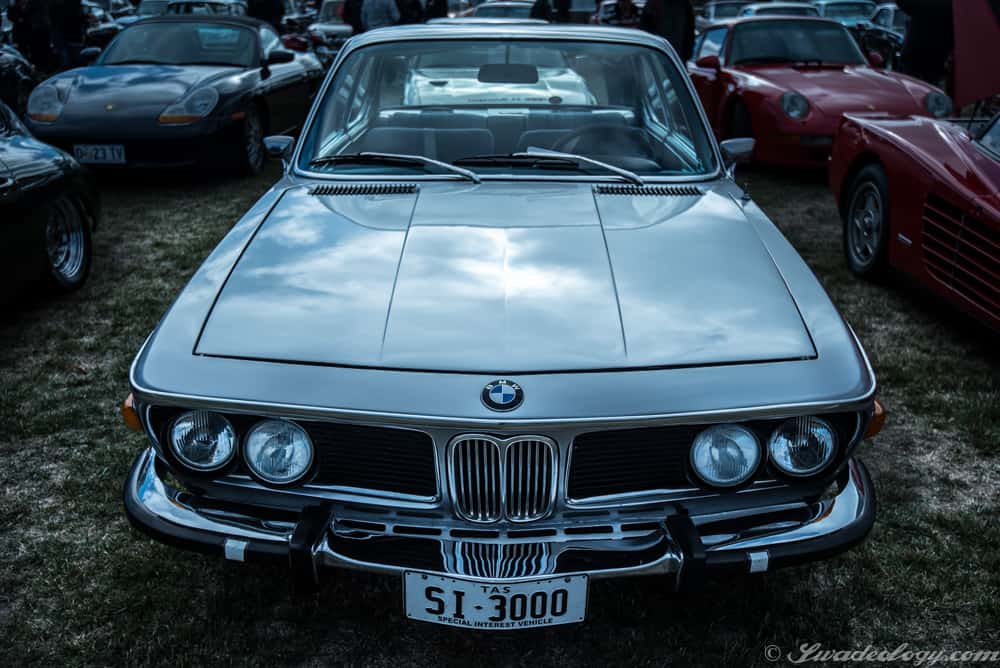
This BMW 2800CS lives in the south. I’ve photographed it a few times at Classics but even so, I couldn’t walk away from it today. Its lines are so beautiful. Sadly, like a LOT of cars today, its windows were closed and I couldn’t get a good shot of the interior.

——

The Citroen guys love to show off their hydraulics. This DS had the jack inserted underneath and the rear guard removed, simulating a rear wheel change. It was just for effect, though.

——

One of my mates from Club Motori Italia had his new-to-him Citroen CX Pallas at the picnic today. It’s a great story, too. The car owes him about $400 – in total – and as you can see it doesn’t look too shabby at all. It had been sitting idle for years when he picked it up for a pittance but with a fresh battery and some fresh fuel, it started right up. The hydraulics are fine, too.

I sat inside the car to take a few of these photos and the seats are soooooo cushy. I’d love to take it for a drive one day.

——

I have another shot of this Ferrari Testarossa – a shot where I’m not getting photobombed – but I couldn’t resist this one.

Well played, Sir.

And a few detail shots, for fun…..

——

Some detail shots of (what I think is) a delightful Citroen Traction Avant. There are a few photographic sins present in these shots. Please forgive.

——

A couple of the Lotuses present at the show today……

——

OK, I photographed one Holden today. But only one 🙂

I’m actually somewhat partial to these early Commodores. This VC model from 1980-81 has got some livery from HDT, which was Holden’s hot version back in the day.

——

The Leyland P76 is a car with a chequered history. It won the Australian Car Of The Year award when it was released as a rival to family cars from Ford, Holden and Valiant in 1973. Reliability problems and the 70’s oil crisis meant it had a short life but it still has a very loyal band of devotees today. One of my uncles has 3 or 4 of them stowed away in a shed.

Check the funky upholstery….

One of the P76’s claims to fame was a boot so big it could accommodate a 44-gallon drum (with room to spare) – something ably demonstrated by one owner at the show today…..

——

Another Citroen study….. this time a very cute 2CV Dolly.

——

I love these early Porsches. This one’s a 911T with the 2.2 litre flat-six.

——

Cars on show at the Picnic at Ross are supposed to be at least 20 years old. I don’t think anyone could conceive of turning away a sexy new F-Type Jaguar, though.

The F-Type was parked amongst the main group of cars. The Jaguar owners club didn’t want to be seen with the riff-raff, however. They parked about 100 meters away from the main group.

Given this silly level of snobbery, I limited myself to only one photo from their group – shot of my favourite classic Jag from their collection – a Series 1 XJ.

——

Mini!

——

Porsche Spyder replica…..

——

And a couple more Fords…..

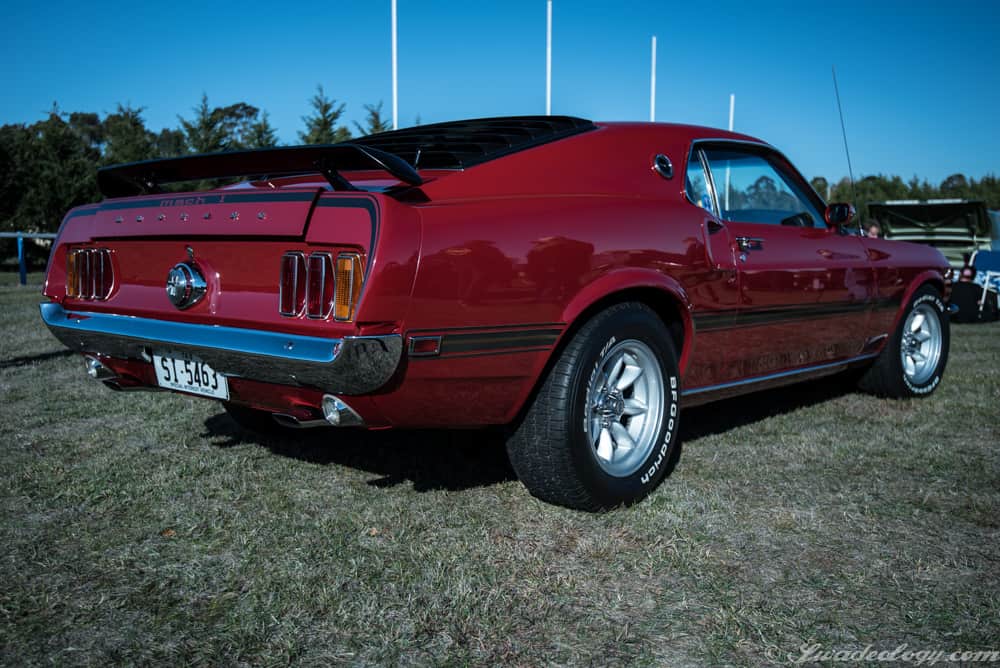
There were a LOT of Mustangs here today. They’re exciting to look at, but I have a feeling they’d be a bit of a pig to drive.

There were quite a few small Fords there today, too. The early Cortinas are always a favourite and I have a feeling this would be more fun to drive than the big Mustang.

Brief Notes: Porsche 928S

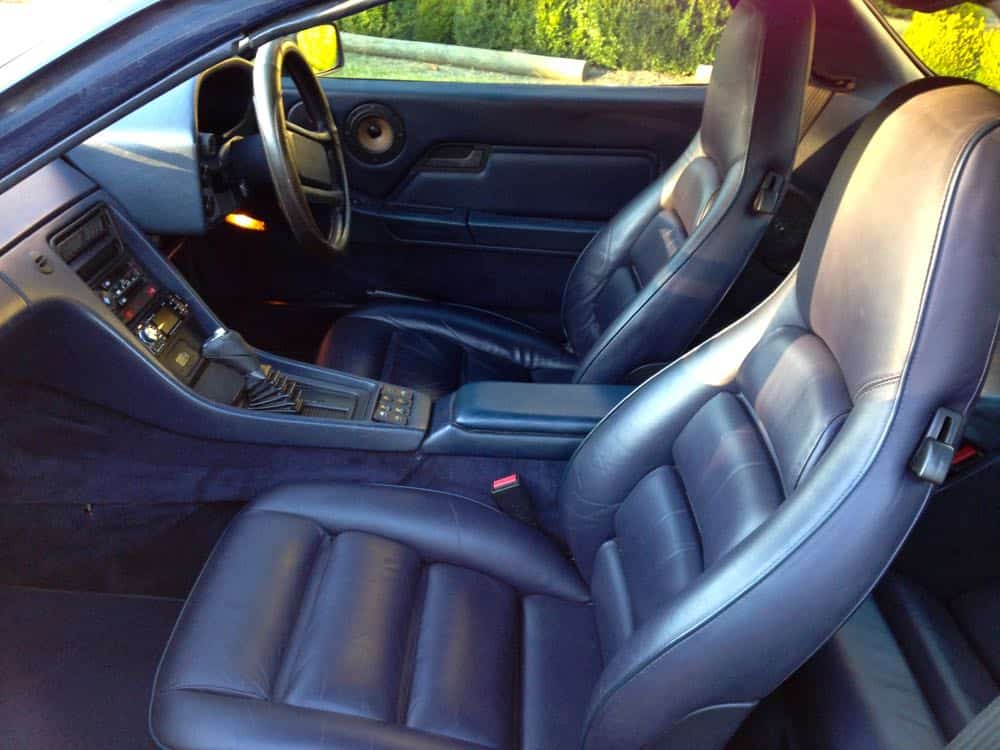
After just three short months – well, two and a half, actually – my Porsche 928S has been sold and picked up by its new owner.

The Sprint and the Brumby both go tomorrow. As I said earlier in the week, change is afoot. More to come later.

To the 928, though…..

I never wrote much about the 928 here. That’s probably because I didn’t drive the car enough to connect with it and form a full opinion. That’s partly because of the cost of driving it regularly. It’s partly because of my Alfa Sprint, which I absolutely adore. And it’s partly because I knew I’d be selling it soon, from 2 weeks after I bought it (a new job came up in early March, one that will require a few significant changes).

I expected the 928 to feel faster than it did. It was certainly brisk, but I was probably seduced by my previous 968CS into thinking that the 928 could be brutal. I fully expected it to be an amazingly capable and genteel GT car – which it is – but I also expected some animal. I just didn’t get that animal feeling as much as I would have liked.

There are a few areas where the 928 is truly exceptional.

The first of these is the handling. The 928 is a burly beast with a big V8 lump at the front and yet it handles like a car with half the weight and half the cylinders. A GT car is supposed to make its money on comfortable long-range trips from city to city. The 928 does that with aplomb. But it’s the 928’s ability to carve its way along a B-road that really surprised me. Just fantastic.

The second is the styling. The 928 bleeds presence. When you look it, try to remember that it was designed in the early-mid 1970’s. There were a lot of very nice looking cars drawn at that time, but the 928 is unique in that the other cars still look like outstanding classic cars from the 1970’s. The 928 still looks quite contemporary today.

I’d wanted a 928 for a long time and I’m glad I scratched that particular itch. I wish it hadn’t cost me quite so much money – selling a car that’s not in demand when it’s not 100% and you’re pressed for time is a costly mix – but I’m still pleased enough to have had the experience. It’s an experience that I won’t try to replicate soon, and one that I’ll do my best to learn from.

And on that note, here are a few pictures. Sadly, not enough.

Classics By The Beach – May 2015

It’s the first Sunday in May and that means Classics By The Beach. For me, it was a significant Classics, too, because it’ll most likely be my last Classics I’ll visit for some time. Circumstances are changing and it’ll involve a move away from Hobart. More on that in another post, later on.

For now, though, I’ve got some cars for you to look at.

It’s not often a Ferrari Dino gets outshone at Classics, but I think we can say it happened today. The car of the month for May 2015 is one of the red ones across the way. It’s very, very rare and makes for a great story.

The car off to the left is an AC Ace. Don’t feel bad if you’re not familiar with them. I wasn’t either.

You’re probably familiar with the AC Cobra, however.

The big V8 engined Cobra was conceived by Carroll Shelby and an original AC Cobra is still the stuff of automotive dreams for many. Replicas are everywhere. Actually, I’d love to know how many replicas exist for each of the 998 original Cobras built in the 1960’s.

The AC Ace is the basis upon which the Cobra was built. Early Aces are particularly valuable as they may be eligible for entry into the Mille Miglia. This one was built a few years too late for Mille eligibility, but is still a very valuable item. It has a 2 litre, 6 cylinder Bristol engine that produces 120hp to push around its alloy body and tubular chassis.

The new owner has apparently been searching for one of these for nearly 15 years. And as sometimes happens in these vehicular missions, he ended up finding the car quite close to home. The long-term owner was the original AC importer for South Africa. He bought the car to Tasmania when he moved here 30 years ago.

This owner passed away some time ago and the car has been sitting under a cover in the family home ever since. The new owner only secured his prize recently and had it at Classics today for the first time.

Original AC Cobras routinely sell at auction for more than $1.5 million. One recently sold for $5.5 million!

The AC Ace doesn’t fetch as much as it’s more famous descendant, but it’s no slouch, either. A 1958 model sold by RM Auctions last year fetched $341,000.

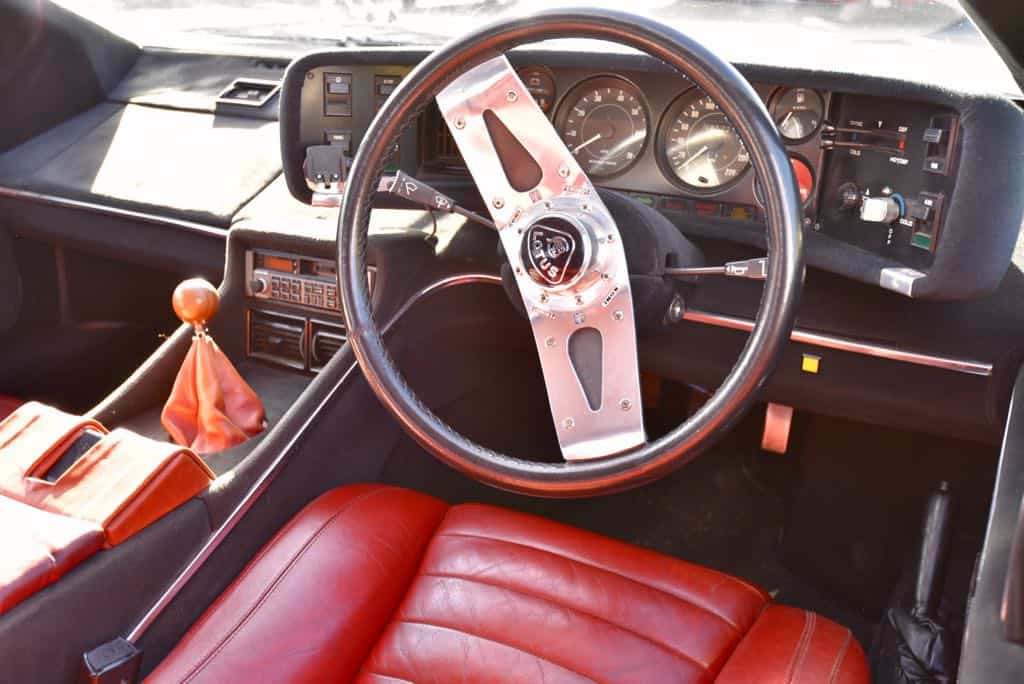
Lotus Esprit in silver – I love the angles on these early Esprits. There’s almost no change in angle from where the bonnet of the car meets the windscreen.

I’m also a big fan of two-spoke steering wheels.

I hadn’t seen this Porsche 356 before but (to my untrained eye) it appeared to be finished to a very high standard indeed. A beautiful car.

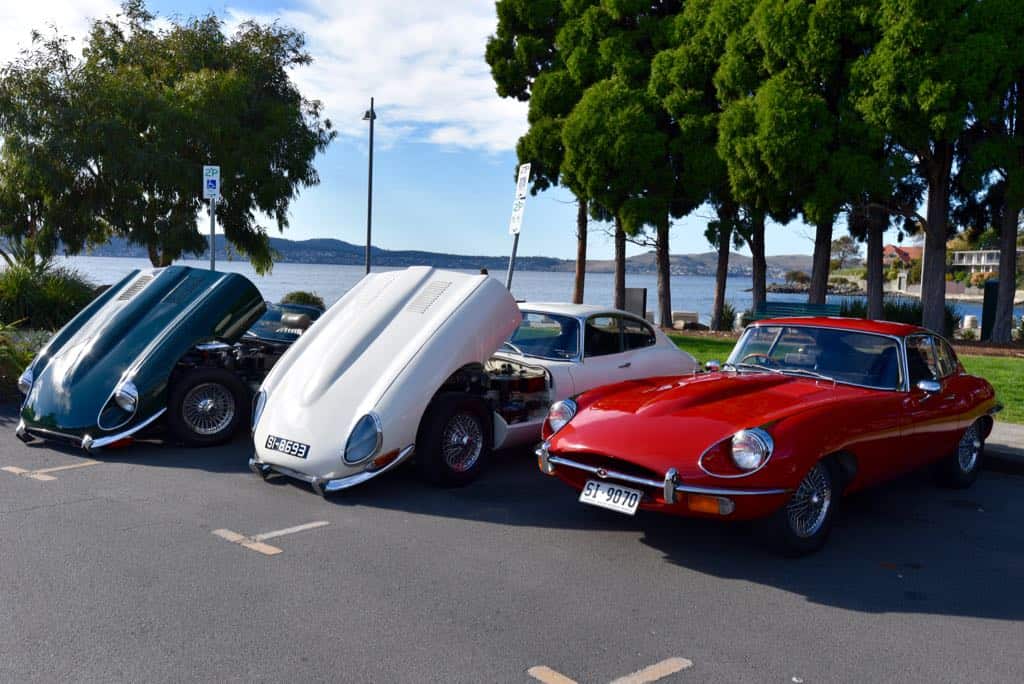
There was a good selection of Jaguar E-Types present today. This little group made for a nice little Italian tri-color effect.

Given the bonnets were open, it would have been rude to not take a closer look 🙂

Turns out we had both a six cylinder and a twelve cylinder on display. Excellent!

The E30 BMW 318i below belongs to a friend of mine. He bought it at a bargain price as a project for he and his son to work on. It’ll be his son’s first car when he passes his licence.

They’ve done a stellar job of recommissioning the car, sourcing all the parts either locally or online and doing all the work at home. It’s got a new camshaft, new wheels, suspension and stereo system (and probably much more that I don’t know about).

I had the pleasure of driving the little Bimmer a week ago and it was fantastic fun. It was much more perky than I expected. The lads should be proud.

This ‘stepnose’ Alfa Romeo Giulia GT is a Targa competitor. It was good to see it again, this time in daylight. It was a shame there weren’t more Targa cars present, actually. This Alfa and a Ferrari 360 (I think) were the only ones present.

The rest of the photographed fleet from today includes a certain Porsche 928S that was sold later in the day. It’ll stay in my drive for just two more nights before heading about 15kms down the road.

The (Interesting) Cars Of Targa Tasmania 2015

Targa Tasmania has been on this week. As usual, Targa had it’s share of bumps and bruises. Four cars left the road on the same corner on Friday and organisers had to deal with a deliberate oil spill on the first full day of the event. There were no medical casualties, thankfully, but a stage of the event had to be cancelled.

Targa drivers covered 2000kms over the last week, with more than 500 of those kilometres at full tilt in timed stages. It’s the ultimate tarmac rally.

The major category winners:

Jason White won the Modern class in his Lamborghini Gallardo. It was White’s 5th Targa win.

Craig Haysman won the Classic class in his Triumph TR7 V8.

Tony Quinn won the Showroom class in his McLaren 650S

——

The Targa fleet was on display in Hobart on Friday night so I popped down to Princes Wharf Shed #2 for a bit of a look-see. The conditions weren’t great for photos, but it was fun. I had a chance to catch up with one of my mates, Phil Blake, who was running his yellow Fiat Abarth in his umpteenth Targa. I’ll have to photograph all the Targa plates at his house one day.

Here are a few of my favourite pictures from the fleet….

Donald Duck adorning a stepnose Alfa Guilia.

It’s always fun to drive a slow-car-fast.

Another Alfa GTV.

Passengers aside from the navigator aren’t usually allowed…..

This Ford Escort Mexico was just beautiful.

There were plenty of 911’s in this year’s race. This was my favourite pic, though not my favourite 911.

An early Alfetta, minus its bumpers. Lovely.

Phil showing me the rally computer in his Abarth. Compulsory equipment for every car.

Ready to go…..

Headlights on the Jensen CV8. This car has been in every Targa I’ve seen.

Porsche 914-6. If it’s genuine, it’s a very rare car.

Needs no description…..

The winning Lamborghini was being held together by duct tape and cable ties by the end of the race.

Apologies for getting a little bit artsy with this gallery, but I had a new lens on my camera and I thought I’d try out the filters on Apple’s new Photos app. The app runs like crap, but the filters turned out OK.

Click to enlarge.

Fantasy Friday: Opel GT

For a long time now, I have had a self-imposed commitment to never buy a car from the pus-infected abscess that is General Motors – except for a Saab. I can think of very few cars for which I might make an exception.

The Chevrolet Corvette might be one, in the right spec. Call me superficial, but I’m a C3 fan. The fact that they’re generally all power and very little handling doesn’t seem to matter. That big, curvy and purposeful front end gets me every time.

I must be going a bit soft in my old age because the Opel GT has become another GM-related product that I wouldn’t mind spending time with.

The little Opel’s styling has often seen it described as a junior C3 Corvette. It’s a visually relevant comparison and they were designed in the same era. Sources I could find credit different designers in very different places, however, and the Opel fans like to contend that the little GT’s origins go back as far as 1962.

The Opel GT first showed as a concept in 1965 and then went on sale in MY1968. And yes, there are plenty of C3 comparisons with those dates because the car upon which the C3 was based, the Mako Shark II concept, was first shown in 1965 and the C3 went on sale – you guessed it – as a 1968 model year car.

Whether planned or accidental, the look is undeniably familiar. From the high-riding curvy wheel arches at the front to the absence of external access to the limited trunk space. The Opel GT is a curvaceous little two-seater and time has treated it well.

Unlike its American cousin, the Opel GT wasn’t a powerhouse in the engine department. The GT followed the European tradition, employing a more lightweight construction in combination with a 4-cylinder engine. The base engine was a tiny 1.1 litres and made just 67hp. Most buyers opted for the more potent 1.9 litre engine, with its 102hp. US buyers of later model GT’s got a detuned version somewhere around 90hp thanks to emissions regulations in effect at the time.

102hp isn’t a lot, but thankfully the little GT weighed in at just 940kg in top spec. Sprinting wasn’t its forte – it rarely is with this type of car – but the GT 1.9 should have enough poke and a light enough body to have some fun in the twisties.

Opel made just over 103,400 GT’s. Surprisingly, around 70,000 of them were sold in the United States through the country’s Buick dealers.

It’s hard to get super-excited about the Opel GT given that I’ve never actually seen one or driven one myself, but here are a few things I like about the Opel GT from afar:

  • The styling. I’ve written enough about this already.
  • The sound from the twin pipes that people put on them. You can get a rorty note from the Opel 4-cylinder, which is essential for the right driving experience.
  • The dashboard – just the right amount of 60’s/70’s black and sporty styling.
  • The headlamps. Watch the video below. They look like they’re flipping pancakes!

The video is in German, but it has some good driving footage of a tuned 1.9 GT. Skip to 4:15 if you just want to see the headlamps 🙂

Some useful Opel GT resources…..

A great article at Hemmings magazine that gives a good overview and all the tech specs.

The Opel Motorsport Club is a US-based operation that heaps of info about the car, including buyer guides, maintenance and tuning.

Why Cars?

A little bit of personal philosophy to start the week…..

I’ve been in a position recently to think about why some of us obsess about cars so much. I remember a time back in 2011, a year or so after the sale of Saab to Spyker was completed, but when Saab were beginning to show the first signs of trouble. I was still writing Saabs United at the time and there was much debate going on about how things were going under Victor Muller’s leadership. I was a stout defender of Victor but there were a number of people who were critical. Some of them were extremely strong in their opinions.

There was one guy in particular, a guy so vehement in his criticism that he became one of the half-dozen or so people that I banned during my 7 years as a website administrator, after which he continued the tirade via email.

Most of the bullets he fired were a complete waste of time but one theme rang true – why are you doing this? Why do you spend so much time writing about this situation at Saab? Why do you write about cars so much? Is it really a productive use of your time? Does it benefit the world at all? Are you making the world a better place when there are people dying of preventable causes in various parts of the world and you’re sitting there writing obsessively about Saab cars?

It was a fair question then, and it remains so today.

Why cars? Why so much time spent on learning about them? Discussing them?

Are cars worthy?

Yes. I think they are.

The liberation of mass transport

From Karl Benz through to Armand Peugeot, Giovanni Agnelli, Henry Ford, and Ferdinand Porsche, cars progressed from being indulgences for the elite to true instruments of mass liberation, bringing a modern world to a society hungry for progress.

Cars expand our collective horizon. They take us to meet new people and experience new places with greater efficiency than we ever had before.

Cars mean that we’re no longer bound to villages or even regions like our ancestors. Trips a century ago may have been greatly affected by weather and could have taken days to complete, but now they could be completed in hours– with the help of air-conditioned comfort, car curtains, a sturdy engine, and a satellite navigation system with Bluetooth audio.

They say travel broadens the mind. It used to refer to inter-territorial travel but the car has made that accessible to nearly everyone. Today such a saying refers to international travel only. Anyone can explore the land they’re connected to, primarily because of the car.

Social mobility

That old village mentality is a thing of the past. Distance is not the barrier it used to be. Cars now carry families and friends to meet together every day. They carry them across town, or across the country.

Cars carry boyfriends and girlfriends to their first dates and a few years later they might just carry the same kids to their wedding.

Cars bring babies home from hospital for their first night under the family roof, just as they also carry the departed to their final resting place.

Cars also come with added security measures to ensure the safety on road. For instance, for babies and kids, one can look for products like a booster seat with recline, Nuna – everyday free shipping, or available in other brands so that kids are safe and protected while on road.

As you can see, cars have become an essential part of everyone’s life, which is why the increased demand. However, a rise in demand does not mean that you have to pay more. You can buy them for cheaper rates as well. So, instead of purchasing new vehicles, why not opt for used ones that can prove to be more economical (partly because they can be bought with no deposit car finance)?

Yes, you heard it right! They are as good as new cars. They are usually well-maintained and properly-functioning vehicles that you can use for a long period. That said, if you are on the lookout for one, then you can find many dealers; for example, we have Hilton Garage, a company that is known to offer used cars leicester.

They seem to be people’s first choice near the said location, as they have a wide range of options in terms of budget, lifestyle, or any other specific requirements. You could try visiting their website to check out the automobiles they have, or can pay a visit physically to them and test-drive the car before you make a decision. Additionally, they can help you with financing the car with different funding options and give you the best solution (you don’t have to do anything).

The best part is that if you are planning to sell it in the future, you can sell it at almost the same price you bought it. This is because the depreciation for used cars is slower compared to new cars.

Economic Mobility

Cars carry pimply 15-year-olds to their first jobs. A few years later they carry them to university.

They carry mobile locksmiths, gardeners, plumbers, pet groomers, bankers, builders and baristas. A vehicle can be a workhorse, a mobile office or even a mobile showroom.

And then there’s the car industry itself, which employs millions around the world. These people work with cars their whole lives – driving them, designing them, building them, fixing them, financing and selling them. Cars have driven advancements in technology, whether it be in safety systems, cutting edge materials, engine efficiency or manufacturing processes – the automotive sector is a hub for innovation in all sorts of fields.

Cars are also the lifeblood of a number of critical industries. They generate huge dollars in manufacturing and in all forms of advertising. There’s a dedicated aftermarket industry serving a vast number of custom vehicle tastes. If you can dream it, someone out there can take your money and build it.

I don’t think we’ll see another too-big-to-fail decision like we saw with GM at the beginning of the global financial crisis. But don’t let that lull you into thinking that the automotive industry has become a lesser player in terms of driving research and development. Car companies remain at the cutting edge of consumer-oriented industry and the dollars they spend on contractors and suppliers generate dollars elsewhere in the economy.

Cars Bring Joy

There’s the joy of the first date, the first baby’s homecoming, and the joy of occasions with family and friends. But there are other times when the car is an intrinsic part of the joyful experience.

The thrill of your first drive.

The joy you have on the right road trip in the right car with the right song on the stereo and the right people in the car with you.

The joy of a winding road shared with you friends in their cars, travelling together for a lunch somewhere. Or just travelling.

The joy people get from artistic automotive design. Yes, cars can be art, just like your favourite chair, desk lamp or wrist watch. Good industrial design is an art form all of its own.

There’s joy in preserving an old car and joy in driving it. The joy of gathering around an old car with friends and fixing it together. Eric Bana said in his film “Love The Beast” that his Ford Falcon coupe was like a campfire that he and his mates would gather around, telling stories while they worked on the car together.

For some people, these moments lose their lustre fairly quickly but for many, they endure for a lifetime.

Social Good

Those of us who spend a lot of time in the automotive sphere aren’t curing cancer. We’re not running a food bank or getting people off drugs. But don’t discount the enormous social good provided by the automobile over the last century or so.

Cars carry medicines to people in need. Their derivatives carry sick people to hospitals. They carry police and even soldiers to defend the places we live. Cars carry food to the hungry.

Cars changed the world. And while they’re not always used for good, the net effect of their invention has been overwhelmingly positive.

So are cars worthy?

I like to think they are. Cars are often the second most expensive investment that people make in their lifetime. We design cities around the need to move from place to place. Our world has become dependent on mobility.

But more than that, cars are intrinsically interesting. The engineering. The potential for man and machine to form an experience.

Put simply, cars bring happiness to a lot of people. It’s not curing cancer – I’ll leave that to the doctors – but sharing some of that happiness and trying to inspire it in other isn’t a bad thing, is it?

Classics By The Beach – April 2015

Rain was the forecast but this morning saw beautiful conditions at Sandy Bay and the cars were shining at Classics By The Beach for April 2015.

Today was also Easter Sunday, so this ornament on an Alvis seemed quite appropriate.

We have a couple of ‘new’ cars this month and plenty of favourites that we’ve seen before.

Let’s take a look…..

Mini 2+2, engineered by Broadspeed

This was the car of the day, for me. I’d never even heard of a Broadspeed Mini before, let alone seen one. I’m glad I’ve seen one now. Magnificent!

The Broadspeed 2+2 was a Mini modified in the mid 1960’s by Broadspeed Engineering, a company started by a guy named Ralph Broad, in Birmingham. The body was modified using fibreglass panels in place of the original steel. The engine was also modified with Broadspeed’s own parts and 4 different levels of specification were offered. Only 28 original Broadspeeds were made. Another 4 were made in Australia using Australian-made Minis as a base. Two are believed to survive.

This example is a steel-bodied replica that the current owner has had for around 5 years. It has a 1300cc engine and it looked and sounded absolutely superb.

Click here for more Broadspeed 2+2 stories and information.

As always, click on any of the photos to enlarge…

Alfa GTV 1750

Mark this down as one that I’d like to take more photos of one day, when I’m less pressed for time and with better light.

This 1971 model’s fresh from an engine rebuild and is in remarkable original condition, in Olive Green Metallic.

Studebaker Lark

Charm is the key and this Lark had it in spades. Big wide chromies, a sanded roof and plenty of patina made a lot of people smile when they saw this old Stude today.

Porsche 550 Spyder

This Spyder’s a regular at Classics but I haven’t photographed it for a while. New velocity stacks were the reason for the engine cover being open so I figured it was time to shoot some photos again.

It always looks great.

Ford F100

I’m not one given to loving old utes. For me, they’re more about being useful than being show vehicles. But it’s impossible to deny this F100 being worthy of some photos. It looked fantastic. Original LHD.

Porsche 911 Flachbau

I don’t know if the slantnose 911 is a divisive design, but given the iconic status afforded the traditional 911, it probably should be.

I like it. I like it a lot, in fact.

The wing’s off one of Porsche’s later GT models.

Ford Cortina GT

There was a nice trio of Cortinas attending today. Whilst both white cars were beautiful, this GT was the one that attracted my camera. They were accompanied by a red Cortina, which I didn’t take a close look at. I should have.

The Rest

I always feel awkward posting these as “The Rest” but I simply don’t have time to photograph or write about every car in detail.

Note the racing Fiat, which made a late appearance and is owned by a mate of mine here in Hobart. He’s completed many a Targa Tasmania, including several in this car. He was also in my Viggen with me when I wrote it off 🙁

The Three Best Cars I’ve Ever Owned

This is the final chapter of a self-indulgent trilogy I started a few weeks ago. First, I recorded every car I’ve ever owned.

Then I listed the three worst cars I’ve ever owned.

Now, it’s time to name the three best cars I’ve ever owned (which is much easier than nominating the three worst, believe me).

So…. in no particular order:

Porsche 968 ClubSport

My time with the 968 was frustrated by driveway hassles. The car was simply too low to get in and out of our driveway without a set of heavy wooden ramps that I built to aid the process. It was a pain to get out of our driveway, which resulted in the following:

1) It tainted the day-to-day driving experience

2) It stopped me from driving the car as often as I would have liked.

Even though I had less seat time than I would have liked, I’m happy to draw the clear conclusion that the Porsche 968 CS is, without doubt, the most technically proficient car I’ve ever owned. It is genuinely fast, not so much in terms of straight line speed (though it’s no slouch in that department) but more in its ability to carry speed along a road or track. It handles like a dream – and that’s with standard suspension. I can only wish I had more time with the M030 suspension I fitted just before selling the car.

I have limited experience with Porsches, but what’s apparent to me is this: Lots of car companies can do something really well. Porsche differentiate themselves by their commitment to doing many things really well. They build focused, technically advanced and quite complete cars.

The only downside with the 968 (and the 928 I own now) is that it lacks a bit of personality. It’s so good that it’s almost too good. It’s limits are way beyond mine, which might be the key to really enjoying a car. You have to be matched to it.

Alfa Romeo 33 16V

What the 968 didn’t have, the Alfa Romeo 33 16V has in spades – personality.

It’s as ugly as a bashed crab and has the build quality of a mid-70’s Chinese apartment building – but my goodness this is a fun car to drive.

The 16V saw Alfa’s boxer engine at the peak of its powers. It only made 130-odd horsepower but it’s a torquey little thing and it loves to rev. Fit it with the right exhaust (2.25 inches is just right) and it makes a noise so beautiful that even the most hardened, latte-sipping butterfly enthusiast will be moved to weeping as you pass them by.

Typically, there are things the Alfa does well and things it doesn’t. It does revs and noise. It doesn’t do handling quite as nicely. Surprisingly, my first 33 did reliability pretty well, but it wasn’t great on comfort or build quality.

It’s this constant battle that gives it such a rich personality. You have to accept some give-and-take with the Alfa, but the things that it gives are given most generously.

Not only is the Alfa superb fun, it’s superb cheap fun. Mine cost me just $3,500 and I can’t recall if I had to spend a cent outside of regular service. I realise they’re not all like that (my second 33 was a basket case) but if you can get a 33 like my first one, it’ll give you the best smiles-per-dollar return you’ll ever see.

Saab 9-3 Viggen

I’ve owned a lot of Saabs over the years and it’s only right that I include one in this list. It’s not an act of charity, however – the Viggen makes this list 100% on merit.

I’m not sure what sort of fairy dust the engineers in Trollhattan sprinkled over the Viggen but it’s a magic machine. I had another Saab 9-3 from the same year that I tricked up to be more potent than the Viggen – on paper – but it never quite felt the same. It never delivered the same thrills and it never had the same presence.

We all know that the 9-3 of 1998-2002 sits on a flawed, GM-sourced chassis. We all know that Saab could have done more to improve it prior to releasing the Viggen to market. Still, the mystical character of that B235R engine combined with the Viggen’s inclination to want to kill you makes an addictive mix.

The Lightning Blue paint sets the car off beautifully and the blue/black leather interior was a masterstroke. I still think it’s Saab’s best ever design/execution effort, period.

I think the 9-3 Viggen is the best car Saab ever made. It’s definitely the craziest, which could well be why I like it so much. It’s not the easiest to drive nor the most practical, but for me, it’s the best combination of beauty, engineering and character that Saab ever screwed together.

The Viggen I bought in 2005 was my first ‘serious’ car purchase. It’s a choice that I’m eternally grateful for.

Exit mobile version