It’s the first Sunday of the month so it’s time for Classics By The Beach in Sandy Bay, just south of Hobart.
There was an emphasis on British classics this week with a number of them gathered on the central lawn. I’ve photographed a few of those and a general cross section of other vehicles from this month. It was a beautiful day here Hobart so the turnout was good, with few cars overlapping from last month.
Again, and as always, I’m amazed by the quality of cars tucked away in people’s garages for such a small, remote city.
Click to enlarge and enjoy.
Cadillac Eldorado
Porsche 993 – collectable
Artistic Porsche 993
MG interior
Alfa Spider interior – outstanding
Chevy rod
Jaguar
Purple Dodge – the ultimate muscle car
Lancia Delta Integrale
Little Fiat
Austin Healey 100
Porsche Spyder
Chevy rod – great condition
Ford Cortina
Ford Cortina
MG
Austin Healey racer
Porsche Spyder
Purple Dodge – the ultimate muscle car
Lancia Delta Integrale
Jensen
Austin Healey racer – magnificent dashboard
Alfa Spider
MG
A clutch of MG’s
Very nice badge – Austin Healey
LHD Porsche 911 SC
Torana – Aussie muscle
VW Beetle – artistic, but I wish I could get the whole side of the car
The BIG question surrounding the fledgling electric car business is whether its big enough to support all the people who want to get into it. For those wondering about the answer, it’s “NO”, just as it was with the internal combustion car business. The only remaining intrigue is about who’ll have a chair when the music stops.
Tesla
For the biggest of the pure EV start-ups it was a case of one step forward and two steps back.
The one step forward was the announcement of a ‘leasing’ plan that would allow more people access to Tesla vehicles without having to stump up their huge prices up-front. That’s good news. Offering what regular car companies can offer is essential if Tesla are going to become a regular car company.
In selling their leasing plan, Tesla put together a calculator intended to show the ‘true cost’ of owning a Tesla under this plan. The problem being that the calculator was loaded with assumptions about how much people’s time is worth, how much time they’ll spend driving long distances and re-charging, and other stuff.
Calculators like these can be a good idea, but the blowback from this one wasn’t great for Tesla. Elon Musk announced the lease plan saying it was possible for the ‘true cost’ of owning a Tesla to be as low as $500 per month (the actual cash cost is at least $1,199 per month). Out of all the people in the motoring press who tried it out that I was able to read, the best of them got their ‘true cost’ down to around $650 per month.
My favourite mocking quote was a tweet from an Automotive News journalist:
“According to Tesla website, if you live in Calif. and make $2 million/year, driving a Model S has an effective monthly cost of minus-$2,000.”
Indeed. The lease/finance plan IS a great idea but Musk has got to learn that doing his own publicity is very much a double-edged sword. He gets it right a lot of the time, but he’s becoming the face of Tesla more than the Model S is, and when you get it wrong, that’s a really dangerous thing.
The second step back for Tesla wasn’t as widely reported, but it was covered here in Australia by one news source, at least. Tesla’s initial quarterly profit has been called into question after Bloomberg News talked with an owner and discovered that Tesla had asked customers to pay for orders up front in order to include them in their profit figure.
According to the email, Tesla was “right on the cusp of profitability this quarter for the first time in 10 years since the company started”.
It then encouraged customers to stump up their payment for the car “in order for Tesla to be able to count your Model S for the quarter”.
Essentially they robbed Q2 to pay Q1, which was a monumentally stupid idea as the market’s only three months away from finding out the real implications of this. Tesla’s share price has been up recently, too, quite possibly on the back of the profit announcement. I’m sure the regulators will be watching market transactions with interest.
—
Fisker
I don’t think Elon Musk is long any sleep over the stuff mentioned above, but imagine the headache Henrik Fisker must have today. Actually, cancel that. Henrik Fisker left the company that bares his name last month due to disagreements with the board.
So imagine the headache someone must have today after Fisker announced – on a Friday, of course – that it was sacking 75% of its workforce, effective immediately.
Have a nice weekend, folks.
—
Saab (NEVS)
I got an email from John Flores at New Motor Mag. He had just got off the phone after doing an interview with Mikael Ostlund from NEVS about the situation at Saab. You can read/hear the interview here.
Disclaimer: I haven’t listened to the 30-minute conversation yet.
But assuming they’ve done their job and included the salient points in the summary, then it’s a saddening event.
I conducted an interview with Mikael Ostlund a full five months ago and it seems that absolutely nothing has changed in terms of NEVS’s PR story for Saab. There’s either nothing going on (unlikely) or NEVS has had no change of heart about the way they communicate with potential customers.
It’s a very arrogant approach IMHO and it’s slowly but surely eroding any goodwill that people might have had toward the new Saab.
Petrolicious is my new favourite website. It covers what I’d call modern vintage cars and it does it beautifully, with articles and beautifully shot videos that showcase why people love cars as well as the cars that they love.
I love older cars. They’re so much more interesting than 95% of the new stuff because they were made at a time when car companies had real, distinct identities. Car companies today are being beaten into conformity by the relentless pursuit of safety, fuel economy, and of course, the most important economy of all – economy of scale.
Modern cars with true individualism are rare. Affordable ones even rarer.
Petrolicious takes you back to a time where man and machine were close, a time when the only silicon chip to come between the two might – that’s might – control a fuel injection computer.
I saw this video on Petrolicious this morning and had to share it here. It’s called The Hunter and it features a man after my own heart (but with much greater means) who searches without remorse or relent for the next car-of-his-dreams.
Damn I love me a V8 Ferrari! And there’s a nice idea here for my mate Mats, too 🙂
Despite having 26 ‘watchers’ in the final hours of the auction, the car didn’t attract any bids. I’m in two minds as to whether I should re-list it on Ebay. I certainly don’t want to consider a lower price than the $11.5K I put on it and there’s also the hassle that comes with selling to someone you haven’t spoken to, someone who hasn’t checked the car out for themselves. I was quite nervous as the auction came to a close, to be honest.
I’ve had some interest from outside of Ebay, which is encouraging, and I’ll see what comes of that for the time being.
Why let the facts get in the way of a good headline? Holden are not holding on at all. The company has slipped down the sales table again and the slow downward spiral has the automotive community in Australia transfixed.
Holden used to fight with Ford for the top of the sales table in Australia until Ford left the fight for good. A decade or so ago, Holden was overtaken by Toyota for the #1 sales position, which Toyota has never relinquished since.
Last year, Holden was overtaken by Mazda as the #2 seller in Australia. We were stunned.
In February 2013, Holden was punted from the Australian Top 3 for the first time in its 65 year history, thanks to Nissan. Holden blamed a computer error for that one (seriously).
Today it has been revealed that Holden were overtaken by Hyundai in monthly sales for March – and Nissan beat them again, too, placing Holden in 5th position on the sales table with market-share continuing to plummet. This month, Holden are blaming the strong Australian dollar (fair) and the Japanese government (fuzzy, at best).
In a pre-emptive strike on the currency issue, Holden popped up in the news yesterday for having been the recipient of more than $2billion in government funding and tax breaks over the last 12 years. That’s more than $2,000 per car built. Holden’s argument is that it couldn’t continue to build cars here without the taxpayer subsidies, citing the dollar and the alleged Japanese government’s manipulation of the Yen as cases in point (so THAT’s why those Japanese cars sell so well here, not quality).
There’s been plenty of chatter here in Australia over the last few years about whether our tiny car manufacturing industry is worth propping up. We give assistance to Toyota and Ford, as well as Holden. With two of the three manufacturers we give assistance to tumbling down the sales charts, the chatter is only going to get louder.
Holden were once revered as The Australian Car Company, building cars in Australia that were suited to Australian conditions. The truth is that they stopped being an Australian car company many years ago and compounded their loss of reputation with poor quality Korean-sourced cars, several of which being cynically marketed and short-lived as a result. Any Aussies still own a Holden Viva?
Australians till take some pride in Holden’s design and engineering arms. The Camaro and Holden’s V8 racing success being the most obvious examples. But even those lack some relevance as the Camaro isn’t sold here and people take their eyes off family V8’s in increasing numbers.
Forgive this self-indulgent post, but I’ve got 40 hours to go in my Alfa GTV6 auction and 22 prospective buyers watching it. Chances are that it might actually sell (no bids as yet). So I’m trawling carsales.com.au like a man possessed at the moment.
The criteria:
Must be fun to drive.
Must be fun to drive.
Must possess a decent quality interior.
Must have reasonable ride quality for the east coast Australia trip later in the year.
Must represent reasonable value for money with the prospect of not sliding in value over the near-medium term.
Must be an interesting colour. No silver for me, thanks.
Manual transmission preferred, but auto could be considered on the right car.
Must be fun to drive.
I’ve not set a price limit because I do have reasonable capacity to pay something off. So whilst I could spend up to $45,000 for the perfect car if it had a reasonable assurance of holding value, it would have to be something really special (see below). I predict I’ll have close to $20K in savings once the Alfa and Subaru are sold.
Alfa Romeo Brera V6
Mentioned as a contender just over a month ago, the Alfa Brera has stunning looks, a beautiful V6 engine (a relative of the Saab V6 engine used in the 9-3) and it’s available for delectably reasonable money.
The downsides – what seems like good value now is not going to hold into the future and then there’s the undeniable fact that the body’s writing cheques that the chassis can’t cash. Like all modern Alfa’s, it just can’t drive to the company’s reputation and it’d be hard to own knowing that.
Nevertheless, a worthy contender for a short-term holding and one I’m seriously considering.
Red, manual V6 Q4 Breras start in the mid $20,000 range and go up from there.
——
Nissan 350Z
This is new to the discussion but provides some serious foor for thought with a wonderful combination of performance and value. The 350Z looks fantastic, has Nissan’s rock-solid gem of a V6 engine (276hp) and has been the subject of a lot of very positive reviews. I’ve never driven one, but the ‘Z’ heritage is well known and this latest generation of ‘Z’ cars is very highly regarded.
Starting just below $20,000, the Nissan 350Z is the value choice and in many respects, the sensible choice. I think it’d be perfect for the east coast drive because of its modern construction and what I assume would be modern refinement, modern performance and interior comfort.
Downsides? I think there’s room for the price to fall further and I think the interior is a little bit plain, albeit well equipped. I’m also willing to admit that I’m a bit of a badge snob and the gravity of the ‘Z’ doesn’t quiet make up for the Nissan badge on the front. Then again, some seat time in something like this might be just what’s needed to turn that attitude on its head.
The red one below is available for A$23,000 at the moment.
——
BMW E46 M3
This is an interesting contender, mostly because it’s so left-field for me and offers so much performance – more than I really need. Obtaining the previously-unattainable makes the M3 a very attractive option.
The ride is renowned and the car is exceptionally well equipped, so what’s the downside?
It’s got a starting price in the mid-$30K range, which is getting up there. The E36 M3 sells for a lot less so that price is going to come down, but it’s still a hell of a lot of car for the money. Then there are the service and repair costs, which former BMW owners tell me will be considerable.
There’s a manual BMW M3 with reasonable mileage for sale here in Hobart at the moment for $37,000. There are others with higher mileage available for as low as $30,000.
E46 BMW M3E46 BMW M3
——
A Host of Porsches
I had a Boxster on my contender list and on my bucket list but I crossed it off that list a few weeks ago, the reason being that I don’t want to live with what seems to be a ticking time-bomb in the engine called the Intermediate Shaft Bearing. There are kits to fix this potential problem, but I’m just not sure that I want to deal with it (especially when I’m questionable on the Boxster’s interior).
So…. to the rest of Porsche’s potential replacements.
Porsche 944 Turbo
I know. I know. I’ve tested a 944 in years past and been profoundly disappointed. BUT that was an early non-Turbo model and I’m very interested in testing a Turbo. I’m an admirer of Porsche’s early front-engined cars. I absolutely love the styling and if I could find one that had a driving experience to match, I think it’d be a compelling option.
944 Turbos are available starting at just under $20,000. The red one below has 250,000kms on the clock, is reported to be in great condition and is for sale for $20,200.
—
Porsche 968
If I’m going to think about front-engined water-cooled Porsches, then I may as well consider what’s widely regarded as the pinnacle – the 968. I prefer the styling of the 944, but I’m warming to the 968 and the mechanical offerings only make the model more compelling. It’s got near-perfect weight balance and is renowned for its neutral handling. The 968 comes from a time where Porsche still had completely bullet-proof construction and quality and the car features a 240hp engine combined with a six-speed manual that can drive the car to 100km/h in around 6 seconds yet still use less than 10 litres of fuel per 100kms on the highway.
Landing a 968 will cost around the low $30K mark here in Australia.
The downside? There’s at least one 968 for sale here in Australia right now that was for sale by the same owner when I bought the Alfa 12 months ago. These are relatively rare cars but there’s also a lack of demand for them. I could buy one and get lumped with it.
My brother-in-law worked for a Porsche dealer in Canada and he’s often recommended the 968 when we’ve talked Porsches. Maybe I’d be happy to be lumped with it?
This black 968 is available for $27,000 and there are a few 968 Clubsport models available in the low $30K’s.
—
Porsche 911
I have two cars at the top of my potentially attainable automotive tree – the Porsche 911 and a Ferrari 308. Getting the Ferrari would mean that a lot of things have gone my way. Getting the Porsche is a possibility right now.
I’d probably be wise to restrict myself to a 3-litre 911SC but I’ve also spent some time looking at 3.2 litre Carreras. The SC starts around $30K (for a decent one) and you can add around $10K for a decent Carrera. My fear is that if I were to get the SC, that I’d be wondering about the Carrera I didn’t buy.
The Carrera I’m looking hardest at is a 911 Carrera Super Sport – a 1988 model with a genuine Turbo body, suspension, powered and heated sports seats, the famed G50 gearbox, genuine RHD (UK import) and low mileage, too, at 104,000kms. It’s in my favourite dark blue, too, though with a less palatable white/dark red interior.
The downside? I’ll be carrying more debt than I’d like as this one’s for sale for $45,000. I think it would hold its value pretty well, though.
The other downside is that looming thought in the back of my mind, where I wonder how I’ll learn first-hand about the 911’s propensity for lift-off oversteer.
——
This post represents a nice problem to have. I’m not complaining.
The other consideration is that my job is under some small amount of threat at the moment, though not in the immediate term. There could be some danger in 12 months or so, after what looks like a change in both state and federal governments (my role is ripe for out-sourcing by an opportunist government, which is what we’ll get).
Given that, the Porsche 911 is attainable but the debt is dangerous. The 350Z is therefore the sensible choice, one that would deliver a good drive and involve little-to-no debt. Everything between those two is risk/reward proposition.
Back in the 1970s, a car sold in Australia was luxurious if it had velour seats and a radio. Those two features meant you didn’t burn your legs on vinyl seats after a day at the beach and you had some music on your way home.
Today, we’ve got so many interior amenities it’s hard to know the difference between inside and outside the car. We step out of a climate controlled building and get into a climate controlled car. We don’t have to stop taking or making phone calls because the Bluetooth system will sync directly and seamlessly with our phone. In the near future our cars will be online. We’ll be able to tweet traffic conditions to our Facebook friends using Waze on the way to a speed date.
The downside of that is more often than not, our automotive furniture is as second-rate as our office furniture. Somewhere back in the 1990s it became OK for everything to be grey. Interiors got better in some ways but in other ways they got worse, simply because they became so generic.
Oceans of plastic. Tacky grey fabric, which if you were lucky, would come with a pale blue, yellow, red or green fleck. Then came the pleather revolution. Today it’s faux sport seats in sub-grade sporty-ish cars that look the goods, but don’t deliver.
I spend a lot of time considering the interior of any car I’m thinking of buying. For me, a car is a world away from home. It’s a world away from generic office life. Driving has the chance to be an occasion. The journey can be a destination all of its own. Whilst good exterior design provides some excitement as you approach from the outside, you spend your driving time inside the vehicle. The interior has to add to the experience.
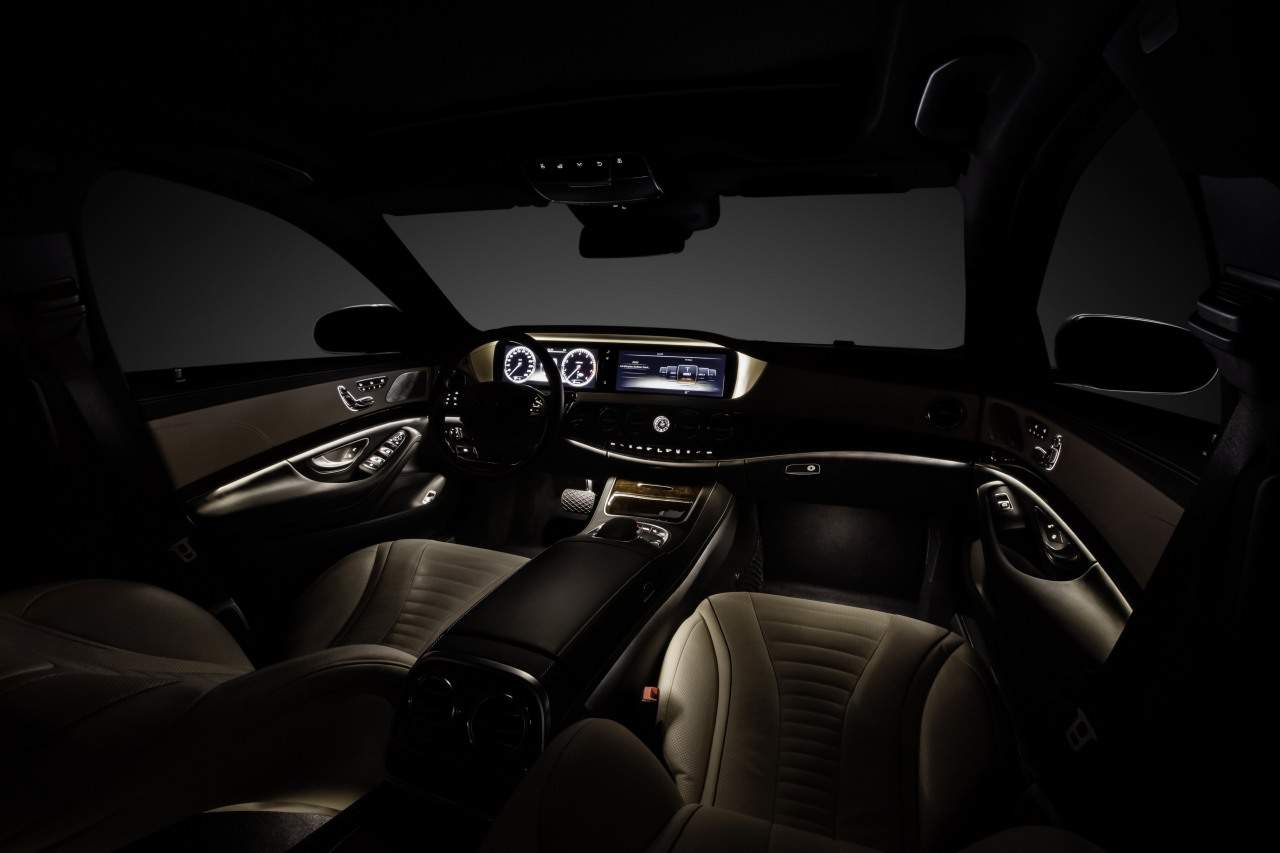
This is why I got so excited when I saw images of the new Mercedes Benz S-Class interior a few days ago. Back in the early 1980s when I was still burning my legs on the seats of my Dad’s XY Ford Falcon wagon, a friend’s parents had a 1970’s vintage Mercedes. Sitting in that car was like being on another planet with views of the earth just outside the window. Those windows were electric, for starters. It had real wood grain trim, big switches and dials for all sorts of functions that the Falcon was missing. It smelled of leather rather than sawdust. That car didn’t try to be better than anything else I’d ever seen. It simply WAS.
The gap between European and non-European vehicles used to be a chasm when it came to interior design and quality. That gap closed over the last few decades and today, both premium and regular brands are selectively guilty of dumping their drivers in a sea of smelly plastic punctuated by generic switchgear.
If this is progress, why is it frequently so unsatisfying?
Form Follows Function is a wonderful mantra but it doesn’t mean things have to be boring. Yes, we like our gadgets in the new millennium but the soul endures. The soul still wants to be encased in something special, not something solely functional.
This is why Spyker’s interiors mean so much to me. It’s why the interiors of old sports cars mean so much to me. Original XJ series Jaguars, too. Even early Japanese sports cars (Mazda RX3, right) had interiors that made an announcement as to why you were in them. The interior of a car should speak at volume about why the car exists.
That’s why I like what I see in these early images of the new S-Class Mercedes interior. It seems that Mercedes has regained its sense of occasion. I look at these photos and to me, they ooze luxury, which is what a Mercedes S-Class should be all about.
Modern car companies from all segments are chasing exterior design efficiency. The shapes are largely the same. It’s the face that they draw on the shape that differs. Modern car companies all do engines and safety pretty well, too.
Could it be that interior design and the quality of materials used will be the last great differentiator between generic and premium cars?
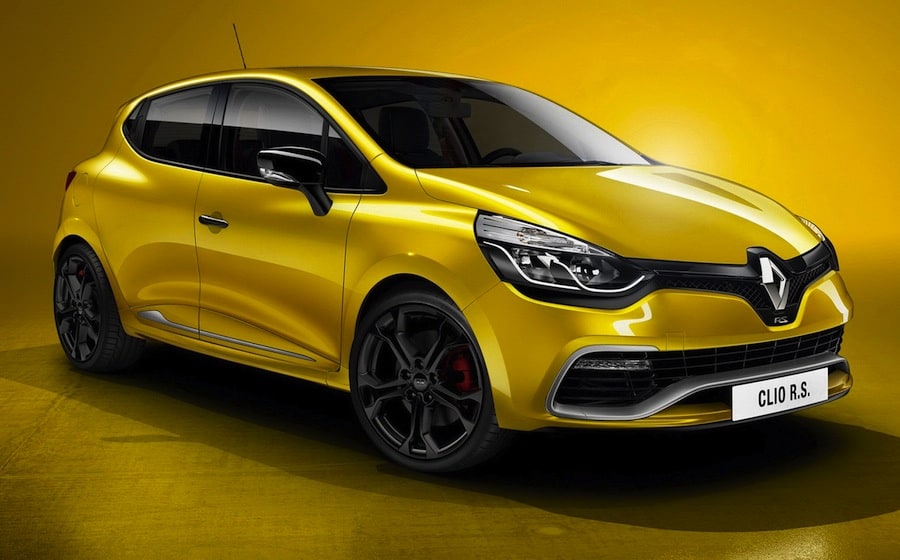
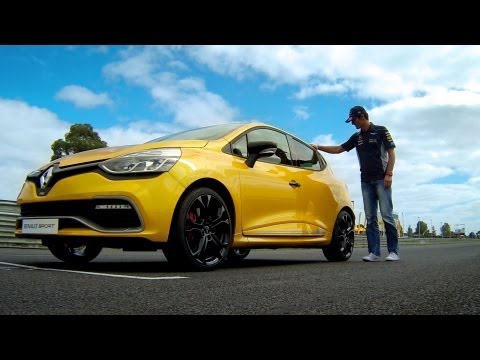
The uniform might say Infiniti but make no mistake – Mark Webber and Sebastian Vettel drive Formula 1 cars powered by Renault. So while Webber was here in Australia for the Melbourne Grand Prix, Renault tapped him to do all sorts of marketing, especially for their performance arm: RenaultSport. Here, Mark Webber drives the new RenaultSport Clio.
Australia is the second-biggest market for RenaultSport cars so the French producer puts a lot of time into marketing here, especially at Grand Prix time.
The new RenaultSport Clio won’t be available in Australia until early 2014 but the coverage of the car is already whetting appetites here and I’m sure pre-orders will be strong. The Megane has got most of the attention in the last few years, but the Clio RS is a hot hatch performance benchmark. Building an all-new one is a big responsibility and changing it from normally aspirated to turbocharged is a decision fraught with danger, but all the reviews so far have been quite positive.
You can see a fair few of the Clio’s party tricks in this short video. The F1 style paddles on the steering wheel, for one, and the pocket rocket’s super-nimble handling as well. The Clio RS comes equipped with launch control, too, so those who are familiar with Webber’s race-start troubles can insert their own joke…………. now.
Enjoy this sneak peek at RenaultSport’s hot new Clio.
——
As an aside…..
I remember a Saab owning mate of mine picking up a Clio five-or-so years ago. I was completely unaware of RenaultSport’s work at that time and gave him heaps for buying a car that sounded just like a famous Australian women’s magazine.
Positive cultural change takes a while to get established.
The wearing of a seat belt by vehicle occupants only became mandatory here in Australia in the early 1970s. State governments in the 1960’s were reluctant to legislate on seat belts. A few vocal minority groups claimed that the data wasn’t conclusive and that such a law would be an unreasonable curbing of a citizen’s liberty.
It’s hard to understate how stupid that sounds in 2013 with decades of data and thousands upon thousands of lives saved. It happened, though. One day we’ll contemplate why it took years instead of just months to clamp down on mobile phones and texting while driving.
You’d think that emerging automotive markets might be a bit smarter in this modern age, that they’d learn from the experiences from others. From a legislative point of view, they have. Seat belts are mandatory in China, which is now the biggest auto market in the world. A few entrepreneurial types, however, are tempting Darwinian fate with some products aimed at preserving that same ‘liberty’ that seat belt dodgers of the 1960’s held so dear.
From the cultural attaché at Car News China comes the seat belt T-shirt.
Fashionista drivers with a penchant for freedom now have a prop to help them avoid the Chinese plod while being free to lurch off balance in a corner and at liberty to launch themselves through their windscreen in the event of a front-end prang.
The modern protector of the people’s freedom needs a little more than that, though.
Modern cars are just riddled with safety devices with one of the most basic ones being the warning bell to tell you fasten your seat belt. What’s really annoying for the automotive Che Guevara is that those little warning bells just don’t shut up! They ring and ringand ringand RING, offering an audible mockery of your free driving experience.
Enter the fake seat belt clip, designed to let you ride belt-free and bell-free at the same time.
Simply jump into your 3-star rated buzz-box (wearing your seat belt T-shirt, of course) and then place your fake clip into the seat belt anchor point and you’re ready to explore the strength of your front windscreen completely unfettered.
The clip comes in multiple designs, too, from your favourite manufacturer’s logo (copyright? what copyright?) to pretty cartoon designs that make being splattered all over the road FUN. Those other freedom lovers are covered, too, with a special six-shooter model that makes your selt belt anchor looks like a holster. Saddle up!
The jewel in the fake-clip crown, however, has to be the bottle opener clip. There’s nothing more liberating, after all, than a few brews with the boys followed by a comfy trip home secure in the knowledge that nothing’s going to stop you from eating your dashboard – except for that pesky airbag!
The Inside Koenigsegg video series concludes today with this final instalment – the gearbox. This one is guaranteed to go over most people’s heads. The overall concept makes sense to me but the technical bits went over my head very quickly and I think it’ll be the same for many people. I get concepts but I’m a technical imbecile. There are still several things you can appreciate, however.
First, even though it’s a video about a gearbox, the fact that it’s Christian von Koenigsegg talking about a gearbox still makes it interesting for some reason. Having watched this series from start to finish, there’s no-one else in the series that can make such technical wizardry so interesting to listen to.
Second, even thought I don’t understand the way everything works in detail, it’s still eminently clear how cutting edge this technology is. That makes the fact that Koenigsegg do all this stuff themselves rather than buying-in the component from someone else all the more remarkable.
This has been a great series to watch. Kudos to the Drive team for putting it together. I hope they stitch all the parts up into one 90-minute video.
——
You can see Episode 1 of this series (Carbon Fibre) here.
You can see Episode 2 of this series (Triplex Suspension) here.
You can see Episode 3 of this series (Perfect Paint) here.
You can see Episode 4 of this series (Interior Surfacing) here.
You can see Episode 5 of this series (Test Drive) here.
You can see Episode 6 of this series (The Brain) here.
You can see Episode 7 of this series (Cargine Camless Valves) here.
You can see Episode 8 of this series (The Engine) here.