Renault and Caterham combine to build Alpine, form slightly familiar acronym – SAAC

Earlier this year, I wrote how Renault/Nissan boss and part-time Napoleon impersonator Carlos Ghosn was my nomination for the Automotive Executive of the Year for 2012*. It was January, actually. I called it early, when Ghosn ruled out bringing Renault to the US.

Since then, we’ve had Nissan unveil their entrant into Australia’s V8 Supercar racing series, a move that’s going to make the series more interesting than it’s been in ages. For a couple of decades now, the series has been fought between just Holden and Ford. Next year, Nissan and a team running some AMG Mercedes Benzes are set to liven things up. A small decision, but a good one.

Today we have another decision from Renault, one that only confirms my thinking. This isn’t a decision that’s going to boost Renault’s business revenue by any large degree. It’s more of a decision of character.

You already know that I’ve got a massive crush on the RenaultSport range of vehicles. Well, I have a feeling my French connection is about to get that little bit stronger:

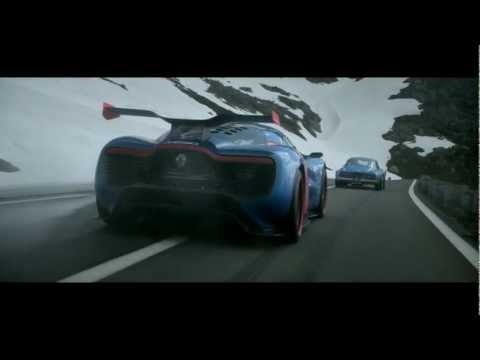
Renault and Caterham Group today announced their decision to join forces in pursuit of a common project: to design develop and build future sports vehicles. This agreement reflects a similar passion and expertise in sports and motorsports vehicles.

The future vehicles will be distinctive, differentiated, and carry the respective DNA of Alpine and Caterham Cars, the automotive division of Caterham Group. They will be built at the Alpine plant in Dieppe, Normandy, in France.

The Caterham Group will own 50% stake in the Automobiles Alpine Renault company, currently 100 % held by Renault SAS. The Société des Automobiles Alpine Caterham, which will be resulting from this partnership, shall be created in January 2013. It will be managed by Bernard Ollivier

This project, which ensures the Dieppe Plant a sustainable future, was made possible thanks to the incentive and to the substantial support and commitment provided by the French State and the Région Haute Normandie which also involved the contribution of Dieppe Maritime.

Carlos Ghosn, Chairman and CEO of Renault:

“This innovative partnership with Caterham embodies a longstanding ambition: the creation of a sports car with the Alpine DNA. It carries both opportunities for the Dieppe plant and the development of its historic know-how.”

Sing to me, Carlos.

Société des Automobiles Alpine Caterham. That’s SAAC for short, but I think we’ll just end up calling them Alpine. You can read a heck of a lot more about this exciting news at the press release.

This partnership in road vehicles will bring some serious motorsport cred along with it. Renault supply multiple F1 teams with engines, one of which is the Caterham team. Of course, Caterham already has plenty of sportscar cred with their range of lightweight roadsters. And then there’s the high esteem already held by RenaultSport for their chassis engineering, which won’t be mentioned specifically here, but only adds to the house that Alpine plans to build.

These won’t be cars for the everyday punter, but they’re going to bring some exciting and more ‘affordable’ competition to the upper end of the sports car market.

Kudos to them, and kudos to Carlos for signing off on it.
——

* As it turns out, I was right back in January. In October 2012, Ghosn was actually named in the Eurostars awards given out by Automotive News Europe. He was credited for the Renault/Nissan’s visionary expansion into high-growth markets at a time when the European market was going quite poorly.

Old vs not-so-old

First of all, I’d like to thank everyone for your advice regarding potential vehicle choices for the USA road trip we’re planning. There were some excellent thoughts there and I’m pondering the vast majority of them (all except Eggs’ offer of money to turn up in Tennessee in a Cadillac!).

Those of you who know me, even just a little, know that I’m very open to some car shopping. In fact, I’m beginning to worry about just how much I’m enjoying this. Is the whole trip just an excuse to buy a car in another part of the world? Honest answer – No, it’s not, but it’s part of the fun, for sure. This trip is all about seeing the United States and catching up with friends there.

But there is planning to be done and part of that includes what we’ll drive. I was hoping to once again tap into the collective wisdom of the experienced.

We will most likely buy a car rather than rent. Renting has its advantages but at the end of the day, what we drive will be a big part of the experience and I want freedom of choice in that. It involves some up-front costs and the potential for being stuck somewhere for repairs, but if we choose wisely and all goes well, we should do OK in terms of finances and much better in terms of experience.

To my current thought dilemma…..

There is a certain romance in doing a trip like this, a great American road trip, in a classic American car. That is, in an old car. Maybe even up to 50 years old.

What I’m wondering is whether or not anyone has recently journeyed this kind of distance in a car that is so old. I mean, usually, when a car gets old and the owner considers it of no use, they sell it to the companies (like Fast Car Salvage NI) that buy scrap vehicles.

However, I might not be like them! I am actually interested to test our aged automobiles. Actually, I am more interested to know whether our respective rear-ends would be able to handle six weeks in 1960’s style seating. I’ve got faith in the engines of the time to make the distance OK. One of the cars I’m thinking of will most likely have received a newer engine, anyway, an upgrade to a bigger powerplant that fits in the same engine bay (a Ford 289 or 302).

Is Mrs Swade going to get absolutely sick-to-death of the exhaust note (again, for six weeks?)

The other option – and the one I’m favouring as I write this – is to go with a more modern car. Still something that’ll make the trip memorable, but with greater comfort and amenity as well as a more efficient and powerful engine and less miles under its belt. Something that’s much cheaper to buy in America than it is in Australia, too. Possibly non-American. Say between 10 and 25 years old.

So, old or not-so-old?

At some risk of duplicating what I asked the other day….. what sort of cars have you actually used on a trip such as this? Would you recommend that vehicle both as a practical choice, but perhaps more importantly in terms of it having the character to be an important part of a memorable life-event?

Which car would you choose for The Great American Road Trip?

We’re thinking about it…..

Coast to coast. From sea to shining sea. All that stuff.

One of the tricks will be choosing the right car. I’m open to renting if the right car is available, but I’m also thinking of foregoing the rental route and purchasing a car to use, then re-sell when we’re done. The logistics will be tricky, I know, but it opens up the choices quite a lot.

So what would you choose?

You’ve got to get from the north-east down to Cali and then maybe all the way up the left coast. Part of me wants to do it in a black screaming chicken a-la Smokey and the Bandit but reliability and efficiency have got to count for something.

It needs to be:

  • Reasonably efficient (but I’ll still take a V8)
  • Comfortable for long sessions behind the wheel
  • Big enough to take at least 1 full suitcase, but not necessarily huge
  • Able to be fixed at a large number of locations if something goes wrong
  • Reasonably simple to acquire and then sell
  • Something you’re happy to have as part of your memories as integral to the trip

I asked Mrs Swade the question this morning and I liked her answer – Ford Mustang. One of the older ones would be romantic, but one of the newer series would be much more suitable. It’s also the most iconic American vehicle according to our poll.

Suggestions?

Catching up with Victor Muller

I haven’t seen my old boss – Saab’s former Chairman and CEO, Victor Muller – since around October 2011. We’ve shared a few quick emails and phone calls since then, but that’s about all.

Prompted by a phone call with another former Saab colleague earlier this week, I decided to give Victor a call and see what’s going on. In doing so I found a Victor Muller who was as driven as ever, as busy as ever, but much more at peace with himself and the world.

There was a lot to recover from, too; much more than the very public battle to try and save Saab Automobile.

Victor lost his father and his sister during the fight to save Saab in 2011. These were the intensely personal parts of his “year from hell”, the parts that few people knew about until after the drama had unfolded. There were health issues, too, such as an emergency operation on his gall bladder in 2010, a procedure that he was still recovering from when I had my informal job interview with him, along with Jan-Ake Jonsson, at the LA Auto Show in November that year.

“For the first 8 months of my daughter’s life, I never saw her” he mentions. She was born in February 2011, just weeks before the factory shutdown that eventually led to Saab’s bankruptcy. He’s now spending his time mostly between the family home on Mallorca and Spyker’s HQ in Holland. That same daughter, now 18 months, is finally getting to know her Dad.

Saab’s dramas still cut deep with Victor but as sad as he is to have seen the company fall, the personal relief at getting his life back is palpable when you speak to him. When I raised the topic of Saab’s new ownership under NEVS, Victor is pleased for Trollhattan and for former employees who might have the opportunity to work at Stallbacka again. Like me, however, he seems lost when it comes to understanding how it is that NEVS are going to do what they plan to do.

“I haven’t come across anyone who is able to explain to me what NEVS does and how they’ll do it, but I’m sure someone, one day, will be able to explain it to me”, he says.

Victor is still dealing with fallout from his time with Saab. There is the ongoing taxation case brought by the Swedish government….

I will fight that to the highest court

….. and the case against General Motors:

We will lodge our defence against their motion to dismiss on November 9 and it will carry on from there.

Most of his time now, however, is spent rebuilding Spyker, the sports car business that nearly went down with Saab.

Continue reading Catching up with Victor Muller

What’s the collective noun for a group of Aston Martins?

Is it a ‘bond’ of Astons?

Maybe a ‘kill’ of Astons, with owners having a licence to kill?

Whatever it is, the Aston Owners Club of Victoria assembled in the northern Victorian border town of Mildura last weekend and a friend of ours, Ian B, was able to snap some photos of this multi-million dollar collection.

What I really enjoyed seeing in this collection was the number of 1970’s Aston V8’s. I had a friend at high school whose father had one of these. For me, strange as it is, these 1970s cars always said “Aston Martin” to me even more than the earlier Astons that made the brand famous. That’s changed, of course, but I’m still quite fond of what you might call the most British of muscle cars.

My thanks to Ian for sending in the photos. It must have been quite a symphony when these cars fired up.

A couple of old Holdens

I’ve written a bit about my fears for Holden’s future given the small role the company plays in General Motors’ global portfolio.

I’ll risk sounding like an old country and western song and show you why I fear for them – the old they don’t make them like they used to thing.

I took some of these photos a few months ago at a small-town art festival in a town called Mirboo North, where they had a parade of locally owned classic vehicles going down the street. Two other shots were just last weekend at a local school fair here in Hobart.

These are some of the old Holdens that I love, the types of family car that Holden built much of their foundation on here in Australia (a lot of it was built on racing, too). Unfortunately, that foundation was built largely before they had serious competition from competent car builders elsewhere. Holden, like GM in America, had close to 50% market share in Australia at one point, before Ford got serious in Australia, and before the Japanese came into the market and ate both Holden and Ford’s lunches.

Anyway, these are some of my favourite old-school Holdens, primarily from the 1960s with a ute from the 1970s thrown in as well.

My personal favourite is the EH Holden from around 1963/4. There are two of them in the gallery below, one dark red and the other blue. I’ll take an EH wagon in storm grey, thanks.

CAR Magazine 50 best from 50 years includes Saab 99 Turbo

CAR Magazine is 50 years old and they’ve just done a special photo shoot featuring their best 50 cars of the last 50 years – including the Saab 99 Turbo.

My guess is that they’ve used Chris’ 99T for this photo shoot, the same black 99 Turbo that Jeremy Clarkson and James May fell in love with on Top Gear.

Fourth row, fifth from the left.

Also, please note that our American, French, German and English poll winners are nearly all present. The only one missing is the VW Beetle (how the Smart got in there when the Beetle couldn’t is beyond me).

In fact, I think the top two in each of our polls have made the grade (minus the Beetle). They would be:

  • America – Ford Mustang, Chevy Corvette
  • France – Citroen DS, Citroen 2CV
  • Britain – Jaguar E Type, Mini
  • Germany – Beetle (missing), Porsche 911

It seems we’re doing pretty well with our assessments.

Holden together – postscript

Some news articles caught my eye in the wake of my opinion on Holden from a few days ago. In that article, I suggested that Holden might end up being too small for GM to keep what is basically a one-country brand.

First, from this week’s autoextremist op-ed:

Let’s face it, GM has Cadillac and Chevrolet. Yes, Buick has its primary role in China and GMC has its place in North America but make no mistake, the future of GM lies in the global success of Cadillac and Chevrolet.

Of course, GM also has Opel (for the time being, at least) but they’ve already introduced the Chevrolet brand into Europe selling a level below Opel. It would be a natural strategy to now push Opel slightly upmarket but European customers are unlikely to let them do that. Opel is Opel. It is to European customers what Chevrolet is to American customers and I don’t think American customers are going to see Chevy as a player in the premium market any time soon.

The entry-level Chevrolet strategy outside the US is to put a bowtie on products designed by GM’s Asian subsidiary, Daewoo. They’re typically made in low-cost countries in either Asia or Eastern Europe and then sold more broadly. Then they add some more sophisticated products based on global designs (Cruze, Captiva, Camaro, Corvette) if the market’s rich enough to pay for them.

Right now, Holden is basically Chevrolet but with a different name. With it’s market share declining, a key dependence on the Commodore for its links to Holden’s past and no commitment to future Commodores beyond the upcoming VF model, it would seem to me that it’s a simple matter of marketing economics that will decide if and when Chevrolet takes over Holden in Australia.

——

I mentioned Opel coming to Australia in my article earlier this week. It’s one of the real interesting developments for GM-watchers here.

Opel are being pitched as entry-level European vehicles. They’re not in the European luxury classes with the usual Teutonic suspects, but they’re definitely being pitched at a level above the basic Europeans and all the generic Asian brands.

So you have Holden and then a half-step up to Opel. Presumably, that’s the strategy.

So what are we to make of the Autoextremist’s claims about Cadillac’s global success also being pivotal to GM’s future? You might think he’s theorising, but he’s not.

From Autoblog, today:

General Motors has created the new position of global vice president for Cadillac. Stepping into that new role is GM senior executive and top lobbyist Robert E. Ferguson, who will oversee global growth and development of the luxury brand.

Ferguson is responsible for marketing, brand management and advertising for Cadillac around the world and is also expected to be responsible for sales in the new year. He will report directly to CEO Dan Akerson, who said of Ferguson, “The Cadillac brand will hit a higher gear under his watch.”

And from Daniel Howes at the Detroit News:

Cadillac is going global — again.

Like an aging rock star, General Motors Co.’s luxury brand is plotting yet another comeback on the world stage, this time led by a telecommunications exec-turned-Washington lobbyist theoretically armed with a strong Cadillac lineup. I can hear the chortling all the way from Munich and Stuttgart, where they’ve seen this show several times before.

Could the ending be any different?

It could, if GM and the masters of Cadillac can replicate effectively the kind of long-term product development discipline and aggressive brand management the automaker and its rival, Ford Motor Co., devote to their lines of full-size pickups. If not — and there’s a decent chance of that, considering past efforts — Cadillac-goes-global will be yet another laugher across the industry.

So once again, GM plan on filling your market with a vehicle for every purse and purpose. It won’t be like the old days, thank goodness, but the extra brand focus needed for a serious tilt at such a plan will likely put little Holden’s future even closer under the microscope.

And Opel? Who knows. The way things are going between GM and the German unions, anything could happen. I think it’s a miracle they’ve made it here at all.

Holden together

Holden has been in the news in recent months and not always for good reasons. Last week, we had monthly vehicle sales reports for September and it was bad news for the General’s Australian division, with Holden being overtaken as the #2 brand in Australia by Mazda for the month. Hyundai is coming hard at #4, too, so there’s no rest for the wicked.

I thought I’d take a deeper look into Australia’s car company. Given that I spent six years writing about – and ended up working for – a brand that was discarded by General Motors, I’m familiar with the warning signs. Could Holden be in danger?

Holden’s Chairman and Managing Director, Mike Deveraux, was asked about Holden’s commitment to producing cars in Australia while in Bathurst for the V8 Supercars highlight endurance race last weekend. He was very positive and very sincere, stating a long-term commitment to both Australian production and the company’s involvement in V8 Supercar racing (a key element to Holden’s marketing and brand identity here in Australia).

I still think there is some cause for concern, however.

Sales

Holden sold 126,095 vehicles for the full year in 2011. That was down from 132,923 sales in 2010. So far in 2012, Holden have slipped another 11% with just over 85,000 vehicles sold.

It gets worse.

Continue reading Holden together

The Volkswagen Beetle is German and iconic

The poll is over and the result is overwhelming – the Volkswagen Type 1, the Beetle, is the most iconic German vehicle.

Here are the top 5 results from the poll, from a field of 25 candidates.

——

Having a fuller field of candidates was an interesting exercise.

One of the reasons I settled on this was because I knew we’d have a big list of nominees this time around. The other reason was to see how I’m doing with my own nominations and I’m pleased that 4 of the top 5 vote getters were nominated on-site. The fact that my fifth nomination only got 1 vote might be a little troubling, but I’ll live with that 🙂

Thanks to all who nominated your favourite iconic German vehicles, and of course to all who placed a vote as well.

Exit mobile version