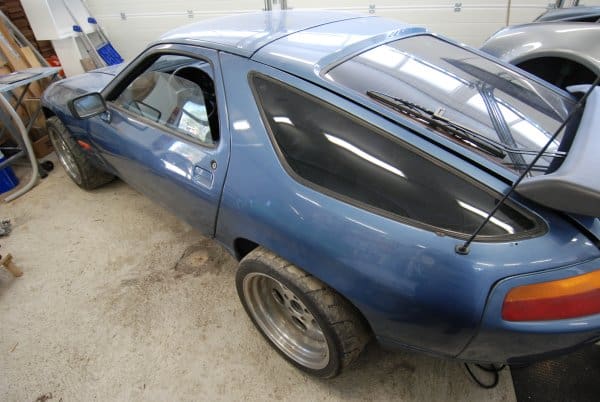
I’m re-posting this to the top so we can get the final votes needed to conclude this poll.
Here is the poll. Once again, the cars are listed in alphabetical order.
Remember – you’re voting for the most iconic German car ever made. It’s the one that you see and instantly know that it’s a German car whether it be design, engineering, whatever.
United States – Ford Mustang
France – Citroen DS
Great Britain – Jaguar E-Type
It’s time to move to the automotive powerhouse that is Germany. Germany is known for robust, quality designed products but for some, they might seem to lack some soul. Creating an iconic car involves passion, flair and a willingness to step outside the square, at least just a little. Some would say that those more emotional, daring traits are not typically German. I say the list below proves that they’re being a more than just a little unkind.
So, can the Germans make an automotive icon? Absolutely. I think you’ll find the choice will be a very difficult one on this occasion.
As usual, I’ve nominated 5 of my own and you can make your suggestions in comments before I post the poll in a few days time.
Here are my five nominations. And because the Germans like order, they’re listed alphabetically 🙂
——
Audi Quattro (Ur)
Audi changed the face of rallying and in many ways, the face of motoring, with the release of the Quattro in 1980. The name Quattro Ur is used to distinguish between the car and the 4WD ‘Quattro’ system used on it for the first time (hence the Ur descriptor).
In rallying terms, Audi blew nearly everyone off the map. The Quattro was the first vehicle with four wheel drive to win the WRC constructors championship, in 1982. From then to now, every vehicle to take the championship has been a 4WD vehicle. That’s revolution. The Quattro took out the constructor championship in ’82 and ’84 and the 1983 and ’84 drivers championships were won in Audi Quattro.
In regular motoring terms, the Quattro made it possible, even fashionable, to have a passenger vehicle with 4WD that could perform well and still offer good ride, handling and reliability. 4WD had previously been simply a utilitarian device for getting big loads across difficult terrain. The Ur changed that forever and the abundance of 4WD vehicles on the road now are all descended from what Audi did.
Sit back and enjoy some Quattro/Rohrl goodness from the magically scary days of Group B….
—
BMW 3-Series
I was tempted to single out the M3 here, but the listing really belongs to the 3-Series over all, because it’s the 3-series that has made BMW the premium automotive powerhouse it is today.
Last weekend I went along to help out at the Club Motori Italia 2012 Domain Hill Climb. It was the 10th Anniversary of the event, which is apparently the only hill climb held in a capital city in Australia.
The Queen’s Domain is a hilltop directly across the highway from Hobart’s city center and a short section near the top of the Domain is used for the hill climb once a year.
Here’s a quick look at the track from the driver’s point of view:
——
Whilst CMI is a club for Italian vehicles, events are frequently attended by owners of other makes. CMI is a CAMS affiliated club, meaning there are plenty of timed events throughout the year. Many drivers join because it’s an opportunity to run their Honda – Nissan – Datsun – Mitsubishi – Subaru or other. CMI are happy to have the participation.
Two things I learned from attending on the weekend:
I need to get something other than my GTV6 in order to participate in events like this. The roof on the GTV6 is quite low and my rather large head – even larger when wearing a helmet – will only fit inside the car if it’s poking out the open sunroof. I was OK about driving this way under controlled conditions on a track, but given the number of trees, logs and ditches lining public roads, it’s just too unsafe.
Having said that, participation is the main priority here. There was a classic and very rare Lamborghini Uracco 3.0 V8 at the event and it was the second slowest car on the day. The owner probably wore the broadest smile, however, simply pleased to have a chance to get the car out and use the whole road. It wasn’t about being fast. It was about being there.
Conditions varied through the course of the day. Things started quite nicely, with cool temperatures but nice blue skies and no wind. Competitors got two runs in those conditions before the rain set in for the rest of the day. Ironically, the only major accident of the day happened in the sunny conditions – a beautiful Alfa GTV6 in silver going off and being stopped by a tree.
The day’s fastest times came in those first two runs, of course. The quickest car on the day was a Mitsubishi Evo 6. There were multiple class winners, too, including a wonderful Alfasud, a tiny Honda S800 and a stunning Datsun 260Z in blue.
I’ve loaded an album of photos on Facebook. Around half of those, plus a few others are also displayed below. Click to enlarge.
A brand attachment survey has just been released in the United States. It covers all brands (plus products that are considered brands in themselves, such as the iPhone) but there were a lot of car brands in the top 100.
The LEAP Index aims to measure how much consumers love brands in a bid to help marketers to predict purchasing behaviour. The poll uses results from a survey of 3500 Americans with annual income of more than ,000 a year.
The automotive companies in the Top 100 and their respective placings were as follows:
3rd – Infiniti
6th – Cadillac
13th – BMW
14th – Audi
15th – Mercedes Benz
16th – Land Rover
21st – Jaguar
24th – Lexus
25th – Acura
26th – Honda
31st – Toyota
32nd – Mazda
33rd – Hyundai
35th – Jeep
41st – Ford
42nd – Nissan
43rd – Chevrolet
53rd – Buick
58th – Chrysler
65th – GM
74th – Dodge
——
Initial observations from my office chair:
Honda gets absolutely no kick from Acura like most other companies get from their premium labels.
Jeep are way lower than expected.
Those German premium brands just love a good huddle.
If the newspaper I got this from is correct and there’s no Volkswagen in the Top 100, then you’ve got to start asking validity questions.
I’m sure Cadillac’s position tells me something about taste, common sense and other things, I’m just unsure as to what it is.
2012 has sucked so much it ought to be called the Year of the Dyson.
I’ve owned four Alfa Romeos.
The first was an early 1980s Alfasud Sprint. It was a terrible car in the way that most early 1980s cars were terrible. Everything was shoddy. It wasn’t the Alfa’s fault, per se. It just hadn’t been looked after and I couldn’t redeem it.
I’ve had two Alfa 33 16V’s. One was absolutely fantastic. I’d buy that car again in a heartbeat. The other wasn’t so good. It was an impulse buy, a poor decision against my better judgement.
My current Alfa, a 1984 GTV6 has been absolutely wonderful……. until today.
I took my car into the workshop yesterday for some standard service work. Fluids, filters, brake pads, a thermostat, etc. Nothing too onerous.
Late in the afternoon I got a call saying there was a problem. It was late in the day and they hadn’t figured the problem out yet, but I should wait an extra day before coming in to pick up the car.
Today, I called them and the car still wasn’t running. I called in at the workshop on my way home and things were much worse than I figured.
When I first bought the car, the hydraulic cam belt tensioner had a small fluid leak. A common fix is to replace the hydraulic part with a mechanical tensioner from the later model Alfa 164. I got this done. It seems there’s been a problem with this part – we don’t know why yet – which has led to the belt being loose yesterday when the mechanic tried to start the car.
I should emphasise here that there have been no problems at other times. The car has driven beautifully for me and drove perfectly when I took it to the workshop.
When the mechanic had done his work, run the car briefly and then shut it off, there was a loud clicking sound. Whatever that was, the end result is that the car wouldn’t start afterwards. The mechanical tensioner seems to be involved and the working theory right now is that the belt got loose enough on the re-start for the belt to skip a few teeth, thereby putting the timing out. (I think I’ve got that correct)
End result – cylinder #3 now has bent valves.
We can go ahead and replace the valves, but there’s a deeper problem here that needs to be solved. What caused the tensioner to fail on this occasion? It’s still in one piece, it’s still in position and it’s an original part that doesn’t appear to have any defects.
Steve’s giving it some more thought and I’m fretting over the potential argument that might ensue about cost and responsibility. These are good guys and I like to believe that I’m a good customer. There is an element of ‘shit happens’ here, but on the other hand, I delivered a functional car for routine service work and I’ve only ever followed their advice on repairs and maintenance (including the installation of the tensioner).
I just want my car back and running again. It’s been such an enjoyable drive, everything I’d hoped for when I bought it, and more.
Top Gear used to say that you couldn’t call yourself a true gearhead until you’d owned an Alfa Romeo. It’s not a theory I subscribe to, but I can understand why they say it. It’s the exhilaration and the frustration. I guess I’ve got both of those in plentiful supply with this car.
Here’s how I’ll try to think of it over the next few weeks. I really hope it doesn’t take longer than that!
The poll is over and the winner can now be declared – the Jaguar E-Type is (un)officially the most iconic car from Great Britain.
Polling took an interesting turn in turn with the way the world turns.
The Mini shot into the lead in early polling – when it was basically just Europe voting – but once the United States woke up a few hours later, things changed. From then on, the E-Type took what turned out to be an unassailable lead.
It’s interesting because through comments, Eggs linked to a recent AutoCar poll that crowned the Mini as the best British car. AutoCar is a British magazine, of course, which would tend to back up the theory that the Mini would be supported in Europe (and then there’s the general popularity of small cars in Europe, too).
On the other hand, small cars have never been big in the US. Whilst the E-Type (XKE) definitely sold in good numbers in the US, I’m not sure if the original Mini ever sold much there at all. They might have sold a few in pairs, as roller skates.
Bottom line: I think voting went largely along continental lines. The Mini and the Jag were THE two prominent polling vehicles in the field, but the Jag simply had more supporters in the end. As you can see, below, I voted for the Roller. Ah well.
We’ve had my nominations (thanks, Lance) and we’ve had your nominations.
It’s time to vote.
I’ve added 3 cars from your nominations, based on how instantly recognisable they are both as vehicles in their class and as simply being typically British. This is, of course, according to my own flawed Swadeology radar. Please forgive me if you don’t agree, but I think we’ve ended up with a very iconic British list.
The vehicles added to the original 5 nominations are:
It’s time to move our automotive icon focus across the channel and take a look at the Best of British.
As is tradition with this series, I’m providing the first 5 nominations here on the site and you readers have to make a case for other nominations in comments. I think we’re going to end up with quite a long list. But remember, we’re looking for the most iconic British car – the most instantly recognised as a piece of British design, engineering or ingenuity. We’re not just looking for personal British favourites that don’t have standing as an icon of the industry.
Whilst considering this post, I figured there were four indisputable walk-up starts. The fifth would always be a matter of contention so rather than cop the blame myself 🙂 I’ve asked the opinion of a British car guy – Lance Cole. Lance has already written one best-seller on the Saab 99 and 900 and he has a new Saab book coming out in just a few weeks. He’s also edited automotive encyclopaedias, written extensively for newspapers and websites about both motoring and aviation (he’s a keen glider pilot, amongst other things) and is just a general, all-round good bloke.
So…. I’ve provided the first four selections for British icons. Lance has provided the fifth. It’s up to you to provide the rest.
I was at a school camp when I was about 14 or 15. A small group of us were talking to one of the camp leaders about cars (what else?) when we got on to the subject of grip.
The camp leader, a guy in his late 30’s by my estimation, stated quite convincingly that skinnier tyres were more conducive to better grip because they transferred the weight of the vehicle to the road via a smaller contact patch. A fatter tyre had to distribute that weight over a larger contact patch and so would have had a smaller amount of pressure-per-square-inch (or centimetre).
Now, I know that wider tyres are more conducive to better grip. I know it from personal experience and simply by observing the wheels and tyres fitted to vehicles that are designed primarily for high performance.
And yet the simple logic of his argument still sticks with me to this day.
Has anyone got a simple, layman’s terms explanation as to why his argument doesn’t work? Why do fatter tyres offer more grip than skinny tyres when the pressure per-unit-of-area on the contact patch would be greater for the smaller tyre?