Next weekend will see the thirteenth – and final – Swedish Car Day run by my mate Pierre Belperron on behalf of the Village Auto Group and what used to be Charles River Saab.
Pierre was kind enough to invite me to the 2010 Swedish Car Day and I can testify to it being an absolutely outstanding event. There are always plenty of fantastic Saabs on hand and quite a few Volvos as well (if you’re into that sort of thing 🙂 ).
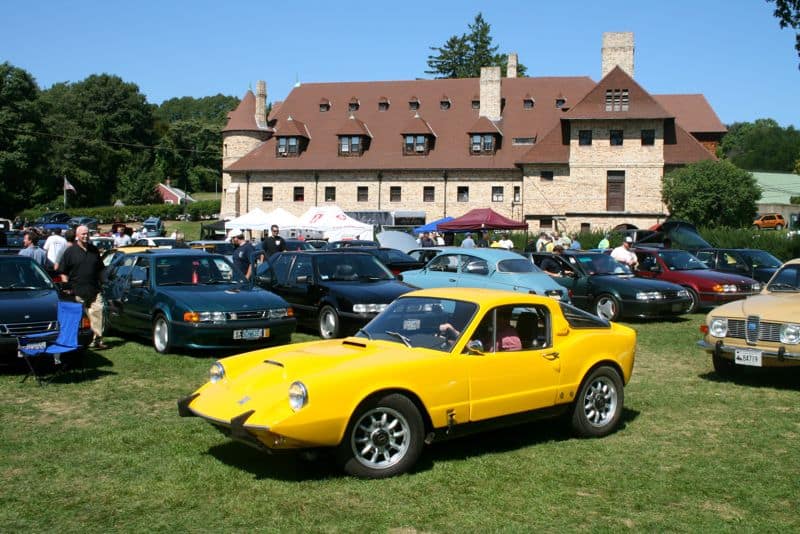
The 2012 Swedish Car Day will be held at the Larz Anderson Auto Museum in Brookline, Mass. As you can see from the photo, the Larz Anderson is an amazing venue and a fitting place for such a distinctive gathering of vehicles.
As well as its regular exhibits, the Museum is currently holding an exhibition of British vehicles to celebrate the appreciation American soldiers developed for them when stationed across the pond during World War II. So if you’re into that sort of thing, you’ll get double the pleasure from your visit.
Pierre has been the driving force behind Swedish Car Day since its inception. He’s running this year’s event, too, even though he’s now changed employers and is working for a Suuby dealership in New Hampshire. That’s how much this day means to him. Of course, the hosts for the event are still the Village Auto Group, which in part comprises Charles River Saab, Volvo Village of Norwell and Boston Volvo Village.
With Pierre now working elsewhere, it’s unknown – some might even say doubtful – that there will be a Swedish Car Day XIV. This could be your last chance to attend this event, as well as being your last chance to support Pierre and the incredible service he’s given Saab owners in the north east over an extended period of time.
The SCD I attended back in 2010 was a magic day with over 200 vehicles in attendance, the most wonderful people and hospitality and absolutely perfect weather. I can’t promise the last one, but I know the cars and the people attending will be first class.
I really hope that all Saab owners in the north-east have got Swedish Car Day 2012 in your diary. My only regret is that I can’t be there myself to share in the fun, and see off Pierre’s tenure in style.
Swedish Car Day 2012 is on next Sunday, August 26.
I received this query earlier today with permission to share it on site. Your input would be welcomed.
Scenario: You are the owner of a 10 year old car which you bought second hand 2 years ago from a used-car lot in Melbourne. From day 1 of your ownership it has had an annoying symptom of being difficult to drive off the mark when cold. Sort of sputters and bogs down when you let the clutch in, almost to the point of stalling, often necessitating starting the process from scratch. Once underway it is pretty much fine, especially after the engine warms up.
The car doesn’t use excessive oil and returns good fuel consumption. The symtom only manifests in 1st or reverse gear and is most noticeable when cold. The local dealership for the brand (not SAAB, I should add) haven’t been able to reproduce the fault despite having the car overnight for a cold start-up and it hasn’t thrown up any fault codes when plugged to their diagnostic computer. (I suspect it is dumping too much fuel into the inlet side for some reason, on start up but this has yet to be proven).
You are now at the point of sale of the above car to a purchaser who has test-driven the car and placed a deposit on it.
Question: Do you disclose the above or not? What would you do?
——
Personally speaking, and before things got to the deposit stage…..
I probably would have made sure I was along for the test drive and if the car sputtered at that time, I would have made mention of it then. I would have described how it had been checked out and provided the name of the technician who worked on it and mentioned how it seems to be a cold-condition affliction that they couldn’t pin down. The car would have hopefully backed up this testimony by running fine as the drive progressed.
As it is, it sounds like the buyer has driven the car and is happy enough to proceed so I’d probably let it go. I’m not sure, but I don’t think most people will expect a 10 year old manual car to be completely smooth off the line when cold, anyway.
The one caveat on that is whether or not the potential buyer drove the car ‘cold’. If they’ve experienced it cold, all well and good. If the car wasn’t test driven in circumstances that would lend it to revealing the problem, then maybe mentioning it now would be a good idea.
——
From my own experience, I’ve appreciated it when sellers have told me of issues or potential issues. It gives me the chance to weigh up whether or not I’m happy to live with it. Occasionally it can also lead to some further negotiation on price, but not always.
On the other hand, I’ve occasionally bought cars with problems that weren’t disclosed. I haven’t tried to return them or negotiate money back, but let’s just say the seller didn’t make my Christmas card list.
Don’t beat yourself up over it, but “do unto others…..” etc.
The story continues, via press release from Spyker Cars.
——
Zeewolde, the Netherlands, 6 August 2012, Spyker N.V. ( Spyker ) announced that it has filed a complaint against General Motors Company ( GM ) in the United States District Court of the Eastern District of Michigan today at 08.00 AM EST. Spyker filed the complaint in its own right and on behalf of its 100 percent subsidiary Saab Automobile A.B., which was declared bankrupt on December 19, 2011.
This lawsuit seeks redress for the unlawful actions GM took to avoid competition with Saab Automobile in the Chinese market. GM,s actions had the direct and intended objective of driving Saab Automobile into bankruptcy, a result of GM’s tortiously interfering with a transaction between Saab Automobile, Spyker and Chinese investor Youngman that would have permitted Saab Automobile to restructure and remain a solvent, going concern. The monetary value of the claim amounts to US$ 3 billion (three billion US dollars).
Since Saab Automobile is in receivership and hence incapable to contribute to the costs of litigation, Spyker and Saab Automobile have entered into an agreement pursuant to which Spyker will bear the costs of such litigation in exchange for a very substantial share of Saab Automobile award when the proceedings are successful. Spyker has secured the financial backing required to see the lawsuit through to the end from a third party investor.
Victor R. Muller, Spyker’s Chief Executive Officer said:Â Ever since we were forced to file for Saab Automobile’s bankruptcy in December of last year, we have worked relentlessly on the preparation for this lawsuit which seeks to compensate Spyker and Saab for the massive damages we have incurred as a result of GM’s unlawful actions.
We owe it to our stakeholders and ourselves that justice is done and we will pursue this lawsuit with the same tenacity and perseverance that we had when we tirelessly worked to save Saab Automobile, until GM destroyed those efforts and deliberately drove Saab Automobile into bankruptcy.
——
VERIFIED COMPLAINT
This lawsuit seeks redress for the unlawful actions of General Motors Company (“GM”)
to avoid competition with Saab in the Chinese market. GM’s actions had the direct and intended result of driving Saab Automobile AB (“Saab”) into bankruptcy by tortiously interfering with a transaction with Chinese investors that would have permitted Saab to restructure and remain a solvent, going concern. In support of their claim for tortious interference with economic expectancy, Plaintiffs aver as follows:
Note: this series is intended to address the basic fundamentals of a social presence for a car company – in this instance, Alfa Romeo. There will always be specialised social campaigns involving all sorts of emerging technology. They’re not addressed here. This is all about building a fundamental and ongoing connection online over the longer term.
And now, the final instalment, where I’ll outline how I’d structure Alfa Romeo’s social media basics if I had a say in it.
——
My theory on social media for car companies is based on having three separate levels of internet property to maintain – stores/feeders, the blogging hub, and distributors.
Last week I wrote about my Subaru Brumby problems, with the car proving very difficult to start in cold weather. The car started OK most of the time if it was used day-to-day, but give it a two or three day break and it just wouldn’t start.
Last Friday I flattened the battery trying to get the car started, so I put the battery on charge all weekend as I had it booked in with my mechanic for Monday morning. Sure enough, as is usually the way with intermittent problems, the car fired up first-turn on Monday morning.
It started with no problems Monday lunchtime.
It started again with no issues on Tuesday morning. I’m sure my mechanic was thinking I was a complete dimwit by this stage.
I had a chat with Steve and asked him to leave the car alone for two days. My theory was that his tests on Monday and Tuesday didn’t replicate my problems for two reasons: a) because it wasn’t as cold on those mornings as it has been on the mornings I’ve been having problems, and b) because I usually have problems after the car hasn’t been running for a few days.
So he left it.
Thursday morning has just passed by as I write this – 48 hours since its previous successful start – and I’ve never been so pleased to report that my car wouldn’t start today!!
This morning was indeed a cold one, at just 2 degrees C. The car hadn’t been run for two days and sure enough, when Steve tried it, the Brumby wouldn’t start.
He’s traced the problem to a faulty ignition module, which from a quick few minutes of Googling means that the coil isn’t getting the signals it needs to send the spark to the distributor. Apparently these are more prone to faults with heat rather than cold, so there could be more to the story but for now, he’s replacing the IM and hopefully that should do the trick.
So, it’s tentative good news for the moment; no need for a carby service or replacement and all going well, my Brumby should finally deliver the reliability it has lacked so far. Perhaps it’ll run a little smoother, too.
When I was at Saab I was amazed at some of the services we were outsourcing and how much they cost. My perception was that the costs associated with this were negotiated to some degree, but mostly just accepted. It seemed to have become an ingrained behaviour, most likely under GM’s ownership of the previous 20 years. Saab’s ownership changed, but the culture of the company didn’t change nearly enough.
Or maybe this is just the way it is in the world of big, global businesses.
Ewanick famously saved $48,000 by using just $2,000 of the $50,000 allowance he received to redecorate his Detroit Renaissance Center office by going to Ikea rather than ordering pricier furniture.
OK, so he’s a top tier executive, but $50K just to redecorate an office? Kudos to him for not using it all.
If you’re wondering why some car companies struggle to be profitable, then rest un-assured that there’s quite a bit of waste going on in most of them.
At Saab, we had a cost-cutting program called Cheetah in our final months. One could rightly say that it should have happened in the first months of Spyker’s ownership rather than as an attempted salvage operation at the end. There were indeed some wasteful spending decisions well before then.
I remember reading some complaints about the PhoeniX concept, which I never thought was a valid complaint for people to have. PhoeniX was absolutely appropriate for a company looking to re-stamp itself on the automotive scene after all the negative news surrounding the GM sale. It got Saab plenty of magazine articles and covers, too.
But I did wonder about the big ‘Independence’ party that happened in the factory just before production stopped in 2011. It seemed a little bit presumptuous and the way history has turned out, it seems suppliers probably didn’t appreciate it, either.
They might take solace in the fact, though, that as far as I know there weren’t any $50,000 office decorations.
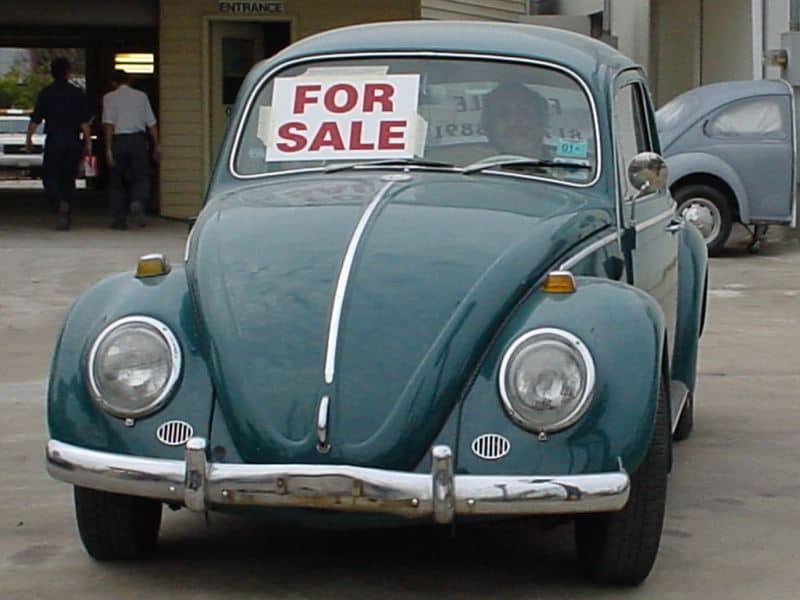
I hate admitting this. I’ve rarely bought a bad car over the years, but my recent purchase of a Subaru Brumby is making me sweat, swear and wish I’d never set eyes on this little runabout.
I bought this car because a) I wanted a ute, and b) the Brumby has a reputation for being bullet-proof both in terms of longevity and reliability. The prices for these cars on the used market back this up. I knew that I paid a little too much for mine when I bought it, but it had very low mileage (just 100,000 kms) and it had power steering fitted (which was never an option for this model) so I took the plunge.
It’s been an exercise in frustration ever since.
First, the water pump failed the day after I bought it. Fair enough. Water pumps give up eventually and this could have simply happened at a bad time. Plus, it was relatively inexpensive to fix at around $90 for the pump itself.
I’m starting to get the feeling, however, that the water pump failure was evidence of a lack of maintenance in general by the previous owner. The fact that it’s got just 100,000kms on it is great, but even Subarus need maintenance during that 100,000km period.
Right now, I’m dealing with a jammed door lock that won’t let me lock the car. I tried to fix this last weekend but no matter how hard I tried, I couldn’t get the window winder off to get behind the door card. Damn you, special tools! I’ll get that one sorted.
But my biggest bugbear is the fact that the car simply won’t start on cold mornings. Once it starts, it’s fine. Getting it started, however, is frustrating beyond belief.
Despite being a car made in the mid-1990s, it’s based on late 1970s Subaru tech. That’s means a carburettor. And a choke. All of a sudden I have this sinking feeling that the carby’s going to need either servicing or replacing and when you’ve already paid over the odds to buy the car, the thought of having that extra spend is very unsettling.
Here’s what I’ve discovered, for those of you skilled in diagnosis:
Fuel, Air and Spark are what’s required to get combustion. Air isn’t a problem and a new air filter was fitted when I had the car registered here a month ago.
Spark shouldn’t be a problem, either. New plugs and leads were fitted last week, and a new battery was fitted just before I bought the car.
That leaves fuel. I’ve had to pour some fuel directly into the carby on previous start attempts and that’s worked before, but this morning (with the battery wearing down from previous start attempts) even that didn’t help. My proposed course of action now is to move from least expensive to most expensive – fuel filters, fuel pump (though it works fine once the car’s started, so I’m doubtful on that) and then perhaps a carby service or replacement. An upgrade to a Weber carb is a popular one with these models.
The last two mornings, I’ve tried unsuccessfully to get the Brumby started in low temperatures (around 4-6 degrees C). The really frustrating part is that when I get home at around 5pm, after a day around 13 degrees C, the car starts just fine. It’s like a grumpy teenager that doesn’t want to get up when it’s cold.
On those non-start mornings, I’ve ended up having to open the garage and take my Alfa GTV6 to work instead. Who’d have thought a mid-80’s Alfa Romeo would be more reliable that a 1990’s Subaru?
I really, really want this car to live up to its reputation. My problem is that I’ve already paid a little too much to buy it and I don’t want to spend a whole bunch on making it what it should have been in the first place.
I have a feeling there’s a carby replacement in my future. Air and Spark should both be OK. It can only be the fuel and once the car’s going, that’s fine. It’s getting fuel to the combustion chamber on a cold morning that seems to be the problem. Or am I completely off base?
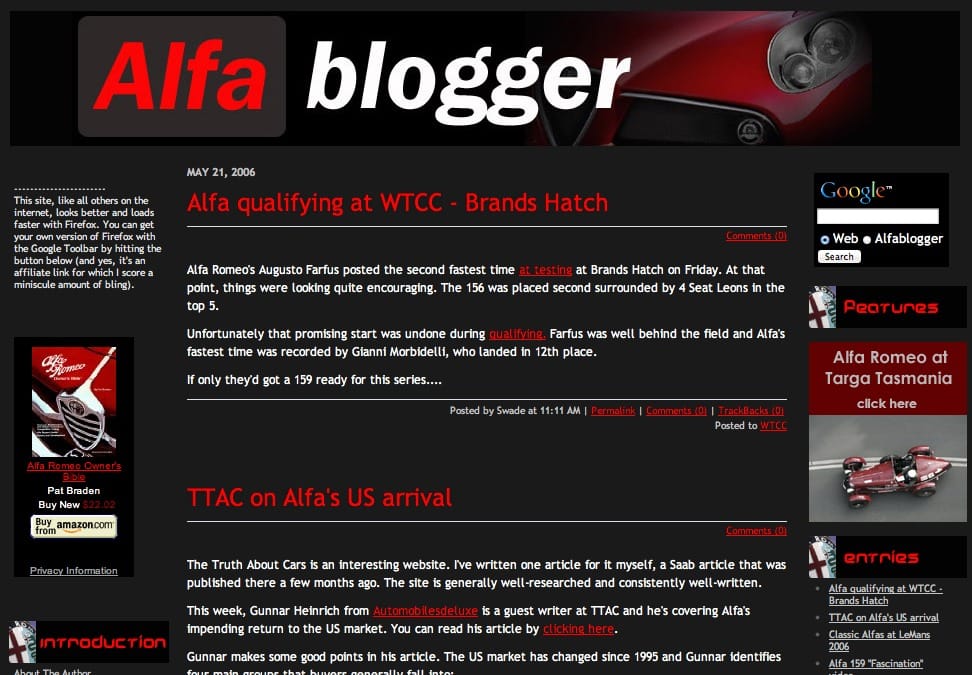
This is a long one and not many people are going to read it. That’s OK. It’s mostly a mental exercise for me and if the people at Alfa Romeo are doing their job properly, it’ll come up on their feed and they might be interested, too.
——
This question about Alfa Romeo and social media is more relevant than you might think.
Alfa Romeo is in a period of transition. Its parent company, Fiat, recently acquired a majority stake in Chrysler and the consequences of this acquisition are significant. There are platform sharing consequences to start with, but even more urgent is the fact that Alfa Romeo is scheduled to re-enter the US market in the near term after an absence lasting several decades.
Sure, they’ve been scheduled to re-enter the US market a number of times, but with Fiat now having a US dealer network at its disposal, only a sale of Alfa Romeo (which has been rumoured, and denied) would stand in the way of Alfa finally making a US comeback in the near term.
Providing they get their product mix right – product is always king in the car business – they’re going to need to reach out to customers in a meaningful way. The Alfa Romeo name is still known in the US. You can even say it’s still respected there. They have a foundation. They just have to build the right structure on it.
So here goes….. my thoughts on how Alfa Romeo could do better with their online social presence and build customer loyalty.
Part 1 will take a look at Alfa Romeo’s current social media assets.
Part 2 will introduce what I think is the centerpiece of a successful social presence for a car company.
Part 3 will look at the structure you can build around that hub.
——
A quick look at Alfa Romeo’s social presence
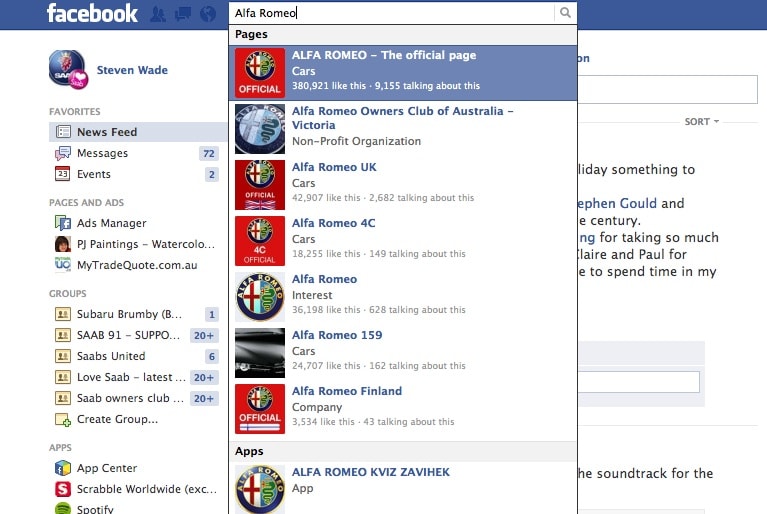
A quick search on Facebook under Alfa Romeo is a good early indicator of some of the mess going on here.
—
Alfa Romeo currently has numerous official pages on Facebook. There’s the official page from company HQ in English and Italian, but you can also see separate model pages for the 4C and the 159 as well as country pages for England, Finland and other spots as well.
The Finnish page is only updated sporadically. The Brits do a much better job with some great, interesting content in place, as does the HQ page. I am sure there are other national pages to be found, but the quick search above provides enough results to point out the flaws.
The 159 page listed above is unofficial but the 4C does indeed have an official page, as does the MiTo and Giulietta.
Twitter – there are more Alfa Romeo national accounts on Twitter than you can poke a stick at, but no official account from HQ that I could see.
Youtube – There are several national Alfa accounts serving up videos of varying quality. There are also accounts for the MiTo and Giulietta. Once again, as with Twitter, there is no official Alfa Romeo centralised account on Youtube.
Tumblr – Nothing official from Alfa Romeo, but there are plenty of Alfa pics being shared by others.
Google + – There’s an Alfa Romeo UK page prominent in search results, and an “Alfa Romeo Cuore Sportivo” page as well, though that one looks unofficial.
There are other services I could check – Pinterest, Instagram, even professional services such as Linked In. Those listed above are the main ones right now, however, and this post is intended to cover the basics rather than the intricacies of a full social campaign.
So what’s wrong with all of this?
I have mixed feelings about Facebook to begin with.
To me, interacting with a company on Facebook is sort of like seeing a street performer. You get small bits and pieces of entertainment and you might even find one or two of them memorable. More often, though, it’s five minutes of your day where you’ve been entertained and you’ll forget who it was just as quickly as the details of any other five minutes of your day.
Personally speaking, I’d rather spend 2 hours in a theatre with Billy Connolly. People will happily take small bits of entertainment but given the choice, most would choose substance over snippets in the long term.
And that’s what riles me about Facebook. Yes, it’s where a company’s customers hang out so they have to be there, but I question the value that companies get from their Facebook presence (and I’m absolutely flabbergasted by the sums of money companies like General Motors are willing to throw at agencies to maintain their presence there – $20 million, in GM’s case!)
When a car company communicates with fans on Facebook, they’re competing for that fan’s attention in what is ultimately a losing battle. Yes, I like Alfa Romeo’s product but if I’ve got 10 minutes in my afternoon to check Facebook and there are three photos of my new great-nephew, Henry, then I’m spending my time with Henry and other friends every time. People do interact with companies like Alfa Romeo when they’ve got more time, but it’s mostly a short-form exchange and each one has relatively little ongoing value.
So, in my opinion, the whole platform is flawed to begin with. You can double the importance of that flaw if you’re in the car industry because it’s a long-cycle business that needs long-term loyalty from its customers.
Take that flawed platform and add in Alfa Romeo’s fractured approach. First, there are short-form stories that don’t build relationship with fans, as well as numerous national pages (UK, Finland, etc) and model pages (e.g. MiTo, Giulietta). All of a sudden people are getting their short-form Alfa Romeo content from numerous places, with varying emphases and in most instances, very little coherence.
The good part is that they’re reaching people in some way. The bad part is that it can lack strategy, it does much less than it could to build fan loyalty and it can be devoid of a uniform marketing or PR message.
I’ve focused on Facebook here because it’s the most prominent, the most visible of Alfa Romeo’s social efforts. It’s their centerpiece, despite the existence of the (IMO) redundant “social net wall”. In the next part of this series, I’ll talk about the beginnings of what I think should be their social hub, what they can do with it and how they can use other platforms like Facebook to support and extend their interaction, rather than be the entire basis for it.