Support Jim Coggs at the Pan Mass Challenge

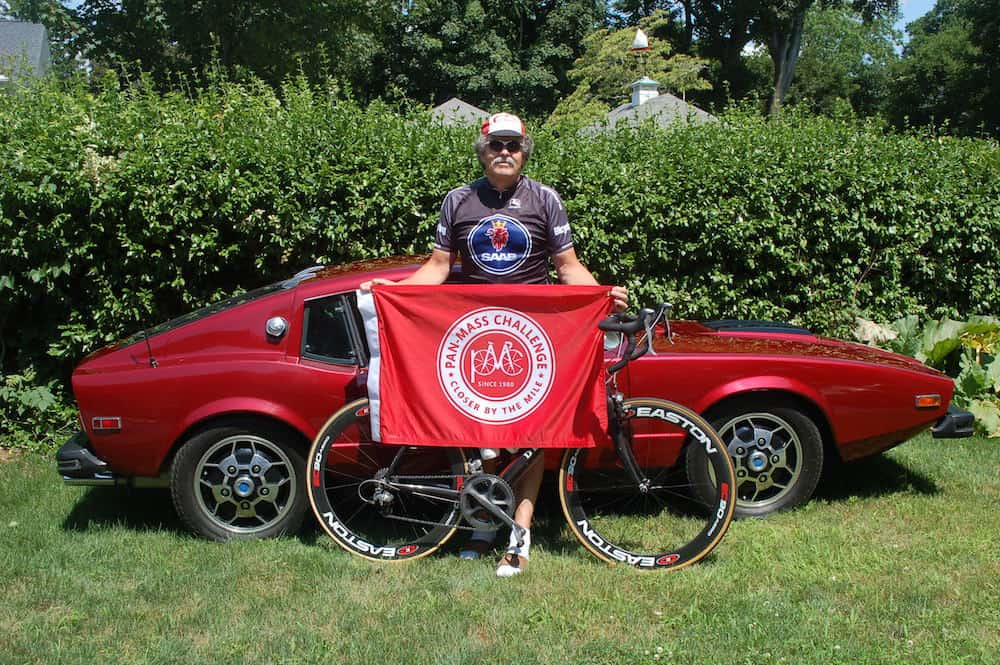
It’s that time of year again. For a few years now – dating right back to the Saabs United days – I’ve been supporting Jim Coggeshall in his bid to raise funds for the Dana-Farber Cancer Institute in Boston, Mass.

Readers of SU and Swadeology have been gracious contributors to this cause in the past and I hope you can be again this year. And for the record, I’m not asking you to do anything I wouldn’t do myself. I’ve already kicked in $250 this year. I lost my Dad to cancer in 1985 and have seen numerous family and friends touched by this disease since. This is a great cause.

I’ll let Jim tell the story because he’s invested in this. He’s relied on these guys to save his life more than once, the most recent time being within the last 12 months.

Click here to support Jim’s ride: http://www2.pmc.org/profile/JC0540

Here’s Jim:

——

Dear Saab Friends,

For the past three years I have participated in the Pan Massachusetts Challenge, a 200 mile cycling fund raiser for Boston’s Dana-Farber Cancer Institute. Bicycling long distance is an accomplishment in and of itself. But real glory comes from channeling that physical, mental and emotional energy into a goal greater than athletic achievement.

I’ve always had my Saab friends covering my back as I try to fulfill that goal.

Four years ago I was told I had testicular cancer. In the following two years I was treated several times for skin cancer. Last fall I had surgery for aggressive prostate cancer. Thanks to the lifesaving work done at the Dana-Farber I’ll be participating in my fourth PMC in two weeks. And I’m so happy to say I’ll be doing it cancer free for the first time ever!
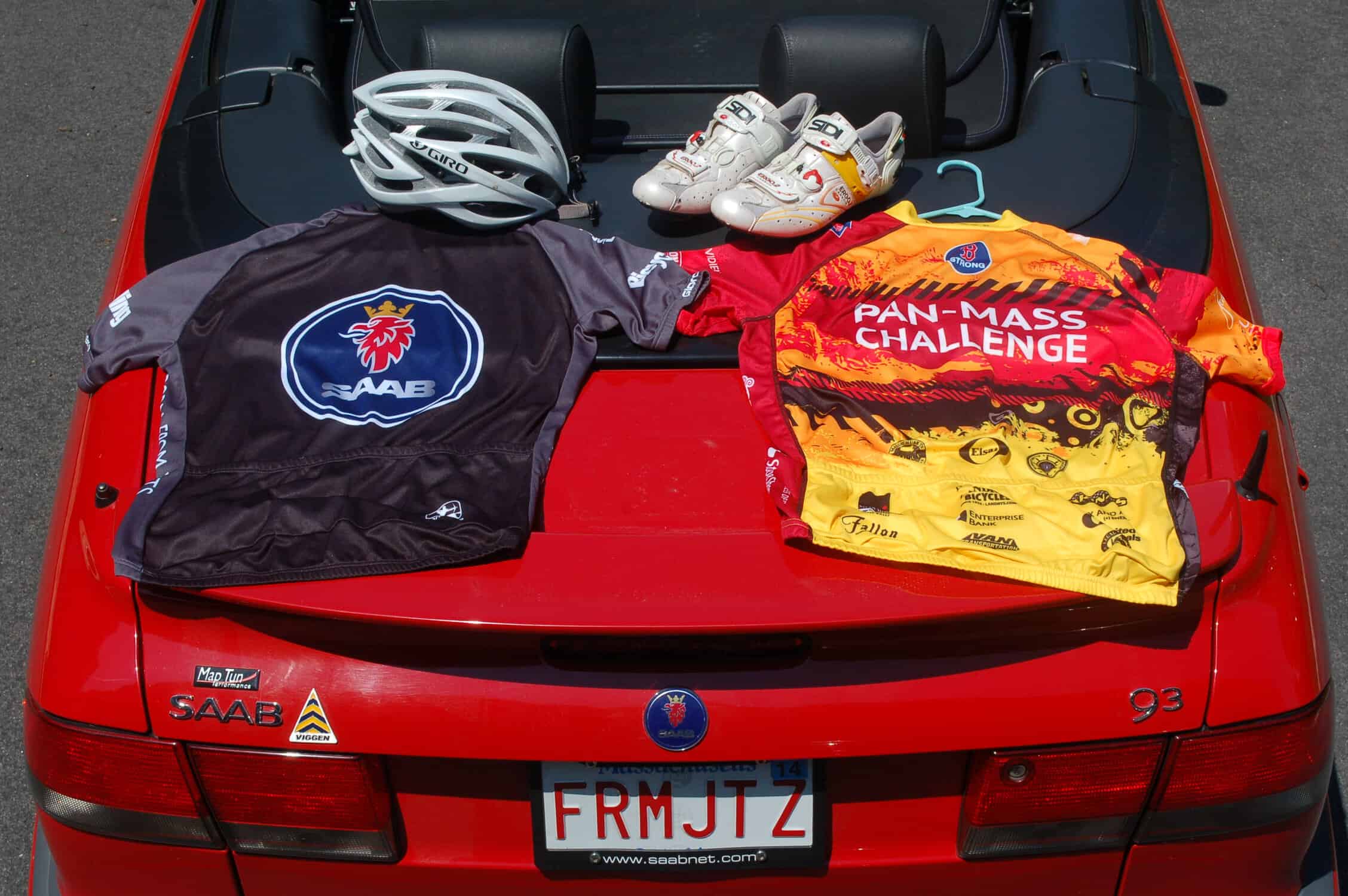
Last year the PMC organizers set a goal of raising $37 million dollars thru rider sponsorship. We reached that mark and blasted right past it with an extra million. The PMC never rests on their laurels and we riders are tasked with raising $40 million in 2014. Got to say, that’s not bad for some folks out for a weekend bike ride! We are in fact the world’s largest single event medical fund raising event. Best of all, 100% of the money pledged to a rider goes directly to the Dana-Farber. Since 2007 the event overhead has been covered by additional corporate underwriters and a rider entry fee. To do my part I pledged a personal commitment to raise $7,000 which will bring my four year total to over $32,000.

It’s a tall order so I hope I can count on you to help me. My friends in the Saab community have been a significant source of support. I have received thousands of dollars in pledges from you, often from people I have never physically met. I’m pleading for your continued support to help others have the same positive result I have been blessed to have. With every mile we pedal, Pan Massachusetts Challenge riders bring cancer researchers closer to a cure, but it’s just idle work without your support.
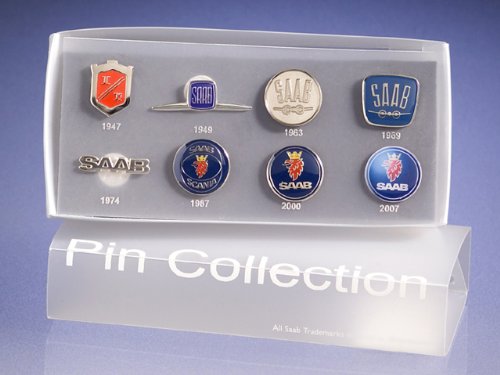
To entice donations from the Saab community I will be raffling off a set of very hard to find commemorative logo pins. This is a $125 value – if you can find a set!

Every $10 donated gets you one chance to win. Donate and double your chances. Donate $99 (get it?) and I’ll call it an even 10 chances! Just mention Saab in your donation comment.

Click here to support Jim’s ride: http://www2.pmc.org/profile/JC0540

I can all but guarantee that not a single person reading this has been unaffected by cancer, be it themselves, a family member, or close friend. It is a disease that takes a tremendous toll on not only the sufferer, but on all those close to them. Cancer is not cured by sharing somebody’s pretty colored ribbon post on Facebook or by throwing loose change in a jar. Cancer research is serious business and it takes serious money. Does it work? I’m what the PMC calls a “Living Proof” rider. Last year there were 500 other cancer survivors among the 5,500 riders. I’d call that a success. How wonderful it would be if we could give more people an optimistic prognosis. I truly think that together we can.

In closing I’ll recap what I say every year (although the list unfortunately seems to keep getting longer):

In order to fight cancer:

  • I gave my left nut.
  • Had chemo poison pumped through my veins.
  • Had 12 “radiation rides” in a CAT Scan machine and 18 chest X-Rays.
  • Had skin sliced/peeled from my face, not once but twice. Note: Wear sunscreen!
  • Had a biopsy spear gun shoved up my butt. Take 12 shots and win a prize!
  • Had an MRI of the prostate taken, from the inside. Hint: It involved a balloon I never saw.
  • Had my prostate surgically removed by a six armed robot named Da Vinci.
  • Just had another operation to put things the robot bumped back into place.

I rode a bicycle 200 miles, three times, raising nearly $25,000. And I’m doing it again – cancer free!

What can you do? How about a pledge at the link below:

http://www2.pmc.org/profile/JC0540
Bleeding Heart Lefty: Australia and Climate Change

Today, the Australian parliament repealed the country’s carbon reduction legislation. It has effectively left our country with no pollution reduction policy and we are the first country in the world to go from having a price on carbon pollution, to having no price on carbon pollution.

Our government campaigned hard on this for some time. They successfully prosecuted the false argument that our carbon tax was hurting Australian business and that it was ineffective in tackling the issue that it was designed for. That neither is actually true – emissions are actually down and the economy has kept growing – didn’t stop them from winning the argument. The whole discussion went from one based on facts to one based on a lowest-common-denominator argument that denigrated a populace.

The argument went something like this: people will fear losing a few dollars from their pocket in the short term more than they’ll fear something they can’t immediately see, something that will effect them in the long term. The hip pocket always rules.

——

Delayed Preface

Forgive me.

I should have prefaced this article by saying that if you don’t believe that human action is having a marked effect on the environment, if you don’t believe in human-influenced climate change, then this article probably isn’t for you.

The legitimacy of any action on climate change turns on whether people believe that an issue actually exists. I do. And I no longer have the time or the patience to discuss the pros and cons with sceptics. Others do and I admire their patience. As far as I’m concerned, however, the science is settled.

Cue the John Oliver video, which you can feel free to watch if you don’t agree (slight language warning):

——

The Carbon Tax

The policy that’s just been disposed of was dubbed The Carbon Tax. Back in the 2010 election campaign, our former Prime Minister, Julia Gillard, said that there would be no carbon tax under a government she leads. When that government ended up relying on the Greens for support, the carbon tax they insisted on was a direct contradiction of Gillard’s pledge. That breach, along with the hung parliament itself, proved terminal to Gillard’s tenure as PM.
The carbon tax put a fixed price on carbon emissions. Like most taxes, it has a dual purpose of influencing behaviour towards a desired goal and raising some money (to be directed towards other projects that help meet the goal).

The carbon tax should have been a cap-and-trade emissions trading scheme. That was the original plan but the former government wimped out in 2009, only to return in 2010 with a carbon tax that was toxic from the get-go. The intentions were good and the tax actually worked to a large degree, but that’s of little consolation now.

——

Direct (In)Action

Our new conservative government repealed the carbon tax laws today. Their plan to help tackle climate change and meet Australia’s emissions reduction goal is called Direct Action.

In short, they have a bucket of money that they’re going to offer as an incentive for companies that voluntarily reduce their polluting. It’s a reverse-auction style of fund, so companies will bid for the money but there’s no compulsion for them to do so because there’s no longer a cap on emissions. There’s merely a desire to reduce overall emissions by 5% by 2020, which is now seen variously as a very modest goal by the standards of Australia’s major trading partners and as quite inadequate by the environmental lobby.

Direct Action has been rightly described as an environmental figleaf, a token gesture to cover up the embarrassing lack of real action on climate change by this government.

In fact, I’m surprised that hardline conservatives are accepting the Direct Action plan at all. If the overarching desire of the conservative is fiscal prudence and getting Australia’s budget on track, then the spending of a couple of billion dollars on something that no-one except Tony Abbott believes will work (and the depth of his belief is the dictionary definition of ‘questionable’) then that’s pouring $2billion or so down the drain. We’ve all seen plenty of outrage about the carbon tax. I haven’t seen any outrage about that.

And how about the fact that the government has gone from charging polluters to charging the general population? No outrage from the lower taxes! crowd there, either. I guess as long as your side appears to be winning, they can do whatever they like.

——

Other Cuts

Our conservative government, along with abolishing the carbon tax, has sought to dismantle the Clean Energy Finance Corporation, a body set up to finance ‘green loans’ to companies embarking on clean energy projects. The CEFC makes money for the government (fact), provides greater access to clean energy (fact) as well as jobs in the energy sectors of the future (fact). It seems logical to keep it, but they want to shut it down.

They’ve appointed a self-confessed climate sceptic to oversee a review of Australia’s Renewable Energy Target. It’ll be no surprise when that’s wound back.

We have no science portfolio at the federal level. This is the first time Australia’s had no Minister for Science since the 1930’s. And funding to Australia’s major science body, the CSIRO, has been cut by over $100million.

The Climate Commission was closed almost immediately upon the Coalition’s election last year. This body’s task was to provide meaningful, authoritative and publicly digestible information about climate change. The main identity from the Climate Commission, Tim Flannery, has since founded the Climate Council through public donation, a funding model that I’m sure is a constant source of pleasure to conservatives everywhere.

In all, the recent Coalition budget slashed proposed spending on climate research and clean energy from more than $5billion to just $500 million over the next 4 years.

And despite all that, our Prime Minister stood in front of TV cameras today and said “We are a conservationist government” with a straight face.

——

The Future of Climate Change in Australia

Today, Australia went from being a leader in climate change action to falling more than a decade behind the rest of the world. In just one day.

Climate change is not going to go away as an issue in this country. First, it has science on its side. There’s a old saying down here (and in other parts of the world) about not letting facts get in the way of a good story. But facts should, and will, prevail. Especially on an issue as important as this.

Australia is experiencing more and more in the way of extreme weather activity. We’ve always had bushfires and we’ve always had storms. It’s the intensity, frequency and ferocity of these occurrences that’s increasing. Climate change plays a part in this; as the countryside gets drier the fires get more intense and as the seas get warmer, the storms get more fierce. The people who don’t believe the modelling on climate change will eventually see the evidence for themselves. Hopefully for them, it’ll be on television rather than in person.

The window is slowly closing on mankind’s ability to take meaningful action. Australia is now at least 10 years behind on joining a meaningful global effort and our Liberal-National coalition, who are more intent on staying in power than they are on making a positive difference for all Australians, will ride the opposition and their carbon tax pony as far into the ground as possible. In fact, Christopher Pyne (aka the most annoying man in Australia) said as much today, saying during question time that the government was going to hang the carbon tax around the Labor Party’s neck like a stinking carcass.

There’s your playing field. It’s set.

Officially, the government actually believes in the doctrine of man-made climate change. Despite our Prime Minister being (in)famous for saying that the science behind climate change was absolute crap. And despite the government’s policies not supporting any real belief in the science. And despite them demonising anyone who’s policies advocate meaningful action. But officially, they do believe.

Welcome to Australia.

I felt compelled to write something about this today. I realise it’s not much, though. It contributes nothing new to the debate and has no new insight. I just wanted to get it off my chest. For the absolute best article on this subject I’ve seen today, read Lenore Taylor’s editorial at The Guardian. It sums up Australia’s dilemma beautifully.

How I bought my Porsche 968 completely the wrong way and still ended up happy

Written a few months ago for Flussig Magazine.

My wife and I planned a 2-week road trip up the east coast of Australia for September/October 2013. We live in Hobart, the capital of the island state of Tasmania, to the south of the Australian mainland. Our plan was to drive from the southernmost mainland capital – Melbourne – and follow the coast as far as Newcastle with an inland detour to our national capital, Canberra, along the way.

The plan-within-the-plan was for me to head to Melbourne a few days before our scheduled departure to test drive a couple of 944’s – an S2 and a Turbo. I was born in 1970 so whilst the 911 was always seen as the pinnacle of the Porsche family, the front-engined water-cooled 944 of the 1980’s was the must-have exotic European on the streets during my teenage years.

I didn’t want to rely on a new-to-me car for our family holiday so I planned to choose my preferred Porsche, work through the negotiations and then pick up the right car on our way home.

I drove the S2 first and I was super impressed. The owner had put much of the M030 pack into the car, plus Porsche’s limited slip diff. I’d driven an early 944 8-valve but this was my first time in a 16-valve and the difference was like night and day. The 3.0 litre was incredibly responsive and had torque by the trouser-load. The LSD and big brakes meant that cornering and stopping were just as much a feature as the acceleration. I was hooked.

I also drove the turbo. On the downside, it needed a lick of paint. On the upside, it was a turbo, it had sports seats, a great history and it was a few thousand dollars cheaper than the S2.

Driving the turbo was great because it confirmed to me how much I loved the S2. I’m not a petite guy, so the sports seats dug in a little too much for my liking. I’m well accustomed to turbocharged cars but the lag in the 944 Turbo and the relatively sloppy response of the 8-valve engine just didn’t do it for me. It was a great car, but just not for me.

A few phone calls and several nervous hours later, I’d negotiated the purchase of my first Porsche – a 1989 Porsche 944 S2 with Guards Red paint and a black leather interior. My wife and I left on our driving holiday with me feeling over the moon, anticipating our return just as much as the holiday itself.

We returned on a Sunday, two weeks later. I was relaxed and excited to put the icing on my holiday cake. My wife flew home to Tasmania and I’d already made a booking to bring the car home on the overnight ferry on Tuesday night.

On the Monday, I went to the S2 seller’s house to take a final drive and conclude the sale. The car was just as I’d seen it two weeks before. I drove it again – fantastic, again – and we finished my second test drive at the bank, where I had a bank cheque drawn to buy the car.

As we got back to the seller’s house, I remembered one final inspection tip that I’d read online – throw a bucket of water over the rear window to make sure it doesn’t leak. Those big glass hatchbacks are quite heavy and if the hinges are worn or stretched, the water can leak through to the rear cargo deck. We got a bucket of water, threw it over the back of the car and sure enough, water was streaming inside the car.

I was gutted. I’d fallen in love with this car. I was finally going to buy one of my teenage dream cars but the opportunity was being ripped away.

This might seem like a feeble reason to back out of a purchase but let me explain something about Porsche prices in Australia. You can pick up a first-series 944 pretty cheap here – around $5,000. At the time of writing, that’s around $4,500 US. You’ll be buying problems at that money, but you can pay that little if you want to. A 944 turbo starts around $15,000 and I’ve seen them sell as high as $30,000. Most S2’s are between $20,000 and $25,000.

I’d negotiated a deal at around $18,000 for the leaky S2 and I don’t know about you, but I don’t want to pay nearly 20-large for a car I can’t wash without needing a snorkel and flippers next time I get into it. I didn’t want to have to worry about whether this problem could be economically fixed at that money, either. I’m sure it could, but I didn’t want to deal with that.

It was extremely disappointing and very, very hard to walk away from a very decent guy with an otherwise wonderful car but there were other, better cars out there.

I draw your attention once again to the fact that this happened on a Monday and I had a ferry trip booked to head home on Tuesday night. It was just after lunchtime on the Monday when I called my sister and asked her to pick me up as I was unexpectedly carless.

Here’s where your textbook guide on how NOT to buy a Porsche kicks in. I had just over 24 hours to find a vehicle and of course, having waited and saved my money so hard for so long, there was no way I was going to get on that ferry without a Porsche.

The only other reasonable 944 in Melbourne at the time was the turbo I’d already dismissed, so that was ruled out. Flying interstate and getting back in time for the ferry might have been a possibility, but only if things worked out exceptionally well. I was not inclined to tempt fate that way. My only option seemed to be trading up – checking out the two 968’s that were for sale in Melbourne at the time.

I tried both owners but only one of them was immediately available to talk on the phone. His car was a Porsche 968 ClubSport, built in September 1994. The car was in proper ClubSport Spec with no electric anything, no rear seat, etc. The only concessions to comfort are A/C and a two-speaker stereo. One of the common problems with ClubSports is that people bought it because it had the trendy badge. It was cheaper and lighter than a regular 968 but that’s because it was de-contented. Many of the trendy buyers went ahead and picked all the heavy items from the options list to make the car more comfortable.

Anyway, I spoke to the seller at around 3pm and while the car was located nearby, it was stored at his son’s house and the owner himself lived a few hours away. The son wasn’t available to show me the car and the Dad couldn’t get into town that afternoon. We made an appointment for 10am on the Tuesday – the day of my scheduled departure. This was cutting things finer than I was comfortable with but I wasn’t in a position to make much in the way of demands.

The one good outcome was me negotiating a reasonable discount on the asking price over the phone, before I’d even seen the car. I didn’t want to waste neither his time or mine if we couldn’t agree on price (assuming the car was in good condition). I mentioned 944 prices earlier. You can add around 30% on the price of an S2 for a 968 in Australia. I hadn’t budgeted on spending $30K for a car, especially one that I hadn’t even conceived of buying just a day before. And yet……

I bought the car in an hour.

The owner was a wonderful older man who’d obviously done well for himself over the years. He had a 996 for regular use and the 968 was his track car. He’s spared no expense on making it suitable for his needs, nor had he skimped on maintenance. The engine had a full rebuild in 2009 and there was an invoice for $15,000 to prove it. There was a lot more spent at other times during his ownership, too.

The car presented beautifully and the extra kick from the 968’s Variocam engine was evident straight away. The handling was even better than I’d imagined and he’d had a high-end sports exhaust fitted, one that gave the car one of the rarest things – a decent sounding 4-cylinder Porsche exhaust note.

I have a couple of maxims that I like to invoke when I buy a car. One of those is to buy the best version of a given car that you can afford. You’ll forget about the extra money eventually but if you accept a lesser target than the one you were aiming for, you’ll be thinking about the car you should have bought for a long time after.

It wasn’t my intention to buy a Porsche 968 ClubSport at all and it was a stretch to do so, but I’m so glad I did. I would have been pretty pleased with that S2 I nearly bought (until it rained heavily, at least) but I’m super-pleased with the 968CS.

I know that I got lucky and I wouldn’t recommend anyone else doing what I did. I bought out of perceived desperation but my instincts told me this was a very good car from an extremely conscientious owner.

My advice: don’t try this at home. Not unless you really, really have to.

French Kisses in Hobart

The more I see, the more I want to go French. In a glorious era of motoring when cars were actually different from one another, there were few carmakers more different than those fabriqué en France.

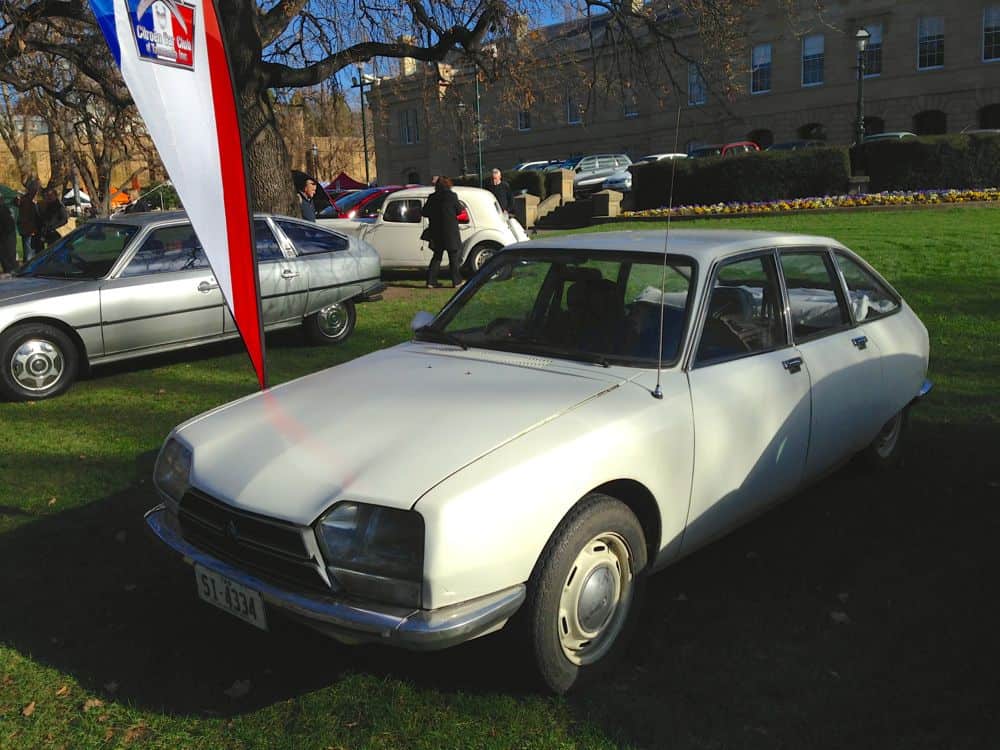
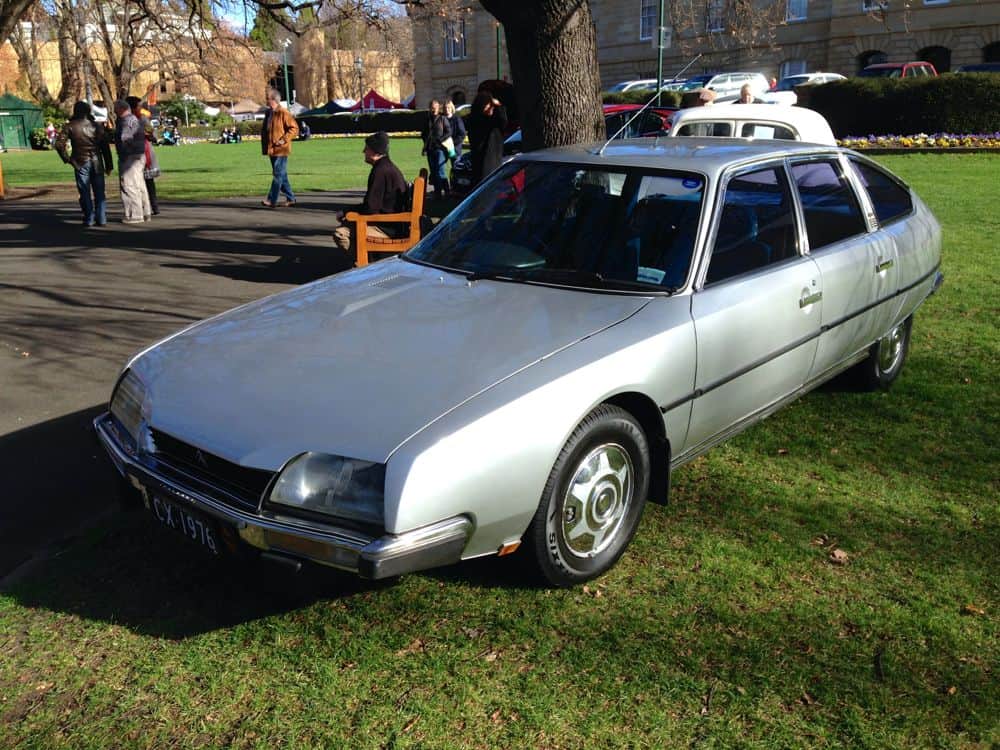
The French Car Club of Tasmania, along with the Citroen Car Club of Tasmania, brought a few cars along to Salamanca today. I took some time out from our market stall to have a look.

Apologies in advance for the iPhone pics. The camera is a compromise to begin with and it wasn’t helped by our long winter shadows.

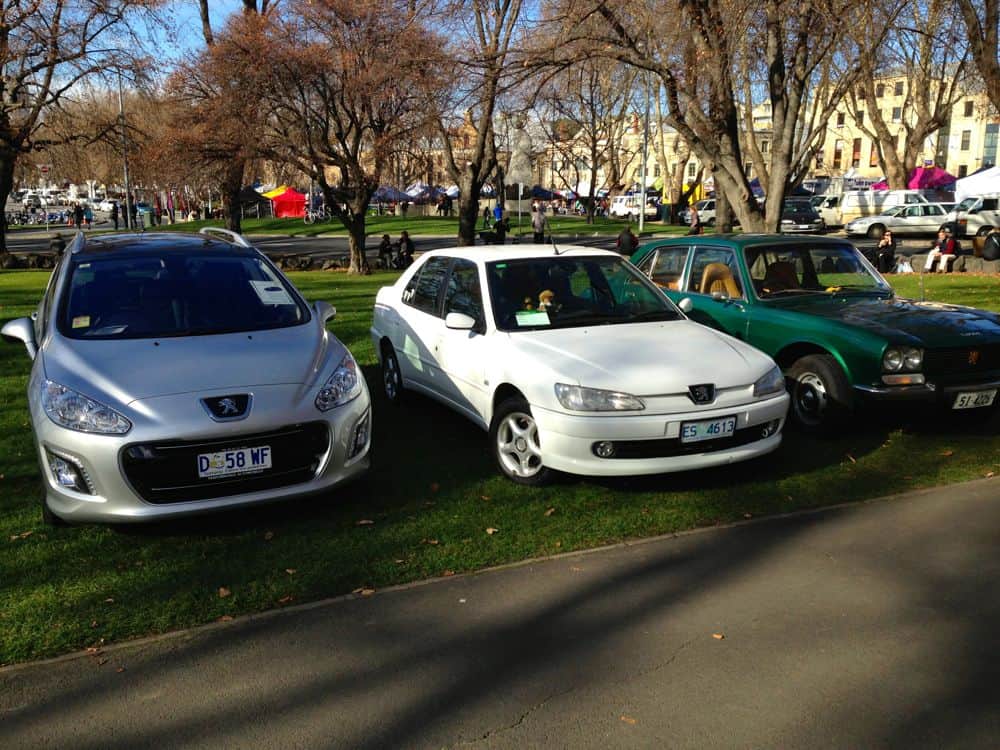
All three French majors were there – Citroen, Peugeot and Renault – and the cars were a mix of old and new. Some of the new cars were supplied by local dealers, but there were a few privately owned newbies, too. This is a refreshing change from the typical car club display that focuses on classics only. It’s nice to see fans of both old and new models enjoying their favoured marques together.

——

A trio of Peugeots posing together. I know there’s a few 205 GTi’s in Hobart but sadly, none of them were there today.

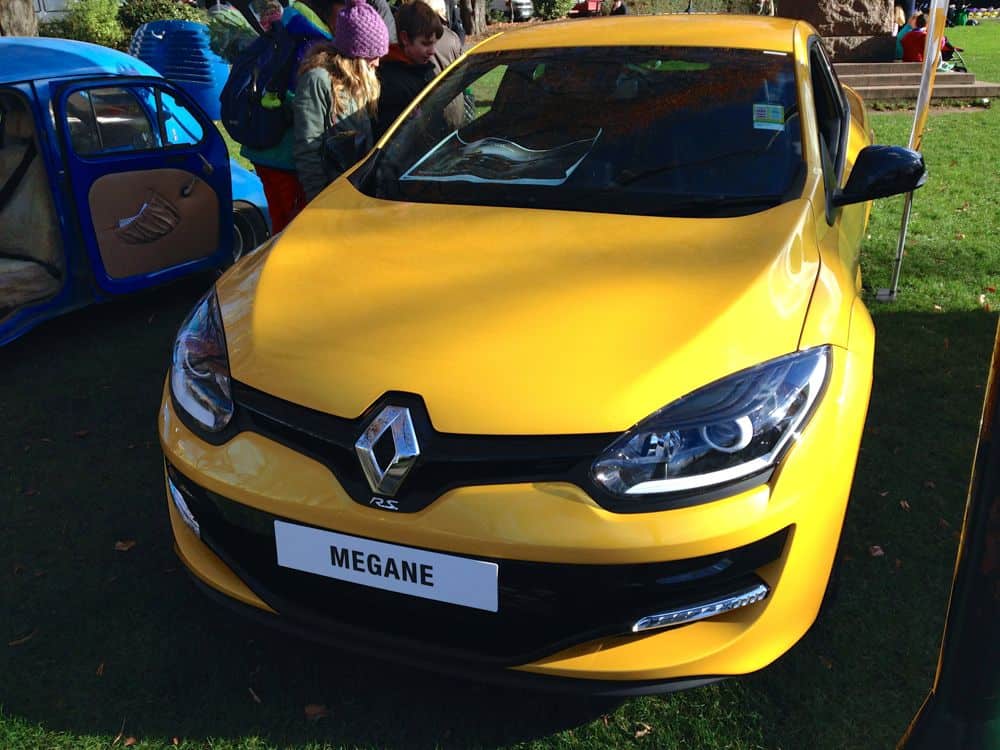
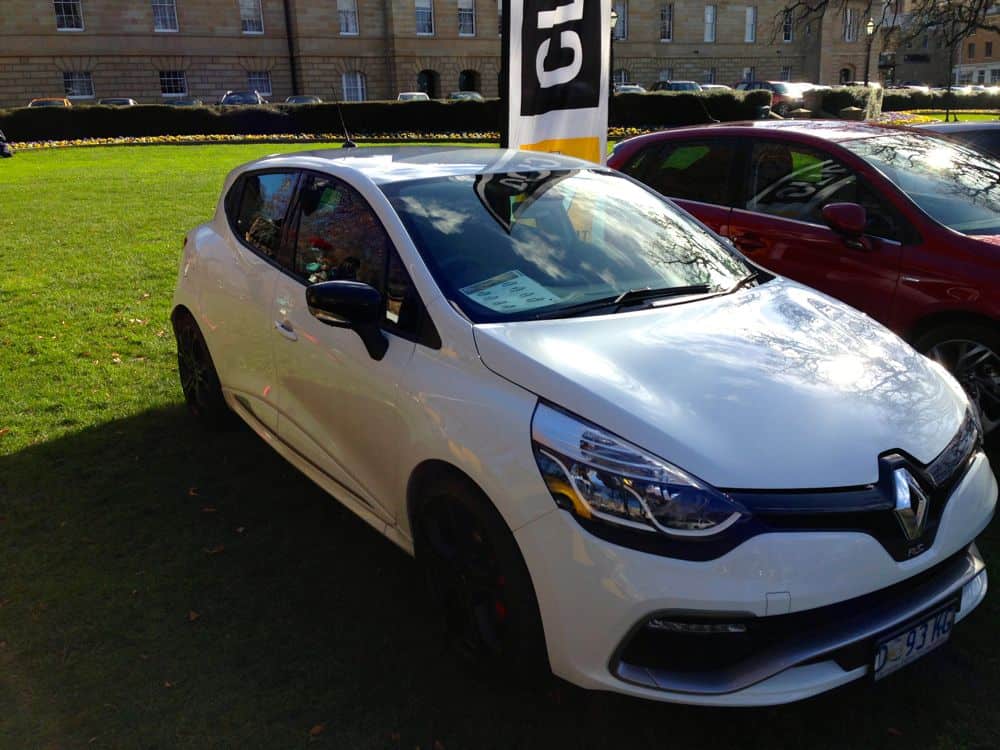
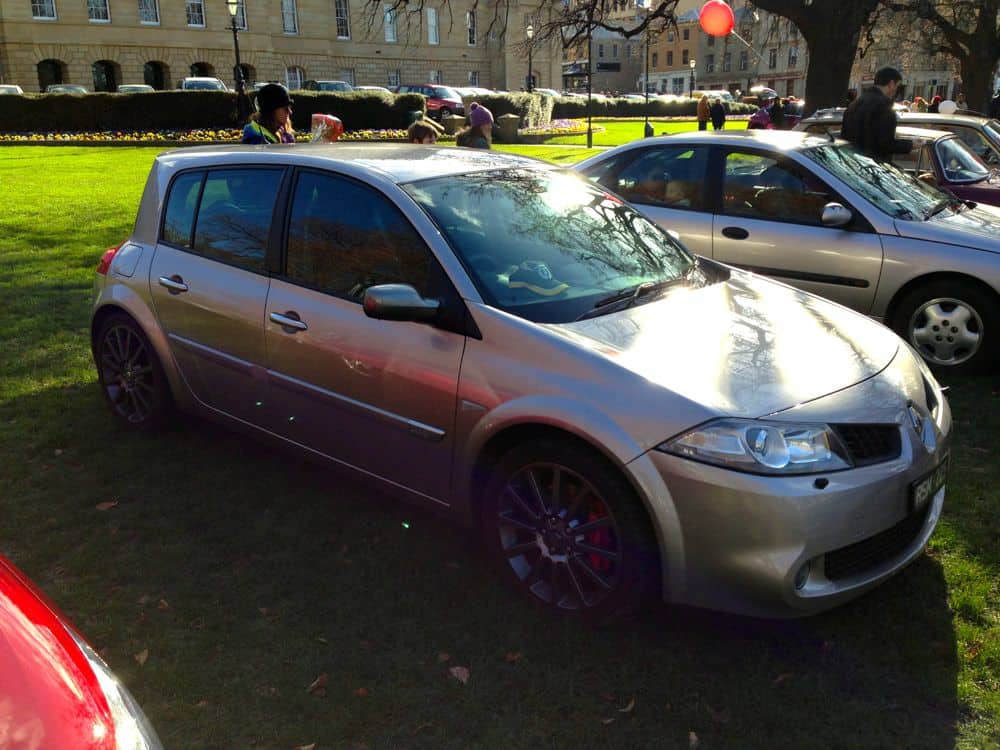
Some of the modern Renaults on site…..

Starting with the new RenaultSport Megane 265 (as in 265hp)

The new RenaultSport Clio, which is causing some waves among purists by being both turbocharged and flappy-paddle automatic. It still goes like stink, though.

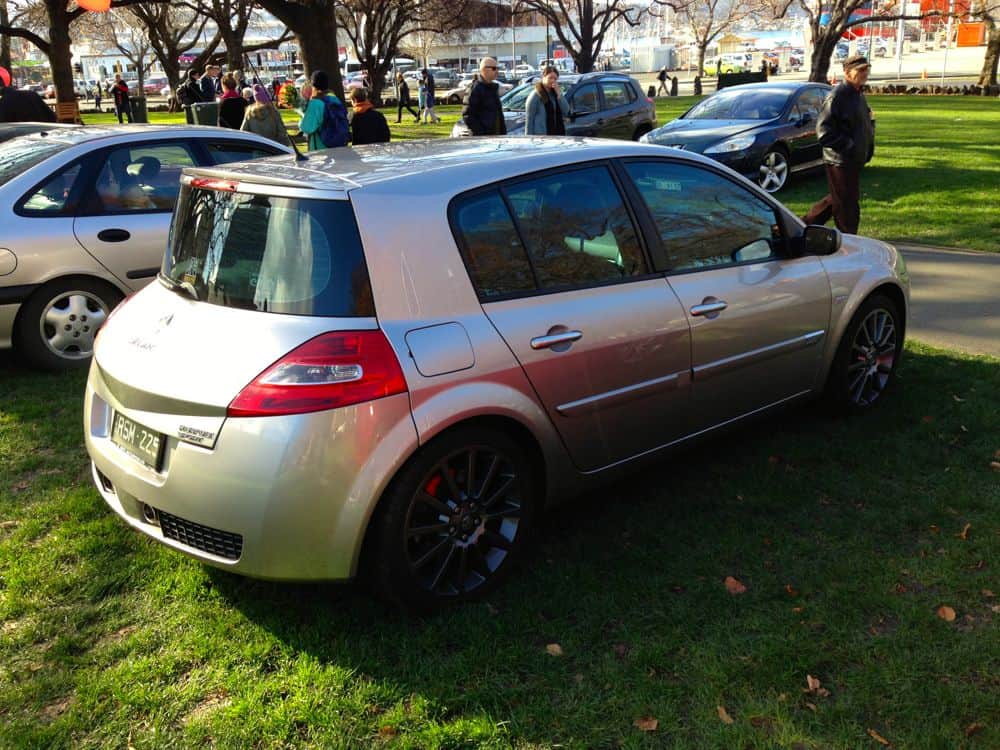
This one’s closer to my budget: the RenaultSport Megane from a few years ago, with a 2.0 litre turbo, 6-speed manual and 225hp. Nicknamed “the bum” for obvious reasons.

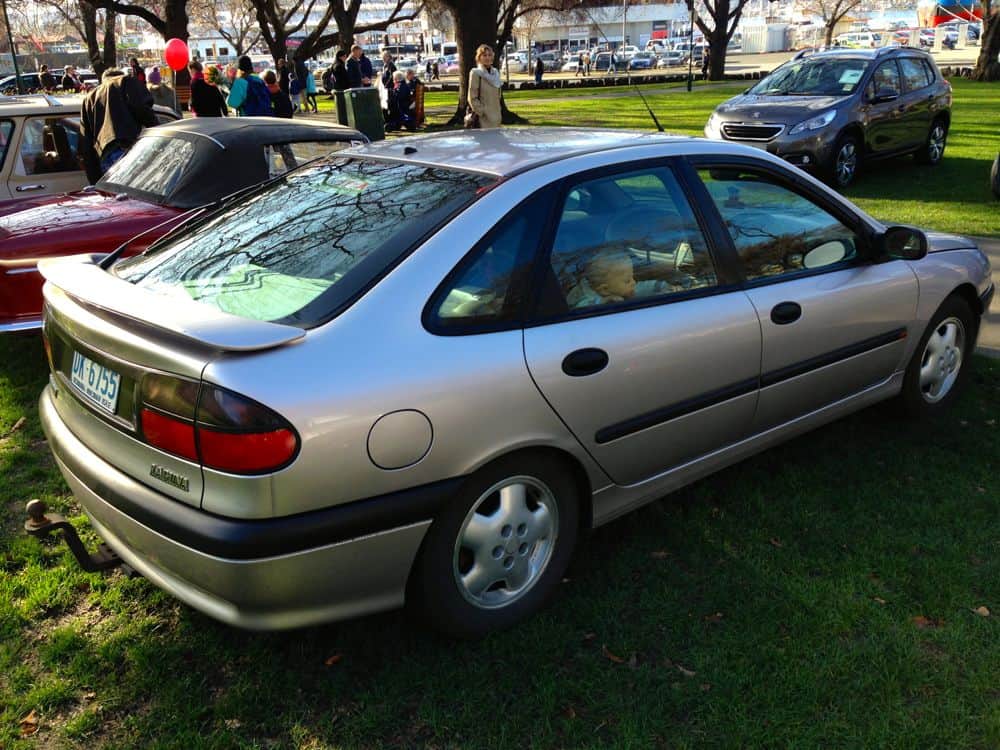
This middle-age Laguna came with the rare infant option in the back…..“let me outta here!”

——

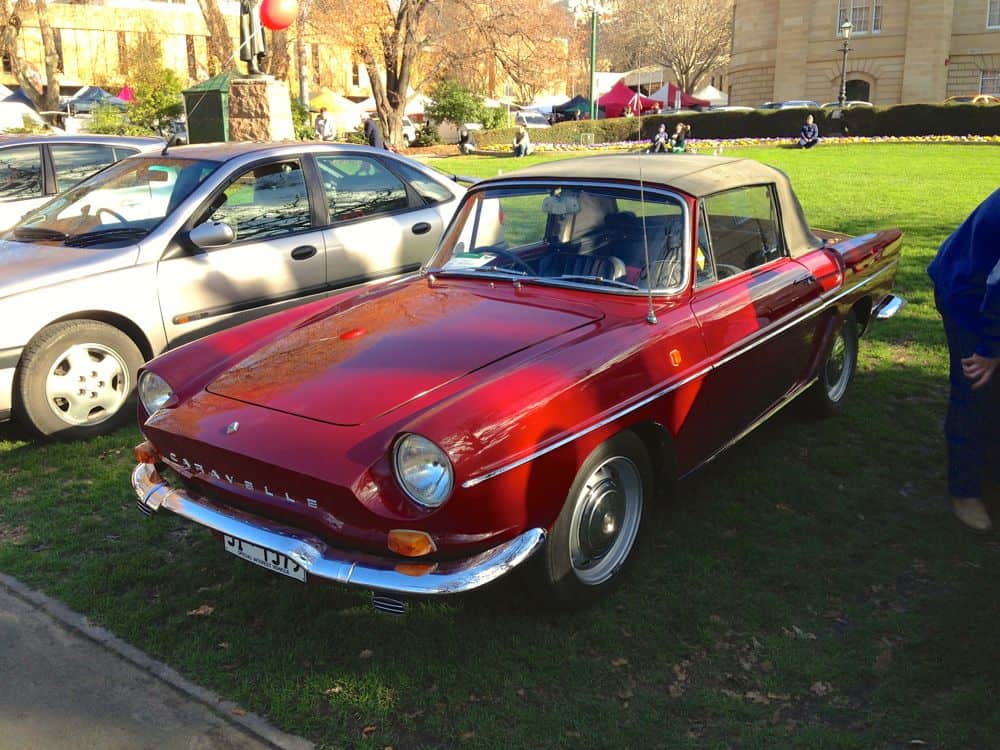
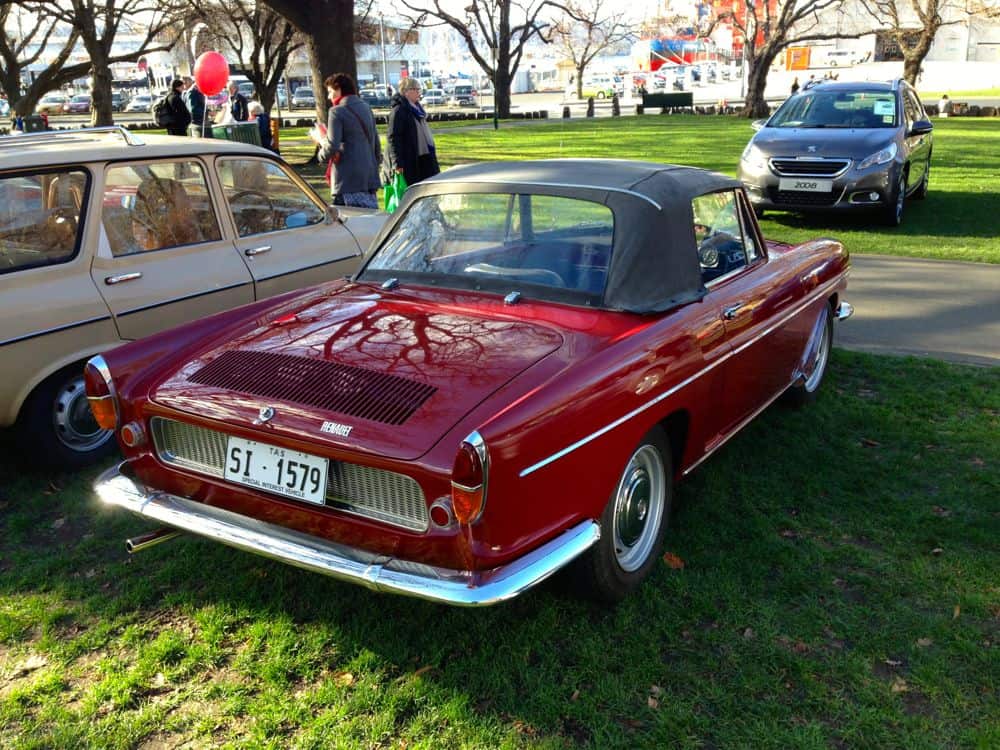
Here’s a Renault I hadn’t seen before – a Caravelle.

The Caravelle was a coupe/cabriolet version intended to complement the Dauphine on which it was based. It was made from the late 1950’s to the late 1960’s. Renault wanted something to compete with Volkswagen’s uber-successful Beetle and Renault felt that a cabriolet would lift the company’s image, especially in the USA. (The cynical amongst you might suggest that reliability would have been a better way to enhance to the company’s reputation in the 1950/60’s, but I digress).

It didn’t help Renault topple VW, but it’s a pretty car and I’m glad they made it. I wish I could show you the interior but the window was up and the reflections from the glass prevented me from getting a decent photo.

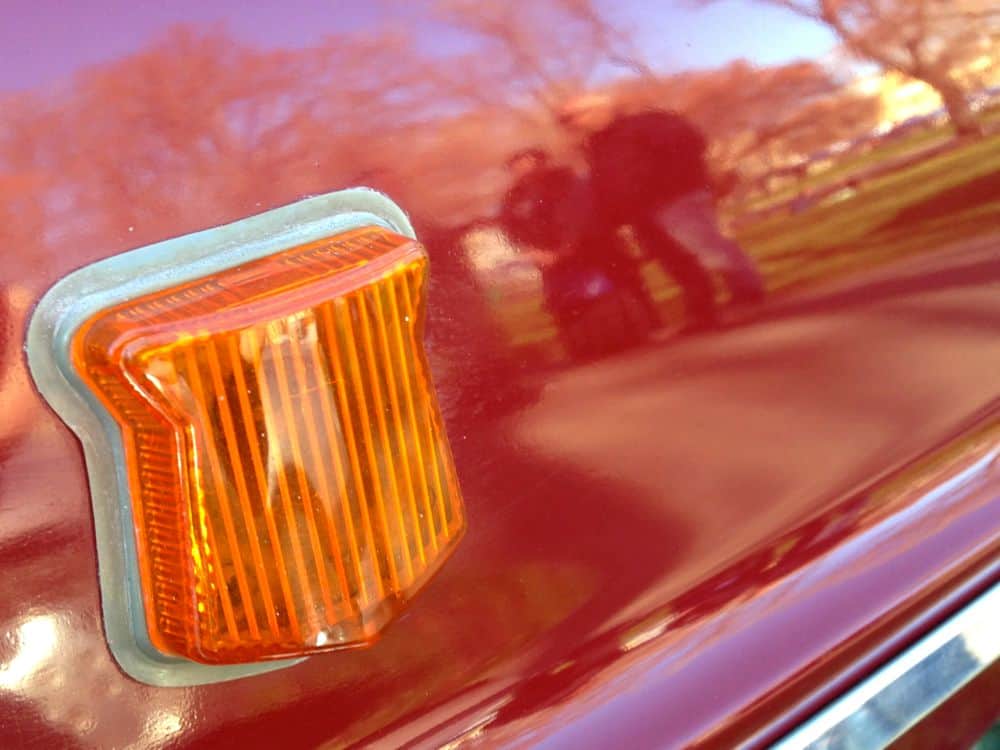
The reason I love European cars, especially those from yesteryear, is the details. Like a shield-shaped side indicator lens, for example, instead of the usual circle, square, or oval.

——

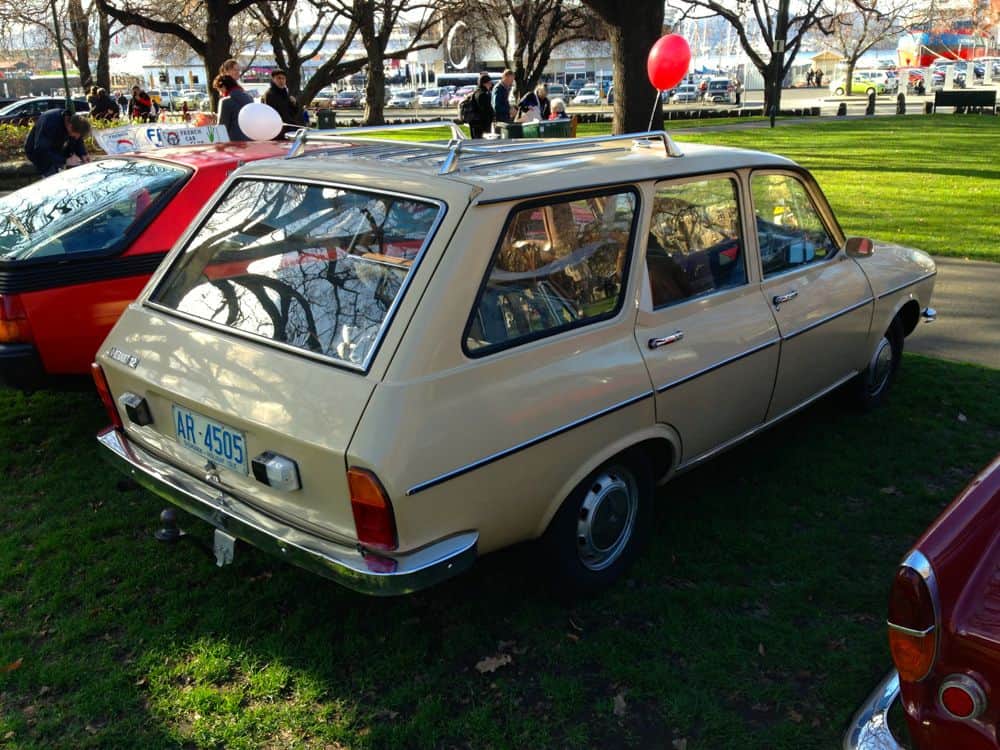
A Renault 12 wagon to take me back to my youth (Mrs Murray, our neighbour, used to have a R12 sedan)…..

——

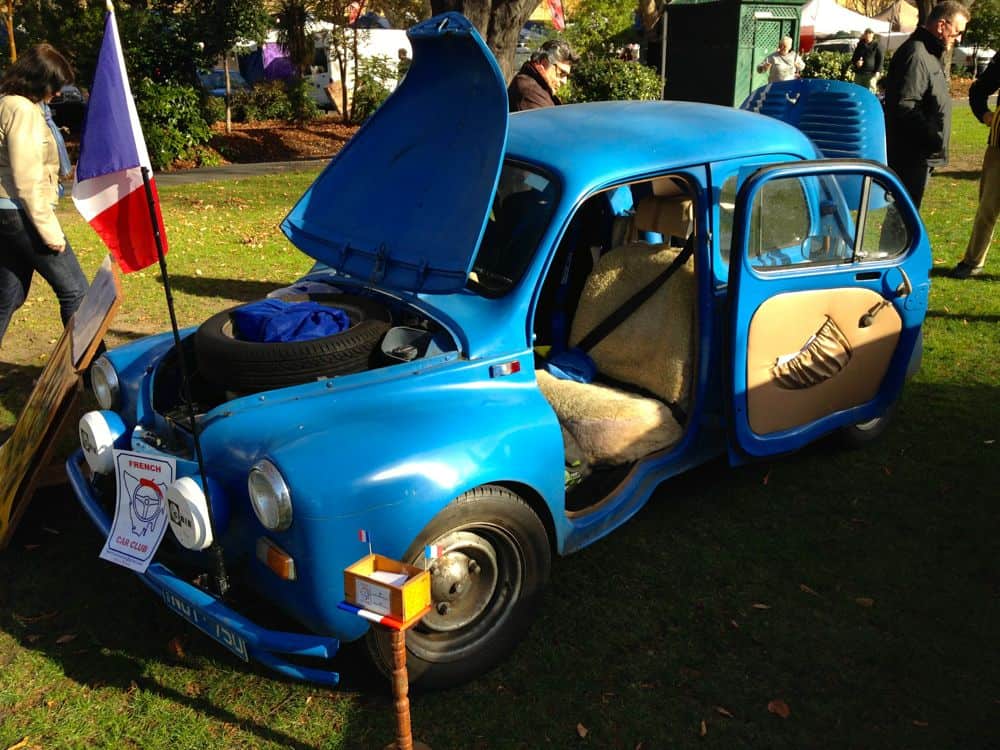
For me, this Renault 4CV was the star of the Renault contingent. Maybe the star of the show, actually.

Check out the curve of the floorpan in the door opening. I love French cars.

The owner bought the car second-hand in 1968 and only ‘recently’ finished getting the car up to the standard he wanted (I suspect the information sheet, which mentioned the recent completion of the car, was itself quite a few years old). The major rebuild started in 1999. Can you imagine starting a major rebuild having owned the car for 31 years already? That’s dedication.

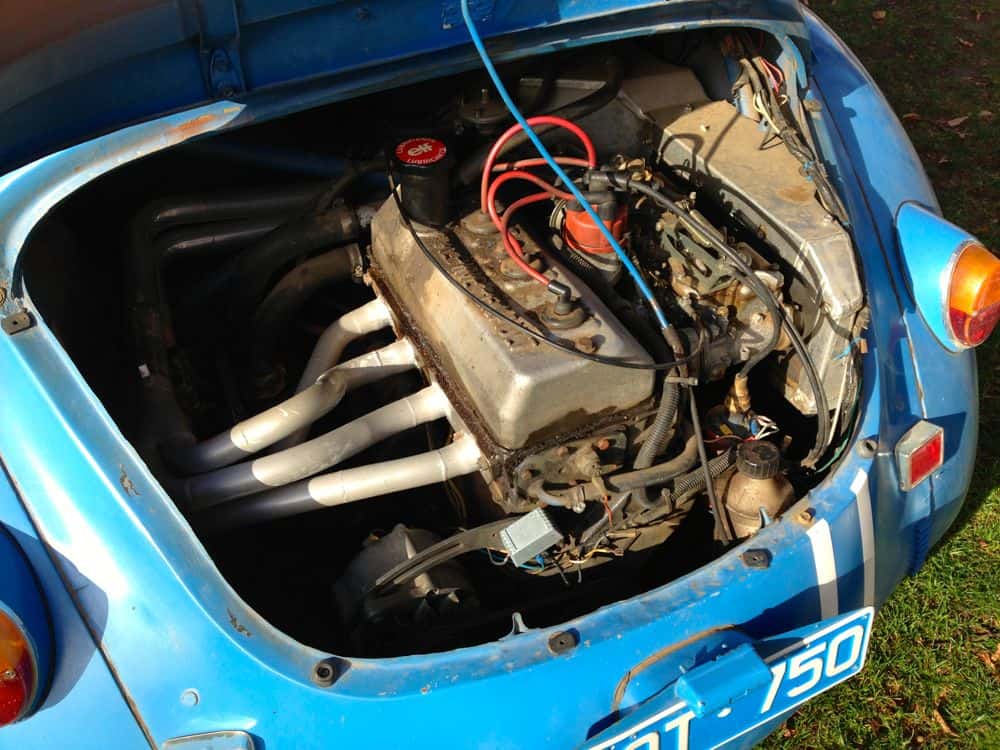
A standard 4CV had a 750cc engine. This is not a standard 4CV anymore. It now has a 1397cc engine from a Alpine Renault 5 and numerous suspension and braking components from an R10 to get the extra power to the ground.

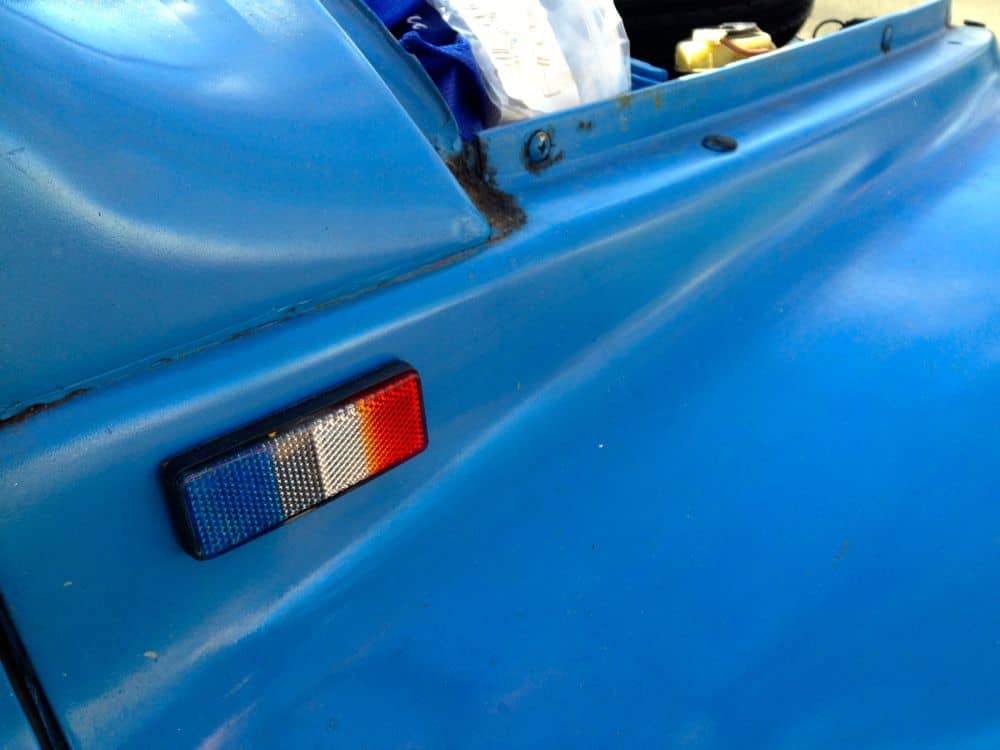
As I said before, it’s the details that make a car interesting sometimes, like the tricolour reflectors…..

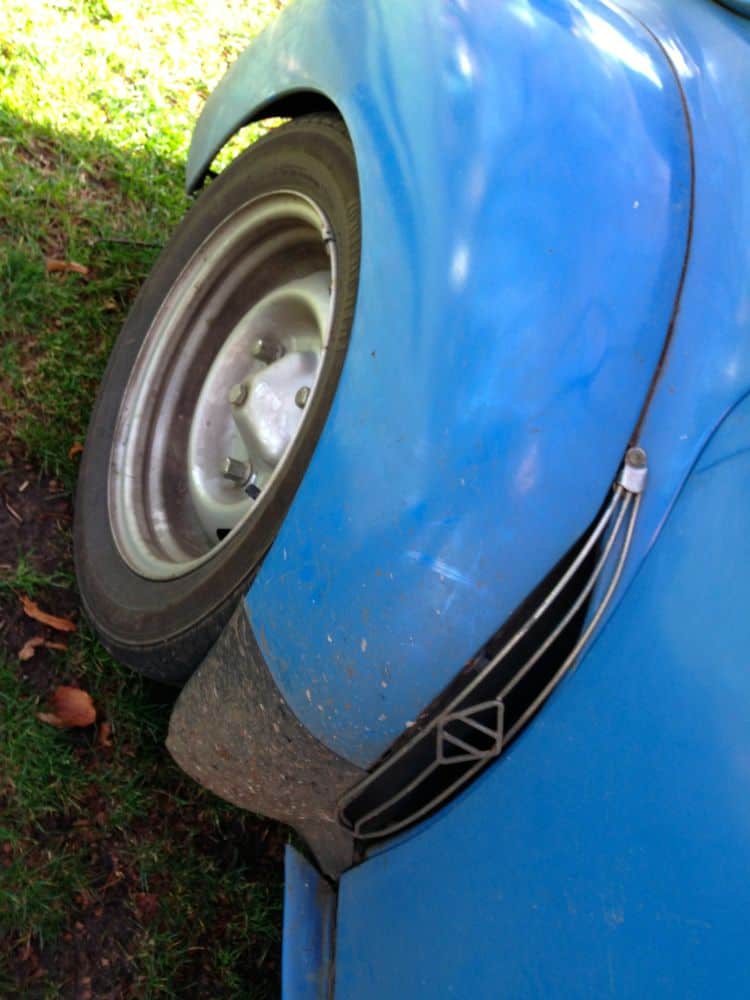
….. and my favourite detail, the brightwork around these air vents between the back door and the rear wheel arch. The vents are presumably to allow cooling air into the engine bay at the rear. The brightwork features the Renault diamond:

I managed to capture a quick video of the car leaving the display later in the day. It’s always nice to see/hear a car in motion.

——

To the Citroens, then…..

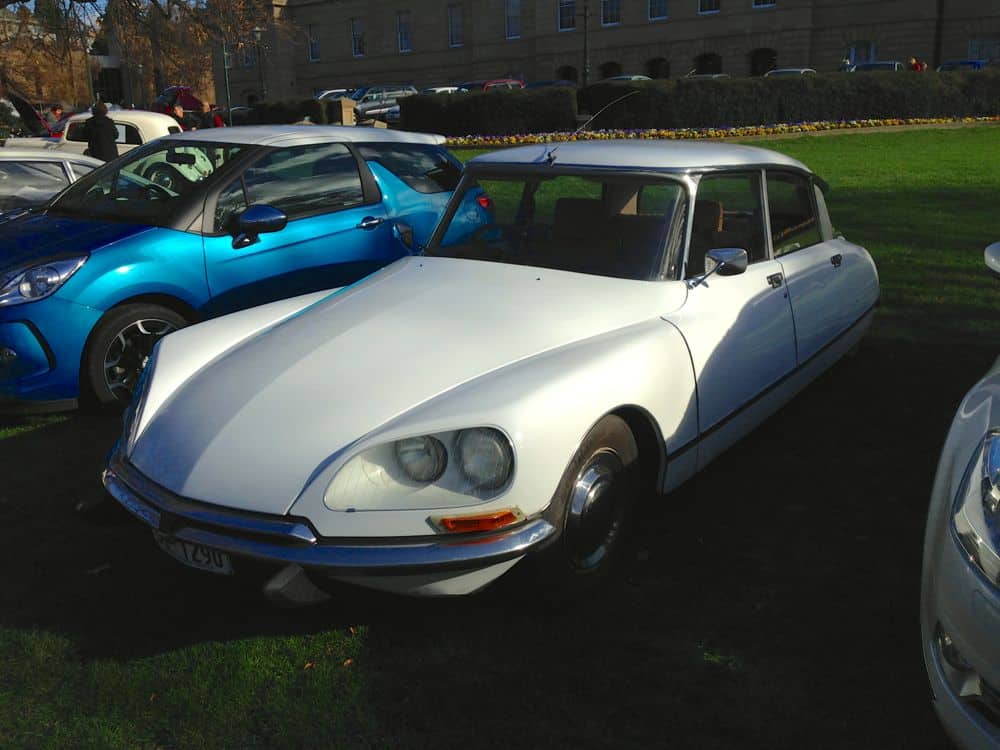
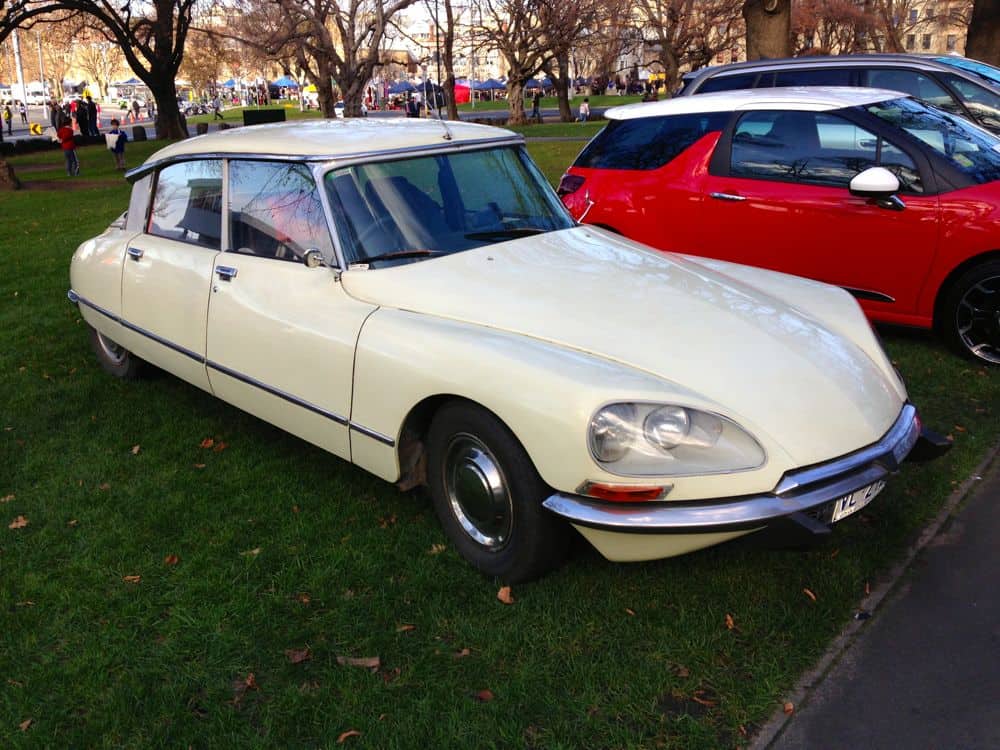
I didn’t take any notes on which Goddesses where there today, but there were a few of them with their more modern derivatives, too.

Here’s the whole bunch:

——

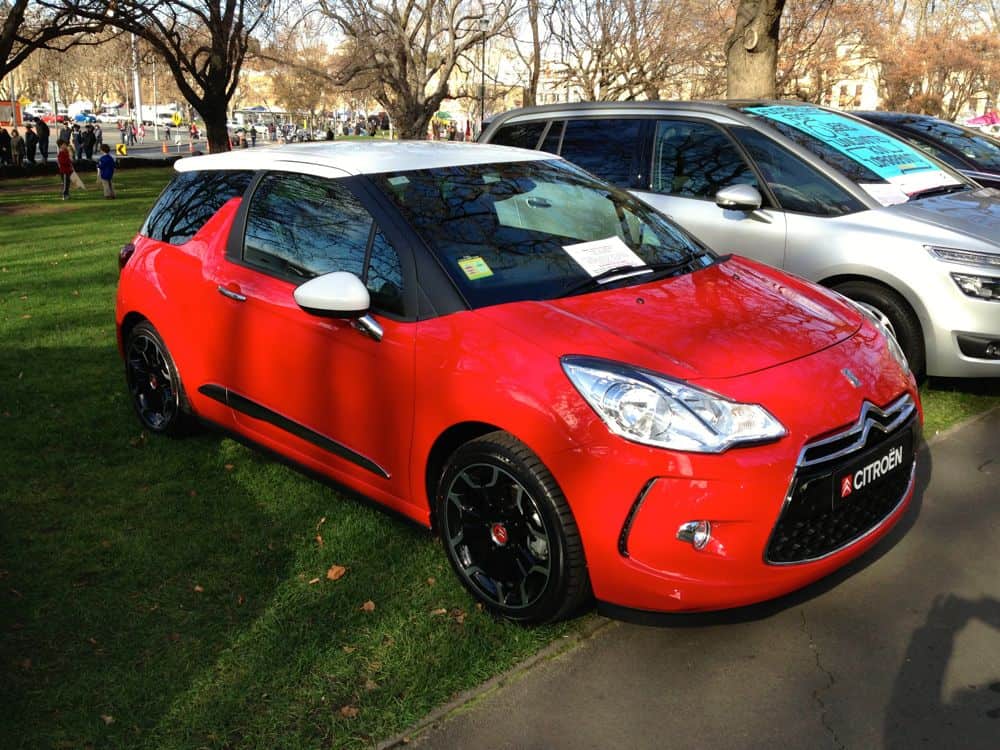
I like the new DS3. It’s got loads of character on the outside and the interior trim (no photo) looked pretty swish, too.

——

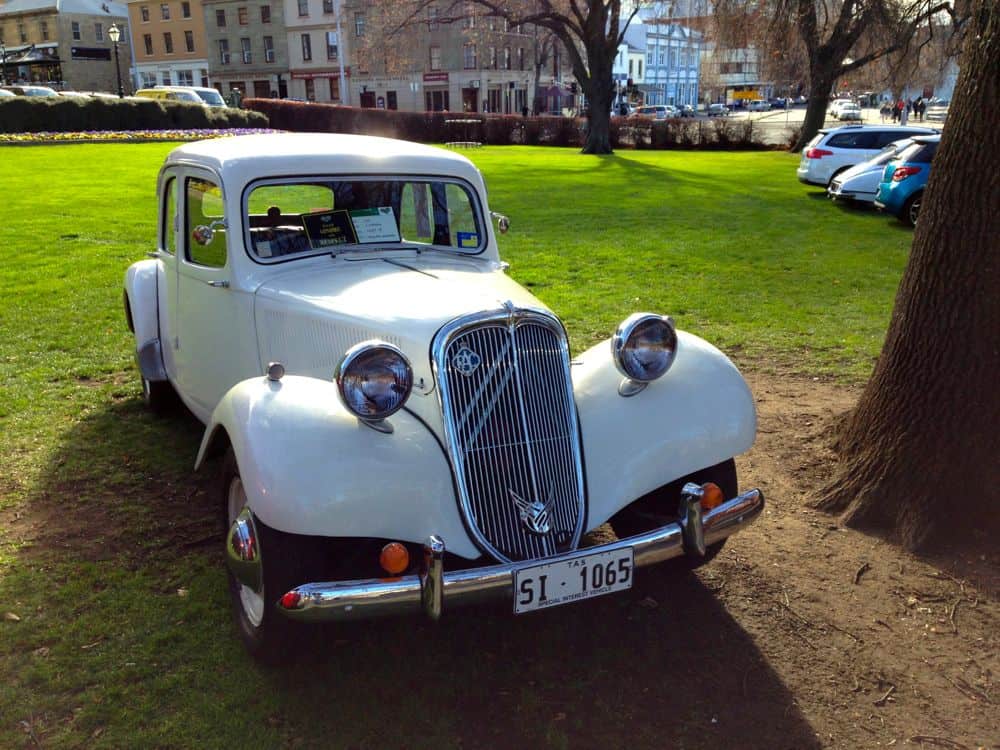
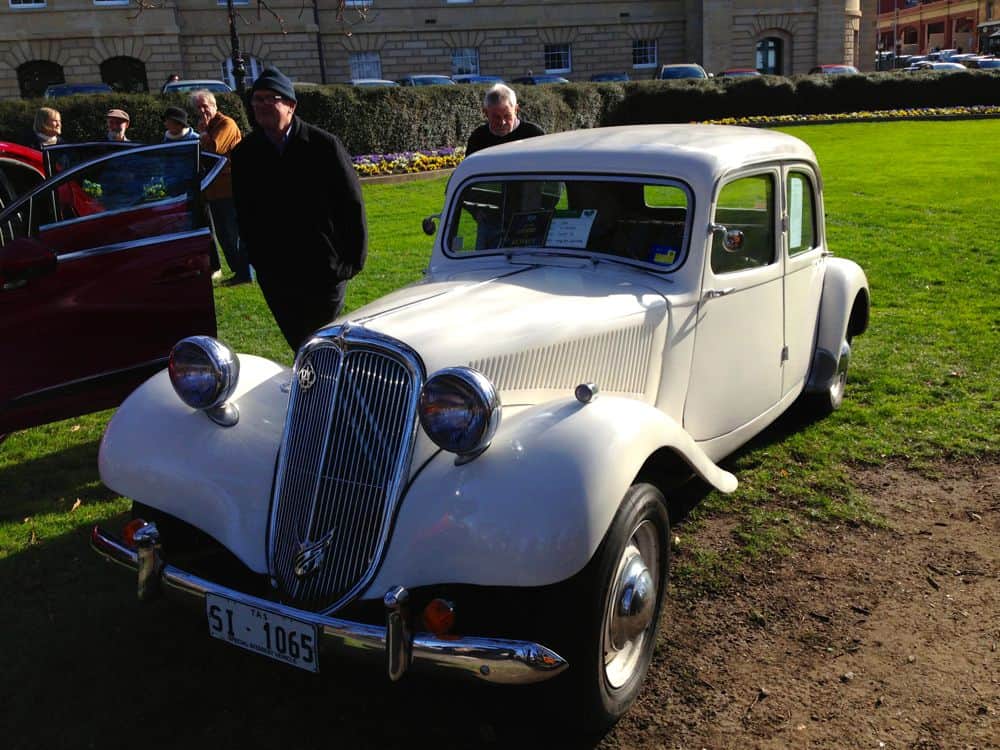
The pick of the Citroens for me, aside from the classic Goddesses, of course, with this 1951 Light 15. It looked absolutely fantastic and is for sale for just under $13,000. That’s got to be the best presented cheap entry into classic motoring around. Amazing.

——

So there you have it – the highlights of the French car show for 2014. There’s a lot to like about the French.

They certainly like doing things a little different – even today – which in the occasionally sleepy world of the automobile is a refreshing change.

Vive la différence!

Follow Your Dream (If You Have One)

Forgive me for being a little downcast today, but I’ve just been watching another one of those “follow your dream” videos online. I’m not normally a sucker for such things, but this video featured a car guy of some note, so it was a natural point of interest for me.

I did find myself a little frustrated at the end of it, though. I’m usually happy and even a little inspired when I read a self-made-man/woman story but today’s video left me with two questions:

  1. Why are these videos/stories always made by successful people? I’ve never seen one of these stories from a struggling middle-class husband/father/wife/mother or a street person. I imagine they’re much easier to make if your dream led you to a point of ‘success’ – whatever that is.
  2. What do you do when your dream goes up in smoke, through no fault of your own?

Regulars to this site will be able to guess where I’m coming from here. I landed my dream job when I landed at Saab. I worked my arse off for 6 years on my own clock in order to get the job and it was taken away through no fault of my own, thanks to Saab’s bankruptcy. I found something I was good at and I think I did it well. I did all the right things but it still turned into a big steaming pile of elephant poo.

How do I make an inspiring video out of that?

More importantly, how do you form a new dream with that experience when everywhere you see massive walls everywhere you look?

I’m not complaining. Just wondering. We have a good life here in Tassie, a much better life that the vast majority of people in the world. We have great people in our lives, a great home and we have jobs that whilst not necessarily fulfilling, keep us independent with a nice roof over our heads. We have nothing real to complain about.

But when you spend most of your productive time doing something you don’t really like at someone else’s behest, you can’t help but feel there should be more out there.

Feel free to discuss (and refer to your own terms or generic terms rather than mine – this was not intended to be a pity party for me).

Shannons Winter Auction – I Want To Blow My Life Savings (Even Money I Haven’t Saved Yet)

There are a lot of classic car auctions these days, and there’s always something of interest in them. Problem? Most of the auctions that really pique one’s interest are in places far away and selling cars that only gazillionaires can afford.

The Shannons Melbourne Winter Auction is an exception. I’d still need to be a gazillionaire to justify buying everything I’d love to own, but this is the first local auction where there’s been so many interesting cars coming up for sale at one event.

The auction is scheduled for July 21.

I’ve pegged the prices mentioned below based on the middle of the expected price range published by the auctioneer. If I had a spare $250,000 laying around, here are the cars I’d buy:

(the last one is – by far – the most exciting)

1982 Porsche 924 Turbo

Price: $5,500 (est $4K – $7K)

OK, I wouldn’t buy this actual car. It’s not a genuine 924 Turbo.

It’s a 924 with an automatic transmission that’s had a big turbo bolted on, as well as a 944 head, 944 brakes, 928 cooling and power steering. The only real downside is the automatic. Otherwise this could well be an interesting car (and yes, I find 924 Turbos interesting).

——

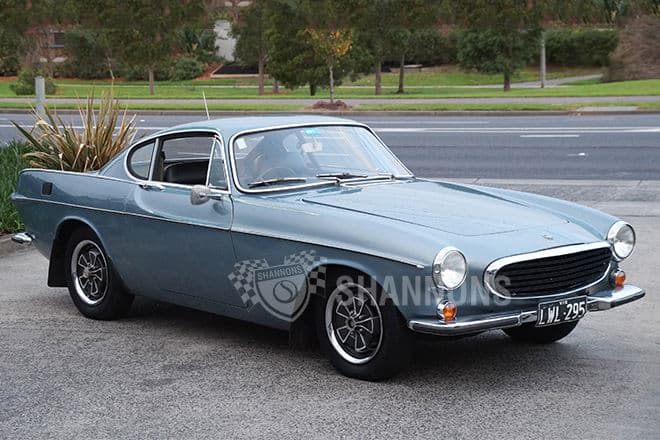
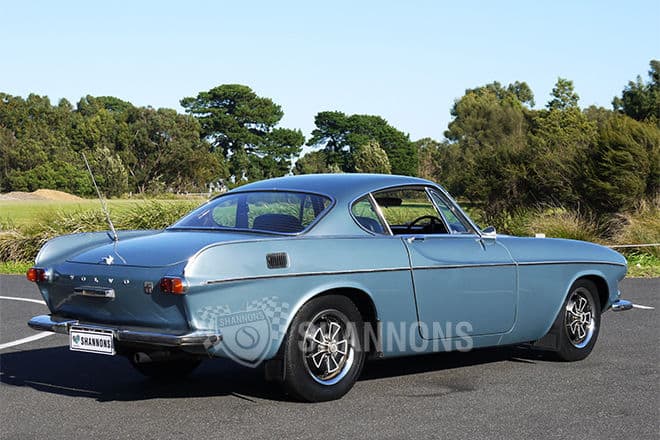
1971 Volvo P1800E Coupe

Price: $12,000 (est $10K – $12K)

If you can find someone who genuinely doesn’t like the Volvo P1800, kick them in the nuts. This is one of the most desirable 60’s-70’s cars there is. It’s sleek, it’s stylish and best of all, it’s Scandinavian. It oozes character and a 3-million-mile version of it in the US tells you that if you look after the P1800, it’ll look after you.

On that note, this particular P1800 needs some looking after. The pre-purchase inspection report says the motor is smoky and various electrical items are non-operational. Given that P1800’s usually sell at around $20K, this seems to be factored into the expected price range.

——

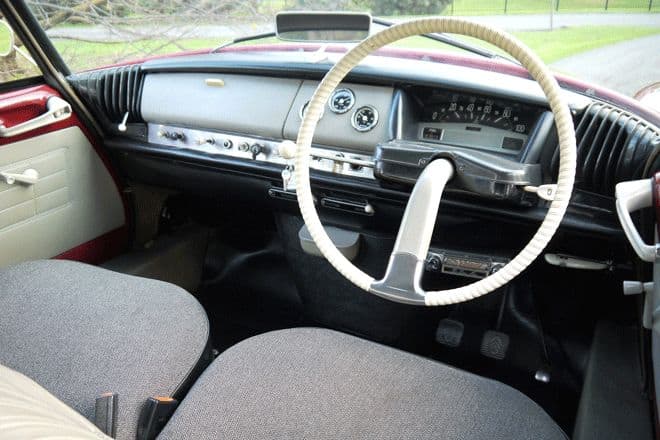
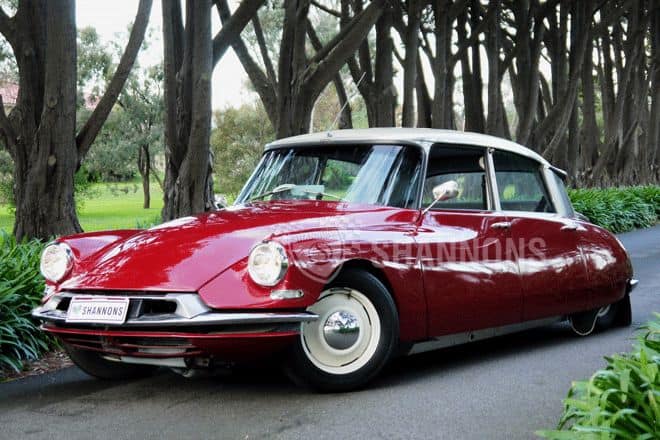
1960 Citroen ID19

Price $17,500 (est range $15K – $20K)

The ID range of Goddesses was a lower-cost version of the better known DS badge. So this car looks like a Goddess and has the famed suspension system but it has less power and less equipment.

The pre-purchase report says this is a good one. The hydraulics are working and the car performed well on it’s test drive. There’s a small oil leak and the bodywork shows the cars age, but is solid. In the collector car world, that’s known as patina. The description claims this car is a recent show winner, too.

——

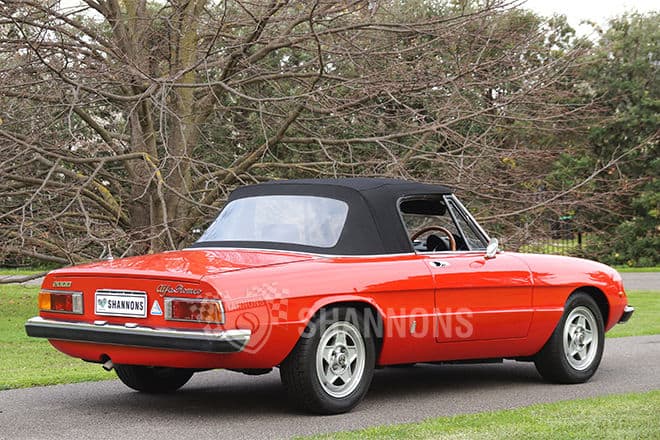
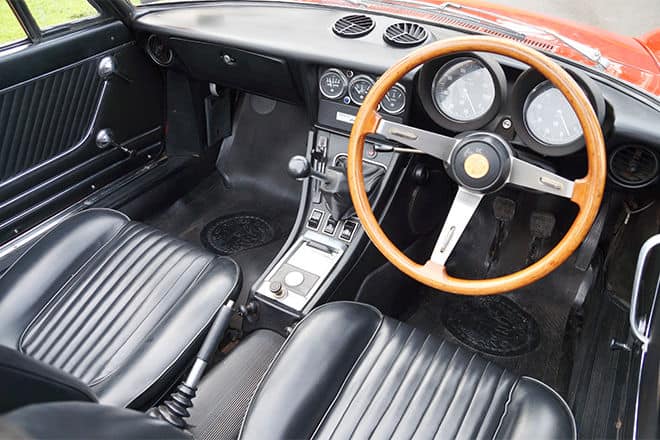
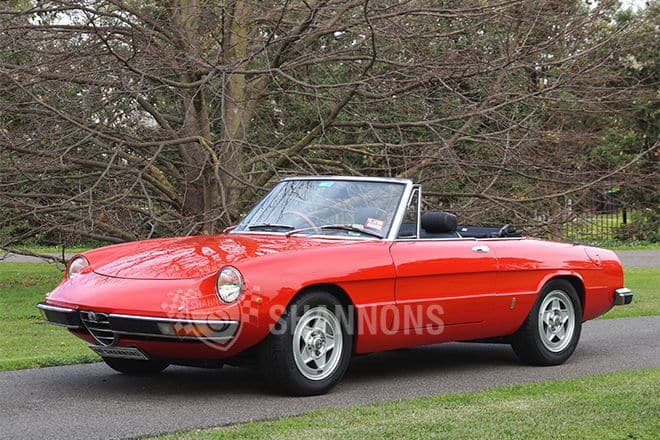
1974 Alfa Romeo Spider

Price: $12,000 (est range $10K – $14K)

The pre-purchase report says it’s running well, but with paint blemishes and some under-body surface rust. The interior looks magnificent, though.

I expected the price range to be a little higher, to be honest. Classic Alfas are starting to move and the Spider is one of those desirable models that’s never going to go out of style.

——

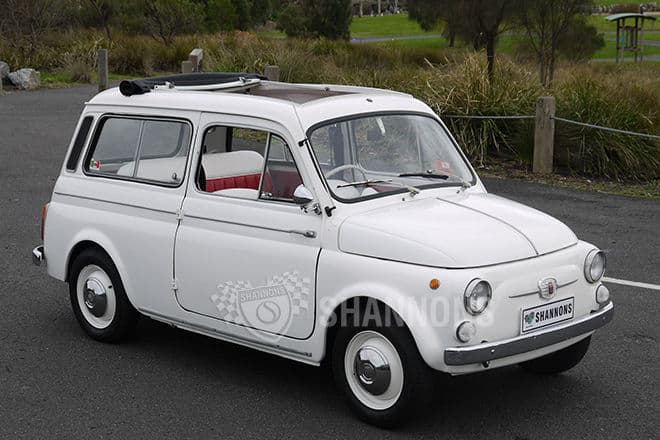
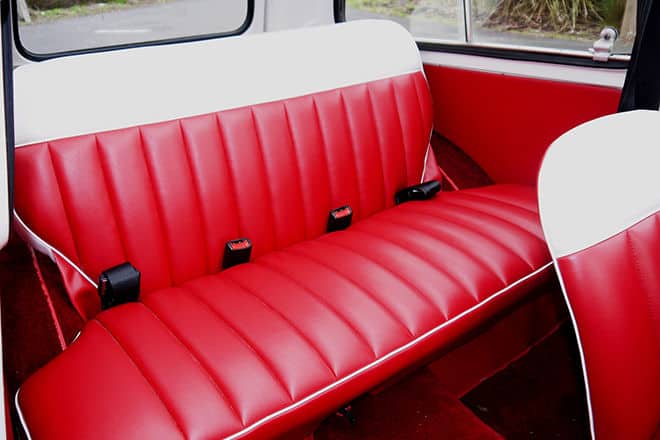
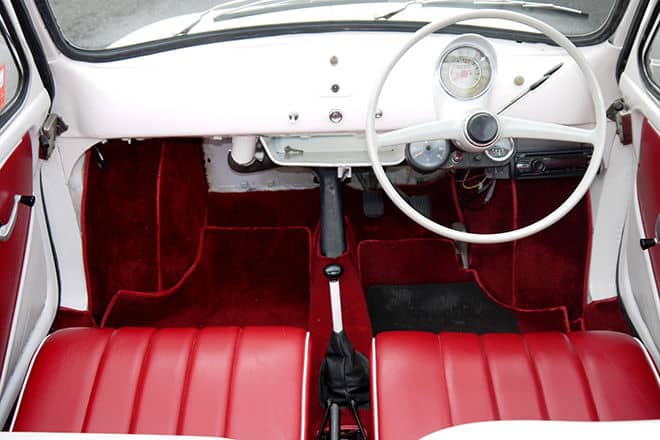
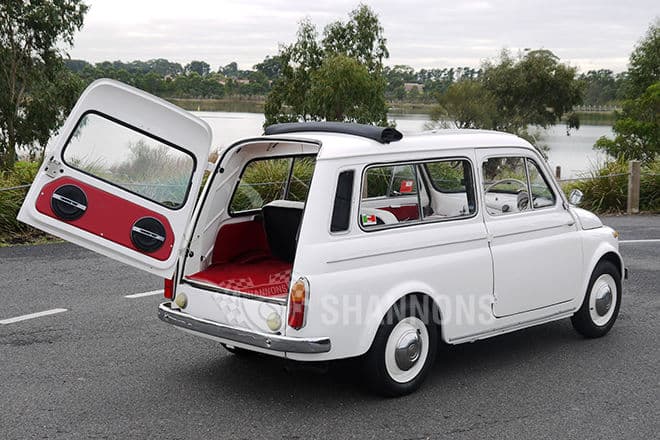
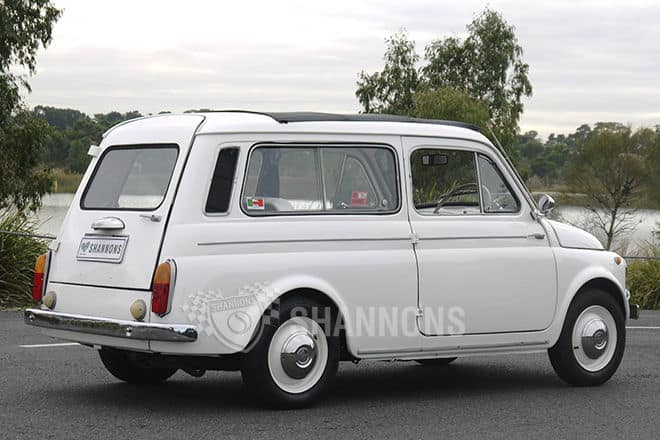
1960 Fiat 500 Garidiniera Wagon

Price: $17,500 (est range $15K – $20K)

If I told you a classic car had minor underbody surface rust and a minor engine oil leak, you’d say that’s par for the course. If I told you it was Italian, you’d say it was completely normal. Such is the case here.

You wouldn’t want to live in a hilly place as this car only has a 2-cylinder engine, but then it weighs as much as a can of cat food. And speaking of cats, it really is the automotive equivalent of a whole internet full of kittens, isn’t it? The cute-factor is almost overwhelming.

The only downside is the speaker installation in the rear door. What a cock-up!

Extra pictures, here. This car deserves it.

——

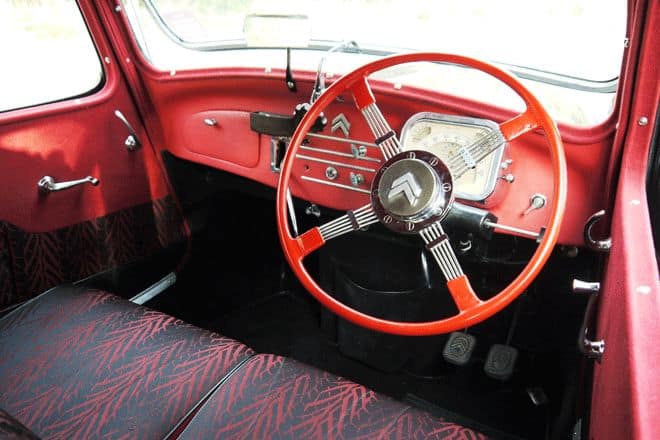
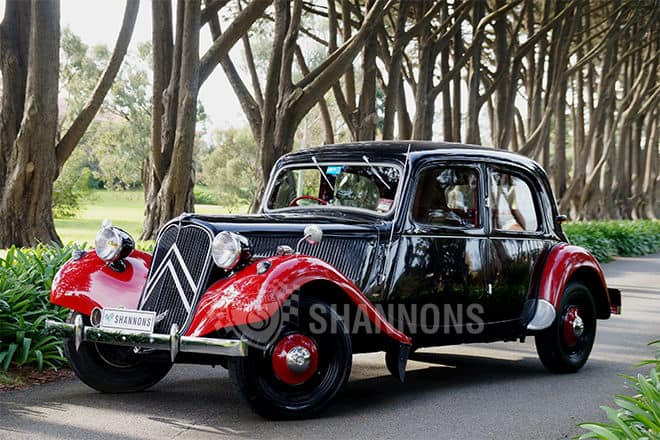
1948 Citroen Light 15 Sedan

Price $20,000 (est range $16K – $20K)

Like the 924 Turbo, above, this is a car that I would not seriously consider buying but only because I don’t have much use for, or appreciation of, such an old vehicle. But take a look – it really is hard to resist even if only as a work of art.

The inspection report says it presents beautifully inside and out and drives as good as it looks. The downside includes a number of electrical faults that would have to be fixed in order for the car to be registered.

But wow. Just wow.

——

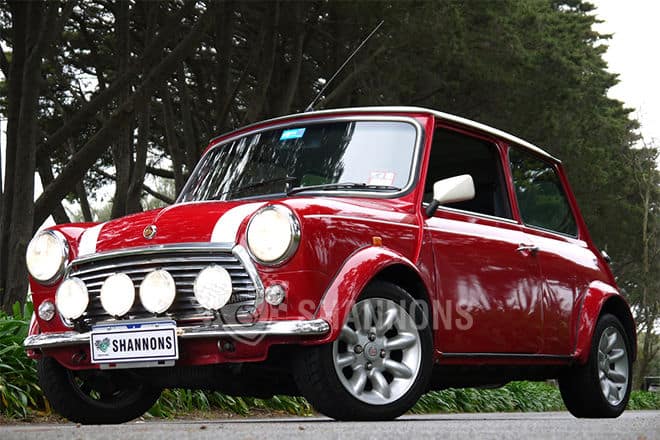
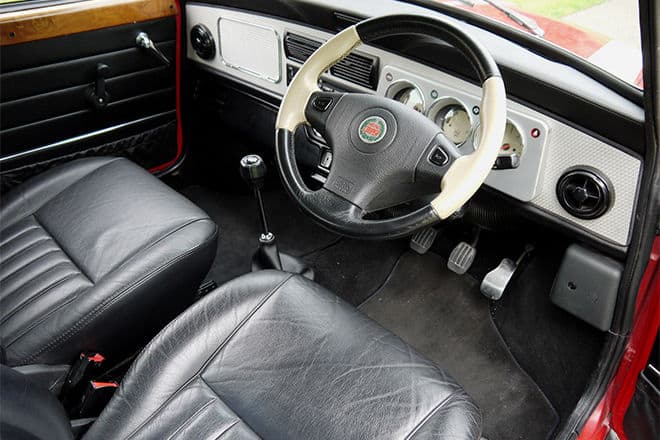
1999 Rover Mini Cooper ’40’

Price $17,500 (est range $15K – $20K) but it’s selling with no reserve, so it could be had for less.

My mate Gavin will kill me for not knowing much about this. Rather than pretend to, I’ll just post the pictures and say this looks like a nice ‘recent model’ Mini for the money.

——

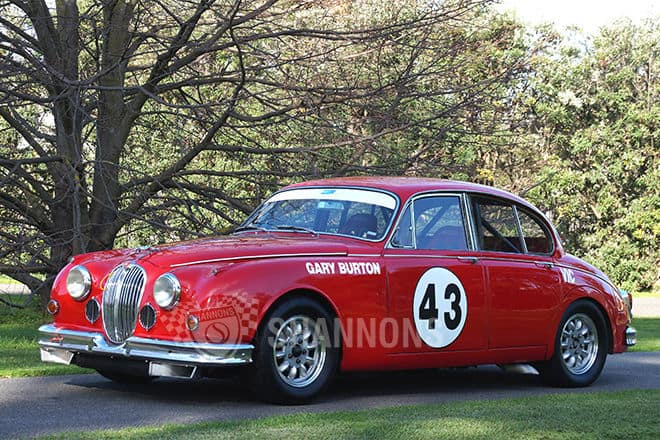
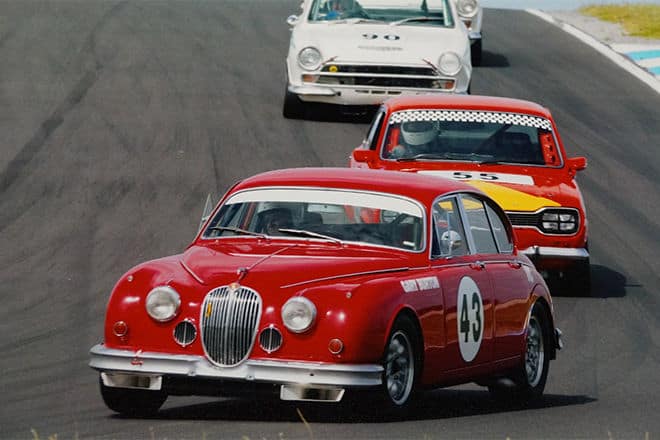
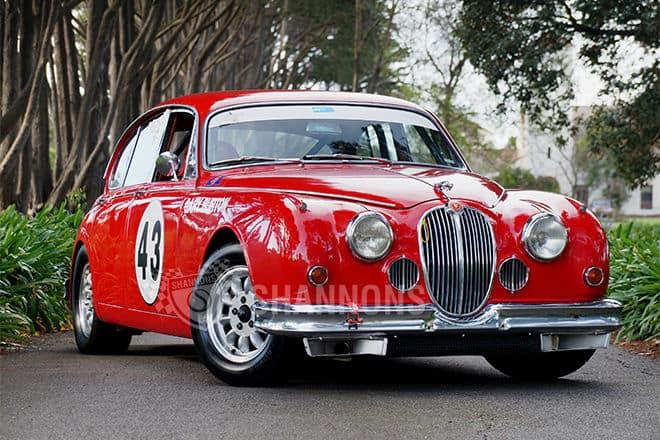
1964 Jaguar Mk II

Price $29,000 (est range $26K – $32K)

Could this be the ultimate gentleman racer? The bargain of the auction? Yes and no.

From the description and the inspection report (“Not tested to full capabilities – test drive reveals enormous potential”), this is one cracking old Jag that’s built to perform and a history file to prove it’s accomplishments.

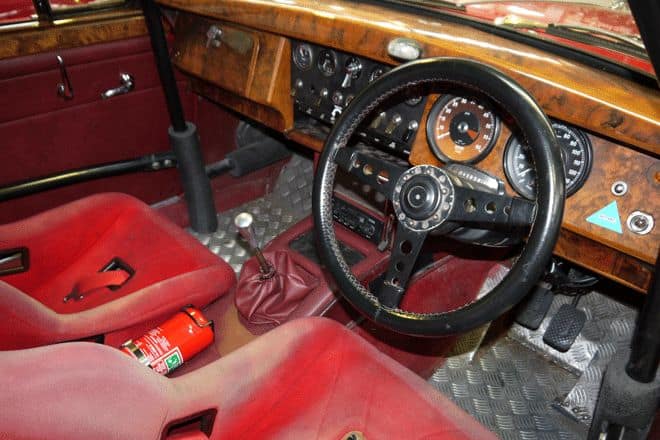
The downside: you won’t be able to drive it on the road as it has a full CAMS-approved roll cage. You’ll have to be a dedicated track-day helmsmith to enjoy this one.

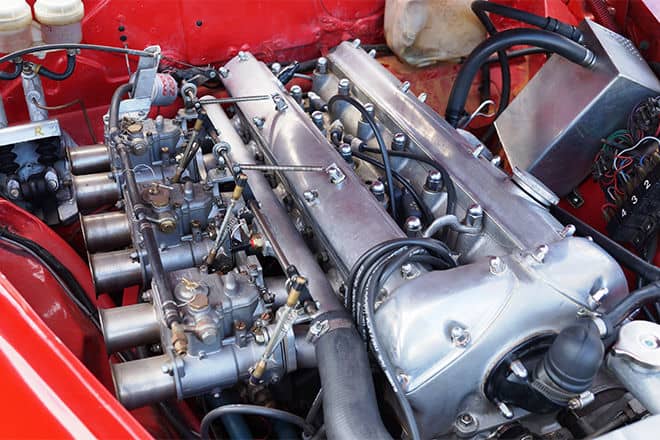
A veteran of two Targa Tasmania events, in 1996 and 1997, this well known Jaguar Mark II has subsequently been rebuilt to Group Nb specification for circuit racing and club events by the current owner. The car underwent a comprehensive body restoration, with the shell strengthened and a full CAMS-approved roll cage installed. The engine is an over capacity 3.8 unit, with billet steel crank and rods, forged pistons, special oil pump and special billet cams. Properly balanced, the motor has a specially fabricated inlet manifold and triple 45DCOE Webers on an extensively modified B-series cylinder head, all cooled by an aluminium radiator. The gearbox is a Needham close-ratio straight cut unit and brakes are 3 pot callipers all round, with competition pads, the car has a limited-slip diff with adjustable Watts linkage and modified lower arms plus extensively reworked suspension, with Pedders shock absorbers.

——

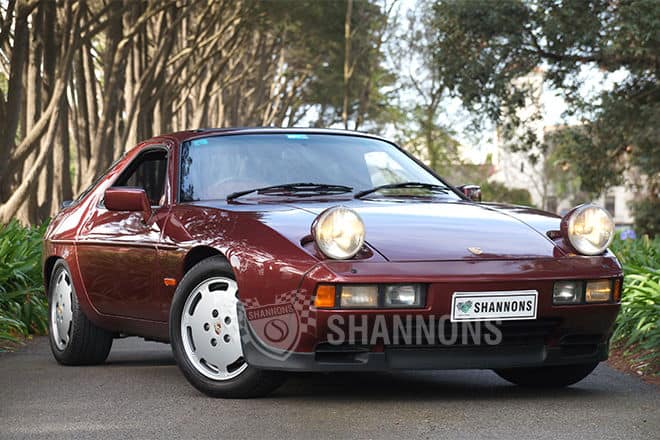
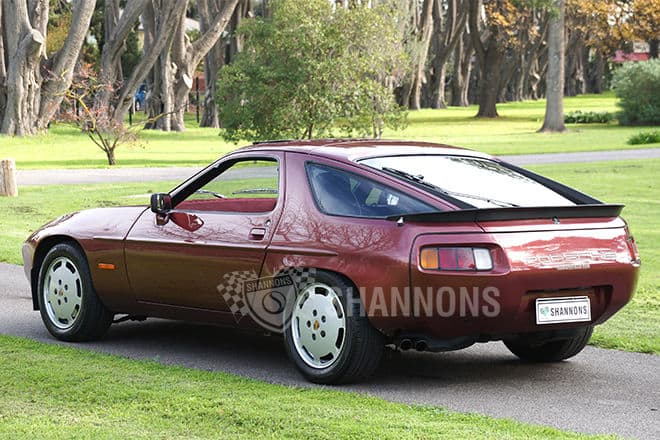
1986 Porsche 928S

Price – $12,500 (est range $10K – $15K)

What can I say? I’ve grown to love watercooled Porsches. This is a very clean ‘S’ and the inspection report lists no faults and a meticulous history. If that’s true, then the expected price is very good value because 928’s are (finally) starting to increase in value here.

——

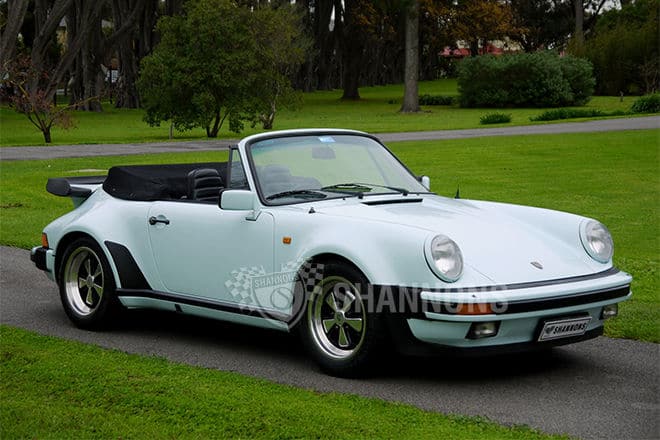
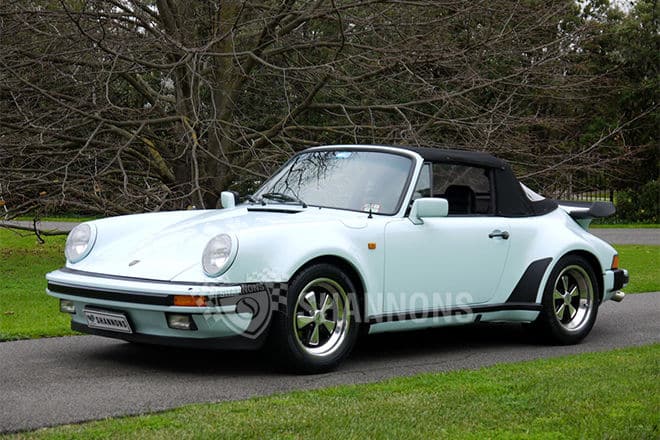
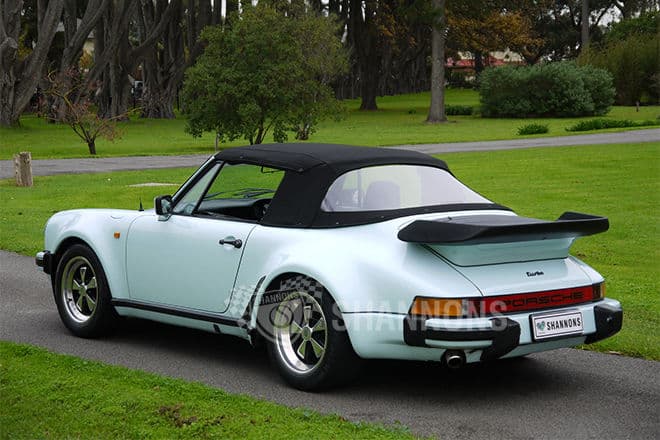
1983 Porsche 911SC Cabriolet

I’ll mention this one because I love the color – it reminds me of the Marble White used on my old Saab 99 Turbo – but this is not one that I’d actually buy.

  1. I’d prefer a hardtop (or a targa) over a convertible.
  2. Non-turbo car with turbo badge shows questionable judgement by previous owner that has to reflect poorly on vehicle history.

——

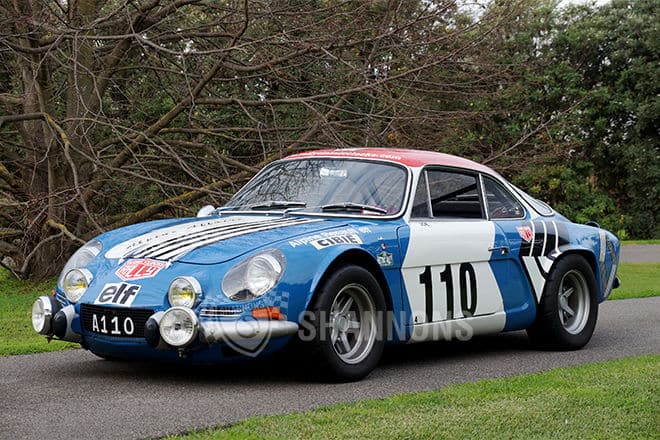
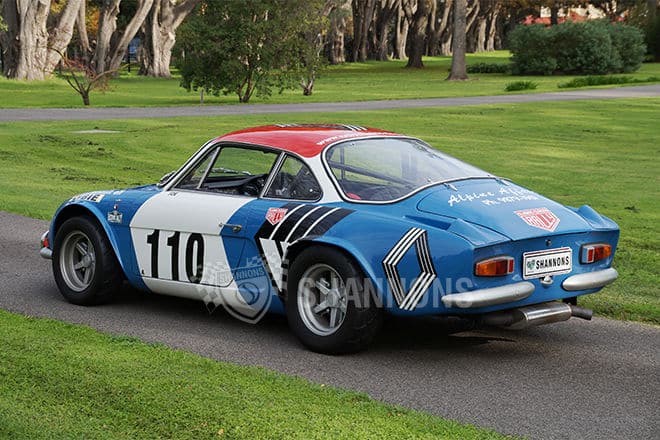
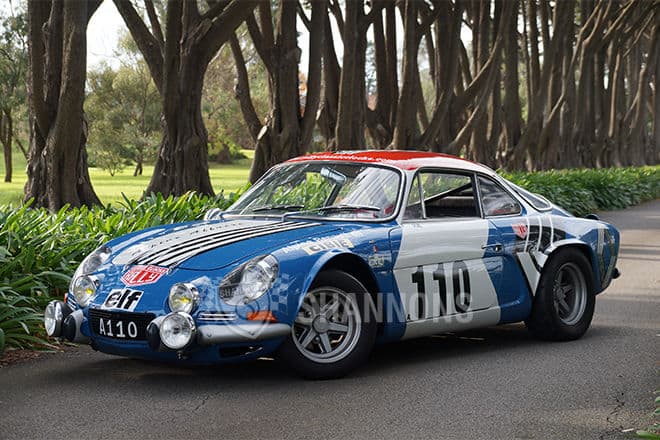
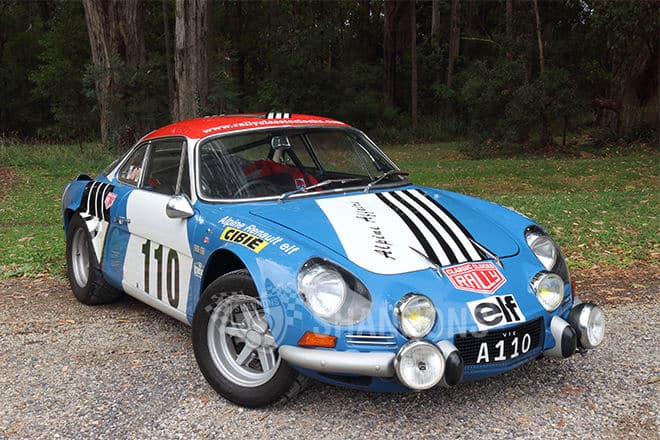
1972 Renault-Alpine A110

Price $105,000 (est range $90K – $120K)

This is the reason we’re here. This is the car that really made me sit up and take notice of this auction. It’s in the pantheon of long-term wish lists, the very definition of desirability.

I’ll shut up. Here’s a 5-minute video that actually features the car that’s being offered for sale.

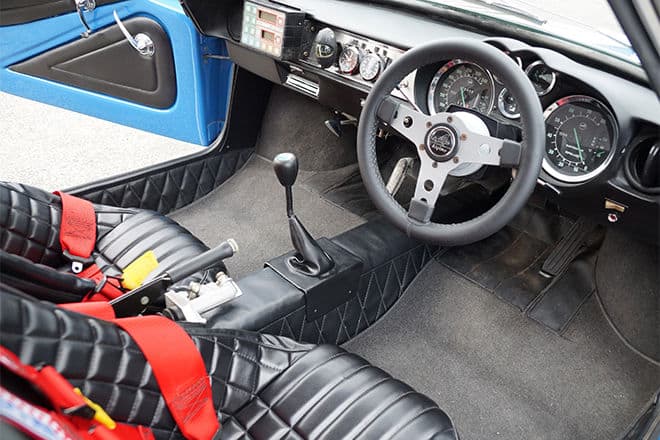
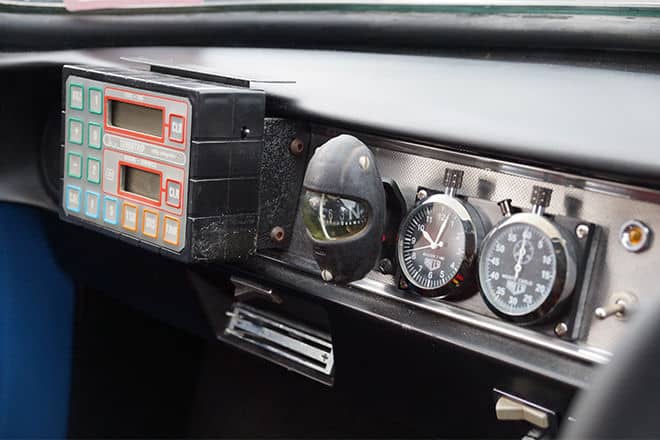
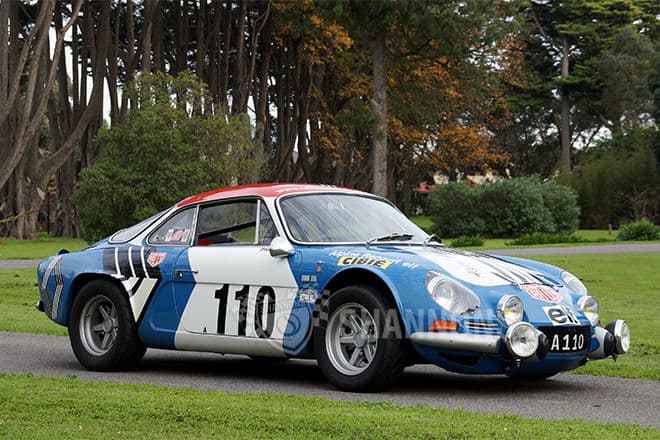
I’d prefer it in plain blue, without all the racing stripes and decals. The inspection report is clean. Just get in, drive and enjoy.

The Alpine A110 is pretty rare in world terms. Having one for sale in Australia – especially one in such great condition – is truly rare. I wonder how much I can get for a kidney?

——

Porsche 917 From “Le Mans” Film To Be Auctioned

This is definitely one to watch!

How stratospheric can a single car’s price go? Not only is this a genuine Porsche 917, it’s a Porsche 917 with actual race history. And not only is it a genuine Porsche 917 with race history, it was also used in a famous film about racing – Le Mans. And not only is it a Porsche 917 with genuine racing history and a famous film role, it was driven in that film by none other than Steve McQueen.

It’s fair to say that there are few cars in existence with such a distinguished and storied history. There are plenty of recognisable movie cars in the world, but the level of respect attached to this car puts it on another level all together. It’s the real deal.

Maybe we should have a nearest-the-pin style competition to guess the eventual selling price? The car will go under the hammer at Gooding & Co’s Pebble Beach Auction on August 16-17.

Here’s the press release:

——

A Legendary Motor Sport Icon Set to Cross the Auction Block at Gooding & Company’s Pebble Beach Auctions

SANTA MONICA, Calif. (June 23, 2014) – Gooding & Company is thrilled to announce the addition of the 1969 Porsche 917K, chassis 917-024 (estimate upon request), featured in the film Le Mans (1971) to its Pebble Beach Auctions on August 16 and 17. The anniversary of the US release of Le Mans (1971) on June 23 in 1971 makes this a truly historic announcement. Set in the golden age of the sport, the film is one of most watched and revered racing motion pictures ever made. Le Mans (1971) features a cast of racing glitterati, including actor Steve McQueen, and a host of extraordinary race cars. 917-024 takes center stage at the height of the action as the Gulf 917 that claims the checkered flag in the film.

David Gooding, President: “917-024 is one of the most significant and recognizable racing cars ever to come to public auction, and we are thrilled to present the legendary Gulf 917 Porsche.”

Porsche designed and built the famed 917 model in the late 1960s to claim outright victory at the 24 Hours of Le Mans. Forming the foundation of this car is an incredibly lightweight aluminum space-frame chassis fitted with a streamlined fiberglass body. The Porsche 917 is an undisputed masterpiece of automotive engineering with both overwhelming success on the track and legions of racing fans around the world.

917-024 has the important distinction of being the first 917 model to compete in a race, which occured when it was entered by the Porsche works team at Spa Francorchamps in 1969. 917-024 was later enlisted by the legendary J.W. Automotive Engineering Ltd.-Gulf team at the 1970 Le Mans Test, where it was driven by Brian Redman and Mike Hailwood. Redman set the fastest times, proving that the 917 model was capable of winning. This car is easily recognized by its striking lines and iconic light blue and orange Gulf livery and boasts a magnificent air-cooled flat 12-cylinder engine.

Chassis 024 was then acquired by Porsche factory driver, Jo Siffert, who loaned it to Solar Productions for the film Le Mans (1971), which he and McQueen, along with many other celebrated racing figures, participated in creating. 917-024 remained in Siffert’s private ownership until his passing and led his funeral procession, reflecting the importance of this car in his career, before being sold to a private collector.

This 917 remained hidden and unknown for roughly 25 years, before re-emerging as perhaps the greatest ‘barn find’ ever. Since resurfacing in 2001, 917-024 has benefitted from an exceptional restoration.

Presented today, this is surely one of the most correct, culturally significant and important of the 917s, making it very easily one of the finest racing cars extant. Without question, the presence of 917-024 at auction is a momentous occasion, for the opportunity to acquire a car of this iconic stature is not to be missed.

The Pebble Beach Auctions

Date(s): Saturday, August 16 at 5:00 pm PST and Sunday, August 17 at 6:00 pm PST
Location: Equestrian Center, Corner of Stevenson Drive and Portola Road, Pebble Beach
Public preview: August 13-17
Auctions catalogues: $100, includes admission for two to the viewing and the auctions
General admission: $40, includes admission for one to the viewing and the auctions
Live auction broadcast: www.goodingco.com
Facebook: www.facebook.com/GoodingCompany
Twitter: @GoodingCompany

——

My thanks to Dick L for passing this on. It’s a great story and it’ll be a thrill to follow to its conclusion.

Note: I’ve used car #20 as the featured image for this post on the front page of the website, but the car up for auction here was actually car #22 in the film. I used the car #20 picture because it was such a good still from the film. McQueen started the movie driving car #20, which is the one he crashed in the movie before taking over car #22 to finish the film.

5 Minutes In A Porsche Macan Turbo

Last weekend I had the pleasure of checking out a brand new Porsche Macan Turbo. It was all-to-brief, but I did get to drive it around the backstreets of Swansea, on Tasmania’s east coast.

First Impressions – Outside

The Cayenne might be the latest in a long line of non-911’s that saved Porsche, but it doesn’t have a long line of purist fans. It’s a large SUV from a company that made its name building light, nimble sports cars.

The Macan is still an SUV, but I think those purists might find it much more palatable.

It’s certainly a more compact vehicle and feels a lot more snug when you get inside. The proportions and the stance – along with those massive wheels (and HUGE brake calipers) – combine to make it feel about as sporting as an SUV can feel.

First Impressions – Inside

Buttons. If there’s one thing you’ll notice immediately upon stepping into the Porsche Macan Turbo, it’s the vast collection of buttons. Buttons on buttons on buttons – and very few of them in the driver’s natural field of vision (not great).

I didn’t have enough time to note all the features of the Macan while I was in it. And I haven’t done any homework as to what features it has. I only know that it must have a lot of features as it has so many buttons. There’s even a plethora of buttons on the side of the seat (though they’re mostly self-explanatory).

The layout is pretty nice and the interior of the Macan feels sporty. On the ever-so-slight downside, the materials feel modern but to me, they don’t really feel ‘natural’. I hope that makes sense. My humble opinion: My 968 features all sorts of man-made materials but it still feels more natural and connected than the Macan. I think sometimes they make these cars too refined, but then my needs are very different to the person Porsche built the Macan for.

First Impressions – Driving

I had a short, short drive, so I can’t say much at all. I can tell you the Macan Turbo has a turbocharged V6 and makes close to 300kW (400hp), which is a LOT of power for small(ish) SUV. I used about 5% of it going around the block at Swansea.

I can’t tell you about the power. I can’t tell you about the grip, which is reported to be phenomenal for a car it’s size. But I can tell you it’s smooth, quiet and refined. It carries its prestige well. The seats hug you like a long-lost aunt, the steering wheel is suitably thick and even using minimal pressure on the loud pedal, you can tell it’s got plenty of go.

The big question is whether or not it can party, too. I’d love to get a longer drive in order to tell you, but that might take a while – I’ve heard that one dealer in Melbourne has hourly test drives booked every day for the next three weeks.

5-minute Conclusion

Forget my personal misgivings with the interior materials. The Porsche Macan Turbo is a very attractive vehicle. It has genuine Porsche design, genuine Porsche power and according to other tests I’ve read, it has genuine Porsche handling, too.

Porsche will sell every Macan that they can make. Have no doubt about it.

Mahindra/Saab Won’t Be Tata/Jaguar

I’ve been away for a few days on King Island for work, with no internet connectivity or phone connection. Let’s just say it was hard work to put aside the connected lifestyle. At least I had a soothing view:

While I didn’t see any Saabs on the island, at least I got to fly in one on the way there…..

There has been significant ‘news’ around Saab this week, a story published by Svenska Dagbladet and picked up on other sources, including SaabsUnited. The ‘news’ – unconfirmed by any of the alleged participants but widely regarded as quite credible – is that NEVS are talking with two companies about either ownership or collaboration with regards to Saab cars. NEVS has limited its comment to confirmation that the company in talks with two Asian companies about various levels of either ownership or development.

According to the story:

  • Chinese car company DongFeng is said to be interested in development of the Phoenix platform, presumably with rights access so that they can build cars themselves on the platform.
  • Indian conglomerate, Mahindra, is said to be interested in an ownership stake and SU’s sources put their interest at more than 50% ownership i.e. a controlling interest.

The DongFeng scenario doesn’t interest me at all. I see two market problems here:

  1. From what I can tell at a distance, NEVS most likely need more than what DongFeng are likely to give. See below. And….
  2. If an actual Chinese government body buying into Saab (Qingdao) can’t fulfil their end of a deal, what sort of confidence would people have in pseudo-government company like DongFeng? It’s one of the bigger Chinese car companies, but even that title doesn’t inspire confidence in terms of the company’s integrity.

So that leaves Mahindra, which I think is the scenario that most Saab fans would be cheering for, me included. Most of the commentary I’ve seen cites the Tata/Jaguar relationship as evidence that an Indian ownership scenario can work for Saab. Indeed, I DO think Indian ownership can work for Saab but in my mind, that’s got nothing to do with the TATA and Jaguar Land Rover situation.

Long Term Thinking Required

If Mahindra buys into Saab, you’d want them to have a 20-year plan and a strategy to carry Saab losses for a significant portion of that time. That’s how long I believe it’s going to take for Saab to have any realistic chance of being profitable.

Saab’s best chance at survival was back in 2010, when Spyker took over. Why? Because of the range of cars it had ready to roll.

The 9-5 isn’t my favourite Saab, but it was ready for sale. I believe the 9-4x was going to be a major success for Saab in some of the company’s key markets. That car was ready for sale, too. A combination of 9-3, 9-5 and 9-4x was a great foundation for Saab to build on and GM had already spent the bulk of the money to get these models up and moving. You cannot underestimate the advantage Saab had in this situation.

Sadly, Spyker didn’t have money of it’s own, the Swedish Government put the clamps on Antonov and GM wouldn’t allow Saab’s other potential suitors to get in the game. Such is life.

The best chance for a new owner is to have a long-term plan in place that seeks to develop key models in potentially profit-rich segments of the market. Of course, they also need the resources and the skills to pull the plan off.

Say Ta-Taa to comparisons with Jag-wah

A lot of people bring up the comparison with TATA and Jaguar Land Rover. That comparison might have been accurate if Mahindra had purchased Saab in 2010 instead of Spyker. 4 years later, it means next-to-nothing.

When Ford sold JLR to TATA, they sold years and years worth of model development that took Jaguar from the somewhat crappy X-Type and S-Type models to clear segment competitors like the XF and the new XJ. Given the development cycle and long lead times in the car business, plans were also most likely well underway for models like the XK, the F-Type and the new XE that Jaguar showed at Geneva earlier this year.

Saab was in a similar position in 2010 but unlike TATA, Spyker didn’t have the money to capitalise on it. Saab had new cars ready to roll and plans for the future in the pipeline. Now, in 2014, the new 9-5 and 9-4x are mere memories that cannot be reanimated. The Saab 9-3 is nowhere near its modern new-vehicle competition (except in the eyes of the most fanatical Saab people) and the Phoenix platform is still being emptied of it’s GM content two years after NEVS acquired it.

A prospective new owner of Saab, or new shareholder, would therefore be starting from scratch. And that’s a really, really long road.

Market Segment Will Be Critical

In the past, I’ve given SU – and Tim in particular – an occasional whack for acting too fan-boy with the SU readership. Accordingly, let me be as free with my praise for what I think is a very sensible public position on Tim’s part and a significant departure with past positions:

I’m sorry to be a party killer here guys but all journalists, economists, dealers and car people that used to work at or with Saab is more or less saying the same thing: unless Saab is able to bring out 3-4 new high-tech high-priced prestige models, sell all of them at a loss for 3-4 years while upgrading them, the brand would not survive.

I agree. Totally.

Saab will have to position itself in the higher end of the mass market. Of this I have no doubt at all. I’ve been questioning NEVS’s strategy with Saab for ages because at a very basic, fundamental level, their business plan simply didn’t make sense (unless they had bundles of cash to burn, which we’ve recently learned is not the case).

Saab has a small manufacturing capacity. It can’t readily produce any more than 180,000-200,000 cars per year and that’s not enough scale to survive unless you’re fetching a reasonable premium on your product.

Yes, a new owner can (and most likely will) increase capacity by manufacturing in a low-cost country, but you’re going to have to increase scale by a hell of a lot – well into the million range – to achieve profitability.

Let me take you back to something I wrote earlier this year in a piece called How Do Car Companies Make Money?:

In Saab’s case, it would make, on average, around US$5000 on its bread-and-butter model, the Saab 9-3. You can increase that amount by around US$3000 for a 9-5 large sedan, a 9-4x SUV or a convertible 9-3. ….

….Saab wanted a small car but did not have the money to develop it. If it had made that smaller vehicle, however, the margin would have been around US$2000 per vehicle.

With materials and labour accounted for, the remaining margin per vehicle has to cover all the other aspects of the company’s operations: technical development, safety, crash testing, NVH, global marketing resources, events, PR…. and many more functions.

It doesn’t take that much more incremental effort to make the larger car instead of the smaller one. You can do the sums for yourself. The upmarket area is much more profitable if you’re going to be a small volume manufacturer. It won’t be palatable for some, but Saab has to go the upmarket route. Saab simply has to chase those market segments with higher margins. Somewhere north of Volvo, for sure.

People talk about the old Saab being an affordable, small and simple family car. And this is true. They also talk about Saab returning to that point of origin, which would be crazy.

Back then, Saab was underwritten by the Wallenbergs and was part of a government-supported aircraft company. Saab itself saw the need to move upmarket, which is why it made the 99 as a successor the 96 and the 900 as a successor to the 99, etc. Each new model was bigger and more sophisticated because that’s where Saab needed to be as a small-scale manufacturer.

Tim’s got it right – Saab has to move upmarket if it’s to be viable. The alternative is to go high-volume, which Saab has neither the capacity or the reputation for.

As always, I think all Saab fans wish the company well.

I vowed after the events of 2011 that I wouldn’t give unqualified support to a new owner because I didn’t want to sway people towards supporting a company that may not be viable. Many of the people reading this are personal friends and I wouldn’t want to see you/them spending hard-earned cash on something that was vulnerable.

I’m quite sure that policy won’t change under a new ownership structure. I wish them well, for sure, but there will always be questions when things don’t make sense.

Time will tell.

Porsche Winning LeMans Media

As I sit here writing this, we’re around three hours from the end of Le Mans. Porsche is leading with the #2 Audi catching them at a pace fast enough to take the lead. Can Porsche hold on and claim a Le Mans victory in it’s first tilt in 14 years? It’ll be an outstanding achievement if they can.

But I wanted to share a little of Porsche’s media output during the race.

I recently gained access to Porsche’s press area and having spent a little time in this sphere myself, I have to say I’m super-impressed with the timeliness of their reporting. They must have a well-staffed, well-resourced media team on the ground at Le Mans. And given that the emails I’m receiving are from Porsche Cars Australia, I assume they’ve got all their regional PR people on point this weekend, too.

As I said, super-impressive.

I got a press release after qualifying and so far I’ve received a video and a press release during the race.

The press releases are accompanied by bundles of high quality photos from the event and they’re landing in my inbox as the event is happening.

It’s only a small example, but this is one of the reasons that leading car companies are leading car companies. Attention to detail, quality product and a relentless drive to exceed expectations.

The photos are below. Click to enlarge.

And GO PORSCHE!!

——

Exit mobile version