Fulvia Update – How to Remove Pitting From Chrome

So…..

I didn’t just ponder the colour of my car on Sunday. I actually did a little work, too.

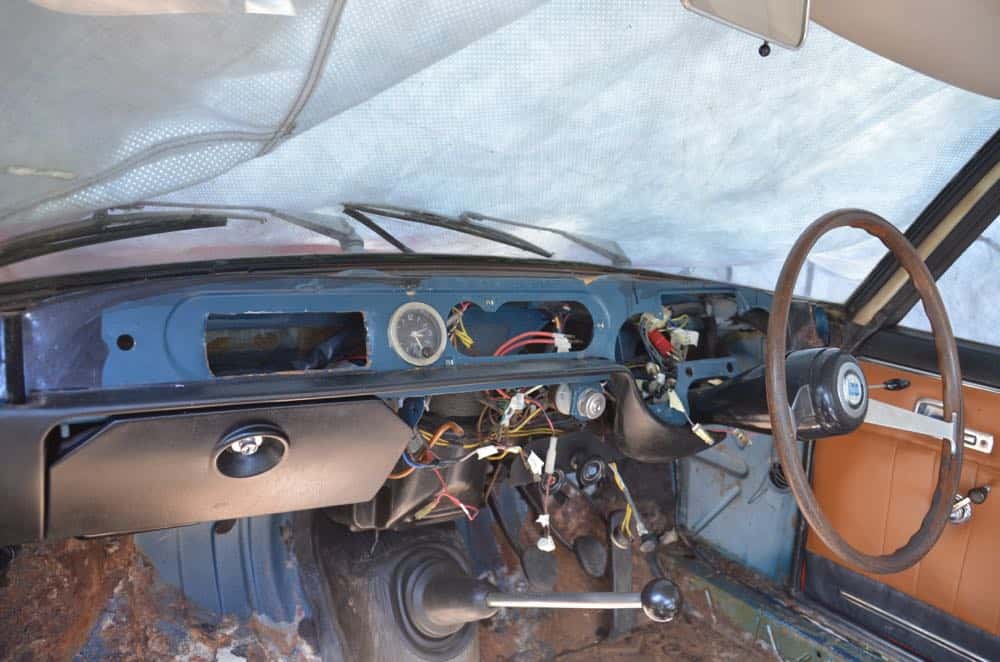
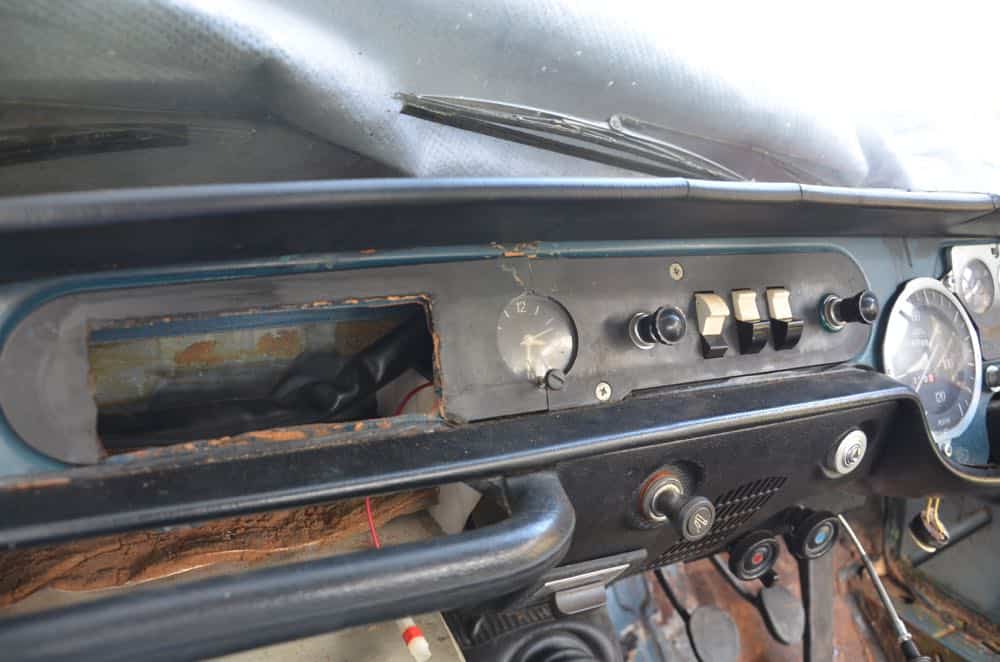
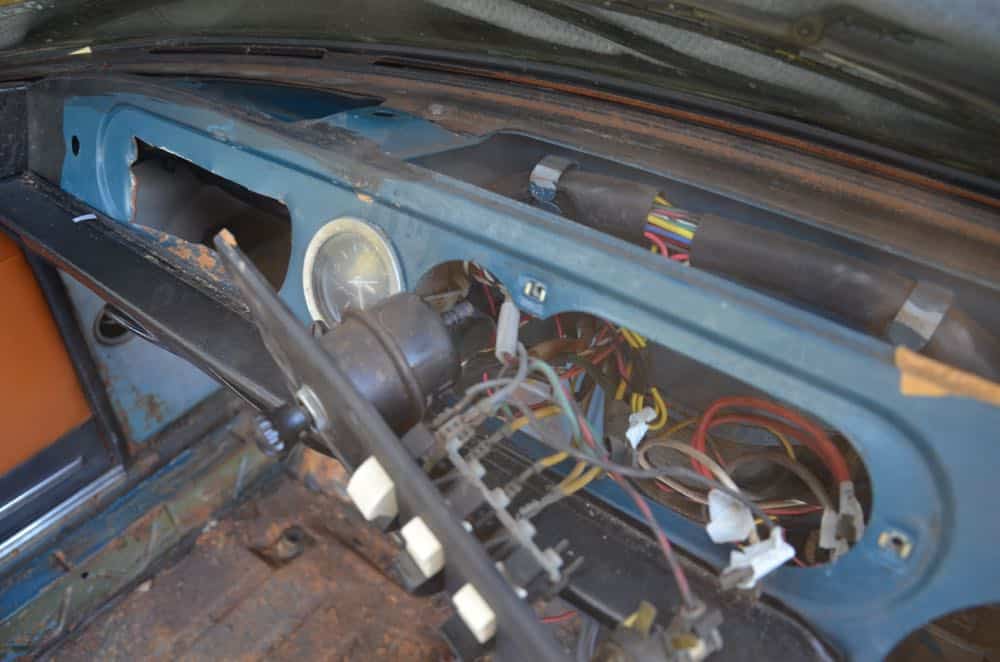
My first job was to remove the clock from the dashboard, something I couldn’t figure out initially but took all of about two minutes once I saw the fixings at the back of the bracket. The dashboard is now completely clear of instruments and is just a mess of wires. And heating stuff.

Remove Pitting From Chrome

While I was inside, I decided to have a crack at some of the pitted chrome. Most of the metalwork on the Fulvia – especially the outside trim – is actually stainless steel. No problems there. There are some old fashioned chrome pieces, however, and these have succumbed to pitting over time.

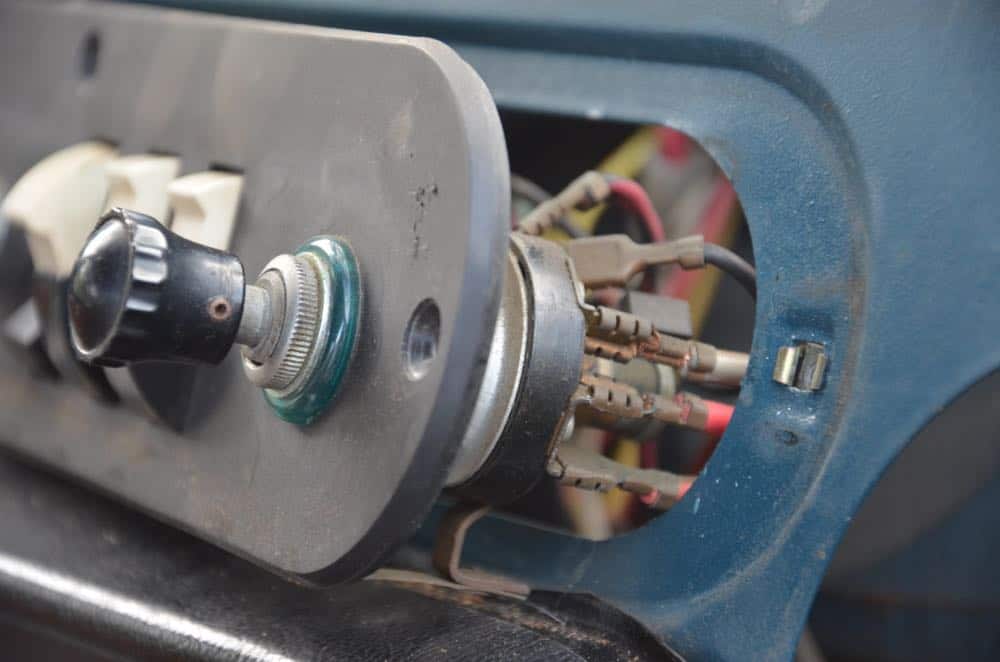
Here’s the housing for the indicator stalk, for example:

I looked up a few resources for advice on how to remove pitting from chrome and I was amazed at how quickly and easily you can treat this. It isn’t a permanent fix, of course. You’d probably need to get things re-chromed to have yourself a real long-term solution. But this quick fix will most likely last quite a while.

The solution I found: aluminium foil and a little bit of water.

I simply tore a strip of aluminium foil about 5 inches wide, folded it to make a suitable sized square, added a little bit of water and rubbed the piece until it looked almost like new.
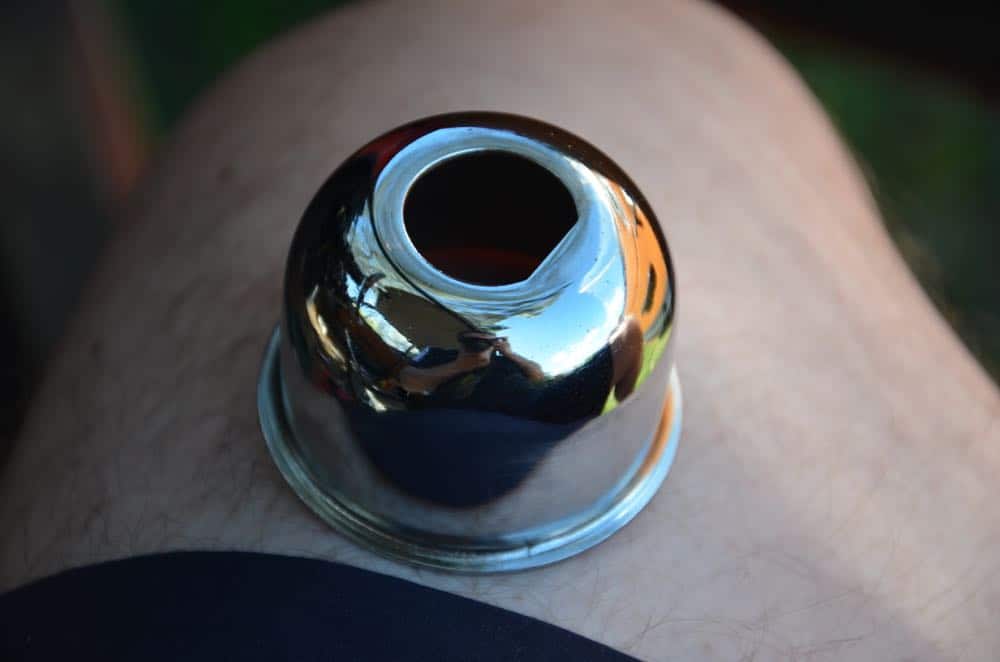
It took all of about 10 minutes to clean the majority of it up. The grooves around the edges will need a little more work but it was good enough to screw back on for the photos above.

I found this handy tip here. Go there for a fuller explanation, but in short….

The aluminum oxide that is created by friction when you rub the surface of the chrome leeches the rust away and when combined with the water you added creates it’s own polishing compound so you end up with a clean, smooth, shiny surface.

I could still see evidence of the pitting after I’d done this so I’m sure it’ll get ugly again after a while but for the moment, it’s looking good.

——

Headlamp Covers

This was a small job that I couldn’t get finished. These headlamp covers are secured by just one screw each but three of the four screws were rusted on and attempt to get them off just rounded the hexagonal head of the screw. The headlamp surrounds are stainless but the fixings aren’t.

These screws are the first items I’ve come across that have been difficult to remove. I might have to get out the drill to get them off. The one on the left in the second photo is the only one that came off.

——

Radiator

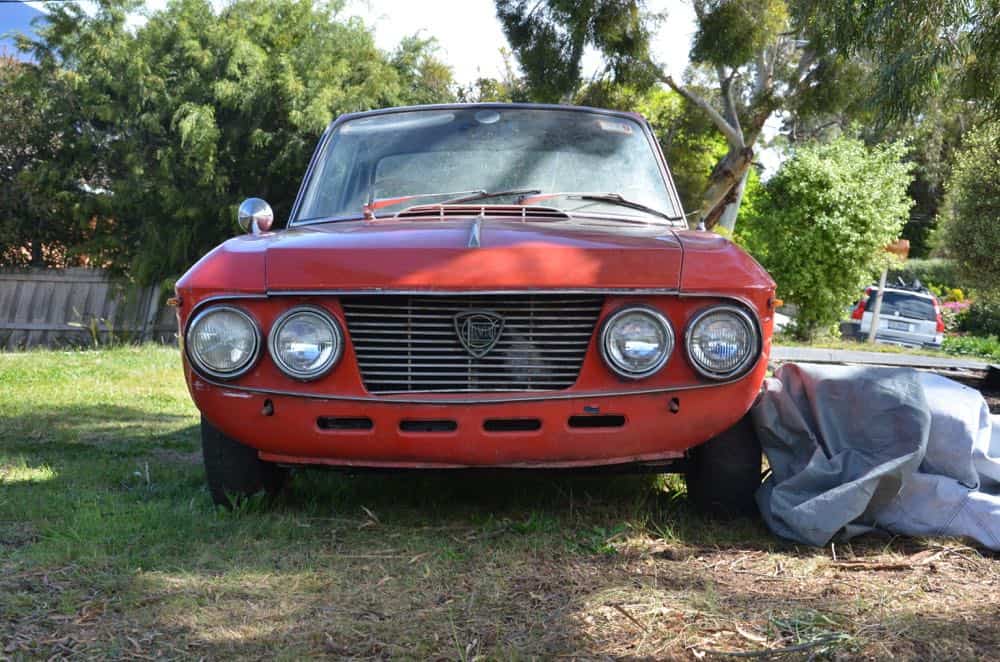
While I was at the front of the car I figured I might remove the grille and take some more photos of the slanty front end. To get the fixings for the grille, however, I have to remove the radiator.
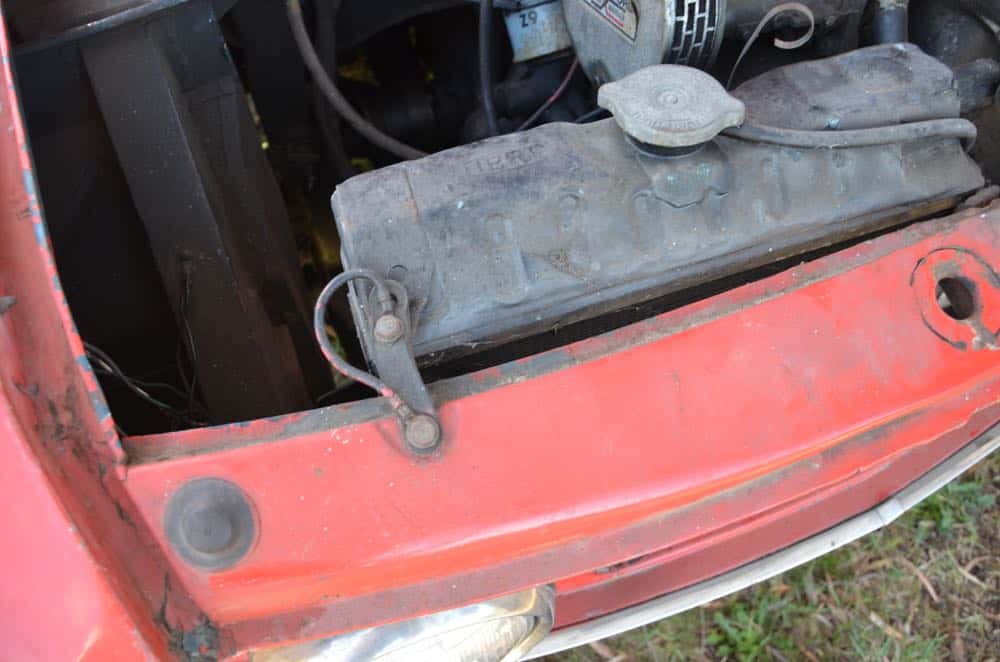
The top hose was very squishy but yielded eventually. The little strap bolts to the left came away easily enough. There are four more fixings at the bottom, however: Two bolts and two more hoses. I got the bolts out quickly but we had to go to the movies so the two hoses are still attached (we saw “Finding Vivian Maier” and it was good).

——

It feels like I got next-to-nothing done while I was tinkering on the Fulvia yesterday but I guess that’s the way it goes sometimes.

Lancia Fulvia Update – Colour

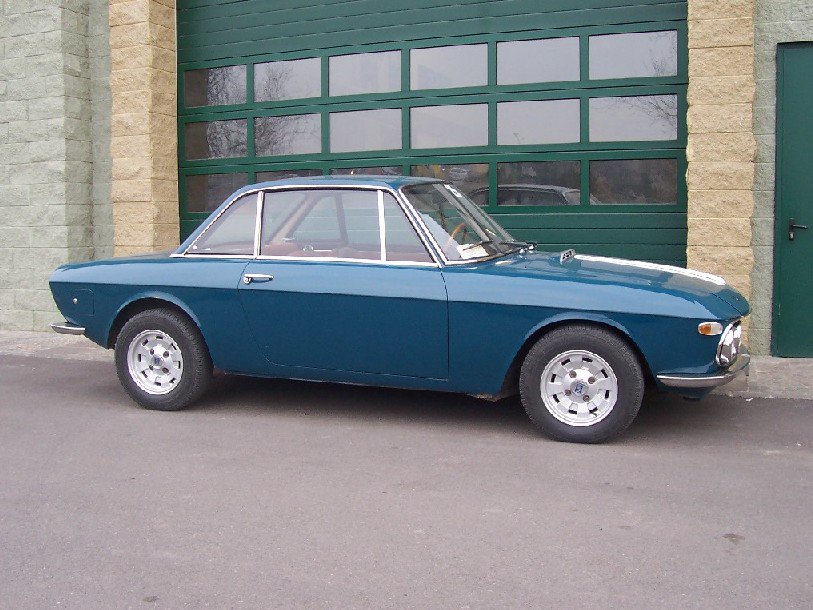
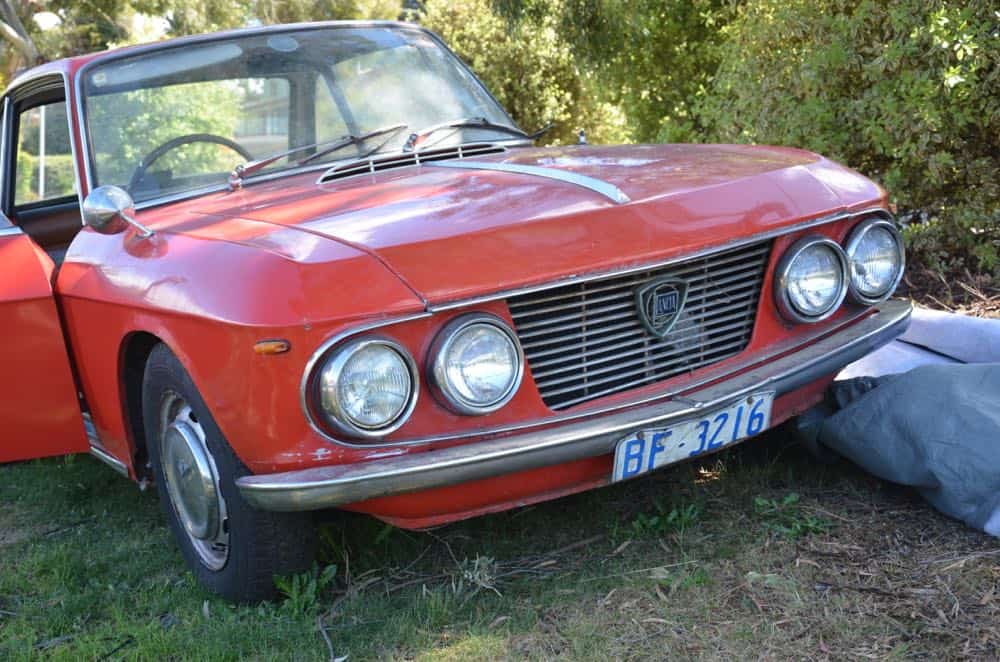
I found the following photos online. This car is for sale in England at the moment. It’s a 1967 Lancia Fulvia 1.3 Rallye.

I’m posting the pics because I’m pretty sure this is (close to) my Fulvia’s original colour.

——

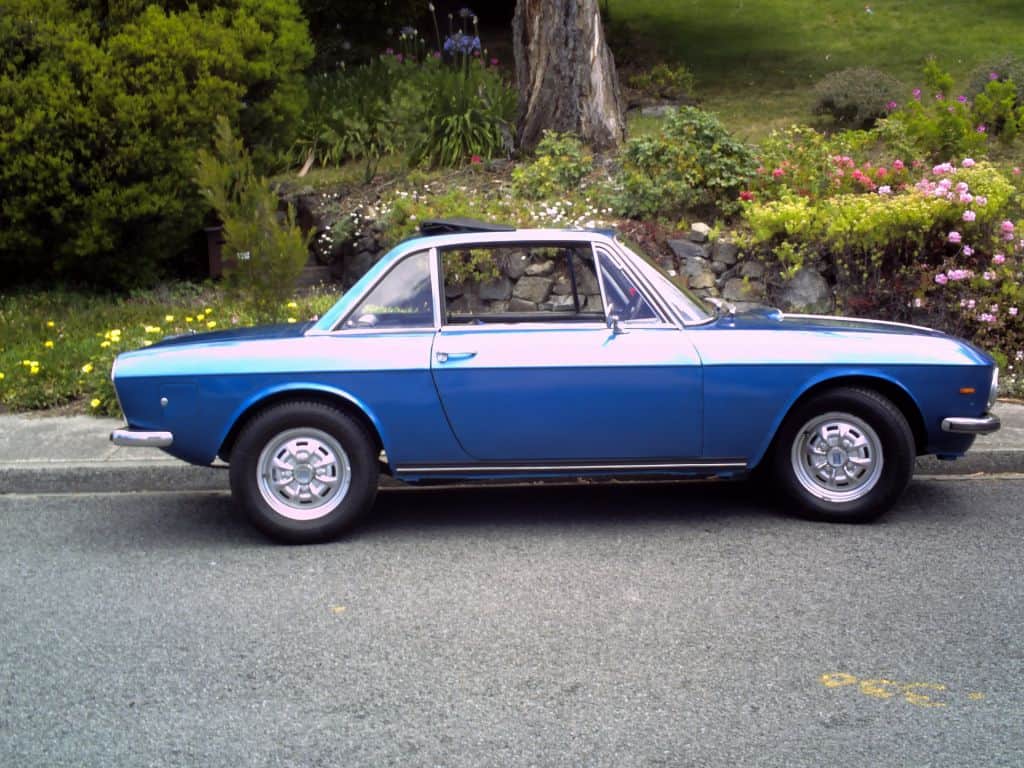
It’s called Mendoza Blue. The pics above look a little green compared to the colour I see on my car, but I did a search for “Lancia Mendoza Blue” online and found this image, which looks spot on.

Here’s some of the blue I’ve uncovered on my car….

What do you think?

I wasn’t a fan when I first uncovered this blue but it’s growing on me. Quite a lot, in fact. I’m not sure how it would look bumperless, but still…..

I got to thinking about the original colour again over the weekend as I did some more stuffing around with the Fulvia in my front yard. I didn’t get much done, sadly. Just a few more items removed from the interior, some cleaning up of pitting on a few chrome bits (photos soon), I made a start on removing some more exterior trim (rusted on screws, be damned!) and a start on removing the radiator. I had a few fiddly connections to deal with on the radiator when I ran out of time last night, but it shouldn’t take long to finish off.

But back to colour…..

I have to paint the car. That’s a no-brainer.

Normally I’d prefer to keep the car in the colour that I bought it but the red that exists now is not original so I don’t feel bound to anything except my budget and my own free choice. Red is nice. Very nice, in fact, but then everyone who has a Lancia Fulvia seems to paint it red.

The original colour is this Mendoza Blue, which I do like, but I’ve always been more partial to the creatively named Lancia Blue, which is a dark navy blue colour. I think Lancia Blue will wear the bumperless look quite nicely, too.

Going Mendoza Blue would mean a (slightly) easier and less expensive job, but then there’s so much to do that going the extra mile for a complete change of colour shouldn’t be that big an issue.

I do like the Mendoza Blue but I have to say I’m a bigger fan of the bumperless look and either red or Lancia Blue will work better with that.

What do you think?

Lancia Fulvia – Traumatic Bonding

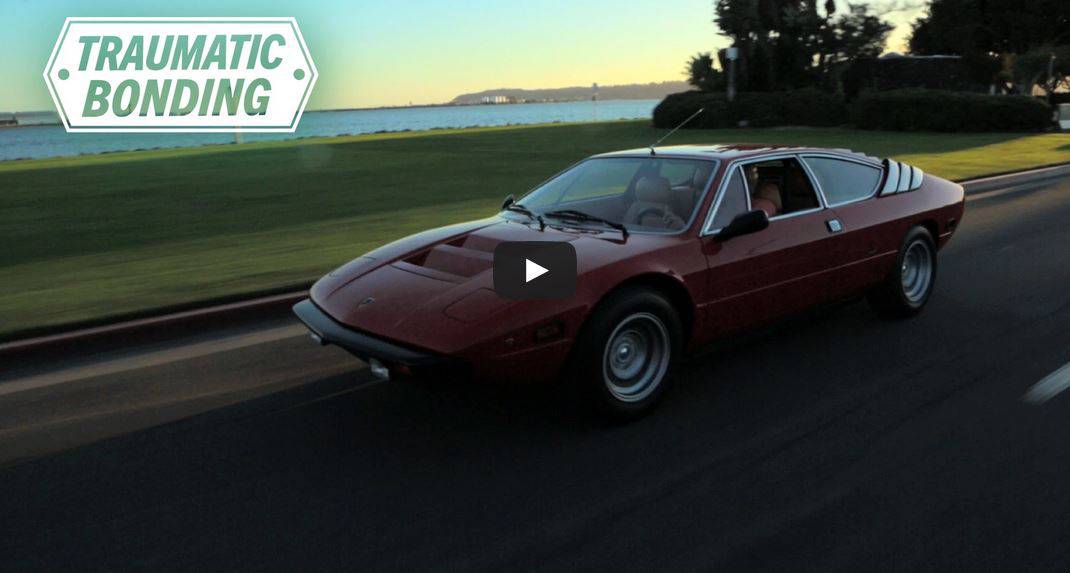
I watched the new Petrolicious video this morning. It’s called “Traumatic Bonding” and it’s about a guy who bought a Lamborghini Urraco back in the 1980’s and subsequently spent a whole bunch of time and money fixing the car up.

I could only nod my head as I watched it and trembled ever so faintly with fear for the future. Excitement, too, but just a little bit of fear.

Here’s the video. It’s about 8 minutes long.

——

Right now, I’m at a tipping point with the Fulvia. I’m dismantling the car but nothing that I’ve done has made the job of restoring it any harder. I haven’t spent any real money on it yet but that’s just about to change (read below).

I have no intention to walk away but if I were thinking about it, now would be the time. The car is still in a condition where it can be restored. It’s 99% complete but everything needs fixing. It could be sold as-is. In fact, I’ve even heard of a prospective buyer who has the skills and the resources to do the job. I could even make a tiny profit if I were of a mind to do so.

I’ve made my first enquiries about replacement panels for the floor and the sills and the costs are a little scary. Just a little. I’m going through Omicron, in England, because they’re the ones with the best reputation and the most comprehensive range of in-house parts and services, and price comparisons with other, similar companies were competitive. The sections I’ve been quoted on – front and rear floors, sills, quarter panels and two rear light housings and lenses – come to just under £1,400. That’s $2,500 Aussie dollars.

What’s scarier is the freight. The supplier has obtained one freight quote so far and it’s £453!!! That’s more than A$800 just to move bits from one place to another.

I’m waiting on him to get a few more quotes.

I also took the top dashboard pad to a restoration company in Melbourne last weekend while visiting my family. The cost for restoring and re-covering – $395. Not unexpected. Maybe $100 more than I thought it would be.

I don’t want this to be a five-seven-ten-twelve-year process. I want to get this car fixed and use it as often as I can, as soon as I can. I want to do as much of it as I can myself, but I know that I’ll have to pay skilled people to do a LOT of the work.

I’ve set money aside and I’m emotionally invested in this process already, but I’m not made of money and I have to try and be as financially responsible as possible. When I see $800 freight bills I start to wonder about my own sanity.

Thankfully, this will probably be the biggest single parts purchase for the car (at one time) and getting the floors replaced is a significant part of the body repair. I just hope the rest of it is structurally sound and fixable without having to resort to a life of crime in order to get it done before I’m dead.

Again, we come to that idea of the tipping point. Maybe I should try and get one of the Bocchino brothers out to see the car and tell me if the rust is terminal, if the seized engine is fixable and whether or not the car’s skewed front-end can be realigned.

Can this job actually be completed or am I nuts to even try?

I’m committed to my little Lancia Fulvia and I want to enjoy both the process and the end result. Maybe I just need to know a little more about what the process is going to entail. And maybe I need to start looking harder for supplies that aren’t going to blow a third of my budget on freight. I’ll use Omicron for the crucial custom made parts because they make the best stuff – and they’ve already been a valuable source of advice – but there must be a way to source some generic stuff at a more wallet-friendly price.

Traumatic bonding, indeed.

Lancia Fulvia Update – Glimpse

I did a little more work on the Lancia Fulvia today. It doesn’t feel like much was achieved, but it sure was time consuming!

When I last left you, all this stuff was still in the car with the exception of the panic handle….

The main focus for today was to finish getting the central part of the dashboard out.

On the right side of the photo, above, you can see the main areas worked on today – the two knobs and three ‘piano switches’ on the black strip, and the lower-central dashboard padding located below that black strip.

The lower part is the one I worked on first. You have to unscrew the ring around the ignition first. This is one of the securing points (I love you, Lancia). There is a screw inside where the instrument cluster used to be, and two screws inside the glove compartment. The final thing holding it in is the wiring attached to the cigarette lighter. One is a clip, the other had to be cut.

Voila!

Next was the somewhat tougher task of removing the upper section, with the two knobs and the three ‘piano key’ switches.

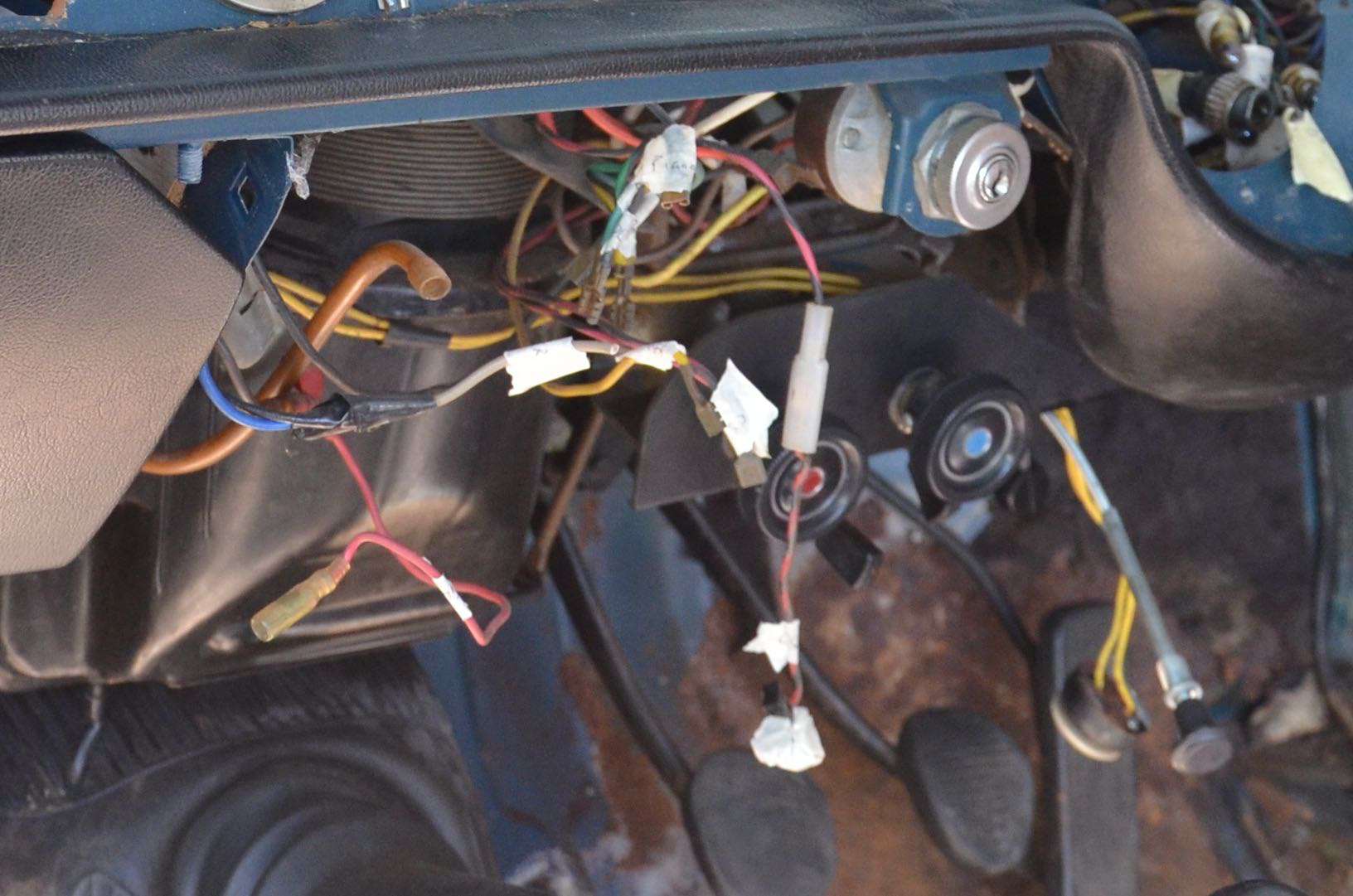
There was wiring a-plenty here. These controls operate your wipers, washers, lights and heating. The knob on the right has 7 wires attached to it all by itself! The labelling of the wires and the terminals on the back of the switch is what took up so much of my time today.

You can see there’s a little hole in the side of the knobs in the photo, above. Sadly, even though I have a selection of very small hex keys, I didn’t have one that would fit.

The knob on the left was connected by two vacuum hoses only.

This is what I’m left with now that the centre section is cleared. I have a clock and a whole lot wiring to pull out, along with the heating system.

I didn’t want to start on that stuff today, though. Working in the interior is very awkward at the moment. The car is parked sideways across a slope in my front yard so balance can be a problem. I need to put at least one seat back into the car, too. That’d make life a whole lot easier.

So, with the interior done with for today, I thought I’d turn my hands towards getting a glimpse of the future. I want to rebuild my car without the front and rear bumpers so it made sense to take them off and see how it looked.

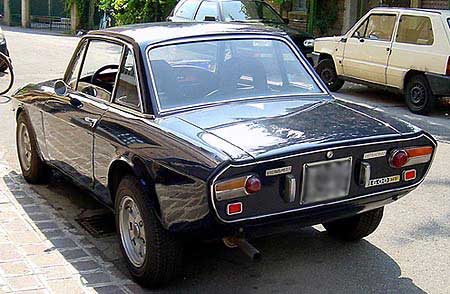
Rear, with bumper…..

And rear, without the bumper!

I much prefer it without. What do you think?

Next, the front end with bumper…..

And the front, without the bumper!

Much better!

The bumpers were fixed by 17mm bolts/nuts and were easy, if slightly awkward, to remove. I also removed the bumper mounts from the front end, though I couldn’t get to the mounts at the back of the car today.

This front-on view has me worried, as it always has with this car. It looks a bit like Bugs Bunny after doing 10 rounds with Muhammad Ali. It seems to have a lopsided toothy grin. Hopefully the fundamentals are OK and it won’t take too much fettling to get into line again.

I’m off to Melbourne on Saturday evening and while I’m there, I’m going to drop my dashboard in to The Dashboard Doctor for some repair work. There are numerous cracks along the top and the whole thing needs to be re-covered.

I’ve also made my first big order of bits to get the restoration underway, with new floor sections and sills on their way from Omicron, in England.

I’ll do a run down of the costs once the order and freight are finalised.

Cheers!

Lancia Fulvia Update – Interior (Still) Coming Out

A little diversion first, shall we?

Last weekend I had the chance to drive a blue Series 2 Lancia Fulvia here in Hobart. The car is (tentatively) up for sale and the owner got in touch to see if I’d be interested in coming to have a look.

He didn’t have to ask twice!

It was wonderful to finally get some seat time in a Fulvia and make contact with an owner who’s been through the ownership experience, including a partial restoration.

I won’t be making an offer on the car because I realised as we drove the blue S2 that I’m far too engaged with my little red Series 1 and I don’t think anything’s going to tear me away from that at this point.

If any Aussies are interested in a blue S2, though, let me know via email and I can put you in touch with the seller. He’s not actively looking to sell at this point, but maybe you and he can work something out. Fulvias don’t come up for sale in Australia very often.

——

Last time I updated you on my Lancia Fulvia, I’d just taken the seats and floor coverings out and finally got a look at the floor, which is pretty well rusted.

Since then, I’ve done a few sessions on the dashboard, which is packed with switches, gauges, nuts, bolts and screws. I got some Fulvia repair manuals online but the information in them about dismantling the interior is sadly lacking. It’s been a case of taking what little info there is, asking a few Fulvia friends for help and when all else fails – just going for it!

The first task was to remove the wooden fascia on the dashboard. There are two control knobs just above the steering wheel. The one on the left resets the tripmeter. The one on the right is a dimmer switch for the dashboard lighting. But together, they also secure the wooden dashboard fascia on the driver’s side of the car.

Undo the threaded sleeves holding these on and that’s two of the three nuts holding the wooden fascia done with. The third and final one is inside and just above the glove compartment.

And here’s the dashboard with the wooden fascia removed…..

Removing the gauges was fun! They were all quite easy to remove with just a screwdriver and the various cover plates were just clipped into place. The toughest part was labelling all the wires that connect into the back of the central cluster. The wires are all covered in masking tape labels now, with matching labels on the back of the gauge itself.

The next task was to take off the top dashboard pad. This is fixed in four places. The first two bits to remove are actually the air vents on either side of the dash pad. I kept feeling around the back of the vent for some screws to release the vents. I tried just pulling them out (though not with much force). I then had some helpful advice from a Dutch friend telling me about the spring release system that holds them in place. You can see the curved bits of metal inside the vent. They sit in a groove in the metal. Simply pop them out with a little bit of leverage from a small screwdriver and the vents come out easily.

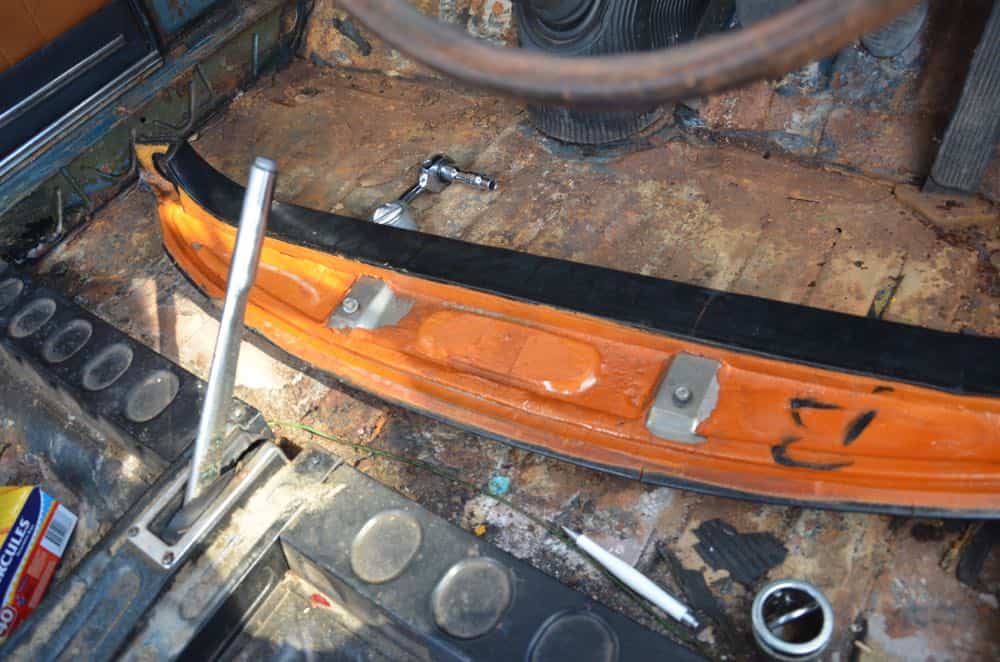
The other fixing are underneath. Two 10mm nuts that were easily accessible from underneath the pad, inside the dashboard. Here’s the dash removed and turned upside down, showing the location of the fixings.

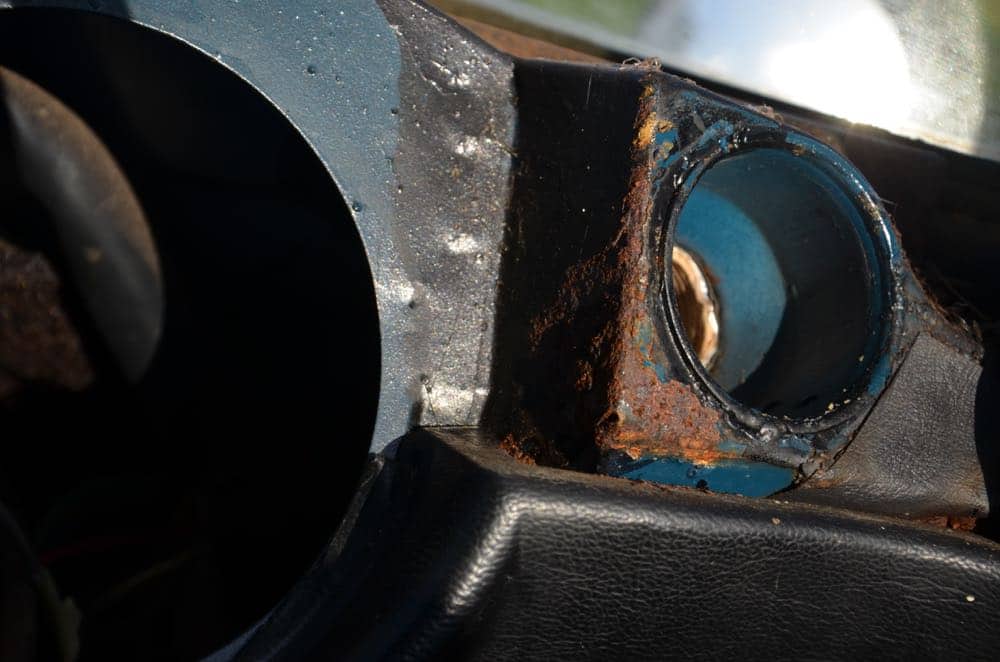
Removing the dash pad revealed some more rust in the top RHS corner of the dashboard. There must have been a windscreen leak in this area. I’ll show you some more rust from that in a moment.

The lower dashboard pad on the driver’s side was secured by two tiny little 8mm nuts that were a complete pain in the backside to undo (until I stopped trying to use my small shifter and trudged down to the garage for an 8mm spanner!)

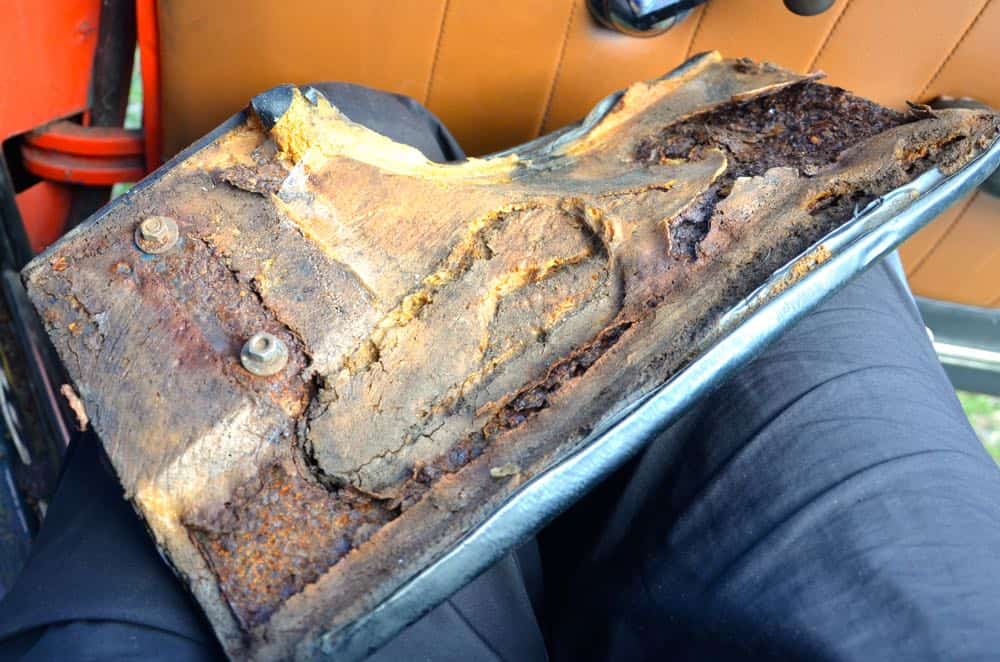
You can see from the photo above, where the lower dash pad was removed, it revealed a little more rust in the metal. The lower dash pad itself is your usual foam with a vinyl covering, but it seems to be formed around a metal mould. The metal in the dash pad itself has rusted quite badly – that likely windscreen leak, again – as you can see from the photo below.

The last task for this evening was to remove the ‘panic handle’ from the passenger side of the dashboard. This was held in by four fixings: two inside the glovebox and two inside the handle itself. Important to note – the of the glovebox bolts also acting as a fastener for this blue wire to the body (presumably an earth, maybe for the clock?)

——

I’ve still got the central cluster of switches and instruments to remove, which I’m told will get very tricky when it comes to the ventilation system. Then there’s the lower dash pad on the passenger side, including the glove box.

Onwards and upwards!!

Fulvia Friday – Turin 1966

I recently purchased some Lancia Fulvia documents on a CD and included was a whole swathe of Fulvia photography – the sort of stuff I used to scour the internet for in the Saab days. Press photos, advertisements, artistic interpretations. All sorts of stuff.

So welcome to Fulvia Friday.

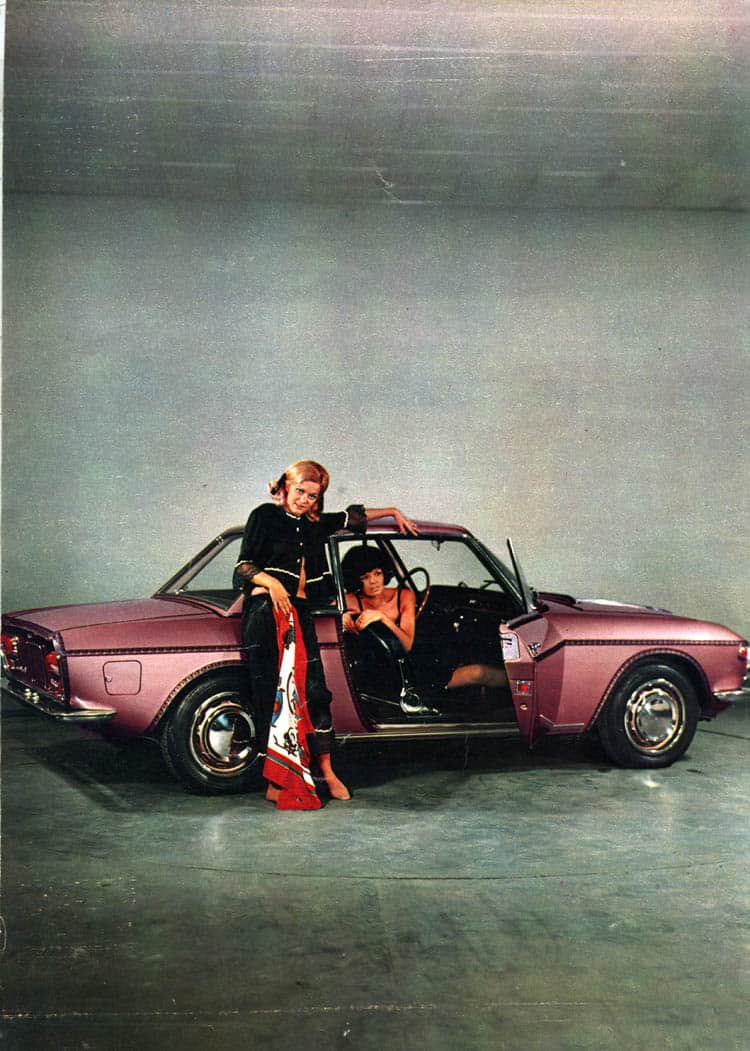
I’ll kick things off with this interesting Fulvia from the Turin Motor Show in 1966. No, I don’t want to paint mine in this colour scheme, but I’m really glad that somebody did. There’s something very 60’s and quite cool about it.

I like it.

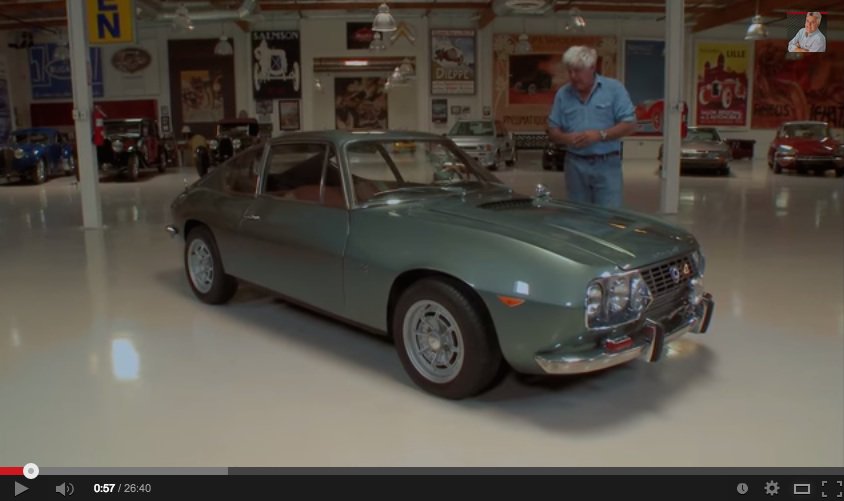
Jay Leno And The Lancia Fulvia Sport (Zagato)

Jay Leno gets all sorts of cool stuff coming through his garage. Most of it he owns, but occasionally he brings in someone else’s car to show it off. Such is the case with this Lancia Fulvia Sport.

The video is around 25 minutes long and provides a great overview to the Fulvia, albeit with the alternate Zagato body.

For those unfamiliar, this is basically the same as my Fulvia, but Lancia had Zagato build some bodies for them until 1972. This is one of those cars. Mine is the regular coupe made by Lancia itself (they made a sedan called the Berlina, too, but that’s another story).

Anyway, the main difference is in the body styling. Underneath, it’s basically the same car.

Enjoy.

Lancia Fulvia – First Photos

Things have been busy with my guitar building course taking up so much time, so it’s been hard to find time to do anything with my new Lancia Fulvia.

Here are the first photos of the car. I haven’t cleaned up a single thing yet so you’re seeing it warts and all. It was good to finally take a close look at everything. There’s a LOT of work to do but having looked the car over pretty closely, I feel even more confident that it can all be done. It’s just a matter of time and money. I have plenty of the first. Hopefully I have enough of the second.

——

Exterior

The red paint is not original and will eventually be replaced. My current thinking is a dark-ish blue. The paint’s in poor condition and who-knows-how-much bog is underneath. The car was first described to me as having had more hits that Frank Sinatra and whilst it appears straight, I ear it’s true.

Here’s a telltale worrying sign – the crooked grin on the front. The left side seems to be slightly lower than the right.

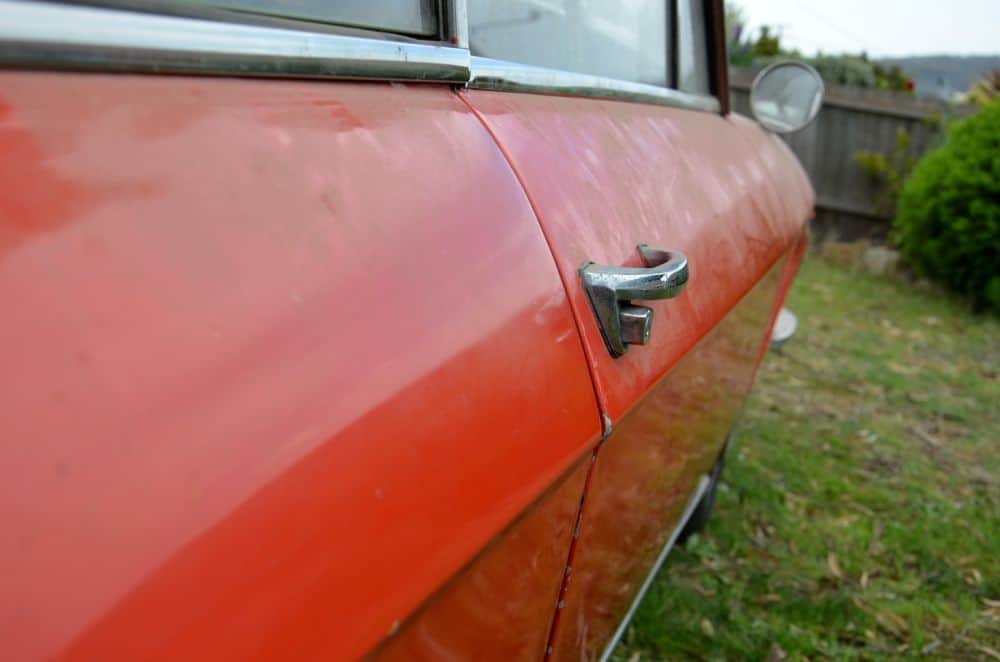
You can also see some misalignment with this view down the side of the car with the door not quite matching the rest of the car:

There are a few spots of rust apparent, mostly in the sills and likely in the floor. Both were expected and new replacement metal can be ordered easily enough. From what I can see, the all-important subframe appears to be intact.

Here are some more external photos:

At first I thought the windscreen was intact but then noticed a crack when I was sitting inside the car. I’m sure I can get one eventually but the price will be interesting!

Much of the brightwork is OK. The window trims, for instance, are quite good and can be retained. The stainless steel trim around the boot is pretty dented, however, and hard to replace. The dents in this headlamp trim (below) might be hard to see, but are significant.

Engine Bay

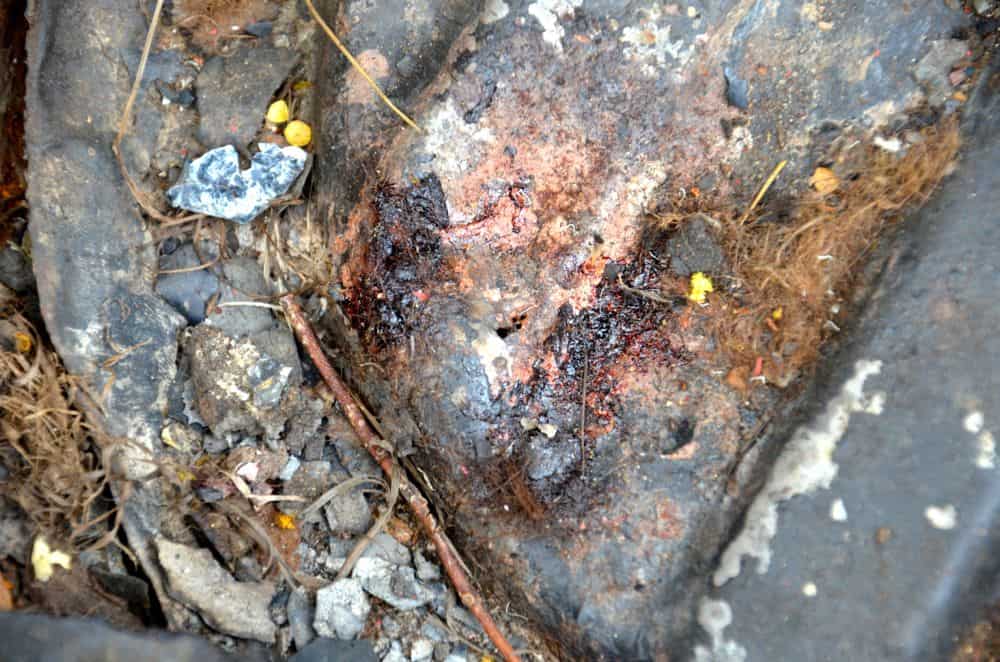
This little Lancia Fulvia played host to some rats for some period of time and they seemed to like using the privacy of the engine bay for their toileting. Rat poo abounds! I restored a little of the Fulvia’s dignity by sweeping what I could out by hand after taking these photos but I’ll need to haul a vacuum cleaner (and a very long extension lead) up to the front yard soon to clean out the rest.

The boot (trunk)

We’ve removed the boot lid and the inside’s not terminal, but not exactly pretty either.

I peeled away some of the material covering the fuel tank and noticed a tiny little hole peering back at me. I’m not sure if it can be repaired (I’d like to keep as much of the original fittings as possible) so that might be another replacement item.

The Interior

There’s plenty to do on the inside, too. The seats need reupholstering, the dash needs some new timber as well as re-covering or replacement of the top pad, and who-knows what state the wiring’s in? The roof lining appeared to be intact at first glance but soon revealed a 1cm hole above the passenger seat. The wooden steering wheel has a number of small cracks in the timber but I’ve been thinking of replacing that with a Sandro Munari two-spoke wheel anyway. All the brightwork is intact, which is a bonus.

Dismantling the interior will be the first job I do in a couple of weekends from now.

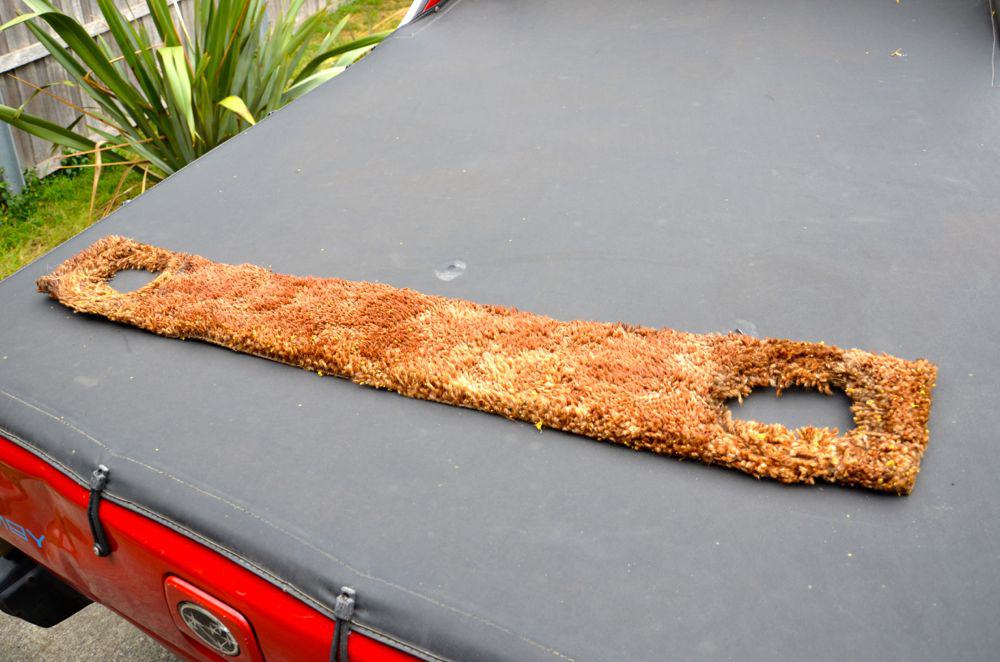
The shagpile rear parcel shelf came out quickly and is now in the bin 🙂

——

When we first got the car home we set to work finding out why the boot lid was stuck up in the air. We managed to squeeze our arms inside and undo the hinge bolts to remove the lid and found that the hinges were stuck fast. We got one moving a little with some Penetrene but the other still won’t budge. Dismantling comes next.

I’ve also started applying some Penetrene to the cylinders to help un-stick the engine. This will be a long process, so I’m putting a little more in every few days to let it soak. The engine will have to come out anyway for dismantling but at least it feels like I’m doing something to contribute to the process in these early stages.

That’s your introductory look for now, a warts-and-all view of the Lancia Fulvia I’ve just bought. There’s not much I can do myself in terms of proper repair but dismantling, some preparation work and then reassembly should be within my meagre abilities.

Thanks for looking!

Exit mobile version