Movie Review: Mary Meets Mohammad

I have to think very long and hard about whether or not what I experienced today is something I’ve experienced before. Today I sat in a movie theatre with around 75 or so other people, and not one single person moved from their seat until after the movie’s credits had finished. When the credits finished, the hushed theatre broke out in a round of applause before people started to make their way out the door.

Such is the power of this film to make you think, to make you examine your own attitude towards an issue that remains very topical here in Australia – asylum seekers.

When refugees take it upon themselves to migrate to Australia outside of the official channels, they are detained until their case can be investigated and assessed. They are asylum seekers, looking for protection from persecution in their home countries. If their situation is found to be legitimate, they are eventually allowed to stay. If not, they are deported to their home country. The debate in this country is mainly focused on where/how they are processed and how long it takes.

Mary Meets Mohammad tracks the meeting of two vastly different cultures.

The first is that of Mary, a 71-year-old Australian woman who belongs to a knitting group in a community near the detention center. The group decides to knit woollen hats (called ‘beanies’ here) for a group of asylum seekers who are sent into mandatory detention here in Tasmania.

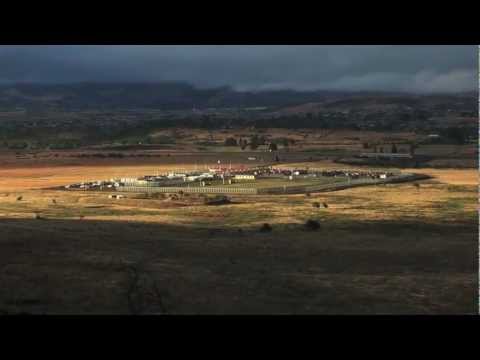
The facility they’ll be living in is new and the movie opens with a community meeting in the area where the asylum seeker detention center is to be established. Tension in the community is high. Tasmania successfully accepted hundreds of temporary refugees from Kosovo in the late 1990s. This time, with the refugees all being men from Iraq, Iran or Afghanistan – and despite the fact that these men will be living in detention, with big fences surrounding them – there’s a lot more fear in the community.

The filmmaker interviews a number of locals living close to the detention center and it’s confronting to see the prejudices evident in people’s words. It’s these sections of the film that were the most powerful for me. This documentary was made in Tasmania. What you in see, the prejudice, fear and misinformation, is a reflection of the community that I live in. It’s not confined to Tasmania, but it’s all the more confronting because whilst this isn’t me, my wife, our friend Sarah who we saw the film with or many of our friends, it is still US as a collective. The reflection is difficult to take in.
—-

As you can see in the trailer, Mary’s initial attitude towards the asylum seekers is that they’re heathens and cowards. She declines participation in her knitting group’s charitable act at first. Eventually, she’s part of the group that visits the detention center to deliver the beanies and it’s here that the changes begin. Mary, like most of us, is open to learning the truth about what are generally a desperate group of people.

At one point, Mary meets a group of old friends from the local Seniors Group and a discussion ensues about the asylum seekers. The opinions shared by her Seniors friends are caustic, almost offensive. You can tell that Mary is doing her best to remain calm amidst their misinformed claims. More importantly, however, is the implicit understanding in Mary that this is how she used to think. As viewers, we’re confronted by the film as a mirror to society. This scene is Mary’s personal mirror as to how she used to be, how she used to think.

Mary’s main point of contact inside the detention center is a young Afghani named Mohammad. He fled Afghanistan to live in Pakistan with his family and they remained there, facing genuine threats from the Taliban, while Mohammad made his way to Australia.

Mohammad is eventually released into the community and the friendship between he and Mary is genuine, unexpected, and touching.

Mary meets Mohammad is an important film that all Australians should see. Unfortunately, it’ll most likely only be seen by a relative handful. The filmmakers are hoping to raise enough money to take the film on tour around the country. It’s a real eye-opener; a film that forced me to examine my own thoughts on the issue and a film that will educate you on the reality of who these people are.

The Tasmanian experience is much more humane than the situation faced by asylum seekers sent elsewhere by the Australian Government. What you see here will embarrass you in terms of Australian prejudice, but it doesn’t shock you the way the film might have if it were focused on Australian detention centers in Manus Island or Nauru.

My own thoughts – Australia does need to address how it processes asylum seekers. It needs to be faster and more humane. I can understand the need for it to be an ordered process and I understand the need to prevent people from jumping on rickety boats that are prone to sinking on their way here. But there’s got to be a better way and there’s got to be more understanding in the community.

I could make some minor complaints about the film dragging in some areas, but that would deflecting the point. This is an excellent piece of work and I hope as many eyes see it as possible.

Movies: Silver Linings Playbook

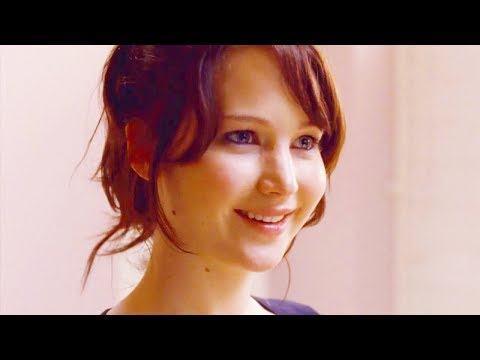
We tried to see Silver Linings Playbook three or four weeks ago and it was sold out. It was still packed solid tonight. Was that due to Jennifer Lawrence’s Oscar win for Best Actress? I don’t think so. I think this is just a damn good movie and people are coming to see it on the big screen while they still can.

Here’s the preview……

And here’s what the preview doesn’t tell you:

Pat (Bradley Cooper) has recently been released from what is essentially a prison hospital. He has a Bi-Polar disorder that was most recently set off by discovering his wife in the shower with a work colleague.

Desperate to win back his wife’s love, Pat returns home to his rather disjointed family and tries to get back on his feet – reading, working out and trying to find a strategy to cope when one of his ‘moments’ threatens his inner peace.

It’s during this pilgrimage to normality that Pat meets Tiffany (Jennifer Lawrence), who’s also pretty screwed up after the premature death of her husband. In short, they’re both messed up and they both have messed up families trying to care for them. Whether they find each other because of, or in spite of their troubled circumstances is a matter for discussion. Find each other they do, however, and it’s a heartwarming story.

Silver Linings Playbook isn’t your typical romantic comedy. It feels kind of silly saying this, but it’s almost as if it’s a guy’s romantic comedy. The film is set in Philadelphia and hovers around Pat’s football-mad family home. It’s a tough town and in comparison with your typical rom-com, this can be a rough, raw and honest film. Pat has a mental illness and whilst the movie doesn’t go into it in-depth, there are moments in the film that you can feel them trying hard to portray the tension within. Sometimes it works (looking for the wedding video) and sometimes it doesn’t (the football game). But kudos to the producers for exploring the theme in what is an unlikely setting.

There are some genuinely funny moments in there, too, and our theatre was alive with laughter on a number of occasions.

All of the performances are first class. I didn’t see the other nominees for Best Actress but Lawrence was superb in this movie. She’s tough, sassy, accessible and vulnerable all at once. Cooper really impressed me as well (and it’s fair to say I’m not a big fan of his previous work). Robert De Niro is his usual, excellent self as Pat senior and a special nod goes to Australian Jackie Weaver as Pat’s long-suffering, beautiful mother.

The best line of the movie comes from De Niro, poignant and wonderfully delivered at the peak of the film:

“When life reaches out at a moment like this it’s a sin not to reach back”

Maybe that’s Silver Linings Playbook in a nutshell – fighting to regain your life in an honest way and having life respond to you. Looking for the silver lining and having it emerge, as it usually does, from the unexpected. And finally, doing what can be the hardest part – embracing it.

Silver Linings Playbook has a slightly contrived ending but it’s a heartwarming and fitting conclusion to a story well told. It’s a story that’s serious as well as seriously funny. A story of the good things that can happen unexpectedly when you’re just being yourself. Most of all, it’s a pretty honest portrayal of conflicted characters and families who sometimes get themselves into trouble but support each other all the way though it.

4 out of 5 stars from me.

——

Movies: Django Unchained

The first Tarantino movie I saw was Pulp Fiction in 1995. I had no idea what to expect when I walked into that cinema and it’s fair to say I had no immediate idea what I’d just seen when I walked out with my jaw on the floor.

Django Unchained is no Pulp Fiction, but it’s still pretty damn good.

Tarantino’s made enough films now for people to know the formula, but not so many that the formula has become tired.

A distinct plot with a first class script, excessive stylised blunt-force violence, a killer soundtrack and more often than not, something big and unexpected. Django Unchained has all that, though because it’s another new genre for Tarantino it’s a little bit ….. different.

The performances in this film are exceptional. Jamie Foxx is great as Django and Leonardo Di Caprio – the boy actor now definitely a man – just keeps getting better. Samuel L. Jackson is wonderfully annoying as Di Caprio’s house negro but it’s Cristoph Waltz who steals the film.

Tarantino’s movies always surprise in one way or another and for me, it was Waltz as Django’s owner/mentor/liberator/partner who sets this film apart. His manner is perfect and his lines are written and delivered with panache.

Stylised sensationalism is the name of the game in any Tarantino movie and Django delivers in spades with big scenes, big laughs (the klan scene is a masterpiece of satire and Django’s valet outfit is hilarious) and of course, big deaths. The blood doesn’t always flow as freely as in the Kill Bill films, but when it comes, it comes in volume. The fine line between entertainment and offence has footprints on both sides, but while it’s sometimes hard to watch, it’s rarely (if ever) out of place. Tarantino uses violence for entertainment, but he doesn’t glorify it.

I may be reaching a little too far here, but I also appreciated the small glimpse into the slavery era, too. It’s something we know about in theory, but rarely consider in detail. I don’t consider this a real depiction by any means, but I’m sure that some of the more distasteful moments were just the tip of the iceberg.

Django Unchained isn’t my favourite Tarantino film but then a Tarantino film is a bit like pizza – even when it’s bad, it’s still really, really good.

3.5 stars (out of 5)

Movies: Flight

Tonight’s movie was the new Denzel Washington film, Flight, directed by Robert Zemickis, otherwise known for his work with Tom Hanks in Forrest Gump and Cast Away.

Here’s the trailer, which goes for 2.5 minutes and should be watched in full to understand this review.

——

Got it?

OK, forget what you just saw, because any notions of heroism and survivor guilt – the themes I get from that trailer – are not central to this film at all.

Continue reading Movies: Flight

Movies: Life of Pi

That Life of Pi is a film well worth your time and money is without question.

It’s a visual feast as well as an entertaining, engaging story. The best bit? Apart from a brief cameo from Gerard Depardeu, there’s not a star in sight except for those that make up some of the brilliant visual effects employed by Director, Ang Lee, in the telling of this unlikely tale.

Pi is a young Indian boy whose real name is Piscine, after a French swimming pool favoured by his unusually large-chested uncle.

Now…… If that sentence seems a little bit strange then rest assured; it will make perfect sense when you see the movie and it’s typical of the way that this film evolves.

Life of Pi is about a shipwrecked boy and how he survives 277 days at sea with a zebra, an orangutan, a hyena and most tellingly, a tiger. The hyena makes short work of the zebra and the orangutan. A short time later it threatens Pi and it’s only then that we see the tiger (and of course, we no longer see the hyena). What follows is the development of a wonderful co-dependant relationship between man and beast in the face of imminent and ever-present danger.

In Pi’s own words, keeping the tiger alive gives him purpose and protecting himself from the tiger keeps him aware.

This is a survival story, a family story, a love story, a psychological story and a fable all wrapped into one. Pi has to survive three-quarters of a year with only a tiger for company. As he learns more about the tiger, he learns more about himself. He begins to understand the lessons his zookeeper father taught him not only about animals but also about life.

Pi is a spiritual searcher; by his own description he’s a hindu-muslim-catholic and this story has elements of the story of Job. It’s a trial but unlike Job, it’s not without rewards along the way. There is a second story in play here, too, but the first one’s far more interesting. You’ll just have to see the film and make the connections for yourself.

Life of Pi is entertaining and it’s visually striking with its use, but not over-use, of 3D effects. It’s never boring though the narrative never quite fulfils the promise made at the beginning – a story that will make you believe in God. The story is enough to make you think about the story, but neither I nor my four companions on movie night felt compelled towards a deeper spiritual journey. It might be an unrealistic expectation, but it’s the promise made by the film itself right from the beginning.

Life of Pi is a feast for the eyes and a heartwarming story to the end. Well worth seeing.

3.5 stars out of 5.

Movies: Les Misérables

I know I’m a little late on this one. It’s been out for a few weeks now, but we only saw it tonight because it was a charity event and the date was set. Better late than never.

I should disclose at the outset that I’ve seen Les Mis on stage – twice. The first time was in the early 1990’s in a professional theatre in Melbourne. The second time was a more amateur, but still very good, performance here in Hobart in the mid-late 1990’s. I’m no Les Mis expert, however. Not by any means.

I’d heard mixed reviews about this film prior to seeing it and I had wondered to myself how such an established stage show would work as a film musical.

The mixed reviews all centered around the quality of the singing. The PR spinmeisters made a point of telling everyone that the singing in the film was recorded live on set. It’s not a studio performance with all of the refinements that a studio performance brings. There’s no miming here – what you see and hear is the performers doing their best at the time the film was made.

It shows, too. Take a look.

——

Yes, some of the singing is much thinner than what you might expect.

I have to say, however, that I was completely surprised – and riveted – by this film.

Continue reading Movies: Les Misérables

Movies: Skyfall

Don’t read this review if you intend to see Skyfall but haven’t seen it yet.

I will talk about plot points during this review, some of which aren’t in the preview below. You might want to keep a few surprises in store.

——

Let’s imagine 5 stars out of 5 represents the perfect film. Silence of the Lambs was pretty much the perfect film. Pulp Fiction was very, very close. The Matrix left a very strong first impression, but has faded on subsequent viewings. The Godfather, both parts 1 and 2, endure to this day.

Casino Royale was extremely close. I’d give it 4.5 stars because it held my interest all the way through with classic Bond traits, characters you could really engage with and a fantastic, twisting plot all the way to the final scene.

Skyfall?

Let’s start at 5 and work back from there.

Continue reading Movies: Skyfall

Electric Car (EV) Movies

If you want to get more of a feel for the recent history of electric vehicles, Chris Paine’s documentaries make for some good viewing on a quiet weekend.

Both movies – Who Killed The Electric Car and Revenge Of The Electric Car – are available on Youtube so if you’ve got some sort of Smart TV setup (I’ve got a little Apple TV box), you should be able to watch them in reasonable resolution on your big screen.

Who Killed The Electric Car

This film reviews the demise of the modern EV, typified by GM’s repossession and destruction of it’s EV-1 lease vehicle fleet. It studies the roles played in the demise of the modern EV by the US Federal Government, California’s Air Resources Board, car companies, oil companies and consumers.

Revenge Of The Electric Car

This film takes a look at the resurgence of electric vehicles, tracking the Chevrolet Volt (and Bob Lutz’s epiphany on EVs), the Nissan Leaf (and Carlos Ghosn’s all-in bet on EV’s), the rise of Tesla (with Elon Musk’s rather stressful life) and a California independent EV-builder’s struggle to establish his business (with a magic looking Porsche 356 EV).

Tesla’s struggle, in particular, is interesting to watch. Even with fantastic products like the ones they have, it’s a massive struggle just to get things started in the car business. Bob Lutz looks a little but smug when he discusses this, but what he’s saying is for real. It’s a credit to Elon Musk and Tesla that they’re still around.

Movie short: Quantum of Solace

I didn’t enjoy Quantum of Solace when I first saw it at the cinema a few years ago. I thought it was a dud.

Last night, Casino Royale was shown on the television here in Australia. Tonight I followed that with Quantum of Solace as a prelude to seeing Skyfall in a few weeks time (it doesn’t open here until November 22).

It was a lot better than I remember. I think the key was watching it straight after Casino Royale. One follows the other. Casino stands well as a movie on it’s own. IMHO, Quantum doesn’t. But watched together, the second one finally works.

Just had to write this down lest I forget in a few years from now.

——

Here’s the opening car chase. Those Alfas die well.

Movies: Safety Not Guaranteed

Let’s get the warning out of the way first: Safety Not Guaranteed, at its heart, is a romantic comedy.

Guys, you have been warned.

The good news, by far, is that it’s much more comedy than it is romantic AND it’s not one of those comedies where you have to check your brain in as you enter the theatre. It does involve a guying trying to time travel, which is un-real, but the film is about the human journey rather than any metaphysical one. It’s about connection and understanding and it’s entertaining in the way it delivers.

The film centers on three employees of a magazine (Jeff and his two interns, Darius and Arnau) who go in search of a story, the spark for which is a short ‘want’ ad in a newspaper written by an eccentric named Kenneth.

After the self-absorbed Jeff fails in making contact, they go down the time-honoured path of using the girl to make the connection. Darius and Kenneth do indeed connect, which is the romantic part of the movie. They do stay focused on the mission, however, and we follow Kenneth’s rather erratic but endearing journey to complete his time machine and train his apprentice.

The side stories of Jeff looking up his high-school ex and the geeky Arnau’s coming-of-age are minor distractions. The film wouldn’t have lost anything if they’d been left on the cutting-room floor. But then one of the very few disappointing parts of this film is that it’s only 85 minutes long and without those side stories it would have been even shorter.

Kenneth and Darius’ journey keeps you guessing and hoping. You can tell there’s a genuine connection building but Darius is also there to do a job – to gather information about Kenneth for what was supposed to be a light-entertainment magazine story. Her conflict of interest becomes more apparent as the film progresses.

The question as to Kenneth’s sanity or genius is held right until the end, too. One clue emerges about the outcome but it would have been nice if the writers had built a few more ‘easter eggs’ in there, too. I’m sure it would have been possible. The good part is that whilst the end goal for Kenneth and Darius is to travel back in time, the nerdspeak is non-existant. It’s a film with a science fiction goal but with no science whatsoever, which puts the focus right where it belongs – on the people.

Safety Not Guaranteed is light and pleasant, sweet and funny, but without insulting anyone’s intelligence along the way. It’s relatable and very, very watchable. It could do with another 10 minutes to tease out what happens to Kenneth and Darius, but perhaps it’s better that you can make up your own ending in conversation afterwards.

Mrs Swade enjoyed it and I have to say that I really enjoyed it, too.

3.5 stars

——

Cue the trailer….

——

Exit mobile version