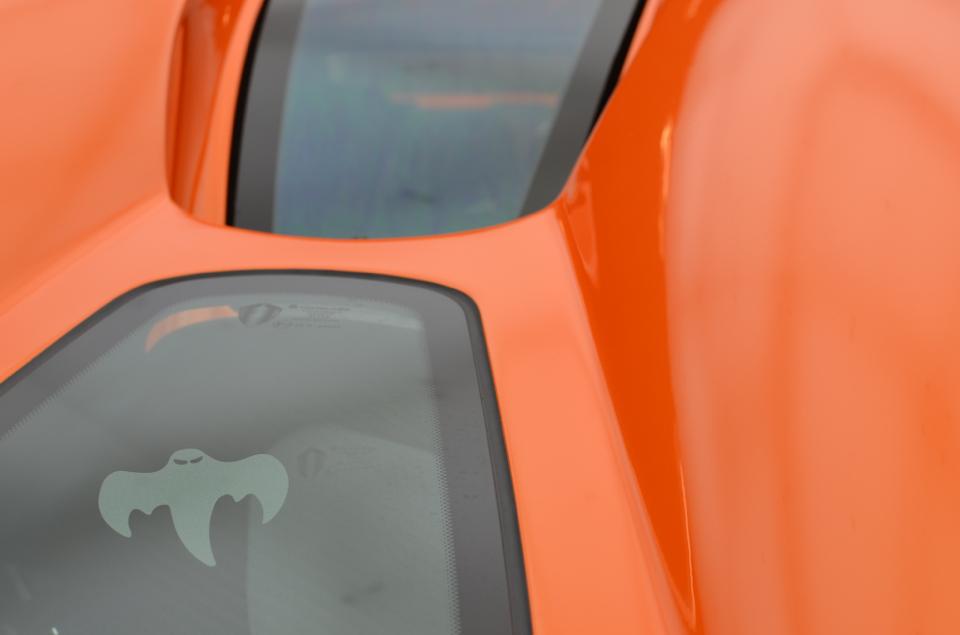
It’s time to go Inside Koenigsegg and explore another aspect of what I believe are the most advanced, extreme cars on the planet. This has been such a good series.
In this episode, you go right into the fine detail behind the electronic brain that controls Koenigsegg’s vehicle systems. It’s quite possibly just a little too much information, to be honest, but it continues the extraordinary insight that this series provides and if you want to get an understanding of what it takes to build any modern car, looking at the processes of a small producer like Koenigsegg gives you much of the bigger story but in a boutique setting.
As with other episodes in this series, the big take-away is how dedicated Koenigsegg are to designing absolutely everything in-house so that it performs as it should. There are no short cuts and the only thing that vaguely resembles a compromise is time (eventually you have to put out a product, after all).
Enjoy:
——
You can see Episode 1 of this series (Carbon Fibre) here.
You can see Episode 2 of this series (Triplex Suspension) here.
You can see Episode 3 of this series (Perfect Paint) here.
You can see Episode 4 of this series (Interior Surfacing) here.
You can see Episode 5 of this series (Test Drive) here.
The New York Times did a Tesla Model S road test recently and the results pretty much solidified the very legitimate fears that people have about electrification of the automobile. It’s called range anxiety and NYT road tester John Broder felt it first-hand and wrote about it in a story on the weekend.
Broder’s task was to drive between two SuperCharger points, around 200 miles apart, and back again after an overnight stay. The 85kWh Model S that he was driving has an EPA-estimated range of 265 miles and a Tesla-rated range of 300 miles. Note that it was cold, so you can drop those figures a little (or a lot, as Broder found out).
You should read the story for yourself at the link, but let’s just say things didn’t turn out as well as either Broder or Elon Musk would have hoped. The car ended up on the back of a flat-bed truck and it wasn’t like the Top Gear test where they deliberately explored the range of the vehicle at max power. This was an exercise where the driver tried desperately to keep the car going, complete with Tesla engineers on the other end of the phone to advise him.
If you’re one of those die-hard Holden fans – you have a red/black jacket and like to cheer your heroes around Mount Panorama, you own a McMansion, have a wife named Shazza or Kyles and you aren’t averse to robbing people, etc etc – then you would have been very interested in last weekend’s news.
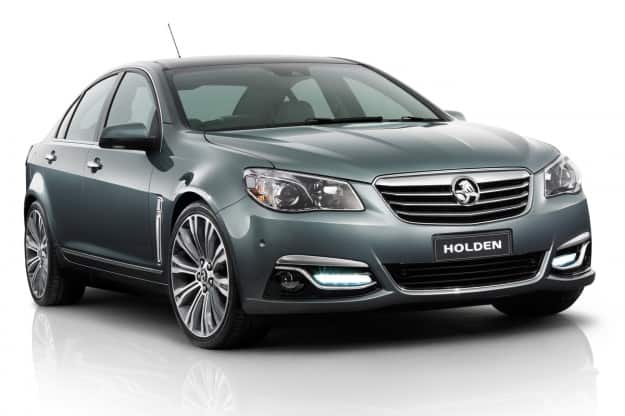
Last weekend, GM’s Aussie branch let out pictures and information on the newest version of what used to be Australia’s favourite car, the VF Holden Commodore.
The big question: will people like it?
Let’s start this post with a poll. Here are the old and new Commodores. The VF (the new one) is on the LEFT. The VE Commodore (the old one) is on the right. Which do you prefer?
The poll……
[poll id=”10″]
——
My advice: grab a low-mileage VE Commodore in the run-out sales and stow it away for 20 years to impress your mates when you retire. The VE is the last Aussie-designed Commodore that’s what you might call……… ours.
The first Tarantino movie I saw was Pulp Fiction in 1995. I had no idea what to expect when I walked into that cinema and it’s fair to say I had no immediate idea what I’d just seen when I walked out with my jaw on the floor.
Django Unchained is no Pulp Fiction, but it’s still pretty damn good.
—
Tarantino’s made enough films now for people to know the formula, but not so many that the formula has become tired.
A distinct plot with a first class script, excessive stylised blunt-force violence, a killer soundtrack and more often than not, something big and unexpected. Django Unchained has all that, though because it’s another new genre for Tarantino it’s a little bit ….. different.
The performances in this film are exceptional. Jamie Foxx is great as Django and Leonardo Di Caprio – the boy actor now definitely a man – just keeps getting better. Samuel L. Jackson is wonderfully annoying as Di Caprio’s house negro but it’s Cristoph Waltz who steals the film.
Tarantino’s movies always surprise in one way or another and for me, it was Waltz as Django’s owner/mentor/liberator/partner who sets this film apart. His manner is perfect and his lines are written and delivered with panache.
Stylised sensationalism is the name of the game in any Tarantino movie and Django delivers in spades with big scenes, big laughs (the klan scene is a masterpiece of satire and Django’s valet outfit is hilarious) and of course, big deaths. The blood doesn’t always flow as freely as in the Kill Bill films, but when it comes, it comes in volume. The fine line between entertainment and offence has footprints on both sides, but while it’s sometimes hard to watch, it’s rarely (if ever) out of place. Tarantino uses violence for entertainment, but he doesn’t glorify it.
I may be reaching a little too far here, but I also appreciated the small glimpse into the slavery era, too. It’s something we know about in theory, but rarely consider in detail. I don’t consider this a real depiction by any means, but I’m sure that some of the more distasteful moments were just the tip of the iceberg.
Django Unchained isn’t my favourite Tarantino film but then a Tarantino film is a bit like pizza – even when it’s bad, it’s still really, really good.
It’s time for my annual review of desireable cars in the form of my Automotive Bucket List. What’s in? What’s out? And how likely is it that any of them will end up in my garage?
Obviously, that list is prone to change. Some cars stay on your automotive radar, some cars don’t. Some cars end up in your garage and can be crossed of the list as one desire satisfied (the Brumby, for example).
The following are erased from the list for the 2013 iteration:
Subaru Brumby – For obvious reasons; I’m currently scratching that itch.
Saab 9-3 Viggen – As much as I loved it, I’m unlikely to buy one again.
Mid 80’s Porsche 911 – It’d be nice. Very Nice. But I think the Boxster S is a more likely acquisition.
Dodge Challenger – for practical reasons. They’re just too damn expensive here.
Jaguar XKR – Still interesting, but not compelling at this point. Maybe another time.
What replaces these? I’m glad you asked 🙂
Let’s start the 2013 Automotive Bucket List with the new additions. Five are gone, but only two are added in their place.
Jaguar XJ6 with a V8 implant
I know. I should be ashamed for debasing such a storied marque, or something like that. But I’ve wanted one of these since I was in my 20s and even after 20+ years of commonsense being drilled into me, I still want an XJ6 with a Michigan twist.
They’re not overly common, but they’re around. Most have had a Chevy V8 installed where the 4.2 Jaguar engine used to be. The V8s are more reliable and depending what you’re after, they have better aural and performance characteristics, too. I’ve never owned a V8 and something like this would satisfy both my power and beauty needs.
Of course, the downside is that you’ve got to do a fair bit of investigative work to make sure the transplant has been done properly. All part of the deal with this sort of thing.
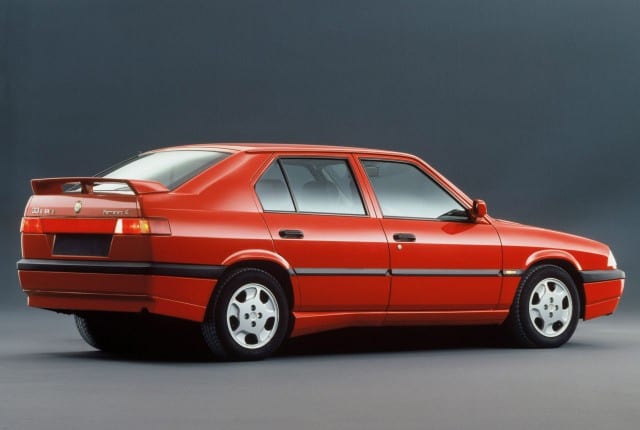
I’ve had two Alfa 33s over the years, with mixed results. The first one was an absolute gem and I’d buy that car back in a heartbeat. The second one I felt compelled to buy because I’d travelled a long way to view it and didn’t want to leave empty-handed. I was a little uneasy about the way it steered but went ahead with the purchase anyway. I should have stayed away.
That hasn’t put me off my love for the model, however. The 16V Boxer engine is so incredibly sweet. It has a wonderful note and great performance for such a small unit. These cars are genuine little pocket rockets bursting with character.
The Permanent 4 is a rare bird in Australia. There were only about 20 or so of them brought into the country. It’s a 4WD version of the car I’ve had twice before. It’s a little slower than the FWD version, but the grip is said to be astounding (and you can work on engine performance, right?). It’s also got an exclusive Recaro interior and exclusive wheels that I quite like.
I’ve had to resort to an Alfa press photo for this one as there aren’t any for sale here in Australia right now. They do come up from time to time, though, and I’ll be watching.
My price expectation is around $5K and if one becomes available, I’d be a likely customer.
—
Saab 9-5 Aero Wagon
A perennial contender for when our current Saab 9000 finally pops its clogs.
This entry has been made all the more interesting because I have a friend here in Tasmania who may put his 9-5 Aero wagon on the market in the coming months. It’s a low mileage example from 2005, in black, and some of you might have seen it in a film I made oh-so-long ago. The car received a Maptun Stage III tune well before I knew who Maptun really were.
We need a wagon or hatch for at least one of our vehicles because of Mrs Swade’s painting business. We have to be able to fit framed paintings into the rear of the car. As my cars are usually smaller than our main family car, Mrs Swade gets the bigger vehicle. Right now, that’s our 9000 but every year a new problem pops up and makes it more and more of an uneconomic proposition.
Of course, all this is contingent on Mrs Swade being interested in a 9-5 Aero Wagon, and of course I’ll make my own enquiries about parts availability (last reports from my mechanic weren’t stellar, to be honest).
—
Porsche Boxster S
I watched one of Clarkson’s drives in a Boxster and took great offence to his contention that buying one was more-or-less conceding that your life hadn’t quite turned out the way you’d hoped. I would absolutely love a Boxster (the S version, please) and for me, it’s very much an aspirational vehicle that’s going to take some sacrifice to acquire.
I can see why the original 2.5 litre Boxster might have attracted some negativity. It’s a Porsche, after all, and a Porsche has to have certain things in certain quantities. Porsche’s front-engined efforts of the 70’s and 80’s – admirable as they are – were shunned by many because they didn’t have those classic Porsche elements in the way the market demanded them. The 2.5 Boxster has handling like a go-kart, but is considered under-powered, which is why it’s now comparatively under-priced.
The Boxster S is a slightly different kettle of fish. With a 3.2 litre engine sitting amidships, the ‘S’ has the grunt to take best advantage of the car’s exceptional chassis.
The styling is contentious, of course, and the interior isn’t quite as good as I’d like it to be, but I’d take it before the quality of the build and most importantly, the quality of the drive.
This is high up on the list. Boxster S’s start in the low-mid 20’s here in Australia but I’d probably look for a more desirable configuration at jut under $30,000 (which is more than I’ve ever spent on a car in my life). The one pictured above is currently for sale for $29,500.
—
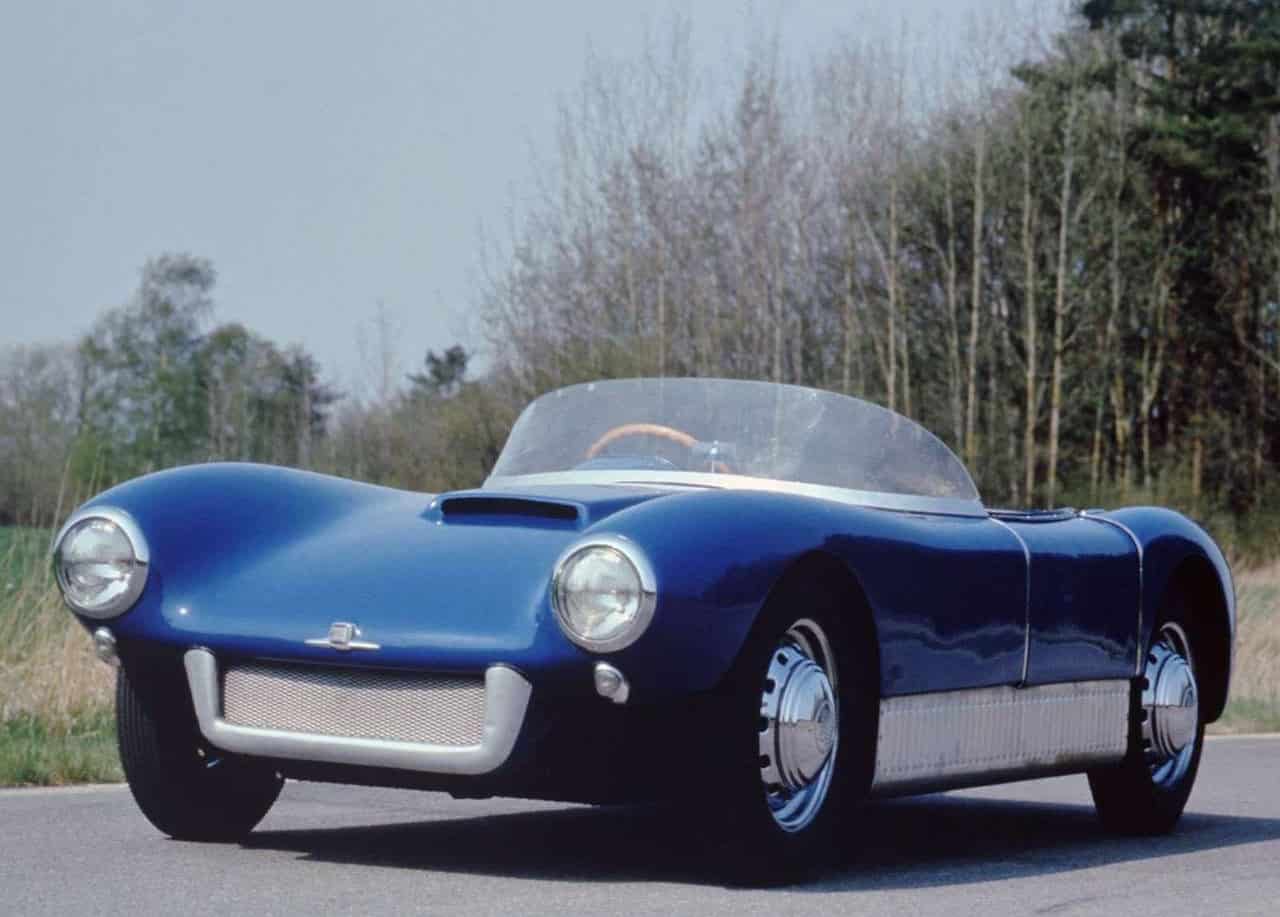
Saab Sonett III
This is still on my most-wanted list when it comes to Saabs.
Aside from the 9-5 Aero Wagon, there’s not really any modern Saabs that interest me too much in terms of ownership. The 9-3 SS and SC are wonderful cars, but not compelling at this stage of my life. My main interest is now in the type of Saabs that drew me to the brand in the first place: Saabs that are different to anything else. The Sonett certainly qualifies.
There is absolutely no rush on getting one of these. It’s going to be a logistically complex situation anyway from an import point of view, nevermind the fact that we’d need more garage space.
But a Sonett III remains on the list regardless. I actually regard it as one of Saab’s finest and most interesting bits of work. If you’ve never driven one, then I implore you to find one and beg the owner to go for a drive. You’ll be amazed at how comfortable and easy it is to drive and the fact that it looks so cool is just a bonus.
The car pictured has been written about before (can’t remember where) but it’s talked of as being a body-kit prototype for a new generation of Sonett that never got made, back in the 1970’s. It’s for sale on Saabnet at the moment for $15,000. I don’t want it, but it’s definitely interesting.
—
Alfa Romeo 105 Series GTV
This one’s slipping down the list, but it’s still there. Why is it slipping? Well, some cars you can justify having for weekend driving. Some are daily drivers. A 105-series Alfa wouldn’t be a priority for either, for me. It’s a car I’d really need some garage space for.
My preference, like everyone else’s, would be for a 1750 with the ‘batwing’ seats. They’re not always easy to find, but I’m not in a hurry.
The car you see here is a 1971 model 1750 and it’s currently selling for $13,000. It looks to be in wonderful condition, but it’s gone 42 years without me owning it. I’m sure it can go a few more.
—
Mercedes 500SL
I was a little bit generalist in my 2012 listing of this car but my thoughts have focused a little more since then.
The big SL will quite possibly be a car I own one day, but it isn’t likely to be here in Australia. These cars still sell for consistent mid-$20K-and-up here in Australia (unless you want a cheaper grey market import) and that’s more money than I’d want to spend on this particular model car.
BUT…… it’d be the perfect chariot to carry Mrs Swade and I around North America one day. The good part about that is you can get them for around one third of the price you’ll pay here. The difference is amazing. I don’t know why they hold their value so much better here – maybe it’s just that there are a lot more of them in US.
This one’s on the list for as long as a US driving trip is still on our travel list, which it is right now.
Most of the cars on this list would be weekenders. The Porsche Boxster S and the RS Megane would be the exceptions, however. These are cars that are more modern and made to be driven every day – which is exactly what I’d want to do with them. These are cars that you wouldn’t want to shuffle back to second preference or treat with kid gloves. It’s made to be driven and young enough to be driven regularly.
The car above is a 2012 RenaultSport Megane 265 Trophy and is basically brand new with only delivery mileage. Hence, it stays on the list for a considerable period of time until it comes down to a price I can afford rather than the $50K it’s selling for right now.
——
That’s it for another year of automotive indulgence. I’m sure my 2014 version of this list will change again.
How am I doing? And what have you added or taken away from your automotive bucket list in the last 12 months?
Comments are open. And be nice about the Jag, OK? We all have our faults 🙂
The Saab Festival is going to celebrate the Saab Sport and Rally days in May-June this year.
I thought some people might like to get another look at one of the original Saab Sport and Rally catalogs, this one from 1978.
1978 must have been such an exciting time to be a Saab owner. Saab were still racing, building on a proud heritage and with the Turbo era just around the corner. It must have been a time filled with so much promise for the future. The chance to look through a factory-backed catalog like this and dream about what you might do to your car would have made for some fun times, indeed.
Saab bowed out of motorsport just at the beginning of the turbo era but that hasn’t stopped people from wanting to heat up their vehicles. It’s a spirit that endures today and will be celebrated at the 2013 Saab Festival. And while it endures, this spirit is probably best displayed by the engineers and gearheads who built those little Saabs to take on the world and their way of sharing that spirit with others at the time – the Saab Sport and Rally catalog.
My thanks to Ted Y for making these files available. Click to enlarge.
It’s time for episode 5 in the Inside Koenigsegg series.
This episode features the man with one of the best jobs in the world – Robert Serwanski. He’s Koenigsegg’s test driver, the man who fine tunes every car before it leaves the factory to be with its owner.
Robert gives a wonderful overview of what’s involved with the final preparation of the car. It’s incredibly detailed and remember, he does this for every car that leaves the Koenigsegg factory. This is the sort of attention to detail that a Koenigsegg owner’s money buys.
Enjoy the film.
——
You can see Episode 1 of this series (Carbon Fibre) here.
You can see Episode 2 of this series (Triplex Suspension) here.
You can see Episode 3 of this series (Perfect Paint) here.
You can see Episode 4 of this series (Interior Surfacing) here.
There’s a Saab Festival again this year!!! Wish I could go, but we have some other family priorities this year that preclude halfway-round-the-world travel.
For those who CAN be there, prepare yourselves for a celebration of Saab’s sporting heritage. The theme for this year’s festival was announced by Saab Museum director and festival co-ordinator, Peter Backstrom, earlier this week:
The work with the Saabfestival 2013 is progressing and we are happy to communicate that the theme will be Saab Sport & Rally!
Remember the orange tuning manual from the 1970’s for your Saab V4? Whether you raced or rallied your Saab or just simply improved it to be a lookalike of the cars that Stig Blomqvist, Per Eklund or Simo Lampinen drove, the Saab Sport & Rally assortment was available through your local Saab dealer.
This theme will suit the old school tuners (camshafts, carburettors, machining of cylinder heads…) as well as the new generation with their 9-3 and 9-5’s (turbochargers, software changes, 3 inch exhaust systems…….)!
How did you improve your Saab?
Show us at The Saab Festival 2013!
The Saab Festival always has its fair share of tuners present but hopefully this deliberate choice of celebrating Saab tuning will bring out even more of them.
For the youngsters with their Maptuned 9-3’s it’ll be a chance to see some of the older V4s and two strokes both on display and in action. Hopefully there will be a track day at Kinnekulle so that owners can really throw those old cars around. There’s nothing quite like a screaming Saab 96 going sideways through a bend.
And for those old-timers, hopefully they’ll gain an appreciation for some of the work done on more modern Saabs, too.
This is my favourite little video from Kinnekulle – an exquisite and quite modified early Saab 99. I know this is neither and old V4 or a new power-chipped modern Saab. The 99 lies squarely in between those two but it IS a point of focus in the Saab Sport and Rally catalog. In fact, this 99, with it’s 16V Turbo engine, doesn’t take second place to anybody, as you’ll see.
Note – This video was shot in 2007 and I didn’t know who owned the car back then. I do now. He’s the brother of the owner of Speedparts and it turns out both brothers have 16V 99s 🙂
—
The Saab Festival will be held in Trollhattan, from May 31st to June 2nd.
The Simeone Automotive Museum in Philadelphia, PA, will host a special Saab exhibition from February 23rd to March 17th entitled The Saab Spirit Lives On.
The vehicles on display are all owned by Bill Jacobson, owner of Sports Car Service in Wilmington, Delaware. I don’t know Bill but his name’s been on my radar for some time, now. Bill’s long been a prominent figure on the vintage Saab scene and he purchased a number of vehicles from the Heritage Collection when it went up for sale following the bankruptcy.
His collection includes one very special Saab – Sonett #6. Actually, the collection is one that could almost rival the Saab Museum itself. Not in number, of course, but in quality and the way it represents such a nice walk through Saab’s history.
The Sonett will be on display at Simeone, along with the following vehicles:
1959 Saab 750 GT (Red) – Featured in Autoweek magazine article “50 years of Saab & Ferrari” also appears in Michael Furman’s Automobiles of the Chrome Age
1964 Saab Quantum Formula “S” (blue with yellow nose) – Sold in “kit” form through Saab US dealers only. Raced in the mid 1960’s with S.C.C.A.
1964 Saab Bullnose Wagon (Tan) – Acquired from the GM/Saab Heritage Collection
1965 Saab Longnose Wagon (Red) – All original, only 75,000 KM
1967 Saab Sonett II 2-stroke (Silver) – One of only 258 produced, most of them were sold here in the US.
1970 Saab 99 (Tan) – Acquired from the GM/Saab Heritage Collection
1978 Saab 99 Turbo (Burgundy) – Acquired from the GM/Saab Heritage Collection, the first of the turbo charged cars that started the “Turbo” powered era.
1980 Saab 900 5 door (Black) – Acquired from the GM/Saab Heritage Collection
1986 Saab 900 T Convertible (Red) – Saab press car for the release of the Saab convertible. Was always owned by Saab and the only red 1986 produced.
1990 Barber Saab Pro Series Formula Car (Red) – Series featuring open-wheeled, Saab-powered formula cars ran from 1986 – 1991 giving many race car drivers their start, such as: Robbie Buhl, Bryan Herta and Juan Pablo Montoya
1991 Saab 900 SPG Convertible (White) – Custom ordered and made for the former Saab president Jim Crumlish
1993 Saab 9000 Cut away (Yellow) – Acquired from the GM/Saab Heritage Collection, shows the steel reinforcements made on a Saab giving them their high standards in crash safety records
1993 900T Limited Edition (Black) – #139 of 325 produced. The last year of the “classic 900” 3 door body style
1996 900 Turbo SE Talladega Challenge (Silver) – The 1996 event Oct 16 – 24th, the Saabs in the challenge bettered 18 of their own records and set 22 more. On the last day the fastest 900 averaged 143 MPH for 12 hours
1998 Saab 9000 CSET Aspen Police (Silver) – Former Aspen Colorado Police car for the first 19,000 miles and then sold back to Saab Cars USA for resale in 1999.
2000 Saab 9-3 Viggen Convertible (Lighting Blue) – 1 of 41 produced in this color in the production year 2000
2011 Saab 9-5 Aero (Silver) – One of the last Saabs to be produced, ending an era in the Saab world.
The best motor show of the year is coming up soon – the Geneva Motor Show. You’ll see a lot of cars from companies you recognise in your favourite motoring pages. There are a few companies you’re less likely to hear about, though. Small companies trying to sell themselves every bit as much as they try to sell dreams on wheels.
Who are they and what are they offering? Here’s a look at some of the more interesting ones (to me, at least)…..
GTA Motor
GTA Motor is a Spanish company looking to build 99 supercars – exclusivity is everything – capable of reaching 100kph in under 3 seconds, and a top speed of 350km/h. The GTA Spano project is actually a few years old now. It has shown at Goodwood and 2013 will be GTA’s second year at Geneva.
It’s a handsome vehicle, for sure.
——
Soleil Motors
Soleil is another fledgling supercar company, based in Milan, Italy. It’s production concept/model is called the Anadi but I don’t know if any have been built for real just yet. They seem to be similar to Spyker in philosophy, with an emphasis on luxury and execution rather than flat-out performance.
——
Pariss Electric
Another exotic from another new company. Are you sensing a trend here? As the name implies, this is an electric vehicle and it even made its debut at it’s namesake motor show – Paris 2012. Pariss claim 100kW of power, a 125km range and a recharge time of just 5 hours for the French made batteries. The price is a very reasonable sounding 60,000 Euros and it’s scheduled for launch in the first half of this year.
Le Tesla?
This video is your first in-motion glimpse, presumably filmed in Paris last year. It shows the state of production readiness at the time – being driven at slow speed around a roundabout, in the rain, with no working windscreen wipers.
——
Fornasari
Fornasari are a specialist carmaker founded in 1999 and based in Italy. They have a number of body styles already in use, particularly high-bodied vehicles intended for sports rallying. The cars mostly use GM V8 engines and rather wacky body styling in some instances.
I’m not sure what they’re showing at Geneva, but it might be the GiGi Concept, below. Again, bespoke leather and aluminium interiors that are reminiscent of Spyker’s work. Very nice.
——
Exagon eGT
Laurent:Dis car haz six sides – front, derrire, left, right, top and bottom. We call it de Cube! Jean-Paul:Nissan already use dis Cube name. Pigdogs! Hexagon also has le six sides. Laurent:A-ha! Exagon, it is!
And so goes my broadly stereotyped tale of how the Exagon company got its name. It’s another French sports car and it’s another electric one, too. The Furtive eGT features two 142kW motors giving the equivalent of 400-odd horsepower and claimed acceleration of 0-100km/h in just 2.5 seconds. Range and Recharge aren’t discussed (yet).
——
There are a number of equally small exhibitors doing smaller projects that don’t quite capture my imagination in the same way as these movers and shakers. They’re more in the frame of modifiers of existing vehicles or other small electric start-ups.
You can peruse the entire list of Geneva entrants here. There’s likely to still be a few names there that you haven’t heard of.