If there were a band called SkepticElectric then I might have been the bass player. I’m fascinated by the technology and the possibilities of electric driving, but given the landscape down here in Tasmania and the distinct lack of infrastructure, an electric car just isn’t viable. Even a Tesla.
No such problems in the US, however. The red dots on the map below are Tesla ‘Supercharging’ stations. All 71 of them. Right now, if you’ve got a Model S and you want to cross the continental United States, your route is governed by those dots.
——
I got that map from Wired, where they outline the story of John Glenney and his daughter, Jill, who just made the first sea-to-shining-sea trip in a Tesla. They went from New York to Los Angeles using 28 Tesla Supercharger stations.
The trip took them six days.
Tesla engineers are reportedly gearing up for their own coast-to-coast trip this weekend. They’re going to try and do the trip in half the time it took the Glenneys – from Friday to Monday. It’ll be interesting to see how they go.
——
How do you eat an elephant?
One bite at a time.
Consider the red dots on that map, above, as individual bites out of the metaphorical elephant that is EV viability. Tesla’s stated goal is to cover the Unites States with Supercharger stations in such a way that 98% of the country will be available to Tesla owners – by 2015.
That’s a massive goal and given that going coast to coast has only taken 15 months from the opening of the first Supercharger, I don’t doubt that Tesla will do it. But I still wonder about the practicality of it.
A road trip isn’t just about point-to-point re-fuelling. It’s about taking a detour when a sign for a certain unexpected attraction catches your eye. Have you got range for that 40-mile round trip away from your main route? That’ll be the question staring down the confidence of Tesla owners over the next few years.
Credit to Elon Musk, though. He’s doing what he said he’d do and when it comes to building a car company, especially building a car company from scratch, keeping your brand promise is absolutely essential.
I’ve had a few emails about this one in the last 24 hours so I better put this up on site to
stem the flow
let you all know about this rather nice Saab 99 EMS for sale
You don’t see many EMS’s come up for sale nowadays, especially presenting as nicely as this one does in the photos. So yes, it’s relatively rare but that’s not the reason people are emailing me. The reason for that is because this car is for sale in my home town – Hobart.
I should stress right from the get-go: I don’t know this car. I haven’t seen it before, as far as I know, and I don’t recognise the handle of the Ebay seller. Maybe, if we met, it would turn out that I do know the person, but at this point I’m drawing a rather large blank.
Consequence – anyone looking for some info on this car should do their homework and contact the seller. I can’t help. I can tell you that if you want a pre-purchase inspection, the guy to contact is Steve Eyles at Hobart Automotive on 03 62347777. Steve did his apprenticeship on these cars and has been working on Saabs his whole life.
From the ad, it certainly looks like a good example. The odometer is showing just 78,000kms, which is nice, low mileage. The only proviso is that service sticker in the photos below. It shows that the next service is due at 85,000 and the last service was some time in 1994. That’s twenty years of inaction so this car will definitely need some care and attention before being driven a long way.
The upside is that the car looks – from the photos – as if it’s wonderfully preserved. The paint looks pretty even, the soccerball rims are nice and the seats show no visible signs of tearing. The only thing I’d want to change is the steering wheel, which I’d swap out for a period three-spoke Saab Sport and Rally wheel.
Here are some of my favourite bits of automotive reading for this week….
——
There have been quite a few notable custom Saabs made over the years. Thankfully, some of them survive today, like most of Leif Mellberg’s work, for example.
Sadly, however, some of them didn’t survive. If you want to see what happened to the miniature Saab 99 pictured below, go over to Saablog-in and read SaabRobz’s story.
——
For those who like to track these things, let it be noted that Toyota won the global sales crown in 2013, with GM and VW filling the other podium spots.
Toyota fell just short of the notable 10 million sales mark, selling 9.98 million vehicles during the year. General Motors sold 9.71 million vehicles whilst Volkswagen’s sales figure has been reported as “more then 9.7 million” in one article and 9.5 million in another.
Either way, it’s a lot of cars.
Toyota want to crack 10 million in 2014 and you might remember that VW have plans to become the world’s biggest car maker by 2018.
——
If you only click on one link from this weekend’s reading, make it this one.
Rally Nippon is a classic car grand tour, a-la the Mille Miglia. It usually runs between Tokyo and Kyoto. It’s a young event, inaugurated in 2008, but it’s very well attended. The classics you’ll see in the photos coming up are the equal of any classic event I’ve read about.
The 2013 Rally Nippon was not held in Japan, but in Taiwan. Why?
Following the devastating earthquake and tsunami in Northern Japan in March 2011, Japan received about 20 billion yen in donations from Taiwan and its people, making Taiwan one of the major donation sources overseas. Yusuke Kobayashi, founder of the Rally, said the Japanese owe the Taiwanese people a debt of gratitude for their generosity following the twin disasters.
Mr. Kobayashi also mentioned that in Japanese culture, when you genuinely want to thank someone, you ought to do it face to face.
That’s why. It was a wonderful gesture and from the photos at Motoring Con Brio, it was an absolutely brilliant event.
The report at Motoring Con Brio is written by a guy named Royce Hong. He’s a Taiwanese who was invited to participate in Rally Nippon by the event organisers. He’s also the owner of the Jaguar E-Type in the Rally Nippon poster, above.
The report is in four parts. The photos are outstanding and you get a sense that the Taiwanese people really got behind this event, with big crowds thanking the fleet wherever it went in acknowledgement of the organiser’s gesture of gratitude.
Just as the wheels maketh the car….. the photos maketh the for-sale ad.
Here are some great tips on getting great photos. From Hemmings.
——
Dan,
I’ve been watching General Motors since my death and I’ve seen how you went from my glorious, exotic lines to a place that even the most mediocre of would find too dull to call home. I’ve subsequently slammed my paranormal fist into Jefferson Ave, just outside your building, and I invite you to do either one of two things: 1) use this giant gaping hole as a fitting venue for a new Design Centre, or 2) dump all your current design plans into it and start afresh.
OK, if I’m going to beat up on GM (which I do, frequently), I better give them the occasional bit of applause, too.
Most of you probably know that Tim Allen, otherwise known as the guy who used to be on Home Improvement, is a car guy. He went and hung out with Jay Leno, another car guy, to show Leno his custom finished 1968 COPO Camaro.
The results are only subtly different from original, but very impressive.
——
TATA motors has designed an all-new engine range.
This is not exciting news in itself. I can’t see the little three- and four-cylinder engines powering anything I’ll drive in the next…. lifetime or so.
But the retro-80’s name given to the engine family is an inspired choice.
Companies and governments always release negative news on a Friday afternoon. I know it’s early Friday in Germany, but it was just after 6pm here when I first saw this:
In-car advertising coming to BMWs
Australian car owners could soon have to contend with in-car advertisements during their daily commute.
BMW is developing technology which will allow businesses to market their products through the German car maker’s built-in satellite navigation system.
Yet another reason to always have at least one fully mechanical car?
In a carefully-worded press release void of the term “advertising”, BMW claims the “location-based offers and services” will be relevant to specific route and final destination during each journey.
So far the technology has been developed in a BMW 7-Series testing vehicle, and allows drivers to set their preferences by filtering information or turning the program off altogether.
At least that last bit is (somewhat) reassuring.
Cue the spin-doctor:
“The joint research project paves the way for an even greater level of driver comfort and convenience,” BMW said in a statement.
“Results from this project could allow future navigation systems not only to provide information about the quickest route but also to provide recommendations about special coffee deals at filling stations, the best parking deals or even real-time offers at a sports shop along the route – but only if the driver wants.”
Wow. The PR guy’s certainly earned his pay this week. These ads are merely there to help the driver, to make driving more comfortable and convenient.
BMW won’t make a cent from it, I’m sure.
Just the fact that they’ve thought of doing this is annoying. I don’t want to sound paranoid but it’s already disconcerting enough that there are sensors in a lot of modern cars that allow companies to track where you’re going, how quickly you’re getting there and other things you might be doing in your car during the trip.
The lads and ladies behind OnStar even have the technical capability to listen to conversations between occupants in a car (though they’ve been told in a very deep, serious voice not to by the US courts).
How creepy would it be to have your car company second-guessing where you’re going according to your GPS data and offering you items from that place or places nearby?
It’s one thing to get offers for cheap coffee. What about ‘sex toys 50% off’ when you’ve got the kids in the back?
No, BMW. 1,000 times No.
And that goes for any other car company that wants to try this. The ability to turn it off doesn’t hide the fact that the whole scenario is creepy, which means the people thinking it up are creepy, too.
If you know these cars, you’ll know that you can take the windscreen off and add some aero shields. I also opted to not have the roll bar that people usually fit to a series 2 at the factory. It wasn’t exactly safe, but it looked period.
I took the car for a run one Saturday, and towards the end my wife called and asked me to pick up some things on the way home. I was heading through down-town Melbourne so I decided to stop at one of the multi-story car parks in the city.
The car park was free of charge for the first hour, and $5 per hour thereafter. The shopping centre seemed full to the brim with staggering zombie shoppers and it felt like my few small errands took ages, but I figured I was still within the “1st hour free” zone.
Alas, when I came out, there was a big line up as the automatic ticket machine wasn’t working. We had to wait until it was fixed and the backlog of people were put through.
By my calculations, I was still on the button for the first hour to be free, but the parking attendant who came to fix the machine was not interested. …. “sorry mate, you have gone past the time”.
So I casually walked away, hopped in to the 7 and drove up to the exit, adjacent to the footpath where the attendant had fixed the ticket machine and was about to insist, again, that I had gone over my free hour.
It’s at this point that I must, once again, draw your attention to the lack of a full windscreen or rollbar on my Lotus Super 7 🙂
As usual with such establishments, the entrance and exits were fitted with boom gates, etc, to stop people getting in and out without paying. Lots of people were watching as I approached the boom gates (the 7 wasn’t exactly a quiet car and had a tendency to draw attention). Those same people let out a few small cheers as I casually ducked under the boom gate and pulled directly into traffic.
Prompted by a recent comments thread over at Saabs United and the level of detail at which people were examining things, I figured it was probably time for me to reflect on my own interest levels. Are the measures people apply to the company within normal parameters – myself included? Maybe it’s time to shut up, wait and then evaluate any new product from Saab when the company has one to show (and no, I don’t consider the 2014 Saab 9-3 to be a new product).
I’ve been critical of various parts of NEVS’s operation and my critical approach has been there for two important and inter-linked reasons. Firstly, I have friends and acquaintances who are very interested in anything Saab does, any product Saab makes. Are they getting full disclosure about the product and the company that’s making it? And second, I think it’s important to take such an approach when the company is under new and relatively inexperienced management.
The bottom line, with those criteria in mind:
Could I recommend to friends that they spend five-figures on a car from this company?
Is the car itself compelling enough to do so?
I think they are honest and fair questions. If I’m going to write anything about Saab, especially given my personal history when it comes to writing about the company, then I want to make sure I include as much information as possible and present it in the right context.
In the past, the first question was a no-brainer. Even under GM, Saab was Saab. There was a clear line of continuity from 1947 to 2011 in terms of geography, vehicle lines and management. There was continued innovation along a certain theme, commitment to a set of principles that governed vehicle technology and design, as well as a hope that any principles that we were watered down during the GM years could be restored.
That first question is no longer a no-brainer. There has been a clear and distinct change of management and the company aims to make vehicles that are clearly different from those in the past. They will use some historical components (out of economic necessity) but the aim to focus on electric vehicles is a clear shift that only some of Saab’s historic customer base can align with.
The second question – is the car compelling enough to recommend? – is one that we, as Saab fans, allowed ourselves a certain amount of flexibility with in the past. The 9-3 and 9-5 were definitely great cars in their heyday, but they lagged behind some of the competition due to material and equipment choices that were restricted by cost-cutting measures enforced by GM. The gap between these cars and the competition only expanded as time went on. We accepted and forgave these gaps in the product because the cars were still very good, and because they were Saabs.
The change of management and subsequent change of direction has meant a lesser willingness on the part of many to be so forgiving, however. And I think that’s quite fair.
Saab is no longer the company that it used to be. And that’s where I think that some of the commenters in the SU thread might have things wrong. It’s where I think I’ve probably been wrong at times, too.
We’re approaching matters related to Saab as if the company were undergoing what we’d all like to think is a subtle shift in the historical continuum. We’d all like to believe that historical changes in the ownership/management of the company were just subtle kinks in a straight line. If we’re honest, however, I think we’ll admit that the GM ‘kink’ was more like a dent, the Spyker ‘kink’ was a vastly under-funded effort to bring it back (to some degree) and this latest NEVS ‘kink’ is, in fact, almost a right-angle bend.
Quite a few Saab fans are evaluating NEVS’s progress with Saab – every itty-bitty detail, sometimes – according to their own wishes of what they’d like Saab to become, a view that is quite likely biased by historical perspective and experience. That’s all quite natural but I wonder if they’re torturing their automotive soul by doing so.
It’s fair to have aspirations and an opinion on what’s happening but that needs to be tempered by a key understanding that some are yet to encounter – you might not be Saab’s target market any more.
—
Be that as it may, most traditional Saab fans have an interest in what’s going on and just like everyone else, I’ve got a few thoughts to share.
The fans – Moving On
I find it a little strange that I have to put this in print, but…..
I’ve been damned by a few people in comments and I know others have, too. Our crime? Moving on and exploring other automotive interests.
My message to anyone contemplating the same – go for it. Moving on and experiencing other vehicle makes is not a crime. In fact, condemning someone for doing so is much closer to a crime than actually doing so. Saab is not a cult (though there are references made to “the cult of [brand]” made about many enthusiast followings, they should only ever be taken as light-hearted spin). Saab is a car company and for automotive enthusiasts, a hobby. Yes, the cars foster heightened levels of interest for many but being interested in Saab doesn’t mean that you’re bound to Saab only. Anyone who has a serious crack at you for doing so ought to re-examine their priorities.
So if you’ve got other automotive interests, feel free to check them out and get excited about them. You’re not turning your back on anyone and you’re not a traitor to anything. No-one lives, dies or is morally compromised by your alternative automotive interests. You’re just a person who’s interested in cars and that’s perfectly fine.
—
The fans – Staying Put
Just like moving on, staying put with Saab is fine, too. You’re not strange, you’re not a hero. You’re just a person who’s interested in cars – Saabs, especially – and that’s perfectly fine, too.
I imagine a lot of people are going to maintain their interest in historic Saabs and a smaller proportion will have an avid interest in both historic Saabs and NEVS Saabs together. I think all Saab fans will maintain an interest in what goes on with the Saab name, but there shouldn’t be any conflict between current and historic Saab fans.
—
The company – Public Relations and Marketing
I really hope that NEVS puts a PR machine together soon and starts to communicate its story more clearly to its target market, wherever and whatever that may be.
Of course, the story will depend on a few things:
How deeply linked they want to be to Saab’s history and traditional market, and
The products they intend to develop in the future.
Do they want to tie themselves to Saab’s history – make themselves part of that continuum? That draws a boundary around the historical part of the story.
The future product and the philosophies that underpin it will give direction to where the story is heading.
Their target market will influence the way in which the story is told.
NEVS will choose the story it wants to tell and in doing so, it needs to decide upon those things.
—
The company – Product
This is the car business. PR and marketing can do some of the work, but at the end of the day it’s all about the product. It’s down to how you design and execute.
The last 20 years have been more difficult for Saab fans (in product terms) than the 20 years that preceded. Yes, the product was more reliable and efficient, but it was less distinctive as a Saab. The 9-3 and 9-5 won a number of new Saab fans, but they also lost a number of traditional Saab fans and it’s fair to say that the GM era put a taint (not a stain) on the Saab brand in the eyes of much of the motoring press.
If NEVS want to reset, then they need to do something special with their first all-new vehicle when it finally arrives.
They need to build a killer product for which there are no contextual explanations needed, no excuses. They need to hit all mention of compromise out of the park.
NEVS and Saab can survive if they fall short of this lofty goal, but just imagine the positive impact they could have by blowing the negative aspects of the GM era out of the water with a truly killer product.
Car companies live and die by the quality of their product. It’s a measure of GM’s colossal success through the mid-20th century that they were able to hang on until 2009 before going into bankruptcy, given all the crap they built from the 70’s onwards. There are few companies in this modern era (and maybe none in the car industry today) that could withstand such a long run of dud products dominating their range.
NEVS’s survival will ultimately depend on the quality of their product and its ability to meet the needs of a market.
The survival of Saab fans will depend on whether or not they are a part of that market.
[hr]
With that off my chest, I’m going to sit and watch what’s going on at Saab.
I’m very interested in what they’re doing. I’m very hopeful for the future but I also have to acknowledge that my love for the Saab brand is based on its Swedish roots and philosophies. If Saab is extracted from Sweden, I know that my interest will shift dramatically and I offer no reservations and make no apologies for that.
NEVS/Saab need to get their story together. They need to get their product together.
Anything I could say about either of those two priorities right now would be little more than educated guesswork and aspiration. I’m a little tired of that (both from myself and from others) so I’m looking forward to sitting back and seeing what they do.
Some of the Saab fans that are getting all up tight about various aspects of the company’s operations might want to do the same.
The challenges that NEVS face have to be met by NEVS.
This is a follow-up from last week’s Monday Reading, where I mentioned a story from Hemmings about two Mercedes Gullwings that were coming up for auction in Arizona.
Both are 1956 Mercedes Benz 300SL Gullwings. Both are black with red leather interiors. Both highly desirable. One was completely original right down to its faded paint, frumpy old seats and scars from years of use and storage. The other had been lovingly restored ‘to concours condition’ and looked as fresh as a spring daisy.
The old:
The new:
[hr]
The Goodings auction was held in Arizona over the weekend and the results are in:
The restored Gullwing (Lot 122) sold for $1,402,500
The original Gullwing (Lot 42) sold for $1,897,500
I’m sure the owner of the restored car is pretty happy getting nearly a million-and-a-half in the family bank account. But I wonder if he/she is smarting just a little at being out-done by $495,000 – more than 33% – by a car sharing the same specs and vintage?
I’ve not experienced it for myself, but I’m willing to bet the classic car auction world is a competitive one (sort of like dog shows but without the big hair).
——
Other interesting results from the Gooding & Company auction….
This 1937 Cord 812 Beverly sold for $79,500. It’s old enough, rare enough and fancy enough to look like it should go for more.
—
This 1985 Ferrari 288 GTO sold for more than $1.4million, proving that Ferrari prices continue to go up and up.
Lest you think (like me) that it’s just a Magnum PI car with a slightly different badge….. The 288 was a limited edition built for homologation purposes. It was based on the 308 and ended up as a stillborn racing model when the FIA dumped the racing class it was built for. It has two turbochargers and produces around 400hp. As it was an homologation car, only 200 models had to be built (there were 272 by the time Ferrari finished), hence the exclusivity and high price.
—
This Lotus (Ford) Cortina from 1966 sold for $107,250
—
This 1977 Aston Martin V8 sold (without reserve) for more than $20K under the estimate, fetching $118,250
—
This Renault Alpine A110 sold for $302,500 and is probably the most desirable car at the auction for me.
—
Symmetry sale: this Jaguar XJ220 sold for $220,000
—
This 1971 Alfa Romeo Montreal sold for $176,000 – a price that makes the $50,000 Montreal you can buy in Australia right now look very attractive.
Either that or someone got really carried away at the auction.
—
This Lancia B24S Aurelia sold for $1,815,000. That’s a figure remarkably close to the un-restored Gullwing and yet I bet there’d be ten people who’ve heard of a Gullwing for every one who’d heard of the Aurelia.
Hemmings note that a similar Aurelia sold for $825,000 last January, so someone made some serious money on the weekend.
—
And finally….
This 1983 Toyota FJ40 LandCruiser sold for $41,800. It’s notable mainly because it was the last model year for the original FJ40 and has a new coat of paint. If that doesn’t convince you there’s only vague logic in the world of car auctions, nothing will.
[hr]
The full list of results from the Gooding & Company auction is available here. There are some outstanding cars there to see and many of them fetched amazing prices.
Forgive the lack of activity but we had a minor family emergency that called me away for a few days, followed by a busy weekend.
Normal irregular transmission should resume some time this week.
In the meantime, here’s one of my favourite European car memories from the 1980s, the Renault Fuego. Thankfully, I’ve never spoiled the memory by driving one.
You must be able to show an example of the car for sale somewhere in the world under that price (at a current rate of exchange).
The car has to be interesting.
The writer should be able to provide some short theory as to why it’s a possible long-term proposition for making a little money (or, at the very least, not losing you (much) money if you look after it properly).
Gavin’s already published his list. Now it’s my turn.
Here we go. Investment cars, a-la Swado.
[hr]
Porsche 911
Predictable, I know. But there’s a reason for that.
Want evidence that a classic 1980’s 911 is holding it’s price? I can’t find one under $30K to show you that’s a) Australian delivered, and b) unmodified. Those are the two basic criteria for buying a 911 here in Oz and a year ago, I would have had a bunch to show you. Now, not so much.
The 911 is always in demand but as with all older cars, the good ones are getting harder to find as time passes and climbing in price as a result. Get a good one and you’ll do well. Get a dud and the bills will be like an anchor around your neck.
This UK-spec 911SC Coupe was imported into Australia and looks neat for $28K, but you’d want to check underneath for rust. Imports will always be worth a little less than Australian delivered models, but you shouldn’t lose anything if the car’s in good shape.
For the best chance at appreciation, buy one delivered in your local market, especially if you live in a relatively dry climate. There’ll be less hassle with specifications meeting local standards, no poor steering conversions to worry about and if you’re in a country like Australia, very little concern about rust.
For you US types, a 1971 911T recently showed up on Craigslist for $25K. I didn’t see what price it ended up selling for, but after it was featured on Bring A Trailer the owner received more than 400 enquiries. I have a feeling the price went up after that. But it just goes to show that they DO become available at good prices sometimes.
—
Lancia Fulvia
How could I not have a Fulvia on this list? It’s not just here because I like it, though. This is a real value-holder and in the right spec (and at the right price), a genuine investment.
The Fulvia is an acquired taste but in the 12 months or so that I’ve been interested in them, I’ve noted that there’s a definite audience interested in this beautifully engineered Italian. They generally sell for less than $30K. You’re more likely to pay in the region of $15K for a good basic car and $20K-upwards for one in really good condition.
I can’t find a current ad to show from Australia, but the 1600HF Lusso I shared here last month proves that if you’re patient enough, even a 1600 HF Lusso (series 2) can become available for under $30K.
The early 1600 HF’s are the real collector cars but the value pick is probably the 1300 Rallye S from the first series, which have the alloy hood, doors and boot lid. They’re good buying, great driving, they look absolutely beautiful and definitely hold their value.
—
Mercedes Benz 380SL
Mercedes SL’s can be hot property, but most of the real investment-grade cars are already well over our $30K ceiling. A good R107 should provide some wonderful motoring without hurting your hip pocket, however, and they can be found in outstanding condition at this money.
I’ve picked a 380SL for my sample because if I was to buy a car like this, I’d want the V8. One of the real money spinners is the 280SL from around 10 years earlier. The gullwing’s in another class all together, of course.
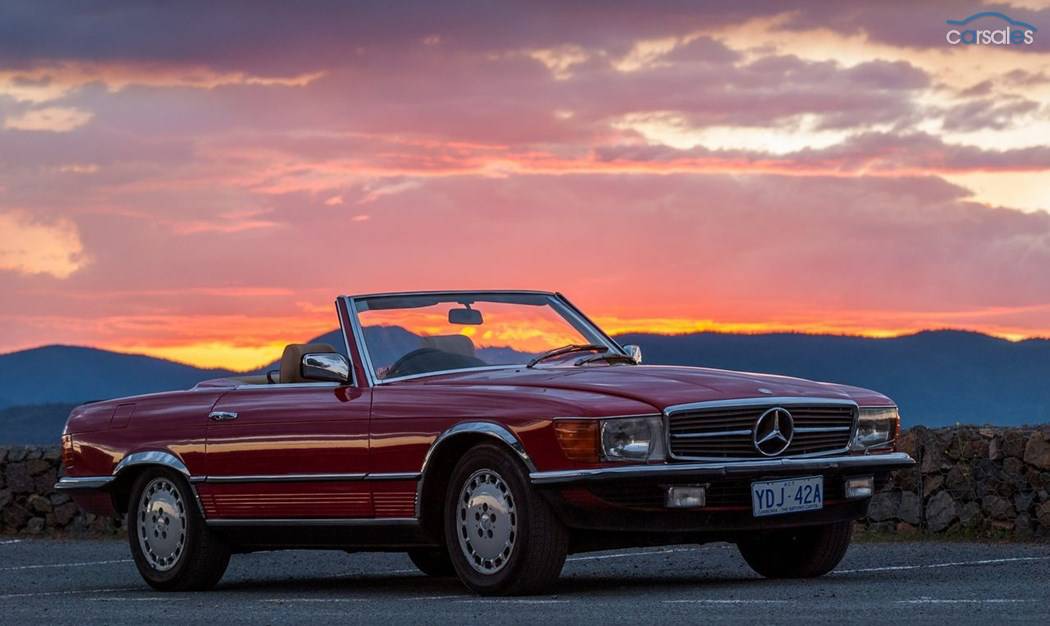
Consider this beauty, for sale in Canberra for $25,000 right now. It looks magnificent in red with a cream leather interior and woodgrain. It’s old enough to look absolutely classic but young enough to have electric everything and ABS, too. Soft-top and hard-top, naturally.
—
Maserati Ghibli GT
Here’s one for sale for $32K (the lowest priced Ghibli GT available in Oz), which is a little over budget but a skilled negotiator could pick it up in the high-20’s, I’m sure. You’d want to change the wheels to something a little more age-appropriate, but other than the wheels it’s a pretty nice looking piece of machinery.
This is a risky pick because Maseratis of this era tend to make your average punter run a mile in the other direction. Prices can go low for the BiTurbo but they’re pretty stable for the Ghibli, and the 100th birthday of Maserati, along with current desirability associated with the brand, means they could be poised for some reassessment by the motoring fraternity.
The second iteration of the Ghibli, built from the early 90’s to the late 90’s suffered from being related to the un-revered BiTurbo of the previous decade. Like many cars of similar tainted origin, however, the Ghibli is the type of car that addressed the problems of its forebear and can actually represent really good performance value thanks to it’s poor lineage acting like a boat anchor on its price. They’re reputed to be very reliable, but scheduled maintenance has to be done and the costs can be high.
Now, that’s not necessarily a recipe for value appreciation, but given the exotic nature of the Maserati name, the brand’s recent success and the generous performance and luxury levels of the Ghibli, it might just be one to be recognised. One of the problems, however, is that you’re looking at a very niche vehicle. In order to sell you have to have a buyer and there aren’t a lot of those for 90’s Maseratis.
Call it a very speculative pick.
The Ghibli GT had a 2.8 V6 with a twin-turbo setup that produced around 284hp. It moves. And I could live with a sound like this, too 🙂
—
BMW M635CSi
The Shark’s already a popular BMW classic and can be had for around $20K in pretty good condition. The smart money’s on the M model, however, with its extra grunt and M badge appeal that helps to hold the car’s value.
The M635CSi has the hi-po version of BMW’s creamy straight-six making just over 280hp. That’s nice rather than nefarious by today’s standards, but it was extremely competitive in the early-mid 1980’s and a big step up from the 215hp offered in the non-M version.
The styling is superb and the interior is well equipped and comfortable.
The 6-series is already a favourite amongst classic BMW fans. To have a genuine M version of the car only makes it more popular and that means demand = price retention or even appreciation over time.
The car shown here is for sale in Australia but is of UK origin so you’d want to make sure it’s cancer-free. At $29,900 the price is right if the car checks out. Other M6’s are selling for up to $10K more.
—
Alfa 105 Coupe 1750
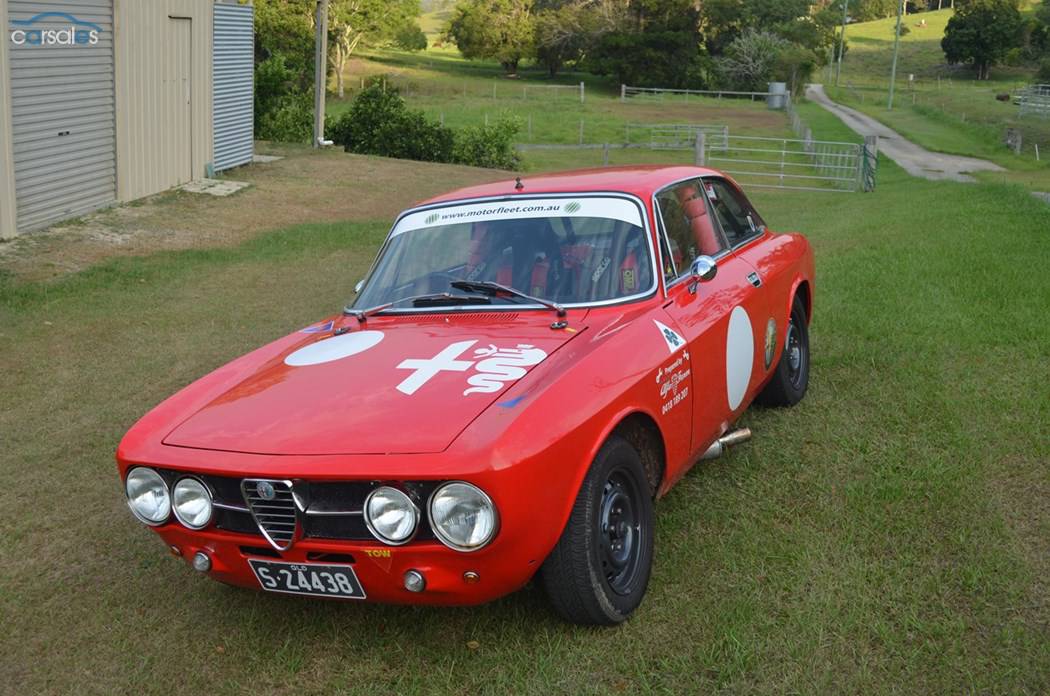
As with the 911 and Fulvia, I’ve been watching Alfa 105 Coupe sales for some times now. And as with the 911 (less so with the Fulvia as they’re not so readily available) the prices for a decent one seem to be going up. Especially for the sweet-spot 1750 engine models.
It wasn’t so long ago that I could show you a number of 105’s around the $10-$15K mark and they would have all been decent, turn-key classics that you could happily take to your Alfa club meeting or on a nice Sunday drive. 1750’s are in shorter supply, however, and the good ones are all starting around $20K now and go up from there.
This one’s for sale right now for $21,000 and the only 1750 selling for less is a $6500 project that you wouldn’t touch unless you had a bunch of time and money to pour into it.
The market says they’re going up right now, but I’d be a little nervous as those $15K cars might hit the sales pages again once their new owners have had their fun. But a properly sorted 1750 (if that’s what this is – buyer beware) is at that point where the good ones are rare enough to be very desirable and unlike the Ghibli, above, you’re selling into a much bigger potential ownership base.
—
Volvo P1800 S
I’m not sure that a Volvo will ever be considered as a real investment, but if there was ever a Volvo that might, it’d be the P1800.
It’s the most beautiful Volvo ever made, with timeless exterior styling and a beautiful interior to match, especially the early interiors like the one on this 1966 car, for sale right now in Queensland for $26,000.
Some people like the shooting-brake ES model but I much prefer the coupe styling of the S. The P1800 is no race car with it’s 4-cyl 1780cc engine but it’ll get down the road nicely and if you want to know about reliability, just ask Irv Gordon, who’s passed the 3-million mile mark in his P1800 S since that video was made.
As I said, it’s not likely to go up, but if it’s looked after properly, a good P1800 S is very unlikely to go down.
[hr]
So there they are: my 7 classic investment cars for under $30,000 – cars that I reckon have some potential to make you a little bit of money (or at least prevent you losing much money). Do your homework, though, as this isn’t investment advice. It’s just my opinion.
If you source them wisely and look after them properly then I think you’ll pay very little in rent over your ownership period and have a very enjoyable time driving them, too.
I have a confession to make. I’ve always – always – been a fan of the old Porsche 911 Targa. You know the one, the ‘lunch pail’ model that most 911 purists talk about with a tone of voice that could rarely be described as ‘fond’.
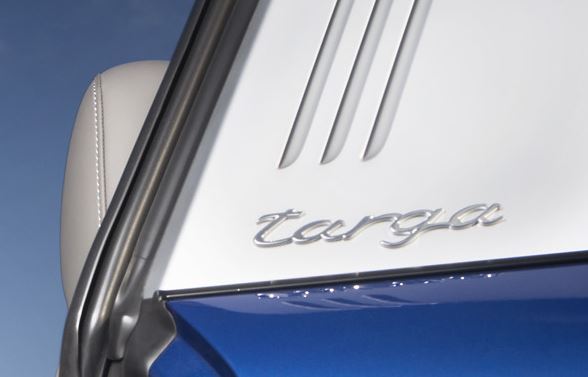
Photo above from Boldride, which has a nice article on the history of the Targa.
Not only is the old Targa usually more affordable than a Coupe of the same age, but there’s also something quite elegant about it, something appealing about the versatility. It’s probably not the 911 to buy if you want to properly learn the dark art of rear-engined driving, but it’s the exact 911 to consider if you want a more affordable 911 that’ll give you a wonderful afternoon on a country road somewhere.
Porsche has used the press days at the 2014 NAIAS in Detroit to unveil a new 911 Targa. The old Targa had a pull-out roof held in by a couple of clips. Of course, that arrangement is far too primitive for a modern Porsche so the whole Targa concept has become a mechnised party-trick.
Skip the architectural bollocks in the video below and go straight to the 45 second mark to see the roof in action. There’s also an animation at the 911 Targa microsite.
—
The 911 Targa will be a 2015 model and the full badging will be either the 911 Targa 4 or the 911 Targa 4S. The ‘4’ that’s common to both variants denotes 4WD, which is the only configuration available. The decision, then, is between whether you buy the ‘S’ or not.
The ‘S’ gets you a 3.8 litre engine with 400hp and the non-S car will have a 3.4 with 350hp. That’s plenty of poke in anyone’s language.
What do you reckon? Hot or Not?
I like the whole Targa concept on the right car and I’m quite sure Porsche will have sorted any concerns about chassis rigidity. I’m a fan.