The Alfa is now up for sale and (as anyone who knows me could have predicted) another car has popped up on my radar for use as our road-trip car later this year.
Current contenders are the Porsche Boxster S and the Alfa Romeo Brera. I’ve got a few more to explore, too, but while I was trawling through brands in the Carsales.com.au classifieds yesterday, I decided to have a peek at the BMW M3 – and I liked what I saw.
The model I’d be interested in is the E46 that was sold in Australia from 2001 to 2007. I didn’t think this would be in my price range and to be honest, it’ll be a bit of a stretch, but E46 M3’s are getting to the point of regular-guy affordability.
It’s fair to say that I haven’t been the roundel’s biggest fan over the years. It was pretty easy to pooh-pooh BMWs and a lot of that was because they were driven most conspicuously by absolute wankers. That’s still the case in some instances, but many of the most objectionable idiots are moving to Audi as their leases expire.
The second reason BMW were so un-likeable was because the company was touted as some sort of automotive deity. Magazines were falling over themselves to heap praise on just about anything originating from Munich. It’s not surprising then, that BMW have spent the last decade creating niches that no-one knew they needed – they believed they could do no wrong. Take one look at the X6 and you’ll agree that counseling would have been a better option.
So some of BMW’s reputation is confected and some of it is deserved. I think the M3 falls into the latter category. In fact, I think the M3 has provided so much reflected glory that it made some rather awkward and unpalatable vehicles into must-haves and the good news for me is that an M3, from everything that I read, has earned every plaudit its ever received (and then some).
The E46 has now slipped well into $30-$40K territory and whilst that’s more than I planned on spending for anything other than a 911, it might well be worth it for an M3. I don’t think there’s another car out there that can combine the M3’s power, handling, appointments and design.
Yes, I think the E46 BMW M3 is a good looking car. There. I said it.
If I can find a good one that hasn’t been modified or thrashed then I reckon the strength of the M3 badge would hold me in good stead, financially speaking. A portion of M3 owners bought the car for performance reasons. Another portion bought it for prestige. I want to find a prestige buyer – someone who bought the name because they could. If they’ve maintained the car according to schedule then I have a theory they’ll be ripe for under-selling an outstanding piece of engineering at a value price.
The E46 BMW M3 comes with BMW’s famous inline 6-cylinder producing near enough to 340hp (252kW) and a very healthy 365Nm of torque. Most of the E46 M3’s sold in Australia were equipped with the sequential manual gearbox (SMG) that’s been variously referred to as a technological marvel and/or a nightmare. That’s a point for investigation. There are also a few six-speed manuals out there to provide some peace of mind.
Those mechanicals are loaded into the M3’s pin-sharp chassis with near perfect weight distribution. There are all sorts of driving modes to choose from in order to get the best setup for the conditions and that’s one of the M3’s real party tricks: it’s equally at home whether out on the highway, in traffic or out on the track.
For us, one of the main goals is to get a modern highway cruiser that’ll do the job nicely for our planned holiday up the east coast of Australia. Given that I’ll be driving, the choice of car is almost as much a part of the holiday as the choice of beaches we’ll stop at. I’ll own the car as my daily driver for a year or two as well, so it’s got to have some major fun-factor appeal, too.
If I could find one with this color combination, manual gearbox and a price in the mid $30K region, I’d be mighty tempted. This one’s an SMG with 88,000kms on it and it’s currently for sale for just under $38K.
E46 BMW M3
E46 BMW M3
—
The M3 seems to tick all the boxes. All I’ve got to do now is get over my historical prejudices and do the sums. The house that M built looks like one that I could live in for some time.
Want to know why Audi have replaced BMW as the car de jour for both the established and the newly financial? Just watch the video below.
It’ll tell you pretty much all you need to know about modern styling, aggressive performance and flawless execution (both the car and the video). Combine those elements with a great driving experience, some great racing and road test results as well as good old word of mouth and you can see why Audi is kicking goals everywhere.
I get very jealous when I see stuff like this because I wish I’d been the one to come up with it. Outstanding.
I’m still not that big a fan of Audis, by the way, but credit where credit’s due.
I wasn’t planning to sell just yet, but I met a guy at the Classics On The Beach event a week earlier and he was looking to buy a GTV6. That got me thinking ‘there’s no time like the present’ so the car is now officially on the market (and yes, that guy’s had a look at it but he’s recently returned to university as a mature age student and despite him loving the car, he can’t push himself too far on price at the moment).
This is the ad. It’s limited to 2000 characters, which is a bummer. As you know I like to fill out the word count 🙂 and this car really does have a very interesting history.
No calls as yet, but it’s early days and I’m a patient man…….. sometimes.
——
One of the good ones.
Brief history: This GTV6 was built in April 1985 and was owned for 20 years by a racing engineer for Gibson Motorsports (think Nissan GT-R).
Ross used the car once in Targa and then as daily transport and occasional club car. He added Twin Spark gears (LSD) and completely restored the interior, which is still crack-free and rattle-free to this day.
Then came the re-build: The original engine was removed, replaced by an Alfa 75 engine, then the original had a full rebuild done along with a rebuilt clutch (twin-plate) and rebuilt brakes. The original engine was reinstalled and the full rebuild was finished in the late 2000’s when Ross sold the vehicle and moved overseas.
Since then it’s had some under-body paint and cavity wax sealing. I’ve recently added tuned length headers, new brake pads, new hydraulic tensioner and replaced all fluids (incl Redline gear oil).
The car has been garaged all its life. The black interior is in perfect condition. It has the original Alfa badged stereo from the period. All the electrics (windows, mirror and antenna) work with the exception of a slightly temperamental clock.
The downsides: a small seam of surface rust at the top of the windscreen – driver’s side. The front of the car also has some small stone chips consistent with age. Aircon needs gassing.
I use the car for light club activity (regularity, social runs) and as a weekender. Time for me to try another car from my bucket list. The history is documented and the comes with the car. Pics in this ad were taken by me but pre-Tassie rego.
Make no mistake – this is a good one. There are other GTV6’s available for slightly less money. They’ve either got big rust patches, tired engines, tired interiors or all three. This 1985 model drives like an Alfa should, presents beautifully, was fully rebuilt to the orders of a race engineer in the last 4 years.
Roadworthy not required in Tassie but I’m happy to have the car tested or inspected.
I write mostly about cars, but this is still a personal blog. Excuse me while I think out loud, sort of.
I alluded to it in my previous post here: the abrupt death last week of my Dutch Saab mate, Nic Schellekens, has really rocked my puny little world. Nic was 52. My Dad was 52 when he passed away back in 1985. Nic’s passing has shown me just how young my Dad was when he passed away. I was only 15 at the time so I didn’t really understand. 52 was pretty old to me back then. At 42, as I am now, it doesn’t seem that old at all.
I saw Nic in person just last year and we’d chat on Skype or email with reasonable regularity. He was young and vigorous and whilst he had recently received some troubling medical news, my last correspondence with him just a few days before he died showed all the usual energy and determination that was Nic’s calling card. Cancer didn’t kill Nic. I’ve since learned that it was a pulmonary embolism, which explains why it was so sudden, so unexpected and so cruel to all his loved ones.
Stuff like this makes you think. It makes you sit back and take stock a little. Nic and I lived very different lives. His was one of service and skill, both in the armed forces and in the private sector. He lived and worked in places I’d be too scared to even fly over. He pushed himself, got the best from himself and gave the best of himself to everyone around him.
I’m not going to put Nic on a pedestal and myself in a pit. I’ve given of myself, too, but in different ways and definitely not to the extent that Nic did, but I have given. Some people have it in them to give everything. They have no fear. They’ve seen the other side – acceptance or rejection – have weathered its flames and the thought of going back there doesn’t sway them. Some find that harder. I’m one of them.
I treasure the true friends that I have because they’re few in number and I’m not very good at making new ones. I find it hard to give what Nic gave. I can talk about cars and football all day long but I’m not too skilled at small talk and I’m not very patient with people I see as being foolish (sadly, that’s more people than you’d expect (but it’s not you, I promise)). Some people care about everybody. Sometimes I wish I was one of them but I fall well short of that mark.
I guess the next thing is to contemplate what Nic’s legacy will be for me. Nic’s legacy in general isn’t for me to determine. That’s for his loved ones and his community back in Europe. But those of us who knew him personally can each make our own deliberations as to what his life meant to us individually.
My Dad’s passing at 52 put the fear of that age into me way back in my teens. Nic’s passing at the same age has reinforced that to some degree. I used to think that every day beyond 52 would be a bonus for me but with that age just 10 years away, those thoughts seem foolish. Bottom line: there’s way too much to live for and you’re a mug if you give the reaper a better-then-even chance. Shit happens sometimes and there’s absolutely nothing you can do about that, but you don’t have to carry a bucket of it with you, waiting for someone or something to tip it over your head.
Nic’s legacy to me, then, is to try and be a better person, like he was a better person.
My entire life has been an open invitation for either cancer or heart disease to come and do its thing. My eating habits used to be absolutely atrocious. They’re barely passable now, but they’ve improved remarkably and I’ve lost nearly 15 kilos in the last 6 months or so as I’ve added regular gym workouts to my regime. I’m going to keep that up in order to ensure that I’ve got enough time to complete my mission.
My personality’s not likely to change. I’m still going to be a grumpy old man right up to the time when I AM an old man. I’m still going to think critically and I’m still going to say what I think when the moment calls for it. But maybe I can stop saying what I think when all I’m really doing is trying to make noise.
I’m not going to be some sort of social butterfly all of a sudden but maybe I can be a better friend to those people who have the good grace to put up with my crap. It’s loose and undefined but I am part of a community of sorts and maybe I can play a better role in that. Carry my weight a little more. Let the people in that community know that they mean something to me.
The hardest part is going to be chasing the dreams that my wife and I have for our lives. We’ve both got secure and (relatively) stable jobs right now. I hate mine, however, and she’d rather be painting. It’s going to take a lot to cut the cord on those, but one thing I learned from thinking about Nic this week is that he ended up chasing – and getting – the life he was born to. He was true to himself despite what must have been some difficult times.
I’d like to chase my dreams and live my life with the same vigour, commitment and honesty that I saw Nic exhibit in his. I don’t know if I have the intestinal fortitude to actually do that, but I read somewhere once that life’s not a dress rehearsal and I believe that to be true.
I think PJ and I can live closer to our ideal and still live fruitful lives. We’re not rocket scientists or brain surgeons. We’re not going to save the world. Hopefully, though, we can contribute something to people who share our interests. Hopefully we can make real connections with the people around us and contributions to their lives because after all, that’s what it’s all about, isn’t it?
It sounds a little cliche but they’re only cliches because they’re true: I’m going to miss Nic more than I can say. I never realised just how much I liked the old bastard until he was gone and that’s a massive shame on me. The least I can and should do is take note of his example after his death – one that I should have taken while he was alive.
I don’t want to miss opportunities like that ever again.
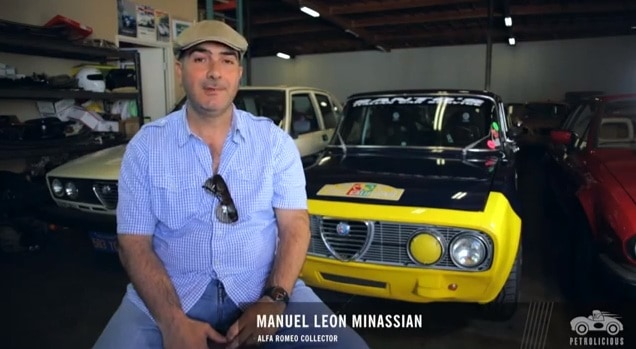
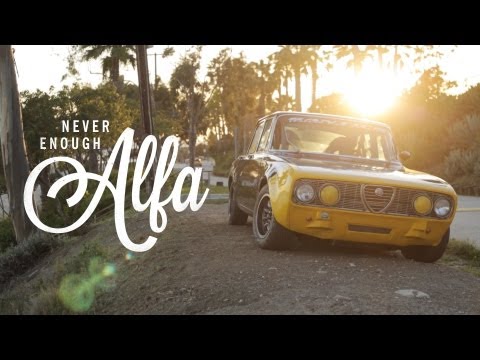
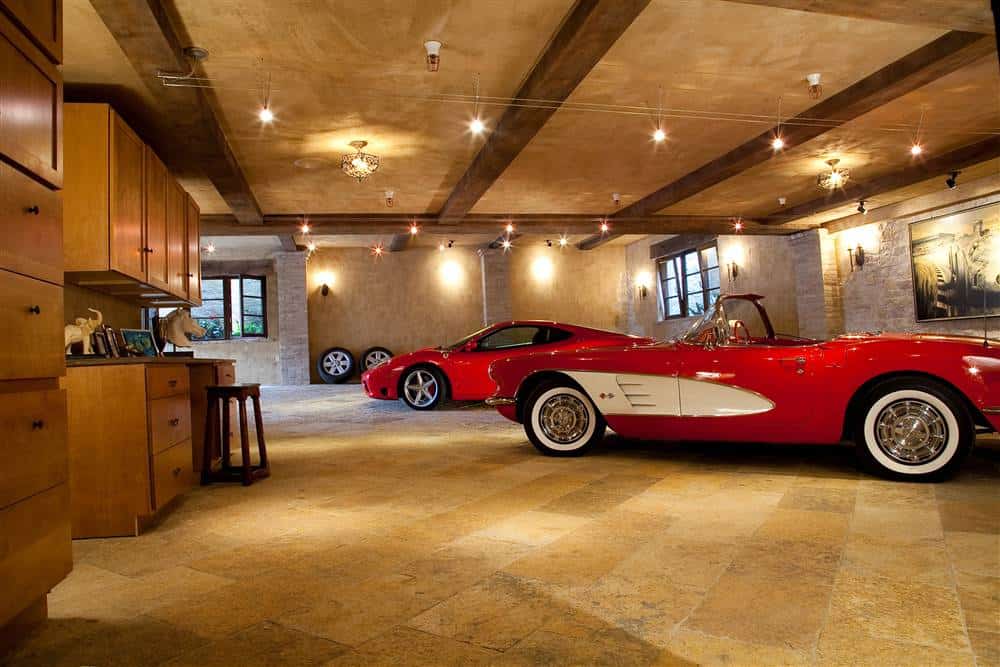
5-minute films, beautifully shot and featuring some amazing little cars and their dedicated owners. They’re inspirational and aspirational. Speaking of which, owing to the size and genuineness of his collection, Manuel is now officially inspiring. I wonder how he got all that space…….
Enjoy.
——
My apologies for having not written much recently. To be honest, I just couldn’t be bothered after the news of Nic’s death came through. Still can’t be bothered, actually, but am trying to get back on the horse as this whole thing IS a passion of mine and sitting around wondering about it isn’t going to get anything done…..
I was fascinated by a recent article I read on Classic Car Investment. Is it really possible to make a little bit of money on an expensive hobby like motoring?
It isn’t easy. Some would go so far to say it isn’t likely. But it IS possible.
If you actually select a somewhat exotic/unusual vehicle and then drive it, that could mean some serious maintenance costs. Think of those as rental fees for pleasure owning the car for a period and it makes the pill a little easier to swallow. Bottom line – pick the right car and it’s possible to buy, own and then sell a vehicle at a profit that’ll allow you to move on to something else.
The best resource I’ve found to help with this is Hagerty. It’s US-based so it won’t necessarily be completely relevant to your market if you don’t live there, but the trend might still be fairly close for the models Hagerty covers. At the very least, it’s an interesting way to pass a few moments/hours/days.
Hagerty has tools that can help you select your vehicle and track its valuation history. Just like stockmarket software, you can create a portfolio of cars and track/compare their valuations over time. They provide base indices, too. For example, are you curious as to how their basket of German Collectables has done over the last few years?
Here it is:
The explanation: The Hagerty Price Guide “Silver Arrow” Index of German Cars is a stock market style index that averages the values of 21 of the most sought after cars from BMW, Mercedes-Benz and Porsche from the 1950s-70s. The list to the left (not shown here – SW) shows the cars that make up the index, while the graph above shows this index’s average value over the past five years. Values are for #2 condition, or “excellent” cars.
Let’s take a look at one of those German Collectables – the BMW 507 Roadster. It’s very rare, of course, and quite pretty. BMW made it in the late 1950s with a focus on the US market but it was too expensive so BMW cut the program after only 252 cars were made.
BMW made huge losses on the 507 but their loss can now be your gain – if you can a) find one, and b) afford it. Here’s the index for the BMW 507 since 2006. The colored lines represent vehicle condition:
A couple of things to notice here…
Even 507’s with some pitted chrome and cracked seats (the red one – Condition ‘D’) are still worth $750,000. That’s a lot of clams. Secondly, that graph starts a few years before the global financial crisis. As you can see, the GFC didn’t do much to hurt the value of this classic car.
—
Swade’s theory of classic car investment and ownership – The big money’s always been in genuine, recognised vintage classics from any generation. They will hold a certain amount of value for collectors, always. Think Mercedes Gullwing, Ferrari 250, etc.
Emerging big money classic car buys tend to be seasonal and a move with the age/generation that has the money.
The previously-accessible movers and shakers over the last 10-20 years, for example, are cars from the 1950’s and 1960’s, bought up by Baby Boomers who’d had their kids, made their money and decided to re-live a little of their automotive youth. Here in Australia, Holden Monaros and GT Falcons were relatively affordable 25 years ago. They went through a massive boom 10 years ago but have come down since. Right now, Japanese rotary-engined cars are doing particularly well.
The oldest Generation X’ers are turning 50 right now, which might mean some good news for 1970’s classics or undiscovered/overlooked 60’s cars.
—
Don’t have a million to splash on a rare Beamer?
Hagerty also has an Affordable Classics index, which is the one for regular guys like you and me. It’s this list that quite possibly shows where some of the movers and shakers of the future will be. Given that they’re not established classics, however, this index is a lot more volatile and cars from this segment DID suffer valuation falls during the GFC.
This list is also more US-centric, so caveat emptor. But it also includes some interesting models that weren’t just US sellers.
These are cars that might appreciate a bit more in the next 10 years either because they’re rare and they’re getting noticed a bit more, or because they’re widely liked and good examples are getting harder to find. They may not make that much money, but kept in good condition there seems to be a good chance they’ll retain their value or increase in value by a small-but-reasonable margin.
A few cars from the Hagerty Affordable Classic index and a few that I’ve chose out of my own field of interest:
Ferrari Dino 308 GT4 (Swadeology pick) – the as-yet unloved Ferrari. The only one styled by Bertone instead of Fezza’s usual Pininfarina. The first Ferrari road car to use a V8, which became the basis for many of the Ferraris that followed it through the 1980’s.
Porsche 911 SC (Swadeology pick) – the 1982 model has an average sale price of around $17,000. That’s an affordable classic and as you can see, it’s holding that value in good condition.
And of course, my current ride – the Alfa Romeo GTV6
——
The key to doing this, as with any investment, is buying low and selling high. There are a lot of things that influence a vehicle’s value and they’re infinitely variable and their relative weight will change with time.
Popularity – this is a supply and demand situation. The more popular the vehicle, the greater the demand. You can’t do much about this except try to track it and predict it. Blue Chip classics are regarded as being ‘Blue Chip’ because they’re more predictable. A Ferrari is typically always going to command good value. A Datsun’s a bit more hit and miss.
Condition – The better the condition, or perhaps the more original (and good) the condition, the high the value. Restored cars can be tricky because some people restore them to their tastes rather than to factory condition. A mint condition factory car should generally be favoured, but they’re very hard to find. If you’re going to restore, the best bet is to do it to factory specs or with original enhancements.
Provenance – If the vehicle’s history is known, documented and most of all, interesting, the vehicle can demand a higher value. The former Pope’s VW Golf sold for nearly a quarter of a million dollars 6 years ago. Your grandma’s Golf is unlikely to fetch as much, regardless of condition (unless she’s more famous than the Pope).
I’m going to figure out how much I need to put away each week to get myself one of those Dinos – along with a house where I can garage it properly…..
——
The Affordable Classics Gallery
Porsche 914
Triumph TR6
Ferrari Dino 308GT4
Volkswagen Beetle
Porsche 911SC
Alfa Romeo GTV6
——
PS….. None of the above should be construed as financial advice. I’m not qualified to give financial advice. This is just an interesting topic. Do your own research and come to your own conclusions about whatever vehicles you might be interested in.
A few weeks ago, I asked Saab owners what they were driving now. Bernard, a long-term Saab fan and reader/commenter on SU and here at Swadeology, recently bought a Fiat 500 Abarth. I drove a Fiat 500 in non-Abarth form around Mallorca back in 2011. That car was short on power but high on fun. I could definitely see the potential for extreme fun with a more potent engine, which is exactly what’s in the Abarth’s (along with a few other things).
Bernard’s kindly provided a few pictures and thoughts about his new car (thanks!). Maybe it’ll inspire a few Saab owners who might be looking to kick off the next chapter of their automotive adventure.
If you’ve got any questions for Bernard, leave them in comments. If you’ve bought something to replace your Saab and you love it, then let me know. I’d love to share it around.
——
Let’s get this out of the way: the Fiat 500 Abarth is a small car. It’s amazing how many people kindly point this out to you. What can I say, that it looks bigger in the brochure? I’m over six feet tall, so the Abarth is effectively a three seater. That’s not a problem for me, but I thought I would mention it.
Also, on the way home from the dealership, my girlfriend asked me “why am I sitting in the middle of the lane?” I had to make a mental adjustment, but it’s all good now.
The Abarth is substantially more expensive than a regular 500, although it’s also cheaper than its sporty competition: BRZ, Cooper S, GTI, MX-5. What do you get for your money? First, you get great seats, with lots of support all around (especially at the knees, which is where most cars don’t deliver). You also get a very sporty steering wheel that could have come out of a Lamborghini, lowered suspension and 160 horsepower. The regular North-American 500 has 100 horses, and there’s a Turbo model with 130, so the 160 in the Abarth is a substantial bump.
You also get all the modern conveniences: bluetooth, air con, power windows and doors, USB/aux-in.
What you don’t get is a silencer in the exhaust. It’s a straight pipe front to back, with a flex in the middle, and a Y behind the rear axle.
Which brings us to the sound. The first time we started the car, we both giggled like little kids. It’s loud, it bubbles like a muscle car, it pops on the over-run, it growls when you put the power down, and somehow it’s not obnoxious. It’s uncanny; not only because it’s incongruous to have such a big sound come out of such a small car, but also because it doesn’t sound like Cherry Bombs on a Chevelle SS (or fart cans on a Civic, for the younger crowd). It sounds happy, like a two-stroke that’s perfectly jetted and coming on-pipe. It’s really not that far from the Group B rally cars that were posted a few days back.
I haven’t had the car long, so all of my driving has been in winter. We’ve had quite a lot of snow this year. Under dry conditions, the car is much as one would expect. It has a substantial kick on acceleration (100 to 150 km/h is near-instantaneous), great grip, and a firm but not too harsh ride. The Abarth comes with FSD shocks (that’s frequency-selective damping, folks) and they work just as advertised: they are softer over bumps (high frequency), and firm when the car changes direction (low frequency). The steering is tight when the car is in “sport” mode, the clutch is light, and the gearshift is precise.
The first thing you should know about driving an Abarth in fresh snow is that you absolutely must cancel the stability control (ESC). It fights you tooth and nail, tries to spin you if you steer with the throttle, kills the power when you need thrust, and generally makes life miserable. Turn ESC off and the car is transformed. There’s tons of traction (probably because there’s nothing of substance behind the firewall), tilting the car on the throttle is ridiculously easy, the steering is perfect and there’s almost no inertia to dampen inputs. It really feels like you’re going through the Turini Pass on the last night of the Monte Carlo Rally. It’s very intense, in a good way.
I could make a list of pros and cons, but I won’t. The Abarth is an emotional purchase and, as such, there’s no point rationalizing it. It feels special when you sit in it, and it’s an absolute joy to drive.
I just came across this in an article in one of our Aussie newspapers this evening:
Looking to splurge on an emotional investment that will quadruple your money in 10 years? Forget watches, stamp collections or even fine art. Buy a classic car.
Not just any old banger will do, though. According to the annual Knight Frank Wealth Report released this week, a ”truly investment grade car” bought in 2002 would have appreciated by up to 395 per cent over the past 10 years.
That makes cars easily the best ”passion” investment you can make, well and truly outperforming popular luxury items such as fine art (199 per cent), jewellery (140 per cent) and watches (76 per cent).
The most sought-after cars tend to be Ferraris, with a 1957 Ferrari 250 Testa Rossa holding the world record of $US16.39 million ($A16.02 million). Classic Aston Martins, Mercedes-Benzes and some pre-war Bugattis, Alfa Romeos and Rolls-Royces can also fetch prices in the millions.
Going from that list, it seems the type of car they’re talking about is already out of my reach. It looks like you have to spend serious money before you can make even a little money back. Generally, when you’re planning on investing, you expect some good returns on it. Even when you consider subversive investments such as precious metals, the strategy is to find out what the best precious metals investments are and then buy them and watch them grow. However, with cars, it’s not so simple. There must be some makes and models sitting just under that imaginary line, cars that will be regarded as classics in the next decade. But one can’t just make a guess or research on the internet which car will go up in value and which one won’t. It’s a risky game. I have to confess that I’ve had some recent thoughts about spending more than I’d ever usually consider on something exotic. I’m pretty sure the car I’m considering would appreciate in value over time, but it might take a long time for it to really be in demand.
It’s a daunting proposition because exotics, even the ‘affordable’ ones, tend to be older. That means they’re possibly going to be harder to maintain, and harder to get parts for (without selling a kidney, at least). We’ve all seen the Mid-Engine Challenge on Top Gear. They spell it out pretty well. “Yes, you can buy a mid-engined supercar for under £10,000 but for heaven’s sake, don’t.”
But what if you spend a little more than that…….?
Have any of you ever had experience with classic car investment? Ever made any money on a classic car? It’s obviously possible, but is it attainable if you’re not super-rich to begin with?
My most anticipated vehicle launch from the Geneva Motor Show has taken place – the Alfa Romeo 4C Launch Edition is now on show. I add ‘Launch Edition’ on the end there because Alfa have put together a special offering for the first buyers of the vehicle that’s intended to re-cast Alfa Romeo as a worldwide brand (see the Launch Edition press release, below).
There’s a lot to like about the Alfa Romeo 4C, but I want to finish this article on a positive note, so I’m going to start with something I don’t like – at all. Photo from Autoblog.
The eyes are the window to the soul and when it comes to cars, the eyes are the headlights. It’s hard to make headlights look outstanding but it’s really easy to %#$! them up. They didn’t look this prominent in the first press photos but they do here (admittedly, under a pretty severe camera flash). I don’t know who had this idea of encasing them in grey plasticky stuff but from all the live photos I’ve seen, they don’t look complimentary. They’re not getting many compliments, either.
Reading the press release, I gather these headlight surrounds might be unique to the Launch Edition. If not, then I hope either Alfa Romeo or some aftermarket company sees the light (pun intended) and develops a more traditional headlight assembly that surrounds the LED’s in mirror-finish backing and a glass covering. These headlight surrounds are, IMHO, a major detraction from what is an otherwise glorious design. With so much resting on this car – the much-promised reintroduction of Alfa Romeo into the US market – I have absolutely no idea why they would choose to do the headlights this way.
Alfa Romeo – FIX THIS PROBLEM!
——
With that out of the way, it’s time to get to the good stuff……
An all-aluminium engine, carbonfibre tub and aluminium frame along with other weight saving measures mean the total vehicle weight of the Alfa Romeo 4C is just 895kg. That’s 1,973 lbs for you old-school types. The only way you’ll get a better power-to-weight ratio in your 4C will be diet and exercise.
The engine is a direct-injection 1750cc turbocharged petrol lump putting out 179kW (or 240hp) along with 350Nm of torque. It’s mid-mounted, just behind the seats for maximum stability and optimum handling.
To put that in perspective, here’s a comparison against one of my favourite all-time cars:
The Alfa Romeo 4C has (just) more power and torque than a Saab 9-3 Viggen – and yet the Alfa Romeo 4C weighs only 63% of what the Viggen weighed (510kg less than a 3-door Viggen and 530kg less than a 5-door). OK, you don’t get a hatchback and the practicality that a Viggen offered, but it gives you an idea of the driving experience on offer here – and driving experience is what the Alfa Romeo 4C is all about.
That power is sent to the rear wheels via a new TCT twin dry clutch transmission that comes with multiple modes and launch control. It’s good for a 0-100km/h sprint of just 4.5 seconds and it’ll pull 1.1g in the corners. The brakes are pretty decent, too – 4-piston Brembos on the front along with ventilated discs all-round that will pull 1.25g in deceleration force.
Interestingly, the Alfa Romeo 4C might just be the most expensive car ever (in nominal terms) to be offered without power steering. Given the vehicle’s emphasis on light weight, Alfa decided to leave power steering on the workshop floor. They promise it’s incredibly precise as a result, and the light weight of the car doesn’t make the task of turning it a difficult one.
The interior is totally driver focused. The carbonfibre tub (which weighs just 65kg, by the way) is left exposed and the dashboard has been given what Alfa Romeo call an ‘asphalt’ treatment to link the visual with the car’s intended purpose. Dials are all digital. The metal bits are all aluminium.
The best news is that all this beauty, technology and performance is going to be on offer for a starting price less than $80,000 here in Australia. For a car with a genuine carbonfibre tub construction, I’ve got to say that that’s outstanding!
All they have to do now is fix the headlights and I think this will quite likely be the target of my automotive existence for the next five years.
Here’s a quick gallery. The Alfa Romeo 4C Launch Edition press release is below. The Launch Edition will be available in either Red or White.
Alfa Romeo 4C Top View
Alfa Romeo 4C rear view
Alfa Romeo 4C – front view
——
World première: Alfa Romeo 4C Launch Edition
The exclusive ‘Launch Edition’ will make its début at the Geneva Motor Show. It will be produced as a numbered limited edition: 400 in Europe, Africa and the Middle East, 500 in North America and 100 in the rest of the world.
Dedicated to the host of fans throughout the world, the limited edition of the new Alfa Romeo compact supercar is distinguished by exclusive characteristics such as carbon fibre trim and the ‘Carrara White’ body colour.
The 4C ‘Launch Edition’ can be ordered straight away at a price which is almost the same throughout Europe, 60,000 euros including VAT (net of other local taxes).
A unique privilege exclusively for 4C ‘Launch Edition’ buyers: the chance to take part in an exclusive event in Italy which also includes an Advanced Driving session with Professional Driver-Instructors.
New all-aluminium engine: direct-injection 240 HP 1750 Turbo Petrol.
Top speed of more than 250 km/h and acceleration from 0 to 100 km/h in 4.5 seconds.
Alfa TCT twin clutch transmission with shift paddles at steering wheel and new Alfa DNA selector with additional ‘Race’ mode.
The global launch of the Alfa Romeo 4C marks the return of the brand to the world of lightweight sports coupés, an extraordinary event, awaited ever more eagerly by the host of fans throughout the world. The exclusive ‘Launch Edition’ was created just for them, a numbered limited edition of 400 in Europe with exclusive characteristics developed specifically for this unique version.
It makes its début today, at the 83rd Geneva International Motor Show, where orders officially opened for the ‘Launch Edition’ of the new 4C compact supercar at a price of 60,000 euros in most European markets (price including VAT net of other local taxes). What’s more, all buyers can take part in an exclusive event which will include an advanced driving course, to learn how to make the most of its potential in complete safety.
The new Launch Edition can ‘clothe’ its body with two liveries – Carrara White or Alfa Red – and is marked out by the distinctive badge, inlaid beneath the paintwork. The line of the special car is enhanced by the carbon aerodynamic kit (including spoiler and door mirror covers), the rear aluminium diffuser with dark finishing, Bi-LED headlights with dark surround and 18″ (front) and 19″ (rear) alloy wheels with burnishing treatment.
To accentuate the sports look still further, there are front air intakes, brake calipers in a specific colour, racing exhaust system with BMC air cleaner and suspension kit with specific calibration for shock absorbers and rear anti-roll bar.
The interior has the same sports feel, with highlights provided by the leather/fabric sports seats with parts in Alcantara, as well as the distinctive, numbered carbon badge. In the case of the red livery, the Alfa Romeo 4C Launch Edition has red stitching on the steering wheel trim, handbrake, mats, handles and sports seats.
Of course, the Alfa Romeo 4C Launch Edition offers all the winning characteristics of the model that represents the essential sportiness embedded in the ‘Alfa Romeo DNA’: Italian style, performance and technical excellence, for maximum driving pleasure in complete safety.
Designed by Alfa Romeo and produced in the Maserati plant in Modena, the new mid-engined rear-wheel drive coupé with two bucket seats will be become available for purchase in 2013 and will mark the return of the Italian brand to the United States, inaugurating Alfa Romeo’s global growth plan.
The Alfa Romeo 4C derives directly from the concept which raised many eyebrows in admiration at the Geneva Show in 2011, so much so that it won three prestigious awards: the ‘AutoBild Design Award’ (2011, Germany), the ‘Design Award for Concept Cars & Prototypes’ (2012, Italy) and the ‘Most Exciting Car of 2013’ – ‘What Car?’ (2013, Great Britain).
Acronym 4C
The acronym ‘4C’ draws its inspiration from the brand’s glorious past, projecting the values of technology and emotions into the future. Indeed, it refers to Alfa Romeo’s great sporting tradition: the acronyms 8C and 6C in the 1930s and 1940s distinguished cars – both racing and non – fitted with the powerful ‘eight cylinders’ and the innovative ‘six cylinders’, confirming in its design layout and construction the goal of achieving the weight/power ratio of an authentic supercar, less than 4 kg/HP, yet focusing not merely on the maximum power delivered, but on limiting the weight to guarantee maximum agility and top performance. To this end, the Alfa Romeo 4C uses state-of-the-art technologies and materials derived from super sports cars (including the Alfa Romeo 8C Competizione) – carbon fibre, aluminium, rear-wheel drive – and technologies from the latest standard models from Alfa Romeo, but updated to enhance the sports appeal of the new car even further. This is demonstrated by the new 1750 Turbo Petrol all-aluminium engine with direct injection, the sophisticated “Alfa TCT” twin dry clutch transmission and the Alfa DNA selector with the brand-new Race mode.
Exterior style
Designed by the Alfa Romeo Style Centre, the 4C immediately brings to mind some of the traditional iconic models which have left a significant mark in the history of the Brand. Above all others, in terms of dimensional and layout similarities, one stands out in particular: the 33 Stradale, a car that combined extreme mechanical and functional requirements with an essential style which “clothed” the engine and chassis appropriately with unmistakable Alfa Romeo treatments.
The 4C has followed suit, and thus completes a journey which was embarked upon with the 8C Competizione, emphasising some particular concepts of the brand, such as compact size, dynamism and agility.
The development of the 4C’s exterior was characterised from the start by the need to enhance the style of the car and the technical characteristics both from a dynamic and aerodynamic point of view. For this reason, all the style solutions adopted have been optimised in accordance with the ultimate goal of the car: performance.
The rear volume, sinuous and enveloping, simultaneously encloses and embraces the beating heart of the car: the mechanics and the engine, visible through the rear window.
All this, thanks to the development of marked musculature above the wheels, lends strength and power to the rear end.
The rear musculature supports its structure on round rear light clusters and on the side air intakes necessary to cool the intercooler and the air intake for engine aspiration.
From this energy-charged rear volume and the two side air intakes spring the two long muscles which lend speed and dynamism to the side, generating the necessary volume at the front end to house the headlights and, on the central part, the two robust ribs running along the bonnet, tracing the unmistakable “V” and coming to their natural conclusion around the shield.
This, together with the two side intakes, forms the famous “Trefoil”, a substantial facet of Alfa Romeo’s profile.
Interior design
The elemental design and essential materials also distinguish the interior, which is all designed and built for maximum driving satisfaction.
Specifically, the carbon fibre of the central cell immediately stands out in the interior, left in full view to enhance the sense of low weight, technology and uniqueness of the car.
The dashboard and door panels have an “asphalt ” treatment to recall the vocation of the Alfa Romeo 4C, conceived to convey maximum driving sensation from the road.
The seats ensure dedicated sports posture, favouring the driver’s contact with the road without, however, compromising the comfort required for everyday use of the car.
The dashboard, simple and designed to make using functions simple too, reaches its zenith in the concept of extreme driver-orientation, thanks to digital instruments and gear shift controls located on the appropriately shaped steering wheel.
The cockpit, which powerfully suggests the world of motorcycle racing and race cars, brings together all information necessary to drive and control the car.
The information, which is rendered captivating through powerful, high-impact graphics, allows the driver to keep everything under control without distractions from controls that would be superfluous on this type of car.
The pedal unit and footboards for driver and passenger are all made of aluminium and embellish the lower part under the dashboard, highlighting sports character down to the smallest detail.
Dimensions and aerodynamics
The compact dimensions make this car with 2 bucket seats truly unique among its competitors: 399 cm long, 200 cm wide, 118 cm high and with a wheelbase of 238 cm. These dimensions serve both to emphasise the car’s “supercar proportions” and to accentuate its agility. What’s more, owing to the designers’ excellent work, the car achieves maximum aerodynamic efficiency levels, guaranteeing a negative Cz which, as in racing cars, contributes towards achieving increased stability at higher speeds thanks to the aerodynamic downforce.
New direct-injection 240 HP 1750 Turbo Petrol engine
The engine is the beating “heart” of an Alfa Romeo. In this case, it’s the new direct-injection 240 HP 4-cylinder 1750 Turbo Petrol, which was designed with a precise objective: to ensure exceptional performance without sacrificing driving fluidity and use in any circumstances, from the racetrack to the city streets. The Alfa Romeo 4C’s new mid-engine, all-aluminium power unit adopts specific optimised intake and exhaust systems, to enhance both response at low speeds and extension, with the assistance of a crankshaft with eight counterweights. In addition, it boasts cutting-edge technical solutions including direct petrol injection, dual (intake and exhaust) continuous variable valve timing, a turbocharger and a revolutionary scavenging control system that eliminates turbo lag. Torque delivery is generous, with a peak of 350 Nm, 80% of which is available at only 1700 rpm.
Alfa TCT twin dry clutch transmission
The 1750 Turbo Petrol engine is teamed with the Alfa TCT twin dry clutch transmission, which is a genuine benchmark in the category due to its limited weight and extreme speed of activation. The gears can be changed in sequential mode using the “shift paddles” located behind the steering wheel. Compared to the version already adopted on the Giulietta and MiTo models, the TCT on the Alfa Romeo 4C implements next-generation software and features the new ‘Launch Control’ function that optimises all car systems to provide the utmost acceleration possible. What’s more, to ensure the best performance in accordance with the road conditions and driving style, the Alfa TCT adopts optimised operating logic, interacting with the Alfa DNA selector, the braking system, the engine management system and the vehicle stability control system. For example, in automatic mode, the shifting logic differs according to the Alfa DNA setting.
The new Alfa DNA selector with ‘Race’ mode
A specific evolution of the Alfa DNA selector has been developed for Alfa Romeo 4C, which not only features the three standard settings available on other models in the range – Dynamic, Natural and All Weather – but also a fourth mode: ‘Race’, designed to enhance the driving experience on a racetrack even further. It only takes a long press of the selector in Dynamic position to activate it: in this mode, the Alfa DNA deactivates the stability control and anti-slip systems, leaving the driver in full, exciting control. Finally, the full-digital instrument panel with TFT display changes configuration – showing only information relevant to the chosen mode – and colour in line with the Alfa DNA setting: yellow for Race, red for Dynamic, grey for Natural and blue for All Weather.
Solid but lightweight structure
A stiff, strong but light structure is an essential pre-requisite for a high-performance sports car. The same principle inspired the creation of the Alfa Romeo 4C. A state-of-the-art combination of hi-tech materials of extraordinary stiffness and strength, together with a very low specific weight, was selected to achieve this result. In particular, the chassis is a monocoque made entirely of carbon fibre with ‘pre-preg’ technology derived from Formula 1 and adopted only by the most advanced supercars, which weighs only 65 kilograms, inside which a space is formed for the driver and passenger. The front and rear structures of the chassis and the roof reinforcements are made entirely of aluminium.
Additionally, the car’s bodywork is made entirely of low-density, high-strength composite material. Benefits of using this material include lighter weight (it is 20% lighter than steel) and resistance to corrosion. Dimensional stability is comparable to steel and better than aluminium.
Finally, the seats have a mixed carbon fibre and fibreglass structure which guarantees high resistance to stresses and a particularly low weight at the same time.
The final result is a significant reduction in overall weight (the dry weight is just 895 kg) combined with the best possible torsional stiffness and strength characteristics, as well as the optimisation of the car’s centre of gravity, which gives the advantage of increased agility and drivability on the most challenging roads.
Suspension
The Alfa Romeo 4C has an extremely sophisticated suspension layout – ‘superimposed wishbones’ at the front, development of MacPherson at the rear – to ensure maximum agility and road holding. This solution, along with the rear-wheel drive and the extraordinary weight to power ratio, ensures Alfa Romeo driving pleasure, enhanced even further by the weight distribution (40% on the front axle and 60% on the rear axle). What’s more, for those wanting the maximum in terms of handling, a complete suspension kit will be available with a specific calibration of the shock absorbers and rear anti-roll bar.
Braking system, wheels and steering
To ensure decisive braking even under the most intensive conditions, the braking system has four self-ventilating perforated discs, with Brembo four-piston aluminium calipers on the front axle. In addition, to “stick” the car firmly onto the road surface, tyres with a different diameter and width depending on whether they are fitted at the front or rear have been fitted (two variants possible, either 17″-18″ or 18″-19″) which were developed especially to guarantee excellent performance (a kit of tyres with a softer mix is also provided for optimised grip). In line with the car’s setup, the steering system of the 4C does not feature power steering, to save weight but above all to secure a superlative driving feel. An appropriate steering wheel load is maintained thanks to the low overall weight of the car.
Real supercar performance
The implemented state-of-the-art technical and technological solutions drive the Alfa Romeo 4C to reach real supercar performance with a unique driving feel. This is demonstrated by a top speed in excess of 250 km/h, only 4.5 seconds to accelerate from 0 to 100 km/h, 1.1 of side acceleration on corners and 1.25 g of maximum braking deceleration.
Excellence made in Italy
The very best technical and industrial expertise of the Alfa Romeo and Maserati brands was used to develop the Alfa Romeo 4C. Specifically, the teamwork between the two brands was aimed at the integration of the Alfa Romeo design department with the Maserati production plant. This was boosted by the technical and technological contribution of other Italian companies, international leaders in the sector of high-performance sports car components. In short, this too is a distinguishing trait of Alfa Romeo, a brand with a century of history that continues to be one of the most famous and popular ambassadors of Italian products across the world.
It’s with a very heavy heart that I write today about the sudden passing of one of the pillars of the online Saab community in general and the Dutch Saab community in particular – Nic Schellekens.
Nic passed away on Tuesday morning. He had recently been undergoing tests for cancer in Holland and was still awaiting a full diagnosis, prognosis and treatment plan. I don’t know the precise circumstances surrounding his passing (update: apparently it was a pulmonary embolism) but suffice to say it was most unexpected and deeply tragic.
I first met Nic online in 2009 as GM were looking to sell Saab. He was pretty well connected and we cautiously shared information here and there about the sale of Saab and what was happening with it. I first met Nic in person at the Saab Festival in 2010. He was one of the Mad Dutchies who got up to all sorts of good-natured hijinks at the event.
Many Saab fans won’t have met Nic personally but would most likely be very aware of his work. Nic, along with others, put in a lot of the legwork to make the Dutch Saab Support Convoy – the first one organised – such a success in 2010. He was also instrumental in conceiving and organising the We Are Many, We Are Saab events in January 2012.
I can’t write with any real knowledge of his whole life. We were only recent but fast friends. What I can say, though, from my own observation is that Nic was a larger-than-life man with a larger-than-life personality and a seemingly endless capacity to care about and act on behalf of the people and things he held dearest. He was a guy who touched you by his example, whose self-giving compelled others to be as open with him as he was with them.
Nic was the first openly gay man that I formed a friendship with. I don’t mean to bring that up as if it’s part of defining Nic as a person. It’s more about defining me and my sheltered, phobia-prone upbringing. Nic didn’t know it, but he opened my eyes to a lot that had been wrong with my world, simply by being himself. He was obviously very much in love with and committed to his partner, Johan, but also cared deeply and demonstratively for his former wife, Pauline. I stayed a Nic’s place for a few days and met both Johan and Pauline in February 2012, and the depth of these relationships was obvious for all to see.
But that’s the thing about Nic – he was an open book, without pretence. He simply got down to the act of living and doing what he could to make the world a better place for the people around him. He and Johan had recently bought and renovated a guesthouse in France but trips back to Holland were a regular feature of their lives.
The three things I’ll associate most with Nic – his family and friends, his love for all things Saab, and his dogs. Nic, Johan and Pauline were all passionate about their dogs, which were all labradors including one retired and one working guide dog.
Trish and I were both absolutely devastated upon hearing this news earlier today (she’d also met Nic in 2010 and spoke with him many times on Skype). It’s fair to say I can’t really believe that he’s gone. Nic and I swapped emails just a few days ago, where he told me about his initial cancer diagnosis and briefly outlined what this coming week would entail. We hadn’t spoken on Skype for a couple of months, but as I think about it it’s like I can hear his voice – the most memorable and oft-repeated words being a deep, growling Coooobus! as he told his beloved black labrador off for doing something naughty 🙂
Nic, my friend, you have left a massive hole in the lives of people around you. You’d be embarrassed if you knew just how much you’re going to be missed. You’d be gracious and kind – and then you’d tell us to get on with it. A man of action, is Nic.