They say that the sea is only salty because of the tears cried by misunderstood sharks that just want to be hugged. They can add my tears to that tally tonight.
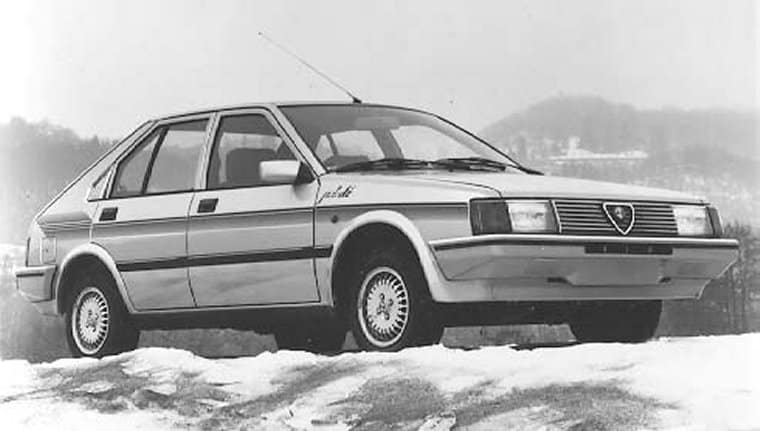
The co-developed car was going to be built by Mazda in Japan but in what appears to be a decision that killed the deal (as far as Alfa are concerned), Sergio Marchionne declared that an Alfa Romeo could only be built in Italy.
I can see his point and I appreciate his desire to preserve the Italian heart of Alfa Romeo. Then again, being built in Italy isn’t a guarantee for success. Alfa’s last Japanese collaboration was built in Italy and that didn’t go very well. Design and engineering are the key and the Alfa/Mazda effort could have been a cracker. I’m sure the Fiat/Abarth version will be.
What replaces this car as a potential Spider in a future Alfa range? Nobody knows at this point. I guess there’s scope with Sergio’s comments for it to be built in Japan as a Mazda/Fiat and in Italy as an Alfa. It wouldn’t make as much economic sense, but it could be done.
Hot on the heels from the sad news with Alfa is a story that the recent alliance between Alpine and Caterham is dissolving amidst reportedly heated disagreements over the direction and development of the vehicle.
From Autocar:
….reports of tensions between the two partners have been rife since it was confirmed the project would be delayed earlier this year, after Renault instigated a minor redesign of its Alpine following customer clinics on the car’s looks.
The Brits and French arguing over something?
Who’d have thought?
I really hope they can work something out. It’d be great to see the Alpine name on the road once again and with the shared pedigree of it’s joint developers, I’m sure the car would be awesome.
Is the Alpine A110 the discerning man’s classic car bargain of the moment?
I was inspired to do this Fantasy Friday post by a photo feature on Petrolicious earlier this week. There’s a sample of it above. Click here to see the full shoot.
You might be familiar with the Alpine A110. Or maybe you haven’t heard of it. Or perhaps you’re like me and have only come across it relatively recently. I’ve only been aware of this elegant classic for a few years thanks to a friend’s interest in Renault Sport vehicles.
So what is the Alpine A110, aside from staggeringly beautiful?
The Renault-Alpine A110
Before you get to the A110, you have to start with Alpine (read it with a French accent and say Alpin).
Alpine was started by the outrageously over-accented Jean Rédélé in a town called Dieppe. Jean wanted to race French cars after the war and started with the Renault 4CV (which rumour has it was a car that played a remarkably shadowy part in the personal history of one Ferdinand Porsche).
Rédélé took factory Renaults and made them more competitive with aluminium (and eventually, fibreglass) bodies, souped up rear-mounted power plants coupled to 5-speed gearboxes of his own design.
Right: My favourite Alpine photo
He met with success early at the Mille Miglia and various rallies in his native France. His success at the Coupe des Alpes and his love for racing in the French mountains gave the company its name.
Alpine’s first car was a re-bodied 4CV called the A106, which was followed by the A108. The A108 used a Renault engine tuned by Gordini, which is interesting in tangential terms because Renault eventually bought both Alpine and Gordini and from the ashes of those two companies, started the RenaultSport brand than continues today.
The Alpine A110 featured a fibreglass body on a steel chassis. Early cars used a small 1100cc engine producing just 66hp but a Gordini-engined option soon followed with a beefier 95hp. The engine continued to grow through 1300cc up to 1600cc and a maximum output of 140hp – in a car that weighed just a little over 600kg.
Yes, you read that correctly. Just over 600kg.
I don’t know if it’s evident from the photos featured here already, but the A110 is quite small. I had the opportunity to see one in person at Targa Tasmania last year and couldn’t help but take a bunch of photos of both the A110 and it’s stable-mate, a Renault 5 Turbo. That the A110 could make the Renault 5 Turbo seem big(-ish) goes to show how much of a pocket-rocket the A110 really is.
Renault Alpine A110
Renault Alpine A110
Renault 5 Turbo2 and Renault-Apline A110
Renault Alpine A110
Renault Alpine A110
Renault Alpine A110
That sort of power-weight ratio lent itself to motorsport success and Renault-Alpine won the first ever World Rally Championship with the A110 in 1973, though the car had already tasted success with the International Rally Championship in 1971 and back-to-back victories at Monte Carlo and many other rallies years before.
There are more awesome photos where that one came from at eGarage.
Here’s what you can do in an Alpine A110. The action starts 30 seconds in and take note – this is just the 1300cc model, not the bigger and more powerful 1600cc 🙂
——
For Sale
So is the Renault-Alpine A110 the collectable bargain that I mentioned at the top of this post? Well, I’m not sure you can ever call something that can cost around £80,000 a bargain, but when you consider that you won’t even be allowed to look at a Lancia Stratos from the same era without serious six-figure sums in your pocket, it doesn’t seem too bad.
In fact, you can buy the Renault-Alpine A110 below for a mere £44,679 but there’s a catch – it was built by FASA, a Spanish contractor that built Renaults for around 50 years up until the turn of the century. So it’s not an imitation, but it’s not the most desirable version, either.
The real deal will cost you all of that £80,000 and a little bit more, but it’ll be the authentic French-built version built at Alpine’s skunkworks in Dieppe.
The car below is currently for sale in Germany. It’s just a baby with only 32,500kms on the clock, is said to retain its original paint and has had only two owners. Notably, it’s the bigger 1600cc model so you are getting maximum bang for your buck, but there’s a LOT of money involved – £85,000.
——
BONUS CLIP
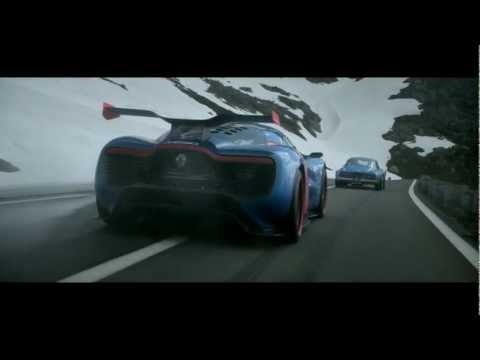
Renault celebrated the 50th anniversary of the A110 by building the A110-50 concept car in 2012. This clip features some wonderful photoshop work to pit the old against the new. Enjoy.
There’s no internet so teenage petrolheads in Australia all read Wheels magazine to get their automotive kicks. There are all manner of car stories, interesting or otherwise, but as interesting as the stories might be, they are matched or sometimes outdone by the advertisements slotted in between them.
There were few ads more exotic than those for Alpine car audio. The reason is easy to see:
—
Anything featuring a red Lamborghini was instant automotive porn for a teenage revhead. It wasn’t just the teenagers that were captured by this, though. Alpine built a legacy that lasts to this day by virtue of their partnership with Lamborghini.
Saab also had audio provided by Alpine in the 1980’s. The same little clear/green buttons that looked so fantastic in Ferrucio’s finest were also available in the Saab 900 (in Australia – SW). The inclusion of Alpine audio was a wonderful bonus for Saab fans but once it became known amongst a certain group of undesirables in society, it also became a problem.
Steve Emanuel was working for a Saab dealership at the time. He now runs Saab Salvage, a recycled parts business in Sydney and I caught up with him last week when I picked up our 9000 Aero. I was eyeing off some Alpine units in his office when he told me about the problems they had with these stereos at the time.
The Alpine was a very desirable unit thanks to its great performance, sleek looks and, of course, its tie-in with Lamborghini. Saab cars both on the street and in dealerships became a target because of this. Alpine stereos became targets and seeing as there were a lot more 900s than there were Countaches on the road, you can guess which model became the focal point for break-in and theft.
The worst single instance was one guy caught with 6 stereos he’d pinched from dealer cars that he broke into. But there were many, many individual thefts. Replacing stolen radios and damaged dashboards was Steve’s most commonly completed task for a certain period of time in the 80’s.
Alpine audio made Saabs a target and Steve mentioned that at one point during those years, Saabs were considered the biggest automotive insurance risk in Australia.
The unintended consequences of an excellent advertising campaign.