[hr]
[dropcap]S[/dropcap]aabs were only produced under Spyker’s ownership for a period of 15 months or so and the company released two all-new models in that time – the 9-5 and the 9-4x.
Given its short production run prior to bankruptcy, a new generation Saab 9-5 – even in sedan form – is a reasonably rare thing. A Saab 9-4x is even rarer because GM pulled the manufacturing rug out from under Saab’s feet pretty soon after production commenced.
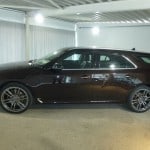
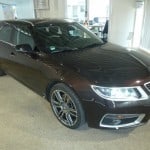
The genuine rocking-horse-poo rarity award, however, has to go to the Saab 9-5 SportCombi, or wagon, in common parlance. Only 27 of them received serial numbers and they were never officially sold by Saab Automobile to paying customers. They were eventually sold at auction by Saab’s bankruptcy administrators to various cashed-up enthusiasts, a number of whom have done the hard yards to register them in various countries around Europe.
Given it’s rarity, then, any NG Saab 9-5 SportCombi is of definite interest to a Saab fan. But at what price?
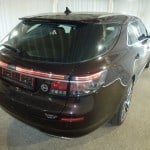
Well, one that’s just come up for sale might just be the genuine unicorn amongst the bunch and the seller’s asking a pretty penny for it, too. This is not only one-of-just-twenty-seven made (#21, actually), it’s reported to be the only one with a V6 engine.
This will be an interesting sale to watch and therefore gauge the collectability of rare Saabs. There would have been a reasonable cost incurred in purchasing this car and getting it complied for registration. But will anyone be willing to shell out the €84155 asking price? That’s €70,000 plus 19% VAT so it’s possible a non-European might pick it up VAT-free, but then they might not be able to drive it and that’s a lot of money for a show car with minimal established show appeal outside Saab circles.
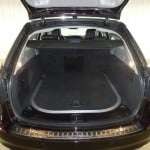
As mentioned, the car has a 300hp V6 engine, coupled to an automatic transmission. It’s finished in Java Brown Metallic with black full leather interior. Those with a keen eye will also spot the XWD badge on the rear tailgate AND a Hirsch badge, too. It’s an Aero model and seems to be carrying every bit of equipment that Saab could pack into the car. It has leather steering wheel, satnav, 20-inch Hirsch wheels (original 18″ wheels come with it, too), Xenon headlamps and Saab’s optional U-rail system in the back.
The car seems to have enjoyed an active life already, having clocked up some 50,000kms on its odometer.
I should have done some more research before posting, and (as always) I should have done that research at Hemmings.
We have a regular visitor in our midst who just happens to be one of the scribes at Hemmings. His name’s Mark McCourt and he left a comment in yesterday’s FF entry that sent me reading two articles from Hemmings that I’d like to pass on for your perusal this weekend.
The first is Hemmings’ look at a 308 GT4, owned by a guy on the left coast of the US. The article gives a great first-hand feel of what it’s like to drive one of these four-seater Fezzas. Here’s an excerpt:
When you toss the 308 GT4 through a lively series of esses, as we got to do around Washington’s Olympic Peninsula during our damp springtime drive, and it just pivots and carves and responds to the subtle deftness of your inputs without a slide or a kickback or an argument, and just goes and does your bidding without a fuss….
And my favourite bit:
Steering is impossible at slow speeds, but impossibly deft at any speed that registers on the speedometer–a subtle indication that cars such as this are meant to be driven, not parked.
It’s a great read.
After you’ve read that one, you might feel satisfied; happy in a new-found appreciation for the red-headed stepchild of the prancing horse family.
It’ll sadden you and if you’re like me, it’ll frustrate you to no end. I hope that’s not the end of the road for this car and I don’t understand why the numbers don’t work in the case of a car like this under those circumstances. Check it out for yourself.
[hr]
[dropcap]L[/dropcap]ife’s too short to never own a mid-engined Italian V8. Gearheads might consider that quote to be agreeable, but getting a mid-engine Italian V8 is not like buying a Corolla. It takes dedication and a commitment to the goals of both acquisition and ownership. It’s not for everyone and on many levels, it shouldn’t really be for anyone.
And yet….. who wouldn’t want one, one day?
There are currently two ways to get into a “reasonably priced” Ferrari in Australia (if your idea of reasonably affordable is to pay from $30K upwards for a 1970’s Italian with an intermittent temper). One is to buy a Mondial, the somewhat unloved four-seater from the early 1980’s. The other is to buy its predecessor – the Ferrari Dino 308 GT4.
The Dino badge was first used in honour of Enzo’s deceased son to denote a Ferrari that wasn’t a 12-cylinder car. The prized Dino is the 246, a voluptuous coupe that is sheer beauty from every angle. A restored example was sold at auction here in Oz recently for nearly $300,000.
The 308 GT4 is a very different and much more ‘affordable’ beast.
The 308 GT4 is looked down upon by some because it was the first (and remains the only) regular production Ferrari to be styled by Bertone. Ferrari had always used Pininfarina prior to this car [pullquote-right]Life’s too short to never own an Italian mid-engined V8[/pullquote-right]and they returned to Pininfarina afterwards, but the diversion was seen as unforgivable by some and the 308 GT4’s price has remained stunted ever since.
Aside – Bertone also self-styled the 250 GT in the late 1950’s but they’re rarer than unicorns and priced accordingly on the rare occasions they do pop up for sale.
The other price-suppressor when it comes to the 308 GT4 is that 4 on the end of the badge, denoting it as a four-seater. Ferraris always tend to look best as two-seaters and it takes a special four-seat design to look customarily spectacular with a Ferrari badge. Not many do and the GT4 isn’t one of them.
The 308 GT4, as the name suggests, has a 3.0 litre V8 engine, mid-mounted and capable of producing 250hp. Fuel is consumed at a prodigious rate via four – yes, four – 40mm Weber carburettors. They must be fun to tune.
Given that you can get that sort of power from a modern 4-cylinder engine, there really is no rational reason to buy a Ferrari 308 GT4.
But then, it’s a Ferrari. You don’t buy it because it makes sense. You buy it for the sense of occasion it’ll provide every day you climb into it and turn the key.
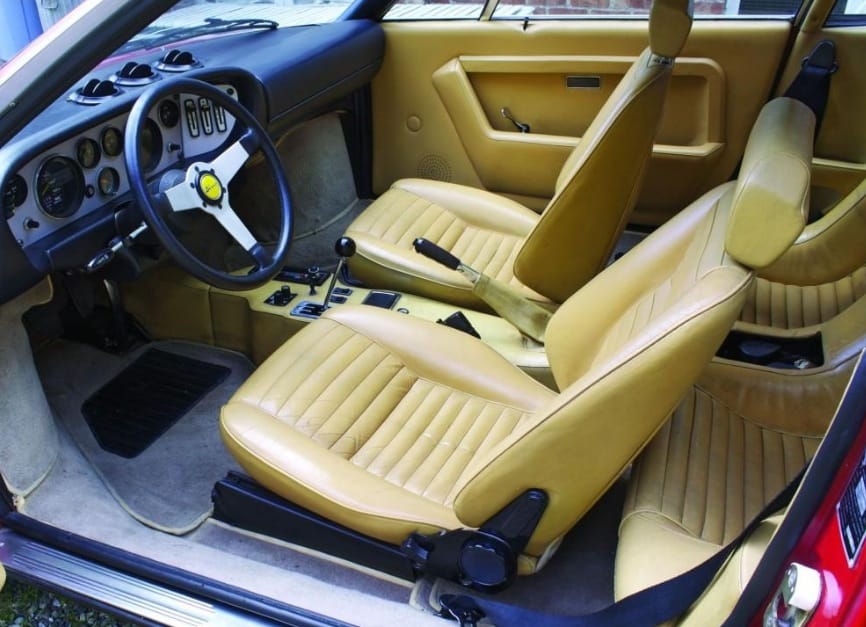
Here’s a short video (6 minutes) that shows just a little of that sense of occasion. The dashboard is classic 70’s and the noise is just sublime.
Note: in some markets, you can also buy a 208 GT4, which has a smaller 2.0 litre V8 engine producing around 180hp. I would expect the noise to be just as nice. I have no idea of the price.
Let it be known I have no buyer’s remorse. I love my 968CS and hope to keep it (or a car like it) for a long, long time. That said, I spent a LOT of 2013 looking for a Lancia Fulvia and still have a deep affection for the little Italian. Even my wife loves them!
If this Lancia Fulvia 1600 HF were advertised a few months ago instead of just coming on the market this week, I would have taken a very close look. If it checked out, there’s a distinct possibility I would have bought it.
Here’s a nice little litmus test to show how much people are willing to pay for what they believe is the genuine article. In this case, it’s a Porsche Speedster.
——
I think the Speedster might be where Porsche’s habit of success with selling stripped-out versions of its cars got started.
The Speedster was basically a lightweight version of Porsche 356 convertible. The idea originated in the US, where Porsche’s distributor wanted a cheaper, lighter model to sell to US customers. The Speedster had a shortened, removable windscreen, basic fixed-back bucket seats, plastic curtains for side windows and minimal clutter on the dashboard.
There are a lot of Speedsters on the road nowadays. A lot more than Porsche built themselves. That’s because they’re a favourite of the replica industry, cars that aren’t the genuine article but made to the original specifications and featuring a very high standard of fit and finish.
So why do so many people want a Speedster? Buyers of genuine Speedsters would have multiple reasons – classical beauty, performance, investment. Buyers of replica Speedsters won’t get the same investment value, but get much of the performance and all of the beauty.
And beautiful it is, too. You probably won’t understand the language spoken, but then you don’t need to understand it in order to appreciate the Speedster.
——
A genuine Porsche Speedster can set you back a fortune. The black one pictured below with a removable factory hardtop is selling in the UK right now for £295000.
There’s one for sale at the moment, however, that’ll cost you quite a lot less.
It is reported to be a genuine 1957 Porsche Speedster but it will require a little bit of fettling in order to reach the high prices that other genuine Speedsters can achieve.
The car is currently for sale on Ebay in the US (don’t click that link just yet – read on). Here’s a bit of the seller’s description:
This Speedster was found as is after sitting outside for a unknown number of years. It was pulled from an old Roosevelt estate on the North Shore of Long Island. It is believed to have been a race car owned by the Roosevelt’s and run at Bridgehampton Raceway in the late 50’s to early 60’s. It appears that it was crashed at some point in history and was parked. It still has part of the racing numbers on the side along and a roll bar.
As you can see from the pictures it is in extremely rough shape. But it is still a real 1957 Speedster.
This is where we get to the testing point – what’s in a name?
We know that a genuine Porsche Speedster is an achingly beautiful car that is surprisingly sprightly for it’s age. We know that they’re coveted by collectors and even more so if they’ve got genuine racing history. The big question, then – How much are you willing to part with for a ‘car’ that’s barely recognisable, simply because you want the genuine article?
Well, as I write this, there are 12 bids on this vehicle and the last bid is $25,400. Yes, more than $25,000.
I guess it’s time to show you some more photos. Believe it or not, the photo above shows the car’s good side 🙂
Click to enlarge.
—
I reckon the only salvageable parts of this car are the plates from the coachbuilder and the door latch. I guess if you replace everything around that coachbuilder’s plate – and I mean everything – and if you do it using genuine spec metalwork, you might still have something that could technically be referred to as a genuine Speedster.
Or you might have a really cool piece of sculpture for the ultimate man-cave.
This car popped up on a random Facebook feed earlier today – thanks Joop! – and I just had to know more. It’s so cheesy and so GM (although not officially) that I couldn’t resist elevating it to Fantasy Friday status.
Is there any mid-engined supercar from the 1980’s that hasn’t been used as the basis for a kit-car and hung on the shoulders of a Pontiac Fiero? My wife’s cousin has a Fieroghini, for example. I have to admit, they’re fun to see on the road and they’re even fun to drive, but I’m not sure I’d want to own one.
The Mera is perhaps the best execution of a Fiero remodel that I’ve seen. Whilst GM never officially sanctioned it, the remodel was so good it was actually offered as a dealer option by a number of Pontiac dealers back in the late 1980’s.
The Mera was built in 1987/88 by a company called Corporate Concepts based in Capec, Michigan. Only new Fieros were used for the cars. They were never sold as an aftermarket kit but original Meras have been used as the basis for some new fibreglass moulds so there may be a couple more around than what were originally built.
Sadly – depending on how you look at it – Ferrari heard about the Mera and put a quick stop to it. Only 247 Meras were ever built.
From the few that I can see for sale at the moment (after a whole 2 minutes of searching) they still hold some value – for late 1980’s Fiero, anyway.
So if you’re after a car that costs five figures and offers so much promise from a distance but will be profoundly disappointing once you get in it what is possibly the best execution of a Fiero kit car, the Mera might be a dream come true. At the very least it’ll be a good conversation starter.
Is the Alpine A110 the discerning man’s classic car bargain of the moment?
I was inspired to do this Fantasy Friday post by a photo feature on Petrolicious earlier this week. There’s a sample of it above. Click here to see the full shoot.
You might be familiar with the Alpine A110. Or maybe you haven’t heard of it. Or perhaps you’re like me and have only come across it relatively recently. I’ve only been aware of this elegant classic for a few years thanks to a friend’s interest in Renault Sport vehicles.
So what is the Alpine A110, aside from staggeringly beautiful?
The Renault-Alpine A110
Before you get to the A110, you have to start with Alpine (read it with a French accent and say Alpin).
Alpine was started by the outrageously over-accented Jean Rédélé in a town called Dieppe. Jean wanted to race French cars after the war and started with the Renault 4CV (which rumour has it was a car that played a remarkably shadowy part in the personal history of one Ferdinand Porsche).
Rédélé took factory Renaults and made them more competitive with aluminium (and eventually, fibreglass) bodies, souped up rear-mounted power plants coupled to 5-speed gearboxes of his own design.
Right: My favourite Alpine photo
He met with success early at the Mille Miglia and various rallies in his native France. His success at the Coupe des Alpes and his love for racing in the French mountains gave the company its name.
Alpine’s first car was a re-bodied 4CV called the A106, which was followed by the A108. The A108 used a Renault engine tuned by Gordini, which is interesting in tangential terms because Renault eventually bought both Alpine and Gordini and from the ashes of those two companies, started the RenaultSport brand than continues today.
The Alpine A110 featured a fibreglass body on a steel chassis. Early cars used a small 1100cc engine producing just 66hp but a Gordini-engined option soon followed with a beefier 95hp. The engine continued to grow through 1300cc up to 1600cc and a maximum output of 140hp – in a car that weighed just a little over 600kg.
Yes, you read that correctly. Just over 600kg.
I don’t know if it’s evident from the photos featured here already, but the A110 is quite small. I had the opportunity to see one in person at Targa Tasmania last year and couldn’t help but take a bunch of photos of both the A110 and it’s stable-mate, a Renault 5 Turbo. That the A110 could make the Renault 5 Turbo seem big(-ish) goes to show how much of a pocket-rocket the A110 really is.
Renault Alpine A110
Renault 5 Turbo2 and Renault-Apline A110
Renault Alpine A110
Renault Alpine A110
Renault Alpine A110
Renault Alpine A110
That sort of power-weight ratio lent itself to motorsport success and Renault-Alpine won the first ever World Rally Championship with the A110 in 1973, though the car had already tasted success with the International Rally Championship in 1971 and back-to-back victories at Monte Carlo and many other rallies years before.
There are more awesome photos where that one came from at eGarage.
Here’s what you can do in an Alpine A110. The action starts 30 seconds in and take note – this is just the 1300cc model, not the bigger and more powerful 1600cc 🙂
——
For Sale
So is the Renault-Alpine A110 the collectable bargain that I mentioned at the top of this post? Well, I’m not sure you can ever call something that can cost around £80,000 a bargain, but when you consider that you won’t even be allowed to look at a Lancia Stratos from the same era without serious six-figure sums in your pocket, it doesn’t seem too bad.
In fact, you can buy the Renault-Alpine A110 below for a mere £44,679 but there’s a catch – it was built by FASA, a Spanish contractor that built Renaults for around 50 years up until the turn of the century. So it’s not an imitation, but it’s not the most desirable version, either.
The real deal will cost you all of that £80,000 and a little bit more, but it’ll be the authentic French-built version built at Alpine’s skunkworks in Dieppe.
The car below is currently for sale in Germany. It’s just a baby with only 32,500kms on the clock, is said to retain its original paint and has had only two owners. Notably, it’s the bigger 1600cc model so you are getting maximum bang for your buck, but there’s a LOT of money involved – £85,000.
——
BONUS CLIP
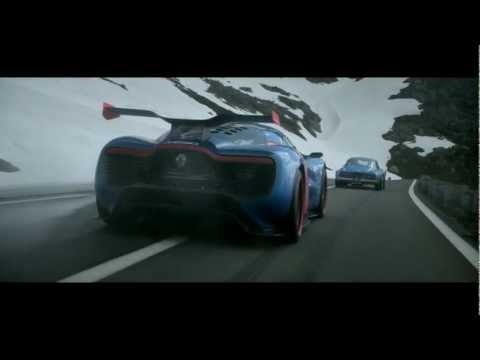
Renault celebrated the 50th anniversary of the A110 by building the A110-50 concept car in 2012. This clip features some wonderful photoshop work to pit the old against the new. Enjoy.
Hairy palms? Hallucinations? Violent mood swings? Doing the same thing over and over and expecting a different result? Voting conservative?
I think it’s fairly safe to add ‘buying a TVR’ to that list. And yet here we are, collectively poised to lust after what is reputed to be one of the most unreliable and notoriously rusty cars that ever existed.
TVR occupied the same mind-space as Ferrari and Lamborghini for me as I lounged around my teenage bedroom thumbing through CAR Magazine and Wheels magazine in the 1980’s. TVR was remote and exotic. The ‘Wedge’ models from the 1980’s looked a bit like a Lotus Esprit (the epitome of untouchable sports cars thanks to James Bond) and the performance figures backed up the exotic angularity.
Living on the other side of the world in those pre-internet days, I didn’t get to hear all the bad TVR stories here in Australia so the dream was allowed to linger untainted. Today, the stories woven by the malaise-era marketing mavens can be seen for what they were and it’s only the hardiest of punters who can stomach the idea of buying a TVR.
I’ll count myself as one of them.
In fact, when I was scouring England for a Lancia Fulvia a few months ago, I discovered TVR’s by the shedload available for sale and the idea of bringing one to Australia crossed my mind more than once. Maybe one day.
Is it that TVR was basically a cottage company making big, burly cars that compels people to cheer for them? The lure of the underdog combined with exotic styling, high speed and an engine note that’s more than capable of moving your middle bits.
I know a Saab-owning couple in the UK who had one and Sharon swore to me that her TVR was one of the most enjoyable cars she’s ever owned.
Perhaps owning a TVR is a bit like owning an Alfa, but even nuttier because of the odds. If you got a good one, I’m sure it’d be absolutely intoxicating. But the odds make it much more likely that you’ll get one that feels like it was built on a Friday afternoon after a long lunch.
Which one?
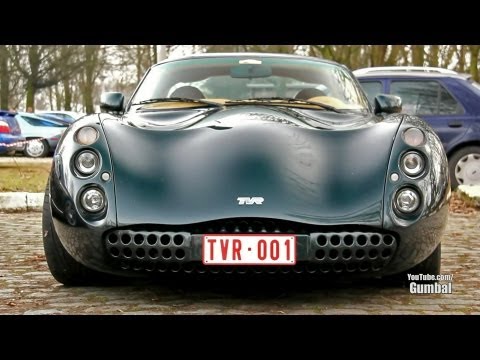
If money was no object I’d be opting for one of the modern TVR’s – a Tuscan or a Cerbera. The latter is swooping and elegant but brutal, while the former is totally uncompromising and looks as insane as it sounds.
—
Or if you want to go for true TVR exotica, there’s the Sagaris. I’m not sure there are words in the English language for this.
—
If I were to bring a TVR into Australia, however, I’d be restricted to a pre-1989 vehicle thanks to our rather ridiculous importation rules. That means either a 1980’s wedge model or something older and swoopier.
My personal preference would be for one of TVR’s M-series models: the 3000M.
TVR’s M-Series cars were built in the 1970’s using a fibreglass body on a purpose-designed chassis. Weight was low, handling was nimble and power was more-than-adequate according to the standards of the day. There was a 1600M using a Ford ‘Kent’ engine and a 2500M using a Triumph straight-six engine. Then there was the 3000M, using the Ford ‘Essex’ V6 engine.
Even though the car only had around 140hp, the 0-100km/h sprint finished in less than 8 seconds thanks to its extremely low weight.
The 3000M is not particularly fast by modern standards and I’m sure it would be far from comfortable to drive. There’s a good chance it’s not very economical or reliable either (not that economy’s a priority with a car like this, anyway, but…). The TVR chassis is so prone to rusting that you can buy replacements ready-made. If you want to see the process for replacing a TVR chassis, Wheeler Dealers did it earlier this year. The video goes for around 45 minutes.
But…. despite all that, the TVR M-series cars, like all TVR’s, have presence. My guess is that you’ll rarely hear an exhaust note so intoxicating and you’ll never see another car like yours staring at you from the other side of an intersection. Get a good one and I have a funny feeling that a TVR like this will quite likely be the most engaging car you ever own.
For sale
A TVR 3000M can sell for as little as 4,000GBP in England. I’ve seen them for even less than that. Of course, you are taking your chances with any TVR so buying the cheapest one you can find means you’re really throwing caution to the wind.
There are only three 3000M’s for sale on my favourite British classifieds site and two of those are left-hand-drive, so let’s check out the best of them.
This car is available in Germany for a somewhat more hefty €22,900 but take a look at the photos and I think you’ll agree it presents as a nicely finished car. The colour scheme is classic British and a new Essex engine was fitted just last year. Work was done to tidy up the gearbox and brakes at the same time.
Nice! Click to enlarge.
And a little 3000M sound, albeit with a slightly modified car…..
This week’s Fantasy Friday entry was inspired by a car I saw on the road in Hobart earlier this week (see above).
Early model Japanese sports cars are rarely going to approach the value of their European counterparts but there is a fierce little community dedicated to the preservation of these cars and their work is gaining in appreciation. Values are gaining ground, too. You can easily fork out over $40,000 for some early Japanese sports cars that would have been sold for scrap 10 years ago.
The 1st generation Toyota Celica Liftback is not one of those $40,000+ cars (yet) but the good ones do command five figures and ….. well …. they look the business, don’t they?
The Ford Mustang inspired a lot of design knock-offs (even Aston Martin made a Mustang-inspired muscle car) and the Mustang treatment on the Celica worked a treat. They’re much rarer than this generation’s hardtop coupe, too, which gives the Liftback a nice additional layer of desirability.
The Liftback looked a little bit staid on the showroom floor but you can see the potential.
Owners tend to go with some bigger, wider wheels and a lowered stance and the transformation is instantaneous. The car I photographed on the road has it. The cars I spotted on this Facebook group dedicated to the model have it as well.
From the mild…..
…. to the meaty…..
….to the downright muscular:
You might feel tempted to pooh-pooh the modified versions of this car but they sit OK with me. These, along with American muscle cars, are some of the first models to really inspire the home the tuner/stylist. They were relatively cheap and much more reliable than most of their contemporaries from the time. That translated to them being accessible, drivable and popular. Give that combination to a cashed-up, creative tuner community and what you get might lack some pedigree, but has plenty of conviction. They took their modifications pretty well, too.
Power wasn’t outstanding but was OK for the time. Celicas have always been powered by 4cyl engines, though some early Supras badged as a Celica XX had a fuel injected six – I owned one all through university! The best of the 4 cylinder models from this first liftback era had a twin-cam Yamaha head, good for nearly 140hp.
Perhaps the enduring attraction of these early Celicas, apart from their 70’s retro look, is the fact that they’re rear-wheel-drive. The model changed to front-wheel-drive in the mid 1980’s and Celicas went from being regarded as cheap sports cars to something more akin to a hairdresser’s car. Teenagers from the 80’s who are now hairy-chested men with a bit of spare cash often like the idea of getting something nostalgic. This is automotive nostalgia that’s authentic, relatively rare and affordable.
——
There are quite a few older Celicas on the market right now but most of them are the hardtop coupe. There are very few of these ‘Mustang’ liftback coupes for sale.
I understand that this won’t be a fantasy car for most visitors to this site. There IS a huge market out there for older Japanese sports cars, however. Older Mazdas and Datsuns are also sought after and some of the prices these former throwaway cars are eye-openers, to say the least.
UPDATE: I’ve been given some links to Celica stories from Hemmings, all of which make for great reading if the Celica takes your fancy. There are some great photos associated with them, too, much better than the photos I’ve gathered here.
Welcome to the first instalment of Fantasy Friday, a momentary brainstorm idea that may or may not be continued in the future.
I spend a LOT of time on various car-selling websites so I thought I’d pick a car from time-to-time to share on here. Any car shown on Fantasy Friday will be a car that’s available for sale at the time of publication (so hopefully a friend can buy it and I can go for a drive!!).
There’s no description on this listing as yet, but the photos say enough to suggest that this Dino presents in very good order. Shannons will put a mechanical report on their website closer to the auction date.
There’s no price guide at this point, either. Shannons have sold a few of these cars over the years, however, with most of them going in the high 100,000’s. The most expensive one sold for $220,000 back in 2007.
That was a GT and therefore, a hardtop. This one’s a GTS, meaning it’s a targa top with a removable roof. This is also the first GTS they’ve listed for sale, from what I can tell. The price will be interesting to see.
——
Here’s some video to get your aural juices flowing. That V6 engine sure sounds sweet.
The video, which was made by the owner of the car, isn’t the greatest quality but it’s got a great car-guy story behind it and gives you a good feel for riding in the car:
On the plane back from Europe in 2008 I happened to meet a French enthusiast who loved Dinos but didn’t have one. I invited him to go for a ride while he was in Los Angeles and his comments about the car are worth hearing.
——
Because I’m a lazy arse and it’s late on a Friday night, here’s a summary about the 246 Dino from the horse’s mouth – Ferrari’s own website….
At about the time that the Dino 206 GT gave way to its successor the 246 GT during 1969, Enzo Ferrari was reaching an agreement with Gianni Agnelli of Fiat to take over the production car side of the Ferrari business. At this time Enzo Ferrari was already over 70 years of age, and apart from securing the long-term future of the production car business, it freed him from the day to day responsibilities of it, and gave him more time to devote to his first love, the racing department.
The Dino 246 GT made its official debut at the Turin Show in November 1969, although the production run had already commenced. A total of 81 examples were completed by the end of the year. Visually the 246 GT was almost identical to the 206 GT that it succeeded, apart from the fuel filler cap being under a flush fitting flap on the left sail panel. In reality there were more differences than initially met the eye. Apart from the increase in engine capacity from 2 litres to 2.4 litres, the engine block material was changed from aluminium to cast iron. Also not apparent from a casual glance was the change to the wheelbase, which was 2280mm on the 206 GT, and 2340mm on the 246 GT, with a corresponding increase in overall length. An increase in diameter of the paired twin exhaust pipes could also be noticed.
During the production period of the 246 GT from 1969 to 1974, there were no major changes to any features, although various smaller items and details did change, leading to the three series of cars referred to as “L”, “M” and “E”. This is apart from the different market versions, and the targa-roof 246 GTS model.
Broadly speaking, series “L” cars were produced in late 1969 and through 1970. They have road wheels with a single knock-off spinner, front quarter bumpers into the grille opening, rear licence plate lights in the quarter bumper ends, an external boot lid release button and head rests mounted on the rear bulkhead. The body material was steel with an aluminium front lid.
Series “M” cars were produced for a short period in the early part of 1971. They had five bolt fixing for the road wheels, an internal rear boot lid release catch, seat-mounted headrests, plus detail changes to the engine and gearbox, whilst the chassis received modification, resulting in an increase of 30mm in the rear track.
The Series “E” cars were produced from early 1971 to the end of production in 1974. They incorporated all the changes to the Series “M” examples, together with further modifications to the engine and gearbox. The windscreen wiper parking arrangement changed from central to right, on left-hand drive cars, whilst right-hand drive examples retained the central parking arrangement. Other visible differences were the repositioning of the door lock barrel from within the scallop to below it. The quarter bumpers finished short of the grille opening, the cooling ducts below the front quarter bumpers changed from plain rectangular openings, to formed circular inlets, and the rear number plate light became a chrome-plated rectangular unit mounted on the rear edge of the boot lid.
A USA market version was introduced at the end of 1971, which can be identified by the vertical instead of flush mounted indicator lights in the nose panel, and rectangular side marker lights cut into the front and rear wings. The 246 GTS model with a black finished removable roof panel was introduced in the spring of 1972 at the Geneva Show. Apart from the removable roof panel, it can be identified by the omission of the rear quarter windows, which were replaced by a plain metal sail panel with three rectangular cabin exhaust air slots. Late in the production run, wider Campagnola wheels of a different design from the standard Cromodora ones, coupled with flared wheel arches, were offered, as were “Daytona” pattern seats, which had a different, more elaborate stitch pattern with thin horizontal bars to the centre, which earned the package the epithet “Chairs and Flares”.
As noted the cars were built on a 2340mm wheelbase chassis, constructed along the same lines as the preceding 206 GT. It was modified twice during the production period, and given factory type reference numbers 607L, 607M and 607E. The Dino even-number chassis numbering sequence, which had started with the 206 GT, continued in use throughout the production run. Servo-assisted ventilated disc brakes, initially Girling on “L” series cars, and then ATE on later models, together with independent suspension of the same layout as the 206 GT were provided. The body shape was virtually identical to the 206 GT apart from the details already mentioned.
The engine was again of 65 degree configuration, with chain-driven twin overhead camshafts per bank, having a total capacity of 2418cc, with a bore and stroke of 92.5mm x 60mm, bearing factory type reference 135 CS. The cylinder block was cast iron, whilst the cylinder heads and various other castings were of a silumin alloy. The engine was transversely mounted in unit with the all-synchromesh five-speed transmission assembly, which was below and to the rear of the engine’s wet sump. It was fitted with a bank of three twin-choke Weber 40 DCN F/7 carburettors on Series “L” and “M” cars, with 40 DCN F/13 models on Series “E” cars, mounted in the centre of the vee, with a distributor and electronic ignition system, to produce a claimed power output of 195 hp.
Despite the evolution of the body style from the sports-racing Dino model, there was virtually no competition career for the Dino road series cars, apart from relatively low key private entries in some national events and rallies. The only major international race appearance was at the Le Mans 24-Hour Race in 1972, when a much modified 246 GT, chassis no. 02678, was entered by Luigi Chinetti’s North American Racing Team, driven by Gilles Doncieux/Pierre Laffeach/Yves Forestier, finishing in 17th position overall and 7th in the Index of Performance category. Between 1969 and 1974 a total of 2487 Dino 246 GT models were produced, with 1274 246 GTS examples being produced between 1972 and 1974.