Sunday November 17 saw the Porsche Club of Tasmania host a hill climb at Baskerville Raceway here in Hobart. I took my 968 ClubSport along to see what it’s like to drive the car unfettered.
Was it fun? Yes it was. Well, for 4.5 minutes, at least. More on that at the end.
Here’s a diagram of the track. Our course started just before turn 10 and finished at turn 7.
It’s not quite the course that comes to mind when you think of a typical hill climb. This is no long drive up a twisting, turning, mountain road. As mentioned, the course was only 1000 meters, it’s on a track, and it met the simple definition of a hill climb by virtue of the fact that the finish line was at a higher elevation than the start line 🙂
Still, Baskerville is a technical course and it’s easy to mess up the esses. You’ve got to get your gearing right for the final climb between turn 6 and 7, which is all uphill and relatively steep.
This was my first event since buying the 968 so my goals for the day were fairly simple:
Improve my times throughout the day, and
Bring the car (and myself) home safe and sound.
I’m pleased to say I was able to do both.
This event was hosted by the Porsche Club of Tasmania but it was also a round of the Tasmanian Hill Climb Championship, therefore open to other clubs and competitors who had competed in earlier rounds of the same championship. There were a lot of competitors driving prepared cars that were either hill climb specialists or proper race cars. You could tell these cars by the fact that they arrived and left on trailers (there should be 10 second penalty for cars that don’t arrive and leave under their own power, I reckon 🙂 )
The fastest car of the day was a Nissan GT-R with massive power to all four wheels. There were quite a few cars doing sub-40-second times today but the GT-R topped them all with an incredible 33.5 second run.
My favourite cars of the day were a black Porsche 944 S2 and a couple of the Alfa Romeo Alfettas. The Porsche was left-hand drive and definitely not standard, running around 300hp at the wheels (standard is 210hp). That car ran twice as often as most because two guys were sharing it on the day and it ran without a hitch all day. It ended up with the equal third-fastest time of the day, too, running a 35.33
As for me?
Like I said in the title of this post, this was a ‘getting to know you’ session, the first opportunity for me to drive the car in this sort of environment. Consistent with the most of the other Class C cars (that weren’t race prepared), I was logging in the mid 40’s in the morning session (4 runs) and managed to lower that to a best of 43.41 in the afternoon session (3 runs). I’m quite sure that there’s at least another 2 seconds to be found and the fact that they weren’t found on the day was down to me, not the car. It was flawless.
I improved throughout the day and that was my primary goal when I left the house this morning. Good times.
——
The economics of Hill Climb track days.
It’ll give you a much better night’s sleep if you skip doing the maths but I couldn’t help it.
Cost – $120 plus $80 for two changes of tyres (from road to track and then track back to road – just another reason I’ve got to buy a spare set of rims). Most people don’t incur that $80 cost, but I’ve still got to count it.
Competitors ran individually at 1 minute intervals and each of my runs was around 45 seconds. That means you drive for 45 seconds and then wait for 45 minutes to drive your next 45 seconds.
We had 7 runs but I stuffed up one of mine by forgetting to put my helmet on. I didn’t realise until the countdown clock had 5 seconds to go (I was chatting with the start-line guy about his 968 and we were both oblivious to the fact that I wasn’t helmeted). It was totally my fault, but still, in doing the sums I only got 6 runs.
I won’t count fuel as I only did 6kms of timed driving.
Bottom line – I spent all day doing 4.5 minutes of competitive, timed driving at a cost of $33.33 per run.
I’m not complaining. I loved the day and had a great time at my first hill climb event. However, I think I’ll aim more at regularity events or maybe even super-sprints in the future, where you get a bit more time on track for the same amount of money.
——
Photos and video
Video first. Feel free to ride along and critique if you wish. I’m in the Rumsfeldian position where I don’t even know what I don’t know about driving a car like this to its full potential. There’s plenty wrong going on here, I can assure you, but I still had fun.
The video shows runs 6, 7 and then 5. I didn’t have the cameras set up during the first 4 runs in the morning.
Photos.
A few of the photos in this post are mine but all of the on-track ‘action’ photos – and all the photos below – were taken by James Tucker, who’s dad was in the green Porsche 911SC. It was a hot day and the sun in Tasmania is a killer sometimes. James did a trooper’s job out there taking more than 700 photos through the course of the day. A champion effort.
I had a comment come in via email from my mate ‘Eggs’ overnight. I’ve got his OK to reproduce it here in order to kickstart this post:
I have been impressed by the number of people (including you) who have recently raved about the quality and seeming durability of Porsche cars. I kind of always assumed that the magic was in the drivetrain and suspension.
Interesting angle.
Indeed, the real magic IS in the drivetrain and suspension. That’s what delivers the driving experience that keeps you coming back again and again. But it’s the durability and quality of the car that keeps it on the road so you can come back again and again. That’s a tangible benefit, which is why Porsche owners talked about it consistently in the research I did before buying my car.
Durability
I’ve only recently bought my Porsche, but I’ve been interested in them for a few years. During those preceding years I did a lot of reading about Porsches and I can definitely echo Eggs’ comments about durability being one of the surprising attractions people talked about over and over.
One downside of Porsche ownership is that the parts can be really expensive if something goes wrong. I have a $15,000 rebuild invoice in my car’s history file to prove it.
The silver lining to that cloud is that they’re really well designed and made using quality materials. Result: with only a few exceptions (by reputation), these cars are absolutely loved by their owners and one of the key reasons, aside from the driving experience, is because they’re extremely reliable if you maintain them correctly.
The classic air-cooled boxer engine is remarkably simple, which is one of the reasons 911 purists love it so much. I used to wonder why so many Porsche owners were happy to pay for engine rebuilds. From what I can tell after speaking to a few of them, it’s not usually to repair something that’s gone wrong. Rather, it’s a form of preventative maintenance to ensure another 10 years of addictive peak performance.
I guess you could call that a pretty good testimony as to how compelling these cars can be to drive. Most other dedicated sports car companies survive along the same lines. They make a product so compelling that people will pay what can be crazy prices in order to keep it going in tip-top condition. In some cases, that’s because they have to (i.e. break down). In Porsche’s case, and I’m quite sure it’s not unique to Porsche, it’s because people genuinely want to keep their cars in superb driving order. They feel OK about paying a small fortune for maintenance because it insures against having to pay a large fortune in the event of a catastrophe.
As with any company, there are known weak spots. I don’t know all of them when it comes to Porsche but I learned about a few of them as I did my research.
The early/mid 1970’s 911 had a 2.7 engine that is not regarded as highly as others. US emissions regulations at the time meant that Porsche’s 2.4 engine was going to lose whatever small performance edge it ever had. Porsche enlarged the engine to 2.7 litres and included some internals designed to burn off build up in a way that didn’t result in the emissions coming out the tailpipe. They even gave it the slightly comical and slightly scary name: “thermal reactor”.
Anyway, those changes made the car run far hotter than an air-cooled car is comfortable with. Owners of these cars back when they were new saw a lot of engine failures and not a lot of support from Porsche, who have a reputation for not acknowledging their problems – buyer beware! Even though the 2.7s that survive today have most likely been modified to overcome the deficiency, prices on the second-hand market seem to reflect the model’s reputation.
The early Boxsters and 996-model 911s have a couple of problems that can rear their heads almost seemingly at random. I’ve seen these models for sale online with several hundred thousand kilometers on the odometer with no reported problems. I’ve also heard about others where the engine has blown for no apparent reason. There are a few known issues (porous blocks, head cracks, and others) but the biggest individual potential problem – the one that can cause these sudden failures – is the intermediate shaft bearing. The results are catastrophic if it fails so there’s good incentive to get it checked and updated/replaced. It’s not cheap, but it’s cheaper than an engine replacement.
Quality
It’s quite easy to think of Porsche and see $$$$$$, which can lead to an automatic presumption of high level quality/luxury/equipment. I’ll testify positively to ‘quality’ but advise caution when it comes to luxury and equipment on the older cars I’m familiar with.
I’ve only driven a few Porsches over the years – 944, 911 (964), 928 and my own 968. You’ll note that these are all pre-Boxster/996 model cars.
With the exception of the 928, I can’t say that any of these cars were built with luxury in mind. They’re certainly comfortable enough to drive everyday but Porsche’s emphasis in those years was very much on performance. Standard comfort items were pretty much limited to power steering/windows, stereo and air conditioning.
The suspension was set up with performance in mind and anything that could be classed as unnecessary excess weight was relegated to the options list. It’s only been in what I’d refer to as the modern era (Boxster/996 onwards) that Porsches had any real emphasis on delivering a comfortable drive as well as a spirited drive. That’s my theory only, by the way.
What they did seem to have in that pre-modern era (again, my terminology) was a commitment to quality in terms of design, engineering and materials. Porsche is one of the few companies where lines like “design and development through racing” are more than just marketing spin. Their parts were honed through racing, designed to operate in high stress environments and given Porsche’s success in endurance racing, for long periods of time. Things wear out, of course, but they’ll usually take a lot of (ab)use before they do.
I’ve been extremely impressed so far with the build quality of my car. It feels remarkably solid (especially given its age) yet I know from reading the specs that it’s very light. That’s a remarkable achievement but I guess it’s the use of low-weight, high-strength components that makes these cars cost a bit more than your average whip.
Versatility
Eggs didn’t mention this in his email, but one of the reasons people seem to love their Porsches is that they ARE versatile and durable enough to be used as everyday cars as well as being more-than-just-competitive track cars.
The following video was made by Petrolicious and it highlights the versatility and adaptability of the Porsche 911. This video galvanised my desire to finally take steps towards buying my first Porsche.
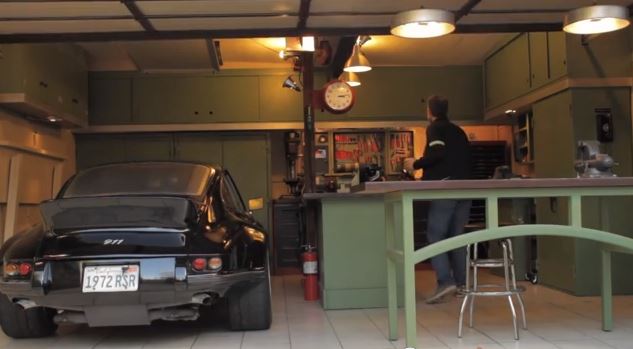
I really like this guy’s car, but I think I’m drawn even more by the experiences he’s had because of the car – the garage he’s built (amazing) and the skills he’s learned.
The video is 10 minutes long. I hope you take the time to watch it and understand.
I’m very pleased to (finally) share some photos of my new pride and joy – my 1995 Porsche 968 CS. I picked this car up last Tuesday in Melbourne at the end of our road trip up the east coast of Australia.
The purchase story’s a bit complicated. I went to the mainland with the idea of returning with a Porsche 944. I got to Melbourne early and drove two 944’s prior to Mrs Swade coming over for the road trip – a 944 S2 and a 944 Turbo.
The first car I drove was the S2 and I was extremely impressed. The S2 has a 3.0 litre 16-valve engine with heaps of bottom-end torque. The owner had also fitted Porsches revered ‘M030’ suspension and a limited slip differential. Consequently, the car handled like it was on rails. It was incredibly stable at speed, very comfortable and easy to drive.
The Turbo was unmodified but with optioned-up sports seats that hug you like a long-lost grandmother. The car presented a major contrast to the S2, however. The clutch was much heavier and there was a lot of turbo lag and the 8-valve engine was relatively lifeless until the turbo kicked in. When it did, however, the car was very impressive.
I was much more comfortable with the S2 and began negotiations with the owner at the beginning of our road trip. We eventually agreed on a price and I drove Simon’s Saab 900i up the east coast happy in the knowledge that there would be a nice 944 S2 waiting for me when I got back.
I didn’t happen that way, however.
I picked up a couple of problems – cosmetic, not mechanical – on my final test drive and while they might have been fixable, I wasn’t in the mood to wait around to see how much it would cost. I could have negotiated further with the seller but I’d already held him up 2 weeks and promised that I wouldn’t go below the price I’d already offered him. It was time to walk away. I was heartbroken to leave this car behind because it drove so well (seriously, very very good) but given that this would be my first foray into Porsche ownership, I didn’t want anything hanging over me that I was unsure about.
Backing out of that deal left me with 24 hours to find another car. I had a booking on the ferry for the next day and no car to bring home. What follows is quite possibly a textbook example of how NOT to buy a car like a Porsche 968.
Put simple – I bought the car on gut feel.
The owner was a retired gent and this was his ‘other’ Porsche. His regular P-car was a 911 Turbo (996) and this car had been specifically set up for club activities (sprints). And it’s been set up very, very well, with only the best components used and no expense spared. There’s one invoice in the history file that scared the daylights out of me: a low oil pressure warning that ended up with what was essentially a major engine rebuild at a cost of $15,000. It’s scary to think that might happen to me, but at the same time it’s comforting to know it was all rebuilt just a few years ago.
I don’t want to get all Zen on you, but sometimes you know from talking to an owner, from reading a history file and seeing how they’ve set up the car, from feeling how the car drives. Sometimes the build says enough about the builder’s technique to show that they know what they’re doing. I could feel that in this car as soon as we took it around a sweeper.
About the 968 ClubSport
The 968 was the final version of Porsche’s front-engined water-cooled experiment that began with the 924 back in the late 1970’s. Porsche were going to call it the 944 S3 but so much of the car was new (around 80%, they say) that they gave it a new name.
The 968 saw the 3.0 litre engine from the S2 dressed up with variable valve timing (Variocam) to push it to 240hp. Coupled with a new six speed manual gearbox the 968 was capable of both 0-100 in around 6 seconds AND 30mpg in the US measurement. The car retained the 944’s 50-50 weight distribution so it’s extremely well balanced from the get-go. Add in some fancy shocks, tyres and other gubbins and the 968 can stick to the road like poo on a blanket.
The ClubSport model was a reflection of the times. Porsche, as was so often the case in the 80s and the 90s, was in financial trouble. They stripped out a lot of the creature comforts in order to offer a cheaper entry level model. Of course, taking out the rear seats and a lot of electronics means there’s a lot less wire, fewer electric motors and other bits. The end result was an even lighter version of what was already an impressive performer. The 968 ClubSport cost less than the fully equipped version of the car and performed better – instant cult classic!!
The 968 ClubSport came with no rear seat, the front seats were recaro shells with the fibreglass backs painted the same color as the car, no air conditioning, no central locking, no power mirrors, no power windows, only 2 speakers for its basic stereo, a manual tailgate release and a smaller battery and alternator (unless a/c was fitted as an option).
The end result was a 50kg weight reduction compared to the regular 968, or 100kg when compared to the 968 Sport sold in the UK, an optioned up package available at the time.
About *my* 968 ClubSport
Whilst all of those creature comforts were removed to create the ClubSport model, they were all still available as options. A lot of CS buyers optioned their cars up and many of the cars you see on the market today have ‘comfort seats’, a rear seat, air conditioning and other bits.
I’m pleased that my CS is pretty much how Porsche intended it to be. It’s only concessions to comfort are air conditioning and an aftermarket stereo (with a faux-woodgrain fascia and a 12-stack CD player, neither of which strike me as very sporting and both of which will meet a dumpster in due course).
Furthermore, my CS has the all-important Option 220 fitted as standard – the limited slip diff – and the previous owner shelled out around $1800 plus labour to fit the yellow Koni coilover dampers that were standard on the M030 suspension option. The car sits on Porsche Cup II alloy wheels shod with Yokohama road/track tyres that are very grippy but very noisy, too. Uncomfortably noisy, in fact. I’ll be getting some more suitable tyres later this week and will keep the Yokahamas aside for club events (it’s a waste to use them on the road, anyway).
The feature items in the cabin are, of course, the half-rollcage fitted by the previous owner and the Recaro A8 racing seats with harness on the driver’s seat. Note: these aren’t the original Recaros fitted by Porsche to the CS. They’re aftermarket Recaro seats purchased by the previous owner. The originals as fitted by Porsche are very hard to get and sell for around $4000 a pair!!
The seats have a pattern on the upholstery that brings to mind a 1990’s era Hyundai but if you can get past the looks, they’re very comfortable and incredibly supportive. I haven’t tried the harness yet (regular seatbelts are still in place on both sides). The other interior feature is the steering wheel; a think leather-clad wheel special to the CS that is the most comfortable wheel I’ve ever driven with. It oozes quality.
Actually, the whole car oozes quality. I love some of the little touches like the chrome surround for the door lock. Porsche were noted for their build quality during this era and the 968 is no exception. My car feels as tight as a drum and solid as a rock. The exterior still looks factory fresh, even after 19 years (built Sep 94). All interior surfaces are covered with quality materials and the doors, buttons, stalks and shifter operate with a level of precision and intent that I haven’t experienced in one of my own cars before. The sole exception is the driver’s window crank, which feels wobbly.
Owning it
It’ll likely be a loooooong time before I’ve even come close to the limits of what this car is capable of. Right now I can tell you it’s fast and it’s enormous fun to drive. It makes you feel good just walking up to it and as a driver, you feel confident as soon as you sit behind the wheel. This car is designed and built to be driven.
Right now, what I feel most is a small sense of foreboding at the potential service costs that lie ahead and a huge sense of responsibility towards this car.
As mentioned at the top of this story, I never intended to buy a 968 ClubSport. When the 944 S2 fell through, I invoked the “buy the best” maxim and went straight for the best front-engined 4-cylinder Porsche the company ever made. I blew my budget out of the water in the process, but right now I couldn’t be happier. Ask me about that again in 12 months when I’m still paying money into our mortgage to pay this off, but as my sister is so fond of telling me – you only live once.
My ambitions for this car:
Enjoy absolutely everything it has to offer.
Be as worthy an owner as the guy I bought it from. Hopefully one day in the distant future some lucky person will feel as good about this car and the person they bought it from as I do.
In the meantime, there’s a journey ahead. I’m not sure if this is the continuation of an ongoing automotive journey or an all-new automotive journey. All I know is I’m enjoying the ride so far.
The 968 ClubSport is an outstanding car and I feel pretty lucky to have this opportunity to own one.
Advance notice – I should advise that I bought a Porsche a few days ago. I’m extremely happy and somewhat frustrated. Happy, because the car is absolutely epic. Frustrated because right now I can’t get it down my driveway. I’ll explain in another post.
I point this out because some people know about my purchase and they’ll see this first post in a long time and think “Oh no, he’s going all Porsche now.” Well, no I’m not.
What’s prompted this post is that I’ve just seen the new photos of the Porsche Macan online and I have to say…… I like it.
Saab fans will probably want to stab me in the throat for saying this, but the first thought I had when seeing the Macan was the Saab 9X concept. I’m not saying the Macan looks like the 9X, but the proportions and the intention of the design reminds me of the Saab 9X: a more sporting and car-like utility vehicle. Saabophiles will know that Saab’s former design chief, Michael Mauer, has been at Porsche for around a decade now, so maybe the resemblance is not merely imagined.
Autocar went for a ride in a Macan with a Porsche test team and they came away quite impressed (note: it was a ride and not a drive). The Mecan Turbo they got a ride in had a twin-turbo version of Porsche’s 3.6 litre boxer engine making just short of 400hp. There’s also talk of a V6 petrol and an unspecified turbo-diesel. There’s even talk of a 4-cylinder turbo version, which Autocar notes would be the first Porsche with a 4-cylinder since the 968 (which, incidentally, just happens to be the car I bought a few days ago).
A word from Autocar:
What strikes me most about its on-road characteristics, once we leave the wide boulevards of Los Angeles behind, is its sheer agility. The Macan corners with all the eagerness of a well sorted sporting estate, displaying sharp turn-in, remarkably little body roll and an ability to accept lateral forces without any discernible understeer, even at the limit. There appears to be abundant levels of mid-corner grip, and the four-wheel drive system ensures that there’s always loads of traction and, in combination with the Turbo’s deep reserves of torque, terrific drive out of low-speed corners.
There seems to be lots of Volkswagen Group links here. The basics of the car seem to be derived from the Audi Q5, though with plenty of Porsche-specific mechanicals to make it distinct. The V6 engine will be from the Q5, too, and you can bet your underpants that any turbocharged 2-litre will have seen service in a hot Golf in a previous life.
People, especially Porsche people, love to hate on Porsches that aren’t 911’s. It’s perfectly normal and very close to being understandable – the 911 is one hell of an icon. The people who own and love their non-911 Porsches couldn’t give a rat’s tossbag about it, however, and I’m sure there will be plenty of people putting their hands up for some Porsche-hate in the form of Macan ownership over the next few years.
The Macan is due to debut at the LA Auto Show next month, at which time the full specs and interior shots will become available.
The Frankfurt Motor Show is on again. Make sure you wear comfortable shoes because the Frankfurt Motor Show is like a small city unto itself. I’m quite sure it’s bigger than the central business district here in Hobart.
When I visited Frankfurt, in 2009, there were nine display halls. Each hall was massive. Some contain multiple brands but some were ‘owned’ by single carmaking groups. Mercedes Benz had their own hall. Volkswagen group had their own hall, except it didn’t include Audi, which had another pavilion all to itself. BMW had its own hall.
Jalopnik has a good article that provides some perspective as to the sheer size of these halls and you can imagine for yourself the amount of money that manufacturers spend on them. Rumour had it that Mercedes spent in the order of 30million EUR and that was back in 2009. Who knows how much Audi spent building an inverted city inside theirs, complete with mirrored ceiling.
——
To the cars from Frankfurt, then…..
Autoblog do a good listing of the stuff they cover. I have to say that in looking through it, I haven’t been particularly inspired. Maybe I’m going off new cars all together.
Things that interested me (sort of, for both good and bad reasons), include the following:
Has there ever been a more dull looking 300hp hot hatch? The VW Golf R.
—
Anything to do with the Mercedes AMG CLA45 is interesting. This is a racing version.
—
I think I’ll mark this down as THE most interesting car at Frankfurt (for me). The new BMW i8. This is no longer a concept, which is what makes it so fascinating. This is a real-deal production car capable of a sub 4.5 second sprint with 94mpg economy in day-to-day driving.
I don’t know why but I find this much more interesting than a Tesla.
Here’s one in something other than car-show-white
And check out the launch video, with the car in black:
—
1963 must have been a good year.
It’s the Porsche 911’s 50th birthday. It’s the Lancia Fulvia’s 50th birthday. It’s also the Abarth 595’s 50th birthday, so Fiat are celebrating at Frankfurt with an Anniversary edition of their popular retro-baby.
This Anniversary edition gets more grunt, special transmission, custom wheels, bigger brakes, an enhanced soundtrack and improved trim.
—
I’m still trying to get my head around this Volvo Coupe concept. It seems so wrong but somehow also feels quite right.
Volvo – stop messing with my head!!!
—
There is no conflict with the Porsche 918 Spyder. This is pure beauty mixed with absolute, uncompromising technical brutality.
And yes, I’ll also post the video of it setting a new production car lap record of The Ring.
—
I’ve seen a lot of people get excited about this Jaguar crossover thing. It’s called the Jaguar C-X17 and I’m not excited.
Another big luxury SUV. I’m sure it will ride beautifully and cosset its occupants in the utmost comfort. But does the world need another luxury carmaker tapping the crossover market? Really?
Big deal.
——
Non-Frankfurt……
Lambo beauty
We did a number of polls earlier about the most iconic cars from various countries. The one significant car country we didn’t cover was Italy. The reason: too intimidating. There are simply too many beautiful Italian cars to cope with. It’d blow up my poll software. My mind would melt. You just can’t assemble that much automotive beauty in one place without a permit and a hazmat suit.
The Lamborghini Miura is a case in point. This video takes a little while to get going and doesn’t reach the heights that it could, but it’s still pretty darn good. It tells the story of a guy who had one 40 years ago as a rich young Playboy, and the guy who became one of Lamborghini’s greatest test drivers.
—
Ferrari Insanity
This video has done the rounds of the web all week. If you haven’t seen it yet, set aside 20 minutes and watch it now.
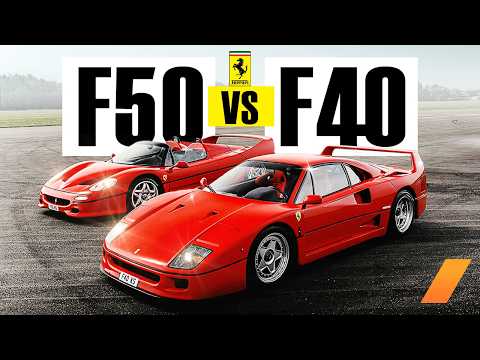
This is Chris Harris from /Drive wringing the necks of both the Ferrari F40 and F50. Both the video and the cars are amazing in every way.
I had a Porsche 944 S2 inspected a few weeks ago and I’m still thinking about whether or not to pursue the car.
Here are the findings of the report with what I consider to be an appropriate priority level assigned to each item. Some of the ‘high’ ones would need to be done immediately and others I would want to do within the first six months of owning the car.
There are a few notes at the bottom that expand on some of these items.
——
Interior etc
Glove Box stays not holding, alloy ones needed – Low
Clock illumination inoperative – Low
Odometer inoperative – High
Tool kit bag in poor condition – Low
Spare wheel badly flat spotted – Medium
1 x horn inoperative – High
A/C fitting ports caps missing – ??
A/C compressor still leaking – Medium
Body / Seals / Wipers etc
Rear hatch seal sucks in exhaust fumes – Medium
O/S door seal torn – Low
O/S window belt line weather strip cracked from sun – ??
O/S door hinges worn (door dropped) – Medium
Rear hatch lock barrel seal – High
Wiper blade assembly needed – ??
Brakes / Wheels / Tyres
Front discs below spec – High
Rear discs well below spec – High
Front tyres near bald – High
Rear tyres not far behind & same age – High
3 x centre caps need repainting – Low
NSF rim gutter damaged (mild) – Low
Brake hoses old and OSF dangerous (due to power steering fluid) – High
Suspension and Steering
Power steering rack noisier than normal (hydraulic noise) – Medium
OSF lower ball joint excessive play – High
NSF lower ball joint boot torn in half and play in joint – High
NS steering tie rod excessive play – High
Steering shaft (lower) uni joints worn – new shaft – High
Front shocks way too soft (original 1990) – High
Front shocks bump stops broken and gator boots torn – High
P/Steering oil leaks from (text incomplete) – High
Driveline / Transmission / Clutch
Clutch hydraulic reservoir almost empty (hydraulics overhaul) – ??
Gear stick mod needed – ??
CV boot torn + 3 others almost – High
Engine and Cooling system
Cam and cam gear cover badly corroded – Med/High
Timing chain old – High
Timing chain guides – old – High
All front engine oil seals leaking – High
Rear main seal leaking – High
Sump gasket (and head gasket) – old – High/Med
Expansion tank in poor condition – Medium
All rad & heater hoses – poor to very poor – Medium
O/S radiator fan inoperative (need pair of fans) – High
Distributor cap and rotor stuffed – Medium
Hall effect sensor falling apart – High
Intake manifold flexible connector sleeve shrunk – Medium
Both engine fuel hoses old and need replacing – High
Accelerator cable ready to break – High
NTC II sensor very old – ??
Starter motor slow (old) – needs replacing – Medium
N/S engine mount from 1989 – ??
O/S engine mount sagged – ??
——
Notes
The odometer malfunction would normally be a major red flag but it seems to be quite recent. I’ve got printed service history for the car and the mileage varies on those documents.
The horn is listed as a high priority because having a working horn is essential for passing a roadworthiness inspection.
The wiper blade assembly finding wasn’t properly explained. Need more info on what’s actually wrong with it but I haven’t sought that information yet.
I’m told the power steering rack is normally slightly noisy in these cars. There was a problem with the rack previously, as evidenced by fluid having leaked onto the brake lines, but it’s since been fixed. The brake lines do need replacing, however, due to damage caused by the fluid leak from the rack when it was malfunctioning.
“Gear stick mod needed” – this is an indicator, perhaps, that the inspector is aiming for his ideal condition of the car (which from talking to him, is concours condition). In other words, he might be emphasising things that an ordinary person could live with. Perhaps.
The cam gear cover is made from magnesium alloy and is prone to corrosion if left unpainted. Porsche painted the cover at the factory but its common to see the paint stripped away due to excessive use of alkaline cleaners (which are OK on normal paint, but not OK used on the paint that has to be applied to magnesium alloy). It’s common to see discoloured cam gear covers on these cars as not many are aware of this. How big a problem is it? I’m told that if left untreated long enough, holes can eventually appear. That’s what I’m told.
——
As mentioned before, the items marked ‘high’ are all things I’d want to do reasonably quickly. Some are needed for basic vehicle safety. Some are needed as important near-term maintenance to prevent major malfunction. Some are highly desired to make sure the 944 S2 driving experience is what is should be.
Items marked ‘medium’ are mostly restoration or preventative maintenance items, many of which I consider I might actually be able to do myself.
I’m trying to keep in mind that the guy who inspected this car has extremely high standards and is very judgemental of anything that doesn’t meet those high standards. He’s very black-and-white about these things. An items is either in fantastic condition or completely f#@ked (his words, not mine). There’s very little in between.
Obviously you want a vehicle inspector to be thorough – especially with a car that’s expensive to repair like a 944 – but you’ve also got to temper the findings with a small dose of perspective. I can live for a while with an original coolant expansion tank if it’s slightly browned for example.
To pursue or not to pursue – that’s the question. Bear in mind that the seller is asking $20,500 for this car, which is around the mark for an S2 in Australia. Also bear in mind that the engine’s internals all seem to be very good, the interior was one of the best the inspector’s seen in a decade and the exterior was described as quite good.
I’d want to pay around $16,000 if I was going to buy it. Your thoughts would be welcome.
This is the second Porsche 944 I’ve looked into buying. I could tell enough about the first one (5 years ago) to know that it wasn’t a good car for me. It was a 1983 model. It looked great, but that’s where the good news finished. The interior was horrible and the car felt like it was about to fall to bits.
I had much higher hopes for the car I had tested today (Friday). It’s a 1990 model Porsche 944 S2. Much better model with more power, better mechanical technology, much better interior and it even looks more contemporary thanks to the body changes that first saw light on the Turbo from 1986.
The photos looked good. The buyer seems like a really responsible guy and the car has a complete history from its Australian delivery to present day. Promising, no?
The mechanic looked over the car today and I think I can summarise the occasion with his words, stating that this could well be one of the best S2’s on the road…… eventually.
First, the good bits. The paint is quite good. There’s some evidence that parts of the car (at least) have been repainted but there’s no lasting damage and the resulting paintwork is very presentable. The interior is one of the best the mechanic’s seen without a full restoration. He was amazed at the condition of the dashboard and the seats had been retrimmed in leather in the last few years. He took the cam cover off the engine to inspect the cam lobes, an easy tell-tale that inadequate oil has been used, but it was all good there, too.
So…. body OK. Interior OK. Engine internals OK.
Porsche 944 S2
Porsche 944 S2
Porsche 944 S2
Porsche 944 S2
Porsche 944 S2
Porsche 944 S2
Then we get to the list of stuff that needs attention. It’s a reasonably long and expensive list.
A lot of people desire originality in their cars and that’s fair enough. Unfortunately, this car seems to be too original. All original pipes, hoses, gaskets, seals, bushes, mounts, etc. That is, barely anything has been replaced and given the current condition of most of them, that’s a shame.
Put short (and again, in the mechanic’s words), this is car that could soak up K or more on top of the purchase price very, very easily.
The must-do list:
Sump gasket
Engine mounts
Hall effect sensor
Rear main seal
Accelerator cable
Rear brake discs
All brake hoses
All dampers
All tyres
Cam cover resurfacing (yes, a must-do)
Radiator fan motors (x2)
Fuel lines to fuel rail
Various cooling hoses
Yes, they’re the considered to be the must-do items. All are essentially the original items that were fitted to the car when it was built in late 1989. Many are on their absolute last legs and others might default to the near-term list (with the radiator header tank, a/c compressor, steering rack and other bits).
Now, there is a caveat in here. The mechanic who inspected the car is extremely finicky. It’s better to be fussy than lazy, but in talking to him I get the impression that anything that isn’t in concours condition is due for heavy criticism. But even if I could live with half of these items being done six months or a year from now, that’s still around $5K or so worth of remedial work that needs doing straight away.
That would push the price into the mid-upper $20K range. Fixing everything that needs doing (along with a few cautionary items that are recommended while you’re working nearby) means there may not be much change from $30K or more.
And at that price you’re into 968 territory. See, it’s never easy.
I’m yet to fully digest the report and go over the major points with the seller. I doubt he’s going to come down to a price that would justify the purchase for me.
We’ll see what happens. I’m not looking for one, but today’s experience just reinforces the fact that there’s no such thing as a cheap Porsche.
It’s been quiet around here because there are a few things on my mind.
First, we have a federal election going on here in Australia. The poll itself will be held on September 7. I don’t want to be consumed by it, but I am. I’m doing my best to keep the election off this website, however.
You’re welcome.
Second, this week has seen the climax of the biggest scandal in Australian sports history. The conclusion has been six months in the making and thoroughly consuming all week.
And finally, I’ve got a vehicle inspection happening tomorrow. We’ve replaced Mrs Swade’s 9000. Now it’s time to replace my Alfa Romeo GTV6.
Here’s the car:
It’s a 1990 Porsche 944 S2 – cross another one off the bucket list!!
I hope the inspection goes well. In fact, after chatting with the owner a bit I’m expecting it to go well. I’ve got the best 944 mechanic in Australia looking at it so if it impresses him then I’ll feel quite comfortable with the purchase.
I’ll let you know.
——
Mod Advice (Part 1)
Back in the SU days I wrote a four-part series on modifications to the 1998-2002 Saab 9-3. The cars are very tunable but they’re also quite compromised by a chassis that’s nowhere near as sophisticated as the engine Saab put into it.
In short, you have to make sure that the bits around your engine can handle the extra oomph that Maptun/Hirsch/BSR/whoever can get out of it.
I spotted this old ad for the Porsche 944 Turbo on TTAC today and it presents the case for careful tuning quite nicely. It shows all the bits that Porsche changed when the company went from the basic NA model to the turbo model.
Click.
Bottom line: Responsible tuning isn’t just the addition of a single go-faster bit. It’s a whole-of-car affair if you want to do it right.
——
Mod Advice (part 2)
If you’re taking your modified car to a huge gathering of like-minded car enthusiasts, make sure the car’s legal.
Queensland police have been criticised for deliberately targeting one of the largest ever car enthusiast events to be held in the state.
…. The promoters had positioned the event as a peaceful day out, with the specific instructions of “No Skids, No stupidity. Don’t give the cops a reason to turn up!”
Regardless of the exemplary behaviour of the attendees, up to 30 Queensland police officers and a special traffic task force blocked the entrance and exit to the event, which was held on private property, specifically to target modified vehicles.
It IS poor form on the part of the police, who should want to build bridges and relationships with elements of the community. Shooting these metaphorical fish in a barrel isn’t really going to help.
But it’s also poor form to drive your car in what might be an unsafe condition. Do your mods carefully and make sure the car’s legal.
All parties (police and individual owners) need to look at doing things better, I’d say.
——
Old man becomes king of the kids
The reviews are coming in and it’s emerging that what’s previously been regarded as a bit of an old man’s brand – Mercedes Benz – might just be taking over a market segment considered the reserve of the young and upwardly mobile – the hot hatch market.
After two days in the saddle (and some scorching track time), this I declare: Mercedes Benz remarkable A 45 AMG is the best high-performance hatch ever made, ever offered for sale.
The best ever… simple as that.
And then there’s this from Wheels Magazine (Australia’s biggest motor mag), who are still on their road test right now. This via Facebook about an hour ago:
Road loop today in the A45 AMG and it’s seriously epic. F@$king epic, even. We already knew it was fast, but it’s the A45’s hungry front-end and superb power down that make you grin like a loon. It’s an easy and predictable car to drive hard, but it’s also still exciting. Every motoring hack on the launch can’t stop raving about it. 2013 is proving a great year for performance cars!
The guys at Renault et al. better get their thinking caps on. I’m sure the result will be worth the wait.
Here’s some video from Autocar in the UK, just in case you haven’t got across this new AMG model yet. It looks like a barn-burner!
—
Thanks to Turbin for the link.
——
Have a good week. Fantasy Friday returns tomorrow.
I was fascinated by a recent article I read on Classic Car Investment. Is it really possible to make a little bit of money on an expensive hobby like motoring?
It isn’t easy. Some would go so far to say it isn’t likely. But it IS possible.
If you actually select a somewhat exotic/unusual vehicle and then drive it, that could mean some serious maintenance costs. Think of those as rental fees for pleasure owning the car for a period and it makes the pill a little easier to swallow. Bottom line – pick the right car and it’s possible to buy, own and then sell a vehicle at a profit that’ll allow you to move on to something else.
The best resource I’ve found to help with this is Hagerty. It’s US-based so it won’t necessarily be completely relevant to your market if you don’t live there, but the trend might still be fairly close for the models Hagerty covers. At the very least, it’s an interesting way to pass a few moments/hours/days.
Hagerty has tools that can help you select your vehicle and track its valuation history. Just like stockmarket software, you can create a portfolio of cars and track/compare their valuations over time. They provide base indices, too. For example, are you curious as to how their basket of German Collectables has done over the last few years?
Here it is:
The explanation: The Hagerty Price Guide “Silver Arrow” Index of German Cars is a stock market style index that averages the values of 21 of the most sought after cars from BMW, Mercedes-Benz and Porsche from the 1950s-70s. The list to the left (not shown here – SW) shows the cars that make up the index, while the graph above shows this index’s average value over the past five years. Values are for #2 condition, or “excellent” cars.
Let’s take a look at one of those German Collectables – the BMW 507 Roadster. It’s very rare, of course, and quite pretty. BMW made it in the late 1950s with a focus on the US market but it was too expensive so BMW cut the program after only 252 cars were made.
BMW made huge losses on the 507 but their loss can now be your gain – if you can a) find one, and b) afford it. Here’s the index for the BMW 507 since 2006. The colored lines represent vehicle condition:
A couple of things to notice here…
Even 507’s with some pitted chrome and cracked seats (the red one – Condition ‘D’) are still worth $750,000. That’s a lot of clams. Secondly, that graph starts a few years before the global financial crisis. As you can see, the GFC didn’t do much to hurt the value of this classic car.
—
Swade’s theory of classic car investment and ownership – The big money’s always been in genuine, recognised vintage classics from any generation. They will hold a certain amount of value for collectors, always. Think Mercedes Gullwing, Ferrari 250, etc.
Emerging big money classic car buys tend to be seasonal and a move with the age/generation that has the money.
The previously-accessible movers and shakers over the last 10-20 years, for example, are cars from the 1950’s and 1960’s, bought up by Baby Boomers who’d had their kids, made their money and decided to re-live a little of their automotive youth. Here in Australia, Holden Monaros and GT Falcons were relatively affordable 25 years ago. They went through a massive boom 10 years ago but have come down since. Right now, Japanese rotary-engined cars are doing particularly well.
The oldest Generation X’ers are turning 50 right now, which might mean some good news for 1970’s classics or undiscovered/overlooked 60’s cars.
—
Don’t have a million to splash on a rare Beamer?
Hagerty also has an Affordable Classics index, which is the one for regular guys like you and me. It’s this list that quite possibly shows where some of the movers and shakers of the future will be. Given that they’re not established classics, however, this index is a lot more volatile and cars from this segment DID suffer valuation falls during the GFC.
This list is also more US-centric, so caveat emptor. But it also includes some interesting models that weren’t just US sellers.
These are cars that might appreciate a bit more in the next 10 years either because they’re rare and they’re getting noticed a bit more, or because they’re widely liked and good examples are getting harder to find. They may not make that much money, but kept in good condition there seems to be a good chance they’ll retain their value or increase in value by a small-but-reasonable margin.
A few cars from the Hagerty Affordable Classic index and a few that I’ve chose out of my own field of interest:
Ferrari Dino 308 GT4 (Swadeology pick) – the as-yet unloved Ferrari. The only one styled by Bertone instead of Fezza’s usual Pininfarina. The first Ferrari road car to use a V8, which became the basis for many of the Ferraris that followed it through the 1980’s.
Porsche 911 SC (Swadeology pick) – the 1982 model has an average sale price of around $17,000. That’s an affordable classic and as you can see, it’s holding that value in good condition.
And of course, my current ride – the Alfa Romeo GTV6
——
The key to doing this, as with any investment, is buying low and selling high. There are a lot of things that influence a vehicle’s value and they’re infinitely variable and their relative weight will change with time.
Popularity – this is a supply and demand situation. The more popular the vehicle, the greater the demand. You can’t do much about this except try to track it and predict it. Blue Chip classics are regarded as being ‘Blue Chip’ because they’re more predictable. A Ferrari is typically always going to command good value. A Datsun’s a bit more hit and miss.
Condition – The better the condition, or perhaps the more original (and good) the condition, the high the value. Restored cars can be tricky because some people restore them to their tastes rather than to factory condition. A mint condition factory car should generally be favoured, but they’re very hard to find. If you’re going to restore, the best bet is to do it to factory specs or with original enhancements.
Provenance – If the vehicle’s history is known, documented and most of all, interesting, the vehicle can demand a higher value. The former Pope’s VW Golf sold for nearly a quarter of a million dollars 6 years ago. Your grandma’s Golf is unlikely to fetch as much, regardless of condition (unless she’s more famous than the Pope).
I’m going to figure out how much I need to put away each week to get myself one of those Dinos – along with a house where I can garage it properly…..
——
The Affordable Classics Gallery
Porsche 914
Triumph TR6
Ferrari Dino 308GT4
Volkswagen Beetle
Porsche 911SC
Alfa Romeo GTV6
——
PS….. None of the above should be construed as financial advice. I’m not qualified to give financial advice. This is just an interesting topic. Do your own research and come to your own conclusions about whatever vehicles you might be interested in.
I just came across this in an article in one of our Aussie newspapers this evening:
Looking to splurge on an emotional investment that will quadruple your money in 10 years? Forget watches, stamp collections or even fine art. Buy a classic car.
Not just any old banger will do, though. According to the annual Knight Frank Wealth Report released this week, a ”truly investment grade car” bought in 2002 would have appreciated by up to 395 per cent over the past 10 years.
That makes cars easily the best ”passion” investment you can make, well and truly outperforming popular luxury items such as fine art (199 per cent), jewellery (140 per cent) and watches (76 per cent).
The most sought-after cars tend to be Ferraris, with a 1957 Ferrari 250 Testa Rossa holding the world record of $US16.39 million ($A16.02 million). Classic Aston Martins, Mercedes-Benzes and some pre-war Bugattis, Alfa Romeos and Rolls-Royces can also fetch prices in the millions.
Going from that list, it seems the type of car they’re talking about is already out of my reach. It looks like you have to spend serious money before you can make even a little money back. Generally, when you’re planning on investing, you expect some good returns on it. Even when you consider subversive investments such as precious metals, the strategy is to find out what the best precious metals investments are and then buy them and watch them grow. However, with cars, it’s not so simple. There must be some makes and models sitting just under that imaginary line, cars that will be regarded as classics in the next decade. But one can’t just make a guess or research on the internet which car will go up in value and which one won’t. It’s a risky game. I have to confess that I’ve had some recent thoughts about spending more than I’d ever usually consider on something exotic. I’m pretty sure the car I’m considering would appreciate in value over time, but it might take a long time for it to really be in demand.
It’s a daunting proposition because exotics, even the ‘affordable’ ones, tend to be older. That means they’re possibly going to be harder to maintain, and harder to get parts for (without selling a kidney, at least). We’ve all seen the Mid-Engine Challenge on Top Gear. They spell it out pretty well. “Yes, you can buy a mid-engined supercar for under £10,000 but for heaven’s sake, don’t.”
But what if you spend a little more than that…….?
Have any of you ever had experience with classic car investment? Ever made any money on a classic car? It’s obviously possible, but is it attainable if you’re not super-rich to begin with?