I’ve had a few emails about this one in the last 24 hours so I better put this up on site to
stem the flow
let you all know about this rather nice Saab 99 EMS for sale
You don’t see many EMS’s come up for sale nowadays, especially presenting as nicely as this one does in the photos. So yes, it’s relatively rare but that’s not the reason people are emailing me. The reason for that is because this car is for sale in my home town – Hobart.
I should stress right from the get-go: I don’t know this car. I haven’t seen it before, as far as I know, and I don’t recognise the handle of the Ebay seller. Maybe, if we met, it would turn out that I do know the person, but at this point I’m drawing a rather large blank.
Consequence – anyone looking for some info on this car should do their homework and contact the seller. I can’t help. I can tell you that if you want a pre-purchase inspection, the guy to contact is Steve Eyles at Hobart Automotive on 03 62347777. Steve did his apprenticeship on these cars and has been working on Saabs his whole life.
From the ad, it certainly looks like a good example. The odometer is showing just 78,000kms, which is nice, low mileage. The only proviso is that service sticker in the photos below. It shows that the next service is due at 85,000 and the last service was some time in 1994. That’s twenty years of inaction so this car will definitely need some care and attention before being driven a long way.
The upside is that the car looks – from the photos – as if it’s wonderfully preserved. The paint looks pretty even, the soccerball rims are nice and the seats show no visible signs of tearing. The only thing I’d want to change is the steering wheel, which I’d swap out for a period three-spoke Saab Sport and Rally wheel.
Here are some of my favourite bits of automotive reading for this week….
——
There have been quite a few notable custom Saabs made over the years. Thankfully, some of them survive today, like most of Leif Mellberg’s work, for example.
Sadly, however, some of them didn’t survive. If you want to see what happened to the miniature Saab 99 pictured below, go over to Saablog-in and read SaabRobz’s story.
——
For those who like to track these things, let it be noted that Toyota won the global sales crown in 2013, with GM and VW filling the other podium spots.
Toyota fell just short of the notable 10 million sales mark, selling 9.98 million vehicles during the year. General Motors sold 9.71 million vehicles whilst Volkswagen’s sales figure has been reported as “more then 9.7 million” in one article and 9.5 million in another.
Either way, it’s a lot of cars.
Toyota want to crack 10 million in 2014 and you might remember that VW have plans to become the world’s biggest car maker by 2018.
——
If you only click on one link from this weekend’s reading, make it this one.
Rally Nippon is a classic car grand tour, a-la the Mille Miglia. It usually runs between Tokyo and Kyoto. It’s a young event, inaugurated in 2008, but it’s very well attended. The classics you’ll see in the photos coming up are the equal of any classic event I’ve read about.
The 2013 Rally Nippon was not held in Japan, but in Taiwan. Why?
Following the devastating earthquake and tsunami in Northern Japan in March 2011, Japan received about 20 billion yen in donations from Taiwan and its people, making Taiwan one of the major donation sources overseas. Yusuke Kobayashi, founder of the Rally, said the Japanese owe the Taiwanese people a debt of gratitude for their generosity following the twin disasters.
Mr. Kobayashi also mentioned that in Japanese culture, when you genuinely want to thank someone, you ought to do it face to face.
That’s why. It was a wonderful gesture and from the photos at Motoring Con Brio, it was an absolutely brilliant event.
The report at Motoring Con Brio is written by a guy named Royce Hong. He’s a Taiwanese who was invited to participate in Rally Nippon by the event organisers. He’s also the owner of the Jaguar E-Type in the Rally Nippon poster, above.
The report is in four parts. The photos are outstanding and you get a sense that the Taiwanese people really got behind this event, with big crowds thanking the fleet wherever it went in acknowledgement of the organiser’s gesture of gratitude.
Just as the wheels maketh the car….. the photos maketh the for-sale ad.
Here are some great tips on getting great photos. From Hemmings.
——
Dan,
I’ve been watching General Motors since my death and I’ve seen how you went from my glorious, exotic lines to a place that even the most mediocre of would find too dull to call home. I’ve subsequently slammed my paranormal fist into Jefferson Ave, just outside your building, and I invite you to do either one of two things: 1) use this giant gaping hole as a fitting venue for a new Design Centre, or 2) dump all your current design plans into it and start afresh.
OK, if I’m going to beat up on GM (which I do, frequently), I better give them the occasional bit of applause, too.
Most of you probably know that Tim Allen, otherwise known as the guy who used to be on Home Improvement, is a car guy. He went and hung out with Jay Leno, another car guy, to show Leno his custom finished 1968 COPO Camaro.
The results are only subtly different from original, but very impressive.
——
TATA motors has designed an all-new engine range.
This is not exciting news in itself. I can’t see the little three- and four-cylinder engines powering anything I’ll drive in the next…. lifetime or so.
But the retro-80’s name given to the engine family is an inspired choice.
Companies and governments always release negative news on a Friday afternoon. I know it’s early Friday in Germany, but it was just after 6pm here when I first saw this:
In-car advertising coming to BMWs
Australian car owners could soon have to contend with in-car advertisements during their daily commute.
BMW is developing technology which will allow businesses to market their products through the German car maker’s built-in satellite navigation system.
Yet another reason to always have at least one fully mechanical car?
In a carefully-worded press release void of the term “advertising”, BMW claims the “location-based offers and services” will be relevant to specific route and final destination during each journey.
So far the technology has been developed in a BMW 7-Series testing vehicle, and allows drivers to set their preferences by filtering information or turning the program off altogether.
At least that last bit is (somewhat) reassuring.
Cue the spin-doctor:
“The joint research project paves the way for an even greater level of driver comfort and convenience,” BMW said in a statement.
“Results from this project could allow future navigation systems not only to provide information about the quickest route but also to provide recommendations about special coffee deals at filling stations, the best parking deals or even real-time offers at a sports shop along the route – but only if the driver wants.”
Wow. The PR guy’s certainly earned his pay this week. These ads are merely there to help the driver, to make driving more comfortable and convenient.
BMW won’t make a cent from it, I’m sure.
Just the fact that they’ve thought of doing this is annoying. I don’t want to sound paranoid but it’s already disconcerting enough that there are sensors in a lot of modern cars that allow companies to track where you’re going, how quickly you’re getting there and other things you might be doing in your car during the trip.
The lads and ladies behind OnStar even have the technical capability to listen to conversations between occupants in a car (though they’ve been told in a very deep, serious voice not to by the US courts).
How creepy would it be to have your car company second-guessing where you’re going according to your GPS data and offering you items from that place or places nearby?
It’s one thing to get offers for cheap coffee. What about ‘sex toys 50% off’ when you’ve got the kids in the back?
No, BMW. 1,000 times No.
And that goes for any other car company that wants to try this. The ability to turn it off doesn’t hide the fact that the whole scenario is creepy, which means the people thinking it up are creepy, too.
If you know these cars, you’ll know that you can take the windscreen off and add some aero shields. I also opted to not have the roll bar that people usually fit to a series 2 at the factory. It wasn’t exactly safe, but it looked period.
I took the car for a run one Saturday, and towards the end my wife called and asked me to pick up some things on the way home. I was heading through down-town Melbourne so I decided to stop at one of the multi-story car parks in the city.
The car park was free of charge for the first hour, and $5 per hour thereafter. The shopping centre seemed full to the brim with staggering zombie shoppers and it felt like my few small errands took ages, but I figured I was still within the “1st hour free” zone.
Alas, when I came out, there was a big line up as the automatic ticket machine wasn’t working. We had to wait until it was fixed and the backlog of people were put through.
By my calculations, I was still on the button for the first hour to be free, but the parking attendant who came to fix the machine was not interested. …. “sorry mate, you have gone past the time”.
So I casually walked away, hopped in to the 7 and drove up to the exit, adjacent to the footpath where the attendant had fixed the ticket machine and was about to insist, again, that I had gone over my free hour.
It’s at this point that I must, once again, draw your attention to the lack of a full windscreen or rollbar on my Lotus Super 7 🙂
As usual with such establishments, the entrance and exits were fitted with boom gates, etc, to stop people getting in and out without paying. Lots of people were watching as I approached the boom gates (the 7 wasn’t exactly a quiet car and had a tendency to draw attention). Those same people let out a few small cheers as I casually ducked under the boom gate and pulled directly into traffic.
This is a follow-up from last week’s Monday Reading, where I mentioned a story from Hemmings about two Mercedes Gullwings that were coming up for auction in Arizona.
Both are 1956 Mercedes Benz 300SL Gullwings. Both are black with red leather interiors. Both highly desirable. One was completely original right down to its faded paint, frumpy old seats and scars from years of use and storage. The other had been lovingly restored ‘to concours condition’ and looked as fresh as a spring daisy.
The old:
The new:
[hr]
The Goodings auction was held in Arizona over the weekend and the results are in:
The restored Gullwing (Lot 122) sold for $1,402,500
The original Gullwing (Lot 42) sold for $1,897,500
I’m sure the owner of the restored car is pretty happy getting nearly a million-and-a-half in the family bank account. But I wonder if he/she is smarting just a little at being out-done by $495,000 – more than 33% – by a car sharing the same specs and vintage?
I’ve not experienced it for myself, but I’m willing to bet the classic car auction world is a competitive one (sort of like dog shows but without the big hair).
——
Other interesting results from the Gooding & Company auction….
This 1937 Cord 812 Beverly sold for $79,500. It’s old enough, rare enough and fancy enough to look like it should go for more.
—
This 1985 Ferrari 288 GTO sold for more than $1.4million, proving that Ferrari prices continue to go up and up.
Lest you think (like me) that it’s just a Magnum PI car with a slightly different badge….. The 288 was a limited edition built for homologation purposes. It was based on the 308 and ended up as a stillborn racing model when the FIA dumped the racing class it was built for. It has two turbochargers and produces around 400hp. As it was an homologation car, only 200 models had to be built (there were 272 by the time Ferrari finished), hence the exclusivity and high price.
—
This Lotus (Ford) Cortina from 1966 sold for $107,250
—
This 1977 Aston Martin V8 sold (without reserve) for more than $20K under the estimate, fetching $118,250
—
This Renault Alpine A110 sold for $302,500 and is probably the most desirable car at the auction for me.
—
Symmetry sale: this Jaguar XJ220 sold for $220,000
—
This 1971 Alfa Romeo Montreal sold for $176,000 – a price that makes the $50,000 Montreal you can buy in Australia right now look very attractive.
Either that or someone got really carried away at the auction.
—
This Lancia B24S Aurelia sold for $1,815,000. That’s a figure remarkably close to the un-restored Gullwing and yet I bet there’d be ten people who’ve heard of a Gullwing for every one who’d heard of the Aurelia.
Hemmings note that a similar Aurelia sold for $825,000 last January, so someone made some serious money on the weekend.
—
And finally….
This 1983 Toyota FJ40 LandCruiser sold for $41,800. It’s notable mainly because it was the last model year for the original FJ40 and has a new coat of paint. If that doesn’t convince you there’s only vague logic in the world of car auctions, nothing will.
[hr]
The full list of results from the Gooding & Company auction is available here. There are some outstanding cars there to see and many of them fetched amazing prices.
You must be able to show an example of the car for sale somewhere in the world under that price (at a current rate of exchange).
The car has to be interesting.
The writer should be able to provide some short theory as to why it’s a possible long-term proposition for making a little money (or, at the very least, not losing you (much) money if you look after it properly).
Gavin’s already published his list. Now it’s my turn.
Here we go. Investment cars, a-la Swado.
[hr]
Porsche 911
Predictable, I know. But there’s a reason for that.
Want evidence that a classic 1980’s 911 is holding it’s price? I can’t find one under $30K to show you that’s a) Australian delivered, and b) unmodified. Those are the two basic criteria for buying a 911 here in Oz and a year ago, I would have had a bunch to show you. Now, not so much.
The 911 is always in demand but as with all older cars, the good ones are getting harder to find as time passes and climbing in price as a result. Get a good one and you’ll do well. Get a dud and the bills will be like an anchor around your neck.
This UK-spec 911SC Coupe was imported into Australia and looks neat for $28K, but you’d want to check underneath for rust. Imports will always be worth a little less than Australian delivered models, but you shouldn’t lose anything if the car’s in good shape.
For the best chance at appreciation, buy one delivered in your local market, especially if you live in a relatively dry climate. There’ll be less hassle with specifications meeting local standards, no poor steering conversions to worry about and if you’re in a country like Australia, very little concern about rust.
For you US types, a 1971 911T recently showed up on Craigslist for $25K. I didn’t see what price it ended up selling for, but after it was featured on Bring A Trailer the owner received more than 400 enquiries. I have a feeling the price went up after that. But it just goes to show that they DO become available at good prices sometimes.
—
Lancia Fulvia
How could I not have a Fulvia on this list? It’s not just here because I like it, though. This is a real value-holder and in the right spec (and at the right price), a genuine investment.
The Fulvia is an acquired taste but in the 12 months or so that I’ve been interested in them, I’ve noted that there’s a definite audience interested in this beautifully engineered Italian. They generally sell for less than $30K. You’re more likely to pay in the region of $15K for a good basic car and $20K-upwards for one in really good condition.
I can’t find a current ad to show from Australia, but the 1600HF Lusso I shared here last month proves that if you’re patient enough, even a 1600 HF Lusso (series 2) can become available for under $30K.
The early 1600 HF’s are the real collector cars but the value pick is probably the 1300 Rallye S from the first series, which have the alloy hood, doors and boot lid. They’re good buying, great driving, they look absolutely beautiful and definitely hold their value.
—
Mercedes Benz 380SL
Mercedes SL’s can be hot property, but most of the real investment-grade cars are already well over our $30K ceiling. A good R107 should provide some wonderful motoring without hurting your hip pocket, however, and they can be found in outstanding condition at this money.
I’ve picked a 380SL for my sample because if I was to buy a car like this, I’d want the V8. One of the real money spinners is the 280SL from around 10 years earlier. The gullwing’s in another class all together, of course.
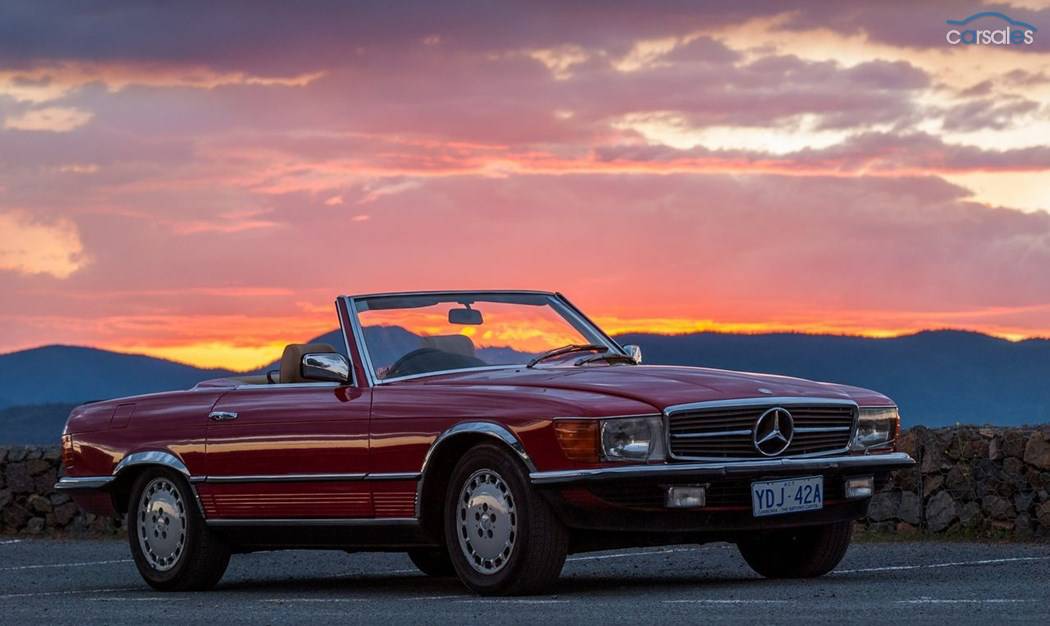
Consider this beauty, for sale in Canberra for $25,000 right now. It looks magnificent in red with a cream leather interior and woodgrain. It’s old enough to look absolutely classic but young enough to have electric everything and ABS, too. Soft-top and hard-top, naturally.
—
Maserati Ghibli GT
Here’s one for sale for $32K (the lowest priced Ghibli GT available in Oz), which is a little over budget but a skilled negotiator could pick it up in the high-20’s, I’m sure. You’d want to change the wheels to something a little more age-appropriate, but other than the wheels it’s a pretty nice looking piece of machinery.
This is a risky pick because Maseratis of this era tend to make your average punter run a mile in the other direction. Prices can go low for the BiTurbo but they’re pretty stable for the Ghibli, and the 100th birthday of Maserati, along with current desirability associated with the brand, means they could be poised for some reassessment by the motoring fraternity.
The second iteration of the Ghibli, built from the early 90’s to the late 90’s suffered from being related to the un-revered BiTurbo of the previous decade. Like many cars of similar tainted origin, however, the Ghibli is the type of car that addressed the problems of its forebear and can actually represent really good performance value thanks to it’s poor lineage acting like a boat anchor on its price. They’re reputed to be very reliable, but scheduled maintenance has to be done and the costs can be high.
Now, that’s not necessarily a recipe for value appreciation, but given the exotic nature of the Maserati name, the brand’s recent success and the generous performance and luxury levels of the Ghibli, it might just be one to be recognised. One of the problems, however, is that you’re looking at a very niche vehicle. In order to sell you have to have a buyer and there aren’t a lot of those for 90’s Maseratis.
Call it a very speculative pick.
The Ghibli GT had a 2.8 V6 with a twin-turbo setup that produced around 284hp. It moves. And I could live with a sound like this, too 🙂
—
BMW M635CSi
The Shark’s already a popular BMW classic and can be had for around $20K in pretty good condition. The smart money’s on the M model, however, with its extra grunt and M badge appeal that helps to hold the car’s value.
The M635CSi has the hi-po version of BMW’s creamy straight-six making just over 280hp. That’s nice rather than nefarious by today’s standards, but it was extremely competitive in the early-mid 1980’s and a big step up from the 215hp offered in the non-M version.
The styling is superb and the interior is well equipped and comfortable.
The 6-series is already a favourite amongst classic BMW fans. To have a genuine M version of the car only makes it more popular and that means demand = price retention or even appreciation over time.
The car shown here is for sale in Australia but is of UK origin so you’d want to make sure it’s cancer-free. At $29,900 the price is right if the car checks out. Other M6’s are selling for up to $10K more.
—
Alfa 105 Coupe 1750
As with the 911 and Fulvia, I’ve been watching Alfa 105 Coupe sales for some times now. And as with the 911 (less so with the Fulvia as they’re not so readily available) the prices for a decent one seem to be going up. Especially for the sweet-spot 1750 engine models.
It wasn’t so long ago that I could show you a number of 105’s around the $10-$15K mark and they would have all been decent, turn-key classics that you could happily take to your Alfa club meeting or on a nice Sunday drive. 1750’s are in shorter supply, however, and the good ones are all starting around $20K now and go up from there.
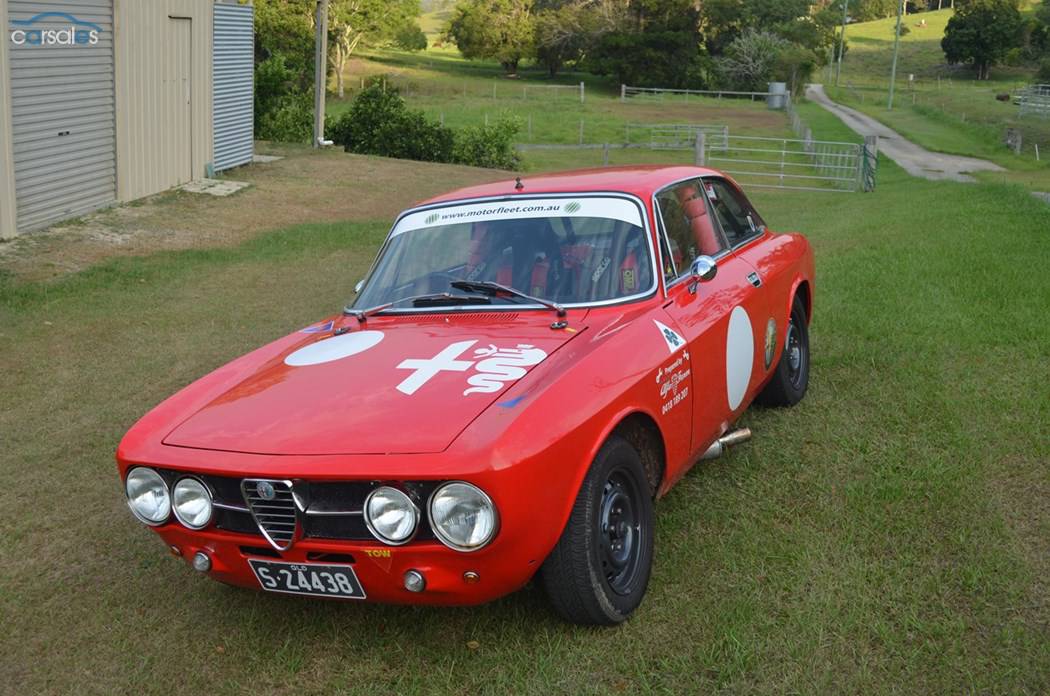
This one’s for sale right now for $21,000 and the only 1750 selling for less is a $6500 project that you wouldn’t touch unless you had a bunch of time and money to pour into it.
The market says they’re going up right now, but I’d be a little nervous as those $15K cars might hit the sales pages again once their new owners have had their fun. But a properly sorted 1750 (if that’s what this is – buyer beware) is at that point where the good ones are rare enough to be very desirable and unlike the Ghibli, above, you’re selling into a much bigger potential ownership base.
—
Volvo P1800 S
I’m not sure that a Volvo will ever be considered as a real investment, but if there was ever a Volvo that might, it’d be the P1800.
It’s the most beautiful Volvo ever made, with timeless exterior styling and a beautiful interior to match, especially the early interiors like the one on this 1966 car, for sale right now in Queensland for $26,000.
Some people like the shooting-brake ES model but I much prefer the coupe styling of the S. The P1800 is no race car with it’s 4-cyl 1780cc engine but it’ll get down the road nicely and if you want to know about reliability, just ask Irv Gordon, who’s passed the 3-million mile mark in his P1800 S since that video was made.
As I said, it’s not likely to go up, but if it’s looked after properly, a good P1800 S is very unlikely to go down.
[hr]
So there they are: my 7 classic investment cars for under $30,000 – cars that I reckon have some potential to make you a little bit of money (or at least prevent you losing much money). Do your homework, though, as this isn’t investment advice. It’s just my opinion.
If you source them wisely and look after them properly then I think you’ll pay very little in rent over your ownership period and have a very enjoyable time driving them, too.
I have a confession to make. I’ve always – always – been a fan of the old Porsche 911 Targa. You know the one, the ‘lunch pail’ model that most 911 purists talk about with a tone of voice that could rarely be described as ‘fond’.
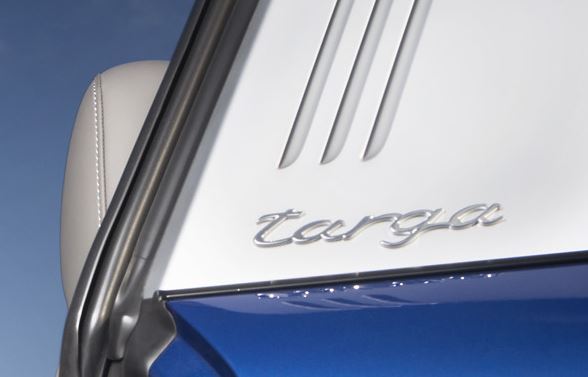
Photo above from Boldride, which has a nice article on the history of the Targa.
Not only is the old Targa usually more affordable than a Coupe of the same age, but there’s also something quite elegant about it, something appealing about the versatility. It’s probably not the 911 to buy if you want to properly learn the dark art of rear-engined driving, but it’s the exact 911 to consider if you want a more affordable 911 that’ll give you a wonderful afternoon on a country road somewhere.
Porsche has used the press days at the 2014 NAIAS in Detroit to unveil a new 911 Targa. The old Targa had a pull-out roof held in by a couple of clips. Of course, that arrangement is far too primitive for a modern Porsche so the whole Targa concept has become a mechnised party-trick.
Skip the architectural bollocks in the video below and go straight to the 45 second mark to see the roof in action. There’s also an animation at the 911 Targa microsite.
—
The 911 Targa will be a 2015 model and the full badging will be either the 911 Targa 4 or the 911 Targa 4S. The ‘4’ that’s common to both variants denotes 4WD, which is the only configuration available. The decision, then, is between whether you buy the ‘S’ or not.
The ‘S’ gets you a 3.8 litre engine with 400hp and the non-S car will have a 3.4 with 350hp. That’s plenty of poke in anyone’s language.
What do you reckon? Hot or Not?
I like the whole Targa concept on the right car and I’m quite sure Porsche will have sorted any concerns about chassis rigidity. I’m a fan.
Here’s the very best of automotive reading from around the web over the weekend.
Well, what I think was the best reading. Let’s see what you think.
—
Congratulations to Volvo on increasing its sales in 2013.
Volvo sold 427,840 vehicles in 2013, a small increase over 2012. The boost came thanks to large rise in Chinese sales and a small rise in Swedish sales. The US market, still #1 for Volvo, dropped by 10% so if they can arrest that slide in the near future, things will indeed look brighter for the other Swede.
Don’t mind the picture to the right. It’s an in-joke.
—
We’ve been talking classics a fair bit lately and Hemmings have rightly touted an upcoming auction as the ultimate classic car showdown. This one’s going to have a huge influence, I think.
Take two very, very desirable classics – Mercedes Benz 300SL Gullwings. Give them both a black exterior and a red interior.
The difference?
One of them is completely original and in a condition that many would say needs restoration after years of storage. The other is completely restored – it was black out of the factory and it’s black now, but the interior has been changed from red with green tartan cloth, to red leather.
Which will attract the highest bid?
My money’s on the restoration, but I’d love the original to come out on top.
I’m going to write my last Saab article in a while over the course of the next week or so. This comments thread at Saabs United has convinced me that there’s nothing to write about with regards to Saab at the moment and won’t be for some time.
It’s slightly amusing and very, very sad – all at the same time.
I’ll write something and post when ready. It’s not in any way a rebuttal of the article, which I think is quite good and fair. It’s just my own thoughts on Saab’s current situation in light of their 31 vehicle sales in December, and why that situation doesn’t need any more comment from me for a while. I think a few others might find themselves in the same boat.
And while we’re talking Any Given Reason, can you imagine stumbling upon a garage where Michael Schumacher’s personally specified Ferrari F40 is considered merely an entree?
Last week I covered 7 classic car investments for rich people and promised that Gavin and I would take a shot at compiling a list (each) of 7 classic car investments for more regular people. Have we suceeded? Let us know.
For now, here’s Gavin’s list….
[hr]
Old man: …….. “What is you quest”
Me: …….. “I seek the Holy Grail”
Old man: ……“What, …..a bargain value car around $30,000 Australian dollars”
Me: …… “err… yes”….. fearing the worst..
Old man:……“Okay, on ya go … good luck to you then … (demented laugh) hahahahahaha”
Me: ……(Confident) “thanks” … then the view ahead hits me …”oh bugger…. what have I done”
[hr]
Preamble
I have admitted already that I am an automotive addict. Regular sessions of intense internet trawling, just to take in and store all tediously small tidbits of information that exist on all things motoring. So to take on the challenge to pick the seven best vehicles for $30,000 AUD was, well … akin to asking Jamie Oliver whether he could whip us up something for lunch.
I can do this in my sleep, I thought, which I wish I did. It’s been near impossible to stop doing the tedious, mind numbing, painful 9-to-5 stuff and find the time to write this. So If I start to rabble about gross profit, EBIT and stock turns, please disregard as it’s most likely a brain shutdown and reboot mid keyboard stroke. Meaning I’ve mixed up my month end report with this ……. Oh… bugger, that would mean ………
Anyway, you can’t actually do things like this in your sleep. So in between profit and loss spread sheets, and some new point of sale for a BBQ, my list of seven was compiled. Note that most, if not all of these belong on my personal “shed full of cars list”
[hr]
The vehicles
Ladies and gentleman, boys and girls …. The seven best are……
Okay I tried to put them in some sort of order, but that was taking hours out of my work day. I had to list them on a white board and number them by different categories. Then I spread-sheeted them and sorted them by different fields. In the end I fell asleep and now have the windows key and the Alt key marked on my nose. People stare … that’s rude.
So, in no apparent order:
(Long dramatic pause please, just like on reality TV)
I discovered Bitters years ago and was just intrigued by the concept. Being Australian we had the Commodore here, which basically was the same as the Opel that Bitter used to build his own car. It occurred to me, at that point in time, that I did not need to build a car from scratch to get my dream car. I could use a standard sedan and create a GT coupe.
I’ve always harboured that addict’s dream of building your own car from scratch.
That said, time has passed and I now understand the pitfalls of using another vehicles chassis. You are governed by that vehicles foibles and in essence you are building into your vehicle someone else’s design flaws. I’m still dreaming down this path. If I get to know you better, I’ll let you in on my current passion dream project.
The Bitter has stood the test of time; hand-built coachwork over an Opel chassis. They were expensive to buy from new and have now deteriorated over time. Pick an original, well looked after car, not a restoration project as it will not benefit you.
In my car trawling years, prices of these have slummed to the low 7,000 euro. But now it appears the cars that have survived are the only ones popping up, and prices have risen again. Expect them to stay steady, or rise further.
The earlier Bitter CD coupe is the real pick, but they have risen beyond the boundaries set in this quest. Sexy none the less.
The early 70’s Audi 100 Coupe has been known to me since, well, for as long as I can remember (In motoring addiction terms).
My First car was a Mk1 VW Golf three door. From this car grew my knowledge of all things VW and from that, I found Audi.
The 100 Coupe is a rare sight in Australia, but I have seen one in the flesh. They have seen the bottom end of the market in prices and over time they have gone through design fashion trend changes that in one period or another would have made people stop and point at this car and say things like “ugly”, “Odd”, or ”out of proportion”.
Thankfully time changes a lot of things, including perception, and this pretty little coupe has come of age, and like the Bitter above, only the good survive. I saw a few basket cases on the net while reviewing for this, but stay well away from those. Pick the best and you will be rewarded with a classic that will pay you back in more ways than one.
My modern alternative to this, and possibly at less then $30,000 currently (and you will need to hold on to it awhile longer to get a return) is the original Audi TT. Like all good collector cars today, they were once cars that were wanted and admired when launched. The TT is one such car. Yes it’s looking a bit dated now, but as you start to grow dated yourself, the TT will come of age again. (trust me).
Of all the marques of vehicles I’ve owned, I’ve had more Loti than anything else. Strangely, I have never had a Europa and previously, I never really wanted one. Time has shifted my thinking and as per the examples above, time has also filtered the bad ones out, so only the cream remain.
The Twin cam is the pick obviously.
Colin’s design concept of backbone chassis and fiber body is probably at its best and simplest here in the Europa. The Early Élan was his stepping stone and continuous development to this model. The Esprits after were much more complicated and intricate. Having owned an Esprit, I now yearn for the more basic version of the concept.
They handle well, go like party pies at a work lunch and the style has travelled through time a lot better than some other 70’s cars. I love the happy face they have.
Mmmm this is not good … as I write this I am seriously contemplating one of these…
Okay, stop laughing. No really, that’s just not being nice.
From childhood it was that odd French thing. Young school boys talking about that weird car with head lights that moved.
The shape was a stand out, and in terms of pushing the envelope, you should buy one of these for that alone. They were brave boys back then at Citroen, either that or the pigeons above the smoko hut at the design lab were tripping out all the time from the fumes rising up at smoko time.
No one has pushed the design of a motor vehicle more than this car. Sadly today, as much as we love and desire a lot of old and newer cars, no one has really forged ahead with any major leap forwards in design. Not like the DS.
That said, no one really copied the DS design either and to an extent, neither did Citroen. They all sort of stood back and said “yeah okay, cool, but we’ve got other ideas”. Mind you, in 2015 the DS appears to go back into production as Taxis in America. (I just want a hover board)
It’s a must have car for a certain type of addict and due to its uniqueness it’s never really been in or out of fashion. It’s just always been what it is: the DS.
Once again (I seem to be saying this for each car, so it must mean something) the good ones have survived and they are the ones that will stay with us, well, at least till we run out of petrol.
Big, boxy and fast. What more could you want? The whole concept of a hand built vehicle, with grace, comfort and style just works.
This series of Royce’s (real RR people call their cars Royce’s not rollers) was not the prettiest and were made at a time when the marque was in a financial and design wilderness.
The boys at Bentley stopped crying into their gin and said “bugger this, let’s make do with what we’ve got”. They went into the workshop, stared at the new Royce, then went back and finished the bottle of gin, which preceded a great brain storming session. This gave birth to the Turbo R.
All I can say is find a good one, sit behind the driver’s seat and if possible, take it for a drive. You will wonder why it’s not been on your list before. It’s not a sports car, but it’s that vehicle you need for those special days. Those days you need to feel extraordinary.
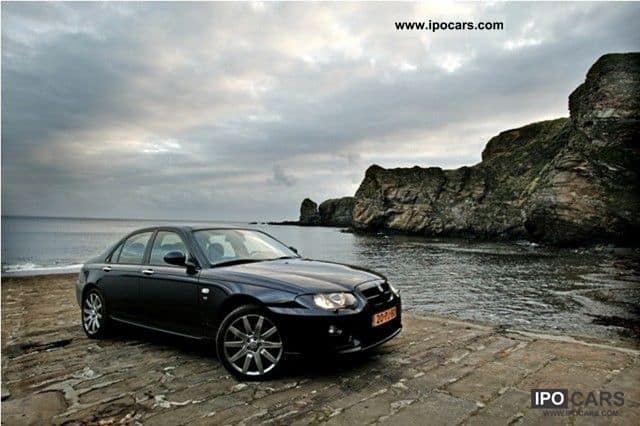
If the Bentley scared you – just because you think the first time something goes pop you will need to sell your house just to buy the parts, let alone have anyone work on the thing (sort of killed the Bentley here haven’t I) – well don’t despair. These English folk were thinking the same thing and in a haze of single malt scotch (and more gin) the team at Rover came up with the budget Bentley.
Once again, a team staring at their front wheel drive sedan, while looking back at heritage, and asking “where did that come from” knew they had to have a rear wheel drive car in the Rover fleet, so they set about building one.
“Ello mate, Gordon form Rover design ere. Listen, we’z were lookin’ for a big lump of a donk to drop in our new Rover / MG, you’ze got anything lying around we can ave?
To which the line to BMW head office went dead. More calls went out to other marques. More dead phone lines.
Then they hit gold.
Unbeknown to them, Tommy Lee at Ford procurement had placed a big order for V8 engines, but they had not sold through.
“Tommy Lee … if you don’t on-sell those engines by close of business today, don’t bother coming back”
…and at that point Tommy’s phone rang.
”ello mate, Gordon here…”
The rest is history.
It’s a bit of a weird one and really, my thoughts on it gaining or maintaining any value are only based around its rarity and value for money. A V8 rear wheel drive luxury saloon. A few for sale in the UK, which is where I have based my findings, as we here in Australia were only blessed with eight or twelve of these things. They don’t pop up for sale often, and when they do, we can only say “tell em they’re dreaming”.
I have kept an eye on these over time and only now am I starting to see a rise in prices on the good condition cars. As before, there are lots of cheapy bad cars to stay away from.
[hr]
RENAULT CLIO V6 .. err from 6,000 GBP to 12,000 GBP and climbing.
With this car, I am both biased and stupid. Biased because I have owned one. Stupid because I just sold it.
I had a phase two version and here I show a phase one. The Two’s were a better build and better car, but the phase one was the original.
They’re affectionately called a “Vee” by those in the fold and there were only 300-odd made. Of those, the passage of time and the passings of boy racers will have dwindled this to much lower numbers. So they will be rare.
The phase one is well known for wanting to pirouette in a corner (or a straight line) and the phase two less so, also helping position the car as uncommon. Consider it as a sort of inbuilt Darwin evolution/vehicle rarity control mechanism.
It’s time to find a good one, as the phase two’s have already started to climb in value.
All I can say is, it’s the only car I know that really makes you smile just starting it up. It’s the only car I know you can have an intimate relationship with, it’s you and the Vee, that’s it.
I’m an addict but I don’t have the ability to buy and store lots of cars. I had the Vee, Loved him (Murphy) and he has gone to a good home. It’s time to find my next affair. … it might just be one of the above …
I’m going to file this away with my other Vehicle Maxims but as the title suggests, it’s really more of a theory than a hard and fast rule.
I could have also called this “Swade’s justification for all the silly cars he’s bought” but I don’t want to give my wife any more ammunition than she needs 🙂
Rent Theory:
The difference between what you pay and what you sell for, along with certain costs of ownership, can be considered as rent paid for the pleasure of owning a vehicle. By avoiding big losses on selling (especially depreciation), you minimise your rent and maximise your pleasure.
It’s relatively rare that someone owns a vehicle for life. Most of us are simply caretakers who look after a vehicle before passing it on to the next owner. We effectively ‘rent’ the car with the rental costs comprising the difference between purchase and sale prices and any money spent improving the car. I put registration, fuel and servicing costs down as operational expenses.
My task (and yours) as someone who likes to own different cars, then, is to minimise the rent. That gives me a good vibe because I’ve preserved my investment in the vehicle, I’ve managed to enjoy a great car at very little cost over the period of ownership and I’ve (hopefully) left myself in the best possible position to replace one interesting vehicle with another when it comes time to change cars.
How do you do it?
You buy something desirable – the supply/demand equation is what preserves price. Buying something that’s regularly in demand isn’t hard – people are looking for Corollas all the time – but buying something that’s in demand and interesting can be a bit tricker. You have to go in with both eyes open.
You have to preserve condition – when you’re thinking about buying a car, you have to look to future when you’re going to sell again. You need to make sure the vehicle’s kept in superb condition so as to make it stand out amongst similar vehicles for sale. If you can get a diamond in the rough that won’t cost the earth to improve, all the better.
You have to buy smart and sell smart – identify the right car at the right time in its life cycle, negotiate the purchase well and know how to market the car well when it comes to selling. Good photos and an accurate description make a hell of a difference when it comes to getting your ad seen.
It’s not often that people make money on buying and selling a second-hand car in the open market. Dealers can do it because they pay rock-bottom when they trade a car in and they offer the convenience of an easy exchange. Private buyers like you and me are a different story. Bottom line: most of the time you’re going to lose some money on the purchase and sale of a vehicle.
The key is to minimise the losses and be philosophical about what they represent. Those losses are the rent you pay for the enjoyment of owning the vehicle that you choose.
Buyers of brand new vehicles pay a higher rent thanks to depreciation but they’re buying greater safety, fuel economy and lower maintenance costs. Buyers of classic vehicles should pay lower rent because depreciation should be minimal (if you’re buying smart) but they’re likely to take a hit with higher operational costs. They’re buying character and paying for the freedom to buy whatever they want from any era rather than simply what’s being sold by manufacturers right now.
It’s all a balancing act and mostly a philosophical one, but for those with a jones for the second hand car market, it’s a handy thought process that’ll help you make it through the night 🙂
—
Addendum: before anyone points it out, let me acknowledge that what I’m describing here is basically known as the theory behind leasing when it comes to new cars.
Your lease charge is the cost of depreciation, expected wear and tear, etc, over a specific term at which time you hand the vehicle back.
The difference here is that the car can be of any age, make, color or creed, the ‘lease’ cost isn’t determined until your ownership is done and you have some abaility to determine what that lease cost will be by the way you buy, sell, maintain and select the vehicle.