For those who don’t know, I worked for Saab Automobile for a short time back in 2011, running a website for them called Inside Saab. As the name suggests, it was designed to bring all the latest news, events and other developments from inside the company.
I started with Saab in April 2011 and finished when the company declared bankruptcy later in December 2011. When the company died, the website died with it.
I have an Inside Saab archive here on this website but it’s text only. I don’t have the images that went with it and the layout is exactly the same as what you’re looking at right now.
Thankfully, a friend you might know as Wulf saved a complete archive of Inside Saab that includes all the text, the images and the CSS to get the layout right. Wulf runs a Saab website called Saabworld and he’s just loaded the full Inside Saab archive on to Saabworld’s pages.
Make sure you check out the video page, too. The first two of what would have been a series of ten Inside Saab films are still on the site. All ten films had been shot and edited (I think) before I even started at Saab. We showed the first two but decided to hold off on showing any more because the factory had stopped production. We didn’t want it to look like we were treating that situation lightly, and we wanted to save what was really excellent material for a time when there was a better vibe about the place.
The video page also features a few other films we’d put together, too. It’s one of the things I really enjoyed about the job and it’s a shame we didn’t get to do more of it. I have a subscription feed for Porsche’s Youtube channel and those films have great cars, of course, but the films lack any real warmth or personality. The films I planned to make for Inside Saab were completely amateur in style, but featured real people telling real stories and doing real things to make great cars. One of the great things about Saab was its accessibility. I really wanted films that came across as one friend talking to another.
——
Sadly, much of Inside Saab is taken up with Saab’s slow death spiral over the latter part of 2011.
There were some really fun highlights, too, though.
IntSaab 2011 in Finland was an amazing experience. If you live in Europe and haven’t been to an IntSaab event yet, put it in your plans. IntSaab was simply wonderful.
I started my tenure at Saab with a trip that would have been typical of the future if Saab had survived – coverage of the New York Motor Show. And if you cast your mind back to 2011, that means the US debut of PhoeniX.
——
If you want to pick a subject to look at on Inside Saab, there is a tag cloud in the column on the right side of the home page. Just scroll down a little to see it.
Don’t use the search function just under the banner at the top of the page as it’s not currently working (it tries to search insidesaab.com which doesn’t exist anymore).
——
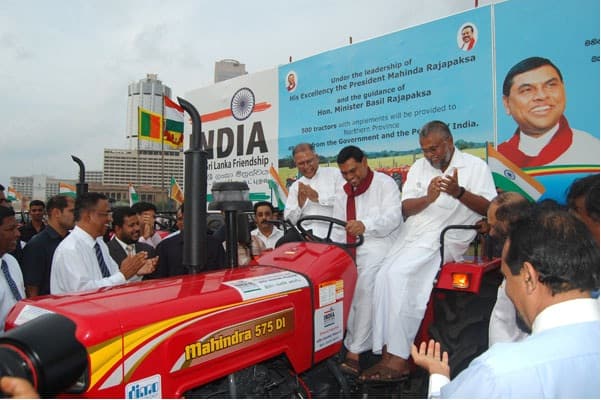
My thanks to Wulf for having the foresight to do a complete download of the website. And my thanks to Wulf again for re-creating it at Saabworld. It’s nice to see the old site back up again (even if I’ve lost around 20kgs since that photo was taken!)
There’s a little bit of news on the Saab front today.
Via TTELA, via comments (thanks to Pingu)
One creditor (the financial company SVEA Ekonomi AB that has provided NEVS with loans during the year) has opposed an extension of the reconstruction. The reason is that they fear that there is no longer enough property at NEVS to secure the loans, since the property that was originally used for the loans (cars, etc.) are currently being sold off to fund NEVS’ operations. They also note that since the operations is now largely funded with other loans with special privileges, their loans will likely not be paid in the end in case of a bankruptcy later on.
A few more things must be noted to give this context, however…..
Firstly, this is one creditor speaking their mind on NEVS’s reconstruction extension. The court would take this creditor’s opinion into consideration, however they’re not bound to end the reconstruction because of this.
Secondly, and perhaps much more importantly, the committee appointed to represent the creditors group as a whole has written to the court in support of NEVS’s reconstruction extension. That will carry a lot more weight.
TTELA also write that a decision on the extension may be forthcoming today and that’s a pretty big deal because if the court says ‘No’ then all of Mahindra’s plans to talk to Saab AB about naming rights, finish off their due diligence, etc, go out the window.
Feel free to keep us updated in comments as I’ll be in bed soon.
——
Mahindra confirmed. Sort of.
Nasdaq.com – which is a real thing, not just an opportunistic guy with a domain name – is reporting as follows:
India’s Mahindra & Mahindra plans to take a stake in the company behind Sweden’s Saab Automobile brand, according to documents filed to a local Swedish court…..
…In a document filed to the court by one of the creditors of NEVS–a British consultant–Mahindra & Mahindra is named as the auto maker about to take a stake in the Swedish company.
NEVS, of course, have been very secretive as to who the potential investors are and while it’s never been confirmed by NEVS or Mahindra, the whispers have been all over the place.
NEVS do have obligations to their creditors, however, including the disclosure of information that will influence their decisions. I’m sure they disclose this information with instructions to keep it confidential, but our British consultant has seen fit to waive that particular request for now.
UPDATE: We just booked some accommodation. Trolltown, here we come!
——
Good News!
The 2015 Saab Festival dates have been announced. The event will take place in Trollhattan from June 5 to June 7 next year.
—
There are no details as to what will be going on but information will be available at the Saab Museum website when it comes to hand.
If you’re a Saab fan, a visit to the Festival at least once in your life is a must. Trollhattan in the summer is just magic and the events around the festival are always first class.
It’s been a big week in the world of Saab with a potential sale looming that could see the company get a rare third chance at life in the post-GM era. There is a letter of intent in place so Saab fans do have the possibility of a positive outcome with regards to the company’s future. But in truth, the situation with Saab/NEVS right now rests on a big collection of “IF” statements.
IF Saab AB will grant rights to use the Saab name…..
IF there’s actually anything that’s still worth buying from NEVS after due diligence is complete…..
IF Mahindra (we guess) are sincere in their intention to buy…..
IF the Mahindra board will see a business case for buying into NEVS……
IF all those things happen, then what remains of the company we know as Saab will have a new majority owner from early March next year and the journey will begin all over again.
What happens after that is anyone’s guess, but it will all start with Mahindra & Mahindra, the Indian company looking to add a European jewel to its automotive crown.
So what is Mahindra? What does the company do?
——
Origins
A few years before Svenska Aeroplan Aktiebolaget started selling their first production car, Mahindra started life as a steel trading company founded by two Mahindra brothers and a guy named Muhammed. The year was 1945 and two years later, Muhammed left to become the new Finance Minister in the newly formed Pakistani state.
Mahindra & Mahindra started their automotive business building knock-down kits of the original Willys Jeep in the late 1940’s. They listed on the Bombay stock exchange in the 1950’s, started exporting machinery and parts in the 1960’s, diversified into agricultural machinery and a technology arm in the 1980’s and have grown steadily ever since.
——
Mahindra Today
Today, Mahindra is a diversified company valued at just over US$16 billion. That’s not massive in world corporate terms, but not insignificant either. The company has around 200,000 employees and is represented in around 100 countries around the world.
Mahindra has spread itself over 18 different industries from farms to finance and aerospace to automobiles. They can sell you a bomb-proof truck, a bucket of potato seeds, a week’s vacation in Goa or a government certified off-grid solar solution for your village.
——
Corporate Philosophy – Rise
It feels a little bit quaint to talk about mission statements and corporate philosophies in 2014 but Mahindra seems dedicated to the Rise philosophy. It’s one that resonates when you’re operating in a country like India, a country that’s rich in heritage and beauty but is trying to raise itself from widespread poverty to become a more commercialised nation.
Mahindra sees itself as a company that makes the tools that India and much of the rest of the world needs to Rise and reach beyond itself. That might feel a little antiquated as you sit in your leather chair reading this on your iPad, but to Mahindra, Rise is the backbone of how they treat their people and everything they do.
Corporate video time…… this is the less cheesy one.
—
To put the corporate feel-good stuff aside for one moment, this utilitarian philosophy is one that should resonate well in traditional Saab circles. Saab itself started as a practical, well designed car for the Swedish masses. Sweden itself is a country whose modern ideals have tended to favour the wellbeing of the society with policies focusing on health, education and the dignity of the individual being a key to the dignity of the whole.
Of course, Saab couldn’t stay as a cheap runaround for the Swedish masses because that wasn’t profitable. And Mahindra understands profit. They’ll know that Saab has to be a premium, quality product because Saabs are very unlikely to sell on volume. What they plan to do with it will be interesting, to say the least.
——
Industries and Products
Aerospace
Mahindra has three Aerospace companies operating in India and Australia. They design and build a range of three light aircraft, with two more on the drawing board as we speak. They also act as a supplier to other manufacturers.
Aftermarket
Mahindra operate businesses that specialise in servicing and on-selling vehicles.
Agribusiness
Mahindra have two companies offering specialist services in the following areas: Crop Care, Fresh Produce Services, Seed Distribution and Seed Potatoes
Automotive
Following their purchase of SsangYong in 2011, Mahindra now has a range of 8 commercial vehicles and 15 personal use vehicles that they sell in dozens of countries around the world. The vehicles range from a small three-wheeled ute for India to a very Mercedes-like limousine sold primarily in Korea.
Mahindra also has a brand called Reva, which sells an electric vehicle – the e20. Mahindra Racing is an inaugural participant in the 2014 FIA Formula E championship. This electric field may well be where Mahindra’s interests with Saab lie.
Components
Today we run art-to-part manufacturing units across India, Germany, Italy, and the UK which help companies around the world build better products using our expertise in processes like forgings, castings, gears, stampings, steel, ferrites, contract sourcing, composites, and more. More than 12,000 of us are at work on a full range of components for use in industries like electrical, medical equipment, power, defense, aerospace and more. We also provide full service art-to-part solutions to our customers by integrating design, manufacturing, and sourcing capabilities.
Construction Equipment
Mahindra & Mahindra entered the Construction Equipment industry in February 2011 with the launch of the Mahindra EarthMaster Backhoe Loader. Already one of the world’s largest markets, demand for construction equipment is growing in India.
Consulting Services
Mahindra runs three different consulting companies specialising in four specific areas: Engineering Consulting, Information Security Consulting, Project Management and Strategic Risk Management
Defence
Mahindra’s defence operations centre around defence vehicles from small, agile people carriers to larger six-wheels ballistic protected carriers. They also manufacture some small arms systems and in 2012, they expanded into manufacturing for naval defence systems.
Energy
Mahindra EPC offers various power generation and energy-efficiency solutions and services.
Farm Equipment
Mahindra is now the largest selling tractor manufacturer in the world, by volume. Their best-selling model is called the Bhoomiputra, which is enough reason in itself to like them 🙂
Financial Services
Of course, with all this stuff to sell to people, it makes sense to make some money off the process. Mahindra does insurance as well as offering loans for machinery and property.
Industrial Equipment
Mahindra Conveyor Systems collaborates with a Japanese partner to build industrial scale bulk handling systems. In layman’s terms, they move stuff in large quantities from one place to another.
Information Technology
Mahindra own three companies that offer various IT services from India to Silicone Valley. They do IT services, outsourcing, IT consulting, business process modelling and a whole range of telecom-based services, too.
Leisure & Hospitality
Mahindra runs a smattering of resorts around India and offers timeshare arrangements for families in partnership with other like companies around the world.
Logistics
Mahindra call it people logistics, which is a fancy way of saying they’re also like a taxi company for the corporate sector. They move people around (100,000 trips per day!). They also handle supply chain management and warehousing.
Real Estate
Mahindra got into property development in the 1990s and now work in both residential and commercial property development with a focus on sustainable development (i.e. green). Their “World Cities” model is something I’ll have to look into a little more.
Retail
Mahindra runs a retail chain called “Mom & Me”. When you’re a country of a billion people, there’s a few births happening so it makes sense. We’ll overlook the Americanised spelling….. for now.
Two-Wheelers
Mahindra makes a range of motorcycles and scooters. They even race the motorbikes and have had some marked success in Italy with two successive 250cc championships. They’re currently in talks to take over Peugeot’s scooter operations.
——
Summary
If it sounds like I’m giving Mahindra a glossy introduction, that’s because I am.
They look like a responsible, growing company from a part of the world that I have a great affinity with. Australia and India are very different countries but we share some common cultural points and sporting links thanks to the Brits. And we love their food 🙂
I wish them well in their efforts to buy a majority stake in NEVS and hopefully revive the Saab name in the automotive sector. It’ll be a tough road and who knows what lies at the end of it, but it has to start somewhere.
Well the ruse worked for about 5 minutes. Yes maybe I had some people thinking about SAAB, and why not? It could just have easily been the case, as it has been for many.
Recently I have questioned my prejudices much more robustly and taken more time to understand why I might feel a certain way. It also helps me understand where others might be coming from.
Why it wasn’t about SAAB is only because I have purchased two post-2003 SAABs, one a 06 9-3 SportCombi shortly after they came out and later a 08 Combi which we still have and love. As a matter of fact, the other day I was almost home when I saw one at a roundabout and thought, “Wow! That’s a cool looking Combi!” and realised it was Mrs Turbin returning home from work.
SO, it wasn’t SAAB I was writing about. It wasn’t even a brand of car or anything car related except for the setting where I have enjoyed this new product has been exclusively while driving.
It is Queens of The Stone Age aka QOTSAs fourth album “Lullabies to Paralyze”.
Now I’m not about to try to sell that band to anyone or explain the reasons I am so into them at risk of boring you. I do not know anyone, friend, foe or family who likes this band even remotely as much as I do. It’s personal, just like SAAB is for those who love the brand.
What’s important is that after buying their 2002 album which really broke through in 2003, I also saw them live both times they were in Australia. As much as anything I loved what their bass-player and sometime vocalist bought to the band in quirkiness, edginess and the rest. He was booted out after the Australian tour and I, like many, thought that was the end. I, also like many, saw the guitarist and sometime vocalist as the demon that ruined something good and decided that I wasn’t going to buy into what came next.
SO, while I’m a person who had no qualms spending large on a couple of those post 03 SAABs I wasn’t prepared to take a chance on spending $20 on an album or two that I might prove to hate or possibly, just possibly, even really love.
Recently while on a Swadesque journey through the albums of Led Zeppelin, I went to buy the next installment, “Houses of the Holy”. It wasn’t at the shop so I finally thought, “Why not take that chance?”, and finally bought the next 2005 QOTSA album, almost 10 years after release. To be honest it wasn’t completely spur of the moment as I had worked my way backwards through the QOTSA catalogue and came to realise that the “demon”, Josh Homme, was actually the founder of the band and had everything to do with their sound as much as his sometime partner in crime, Dave Grohl, is core to Foo Fighters and their sound.
Guess what? I came to love it really quick. Any album that has Billy Gibbons from ZZ Top guesting on a track supplying “guitar lead, vocals” where Jack Black is also credited with “marching” might just have something going for it.
I then got thinking why I let prejudice get in the road all these years. I also came to see there was this strange-but-true parallel with SAAB and thus we get to this point.
My question then is:
Have you, readers of Swadeology, ever come to a point where you’ve finally given up judging something and thought “What was I thinking to have not done this before? I’ve been missing out!”??
Imagine it’s 11:58 on your personal doomsday clock. You’ve got a heart condition and you’re due for surgery. Tomorrow.
Being a strong spirited type and knowing that your time might be limited, you decide to dress up and head out for a night at your favourite jazz club. Jazz is what you love most in all the world and if you’re going to check out, then you’ll go on your own terms.
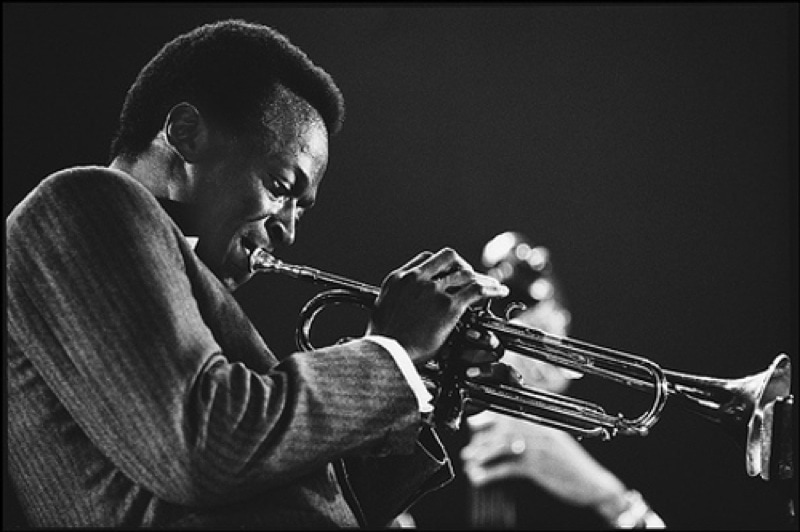
The band gets up to play and to your surprise, you find that the lead musician – the trumpet player – is your heart surgeon. And he’s HOT. It’s like he’s channelling the spirit of Miles Davis himself. You can’t believe what you’re hearing and it fills you with hope to know that the man who will take your life in his hands tomorrow is so in tune with your passion.
After the first set, the band steps down for some dinner. You wait a respectful 20 minutes or so but you have to get home at a reasonable hour, so you head on over to the band’s table to congratulate Dr Davis on the best set of jazz you’ve heard in your life.
As you arrive, the good doctor is thumping his fists on the table because his $5,000 glasses just fell off his nose and into his fillet steak. The whole table’s laughing but your doctor is mad as hell before he sees the funny side for himself. As you look down to examine this odd occurrence, you notice that this tender fillet of beef hasn’t been delicately cut and consumed. You might have expected that from a surgeon, but no. In fact, there are shreds of beef all over his plate. Maybe he got a blunt knife? Who knows? But for whatever reason, the steak looks like it’s been set upon and torn up by a couple of hungry dogs.
The whole situation is a little bit slapstick. “Imagine those glasses just falling off his nose and into that messed up meat”, you think. “What a laugh!”
You go home and sleep soundly on what might be the last night of your life. Why? Because despite the fact that your heart surgeon might be a bit clumsy with both his utensils and his food, he sure can play a mean horn!
——
NEVS/Saab survived their creditors meeting earlier this month and earned a stay of execution to continue their business reorganisation plans. During that creditors meeting they outlined what they called “Plan B” – a totally new element to their business plan involving the potential to offer technical services to other OEMs as well as adapting the Trollhattan factory to build cars for other OEMs. It’s not written in stone. It’s something they say that they can do without, if necessary. But it’s there.
Saab’s business plan has been quite fluid since NEVS took over. In the beginning, they were gung-ho on going fully electric. Then NEVS took on a 22% shareholder who – they have recently claimed – insisted that Saab produce petrol-driven vehicles for immediate use. Consequently, NEVS swung its resources into resurrecting the Saab 9-3 only to have the 22% investor fail to honour their contract while new 9-3’s sat in the factory car park with very-close-to-zero interest from buyers.
Now the business plan has a new, slightly desperate element. Well, it’s new for NEVS but not totally new for Trollhattan.
Spending time on the viability of Plan B is a bit like our heart patient at the top of this article. It misses the point. It’s fundamentally irrelevant. The court knows it. The suppliers/creditors know it and NEVS knows it, too. Plan B is merely complimentary information included for the sake of saying “we’re trying everything” while they continue to talk with their two Asian [potential] investors. It purchases time and nothing else.
The real issue here – the one that creditors are hoping NEVS can solve – is the issue of ownership and management. I think it’s only by changing the ownership and management structure of NEVS that the creditors can hope to see their debts collected.
Kai Johan Jiang was let down by his Chinese investor and he’s been burning cash trying to keep things afloat. NEVS spent bundles of money on a car it can’t sell while slowing development on its key technologies – the Phoenix platform and vehicle electrification. Qingbo might have let NEVS down but the bottom line still tells you a few things:
NEVS market intuition wasn’t keen enough to realise that a petrol-driven 9-3 would be a complete sales disaster.
NEVS management voice wasn’t strong enough to resist Qingbo’s urging for a petrol driven vehicle and stick to its plans.
That NEVS was able to build a 9-3 that motoring journalists in Sweden described as being quite capable is intellectually interesting but ultimately, irrelevant.
The only thing that NEVS had to do, the only thing that NEVS had to prove, was that it could live up to its promise of building a premium electric vehicle. Anything aside from that was, and still is, a distraction from the core reason the company was established.
As always with car companies, it all comes down to the product. You can position a company any way you want in the public eye but if you haven’t got a good product that people want to buy, you’re toast.
Building that product is a tough gig. I’ve said a million times that there are no fingersnap solutions in the car business (and by the way, “Plan B” is no fingersnap solution, either. The logistics involved are mammoth, which is one of the reasons I count it as a mere smokescreen to buy more negotiating time). Designing a car and its component parts takes time and LOTS of money. Right or wrong, NEVS got distracted from that tough gig. Whether the company would have succeeded anyway is a matter for debate but only as another intellectual exercise.
What matters now depends on your point of view.
If you’re KJJ, you want to keep your shirt on.
If you’re a supplier, you want to get the money that’s owed to you.
If you’re a Saab fan, you want to see meaningful vehicles being developed and built in Trollhattan in the future.
If you’re a potential investor, you want……… something that we don’t really know right now.
From here, though, the best way for most of these things to happen is a change of ownership to someone with the management skills and the resources to make something meaningful out of this mess. The upper level of NEVS management has neither the skill set or the resources to have meaningful success with the Saab facility at Trollhattan.
The decision to extend NEVS’s time in reorganisation had nothing whatsoever to do with Plan B or anything else to do with product plans, etc. If you believe it did then IMHO you’re missing the point. The decision to extend, again IMHO, was to allow time for an outcome that gives people what they need the most – a change in ownership and management.
NEVS’s anaemic PR division followed this up with a press release:
Nevs hereby clarify that the company is not insolvent. The company does not have enough liquid cash as today to pay all outstanding debt but Nevs’ assets are larger than its debt. Nevs today cannot say exactly when, but Nevs’ suppliers will get paid.
During the summer, the dialogues with the two major vehicle manufacturers have continued and developed in a positive direction. It is a thorough evaluation process that is still ongoing, and the discussions have not been finalized yet.
After the funding is secured, and that Nevs business plan is updated together with its new partners, Nevs will be able to make the decision on when the Trollhattan factory can resume its production.
The company whose representative filed a bankruptcy petition has informed Nevs today that they will withdraw the case after the information they have got regarding the ongoing dialogues.
A few quick thoughts on this:
“Nevs hereby clarify that the company is not insolvent” being followed by the words “The company does not have enough liquid cash as today to pay all outstanding debt….” is more than a little strange. It changes marginally from place to place, but in general terms, insolvency is where your debts outweigh your capacity to repay them as they fall due. It requires liquidity, not promises or claims about total assets. NEVS may claim solvency in this press release but such a claim has to stand up in court if/when they’re pressed to prove it.
Here’s a question someone in Sweden should be asking – Why doesn’t NEVS protect itself from creditors by going into Reorganisation, as Saab/SWAN did more than once a few years ago?
“Reorg”, you might remember, is the rough Swedish equivalent of a Chapter 7 11 bankruptcy in the US or ‘Voluntary Administration’ here in Australia, where the company gets some protection from creditors and can reorganise its business in order to maintain solvency and become profitable. The answer, I believe, is that if you go into Reorg you’ve got to prove to the court that you have a realistic chance of coming out of Reorg and trading successfully. NEVS’s ability to prove that would be severely limited because right now, they don’t have a finished product to sell nor a distribution network to sell that product into.
Consequently, I’ll take a stab and say that NEVS quite possibly exists right now only because of the good graces of its creditors. KJJ has already liquidated plenty of assets in China and elsewhere to keep the doors open this long and his capacity to keep doing this must be limited at this point.
And another question, on a slightly different matter….. Unless there’s going to be a three-party effort going on here – NEVS, DongFeng and Mahindra all working together – why is NEVS still in discussion with two potential partners?
This has been going on for months now and it will likely go on for many, many months more if NEVS still hasn’t got past the point of isolating one partner to deal with (if indeed one partner is the intended goal). If I were a creditor, I’d want a little more information as to exactly where things are at. I’d want a more realistic timeframe as to when I was going to get paid. If the goal is to secure a single partner/buyer/investor and NEVS is still sorting out who that might be, then I wouldn’t be planning on recovering my debt any time soon. Maybe the creditors have got that info from NEVS, but to the general market it looks like very little is happening in the way of progress – again, this is down to the anaemic PR department at NEVS.
There was some chagrin recently when Tim mentioned in comments on Saabs United that he was thinking of buying a BMW. How could someone so dedicated ever consider another brand? Some people expressed surprise, others disappointment. My advice: build a bridge and get over it. People everywhere are capable of loving a brand, remaining fully invested in that brand while buying something else.
How do I know this? I’ve done it myself.
Let me tell you a few things about running a website like Saabs United that you probably already know. For starters, it’s a heck of a lot of fun. It’s all-encompassing and it’s exhausting. I used to average around six-to-eight entries a day at the busiest times and three or four entries a day over the longer term. I used to monitor every comment in real time during waking hours and I had to manage any flare-ups in the community on the fly. I learned something new nearly every day and met some amazing people who were totally, absolutely dedicated to the brand.
There are a few things about running a site like SU that you may not realise, however. I won’t speak for Tim, or Till, or any of the other guys at SU, but this is definitely something that happened to me.
When I was running SU and Trollhattan Saab, the whole notion of chasing, writing and explaining the story became as important as the cars. I started the site(s) because I loved Saabs and I wanted to write about them. It was a 50/50 situation divided between the cars and the writing process. As you get deeper and deeper into it, the process does tend to take over. You’re still a car guy, but it changes the more you get into it. The more you learn, the more you want to learn – about ALL cars. About technology. About driving. About classics.
The other thing about doing a ‘job’ like SU is that when it’s over, when you’ve given it 110% and the stories stop (through no fault of your own), then if you’re a car guy there’s little choice but to take your car interest elsewhere. For a Saab person, there’ll most likely always be a Saab in the garage or a strong interest in Saab cars. For a car person – note the subtle difference – other interests will develop.
I loved Saabs. I love cars in general but I loved Saabs the most. That’s why I owned them and why I chose to write about them. But that doesn’t rule out any interest in other brands. That’s as true for me as it is for you, as it is for Tim and anyone else involved with SU. Remember that while I was right in the middle of my SU/TS experience, I bought three Saabs as well as two Alfa Romeos and a Mazda MX-5. Just because something is your primary interest doesn’t mean it’s your sole interest.
While I was associated with Saab I dealt with a designer who drove a Porsche 928, a PR guy with a 911, a USA staffer with a Ferrari, a Swede with a stunning Alfa Romeo SZ and of course, the former Saab USA public relations chief, Jan-Willem Vester, had an award-winning Porsche 911. All of these guys loved Saab and gave decades of their lives to work for, and support, the brand.
For me, my interest is in cars and back then, I had a focus on Saabs. My focus has shifted now, but there will always be a passion for Saabs and Trollhattan. We own a Saab 9000 Aero at the moment and I think that’ll be the second-last Saab we buy. The last Saab I plan on buying is the Sonett III I’ll import from the US one day in the future.
For Tim? Knowing him and his connection to Trollhattan just a little, I’m sure there will always be a connection and I’d be surprised if there’s not at least one Saab in his garage for a long time to come. Tim builds good cars and I’m sure he’ll want to preserve at least one Saab in his life, maybe more.
He’s given plenty to the cause, so don’t begrudge him (or anyone else) the expansion of their horizons. It’s a big wide automotive world out there and there’s room to invest yourself in more than one brand.
Some people will only own Saabs for the rest of their lives and more power to them. Some people will cherish what they see as being the Saab classics and will keep one or more of those. More power to them. Some people will lose interest all together. More power to them, too.
I’ve been away for a few days on King Island for work, with no internet connectivity or phone connection. Let’s just say it was hard work to put aside the connected lifestyle. At least I had a soothing view:
While I didn’t see any Saabs on the island, at least I got to fly in one on the way there…..
—
There has been significant ‘news’ around Saab this week, a story published by Svenska Dagbladet and picked up on other sources, including SaabsUnited. The ‘news’ – unconfirmed by any of the alleged participants but widely regarded as quite credible – is that NEVS are talking with two companies about either ownership or collaboration with regards to Saab cars. NEVS has limited its comment to confirmation that the company in talks with two Asian companies about various levels of either ownership or development.
According to the story:
Chinese car company DongFeng is said to be interested in development of the Phoenix platform, presumably with rights access so that they can build cars themselves on the platform.
Indian conglomerate, Mahindra, is said to be interested in an ownership stake and SU’s sources put their interest at more than 50% ownership i.e. a controlling interest.
The DongFeng scenario doesn’t interest me at all. I see two market problems here:
From what I can tell at a distance, NEVS most likely need more than what DongFeng are likely to give. See below. And….
If an actual Chinese government body buying into Saab (Qingdao) can’t fulfil their end of a deal, what sort of confidence would people have in pseudo-government company like DongFeng? It’s one of the bigger Chinese car companies, but even that title doesn’t inspire confidence in terms of the company’s integrity.
So that leaves Mahindra, which I think is the scenario that most Saab fans would be cheering for, me included. Most of the commentary I’ve seen cites the Tata/Jaguar relationship as evidence that an Indian ownership scenario can work for Saab. Indeed, I DO think Indian ownership can work for Saab but in my mind, that’s got nothing to do with the TATA and Jaguar Land Rover situation.
Long Term Thinking Required
If Mahindra buys into Saab, you’d want them to have a 20-year plan and a strategy to carry Saab losses for a significant portion of that time. That’s how long I believe it’s going to take for Saab to have any realistic chance of being profitable.
Saab’s best chance at survival was back in 2010, when Spyker took over. Why? Because of the range of cars it had ready to roll.
The 9-5 isn’t my favourite Saab, but it was ready for sale. I believe the 9-4x was going to be a major success for Saab in some of the company’s key markets. That car was ready for sale, too. A combination of 9-3, 9-5 and 9-4x was a great foundation for Saab to build on and GM had already spent the bulk of the money to get these models up and moving. You cannot underestimate the advantage Saab had in this situation.
Sadly, Spyker didn’t have money of it’s own, the Swedish Government put the clamps on Antonov and GM wouldn’t allow Saab’s other potential suitors to get in the game. Such is life.
The best chance for a new owner is to have a long-term plan in place that seeks to develop key models in potentially profit-rich segments of the market. Of course, they also need the resources and the skills to pull the plan off.
Say Ta-Taa to comparisons with Jag-wah
A lot of people bring up the comparison with TATA and Jaguar Land Rover. That comparison might have been accurate if Mahindra had purchased Saab in 2010 instead of Spyker. 4 years later, it means next-to-nothing.
When Ford sold JLR to TATA, they sold years and years worth of model development that took Jaguar from the somewhat crappy X-Type and S-Type models to clear segment competitors like the XF and the new XJ. Given the development cycle and long lead times in the car business, plans were also most likely well underway for models like the XK, the F-Type and the new XE that Jaguar showed at Geneva earlier this year.
Saab was in a similar position in 2010 but unlike TATA, Spyker didn’t have the money to capitalise on it. Saab had new cars ready to roll and plans for the future in the pipeline. Now, in 2014, the new 9-5 and 9-4x are mere memories that cannot be reanimated. The Saab 9-3 is nowhere near its modern new-vehicle competition (except in the eyes of the most fanatical Saab people) and the Phoenix platform is still being emptied of it’s GM content two years after NEVS acquired it.
A prospective new owner of Saab, or new shareholder, would therefore be starting from scratch. And that’s a really, really long road.
Market Segment Will Be Critical
In the past, I’ve given SU – and Tim in particular – an occasional whack for acting too fan-boy with the SU readership. Accordingly, let me be as free with my praise for what I think is a very sensible public position on Tim’s part and a significant departure with past positions:
I’m sorry to be a party killer here guys but all journalists, economists, dealers and car people that used to work at or with Saab is more or less saying the same thing: unless Saab is able to bring out 3-4 new high-tech high-priced prestige models, sell all of them at a loss for 3-4 years while upgrading them, the brand would not survive.
I agree. Totally.
Saab will have to position itself in the higher end of the mass market. Of this I have no doubt at all. I’ve been questioning NEVS’s strategy with Saab for ages because at a very basic, fundamental level, their business plan simply didn’t make sense (unless they had bundles of cash to burn, which we’ve recently learned is not the case).
Saab has a small manufacturing capacity. It can’t readily produce any more than 180,000-200,000 cars per year and that’s not enough scale to survive unless you’re fetching a reasonable premium on your product.
Yes, a new owner can (and most likely will) increase capacity by manufacturing in a low-cost country, but you’re going to have to increase scale by a hell of a lot – well into the million range – to achieve profitability.
In Saab’s case, it would make, on average, around US$5000 on its bread-and-butter model, the Saab 9-3. You can increase that amount by around US$3000 for a 9-5 large sedan, a 9-4x SUV or a convertible 9-3. ….
….Saab wanted a small car but did not have the money to develop it. If it had made that smaller vehicle, however, the margin would have been around US$2000 per vehicle.
With materials and labour accounted for, the remaining margin per vehicle has to cover all the other aspects of the company’s operations: technical development, safety, crash testing, NVH, global marketing resources, events, PR…. and many more functions.
It doesn’t take that much more incremental effort to make the larger car instead of the smaller one. You can do the sums for yourself. The upmarket area is much more profitable if you’re going to be a small volume manufacturer. It won’t be palatable for some, but Saab has to go the upmarket route. Saab simply has to chase those market segments with higher margins. Somewhere north of Volvo, for sure.
People talk about the old Saab being an affordable, small and simple family car. And this is true. They also talk about Saab returning to that point of origin, which would be crazy.
Back then, Saab was underwritten by the Wallenbergs and was part of a government-supported aircraft company. Saab itself saw the need to move upmarket, which is why it made the 99 as a successor the 96 and the 900 as a successor to the 99, etc. Each new model was bigger and more sophisticated because that’s where Saab needed to be as a small-scale manufacturer.
Tim’s got it right – Saab has to move upmarket if it’s to be viable. The alternative is to go high-volume, which Saab has neither the capacity or the reputation for.
—
As always, I think all Saab fans wish the company well.
I vowed after the events of 2011 that I wouldn’t give unqualified support to a new owner because I didn’t want to sway people towards supporting a company that may not be viable. Many of the people reading this are personal friends and I wouldn’t want to see you/them spending hard-earned cash on something that was vulnerable.
I’m quite sure that policy won’t change under a new ownership structure. I wish them well, for sure, but there will always be questions when things don’t make sense.
For those who are wondering, it’s been quiet here because I was away for work, and bracketing that trip is the demise of my computer (which will hopefully be fixed soon). I’m actually enjoying the hiatus.
I had to get back online for this, however. My thanks to ctm for posting this press release from NEVS in comments.
A few cents worth of thoughts at the bottom…..
Status update from Nevs
National Electric Vehicle Sweden (Nevs) is preparing an extensive investment to develop a new platform on the Phoenix architecture, which will be the base for future car models. This development will be done in cooperation with other global OEMs. These collaborations involve sharing cost of development and reduced costs of components through significantly higher volumes.
Nevs has recently signed a frame agreement with a major international automotive OEM regarding the cooperation in product development of the future platform. A negotiation with another major automotive OEM is also taking place regarding part ownership. The objective is to add significant resources to the development of Saab as a global premium car brand name. The partnerships will contribute to secure Nevs with the right financial and technical support to develop new products and distribution of cars on a global basis.
Even if the long term perspective of Nevs remains very exciting and promising it is a short term cash problem.
The root cause of the current situation is that Nevs’ shareholder, Qingbo Investment Co. Ltd, has not fulfilled their contractual obligation to finance the operations.
As a consequence Nevs’ main owner National Modern energy Holdings Ltd. (NME) has since the beginning of the year decided to enter into the position as the sole financier of the company. Recently NME had to conclude that despite enormous efforts it has not been possible to capitalize its assets in China as fast as needed to support Nevs. This has resulted in a time lag between the financing from China and the need of cash to pay suppliers. As of today NME has transferred over 3 Billion SEK to Nevs and made additionally large investments in China, i.e. in the new battery factory and the technology development center.
It is important to state that the assets are significantly higher than the debt but Nevs is planning to use short term credits to cover all outstanding and near term obligations until the long term financing is secured. This is bridge solution is planned to be realized within a near future.
To further support the situation financially and give Nevs time to align the strategy with the new OEM partners Nevs will also take short term measures to reduce cost. Among the measures to be taken are a short term stop of production, which today is six cars per day, and a reduction of hired consultants.
End of press release.
OK.
A couple of points……
As many regular readers would know, I was skeptical about NEVS’s electric vehicle plans right from the beginning. I was reassured, however, by words from some former colleagues at Saab saying that Kai Johan Jiang’s companies were VERY well resourced.
I guess it just goes to show exactly how tough it can be to run a car company, especially one that you hope will be a mass producer. The costs are Massive-with-a-capital-M.
It’s a chicken-or-egg situation. People aren’t going to buy the cars if they don’t feel they’re getting value, or ongoing support. To get the costs down and build in some value, you’ve got to create economies of scale. To reach the volumes that create economies of scale, someone has to invest a metric buttload of money in order to both build and market the cars for sale on a large scale. But people aren’t going to buy the cars if……….
Saab was behind the 8-ball on that right from the beginning. Their decision to build the old 9-3 put a very tight cap on the potential size of their market because it didn’t meet safety standards for general approval in Europe.
The 9-3 decision was one that had some real short-term appeal; it was a smaller investment and meant a shorter time to market. It needed to be a success, though. Sadly, it hasn’t been a success at all. Yes, fans can judge the re-commencement of manufacturing as an achievement in itself and that’s fine and dandy when you’re future’s still full of potential. Eventually, though, you’ve got to sell some cars and make some money. Whether by lack of marketing in Sweden or market fatigue with the old 9-3, they simply haven’t sold.
Jiang was hoping Quingdao would fulfil their commitments to the investment they made in the company. I guess not. Welcome to the Chinese way, which is not exactly a new phenomenon for Saab fans.
I took a few suns worth of heat for not being an unequivocal cheerleader for a new Saab. The reason I took the cautious stance I did is because I didn’t want to encourage friends to spend their hard-earned on a product that had potential to be unsupported. Once was enough.
It’s unpalatable, but you simply have to wait for proof of sustainability in a situation like this. We all wish Saab well, but pouring money into the company is something investors have to do before they ask customers to do the same.
I hope the lads and ladies at NEVS can sort this stuff out. Everyone wants to see the Saab name continue to be associated with quality cars that have a real connection with Sweden.