Given that my interest in Zagato-bodied cars is rising, the timing of this Petrolicious video couldn’t be better. It features none other than Andrea Zagato, the third generation to run the family business.
He talks about Zagato’s styling and construction principles, as well as taking viewers for a ride in the absolutely beautiful Alfa Romeo 1900 SSZ.
Tip – Andrea only speaks Italian, so make sure you hit the little button at the bottom to make the subtitles work.
Enjoy. And thank your favourite deity for Petrolicious and their exquisite videos.
I’m currently looking for a Lancia Fulvia. As they’re relatively rare in Australia (there’s one for sale publicly right now, detailed below) I’ve widened my search to include vehicles overseas.
As I type this, I’m looking at three – maybe four – basic options. Your considered thoughts would be appreciated.
But first, a look at what I consider to be the ideal attainable Fulvia from the ones available for sale around the world right now. Attainable is important. There are more desirable models for sale, but at crazy prices. I don’t have that kind of money.
In fact, this car would be stretching the budget well beyond what’s reasonable, but if I were going to be completely selfish, this is what I’d buy.
This is a Lancia Fulvia 1.6 HF ‘Lusso’. The HF cars were like a 1970’s Lancia version of BMW’s original M cars. They’re the hi-po editions that were made to enable homologation of Lancia’s competition cars. The ‘Lusso’ version here is a more consumer-oriented car, slightly detuned and more comfortable than a pure HF (known as the ‘Fanalone’ model amongst the Lancia crowd).
This is a series 2 car. Series 1 cars are more desirable and thus, more expensive. You’ll note is has nice HF seats, HF wheels and all of its brightwork on the front and rear of the car but it’s still set up as a sports car.
This car is original RHD and strangely, is for sale right now in a non-RHD country (Belgium) – for 25,500 Euros. That’s $38,000 in Aussie money and then there’s around $5K in costs to get it here. All up, that’s way more than I intend to spend.
But that’s the ideal.
——
Option 1 – Blue 1967 Fulvia Coupe (Australia)
This Fulvia Coupe has an interesting history – if only it could be verified. The owner’s story goes like this….
He bought the car in the early 1980’s and it had been off the road for 5 years at that point. He’s never registered it, either. It still has the registration sticker from the last year it was on the road legally, in 1977. The owner was young and moved around a lot for work in country Victoria, so never got to work on the car as he wanted to. Time passed, he got married and had kids. The car has been sitting in his in-laws’ garage for nearly 15 years now in non-rusty Canberra. He claims the mileage – just 22,000kms – is genuine.
Unfortunately, none of this is documented. It’d be a great low-mileage history and I don’t doubt the truth of it when it comes from his mouth, but in order to form part of the car’s history when it passes from one owner to another, you need to be able to back it up. That old registration sticker is about as good as the proof gets.
The car hasn’t been started in around 10 years. I inspected it a few weeks ago in Canberra and we were going to jump-start it when we realised that the fuel was also 10 years old. We decided against it.
The car is structurally sound and the interior is absolutely fantastic, but the exterior needs a complete restoration and the mechanicals?…… who knows. You could easily sink $20,000 into this car. You’d have a wonderful (un-proven) low mileage Fulvia, but it’s take a hell of a long time.
Pluses:
Genuine Series 1 car with aluminium doors, bonnet and boot lid.
Outstanding interior.
Quite possibly one of the lowest-mileage Fulvias in the world.
Minuses:
He wants a low five-figure sum for the car as it is.
No documented history.
Magical mystery tour of restoration with who-knows-what needing to be replaced after all those years idle.
—
Option 2 – Red 1971 Fulvia Coupe (England)
A friend of mine checked this Series 2 Fulvia out for me last week in England.
The seller is a former Lancia, Ford and Saab mechanic and he’s owned the car for nearly 30 years. He built rally cars for the dealership he worked at back in the old days when dealers did that sort of thing and we swapped a few interesting Saab stories over the phone when I spoke to him. Bottom line – a very genuine seller and Lancia nut.
This is a turn-key car with little-or-nothing needing to be done IF you like your cars set up like a rally car. I prefer the sports car look, so the mudguards would have to go, as well as the extra spotlights.
Then there’s the seats…..
They’re actually really high quality Recaros with Sabelt 4-point harnesses. This is good, quality stuff but there are downsides. For starters, I plan to use this car 3 or 4 times a week and I just don’t know how long I could shoe-horn myself into those seats before I got totally sick of them. Unfortunately, the seller doesn’t have the original seats.
I’m also concerned about whether or not the modifications made to this car will pass inspection when I bring the car to Australia. Will the seats/harnesses/spotlights/unknowns be approved by the Transport inspectors or will I have to change them?
The other thing that’s missing is the brightwork around the front grille/lights and around the rear of the car. The seller has some of it, but some is missing and would have to be sourced. That’s not impossible, but it’s a pain.
This car is selling for around $12,000 Aussie and would cost around $5K in transport, taxes, inspection and registration. At $17K, it actually represents pretty good value providing the body is sound. I have every faith in the mechanical integrity of the car but those salty English winter roads…. the seller says that he has waxoyled the car religiously but you never really know what lurks beneath.
Pluses:
Very solid owner who has loved the car to bits.
Some spare parts, special tooling and factory repair manuals come with the car.
Likely to be the best value-proposition based on condition.
Minuses:
It’s in England, which means considerable freight costs as well as Australian compliance checks – will the seats, harnesses and lights pass muster?
Rally livery not really to my taste (if it’s not a genuine HF then I don’t really like the idea of HF decals, etc. Just personal choice. Thankfully they’re removable)
Lack of original seats and brightwork.
—
Option 3 – Fulvia Sport Zagato Coupe (England, most likely)
I’ve never been that excited about the Zagato but one turned up at a local meet last Sunday and it was far more attractive in person than what they tend to be in photos.
The local car:
That’s still a bit too ‘straight’ for me. But there are options available for re-making a Zagato into a pretty hot looking little sports car.
The car below is currently for sale in England and it’d make a good starting point. It’s what’s referred to as a Series 1.5 car as it has a Series 1 Zagato body (subtle but nice differences including the side-hinged bonnet made from aluminium) along with Series 2 Fulvia mechanicals (most notably, a five speed gearbox).
This car’s already got some nice HF-style wheels on it. Remove the front and rear bumpers, add some wheel arch flares and then lower it a little and you get a very nice stance. Change the headlamps for dual-round units with black surrounds and you get a very nice effect, too.
Here’s one in blue, care of the people who do this sort of thing for a living, Vere Lancia
Now THAT’s something unique …. but still with all the driving characteristics of the original Fulvia.
The red Zagato, above, is currently for sale in England for around $20K. Add the cost of transport and the customisation cost and you won’t get much change out of $30K – if any change at all.
It’s beyond what I’d like to spend, to be honest, but the uniqueness of the car appeals to my sense of the unusual a great deal.
Pluses:
Ad reads like the seller is quite genuine and knows what he’s got (but then they all do, don’t they?)
Unique and unusual option with some very desirable pedigree
Minuses:
It’s in England. Unknown rust issues and cost of transport are both to be considered.
Modifying a car like this from standard rarely, if ever, increases its value. You get unique, but you may not be making an investment.
—
Option 4 – Australian Fulvia not officially on the market yet.
This option only popped up yesterday so I don’t know much about it at all.
I was talking with a Lancia specialist interstate and he mentioned that there is going to be a Fulvia come up for sale soon as part of a deceased estate. The owner was a very fussy owner of several classic cars, the Fulvia being one of them.
Details unknown except the following: it’s a Series 2 car and they will be seeking a price in the low $20,000s. Rust will not be a problem and the general mechanical upkeep is expected to have been attended to religiously. All up, this is expected to be a very good car.
Given the costs of bringing in a car from overseas and the headaches associated with not really knowing a foreign car’s condition until it gets here, this might be the best option of the lot. It’s an Aussie car, already registered, ready to go.
I just don’t know who the seller is or when it’s going to come up for sale.
——
Thoughts?
Those are the options. If you’ve managed to read this far without falling asleep, thankyou!
Your thoughts are welcome in comments. I’m most partial to the red Fulvia in England as I’ve got a lot of confidence in the long-term owner. Plus, the price is the most manageable for what is a ready-to-go car.
I’m intrigued by the local car that’s not officially on the market, though. It’s a bit more expensive, but involves far fewer headaches and is reputedly going to be a very clean example, too.
And in case you’re wondering why this is (still) occupying so much of my thought time (again), here’s a couple of video reminders.
Yesterday saw another first Sunday of the month and therefore, another gathering of Classics By The Beach at Sandy Bay, Hobart. As per usual, it was a good mix of cars with a few regulars in attendance and some wonderful new additions.
The undoubted highlight of the gathering was this Ford GT40 replica. It might ‘just’ be a replica, but it had incredible presence and the sound when it fired up wasn’t half bad, either.
I hope the glare off the windows doesn’t stop you getting in impression of just how close that thumping V8 is to the car’s occupants. To quote Cosmo Kramer: there’s nothing between you and me but a thin layer of gaberdine!
—
This trio of Alfettas looked fantastic all lined up. I was going to suggest that it’d look more Italian if there was a green one there (and a bit more organisation) but the French Blue on that early GTV looked fantastic.
I’m not usually a fan of tan interiors on Alfettas, but the tan interior on that blue car was in superb condition and set the car off perfectly.
—
There were some great vintage cars in attendance this month. There’s always a few but there seemed to be a few more this time around. The Riley was a stand out.
Rolling in style…..
This Bentley drew many admiring glances, too…..
And finally, sidepipes…..
—
I do not profess to know anything at all about motorbikes, but assuming the labels are correct, this is a 1935 Harley Davidson. If only all the late-septuagenarians on the road brought as much pleasure.
As an aside, it’s amazing how much cars have changed the way they look between the 1930’s and now. On the other hand, it’s equally amazing how both bikes and planes can be so visually similar to their forebears.
—
Switching subjects…….
I’ve been researching and writing about Lancia Fulvias for the last month or so. Imagine my surprise when a Lancia Fulvia Sport Zagato turned up yesterday!!!
I have to admit I’ haven’t been too interested in the Zagato version of the Fulvia. I’ve seen plenty of them advertised for sale when looking around for a regular Fulvia coupe. They always looked quite bloated in the adverts. They’re much nicer up close, however.
It’s a bit like seeing a Swedish car – they seem a little odd to some but once you see it them the right light (especially if you see them in Sweden), they really make sense.
In person, the Zagato makes sense. I think the front headlamp covers really help it, too.
I still prefer the coupe, but the Zagato was a lot nicer than I figured it would be. The owner’s only had it since January after making a rather silly offer to a guy who needed the money. It’s in outstanding condition, too. You could eat your dinner off the engine bay and the interior’s very tidy as well.
—
I’ll continue the Italian theme for a few more moments…..
This Fiat 2300 Coupe belongs to a mate from the local Italian Car Club. It was yet another first-time surprise for me and I’m trying to sort out a date when I can see what else he’s got tucked away in his collection.
The glasshouse on this car was amazing (though I’d hate to have to try and replace any of it).
—
And a final grazia to the owner of this Alfa Spider for his beautiful interior.
—
Yeah, baby!!!
—
There were no parking spots available when this uber-rare Renault Sport Clio V6 dropped in. The owner did stop by for a chat, but I wish I’d been able to get a closer look at the car itself.
—
The final word has to go to this muppet, who figured a classics show was a good time to advertise his 1980’s Toyota for sale. He parked right in front of a few of the classic cars, too, blocking them in. To be fair, I think he was a friend of one of the exhibitors. But park it around the corner next time, please.
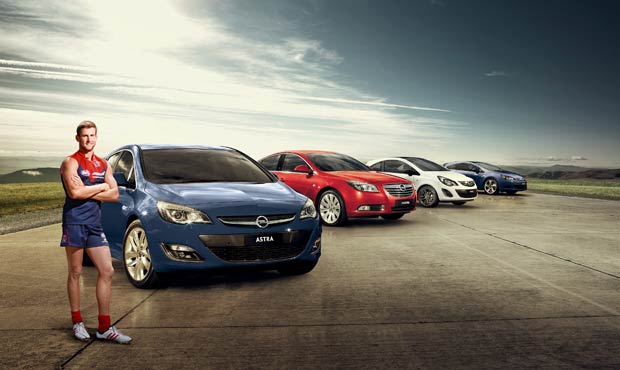
The alternative title for this post is “Opel prove how hard it is to build a new brand presence”.
Opel preceded its arrival here in Australia (by six months!) by sponsoring one of our prominent football clubs. By the time the season finishes at the end of September, Opel’s sponsorship of the Melbourne Football Club will have lasted twice as long as their cars did.
Opel say they were struggling too much in this competitive environment and the pressure on prices is only going to increase now that the Australian dollar is starting to fall (as an aside: it took two-three years of a strong Aussie dollar before companies started dropping their prices. It’s taken just two months of a falling dollar and the first article on rising prices came out today).
There are a few lessons to be learned from this.
First, even if you’ve got good cars, which Opel has, it’s not easy launching into a new market. Opel had plenty of ads, even here in little old Tasmania, but they sold less vehicles than Saab did (in a good year).
Second, even if you’ve got 150 years of history, your brand means little to people who don’t know it. If you don’t go in with resources for a long haul of brand building, you’re not going to build your brand. That makes so much sense written down that I’m amazed that the MBA’s at GM don’t get it.
Third, GM have tried to ram a few brands down Australian throats with little success. Hummer died in Australia even before it died globally. A few cashed-up bogans (rednecks) bought them for novelty value but that’s as far as it went. GM set up a Premium Brands division here about 5 or so years ago with the idea of that branch covering Saab, Hummer and Cadillac. None of those brands exist here anymore and two of them don’t exist at all.
You can’t ram a brand into a country like Australia if there’s no demand for it. Australians like the Astra, Opel’s most prominent model, but GM could have quite easily sold it here as a Holden. That it might have clashed with the Cruze shouldn’t have been an issue (Honda sold two versions of the Accord here for years – internal choices aren’t a bad thing).
Will GM learn? It’s unlikely. That involves admitting a mistake and taking ownership of it. GM are much more comfortable just wiping slates clean and washing their hands (usually with other people’s money).
——
A final postscript – I didn’t know this but it makes complete sense: My mate AlAero tells me that Opel’s admin staff were working out of the same offices that Saab’s staff used to occupy.
Here’s another quick nugget from my return trip with my Saab 9000 Aero.
The Saab 900 Enduro is a bit like Bigfoot. Everyone’s heard of it, but 99.9% of the people – myself included – have never seen it. Last week, my visit to Saab Salvage in Sydney changed all that. I didn’t get to see an Enduro running, but I did get to set my eyes on not one, but TWO Saab 900 Enduros.
Well, one-and-a-half.
For the unfamiliar, the Saab 900 Enduro was a special edition put together by Saab Australia just after the Saab 900 was introduced. They took a standard 900 Turbo, added some outrageous fibreglass wheel arches, special graphics, Simmons wheels, a special gauge pack in the cabin, substantially tweaked suspension, water injection and an uprated wastegate.
The Enduro below is the real deal and it’s under reconstruction at the moment. Steve plans to get it running and use it in club events and regularity type rallies – events that will keep it moving and get it seen without taxing it too much.
OK, it’s a little messy and crowded in there at the moment, but that’s life with a rebuild. Steve does it right and this car will eventually look like it just came out of the showroom.
You can see the interior below, which is pretty stock standard for a 900 Turbo of the era. The only change being the extra gauges at the top of the center stack, detailed in the photo underneath.
The Enduro features some funky graphics using the Turbo font first used on the Saab 99 Turbo. Steve’s already got new graphics made up and ready to go.
——
The car below is best referred to as half an Enduro. And with that, let me make it clear, this is NOT a real Enduro, though of all the stories that might surround the real Enduros, this car would match any of them.
As mentioned earlier, the Saab 900 Enduro was a limited edition. My understanding used to be that only 12 of them were made, but the 900Enduro website states that there were just 11 of them, with the 12th being a reserve body kit only.
Somehow, a Saab dealer in Adelaide got hold of the fibreglass moulds used for the Enduro body kit and started advertising that he could convert 900 Turbos into Enduros for $5,000. His choice of a two-tone 900 as his demonstrator was interesting and I think it actually looks pretty good.
The dealer’s offer came to the attention of the powers that be at Saab and the following proposition was made: he could continue offering his own Enduro kit, but it wouldn’t be as a Saab dealer. Or, he could keep his dealership status and ditch the custom work. He stayed a Saab dealer.
There’s an interesting story surrounding Steve’s acquisition of this car, too. A friend of his let him know that one of the motoring websites here in Australia had an old Saab V4 for sale. It was while Steve was checking out that ad for that car, that he noticed the ad for this Enduro. The owner didn’t really know what he had and was preparing to destroy the car. Thankfully, Steve was able to pick it up and bring it back to his yard in Sydney.
I hope to get a ride in a working Enduro one day, with a video camera along to record the experience. I’m looking forward to Steve finishing the work on these two, one day in the future.
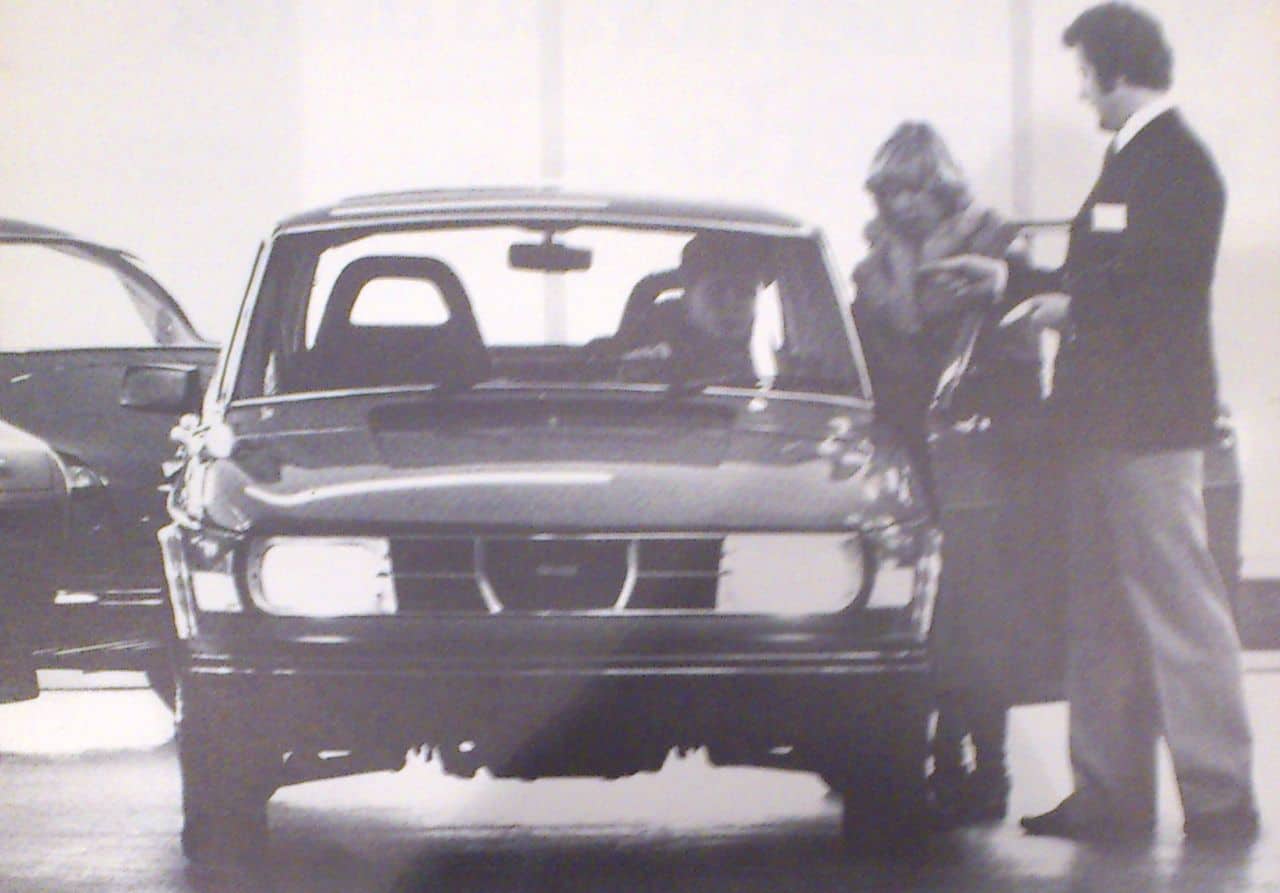
While bringing our Saab 9000 Aero back from Sydney, I called in on Bill and Jane P, some friends and Saab owners who live in southern New South Wales. When Bill’s Saab dealer closed a few years ago, Bill ended up as the beneficiary of a whole bunch of Saab promotional and technical material.
Bill showed me through the collection and this brochure, despite its evil-looking title page, stood out as something cute from the period. I thought it’d be fun to share here.
Please excuse the crappy phone-camera photos. I hope the writing is legible.
The images are clickable for enlargement if required (click once to isolate the photo and then click on the expand button in the top-right corner of the isolated image to enlarge to full size).
There’s no internet so teenage petrolheads in Australia all read Wheels magazine to get their automotive kicks. There are all manner of car stories, interesting or otherwise, but as interesting as the stories might be, they are matched or sometimes outdone by the advertisements slotted in between them.
There were few ads more exotic than those for Alpine car audio. The reason is easy to see:
—
Anything featuring a red Lamborghini was instant automotive porn for a teenage revhead. It wasn’t just the teenagers that were captured by this, though. Alpine built a legacy that lasts to this day by virtue of their partnership with Lamborghini.
Saab also had audio provided by Alpine in the 1980’s. The same little clear/green buttons that looked so fantastic in Ferrucio’s finest were also available in the Saab 900 (in Australia – SW). The inclusion of Alpine audio was a wonderful bonus for Saab fans but once it became known amongst a certain group of undesirables in society, it also became a problem.
Steve Emanuel was working for a Saab dealership at the time. He now runs Saab Salvage, a recycled parts business in Sydney and I caught up with him last week when I picked up our 9000 Aero. I was eyeing off some Alpine units in his office when he told me about the problems they had with these stereos at the time.
The Alpine was a very desirable unit thanks to its great performance, sleek looks and, of course, its tie-in with Lamborghini. Saab cars both on the street and in dealerships became a target because of this. Alpine stereos became targets and seeing as there were a lot more 900s than there were Countaches on the road, you can guess which model became the focal point for break-in and theft.
The worst single instance was one guy caught with 6 stereos he’d pinched from dealer cars that he broke into. But there were many, many individual thefts. Replacing stolen radios and damaged dashboards was Steve’s most commonly completed task for a certain period of time in the 80’s.
Alpine audio made Saabs a target and Steve mentioned that at one point during those years, Saabs were considered the biggest automotive insurance risk in Australia.
The unintended consequences of an excellent advertising campaign.
You really do have the bug. Give us a run down on the model code names, specs and years? Know very little about this little car…liking it more and more myself.
Yes, I do have the bug.
Sadly, it’s an intellectual bug only because I’ve never actually driven one. The Fulvia has come to my attention through a combination of temporary availability and video. I want one because one was available for sale and I liked what I saw when I checked them out.
Exterior and Interior
The Lancia Fulvia was built in three series from 1963 to the mid 1970’s. The Fulvia also had three body styles. The first Fulvias were Berlina four-door sedans but most of the interest these days is around the Coupe and the Sport models. The coupe was designed in-house at Lancia and the Sport had a completely different body styled by Zagato. The Sport sounds exotic, but the coupe is the one to go for IMHO.
Lancia Fulvia Berlina
Lancia Fulvia Coupe
Lancia Fulvia Sport (Zagato)
—
The Sport body by Zagato can be dressed up to look quite sporty, but IMHO looks a bit bloated. The coupe body was the biggest seller and it proved to be a wonderfully versatile design. The coupe can look either classy or quite mean depending on how you want to set the car up.
All three cars had the same basic interior design, which is simple, sporting and quite elegant in the way that it seems only 60s and 70s cars can be.
OK, I cheated a little bit there.
That interior has been fitted out for rallying with its timing gear on the right and the Sandro Munari steering wheel – one of the best looking steering wheels I think I’ve ever seen.
But that’s part of the beauty of the Fulvia – it’s so suited to being both classically beautiful and very sporty – both in the way it looks and the way it drives.
Here’s a more standard interior from a later model Fulvia in RHD:
—
The Fulvia is a compact 4-seater whether in 2-door or 4-door version. The rear seat is small and there’s not much room for cargo in the boot, either. Most of the boot space is taken up with the spare wheel, actually.
But who cares about back seat passengers or cargo? This car was made to be driven!
——
History
Lancia’s one of those companies that a guy of my generation probably won’t know much about unless they’re a bit of an anorak. Brits and other Europeans might be a bit of an exception because Lancia sold the vast majority of their vehicles in the European market.
My knowledge was limited to the Beta, which sold here and which I still quite like in terms of styling. Of course, I’d heard of the Stratos and later, the Delta Integrale, but I still didn’t appreciate the full measure of Lancia’s success as both an innovator and as a motorsports champion.
Two things slowly opened my eyes.
The first was the knowledge that Lancia was one of Victor Muller’s favourite historical marques. I’m led to believe he own a number of them. Victor is quite obviously a man of means with a flair for items of some substance. It put an asterisk next to Lancia for me as a brand that I had to look into a bit more at some stage.
The second was the Top Gear special story on Lancia. I included it in a previous post about the Fulvia, but I’ll put it here again for those who still haven’t seen it. Take note of the number of significant firsts this company achieved as well as their considerable motorsport success.
——
Lancia had achieved a fair bit of success with the Flavia medium sized car when the company decided to make a more compact car, which became the Fulvia. The Fulvia debuted in 1963 at the Geneva Motor Show and the Coupe was introduced in 1965.
The Fulvia Coupe formed the basis of Lancia’s assault on the world rally championship, and what an assault it turned out to be. Lancia won the 1972 International Championship for Manufacturers, the predecessor to the World Rally Championship with the Lancia Fulvia HF (noted flying Finn and Saab works driver, Simo Lampinen was at the wheel of that car).
Lancia then dominated the initial years of the World Rally Championship with manufacturer wins in 1974, 1975 and 1975 with the Lancia Stratos. They returned to the winners podium in 1983 with the Lancia 037. In 1987, Lancia had the first of six consecutive WRC titles with the mighty Delta Integrale – the most successful vehicle in WRC history.
All that success began with the Fulvia.
——
Specs
I’ll deal with just the coupe here, as that’s the model of main interest.
The Fulvia Coupe was made for around 10 years and was available in several different specifications over that period. The following is taken from Wikipedia but resolves quite well with other independent sites.
—
Coupe – A compact two-door introduced in 1965, designed in-house by Piero Castagnero. the coupe uses a 150 mm (5.9 in) shorter wheelbase along with the larger (1216 cc) or 1231 cc engine producing 80 bhp (60 kW) at 6000 rpm.
Coupe HF – A competition version of the coupe introduced later in 1965, fitted with a tuned version of the 1216 cc engine producing 88 bhp (66 kW) at 6000 rpm, and fitted with aluminium bonnet, doors and bootlid together with plexiglass side and rear windows.
Rallye 1.3 HF – An updated HF with a new 1298 cc engine with 101 bhp (75 kW) at 6400 rpm..
Rallye 1.3 – An updated coupe with the 1298 cc (818.302) engine with 87 hp (65 kW) at 6000 rpm.
Rallye 1.3S – An updated Rallye 1.3 with a new 1298 cc (818.303) engine producing 92 hp (69 kW) at 6000 rpm.
Rallye 1.6 HF – The evolution of Rallye 1.3 HF with a 1584 cc engine producing 115 hp (86 kW) at 6000 rpm. Other changes included negative camber front suspension geometry, with light alloy 13 inch 6J wheels; and a close ratio 5 speed gearbox and wheel arch extensions.
Rallye 1.6 HF Variante 1016 – Also known as Fanalone – The most-powerful Fulvia with a 1584 cc engine producing up to 132 hp (98 kW) depending on tune. This was the version used by the works rally team until 1974, when it was superseded in competition by the Stratos HF. 45mm bore Solex carburettors were used tht were later replaced by 45DCOE Webbers. The cam cover had special blue stripe over yellow paintjob (HF cars had just yellow paintjob). Some sources indicate the easiest way to distinguish this version is by 2 triangular holes between headlamps and grille.[4]
Coupe 1.3S – 2nd Series – Face-lifted body and new 5 speed gearbox with 1298 cc (818.303) engine producing 90 hp (67 kW) at 6000 rpm. Larger Girling calipers and pads replaced the Dunlop system fitted to 1st series cars.
Coupe 1600HF – 2nd Series – Face-lifted all steel body with 1584 cc engine producing 115 hp (86 kW) at 6000 rpm. The bodywork was changed from the standard 1.3 Coupe to incorporate ‘flared’ wheel arches (replacing the extensions used on 1st series HFs). ‘Lusso’ versions had extra trim and were fitted with bumpers and were mostly produced for export.
Coupe 1.3s Montecarlo – Replica of 1972 Montecarlo Rally works car livery with 1298 cc producing 90 hp (67 kW) at 6000 rpm. This version used his own bodyshell with flared wheelarches similar but different to the 1600HF bodyshell, ‘Lusso’ interior fittings (bucket seats etc.), fitted with front fog lamps and no bumpers; but were fitted with the standard 4.5J steel wheels of the standard 1.3 Coupe.
Coupe Fulvia 3 (3rd Series) – Updated Coupe introduced 1974 with a new design of seats incorporating headrests and new white faced instrument dials with an updated range of trim colours, materials and options. Mechanically the same as the earlier 1.3s S2 Coupes except for the addition of emission control on the solex carburettors.
Coupe Fulvia 3 Safari – A limited edition of the standard Coupe without bumpers, special trim, exterior badges on the bonnet and on the bootlid and also special numbered plaque on the dashboard.[5]
——
Power isn’t this car’s strong point, as you can tell. The most powerful model had just 132hp and those models, known as Fanalone, are the ones that sell for the big bucks these days.
The car’s strong points are handling, engineering and styling. Fulvia owners that I’ve talked to will talk about these qualities at length and with relentless consistency. Lancia built its reputation in preceding decades on well engineered, well constructed and very stylish cars. Clarkson’s point about the Fulvia being more expensive at release than an E-type Jaguar come to mind, such was the expensive, hand-built nature of the little Lancia.
The Fulvia is known for being very reliable, even for such an old vehicle. There are plenty of them still being used as daily drivers. There’s a good enthusiast community around the world for them, too. A lot were sold in the UK so there’s even a ready RHD market and parts supply is pretty good for such an old vehicle.
The Fulvia is quite rare here in Australia. I heard from one source that there were only a couple of hundred of them brought here. Sales and values are therefore a little hard to judge, but I think it’s not beyond reason to expect a basic 1.3S or Rallye in restored condition to sell somewhere in the order of $20,000. Sellers of HF models have been asking amounts over $50,000 in recent years, but I’m unsure as to how many of them actually achieve this figure. A good condition Fanalone would nearly double that price in the right market.
——
Video
These video were in one of my previous Fulvia posts, but they’re worth showing again.
Enjoy.
—
Petrolicious, as always, do it right…..
—
Overview of second hand Fulvias in Britain (old video)….
The Lancia Fulvia I was tracking on Ebay sold last night for ,250. I’d set myself a ceiling of $12,000 so someone else has ended up with what is hopefully a wonderful example that’s full of potential. It’ll take some work based on the photos I saw, but it’s a good start.
On top of my concerns about the car, I also have concerns about the auction bidding. Take a look at the bidding progression, at right (click to enlarge). There were only two bidders. One had a purchase history and the other was a newly created identity. The new ID kept pushing the price up just a little then backed out as the auction drew to a close. Does that feel legit to you?
Given the less-than-stellar vehicle description, this bidding pattern is quite suspicious.
——
Regular visitors here will know that I change vehicles like I change my underwear and I’m constantly window shopping for something new.
I have to say I haven’t been this interested in a new vehicle in ages. This Fulvia has slipped through my fingers and despite my hesitations about the seller, I think it could have been a good car. I’m going to keep looking for one and given their relative affordability in other markets, I won’t be limiting my search to Australia.
This is a cracker of a little car with a wonderful backstory, design to die for and lusty small car performance. I’d be proud to own one. As long as it’s red 🙂
Earlier this year, a new Chinese car company called Qoros made their international debut at the Geneva Motor Show. Qoros have already picked up a number of staff members from Saab and as hinted at Geneva, they’ve also picked up a bit of technology that was intended for Saab as well.
The second conversation mentioned the first company I’ve heard of that will use eAAM’s electric rear drive system – the one that would have debuted in Saab’s Phoenix-based 900.
The company is Qoros, a Chinese-based but very much Europe-focused branch of Chery…..
The development of advanced engineering innovations is a core strategic activity for Qoros and the Cross Hybrid Concept features an innovative hybrid drive system. Intelligent control software ensures seamless transition between petrol-engined front-wheel drive, electric motor rear-wheel drive, and an all-wheel drive mode employing both power units together.
They didn’t mention it by name back then, but it sounded all too familiar to a Saab fan.
Today, eAAM have confirmed the hunch with a press release:
——
DETROIT, MICHIGAN- July 9, 2013 – A commitment to the advancement of hybrid and electric driveline systems has secured AAM a new driveline systems contract featuring e-AAMTM technology, with Qoros Auto Co., Ltd. (Qoros).
Qoros, an automotive manufacturing company headquartered in Shanghai, China and a joint venture between Chery Automobile Co., Ltd. and Israel Corporation, will feature e-AAMTM technology on a future model year Qoros vehicle. This vehicle will be produced in China for both the Chinese and European automotive markets.
e-AAMTM hybrid and electric driveline systems consist of an electric drive unit, power box unit with an electric drive control module and a proprietary control strategy and software designed for traction and hybrid controls functionality. e-AAMTM technology provides a cost efficient solution with market leading power density, a high degree of modularity and a full scope of controls and software designed to provide significant benefits to consumers. These features include better fuel efficiency, reduced CO2 emissions and improved safety, ride and handling performance.
“We are extremely pleased to initiate a partnership with Qoros,” said AAM President & Chief Executive Officer, David C. Dauch. “Our investment in driveline systems for hybrid and electric vehicles has allowed us to develop an innovative patent-protected product portfolio, enabling AAM to play a leading role in this important new driveline product segment.”
——
Next thing you know, they’ll be calling it the 9-3 or 900!
Kudos to Qoros for recognising some good tech when they see it. It’ll be interesting to see the reviews when an eAAM car is eventually released.