Just a quick update on my search for a good Lancia Fulvia.
The red one from northern Australia has been ruled out. I did get some feedback from the seller last night (finally) and it raised more questions than it answered. There IS a good list of spare parts that come with the car so anyone looking at it who’s willing to reconcile the irregularities that I can’t figure out from a distance could well land themselves a good car.
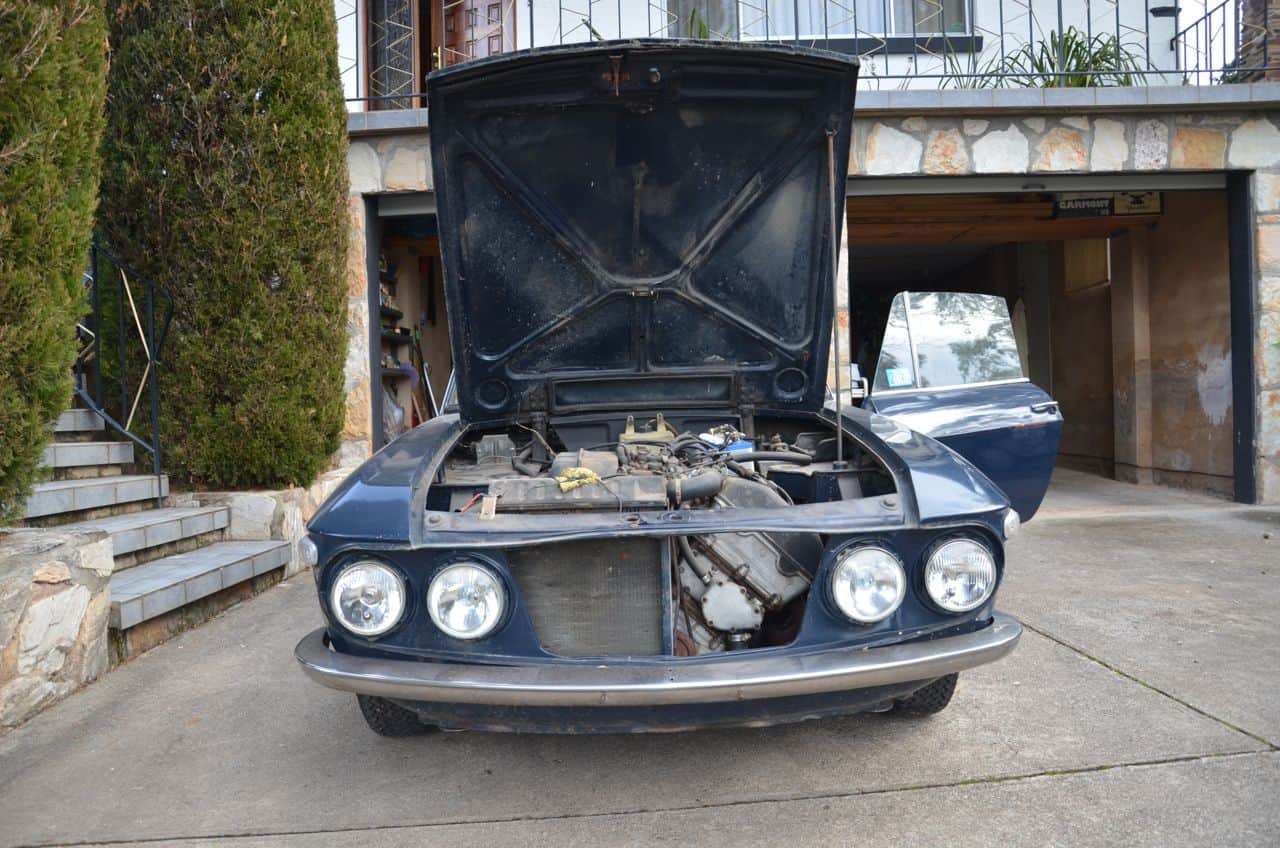
The blue car from Canberra is still available and the seller has received several offers, including a standing offer from me. All offers are around the same mark. I’ve said that mine’s conditional upon establishing that the car is indeed drivable.
Why?
As mentioned earlier, the car hasn’t been run for around 10 years. The seller is very, very confident that that isn’t a problem because the engine was perfect before it was stored. I still want to be sure.
And as a practical matter, the car has to be able to drive and stop as a condition of carriage with a freight company.
I don’t hold out a lot of hope for the blue Fulvia. I think some of the interested parties (and there are apparently quite a few) will have less stringent conditions than I have.
I reckon I’ll give it another week and make my own decision then. It may just be that I have to put the whole Fulvia idea aside for some time in the hope that one will become available closer to home one day.
Even I’m capable of some common sense, even if it’s only occasionally.
I’ve been asked about the Saab 9000 Aero we bought a few weeks ago. How’s it going? What’s it like? Can we see pictures?
The answer is ……. well……. complicated.
First, let me get the negatives out of the way. They are significant, annoying and even a little embarrassing. This is not the post I wanted to write about this car, but I’m going to write it as both a reminder and as a warning.
Negative #1 – The engine.
There’s no elegantly loquacious way of saying this, so I’ll just say it: Our car doesn’t have an Aero engine.
An automatic Saab 9000 Aero should have a B234L engine and ours has a B234E engine. The engine was changed at some stage and an Ecopower engine was installed. No, I didn’t know this until I had the car inspected for registration and yes, I’m quite pissed off about it. Combine this key incident with all the smaller incidents noted below and it’s fair to say that I’m a little less happy than I should be with what is actually quite an enjoyable car. Right now, it’s tainted.
Right: Something here is not as it should be.
Didn’t I notice this as I drove it home from Sydney? No.
The car does have a new turbo, a TD04, which spools up quicker. Combined with a manual boost control valve, the car does deliver better performance than a regular Ecopower 9000 (we also own a 1994 Saab 9000 CS with the standard Ecopower setup). It’s not as smooth running as I imagined an Aero should be. Not by a long shot. But I didn’t twig to the engine being a transplant.
This is not as bad as it could be, however, and that’s because our car has an automatic transmission. If we’d bought a manual 9000 Aero, I wouldn’t be writing this publicly. I’d be getting legal advice. As it is, I’ve already invested so much in the car that I’ll say my piece here and do the remedial work at as little cost as possible.
The difference between the B234L that our car should have and the B234E that we’ve got is minimal and restricted primarily to software. I can make the changes very economically and I’ve already had a chat with my mates at Maptun about doing that. It’ll be quite cheap and very, very effective. We plan to keep this car for a long time so re-sale’s not the issue but when that time comes, our car will have Aero+ performance, despite not having a genuine Aero engine.
On a matter of principle, however, I maintain my anger. I was a very up-front buyer in this transaction and I acted in good faith every step of the way. I checked out and trusted the reputation of the seller and acted in such a way that respected that reputation. I feel severely let down by the seller in that regard and have written to him with this engine issue and others (yes, there were other issues) squarely in the gun. No response so far, but we’ll see if that changes.
Learn from my mistake – even if the transaction is for a low value, as this one was, if it’s a specific model car and the type of equipment is important, take time to make sure everything is as it should be. Even if you know/trust the seller or if people you know/trust have a relationship with that seller, make sure you’re getting what you think you’re getting.
Right: The new turbo, a savings grace. The tell-tale engine number is just out of shot.
Our car will turn out OK. Better than OK. But the experience has left a slightly bitter taste so far, which is unfortunate.
Note: I’m quite sure that the seller is a decent bloke and that what we’re looking at – at least in some small part – is an oversight of disclosure rather than an attempt at genuine hoodwinkery. That’s why I’m not naming names here. I’m quite sure that the engine was replaced for no reason other than it was necessary to do so. Why would you with a B234L?
What I’m angry about is the lack of disclosure, oversight or not. An engine is at the heart of a car’s character and despite the similarities between my engine and the original engine, a buyer deserves the decency of being told what they’re getting, especially when it’s one enthusiast to another, even if they don’t know each other personally.
I’ll say it again – please learn from this and make sure you’re getting what you think you’re getting. This is an embarrassing and annoying development for me, but I’ll make it right and if someone learns from it, that’s a good outcome from a bad situation.
—
Negative #2 – The Value Maxim.
I have had a theory about used cars for a long time now. I wrote about just a few weeks ago when talking about the Lancia Fulvia. The theory goes like this:
Any given model of vehicle in good condition is worth X dollars. If you buy it for X-minus-Y dollars then you’ll usually spend Y dollars (at least) getting it up to your desired condition.
Such is the case with our 9000 Aero. I thought I could beat my own theory, but I was wrong. A good 9000 Aero in Australia is worth around $7,000 and we got this car for $3,300. But even before I picked it up in Sydney I had to get Steve at Saab Salvage to do around $1,200 worth of work to it. (Note: unlike the engine situation, I checked all this out before completing the transaction and authorised the repairs).
There were various bits not working or simply not present. Things like the electric motor on the driver’s seat, which is essential as both Mrs Swade and I will drive this car regularly and I’m around 8 inches taller than she is.
The washer bottle needed replacing. The central locking wasn’t working on one of the doors. There was a small plug leak off the distributor. One sun visor was hanging down. The A/C compressor needed replacing. The list went on…..
There are still a few items from the list that are yet to be done. The steering rack, which works perfectly but has a small leak, will need attention eventually. The front bumper also needs a little bit of cosmetic work (plastic welding and paint) but I’ll live with those for a little while.
We could have got another 6 months out of the tyres, but I figured it would be better to replace them while I was in spending mode. And I desperately wanted a functional, modern stereo, so that went in a few weekends ago.
Bottom line, we got the basics of a good car at a very good price but there’s been a lot of small things and a few bigger things to address. We’ll probably go just over X dollars by the time it’s all fixed up, but we’ll have a very well sorted Saab 9000 Aero by then – the perfect car to do our East Coast of Australia drive later in the year.
The lesson learned – Swade’s Used Car Theory ™ holds up once again. Genuine bargains are rare and any car worth having will cost you X dollars to acquire and fix.
To the good bits, then…..
—
Even decidedly mid-level modern cars have passed the best 1990’s cars in terms of performance and efficiency. They did that some time ago. The progress has been amazing. You can get a Hyundai at bargain price that’ll run rings around some of our favourite cars from 20 years ago in terms of technology, mechanical flexibility, comfort, safety and competence.
The thing I’m coming to love about the 9000 Aero, however, is that you get what is still genuine performance along with quintessential Saab styling and functionality. And despite what I wrote in preceding paragraphs of this article, you can get all that authenticity for a wonderfully affordable price.
We’ve got two front airbags (that we hope to never use), ABS, an electric sunroof, cruise control, power steering, power seats with memory, incredibly good looking seats, incredibly comfortable seats, faux woodgrain, all the radio stations in Hobart (not to be sniggered at given the radios on our recent cars), iPod/iPhone control, Bluetooth, digital climate control, massive storage space in the rear, Super Aero wheels, PLENTY of usable power and all of that wrapped in a wonderful looking, still-contemporary body.
In short, we want for nothing.
We’re very experienced with the 9000 as a model. We’ve had a 9000 of one variety or another for the last five or six years. The reason I’m so happy to buy another one is because they’ve been very reliable, they eat up highway miles like a cookie monster and they’re big enough to carry as many artist’s frames as Mrs Swade needs.
This particular 9000 is our first Aero, a model I’ve wanted to own for a long time now. I can still remember a story on Saab a few years ago wherein former Saab Designer, Bjorn Envall, said that the Saab 9000 Aero was probably the best Saab the company ever made – “the rest was compromise” (his words, not mine). That’s always going to be a subjective notion, but the 9000 has been our favoured family Saab for a long time now and as much as I like the 9-3 and 9-5 (which I like a LOT, especially in wagon form), I’ve never felt compelled to go more modern than the 9000 for our own needs.
The main differences between the Aero and our previous CS that I appreciate most are the engine (yes, even this engine) and the interior.
We’ve only had it a few weeks, but I drove it more than 1,000kms to get it home. It was a highway star, as expected, and it has proved itself very tractable around town, as well. The power isn’t huge off the line, but then that’s not the point with the 9000 (or any Saab, to be honest). The TD04 turbo is doing its job nicely and as with all 9000 Aeros, the power to accelerate when in motion is dramatic and intoxicating. It’ll only improve when I bring that engine up to spec.
I don’t want to sound superficial, but the good feelings you get as soon as you open the doors and look at those Aero seats are more than enough to justify the purchase. The car makes you feel like a king even before you sit in it. As an aside, the seats aren’t the most comfortable seats ever, but they’re very, very good.
I’ve always been a fan of the 9000’s interior layout and in the higher specification that comes with the Aero, with automatic climate control and woodgrain, it’s even better than what we were used to with our plain-Jane CS. Our steering wheel has a bit of pitting around the leather rim so I’d love to replace that with a 1/2 leather, 1/2 wood wheel from the Anniversary model. They’re getting hard to find, but it’s on my list.
The bottom line…..
Despite my experiences immediately after buying this car, our 9000 Aero has now got everything I wanted in a 9000 in terms of looks and equipment. I’ll sort out the engine and performance side very soon and I’m quite confident that this car will be providing very pleasurable family motoring long after my negative feelings have subsided.
That’s the good thing about a car like this. The character, comfort and competence built into it from the factory lasts for the life of the car. Memories and feelings, depending on the individual, are temporary.
I’ve learned my lessons. I’ll move on and enjoy.
——
Apologies for not having better photos. I’ve just got the car Tassie registered and will get some better shots soon. Promise.
Yesterday I asked you opinion on which car I should buy next. There were four options. Here are the poll results, from most popular to least popular.
52% of you think I should buy the hot looking Alfa Junior with the 2-litre transplant.
31% of you think I’m an idiot.
11% of you voted for the blue Fulvia, which needs a full restoration.
6% of you voted for the red Fulvia
——
I’d like to say I was encouraged by the vote, but it’s pretty clear I’m almost on my own with regard to appreciation for the Fulvia. And maybe I was a little hard on my description of the red one, which is probably my favoured alternative.
I’m unsure as to what will happen here.
The Alfa is almost too nice for me to buy. That won’t make sense to some, but it makes sense to me. I need something I can improve and make my own. That Alfa’s so nice it’s hard to imagine me making a positive difference to it. Plus, it’s a little more than I want to spend up-front on a car (if I can help it).
The red Fulvia seems difficult to get information about and the blue Fulvia simply needs too much work for the price that’s being asked. Plus, whilst I’m still dead keen on getting one, both Fulvia’s do break one of my own automotive maxims (to be discussed later in the week).
Thanks for your participation, even if you think I’m an idiot 🙂 . It’s nice to see that lunacy can be recognised for what it is. I don’t pretend that my automotive decisions make sense to anyone but me.
It’s a fairly notable model in Saab’s history as it was made in late 1984 as one of the first 16-valve cars. I couldn’t confirm it, but a story told to me by someone around at the time was that it was actually one of the press cars bought into Australia at the time of the 16-valve’s introduction. Those cars were supposed to go back to Sweden but let’s just say that stock control in the mid-1980’s wasn’t what it is today. Some of the cars were sold and apparently this might have been one of them.
I sold the five years or so ago after a relatively short period of ownership. It had an intermittent problem that would see it just cut out and die for no apparent reason. I gave the car to my mechanic for a week and told him to drive as if it were his own car for the week. It never gave him a problem. A friend of mine had it for a couple of months while I drove a Subaru WRX. He had no problem with it, either. But it died on me several times, once on a 110km/h highway with a friend in the car on the way to the airport.
I couldn’t rely on the car and no-one could diagnose what was wrong with it. So I sold it.
That was five years ago and last Friday, I saw the car on the road in a suburb just south of Hobart. It’s still owned by the same guy I sold it to. We were heading down the same road so I ended up waiting just behind the car at a set of traffic lights. I turned off my radio, wound down the window and listened to that 3-inch exhaust amplifying the traditional Saab 16-valve burble. There’s not a sound in the motoring world that’s quite like it.
Tonight, coincidence or otherwise, the guy contacts me via social media asking to connect. I connected and sent him a short message about how I saw the car last week and I’m glad he’s still enjoying it, etc. I haven’t heard back from him yet.
What if…….
I know he’s put the car on the market once before. He had just replaced the engine, was asking too much and the car didn’t sell.
I don’t know how he found me via social media, but what if he’s interested in selling the car again and figured I might like to buy it?
Would I?
——
I’ve bought my own car back once before; my first Saab Turbo, a 1979 Saab 99 Turbo (built in December 78).
I loved the car but I had a real crush on the Saab 900 model, so I sold the 99 and bought a 1986 Saab 900 Turbo. I remember having both the 99 and the 900 sitting out front of my house and thinking “what the hell am I doing?”. The 900 was a flash in the pan compared to the love I had for that 99 Turbo.
A few years passed and the 99T’s new owner eventually needed to get something more modern. He’d put a new exhaust on it, a second-hand gearbox and a new windscreen. The price was very right, so I jumped at the offer to buy it back.
I drove that car for another two or three years until the gearbox gave out. I enjoyed every minute of it and have actually tried to buy the car for a third time (or it’s pigeon pair brother, both now owned by a friend who doesn’t want to sell).
There was something very special about that car. It would need a hell of a lot of work but it’s still one that I would like to own again, even now.
——
The 900?
I didn’t have great experiences with that car because of the intermittent narcolepsy issue. I recognise how much of a classic model it is, but I don’t have anywhere near the connection with that car as I had with the 99.
Thankfully, I had a wonderful 900 when I was living in Sweden. It cemented my love for the 900 model. I’d respected the model previously, but I hadn’t had an experience that led me to love it.
This whole article is theoretical, of course. The owner contacting me could just be because that’s what you do on social media – contact people. But seeing the car last week and having him contact me today did make me pose the question to myself: would I buy it back if he offered?
I’d certainly take a look at it. I’m much less certain that I’d be tempted to go back there, though, even if a flat-nose 16V is a relatively rare beast.
There’s a lot of text and a LOT of photos here. It’s basically me trying to figure out my own thoughts on these two Australian Fulvias. Feel free to climb inside my mind.
I’ve been looking at Fulvias for a few months and I’m coming to a point where a decision is warranted – which one do I pursue?
The situation has changed a little since I last wrote about Fulvias. Another car has come on to the market here in Australia. We’ll it’s returned to the market. This car was sold on Ebay a few weeks ago but the sale fell through so it’s now available once again.
With two Fulvias available in Australia, the overseas options are temporarily shifted to the sidelines. So let’s take a closer look at these Australian cars and perhaps you can help me choose.
——
1968 Fulvia in Red
I was watching this car when it sold on Ebay a few weeks ago. I didn’t bid on it because there were a few things that concerned me at the time. First, the seller told me a couple of things on the phone that weren’t mentioned in the ad – like the fact that the spare parts would only come with the car if it reached a certain price. I didn’t think that was fair.
I had a friend take a look over the car and there were some things about its condition that weren’t mentioned in the ad, either. Some (possibly) questionable body work and a reasonable size oil stain at the bottom of the engine bay.
Back when the car was on Ebay, I mentioned on this site that I wouldn’t be surprised if the sale fell through because the car was not described correctly in the ad. It seems that’s come to pass so it’s back on the market again.
Lars (my test-driving friend) took a bunch of photos for me, which are included in the gallery below. I think the car will need some work but it’s basically OK. I’m more wary of the seller.
Here’s the first gallery of photos, the ones featured in the Ebay ad.
As with all these galleries, please click to enlarge.
It looks pretty sweet there, right?
It’s been done up to look like a HF rally car. It’s not a HF. It’s a regular 1.3 Rallye with a some flares, wheels and stickers. I’d remove the stickers but I’m happy with the flares and the wheels. In fact, the flares, wheels and steering wheel are very attractive items and they’re difficult and expensive to replace. That’s one of the attractions of this car.
It runs OK, too. My friend Lars had a chance to drive it. As expected, the engine note was totally addictive but it also got down the road OK. It’s not fast – Fulvias are more about carrying speed than acceleration – but it’ll keep up with traffic OK.
Lars also took some extra photos and sent them to me. These photos show the real condition of the car, the details that the photos from the ad don’t show you. In this collection you’ll see some cracks in the paintwork (not really OK, but indicative of some poor preparation or worse), some faint surface rust (OK), some cracks in some of the interior surfaces (understandable), some oily bits at the bottom of the engine bay (to be checked) and some missing window seals (not great).
—
My thoughts on the red Fulvia:
I like the stance of the car and the wheels, flares and steering wheel are very desirable accessories. It’s likely I’d look for those down the track anyway so getting them on the car from the get-go is a bonus.
The seats are from a Subaru but the seller says that he has the original seats and seat belts. The original seats need refurbishment.
It runs but the engine will need to be looked at to determine the cause of the leak.
I’m getting Lars and a friend of his (bodywork expert) to take another look, focusing on the integrity of the subframe. If it checks out, I think this’ll be a car that could be used with minimal attention while saving up for the fiddly bits that’ll need to be addressed down the track.
Having said all that, I’m quite wary of the seller and therefore I worry about what secrets this car might hold.
I reckon this car could be bought for a figure in the mid-teens. Around $15,000 should do it and that should also secure a bunch of spare parts that the seller has. The problem is that it’s proving hard to get that list of spare parts out of the seller so I don’t even know what to expect as far as the parts are concerned (the seller’s not the easiest bloke to deal with).
Thankfully I’m buying the car and not a relationship with the seller. It’s tricky, but I think the car’s worth the investigation.
——
1967 Fulvia in Blue
I told this car’s story on site here just a few days ago:
This Fulvia Coupe has an interesting history – if only it could be verified. The owner’s story goes like this….
He bought the car in the early 1980′s and it had been off the road for 5 years at that point. He’s never registered it, either. It still has the registration sticker from the last year it was on the road legally, in 1977. The owner was young and moved around a lot for work in country Victoria, so never got to work on the car as he wanted to. Time passed, he got married and had kids. The car has been sitting in his in-laws’ garage for nearly 15 years now in non-rusty Canberra. He claims the mileage – just 22,000kms – is genuine.
Unfortunately, none of this is documented. It’d be a great low-mileage history and I don’t doubt the truth of it when it comes from his mouth, but in order to form part of the car’s history when it passes from one owner to another, you need to be able to back it up. That old registration sticker is about as good as the proof gets.
I took a look at this car myself while visiting Canberra a few weeks ago. The car hasn’t been started in 10 years. It hasn’t been registered for 36 years!!
That means there’s a hell of a lot of work to do. The seller is a very nice guy who I’m not wary of at all. He swears black and blue that the engine is absolutely fine. He even mentioned some work being done to the engine but I didn’t get the timeframe for that. Bottom line, though, an engine that hasn’t run in 10 years is going to need some work and if you go into a purchase like this thinking otherwise, you’re kidding yourself. Then there’s the brakes, all the plumbing, the suspension, etc, etc.
Thankfully the interior’s in fantastic condition with the seats having accommodated absolutely no-one since they were refurbished some time ago. They look sensational.
Time for the photo gallery:
—
My thoughts on the blue Fulvia….
There’s a hell of a lot to like about this car and there’s a lot that frustrates me. It has a great backstory and low mileage, although that history is totally undocumented. You have to hope that it’s non-use over the years would come through as being genuine in the restoration.
I would hope that this car could be bought for under $10,000. There’s most likely $20,000 worth of work to be done. The seller wants a price in the low teens, but I don’t think that’s a fair representation of the work that has to be done.
What really appeals to me is the romance of this car. It’s basically been without any meaningful purpose for more than 30 years. The idea of bringing it to life again and learning about these wonderful cars in the process is a very, very appealing idea.
The downside is that that’s going to take some time and a whole lot of money. I’d like to drive something in the near term.
——
If you’ve got this far, congratulations and thankyou.
Both are genuine options and I need to figure out which one I’m going to pursue more aggressively this week.
I’m drawn by the blue car’s story and I’m wary of the red car’s owner, but then the red car is set up almost exactly as I’d like to set up a Fulvia myself. And while the red car will need attention to the body down the track, it’s basically a driveable proposition right now (albeit with a little oil leak to attend to). The blue car will need a lot of work but I think the payoff for that work will be huge – a genuine low kms car that you’ve basically brought back from the dead. I really like that idea, even if I lack the skills right now to bring it to fruition myself.
Before I really even knew what a Saab was, it was the off-beat nature of everything Saab-related that drew me in. This accessories catalogue from 1979 is a perfect example. Everyone of its 8 pages has something different, something destined to be retro-cool from that day it was made – even the ‘fashion’ page.
I got this brochure on my recent trip from Sydney to Hobart, when I picked up our 9000 Aero. My thanks to my mate Bill for letting me bring it home.
I don’t want to sound down about the future, but let’s just say the present ain’t looking all that great.
BAIC bought technology from Saab just as the company was being sold by GM in 2009. It’s four years later and their vehicle based on the Saab 9-5 – called the Senova – has just been tested by Autocar magazine in England. You would hope that with a solid working base and 4 years to remodel that things would be reasonably good. And parts of it are. Plenty of it wasn’t, though.
In short:
The drivetrain shows its age.
The equipment levels are great, but….
The materials are terrible.
That drivetrain is basically the same 2.0 and 2.3 litre turbo engines that Saab used in the 9-5 back in the old days. From 1997 onwards.
It was a great engine to drive in the Saab 9-5 back in the day, but running through the same old yesteryear 5-speed auto transmission, Autocar finds it to be a little bit dated. With the 9-5’s old competition offering 7+ speeds as standard nowadays, I’m not surprised.
Electronics are cheap and ubiquitous these days so it’s no surprise that the Senova comes well equipped with touchscreen infotainment and powered everything. They’ve even kept a large number of Saab cues including active head restraints and central ignition (using a button instead of a key, of course).
It’s the materials that get the biggest panning:
Internally, BAIC have taken a top-down approach: the further you go down, the worse the quality gets. On the top of the dashboard the soft plastics are fine, but once you get down to the central console much cheaper materials are in play and the door pockets are downright flimsy. Never mind competing with European executives, this doesn’t even come up to the standards of an Avensis.
The materials and the lack of driving excitement are the biggest concerns. BAIC has had four years with this car and those familiar with the 9-5 know that they had a pretty decent base to start with. That a car company, even a Chinese car company, couldn’t take that base and improve it to any measurable degree after 4 years doesn’t bode well for those of us looking forward to see what the next Saab-based vehicle will be like.
That car’s due to come along next year, after only a couple of years development time rather than four years. It’ll roll off the production lines in Trollhattan and have a Saab name attached to it. Thankfully NEVS have got more experienced people on board than BAIC, so hopefully their 9-3 based car will fare better than BAIC’s first effort with the 9-5.
It’ll need to. NEVS can’t afford a first review like this one from Autocar.
Just when I’m making some real progress on my Fulvia search, along comes this Alfa Romeo 1300 GT Junior to distract me.
It had a full restoration in the late 1990’s but is still looking remarkably good – and it’d want to given the $23,000 price tag.
The 1300 engine has been replaced with a 2-litre Alfa engine for some extra oomph. There’s a number of electrical and mechanical upgrades to go with that, too. The original 1300 engine is available to come with the car.
I’ve long had a Bertone coupe on my automotive bucket list but I was thinking more of a genuine 1750 or 2000. I love the single-light simplicity on the front of the Junior, though, and with a 2000 engine slotted in (check the clean engine bay!!), this car might just be the best of both worlds.
I’ve got two Australian Fulvias in sight right now and I’m going to continue chasing those for the moment. If they don’t lead to a conclusion in the near-medium term, however, then this Alfa looks mighty, mighty tempting. It’s certainly putting me off the trouble and complexity of bringing a Fulvia here from the UK.
So many cars. So little time (space, money, etc)….
Anyone who lived in Victoria in the late 1980’s would remember the ad in the video below, from the State Bank of Victoria. The line “It’s your money, Ralph” became as common in regular conversation back then as “Not Happy, Jan!” became in offices around the country five years ago.
——
The news broke last Friday (at 5pm, of course) that Opel would be pulling its cars out of Australia after a spectacularly short 12 months where they sold just 1500-or-so cars to actual customers.
It’s hard to comprehend just how massive a stuff-up this is or how the supposedly smart people running a global corporation could make it, but it’s HUGE and they’ve done it. And believe it or not, this is just the second part in an ongoing saga called Will-GM-Exist-In-Australia-Or-Not?
Right now, there’s plenty of money on both sides of the wager over whether or not GM Holden will continue in any meaningful way in Australia. There’s a very real fear that Holden will cease manufacturing in the near term and become an imports-only business selling cars designed somewhere and manufactured in cheap labour markets in Asia.
Successive Australian governments have already poured millions into Holden and the other two local manufacturers, Ford and Toyota. With Ford pulling the pin on local manufacturing in 2016 and Holden making noises about doing the same, the appetite for propping up the local industry with taxpayer funds has withered considerably. There’s a feeling amongst the people that these global companies are just sucking money out of the locals and it seems to be happening with monotonous regularity.
This latest episode with Opel only poses more questions as to which inmates are running the asylum at General Motors. Why would the Australian taxpayer want to put another cent into a company when the global parent could get a market investment like Opel so completely and utterly wrong?
—
It’s your money, Aussies.
Right: PM Kevin Rudd and Industry Minister Kim Carr check out their investment….
Australia has put billions of dollars into the car industry, more than $2billion going to Holden alone in the last 12 years. There’s another $2.3billion sitting in the Automotive Transformation scheme to be allocated over the next few years and with Ford pulling out of manufacturing in Australia, Holden is eyeing off a larger chunk of that pot, too.
Here’s a neat little table, courtesy of news.com.au
Government funding over the past 12 years (2001 to 2012):
Holden: $2.17 billion
Toyota: $1.2 billion
Ford: $1.1 billion
Annual average over the past 12 years (2001 to 2012):
Holden: $180 million
Toyota: $95.8 million
Ford: $87.8 million
Cars made locally in 2012:
Holden: 85,000
Toyota: 101,500
Ford: 37,000
Average taxpayer dollars per car built in 2012:
Holden: $2117
Toyota: $944
Ford: $2372
There were 20 Opel dealers in Australia last Friday and they learned about the brand’s fate the same day we all did. GoAuto reports that they’d each spent between $500,000 and $3million getting Opel into their showrooms with some of them building brand new facilities for the brand.
Dealers will get some of their investment back directly from Opel, which will reimburse for some vehicles, marketing materials, etc. But what about that extra space that some dealers have just built or are still in the process of building?
Right: An Opel dealership, today. It’s hard to tell if it’s still being constructed or dismantled. My mate Turbin doesn’t care. Thanks to his morning ‘vitamins’, he’s always happy.
What about the opportunity cost of two years wasted on just a year’s sales when that money could have been spent by dealers on a brand that was here for the long haul? Dealers who took Opel on had to sign up to a 5-year commitment. That’s why they put so much money into establishing their Opel presence on site. It’s more than reasonable for them to expect that Opel would honour their end of the deal.
Those showrooms, by the way, were built at Opel’s insistence. Either dealers allocated a significant/new building for Opel sales, or they missed the franchise. Nice.
——
It’s your money, Employees
First of all, let’s spare a brief thought for the Opel employees directly employed by Opel and working in Saab’s old offices here in Australia. There’s not many of them, but spare them a thought anyway because most will be out of a job now.
Same for the dealership staff employed to sell Opels that are no longer going to be sold. Some of them probably left decent paying jobs elsewhere to take up the challenge of building a new brand, one with a solid history within a global corporate giant. Oops.
Taking a wider view, however, and considering the rather large amounts of government assistance that Holden are both in receipt of and anticipating in the future, spare a thought for Holden’s vehicle assembly staff in South Australia.
Right: Holden chief, Mike Deveraux, contemplates some cash.
The company wants a whole lot of government money in one hand. It’s putting its employees in the other hand – and squeezing.
A new employment deal being offered to workers includes a 3-year wage freeze, reduced leave (at a time Holden tells you is OK), reduced breaks through the day, regular drug testing, short notice for what is effectively compulsory overtime if needed and the threat of termination for a vaguely worded ‘inefficiency’.
Some of these are fair enough. I wouldn’t like my car to be built by a guy with a massive case of the munchies. But if I were a Holden employee, sick already from an axe hanging over my head, this new deal wouldn’t have me doing cartwheels or star-jumps.
Given that Holden’s likely to cut and run from assembly in Australia in the next few years anyway, I’d advise Holden workers to hit the halls at their local TAFE (training institution, for you non-Aussies) sooner rather than later.
——
It’s your money, Americans
The numbers we’re talking about in the Australian context are peanuts compared to the taxpayer funded bailout that GM received from the US government back in 2009. But still, this is GM we’re talking about and what we see here is careless planning and reckless behaviour from a bailed out company in a market that’s probably not going to be on the American radar.
My American friends – this is what your too-big-to-fail company is doing outside your borders. This is how they’re managing their business, reorganised and propped up for more than a few years by your money. Opel is a German unit of General Motors and they money they’ve spent on production for Australia, dealerships in Australia, marketing in Australia and even sporting sponsorships in Australia, will be booked back to Germany. But it’s still all part of the big GM family.
You can make of that what you will.
——
I like the fact that we’ve got a car manufacturing industry here in Australia. I like the fact that for the last however-many years, we’ve had a selection of Australian cars that were designed for Australian conditions. I like the fact that the industry drives innovation and creates jobs. I don’t want the industry to go.
At some point, however, you’ve got to wonder when the companies involved will develop and manufacture viable vehicles. GM got itself into a deathwatch position at the turn of the century because it was addicted to manufacturing vehicles that people were buying in reduced numbers. They completely missed the move to smaller, more fuel-efficient cars and they nearly died as a company because of it. It’s killing the Australian industry, too, because buyers moved to small SUV’s or compact cars a long time ago and GM/Ford have insisted on building large sedans right through that move.
I know it’s not easy or cheap to change, but it sure beats the unending losses that lead to closures. Holden seem to be very adept at hoovering the wallets of the Australian government but the whole mess with Opel makes me wonder about the wisdom of propping up a company that’s run at a global level by a bunch of inebriated man-clowns.