In order to spice up my online advertising a little, I had the GTV6 detailed yesterday. After that, I called my mate Stu the Lens Genius and we went for a little photo-shoot. We took the car down to the docks here in Hobart and up to a treed area just outside town, called The Domain.
I think the car scrubbed up quite nicely and, of course, Stu’s talents behind the camera have brought out the absolute best in it.
It’s a cracker of a car and worth more than what I’m asking for it, but it seems the interest in 1980’s Europeans might be down a bit in these uncertain times. There has been some interest, however, and I’ve even got two parties interested in it right now, but they’re moving very slowly.
Fingers crossed that this facelift and photoshoot will reel in some more punters. The car’s worth every penny and someone deserves a GTV6 this good.
If you want to listen to this post in its original (and frankly, much more entertaining) form then go to Gareth Jones On Speed and download the latest podcast. This post is unashamedly pinched from that broadcast. I found it so fascinating that I had to adapt it for the written form here.
Gareth Jones On Speed is a podcast hosted by….. Gareth Jones and featuring a couple of his mates. One of them, Richard Porter, is a writer for the Top Gear television show and Evo Magazine. In the latest episode of the podcast he shared some rather amazing little tidbits about UK car sales in April 2013.
I’d like to share a few of his points and make a few of my own.
You tend to get used to your own vehicle market and think that most other western markets are similar to yours. Here in Australia, for example, the market is totally dominated by Toyota. Asian brands make up much of the Top 10, too. Here’s our Top 10 for April:
Additionally, here’s the US Top 10 for April. As you can see, there are some variations, but it’s reasonably similar. Domestic and Asian brands dominate.
So who do you think came in at #4 on the UK sales chart in April 2013?
–
–
–
–
– Toyota?
–
– WRONG!!!
–
–
–
–
–
–
– Hyundai?
–
– WRONG!!!
–
–
–
–
–
–
–
OK, maybe it’d be one of those cheaper European brands. I saw a hell of a lot of Peugeots when I was last in England, so let’s go with them. Peugeot?
–
– WRONG!!!
The #4 best selling brand in the UK in April 2013 was none other than…..
Yes – Audi was the #4 selling brand in the UK last month. I’d normally expect a company like Audi to be top three in the premium segment or something like that, but they’re only one place out of the top three for the entire UK market.
What’s even more amazing (to me) is that companies like Mercedes Benz and BMW are also listed in the Top 10. Toyota DID make the top 10, but only just. They’re actually at #10 in the sales chart, with Mercedes Benz at #7 and BMW at #5.
Toyota being outsold by Audi, BMW and Mercedes Benz???
I don’t know about you, but to me, that’s quite stunning. I’m sure it’s actually more normal than I realise in European markets, but downunder we get used to Toyota being a complete juggernaut that consumes everything in its path. German brands such as those listed are more for the well-heeled and whilst they’re not that far away from the Top 10 (Mercedes came in at #12 last month), they’re much more a minority player here. It’s nice to hear about some places where that’s not the case.
Some other brief notes from UK sales in April:
One of the notes from Richard Porter in the GJOS podcast that’s worth mentioning – at an Audi dealership he spoke to, something like 70% of their sales do NOT involve a test drive. The customer simply places the order and waits for the car.
MINI, Skoda and Citroen all sold more cars in the UK last month than Honda. Actually, even SEAT sold more cars in the UK last month than Honda.
SMART sold more than three times as many cars in April than Subaru. In fact, if Bentley had sold just one more vehicle in April, they would have drawn level with Subaru in the UK last month.
4 of the top 20 selling brands in April belong to Volkswagen Group.
There were 2 Saabs sold in the UK last month. If one more Saab had been sold, Saab would have shared last place with Proton (3 sold)
——
Make sure you check out the Gareth Jones On Speed podcast. There’s a heck of lot more about British sales in April in the latest edition, and a lot of other stuff to have a laugh at as well.
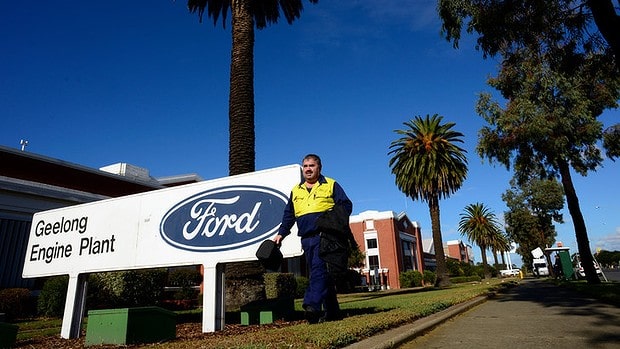
We had some really sad automotive news here yesterday. Ford will close its Australian manufacturing operations in three years’ time, after around 90 years of manufacturing in this country.
The Fords, built in Australia between now and October 2016 will be the last Fords ever built here. Ford will close its engine building plant in Geelong and its vehicle assembly plant in Broadmeadows. It’s estimated that 1200 direct jobs will be lost, with the flow-on effect being up to several thousand more. Ford will continue to retain a vehicle development division here in Australia to work on global Ford vehicles.
A few random dot points about this news.
There are a lot of people here in Australia angry about this, especially in light of the substantial financial assistance given to all three manufacturers still present in Australia. Ford, GM and Toyota have all received financial help to prop up their Australian manufacturing operations.
Ford Australia CEO Bob Graziano stated yesterday that it costs them twice as much to manufacture in Australia compared to manufacturing in Europe. That’s staggering. Asian manufacturing is only a quarter of the cost of Australia.
Much of that cost problem has to do with our high dollar. A lot of it is to do with a lack of scale. Ford builds two vehicles here – the Falcon and the Territory SUV. Neither of them are exported and both are large vehicles where the buyers are buying smaller sedans/hatches or compact SUV’s. Sales of the Territory have been OK, though they’re falling. Sales of the Falcon have been in the toilet for some time now, despite them releasing a 4-cylinder turbo version that’s reported to be quite good.
There are two significant knock-on effect from this announcement, aside from the hardship it’ll cause those immediately involved. The first is the question mark this announcement puts on the Australian vehicle manufacturing industry as a whole. Holden and Toyota have both committed to continued manufacturing in Australia for around another 10 years. This announcement means their local component suppliers are going to lose one of just three customers, however. That’s going to put quite severe pressure on those suppliers and could make life quite difficult for the wider vehicle manufacturing sector.
The second knock-on effect is on racing here in Australia. The most popular racing series here is the V8 Supercars, which for years was a series comprising just two manufacturers – Holden and Ford. Nissan joined this year as well as a privateer team running some AMG Benzes. Holden and Ford remain the backbone of the competition, however, and removing one of those is going to make things very interesting (hopefully in a good way).
While this is bad news, credit to Ford for announcing it well in advance of the actual closure. Workers, government and Ford itself have three years and five months to sort out what happens next. It’s not good, but getting Ford to commit to three more years of losses is probably as good as it can be under the circumstances.
——
I ended up owning Holdens when I got my licence, but I grew up in a Ford house. Dad had an old Falcon wagon. Mum had a couple of Cortinas and a Laser. My uncle still has the XC Falcon sedan that he bought new in 1977 and his son, my cousin, has worked for Ford since…… forever. I’m sure he will be affected by the closures announced yesterday.
How did I ever end up in a Holden? Rebellion? Peer pressure? A bit of both?
None of that matters (as if it ever did).
I got a chance to spend a week in a Ford Focus earlier this year and I was very impressed with the chassis, though not so much with the engine. It was my first time behind the wheel of a Ford in a long time and I could see why the Focus gets the respect that it does.
My last experience with the Falcon was some time ago. We had a Falcon here at my workplace for a few years and personally, I quite liked it. The decision wasn’t mine when it came to replace it, however, and we’ve had a succession of Subarus since.
I feel bad about the loss of Ford manufacturing here in Australia. I wish they’d responded to the market better than what they did because it’s their workforce that’s going to pay for it. Maybe they could have done things a little differently and planned it a little better with the help of up and coming software like ERP. This would have helped them understand the market better and implement their plan of action better, leading to a longer stay in the market! However, the first step to a successful ERP implementation without hiccups is planning. And that is what they lacked probably! That, and the will to upgrade to better technologies to help with their daily operations!
We’ve lost part of the motoring fabric of this country, too. That’s another sad thing.
The Ford Falcon was as Australian icon but Ford were either unwilling or too slow to adapt it to changing market tastes. Ford don’t plan to use the Falcon name on another vehicle brought into this country, so one of Australia’s past favourites will be gone forever once this decision is implemented.
I’ll take an XP Coupe, thanks. White on red would be just fine.
There’s been some terrible, terrible news coming out of Sweden this week. Swedish tax authorities had three former Saab executives arrested, kept in cells overnight, and all because they wanted to ask them some questions? Sounds like jackboot jante law to me.
They were kept separate, as if somehow three people could establish a credible cover story for elaborate tax fraud whilst indulging in a little officer-supervised fika.
What an absurd situation.
I can’t speak for Saab’s former financial controller because I never met the man, but anyone who’d had anything to do with either Kristina Geers or Jan-Ake Jonsson (and I’m not JAJ’s biggest fan, by the way) will have a hard time believing accusations of their deliberate involvement in manipulating the books or creating convoluted business relationships designed to hoodwink the state’s pinheads. With everything Saab went through from 2009 to 2011, I can barely believe they’d have the time, let alone the intention.
All this mud got me thinking about The Real Saab. The Saab that caught my eye in the first place. The Saab that had a brief chance to live again before its final demise in December 2011.
The Real Saab was a company that did things different, not to be different for the sake of it, but because they had conviction based on experience and an engineering and design ethos based on local necessity.
The Real Saab started with simple, tough, but lightweight cars that met a harsh market. The company implemented new technologies and surprised the market time and again with turbochargers, convertibles and safety technology long before any substantial safety regulations ever existed (conviction, again).
The Real Saab did things that were so crazy that they ended up making sense.
They entered their tiny motorsport team into a Monte Carlo rally and nearly took a podium spot – with a 2-stroke, 2-door, 7-seater station wagon. I still find it amazing that they actually made a 2-door, 7-seat station wagon but they did, for nearly 20 years.
The Real Saab made a small fibreglass 2-seater that had no real performance credentials, a freewheel transmission and no real place in their lineup. It’s quite possibly my personal most-desired Saab right now.
The Real Saab engineered a sub-120g emission vehicle that their former parent company – with all its global wisdom and resources – said was impossible. And they were on the cusp of delivering even more in that respect, too.
The Real Saab brought turbocharging to mass-market vehicles 30 years before the mass-market made it more normal than abnormal. They made a 9000 Turbo that could accelerate through overtaking speeds faster than a Ferrari and a 9000 Aero that might just be the best car they ever made.
“When you see it in your mirrors you know, beyond a shadow of a doubt, what is about to happen” – or words to that effect.
The Real Saab had an unbreakable and undeniable link to the region in which it was built. Saab was Trollhattan and Trollhattan was Saab. Saab took Sweden to the world in a way that few other companies or artists were able to do.
The Real Saab fought tooth and nail to stay alive in 2009, to the point of entering reconstruction in a move that surprised the parent company that was trying to wind it down. The Real Saab involved a spirit that was innovative, mischievous, full of integrity and purpose. It was a spirit that got things done when people thought those things were reserved for much bigger companies. It was a spirit that gave the cars a soul, a life force that owners connected with and loved.
That’s the Saab I came to adore. That’s the Saab that I truly believe had a chance to live again under Spyker’s ownership. I 100% believe that Victor Muller got it when it came to Saab and the company was doing innovative things once again. They just didn’t have the money to keep it going.
All this crap from the Swedish Government? It’ll blow over in good time.
The Spirit of Saab, the Real Saab, will remain long after the current crop of cretins in the Riksdag have left public life, long after their minions at the tax office have given up what I’m sure will be proven to be a puerile chase.
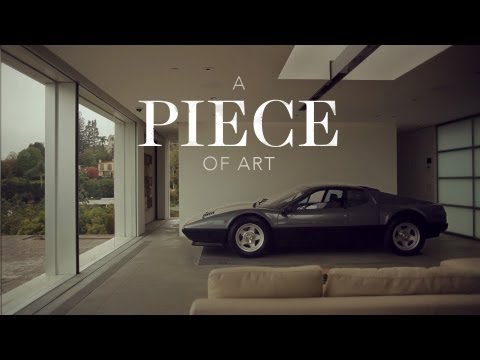
You’ve probably heard about or seen this garage already. I’ve seen photo-features on a few different websites over the years, but I’ve never seen film of either the garage or the car.
Thankfully, Petrolicious is here to do the job right.
The garage won a competition called Design Driven, sponsored by Maserati, back in 2009. It’s been shown as a car-centric living space in many photo shoots, but it seems to double as Holger Schubert’s design office in this video.
What I love about this:
The garage – It’s absolutely magnificent, combining function and beauty in one minimalist piece.
The car – a Ferrari 512 Berlinetta Boxer. Its classic lines and mad engine combine to make one of the all-time automotive icons. Its relative rarity just makes it all the more alluring.
The guy – Holger Schubert comes across as a pretty down-to-earth guy. He doesn’t need to trumpet his abilities because the space he’s built allows the sheer basic beauty of his work to shine for him. He seems to appreciate the right things and that sort of humility, to me, makes him all the more endearing.
Last weekend I had a conundrum on my hands – do I take the Alfa GTV6 I’m trying to sell out to a track meeting and risk something bad happening to it? Or stay home and do…. whatever. I ummed and ahhed about it for a few hours, worried about the possible consequences as well as the cost of buying a helmet – and of course, I did it.
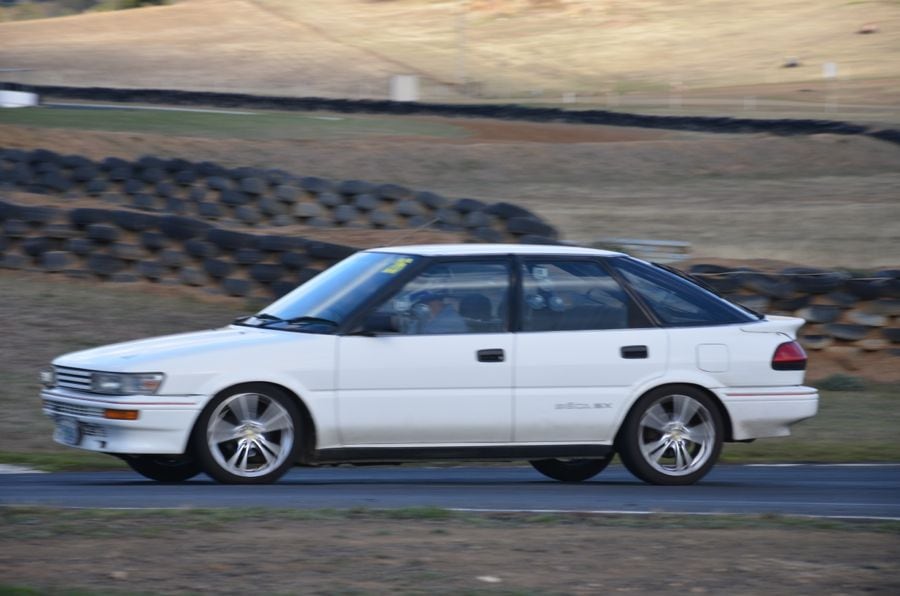
I had an incentive, I have to admit. I managed to talk our youngest, Geoffrey, into coming along in his zippy little small-port Toyota Corolla. Of course, I couldn’t let the young bloke down. Our initial plan was that we’d both drive his car, so my conundrum mostly centered around whether to bring the Alfa or not.
I’m glad I did.
Regularity is probably my favourite form of motorsport. It’s on a track, so there aren’t any trees to hit. You run with only a few other cars on the track at the same time and all spaced accordingly, so there’s minimal chance of banging fenders with other cars. And finally, the objective is to be consistent, not to be first. You can go as fast as you like, as long as you’re consistently fast.
——
We did timed laps in the morning so that everyone could get a feel for their speed. The objective is to determine your nominated time for the afternoon, a time that you’ll need to stick to in order to lose as few points as possible.
Resting in the pit lane during a break….
You get a point for every second slower than your nominated time. You get two points for every second faster than your nominated time. Your objective is get as few points as possible.
My timed sessions in the morning saw me post the following times (in seconds):
78 81 81 80 74 78 75 76 79 74
The trick is to nominate at the faster end of your range. You tend to get better throughout the day. I nominated 75 seconds for my lap time to match in the afternoon.
Geoffrey’s timed sessions in the morning saw him post the following times:
73 79 82 80 78 76 75 76 78 77
Geoff was feeling pretty confident so he nominated 74 seconds for his lap target in the afternoon.
——
My afternoon session was marred by one incident in my third session. On the third lap I came in to the last corner a little too hot, messed up my gearchange and ended up sideways and into the dirt on the side of the track.
I decided to head straight into the pits and check out the car, just to make sure everything was OK. The decision to DNF that session cost me 23 points. Thankfully, the car was 100% OK.
I nominated 75 seconds for my lap time in the afternoon. My afternoon lap times were as follows:
Session 1 – 77 76 76
Session 2 – 76 75 76
Session 3 – 75 74 / /
Session 4 – 75 75 75 74
Points accrued – 4+2+25+2 = 33
——
Geoff’s afternoon session was as smooth as a baby’s bottom. We actually took some video of him driving the car and you’ve rarely seen anyone so relaxed in charge of a car at speed. In contrast, I was wrenching the GTV6 around the track. The differences between 70’s and 80’s chassis design was never more marked.
Geoff nominated 74 seconds for his lap time. His session times for the afternoon were as follows:
Session 1 – 75 75 74
Session 2 – 74 75 75
Session 3 – 74 74 73 74
Session 4 – 75 75 75 74
Points accrued – 2+2+2+3 = 9
Remember, this is a guy at his first ever track event. Geoff’s consistency was outstanding and it didn’t go unrewarded.
Geoff actually took out third place for the entire event!!!
——
We had a great time. Both cars and both drivers made it home in full operating condition and plenty of fun was had along the way.
Club Motori Italia will host a hillclimb at the same track in the near future. I’m pretty sure we’ll both be there. I don’t think I’ll have the GTV6 at that time, but I’m sure there’ll be something in the garage that’ll make the event memorable.
——
I didn’t have much time for photos, as you can see.
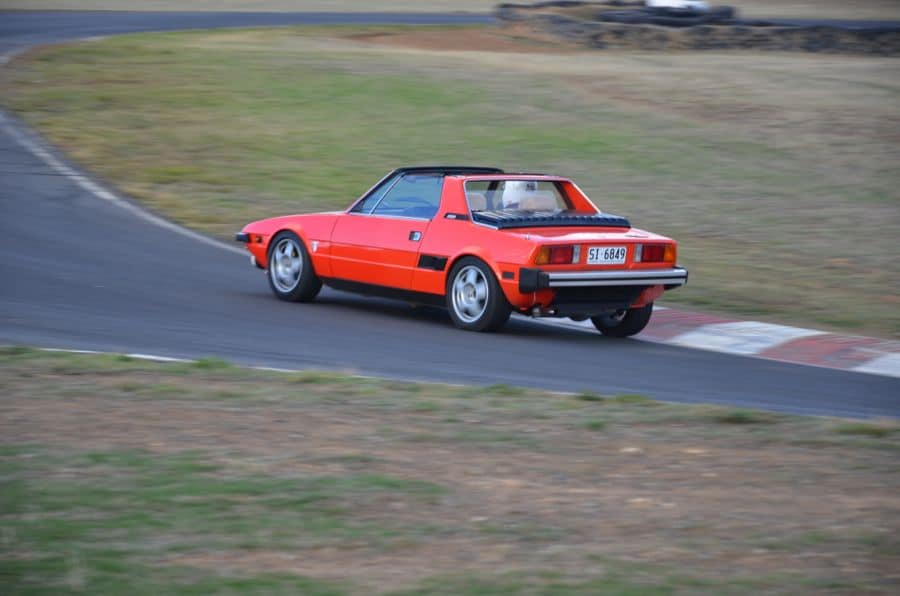
The only car I took shots of, aside from one shot of my own and a few shots of Geoff, was this wonderful little Fiat X1/9. The owner has had the car for around 20 years and has done a wonderful job preserving it. He had a ball, too.
I have to think very long and hard about whether or not what I experienced today is something I’ve experienced before. Today I sat in a movie theatre with around 75 or so other people, and not one single person moved from their seat until after the movie’s credits had finished. When the credits finished, the hushed theatre broke out in a round of applause before people started to make their way out the door.
Such is the power of this film to make you think, to make you examine your own attitude towards an issue that remains very topical here in Australia – asylum seekers.
When refugees take it upon themselves to migrate to Australia outside of the official channels, they are detained until their case can be investigated and assessed. They are asylum seekers, looking for protection from persecution in their home countries. If their situation is found to be legitimate, they are eventually allowed to stay. If not, they are deported to their home country. The debate in this country is mainly focused on where/how they are processed and how long it takes.
Mary Meets Mohammad tracks the meeting of two vastly different cultures.
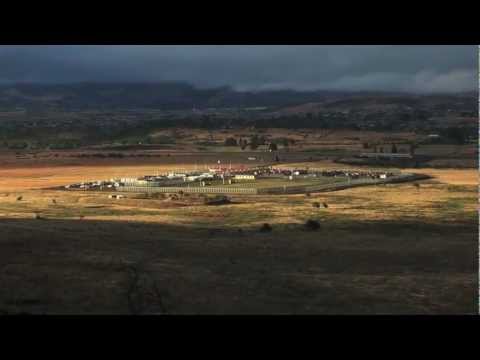
The first is that of Mary, a 71-year-old Australian woman who belongs to a knitting group in a community near the detention center. The group decides to knit woollen hats (called ‘beanies’ here) for a group of asylum seekers who are sent into mandatory detention here in Tasmania.
The facility they’ll be living in is new and the movie opens with a community meeting in the area where the asylum seeker detention center is to be established. Tension in the community is high. Tasmania successfully accepted hundreds of temporary refugees from Kosovo in the late 1990s. This time, with the refugees all being men from Iraq, Iran or Afghanistan – and despite the fact that these men will be living in detention, with big fences surrounding them – there’s a lot more fear in the community.
The filmmaker interviews a number of locals living close to the detention center and it’s confronting to see the prejudices evident in people’s words. It’s these sections of the film that were the most powerful for me. This documentary was made in Tasmania. What you in see, the prejudice, fear and misinformation, is a reflection of the community that I live in. It’s not confined to Tasmania, but it’s all the more confronting because whilst this isn’t me, my wife, our friend Sarah who we saw the film with or many of our friends, it is still US as a collective. The reflection is difficult to take in.
—-
As you can see in the trailer, Mary’s initial attitude towards the asylum seekers is that they’re heathens and cowards. She declines participation in her knitting group’s charitable act at first. Eventually, she’s part of the group that visits the detention center to deliver the beanies and it’s here that the changes begin. Mary, like most of us, is open to learning the truth about what are generally a desperate group of people.
At one point, Mary meets a group of old friends from the local Seniors Group and a discussion ensues about the asylum seekers. The opinions shared by her Seniors friends are caustic, almost offensive. You can tell that Mary is doing her best to remain calm amidst their misinformed claims. More importantly, however, is the implicit understanding in Mary that this is how she used to think. As viewers, we’re confronted by the film as a mirror to society. This scene is Mary’s personal mirror as to how she used to be, how she used to think.
Mary’s main point of contact inside the detention center is a young Afghani named Mohammad. He fled Afghanistan to live in Pakistan with his family and they remained there, facing genuine threats from the Taliban, while Mohammad made his way to Australia.
Mohammad is eventually released into the community and the friendship between he and Mary is genuine, unexpected, and touching.
Mary meets Mohammad is an important film that all Australians should see. Unfortunately, it’ll most likely only be seen by a relative handful. The filmmakers are hoping to raise enough money to take the film on tour around the country. It’s a real eye-opener; a film that forced me to examine my own thoughts on the issue and a film that will educate you on the reality of who these people are.
The Tasmanian experience is much more humane than the situation faced by asylum seekers sent elsewhere by the Australian Government. What you see here will embarrass you in terms of Australian prejudice, but it doesn’t shock you the way the film might have if it were focused on Australian detention centers in Manus Island or Nauru.
My own thoughts – Australia does need to address how it processes asylum seekers. It needs to be faster and more humane. I can understand the need for it to be an ordered process and I understand the need to prevent people from jumping on rickety boats that are prone to sinking on their way here. But there’s got to be a better way and there’s got to be more understanding in the community.
I could make some minor complaints about the film dragging in some areas, but that would deflecting the point. This is an excellent piece of work and I hope as many eyes see it as possible.
Anyone living in a country where students undergo national testing in order to evaluate a school’s effectiveness knows one thing – teachers will eventually, inevitably, teach the test. If you have a pressing need to pass something, you don’t necessarily learn everything about a topic, you learn what you need to know to pass the test. I did the same thing for my CPA exams – I didn’t learn everything about accounting. I learned around 50% of what I needed to know, then I learned how to effectively index my text books so I could find anything within a minute (no, don’t get me to do your taxes).
One automotive equivalent of a crucial academic examination (a crunch test, if you’ll pardon the pun) is the regime of crash testing that new models have to pass in order to get a decent safety rating. In Europe, that’s the EuroNCAP regime.
The Captur is built without any rear airbags because Renault knew it would score well in NCAP without them and it would save money.
Pejout admits the Captur would be safer with rear airbags, while providing plenty of justifications for the omission. “It’s always a money issue,” he tells Carsguide. Asked straight-out if the Captur would be safer with rear airbags he answers “Yes”.
But he says rear seats are often left empty, that ESP stability control means fewer side-on impacts away from junctions, and that the Captur is still likely to get a five-star Euro NCAP ranking.
Pejout goes on to say that customers don’t count the number of airbags when looking at a car. They look for the EuroNCAP rating. If the Renault Captur has a five-star rating, which I’m sure it will because engineers design it with the EuroNCAP deformation standards all loaded into computer testing models, then the customer will be happy.
I think there are a few things to learn from this.
First, don’t think that Renault are the only ones doing this. Car companies make decisions about what to leave out of a car all the time and I’ll bet my mother’s life that Renault isn’t the only one ‘compromising’ the safety content of their vehicles.
Second, when you shop for a car, know your priorities. Renault are only doing this because they know what customers look for – the EuroNCAP rating. If their customer feedback told them that people were counting airbags then guess what you’d see.
Third, think about this story the next time you complain about the cost of a new car.
Fourth, there are plenty of people for whom Pejout’s reasoning is perfectly valid. I can’t remember the last time I needed a rear seat in my personal vehicle (my wife’s car – yes. Mine? No.). For a lot of people, rear seat airbag protection is unnecessary and ESP systems do indeed reduce the incidence of driver-induced side impacts.
None of that, however, takes away from the fact that we are in an age where car companies do indeed make (cost) conscious decisions to leave out technology that, if mindfully considered, should be considered a baseline essential for a family car. There was a time when car companies clamoured to see just how much technology they could fit INTO a car. Now we live in a time when they’re all assessing what they can leave out.
It’s the first Sunday of the month and that means Classics By The Beach. It started as a cold day, but that didn’t stop some hardy classic car owners from gathering under blue skies down at Sandy Bay once again. A few of the old stagers were there, but there are always new cars to see. Here are the best of them for this month.
My personal favourites from today were the Ferrari Dino and the Porche 356 Super 90. The Dino, especially, simply oozed class. Its curves were magnificent and my only regret is not being able to hang around long enough to hear it start up.
My favourite image is of the Porsche Spyder replica’s dashboard, with what has to be the prettiest tachometer ever made. Just outstanding. It was an unintended bonus to end up with 3 Porsches in that photo.
My apologies for the sub-standard photos. The conditions weren’t great for the compact camera I was using. And also apologies for not knowing all the names and models. I’ll do better next time, I promise. Enjoy!
Following on from Sniff Petrol’s review of the Dacia Sandero a few days ago, I locked on to Richard Hammond’s reviews of both the Sandero and the Dacia Duster. The guy behind Sniff Petrol, Richard Porter, is a writer for Top Gear and I’m pleased to say that the charms of the Dacia duo rubbed off on his front-of-camera colleague, too.
Neither car is available in Australia and I haven’t heard of any plans to bring Dacia here, either. But I have a feeling that I’d be charmed by one, too. I’m not sure I would ever buy one, but just from reading the reviews above, I feel like I get it when it comes to these vehicles.
I bought two cars last year – an Alfa Romeo GTV6 and a Subaru Brumby. The Alfa is for sale right now and there’s a good chance the Subaru will be on the market in a few months. I have to say, however, that I’ve really, really enjoyed my time in the Brumby and that I see the Dacia models as a modern day equivalent: cars built simply with a specific purpose in mind.
The Subaru Brumby, or Brat as it was known in some markets, is a no-nonsense small ute with a reputation for being able to get in and out of places other small utes would fear to tread. It was (and remains) rock-solid reliable, had no creature comforts as standard aside from a heater and a radio and was (under)powered by a small 1800cc boxer engine.
It’s the little-car-car-that-could.
Whilst my Alfa’s basically been a garage queen the whole time I’ve owned it, the Brumby has been my workhorse. It’s not fast. It doesn’t handle great. It’s certainly not an image-builder. But it does absolutely everything I ask of it and it never complains. It’s the honesty of the car that endears it to you.
I think the Dacia siblings would be much the same. On the base model Sandero, you can have any color you want as long as it’s white…. and that comes with un-painted bumpers. There’s no radio. No aircon. Just a reasonable amount of room, good modern safety kit and an engine. It’s what the Tata Nano was supposed to be in India only the higher Euro-centric price means you get more car as well as getting a car that you can count on, and one you can actually use.
The Duster has the same simple approach but stump up an extra 2K for the 4WD model and you’ve got a modern day Brumby with a roof and a go-anywhere drivetrain. It’s basic nature and price means that you’re not going to have a heart attack if and when the car actually gets used for its intended purpose.
It’s very refreshing to see a manufacturer placing their pride on their simplicity and value. At a time when manufacturers are busy crafting contrived corporate images based on nothing more than a Don Draper wannabe pitch, Dacia’s basic “here’s a car” approach is more comforting than pants.
And if the Duster and Sandero prove to be reliable, I think they’re a good chance to go down in history with the likes of older VW’s and Subarus – cars that aren’t glamorous but compel you to love them because of their honesty. Cars that are built for a purpose and conduct themselves honestly and against the odds deserve our kudos.
Some people won’t understand that. But those that do will love them.
——
From the photo below, it looks like the Duster Cult is well underway…..