Here’s a nice little litmus test to show how much people are willing to pay for what they believe is the genuine article. In this case, it’s a Porsche Speedster.
——
I think the Speedster might be where Porsche’s habit of success with selling stripped-out versions of its cars got started.
The Speedster was basically a lightweight version of Porsche 356 convertible. The idea originated in the US, where Porsche’s distributor wanted a cheaper, lighter model to sell to US customers. The Speedster had a shortened, removable windscreen, basic fixed-back bucket seats, plastic curtains for side windows and minimal clutter on the dashboard.
There are a lot of Speedsters on the road nowadays. A lot more than Porsche built themselves. That’s because they’re a favourite of the replica industry, cars that aren’t the genuine article but made to the original specifications and featuring a very high standard of fit and finish.
So why do so many people want a Speedster? Buyers of genuine Speedsters would have multiple reasons – classical beauty, performance, investment. Buyers of replica Speedsters won’t get the same investment value, but get much of the performance and all of the beauty.
And beautiful it is, too. You probably won’t understand the language spoken, but then you don’t need to understand it in order to appreciate the Speedster.
——
A genuine Porsche Speedster can set you back a fortune. The black one pictured below with a removable factory hardtop is selling in the UK right now for £295000.
There’s one for sale at the moment, however, that’ll cost you quite a lot less.
It is reported to be a genuine 1957 Porsche Speedster but it will require a little bit of fettling in order to reach the high prices that other genuine Speedsters can achieve.
The car is currently for sale on Ebay in the US (don’t click that link just yet – read on). Here’s a bit of the seller’s description:
This Speedster was found as is after sitting outside for a unknown number of years. It was pulled from an old Roosevelt estate on the North Shore of Long Island. It is believed to have been a race car owned by the Roosevelt’s and run at Bridgehampton Raceway in the late 50’s to early 60’s. It appears that it was crashed at some point in history and was parked. It still has part of the racing numbers on the side along and a roll bar.
As you can see from the pictures it is in extremely rough shape. But it is still a real 1957 Speedster.
This is where we get to the testing point – what’s in a name?
We know that a genuine Porsche Speedster is an achingly beautiful car that is surprisingly sprightly for it’s age. We know that they’re coveted by collectors and even more so if they’ve got genuine racing history. The big question, then – How much are you willing to part with for a ‘car’ that’s barely recognisable, simply because you want the genuine article?
Well, as I write this, there are 12 bids on this vehicle and the last bid is $25,400. Yes, more than $25,000.
I guess it’s time to show you some more photos. Believe it or not, the photo above shows the car’s good side 🙂
Click to enlarge.
—
I reckon the only salvageable parts of this car are the plates from the coachbuilder and the door latch. I guess if you replace everything around that coachbuilder’s plate – and I mean everything – and if you do it using genuine spec metalwork, you might still have something that could technically be referred to as a genuine Speedster.
Or you might have a really cool piece of sculpture for the ultimate man-cave.
If you were born in the 1960’s or very early in the 1970’s, there’s a good chance you:
a) think your local barista (half your age, of course) is kinda cute, and
b) think he/she just might be into you, too.
Newsflash – your barista IS cute, but those smiles you get every morning are not because he/she is into you. They’re what is widely known amongst non-delusional people as good customer service.
All is not lost, however.
Why not enjoy some summer cruising in the dream ride of your youth (or a modern equivalent) with a partner who loves you in the real world?
Here are 10 cars you could snap up today for less than 20 grand, all of them specially selected to put some cream in your coffee.
1. Alfa Romeo Spider
It’s no coincidence that I have a few convertibles on this list. Or an Italian one, at that. Who doesn’t dream of the wide-open road, a rorty engine in front, nimble steering and a gentle breeze?
OK, the gentle breeze might be wishful thinking, but the Alfa Spider features classic good looks that stand out in any civilised setting, whether it be a country picnic or a night at the theatre.
Be wary of rust and poor maintenance. The good news is that if you get a good one, you may never want to sell.
Looks great in red.
—
2. Mazda MX-5
Panned as a hairdresser’s car by everyone who’s never driven one.
The little MX-5 is the slightly sensible helmsmith’s dream. It has an unrivalled capacity to deliver 100% fun while simultaneously offering rock-solid reliability and very affordable ownership costs.
Looks like a very obvious mid-life crisis in red. Less so in blue.
—
3. Porsche 944 S2
Find a good one and you’ll be amazed at how modern it feels for a 20+ year-old car. It’s got plenty of low-end torque for great drivability in all conditions, superb balance and great handling. The interior’s not luxurious but features all the conveniences you’d expect for the time. Porsche’s build quality means that there’s a good chance it’ll still be in very good condition, too. Pop-up headlamps are a nostalgic touch.
Make sure to check for a good maintenance history and be prepared to keep it going. 944’s have a great record for being rock-solid reliable, but the parts bill will kill you if it goes pear-shaped.
Looks outstanding in red.
—
4. RenaultSport Megane
For the mid-lifer who just wants to drive.
This is probably not going to impress your barista, but the RS Megane (along with it’s smaller sibling, the RS Clio) has become a bit of a cult car here in Australia. The RenaultSport range puts the stuff that Renault know from its racing experience into a road car. It’s not a luxurious item, but it’s a fast little four-pot and it sticks to the road like poop to a blanket.
Unfortunately, you won’t get the better-looking new generation for under $20K, but the first generation cars are exceptional value now.
Looks sensational in Blood Orange.
—
5. BMW E30 325i
You can get hold of a BMW M3 for around $20K if you look hard enough but odds are it’ll be so rough that you wouldn’t want to buy it.
Instead, why not pick up an E30’s with its handsome looks and get the perfect weight balance and creamy straight-six to boot? You won’t be screaming down the road like a Banshee but you’ll have plenty of fun and just enough cred amongst those that know what’s what.
For those who want a more modern twist, look for an E46 330 Ci. It’s the full bag of fruit in a sharp looking suit.
The E30 looks great in red. The E46 is more commonly found in more Teutonic tones like silver or dark blue.
—
6. Holden Monaro
Aussie Aussie Aussie! Oi Oi Oi!
Yes, you can get a modern Monaro for under $20K and it doesn’t need to be the wimpy V6, either. Most of the V8’s under $20K have high mileage but look hard and a good example can be found without too much wear and tear.
It’s not aged as well as people might have hoped but the Monaro is still one heck of a performance package and it might just be the last of an iconic Australian breed.
Infrequent in red. Try to dress it up a little more than this, OK?
—
7. Alfa Romeo GTV6
I had to put another Italian on this list and seeing the classic mid-lifer Ferrari 308 is at least $30K out of bounds, the GTV6 gets the nod.
It’s beautiful to behold and the noise….. oh, the noise. A transaxle gearbox helps with weight-distribution and while it’s not overly endowed with grunt by modern standards, there’s plenty of fun to be had on a winding country road.
Those wanting a more modern alternative might seek out a late 1990’s or early 2000’s GTV V6 or Spider.
A jaw-dropper in red. Get the black interior, much harder wearing and better looking than the tan.
Alfa Romeo GTV6
—
8. MG B
“I spent 16 grand on an MG B, what else could she want from me?”
It’s been 30 years since Jon English sang those words but not a lot’s changed. You can spend a lot less on an MG B but a good silver-bumper model will still set you back 16 grand.
Make sure that it comes with a set of spanners and a drip mat.
Looks great in red or British Racing Green.
—
9. Honda S2000
Is this the last great Honda sports car?
The S2000 qualifies for being a mid-lifer by virtue of its utter impracticality, being a pure two-seater. It also offers a great drive with superior handling and a high-revving engine. Honda build quality and reliability doesn’t hurt, either. Think of it as an upmarket MX-5.
Looks good in red, but seen more often in silver with a red leather interior.
—
10. Nissan 350Z
Nissan have won plenty of awards for their V6 engines and five minutes in a modern Z car will tell you why. The 350Z pulls like a train and with sleek modern looks, it’s well equipped to cast a spell. The downside is an interior built to keep the costs down but later models (more $$$) addressed that.
Factor tyre costs into your budget. You’re going to need them.
For a retro option, the Datsun 260Z is available under $20K. It’s got genuine enthusiast cred but the driving experience will show the passage of time in no uncertain terms. If you’re after refinement, go modern.
Looks great in red, blue, black or silver.
——
I wrote this piece earlier this week as a submission for a new magazine website here in Australia. As of Monday afternoon, they were accepting freelance contributions for motoring content. As of this evening, they’ve cut a deal with another site to share content. Que sera sera.
So I decided to share it here instead. I don’t often do lists, but it’s one of the styles the editor suggested and I had fun doing it.
The fact that I’ve owned a few cars on this list shouldn’t be taken as evidence of a mid-life crisis, even if I’ve been having one for around 5 years now 🙂
Earlier today I posted a picture of a car with the grille blacked out so that people couldn’t tell what manufacturer it was. Your job was to guess the manufacturer. That was earlier in the day. Now, from PT in comments:
OK Swade, c’mon now. Time to put those of us interested enough to care but not enough to Google out of our misery….What is it?
Between the guesses here and on Facebook you had most of the major companies covered, with the exception of Ford and Toyota. There were nominations for GM, Hyundai, Kia (quite popular), Peugeot, Jaguar, Audi, Lexus, Chery, Geely, Honda and Chrysler.
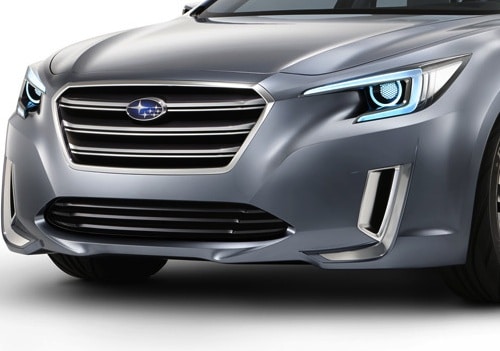
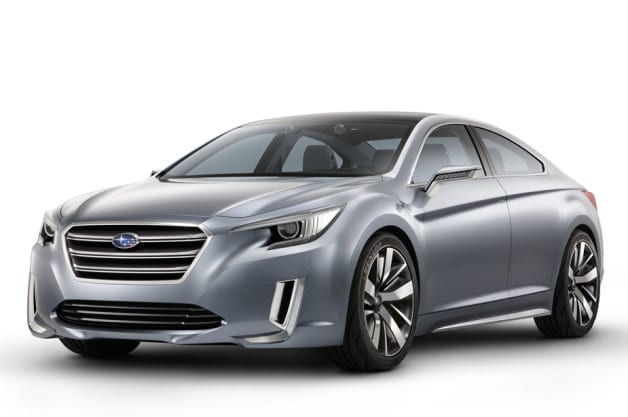
A few of you made the correct guess – Subaru.
I fibbed a little when I said it was due for release quite soon. It’s actually a concept called the 2015 Subaru Legacy Concept and will show for the first time at the LA Auto Show, which starts this Friday. Subaru say – and recent trends with ‘concepts’ back this up – that the car speaks to the new design language that the brand’s models will have in the near future.
As someone pointed out in comments, the breadth of guesses pretty much proves the point I was trying to make: cars are getting more and more generic in their design. The shape of mainstream brand cars is very similar with just the ‘face’ they draw on that shape providing the difference.
For most carmakers, the days of the distinctive silhouette are pretty much over.
Car designs are getting more and more generic. That’s only partly the fault of the car companies. Safety and design rules place some restrictions on what can be done with car design these days.
You may have noticed car companies designing their cars with very flat fronts on them, for example. That’s courtesy of the pedestrian safety requirements, which have received heightened importance in crash testing over recent years. You want to go to market with a good crash test result? That doesn’t just mean protecting the vehicle’s occupants anymore. It means protecting those on the street, too.
And that influences what shape your car must be.
A vehicle’s silhouette used to be considered important in a time when you could identify what sort of car you were looking at when it was 100 meters away. People used to like that because their car was distinctive – it was a shape that they engaged with. You can’t mistake a classic Saab 900 from that distance, for example, or a Porsche 911.
Today, various rules and goals (e.g. aerodynamics) dictate what a car should be and vehicle design is becoming increasingly generic as a result. It’s like they’re all chasing the same magic formula, leading every company’s vehicles to adopt the same basic exterior shape. It’s the face they draw on the shape that’s different from company to company.
I saw this image online a few days ago. This car is a new release and will be shown at a motor show in the near future. The question is: can you identify which manufacturer makes this car?
Don’t go googling or checking the recent automotive headlines. Just have a look and see if you can pick who makes it.
I’ve deliberately blacked out the front grille, for the purposes of this post.
——
It shouldn’t be that hard to find, or guess.
The point of the post, however, is that in 2013 the vehicle in that photo could be made by any one of ten different companies and no-one would be surprised.
Motor vehicles have come a long, long way over the last four or five decades. The advances in technology have improved all areas of car making – from manufacturing to safety, amenity to capability, reliability to fuel economy.
I’m just not sure that aesthetic design has been one of those areas where it’s been all forward progress, that’s all.
This car popped up on a random Facebook feed earlier today – thanks Joop! – and I just had to know more. It’s so cheesy and so GM (although not officially) that I couldn’t resist elevating it to Fantasy Friday status.
Is there any mid-engined supercar from the 1980’s that hasn’t been used as the basis for a kit-car and hung on the shoulders of a Pontiac Fiero? My wife’s cousin has a Fieroghini, for example. I have to admit, they’re fun to see on the road and they’re even fun to drive, but I’m not sure I’d want to own one.
The Mera is perhaps the best execution of a Fiero remodel that I’ve seen. Whilst GM never officially sanctioned it, the remodel was so good it was actually offered as a dealer option by a number of Pontiac dealers back in the late 1980’s.
The Mera was built in 1987/88 by a company called Corporate Concepts based in Capec, Michigan. Only new Fieros were used for the cars. They were never sold as an aftermarket kit but original Meras have been used as the basis for some new fibreglass moulds so there may be a couple more around than what were originally built.
Sadly – depending on how you look at it – Ferrari heard about the Mera and put a quick stop to it. Only 247 Meras were ever built.
From the few that I can see for sale at the moment (after a whole 2 minutes of searching) they still hold some value – for late 1980’s Fiero, anyway.
So if you’re after a car that costs five figures and offers so much promise from a distance but will be profoundly disappointing once you get in it what is possibly the best execution of a Fiero kit car, the Mera might be a dream come true. At the very least it’ll be a good conversation starter.
I had a comment come in via email from my mate ‘Eggs’ overnight. I’ve got his OK to reproduce it here in order to kickstart this post:
I have been impressed by the number of people (including you) who have recently raved about the quality and seeming durability of Porsche cars. I kind of always assumed that the magic was in the drivetrain and suspension.
Interesting angle.
Indeed, the real magic IS in the drivetrain and suspension. That’s what delivers the driving experience that keeps you coming back again and again. But it’s the durability and quality of the car that keeps it on the road so you can come back again and again. That’s a tangible benefit, which is why Porsche owners talked about it consistently in the research I did before buying my car.
Durability
I’ve only recently bought my Porsche, but I’ve been interested in them for a few years. During those preceding years I did a lot of reading about Porsches and I can definitely echo Eggs’ comments about durability being one of the surprising attractions people talked about over and over.
One downside of Porsche ownership is that the parts can be really expensive if something goes wrong. I have a $15,000 rebuild invoice in my car’s history file to prove it.
The silver lining to that cloud is that they’re really well designed and made using quality materials. Result: with only a few exceptions (by reputation), these cars are absolutely loved by their owners and one of the key reasons, aside from the driving experience, is because they’re extremely reliable if you maintain them correctly.
The classic air-cooled boxer engine is remarkably simple, which is one of the reasons 911 purists love it so much. I used to wonder why so many Porsche owners were happy to pay for engine rebuilds. From what I can tell after speaking to a few of them, it’s not usually to repair something that’s gone wrong. Rather, it’s a form of preventative maintenance to ensure another 10 years of addictive peak performance.
I guess you could call that a pretty good testimony as to how compelling these cars can be to drive. Most other dedicated sports car companies survive along the same lines. They make a product so compelling that people will pay what can be crazy prices in order to keep it going in tip-top condition. In some cases, that’s because they have to (i.e. break down). In Porsche’s case, and I’m quite sure it’s not unique to Porsche, it’s because people genuinely want to keep their cars in superb driving order. They feel OK about paying a small fortune for maintenance because it insures against having to pay a large fortune in the event of a catastrophe.
As with any company, there are known weak spots. I don’t know all of them when it comes to Porsche but I learned about a few of them as I did my research.
The early/mid 1970’s 911 had a 2.7 engine that is not regarded as highly as others. US emissions regulations at the time meant that Porsche’s 2.4 engine was going to lose whatever small performance edge it ever had. Porsche enlarged the engine to 2.7 litres and included some internals designed to burn off build up in a way that didn’t result in the emissions coming out the tailpipe. They even gave it the slightly comical and slightly scary name: “thermal reactor”.
Anyway, those changes made the car run far hotter than an air-cooled car is comfortable with. Owners of these cars back when they were new saw a lot of engine failures and not a lot of support from Porsche, who have a reputation for not acknowledging their problems – buyer beware! Even though the 2.7s that survive today have most likely been modified to overcome the deficiency, prices on the second-hand market seem to reflect the model’s reputation.
The early Boxsters and 996-model 911s have a couple of problems that can rear their heads almost seemingly at random. I’ve seen these models for sale online with several hundred thousand kilometers on the odometer with no reported problems. I’ve also heard about others where the engine has blown for no apparent reason. There are a few known issues (porous blocks, head cracks, and others) but the biggest individual potential problem – the one that can cause these sudden failures – is the intermediate shaft bearing. The results are catastrophic if it fails so there’s good incentive to get it checked and updated/replaced. It’s not cheap, but it’s cheaper than an engine replacement.
Quality
It’s quite easy to think of Porsche and see $$$$$$, which can lead to an automatic presumption of high level quality/luxury/equipment. I’ll testify positively to ‘quality’ but advise caution when it comes to luxury and equipment on the older cars I’m familiar with.
I’ve only driven a few Porsches over the years – 944, 911 (964), 928 and my own 968. You’ll note that these are all pre-Boxster/996 model cars.
With the exception of the 928, I can’t say that any of these cars were built with luxury in mind. They’re certainly comfortable enough to drive everyday but Porsche’s emphasis in those years was very much on performance. Standard comfort items were pretty much limited to power steering/windows, stereo and air conditioning.
The suspension was set up with performance in mind and anything that could be classed as unnecessary excess weight was relegated to the options list. It’s only been in what I’d refer to as the modern era (Boxster/996 onwards) that Porsches had any real emphasis on delivering a comfortable drive as well as a spirited drive. That’s my theory only, by the way.
What they did seem to have in that pre-modern era (again, my terminology) was a commitment to quality in terms of design, engineering and materials. Porsche is one of the few companies where lines like “design and development through racing” are more than just marketing spin. Their parts were honed through racing, designed to operate in high stress environments and given Porsche’s success in endurance racing, for long periods of time. Things wear out, of course, but they’ll usually take a lot of (ab)use before they do.
I’ve been extremely impressed so far with the build quality of my car. It feels remarkably solid (especially given its age) yet I know from reading the specs that it’s very light. That’s a remarkable achievement but I guess it’s the use of low-weight, high-strength components that makes these cars cost a bit more than your average whip.
Versatility
Eggs didn’t mention this in his email, but one of the reasons people seem to love their Porsches is that they ARE versatile and durable enough to be used as everyday cars as well as being more-than-just-competitive track cars.
The following video was made by Petrolicious and it highlights the versatility and adaptability of the Porsche 911. This video galvanised my desire to finally take steps towards buying my first Porsche.
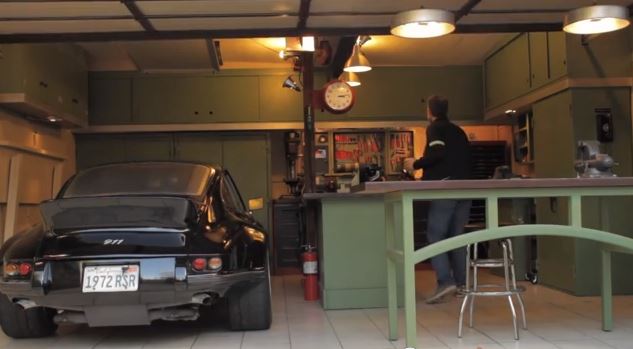
I really like this guy’s car, but I think I’m drawn even more by the experiences he’s had because of the car – the garage he’s built (amazing) and the skills he’s learned.
The video is 10 minutes long. I hope you take the time to watch it and understand.
Is the Alpine A110 the discerning man’s classic car bargain of the moment?
I was inspired to do this Fantasy Friday post by a photo feature on Petrolicious earlier this week. There’s a sample of it above. Click here to see the full shoot.
You might be familiar with the Alpine A110. Or maybe you haven’t heard of it. Or perhaps you’re like me and have only come across it relatively recently. I’ve only been aware of this elegant classic for a few years thanks to a friend’s interest in Renault Sport vehicles.
So what is the Alpine A110, aside from staggeringly beautiful?
The Renault-Alpine A110
Before you get to the A110, you have to start with Alpine (read it with a French accent and say Alpin).
Alpine was started by the outrageously over-accented Jean Rédélé in a town called Dieppe. Jean wanted to race French cars after the war and started with the Renault 4CV (which rumour has it was a car that played a remarkably shadowy part in the personal history of one Ferdinand Porsche).
Rédélé took factory Renaults and made them more competitive with aluminium (and eventually, fibreglass) bodies, souped up rear-mounted power plants coupled to 5-speed gearboxes of his own design.
Right: My favourite Alpine photo
He met with success early at the Mille Miglia and various rallies in his native France. His success at the Coupe des Alpes and his love for racing in the French mountains gave the company its name.
Alpine’s first car was a re-bodied 4CV called the A106, which was followed by the A108. The A108 used a Renault engine tuned by Gordini, which is interesting in tangential terms because Renault eventually bought both Alpine and Gordini and from the ashes of those two companies, started the RenaultSport brand than continues today.
The Alpine A110 featured a fibreglass body on a steel chassis. Early cars used a small 1100cc engine producing just 66hp but a Gordini-engined option soon followed with a beefier 95hp. The engine continued to grow through 1300cc up to 1600cc and a maximum output of 140hp – in a car that weighed just a little over 600kg.
Yes, you read that correctly. Just over 600kg.
I don’t know if it’s evident from the photos featured here already, but the A110 is quite small. I had the opportunity to see one in person at Targa Tasmania last year and couldn’t help but take a bunch of photos of both the A110 and it’s stable-mate, a Renault 5 Turbo. That the A110 could make the Renault 5 Turbo seem big(-ish) goes to show how much of a pocket-rocket the A110 really is.
Renault Alpine A110
Renault Alpine A110
Renault Alpine A110
Renault Alpine A110
Renault Alpine A110
Renault 5 Turbo2 and Renault-Apline A110
That sort of power-weight ratio lent itself to motorsport success and Renault-Alpine won the first ever World Rally Championship with the A110 in 1973, though the car had already tasted success with the International Rally Championship in 1971 and back-to-back victories at Monte Carlo and many other rallies years before.
There are more awesome photos where that one came from at eGarage.
Here’s what you can do in an Alpine A110. The action starts 30 seconds in and take note – this is just the 1300cc model, not the bigger and more powerful 1600cc 🙂
——
For Sale
So is the Renault-Alpine A110 the collectable bargain that I mentioned at the top of this post? Well, I’m not sure you can ever call something that can cost around £80,000 a bargain, but when you consider that you won’t even be allowed to look at a Lancia Stratos from the same era without serious six-figure sums in your pocket, it doesn’t seem too bad.
In fact, you can buy the Renault-Alpine A110 below for a mere £44,679 but there’s a catch – it was built by FASA, a Spanish contractor that built Renaults for around 50 years up until the turn of the century. So it’s not an imitation, but it’s not the most desirable version, either.
The real deal will cost you all of that £80,000 and a little bit more, but it’ll be the authentic French-built version built at Alpine’s skunkworks in Dieppe.
The car below is currently for sale in Germany. It’s just a baby with only 32,500kms on the clock, is said to retain its original paint and has had only two owners. Notably, it’s the bigger 1600cc model so you are getting maximum bang for your buck, but there’s a LOT of money involved – £85,000.
——
BONUS CLIP
Renault celebrated the 50th anniversary of the A110 by building the A110-50 concept car in 2012. This clip features some wonderful photoshop work to pit the old against the new. Enjoy.
Warning – this post may contain content about a certain brand of car beginning with P. I feel like I’ve been gushing a little too much about my latest acquisition so I’m trying not to mention it too much lest people get a bit sick of it – but HOT-DAMN, it’s good!
If there’s one thing I fell in love with straight away when it comes to my 968, it’s the grip. Much of that comes courtesy of the car’s transaxle, 50/50 weight balance and limited slip diff. But the finishing touch was the four rubber patches holding it to the road – the Yokohama tyres that, whilst road legal, are designed primarily for the track.
The downside is that they’re very, very noisy. They create a whining sound that rises in volume as you accelerate and to be honest, they made driving the car around town more laborious than it should be.
So last week I made my first post-purchase decision and had new tyres fitted. The new tyres are Goodyear Eagle F1 Asymmetric 2’s.
Here’s a photo of the new tyre next to the old one:
Result – a much more pleasant driving experience!! The Goodyears are not only a LOT quieter, they seem to absorb the disturbances in the road a lot better, too, making for a much more comfortable drive all round.
I’ve undoubtedly lost a little bit of that grip, but I tested the new rubber out on a couple of 180+ degree off-ramps the other day and I can tell you: there’s still plenty of grip there to be enjoyed 🙂
The Yokohamas are now in storage and will come out for special occasions, like the Porsche Club of Tasmania hillclimb at Baskerville race circuit in a few weeks from now. It would have been a waste to wear those Yokohamas out on regular streets, anyway.
——
A couple of things noted during the tyre change:
1) It’s nice to know I’m not the only one that has trouble with the low stance of this car.
The guys at Beaurepaires couldn’t get their hoist under it to change the tyres so they had to do it with trolley jacks instead.
2) While the wheel was off and for no good reason at all, I picked up one of the wheel nuts. Porsche’s commitment to always thinking like race-car builders was evident straight away.
The wheel nuts are made of lightweight alloy and weigh next-to-nothing. I picked up the wheel nuts from the Holden Commodore in the next bay and they must have been at least three times as heavy.
When it comes to unsprung weight, every little bit helps.
——
The next spend will be on the 120,000km service, including the timing belts and associated bits and pieces, just for my own piece of mind. After that, I’ll be hunting for a spare set of Cup I wheels so I don’t have to go back to Beaurepaires every time I want to change my tyres.
Of course, there’ll be some very pleasant driving between now and then and maybe, if it’s OK with you, some more photos and posts on the website about the expeirence.
It’s natural that people tend to be comfortable with what they know if it’s functional and does what they need it to do. There’s rarely a need to explore the finest quality product available unless you’re deeply interested in that certain something.
I’d be quite happy with a watch, for example, but some people won’t settle for anything less than a Rolex or a TAG Heuer.
I used to think that companies like Ford and Toyota built generic cars, companies like BMW and Mercedes built real quality and further down the road, Ferrari and Lamborghini built real exotic quality. To a large extent, that’s mostly true.
Then I visited Koenigsegg, whose in-house capability and dedication to building the best product possible makes everyone look generic.
It’s all about what matters to you. You seek out the quality that you desire, whether it be as a potential owner of something or just as an interested party and an admirer.
It’s only in the last few years that I’ve gained a real appreciation of how hard it is to engineer something that is bespoke for a particular creation. Mass production has us all used to the idea that we can only change or customise a small part of anything we are looking to buy.
There are people who don’t work that way, however. People who don’t just build things. They create things. People who can take the familiar and make it special.
Petrolicious has a new video this week looking at a company in the USA called Ringbrothers. They make parts, mostly for American muscle cars. They also take cars that are quite generic within their niche and make them special, using the parts that they design and mill in the company’s workshop.
I know they’re just one of a large number of custom shops, but their work struck me as not only being top quality, but pretty tasteful as well (which is not something you can say of some of the more well known custom shops that end up with their own reality TV shows).
I wish Petrolicious had got a few more customer cars into this video for a larger exhibition of Ringbrothers’ work. The small sample you see in this video is enough to whet the appetite but I’d really love to see more of what they can do.
Well done, Ringbrothers. The more I see stuff like this, the more I love the idea of a car as a piece of art. This is craftsmanship.
I’m in two minds about whether to write this post. On one hand, it can be regarded as bad form to analyse the contents of a website that you have had some sort of relationship with, however distant that relationship is now. On the other hand, experience tells me that I might have something to contribute on matters raised in a recent SU article and the ensuing comments section – and that it’s something worth talking about.
The article starts off with some thoughts about the vehicle purchased by Saabs United fans (me included) and stored at the Saab Museum. That’s interesting but it’s not why this article was written.
The key to this post is in this quote:
We’ve been asked many times what will happen to DJA880 now that the last Saab is no longer the last Saab. In fact, 30 new cars have been built since NEVS start up the production line again, and within a couple of weeks a new significant car will be rolling off the production line in Trollhättan.
NEVS have built 30 cars on the production line at Stallbacka but for some reason a car built in the next few weeks is going to be significant.
I’ll give you two options:
They’re going to start building NEVS’s face-lifted Saab 9-3 to sell.
They’re going to start building NEVS’s face-lifted Saab 9-3 for the first time.
The difference is subtle, I’ll grant you, but it’s there.
I don’t think it’ll be the first option (cars to sell) for reasons I’ll get to in a moment.
I think that if you tie in the rare bits of Saab news from the last few months, the more-than-reasonable conclusion to be drawn is that NEVS have finally got a full compliment of parts suppliers on board and will finally run a Saab 9-3 down the production line that is “GM-free”.
If that’s the case, then this will be the first production session that tests the fitment and operation of the new parts. This exercise will go a long way in answering whether the production line will work in a reliable fashion with these new parts. Additionally, it will quite possibly mark the moment where vehicles are made for extensive field testing as a complete unit.
——
I should mention at this point that I have absolutely no first-hand insight as to what’s going on in Trollhattan. I don’t have any active sources there and what you see above is primarily me interpreting what’s been written on SU (by Tim, who very definitely does have active sources in Trollhattan) and seasoning my interpretation with my limited experience writing about and eventually working at Saab (brief as that assignment was).
Back to the post…..
——
So why do I think it’s important to interpret this development in this particular way? Why do I think it’s test vehicles rather than production vehicles for sale?
The one thing I’ve banged on about with regard to Saab this year is that making a vehicle with a whole bunch of new parts will not be a walk in the park. NEVS have talked as recently as a few months ago about the fact that they were still working on getting all parts suppliers on board. Those parts need to be tested and that’s a time consuming business.
If NEVS are as business-minded and prudent as everyone says they are then they’ll need to know beyond doubt that those parts are safe and that they will not cause a whole bunch of warranty problems six months after vehicles go on sale. There hasn’t been time to do that yet, not when you’re talking about a bunch of new parts suppliers.
From comments to the SU post, some people are interpreting the ‘significant car’ news to be the start of production-for-sale. Here’s one:
So the face lifted 9-3 will be out in two weeks, that is cool.
Well, no. I don’t think it will.
And if it is, then I don’t think it’s a face-lifted 9-3 that any sane person would want to buy.
Here’s a video I made for Inside Saab, which shows durability testing of the rear tailgate for the Saab 9-5 SportCombi.
Now, bear in mind that that’s the level of quality testing that people would expect for the whole car. That sort of testing takes a while.
But the 9-3 isn’t a new car, you say?
No, it’s not a new car. But it’s using a whole bunch of new parts and those parts have to be tested to make sure that they’re up to the job. Do you really want to put your family into a car that’s had only some of its parts tested properly in a previous incarnation of the vehicle?
I’ve written on this site before that I’d be very surprised if NEVS have a car that’s ready for sale, and sales channels that are ready for public exposure, by the final quarter of 2014. I’ll stick to that.
This need for testing is the primary reason for my conservatism and, to be honest, I’d be a little bit scared for Saab if the car came out any sooner without some sort of detailed explanatory story as to what they’ve done in terms of quality assurance, crash testing, etc.
If this is indeed the first test-run of a car built wholly with NEVS-sourced parts then that’s fantastic news and a significant moment in the development cycle. Let the testing begin!
——
Issue #2 – Are NEVS doing the PR job they should be?
This is the other major topic that was discussed in comments at SU and as my name was invoked in the conversation, I think it’s OK to mention it and give my perspective here.
A commenter named Angelo is prone to complaining ad nauseum about NEVS’s lack of public relations activities. I’m inclined to agree with him for the most part, even if he’d drive me batty as an editor with his repetitiveness if I was still looking after the site. As he was doing his thing on this post, Tim replied with…
I will never do anything to damage Saab, which has been a key rule of SU since Swade started the website. I will continue to abide by that rule!
Well….. actually…….no. Yes and no, to be fair.
I never went out of my way to ‘damage’ Saab, it’s true. But my first concern was always my readership and I didn’t mind if Saab had a few uncomfortable moments as a result. I think that if you’re running an independent website, that’s a pretty important thing to keep in mind.
For example, I can remember being the recipient of some rather stern words from a member of Saab’s PR department when I first visited Trollhattan in 2007. At issue were pictures of the face-lifted Saab 9-3 that was officially unveiled just a few days later at the Saab Festival. I’d received some advance pictures that were not authorised, which showed a test vehicle parked at an old industrial site in the area. I published them on Trollhattan Saab. It caused some people serious discomfort that the car had been seen so plainly, so far in advance of its unveiling.
I didn’t like to strain relations with the company but the website was only of value if it gave readers something extra on top of what the company could give them. The value I created by doing spyshots and other Djup Strupe material is what built the readership and – here’s the key – made the website valuable for the company.
Trollhattan Saab and Saabs United were valuable to Saab because the sites did things that Saab itself couldn’t do in the PR climate of the time. I may have trodden on a few toes at times (hence JAJ’s description of me as “that guy”) but TS and SU built up enthusiasm for the brand because the sites were a) honest, and b) gave an insight that the company either couldn’t, or wouldn’t give.
So what of NEVS’s PR efforts?
They say they’ll talk when the time is right. Personally speaking, I think the time has been well past ‘right’ for a while now.
They don’t have to be out there every day with every little thing that’s going on at the factory, but they could definitely have started the build-up to recreating the Saab story with their particular slant on it. This pre-supposes that NEVS are interested in trading on Saab’s past, of course, but if they’re not interested in tying the company’s future to its past in some fashion, then why negotiate the use of the Saab name?
We had an ‘Inside Saab’ concept in Saab’s marketing department with a whole bunch of films to share and other themes to spin off when the time was right. We only got to release a handful of those films before we had to hold off because production wasn’t re-starting.
I think the ‘Inside Saab’ theme would be perfect to tell to the story of Saab’s re-birth.
You don’t have to be flashy. You don’t have to over-promise. You don’t even have to interact much at this stage. Just tell the story and let people get a feel for the development cadence and what’s going on, what they can expect from Saab.
Right now, those that still care are operating in a vacuum; expecting the world and getting very little in return.
NEVS don’t have to do much, but they should be doing something.