
Myself and a few mates like to talk crap via email. The subjects include list making, music, cycling, gadgetry, buildings, cars, man maths and other things. Occasionally the subject ends up making sense in an interesting way that’s worth circulating.
All entries from The Guild can be found at that link.
Introducing Turbin.
——
I’m a big railway fan from way back.
One of my favourites is what was called the “Sharknose” diesels from a company called Baldwin.
They were once the biggest loco manufacturer in the world with a capacity of 3000 steam locomotives a year.
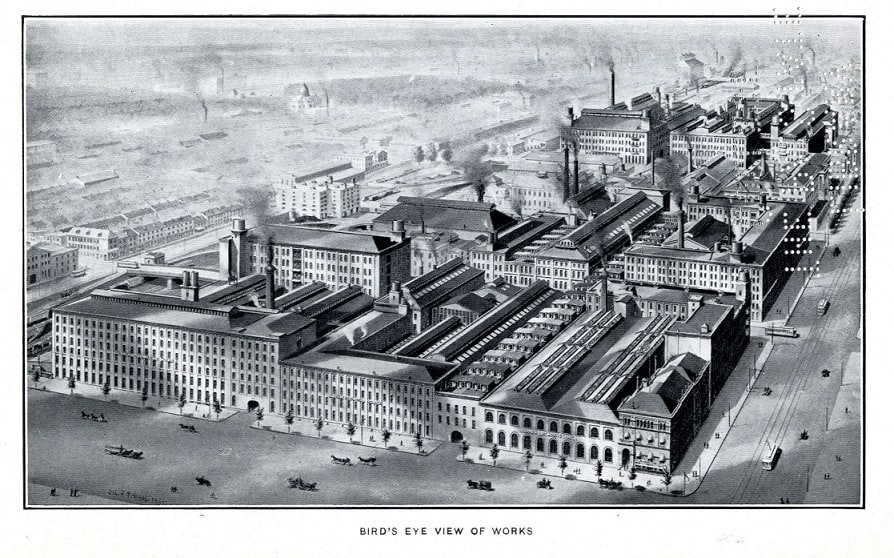
Baldwin Trains were also some of the biggest and baddest machines ever.
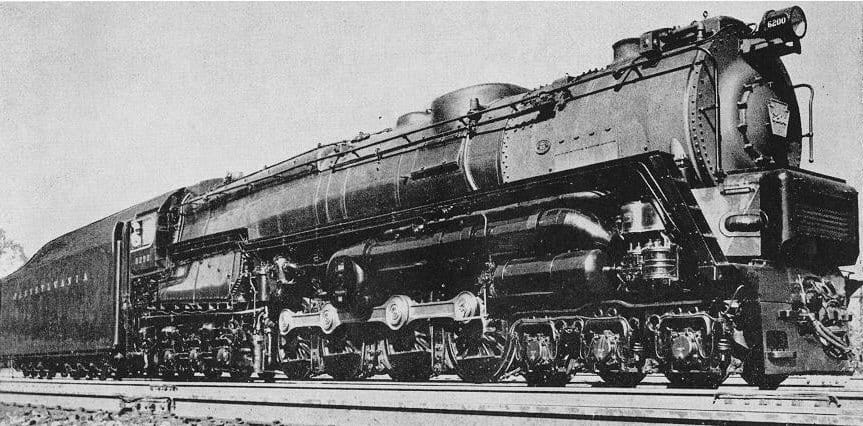
They started developing diesels early in the piece but were interrupted during WWII. The War Production Board would not let them develop mainstream diesels through the war period.
The only company allowed…. yep, GM’s EMD division.
So post war GM comes out strong with a lead and a standardised product that took the US (and Australia, as pictured below) by storm.

Baldwin battled along for a couple of decades making some big, beautiful and brutal machines.
In an effort to differentiate themselves from the GM product they enlisted Ramond Loewy, a designer famed for his “out there” work with Studebaker as well as some truly incredible hardware for the Pennsylvania Railroad.

Loewy developed the “Sharknose” theme for the Baldwin diesels which sold in very modest amounts but had a big visual impact.
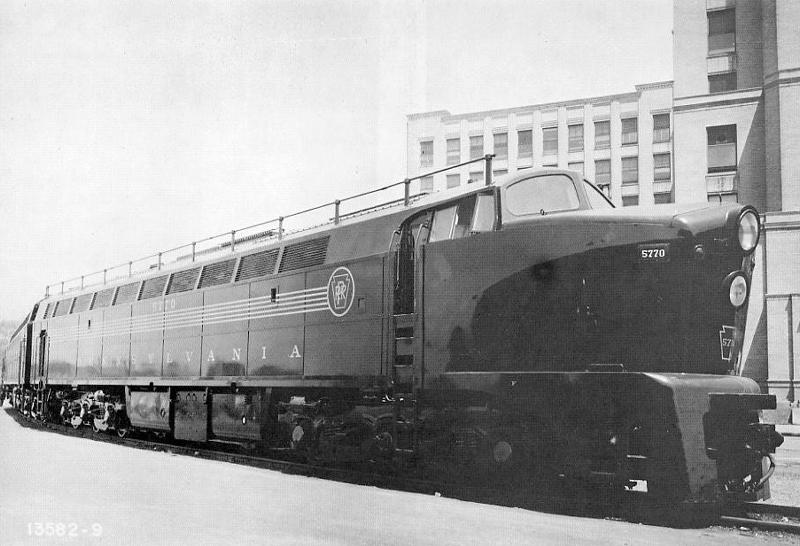
Many of these locos started serving on mainline “name” trains pulling luxury coaches and the like, but before long were relegated to pulling general freight. Most lasted only a decade or so before being pulled out of service and cut up for scrap…
Except for 2.
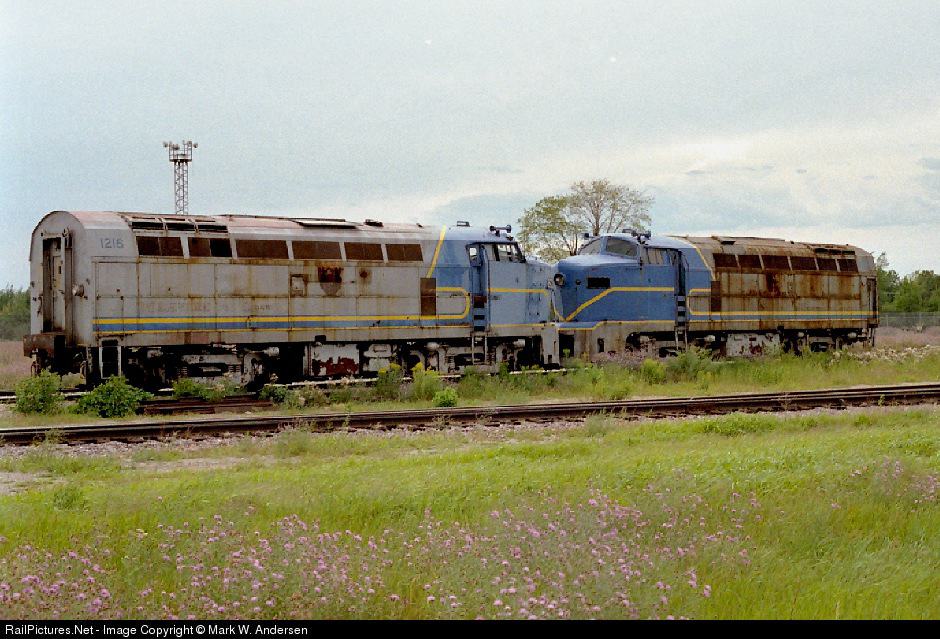
These two were bounced around from railroad to railroad until finally both their engines failed. They were left out in the open for some time but in the early 80’s were put undercover, never to see the light of day again and very heavily shielded from a railfan public who had reputedly stolen bits off the locomotives while they were sitting outside.
I’ve had a book about Baldwin diesels since I was a teen and it is in immaculate condition. I pull it out every now and then for a bit of a browse.
On my latest read I again relearned about these last two units of a once great company which prompted me to do a bit of googling.
Lo and behold, just a few weeks ago somebody anonymously posted the only photos anybody has publicly shared for over 30 years.


These are pics from inside the shed of a privately held railroad. Apparently the owner has been offered m for them and refuses to sell.
Whoever, whenever, restores these has got one hell of a job ahead of them (it’s all relative, Swade) . At least they are covered and not likely to be deteriorating at as greater rate as they were outside.
Why is this important??
It just is.
sharknose turbin

Great to hear about those D&H locos.
I had no idea, and I can see the attraction. Quite the example of ‘Mid-Century’ design. Great post!
Some readers will already know this, but EMD was sold by GM in their recent years of struggle and now they are owned by Caterpillar. I’ve been in the LaGrange, Illinois plant many times and the employees like the new ownership much, much better. Cat understands the low-volume, high-value business much better than GM ever could.
Hmm….wonder if Caterpillar would be interested in buying Saab? 😉
Swade, you bring back memories of my model trains days. There were some amazing steam locomotives in the US including the Norfolk & Western J Class
http://upload.wikimedia.org/wikipedia/commons/8/83/NW_611.jpg
The Union Pacific 4-8-8-4 big boy
http://www.vistadome.com/trains/steamtown2/uprr4012.jpg
the Pennsylvania RailRoad Duplex Drive
http://www.billspennsyphotos.com/photos/Locomotives/PRR%20S1%206100%20E11448%202%208%2039%20800×160.jpg
I’m with you on all of those.
Of course the Duplex Drive S1 was another Loewy design and precursor to the sharknose T1 above.
I have some footage somewhere of it running on rollers at the 1939 World’s Fair in NY.
The T1s were unfortunately scrapped after a short time as they were both the last steam ordered for the Pennsy and also had the ability to wheel spin at 100mph damaging their own hardware. Rumored to have run up to 140mph but never proven.
The Sharks……my first big trip out east railfanning with a friend in early October 1977, we came upon the Sharks parked in Whitehall, NY. The Sharks had been shutdown and stored pending disposition. A couple of days later we found the D&H PA-1s running in commuter service out of South Station in Boston. That night we took many photos of the four PA-1s in and around their overnight lay-over at South Station. We were noticeable enough that a engine watcher/hostler invited us into the cab of a PA-1. The PA-1s had only gone into “T” commute service a couple of weeks earlier. We were rousted from our sleep by a Framingham, MA cop checking out a Illinois licensed car with a couple of guys sleeping in a a railroad wye while PA-1 led commute trains were wyed before their runs back into South Station. Forward another day we were given the bum’s rush at a steel plant in Burham, PA while I was audio recording a Baldwin switch engine (VO-660, IIRC) along the fence line. The engine crew was blipping the throttle to make more engine noise. The reason for the “getouttahere”? Steel plant security called it a “defense plant’ with resulting security levels.
Forward a couple of years and a friend’s family was interested in purchasing the Sharks, something well into the high six figures. About this same time, Castolite Corporation either purchased or cajoled the E&LS to move the Sharks indoors. The Sharks have not seen the light of day since. The E&LS is the perfect place for the Sharks to slumber away. The E&LS dieselized with a pair of Baldwin switchers in the late 1940’s and has operated Baldwin locomotives since then.
At least the Sharks have not suffered the indignities of the PA-1s, still around and could be restored to operation. It is my understanding the engines are rebuildable. Parts for Baldwin engines are very scarce and unique to the builder. The E&LS was a great choice to store the Sharks as
Wow! Somebody who’s actually seen them! I haven’t even been to NY. I’m just a fan from the other side of the world.
Argentina had some snubnose shark and I have since noted on the interweb that there’s photos of one having been restored. Beautiful! I swa some amazing rusting hardware when I was there in 2000.
If I can figure out how to scan the October afternoon sunny slides, I’d be happy to forward to Swade for transcription here. Now to dig the slides out from 37 years ago.
BTW, the week we spent in New England was just a bit past the peak of fall color. We were poking around Whitehall looking at both buildings (I’m an architect) and general scenery when we came upon a Second Empire/High Victorian Italianate home being used as a restaurant up on a hill overlooking town. The restaurant was closed for the day with an empty parking lot. As we were getting ready to leave, a local asked why were there, a quick explanation by my friend, gained us an apology for the lack of colors!
Did a bit of searching….the restaurant is called Skene Manor. Check out: http://www.skenemanor.org/
More to come, I’m digging into the slide archives of the 1977 trip. Am looking for photos of E&LS Baldwins shot in the ’70’s and ’80’s.
Ah, the era of the Streamliner. Evocative and emotive. Interesting to look at today’s super high speed intercity trains and the aero detailing they have these days.
That’s way cool
Ahh, the haunting beauty of decaying industrial heritage.
I’ll say whoever restores these two sisters has a whale-aceous task ahead of ’em–but it’s doable. I would go through and gut them of their old hardware, put in new Caterpillar/EMD 710 engines with new generators, traction motors, controls, et cetera. A bit of bodywork would also be needed. Paint ’em up like they looked in ’74, and what you’d have (oh, yeah, air-condition the cabs) could be more than twice the horsepower as the locomotives originally were. You’d also need to install some form of HEP (head end power) for the passenger cars. An expensive proposition, yes, but you’d have the handsomest pair of locomotives in the world. Couple them to a set of sixteen stainless steels (don’t forget the vista dome lounger now) and you’d have a force to be reckoned with in the form of an excursion train.
Removing the Baldwin engines is the most idiotic idea I’ve ever heard, and is worthy of no further consideration on my part, or anyone else’s. I’ll bet you have a 1948 Tucker w/a Chevy 350 in it. Are you 5?
You might want to re-check your history. In 1959, Pennsylvania Railroad took Baldwin Shark RF16 #2001, retrofitted it with an Alco 251-series 1800 hp engine, and the end result was what was known as an ABF-18. Not saying how good the retrofit was, nor am I saying how long they used it, I’m just saying it was done. I would have picked an EMD engine myself. Which brings us to the ’48 Tucker. If I knew the 350 Chevy engine in it had a wider availability of parts, I’d use that too. I get a little tired of the purist philosophy that seems to permeate all those who are supposed to know more than the rest of us. And as for being 5–I am 5–with 43 years of experience.